Are Garden Hose Quick Connectors Universal? What to Know
You twist a shiny new quick connector onto your hose, head to the tap, and nothing lines up. So are garden hose quick connectors universal? Honestly, not the way most people hope.
Some parts swap freely, others flat-out refuse.
The catch comes down to two standards and a pile of brand-specific click systems. In the US, most hoses use Garden Hose Thread (GHT), a 3/4-inch fitting at 11.5 threads per inch. In the UK and Europe, taps run on British Standard Pipe (BSP).
Those two don't mix without an adapter, and that single fact trips up more gardeners than anything else. Let's sort out what actually fits.
Quick Answer
Garden hose quick connectors are not truly universal. Thread standards differ by region. The US uses GHT, while the UK and Europe use BSP.
Brand click systems like Gardena and Hozelock rarely lock together. A same-brand kit connects reliably. Cross-brand or cross-standard parts usually need an adapter.
As of 2026, no single connector fits every hose worldwide.
Why "Universal" Is a Trap With Hose Fittings
"Universal" gets stamped on a lot of packaging. It rarely means what you'd think. What it usually means is "fits standard hoses in this region." That's a big asterisk.
Here's the trap. A connector sold as universal in the US assumes GHT. One sold as universal in the UK assumes BSP.
Buy the wrong region's kit online, and the threads simply won't marry up. The plastic might start to bite, then jam and cross-thread.
There's a second layer too. The threaded end of a connector follows a standard, but the quick-release click mechanism does not. That snap-fit collar is proprietary.
A Gardena male plug won't seat in a Hozelock coupling, even though both screw onto the same hose.
Keep that split in mind and the whole topic gets simpler. Threads follow rules. Clicks follow brands.
The Two Things That Actually Decide Compatibility
Two variables decide whether your fittings play nice: your thread standard and your brand's click system. Get both right and everything connects. Miss either one and you're reaching for an adapter or a new part.
Your Hose Thread Standard: GHT vs BSP
Thread standard is the big one. It's set by where the gear was made and sold.
- GHT (Garden Hose Thread): the US and Canada standard, 3/4-inch at 11.5 TPI. It's governed by ASME B1.20.7.
- BSP (British Standard Pipe): the UK, Europe, and Australia standard, defined under ISO 228. Common sizes are 1/2-inch and 3/4-inch.
These threads use different pitches and diameters. If you've got a GHT spray gun and a BSP tap, they will not screw together cleanly. You can read the official thread spec straight from the ISO standards catalogue if you want exact dimensions.
Your Brand's Click System
The click system is where brand loyalty kicks in. Each maker designs its own push-fit shape.
- Gardena and Hozelock dominate Europe with distinct, non-interchangeable clips.
- Orbit, Melnor, and Rain Bird lead the US market with their own designs.
If you want quick tool swaps that always work, pick one brand's ecosystem and stick with it. Mixing brands mid-hose is where the frustration starts.
How Garden Hose Quick Connectors Work
A quick connector is a two-part coupling that snaps together instead of screwing. One piece is the female coupler, and it usually attaches to your hose or spray tool. The other is the male plug or tail, which pushes into it.
The magic is in a spring-loaded collar. Pull the collar back, push the two halves together, release, and internal grips lock the plug in place. A rubber O-ring seals the joint so water doesn't spray from the seam.
Many kits add an auto-shutoff, sometimes called an Aquastop or Waterstop. When you disconnect, a valve snaps shut inside the coupler. That stops the backspray you'd otherwise get with an open, pressurized hose.
Here's what matters for compatibility. That threaded tail still has to match your hose bore and your tap's standard. The clever click mechanism doesn't override the plumbing underneath it.
If you're piping water to thirsty containers or greenhouse and indoor greenery, a leak-free seal here saves real hassle.
Find Out What You Have: A 3-Step Check
Before you buy a single connector, figure out exactly what's on your tap and hose. Three quick checks save you a return trip. Work through them in order.
Step 1: Identify Your Thread Standard
Start with region. If your kit was bought in the US or Canada, assume GHT. If it came from the UK, Europe, or Australia, assume BSP.
Older or imported taps can surprise you, so don't guess if the parts feel off.
A fast tell: BSP fittings often carry a size stamp like "1/2" or "3/4" BSP. GHT parts rarely spell out the thread name at all.
Step 2: Measure Your Tap and Hose Ends
Grab a tape or caliper and check the tap spigot. Note two things: the diameter and whether the thread sits on the outside (male) or inside (female).
- 1/2-inch BSP measures roughly 20.9mm across the thread.
- 3/4-inch BSP measures roughly 26.4mm.
Write it down. Tap thread mismatch, wrong size or wrong gender, is one of the most common reasons a "universal" set won't fit. For a batch of quick projects, our step-by-step garden guides walk through similar measuring habits.
Step 3: Match the Barb to Your Hose Bore
Last, check the inner bore of your hose. That's the hole water flows through, not the outside diameter. The connector's barbed tail has to match it.
| Hose bore | Common label | Typical use |
|---|---|---|
| 12.5mm | 1/2-inch | Light garden hoses |
| 16mm | 5/8-inch | Standard all-round hoses |
| 19mm | 3/4-inch | High-flow, longer runs |
Fit a 1/2-inch tail into a 3/4-inch hose and it'll leak or blow off under pressure. Match the barb to the bore and the collar clamps tight.
Decision Guide: Which Connector Setup Fits Your Situation
Your best setup depends on how you use the hose. Match your situation to the branch below.
- If you swap tools constantly (spray gun, wand, sprinkler): commit to one brand's quick-connect kit. Same-brand plugs and couplers click every time.
- If you rarely change attachments: skip quick connects and use plain threaded fittings. Fewer parts, fewer leak points.
- If you mix old and new gear: buy a universal-style set that clamps onto any hose end, then adapt at the tap.
- If your parts cross regions (GHT and BSP): add a thread adapter first, then standardize the click system on top.
Setting up drip irrigation or a soaker line? Choose a system with an auto-shutoff coupler. It stops water loss every time you disconnect to move the line.
For renters, the safe play is a universal push-fit kit plus a spare tap adapter. You keep the connectors when you move, whatever tap you inherit next.
Where Adapters Save You and Where They Don't
Adapters fix most thread mismatches, but not click mismatches. That's the line to remember. A brass GHT-to-BSP adapter lets a US spray gun meet a European tap.
It's cheap and it works.
Where adapters fall short is the proprietary snap-fit. No adapter makes a Gardena plug lock into a Hozelock coupler. The click shapes are patented and simply don't interlock.
Here's a quick read on what an adapter can and can't rescue:
| Mismatch | Adapter fixes it? |
|---|---|
| GHT tap, BSP hose end | Yes, thread adapter |
| 1/2-inch tap, 3/4-inch fitting | Yes, size reducer |
| Male-to-male threads | Yes, double-female coupler |
| Gardena plug into Hozelock clip | No, buy matching brand |
One caution. Every adapter adds a joint, and every joint can leak. Keep the chain short and seal each thread with a fresh washer or PTFE tape.
Brand Mixing: Do Gardena, Hozelock, Orbit, and Melnor Fit Together?
No, the major brands' quick-connect clips do not fit together. Each maker uses its own plug-and-collar geometry. Aggregate user reviews consistently report that a plug from one brand won't seat in another's coupler, even when both fit the same hose.
What does transfer is the threaded base. A Gardena tap connector still screws onto a standard BSP tap, and an Orbit one onto a GHT tap. So the plumbing side is shared.
The clicking side is a walled garden.
- Gardena and Hozelock: both huge in Europe, totally separate clip systems.
- Orbit, Melnor, Rain Bird: US-focused, each with its own quick-connect.
Pick your brand based on what your local store stocks. Spare washers and replacement plugs need to be easy to find. If you're planting up a border and want tidy watering runs, coordinating one brand keeps things simple, much like sticking to a single palette in these flower bed fencing ideas.
Brass vs Plastic Quick Connectors
Brass lasts longer, plastic costs less. That's the trade in one line. Which one suits you depends on climate, pressure, and how rough you are with your gear.
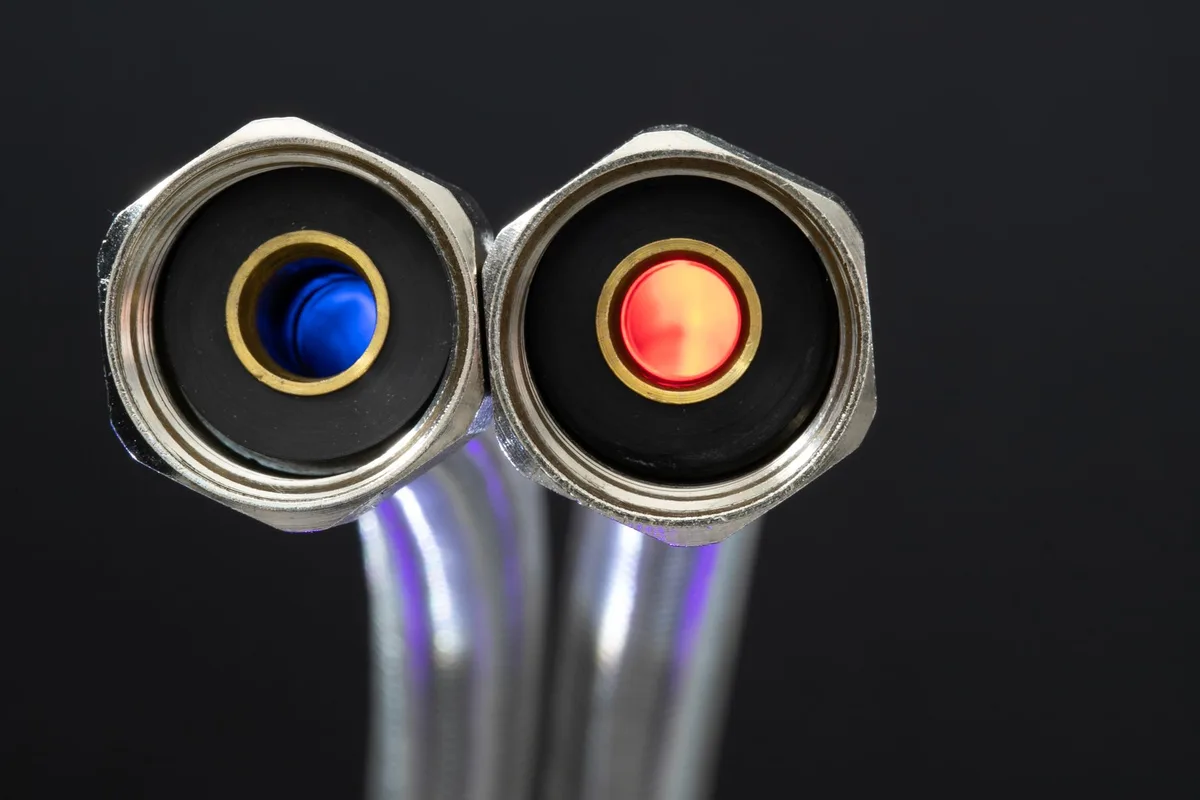
Brass handles higher pressure and shrugs off frost better. It won't crack if a little water freezes inside. The downside is weight and price.
Verified buyer feedback also notes brass threads bite more firmly, which cuts down on cross-threading.
Plastic, usually ABS or reinforced nylon, is light and easy on the wallet. It's fine for gentle summer watering. But it gets brittle in cold snaps and can crack under a pressure spike.
| Factor | Brass | Plastic |
|---|---|---|
| Durability | High | Low to medium |
| Frost resistance | Strong | Weak |
| Price | Higher | Lower |
| Weight | Heavier | Light |
| Best for | Year-round, high flow | Casual summer use |
If you run a pressure washer inlet or leave hoses out through winter, brass earns its cost. For a small patio setup packed away each autumn, plastic does the job.
Mistakes That Cause Leaks, Blow-Offs, and Stripped Threads
Most connector failures trace back to a handful of avoidable errors. Spot them early and you'll save yourself a soggy afternoon.
- Forcing mismatched threads: GHT into BSP cross-threads and ruins both parts. Check the standard first.
- Wrong barb size: a tail too small for the bore blows off under pressure. Match millimetre to millimetre.
- Skipping the washer: a missing or flattened O-ring leaks at the collar. Keep spares on hand.
- Over-tightening plastic: it strips or cracks the thread. Hand-tight plus a quarter turn is plenty.
- Leaving plastic out in frost: trapped water expands and splits the body. Drain and store before the first freeze.
Troubleshooting a drip at the joint? Work backward. First reseat the click, then check the washer, then confirm the barb matches the bore.
Nine times out of ten it's one of those three.
One more from aggregate reviews: grit on the O-ring. A tiny bit of sand breaks the seal. Wipe the plug before every reconnect and the leak often vanishes.
Sizes, Specs, and What the Numbers Mean
The numbers on a connector aren't random. They tell you thread and bore at a glance. Learn to read them and you'll buy right the first time.
Thread callouts come in two flavours. GHT is written as 3/4-inch, 11.5 TPI. BSP is written with the size and the letters, like "3/4 BSP" or "1/2 BSP."
- 3/4-inch GHT: US and Canada tap and hose standard.
- 3/4-inch BSP: 26.4mm thread outer diameter, common on UK outdoor taps.
- 1/2-inch BSP: 20.9mm, seen on smaller taps and indoor fittings.
Bore sizes stay separate from thread. A hose can carry a 5/8-inch (16mm) bore and still take a 3/4-inch threaded coupler. Match the barb to the bore, and the thread to the tap.
Two measurements, two jobs.
Typical household supply runs around 40 to 60 psi. Most quick connectors are rated well above that. Just don't pair a bargain plastic plug with a pressure washer feed.
Safe-Use and Drinking-Water Notes for Outdoor Taps
If you'll drink from the hose or fill an RV tank, the fittings matter for safety, not just flow. Choose parts marked drinking-water safe. Standard garden brass can contain lead, so look for a lead-free stamp.
Backflow is the bigger risk. When pressure drops, water can siphon backward from your hose into the household supply. That's why many codes require a vacuum breaker or anti-siphon device on outdoor spigots.
- Use a hose-bib vacuum breaker on any tap feeding a hose.
- Pick potable-rated hose and connectors for drinking water or caravan use.
- Confirm lead-free brass for anything touching water you'll consume.
Backflow rules vary by area. The U.S. Environmental Protection Agency covers cross-connection basics if you want the reasoning behind them.
Check your local plumbing code before permanent installs.
Winter, Frost, and Keeping Connectors Working Longer
Frost is the number one killer of plastic connectors. Water left inside expands as it freezes and splits the body. A five-minute autumn routine prevents most of it.
- Disconnect every quick connector before the first hard freeze.
- Drain hoses fully and coil them somewhere sheltered.
- Store plastic plugs and couplers indoors. Cold makes them brittle.
- Wipe O-rings clean and check for cracks before spring.
A dab of silicone grease on the O-ring keeps seals supple and easy to click. Do it once a season. Aggregate reviews link most mid-season leaks to a dried-out or gritty washer, exactly the thing this habit prevents.
Brass tolerates cold far better, but it still hates trapped water at a spray gun tip. Empty everything. If you're tidying the garden for winter, the same care that goes into these country garden touches pays off on your watering kit too.
Frequently Asked Questions
Are all garden hose fittings the same size?
No. US hoses use 3/4-inch GHT, while UK and European hoses use BSP threads. Bore sizes also vary between 1/2-inch, 5/8-inch, and 3/4-inch.
Always check both the thread standard and the inner bore before buying a connector.
Do Gardena and Hozelock connectors fit together?
No, their quick-connect clips are not interchangeable. Each brand uses a patented plug-and-collar shape that won't seat in the other. The threaded tap bases still fit standard BSP taps, but the click halves must match brand for brand.
Can I connect a US hose to a European tap?
Yes, but you'll need a GHT-to-BSP thread adapter. The two standards have different pitch and diameter, so they won't screw together directly. A brass adapter bridges them cheaply.
Just seal each joint with a fresh washer.
Why does my quick connector keep leaking?
Usually a bad seal. Check the O-ring for grit, flattening, or cracks and replace it if worn. Confirm the barb size matches your hose bore.
A mismatched or dirty washer causes most collar leaks.
Is brass or plastic better for quick connectors?
Brass lasts longer, handles higher pressure, and survives frost. Plastic is cheaper and lighter but turns brittle in the cold. For year-round or pressure-washer use, choose brass.
For light summer watering that's packed away each autumn, plastic is fine.
Your Quick Connector Buying Decision, Simplified
So the honest takeaway: these fittings aren't one-size-fits-all, but they're easy to get right once you know your two variables. Nail your thread standard and your brand click system, and everything else falls into place.
Before you buy, run the short checklist:
- Confirm GHT or BSP based on where your gear came from.
- Measure your tap thread and hose bore.
- Pick one brand's kit and stick with it.
- Keep a thread adapter and spare washers on hand.
- Choose brass for frost and pressure, plastic for casual use.
Do that and mismatches basically disappear. Whether you're feeding a sprinkler, a pressure washer, or a row of pots dressed up with privacy-minded planting, the right connector clicks on and stays put. That's the whole game.

Similar Posts