How to Connect Two Garden Hoses Together
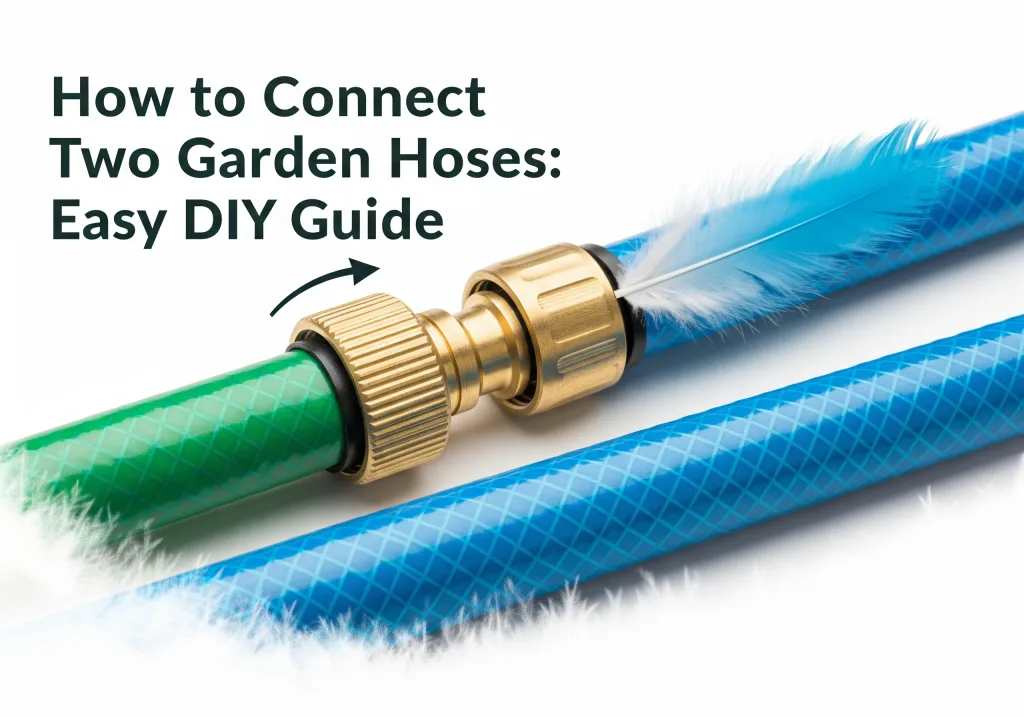
If you've ever stood in the garden wondering how do I connect two garden hoses together, the answer isn't as simple as grabbing any coupler off the shelf. The right method depends on what types of fittings you already have, whether your hoses are the same diameter, and whether you want a permanent join or something you can disconnect quickly.
All US standard garden hoses share the same thread specification: Garden Hose Thread (GHT), 3/4 inch diameter at 11.5 threads per inch. Knowing your fitting situation before you shop saves time and avoids a wasted trip. Here's how to diagnose your setup and get it right.
Quick Answer
To connect two garden hoses together, start by identifying your fitting ends. Two female ends need a double male adapter. Two male ends need a double female coupler.
A standard female-to-male join uses any inline hose coupler. Most connectors cost $4 to $15 and need no special tools.
Why Connecting Two Garden Hoses Isn't Always Straightforward
The problem most people run into isn't finding a connector. It's buying the wrong one because they didn't check their fitting types first.
Every garden hose has gendered ends: male (external threads) or female (internal threads). When two female ends meet, they can't thread together directly. You need a bridging adapter.
The same issue applies when two male ends meet.
Add mismatched hose diameters, a damaged fitting, or a desire for quick-connect hardware. Suddenly you've got four distinct scenarios, each calling for a different product. Knowing which one applies before you shop means buying the right connector on the first trip.
The First Thing You Need to Check Before Buying Anything
Look closely at both hose ends you want to join. Pick each one up and examine the tip directly.
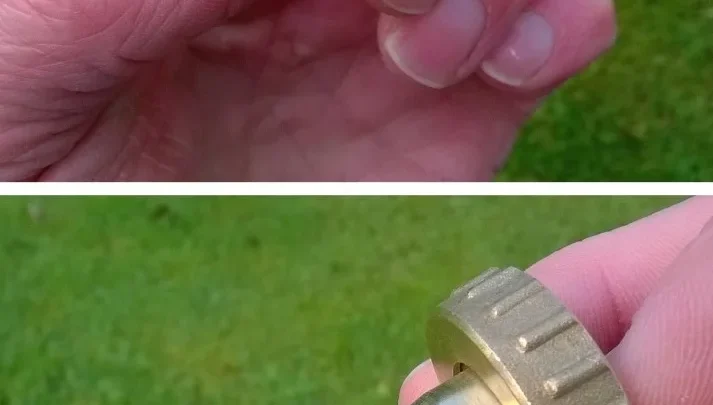
A male fitting has threads on the outside of the connector body. A female fitting has threads on the inside, with a wider opening to accept a male end. This gender pairing determines every purchase you'll make.
Also check each hose's internal diameter, usually printed on the hose label. Common US sizes are 5/8 inch and 3/4 inch. Connecting two different diameters requires a reducing adapter, not a standard coupler.
Write this down before heading to the store:
- Hose 1 end: male or female
- Hose 2 end: male or female
- Hose 1 diameter: 5/8" or 3/4"
- Hose 2 diameter: 5/8" or 3/4"
Understanding Hose Fitting Gender: Male vs Female Ends
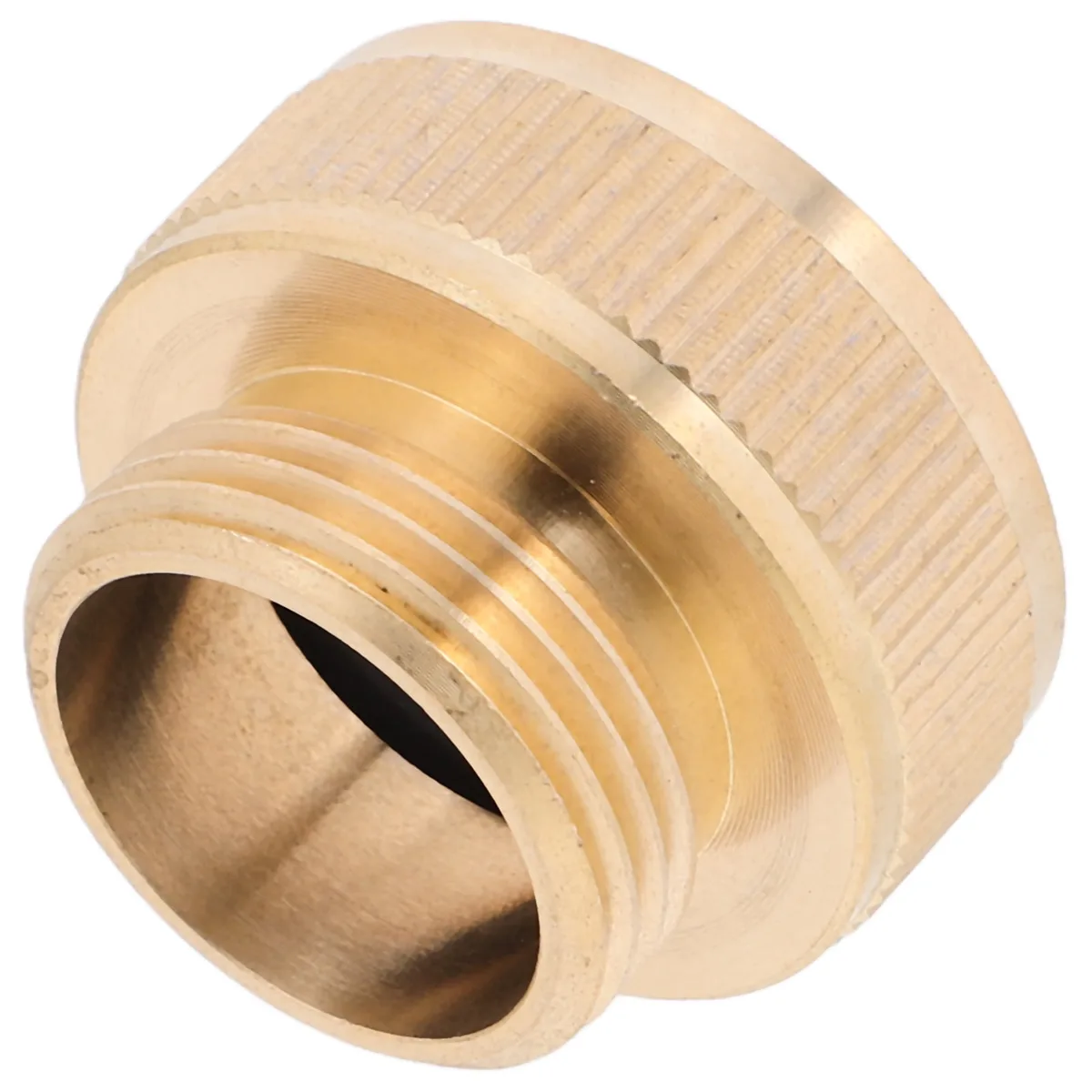
Male garden hose fittings have external threads running around the outside of the connector body. Female fittings have internal threads set inside a wider opening that receives the male end. They screw together clockwise.
Most US hoses ship with a female end at the faucet side and a male end at the nozzle side. But that's not universal. Replacement hoses can come configured differently, and any end you've cut for a repair now has no threads at all.
Quick test: if your outdoor tap's threaded spigot screws directly into the hose end, that end is female. If the hose end screws into the tap, it's male.
Per ASME standards (specifically ASME B1.20.7), all US garden hose fittings use the GHT specification: 3/4 inch, 11.5 TPI. Any two GHT fittings will mate correctly as long as you're matching male to female.
The Four Common Connection Scenarios (And What Each One Needs)
Once you know your fitting types and hose sizes, your situation falls into one of four categories.
Scenario 1: Female End to Male End (Standard Join)
This is the straightforward one. You need a standard inline hose coupler, also called a hose union. One side threads onto your female hose end.
The other receives the second hose's male end.
No PTFE tape needed if both rubber washers are soft and intact.
Scenario 2: Two Female Ends Meeting
You need a double male adapter, also called a male-to-male connector or hose nipple. It has external threads on both ends, bridging two female fittings together.
These cost $3 to $8 in brass or plastic and are stocked at most hardware stores.
Scenario 3: Two Male Ends Meeting
You need a double female coupler. It threads onto both male ends and holds them together. This is the direct mirror of Scenario 2.
If one hose consistently creates this problem, swapping out that fitting end is a cleaner long-term fix than relying on a bridge adapter every season.
Scenario 4: Mismatched Hose Diameters (5/8 inch to 3/4 inch)
You need a GHT reducing adapter. It has different bore sizes on each end but standard GHT threads on both sides. There's a small flow reduction at the join point.
For general garden watering this is barely noticeable. If you're extending a drip irrigation setup, factor the reduced flow into your coverage planning.
| Scenario | What You Have | Connector Needed |
|---|---|---|
| Female + Male | Standard ends | Inline hose coupler / union |
| Female + Female | Two female ends | Double male adapter |
| Male + Male | Two male ends | Double female coupler |
| Different sizes | 5/8" + 3/4" | Reducing adapter |
Choosing the Right Connector: Threaded Coupling vs Quick-Connect
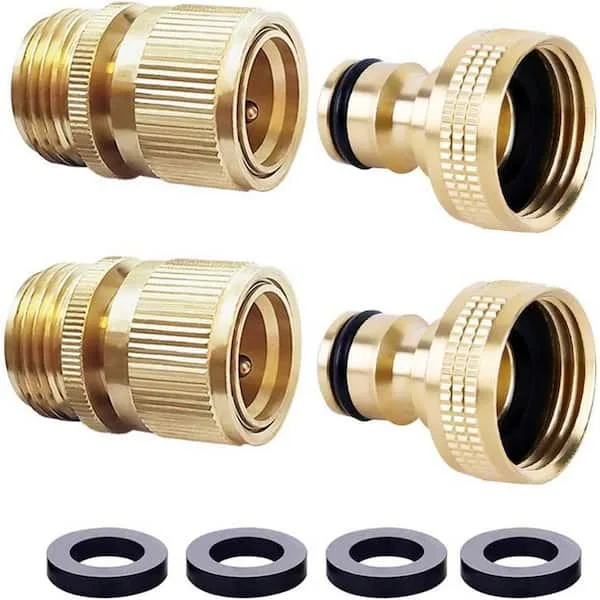
Once you know your scenario, there's one more choice: threaded coupling or quick-connect system.
Threaded couplers are the classic option. Screw them on by hand and snug them with pliers. They form a reliable seal, cost $4 to $12 in brass, and last for years.
The trade-off is that every disconnection means unscrewing the fitting, which takes time and gradually wears threads over repeated use.
Quick-connect fittings use a push-and-click collar. Attach a collar to each hose end, click them together, and release with a squeeze. No tools required.
As of 2026, quality quick-connect sets cost $8 to $20 for a pair.
Quick-connects are ideal for setups you reconfigure regularly, like hosing down the car one afternoon and watering the back garden the next. For a permanent extension that stays connected all season, a brass threaded coupler is more reliable and significantly cheaper.
| Feature | Threaded Coupler | Quick-Connect |
|---|---|---|
| Cost | $4–$12 | $8–$20/pair |
| Connection speed | Slow (pliers helpful) | Instant |
| Seal reliability | Excellent | Good (brand-dependent) |
| Best for | Permanent runs | Frequent swapping |
How to Connect Two Garden Hoses Step by Step
What You'll Need
- Correct connector for your scenario (from the table above)
- PTFE thread tape (situational; covered in the next section)
- Pliers or adjustable wrench
- Replacement rubber washers if existing ones are cracked or flat
The Connection Process
Step 1: Inspect both hose ends. If the rubber washer is cracked, flat, or missing, replace it before anything else. A worn washer is the top cause of drips at join points.
Replacement washers cost under $2.
Step 2: If using PTFE tape, wrap it clockwise around the male threads only. One to two wraps is enough. Skip this step if the washers are fresh.
Step 3: Hand-tighten the coupler onto both hose ends until you feel firm resistance as the rubber washer seats.
Step 4: Add a final quarter-turn with pliers. No more. Over-tightening crushes the washer and can crack plastic fittings.
Step 5: Turn the water on at normal pressure and run it for 30 seconds.
How to Check for Leaks
Run your finger around the join while the water is flowing. A drip means either the washer isn't seated or the fitting needs one more quarter-turn. If it still drips after tightening, turn the water off, disconnect, inspect the washer, and reconnect.
Don't just crank harder.
How to Join Two Hoses When One End Is Damaged
If one hose end is split, corroded, or has stripped threads, you can't couple onto it cleanly. You need to remove the damaged section first.
A hose repair kit handles this. It includes a barbed fitting that inserts into the cut hose body, plus a hose clamp that compresses the hose tightly around the barb. Cut the damaged section off cleanly.
Push the barb into the open end, slide the clamp over, and tighten with a screwdriver. You now have a fresh fitting and can couple normally.
Hose repair kits cost $5 to $12. They also work when a hose has cracked or split mid-body rather than at the fitting itself.
Brass vs Plastic Fittings: Which Should You Actually Buy
Plastic couplers cost $2 to $4 and work fine for occasional, light-use connections. For a one-off fix, they're adequate.
Aggregate buyer reviews consistently show plastic fittings crack under frost, strip threads faster, and degrade from UV exposure within two to three seasons. Brass fittings cost $6 to $15 and hold up to years of outdoor use without corroding or cracking.
For a permanent extension you'll rely on every season, choose brass. For a rarely-used backup run, plastic is acceptable.
One note: if you're watering vegetables or food crops through the connected hose, confirm any brass fittings are labeled lead-free before buying.
PTFE Tape: When You Need It and When You Don't
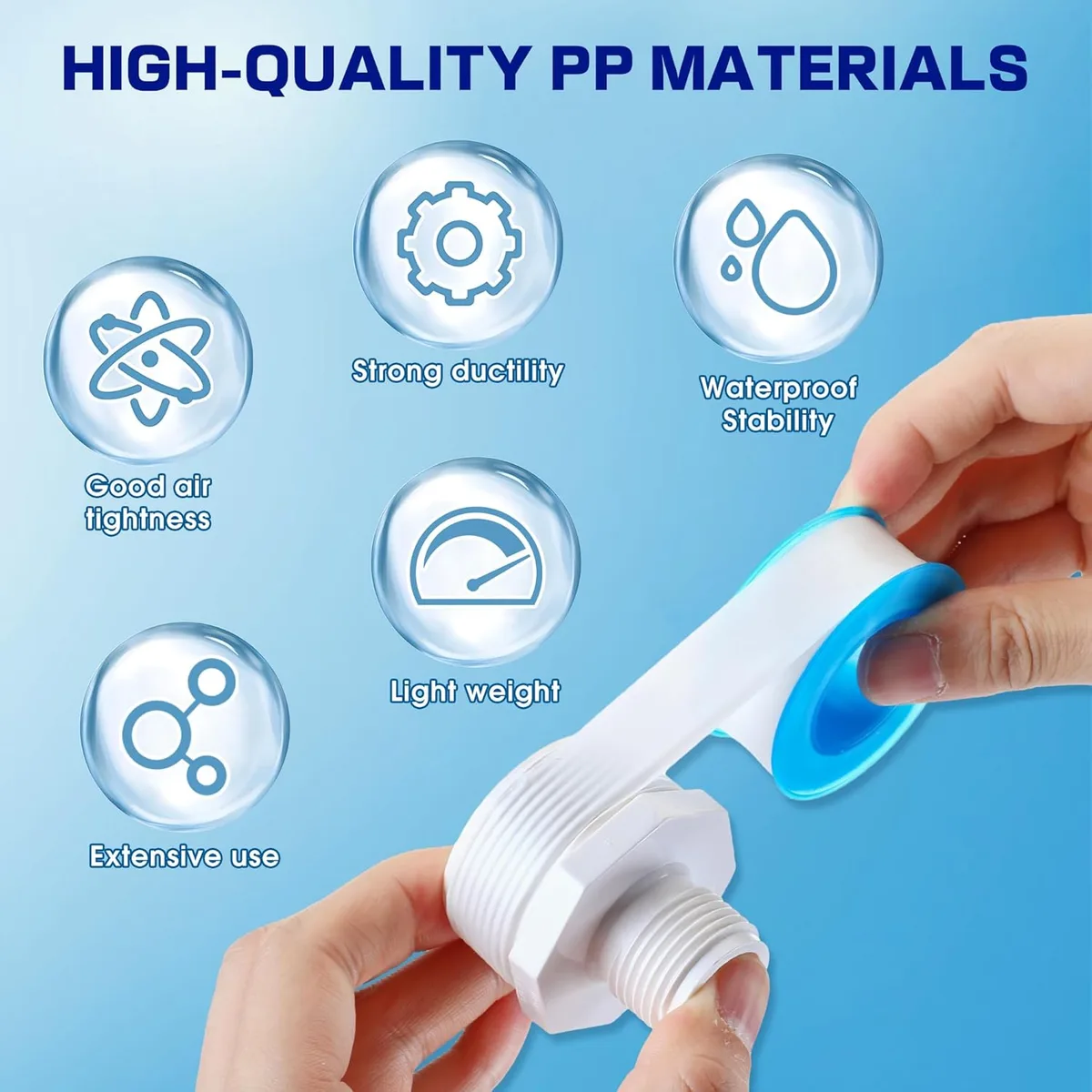
PTFE tape (polytetrafluoroethylene, commonly sold as Teflon tape) fills microscopic gaps between mating threads to create a better seal.
You need it when threads are slightly worn, fittings are older and don't seat cleanly, or dripping persists despite a good washer and correct tightening.
You don't need it when the rubber washer is new and soft. Most garden hose joins seal cleanly on the washer alone. Adding tape to a fresh connection makes the fitting harder to unscrew at the end of the season.
When you do use it, wrap clockwise around the male threads only. One to two wraps is enough. Applying tape to female threads, or wrapping anti-clockwise, are both common mistakes that either jam the fitting or unravel tape into the water line.
Mistakes That Cause Leaks (And How to Avoid Them)
Most connection leaks trace back to one of five causes:
- Missing or worn rubber washer. The washer does the sealing work, not the threads. Without it, no amount of tightening stops a drip.
- Cross-threading. If you feel resistance before the fitting is hand-tight, stop. Unscrew and retry. Forcing it strips threads permanently.
- Over-tightening. A final quarter-turn past hand-tight is all you need. More force crushes the washer seat.
- PTFE tape on female threads. Tape goes on male threads only. On female threads, it jams the fitting or unravels inside the waterway.
- Mixing NPT and GHT threads. National Pipe Thread (NPT) and Garden Hose Thread (GHT) look similar but aren't interchangeable. Always confirm your connector is labeled GHT.
Drinking Water and Food Garden Safety: What the Certifications Mean
If your connected hose supplies water for vegetable gardens or an RV water hookup, the fittings must be rated for potable water contact.
Look for two things on the packaging:
- Lead-free brass (required under the US Safe Drinking Water Act for plumbing components in contact with drinking water)
- NSF/ANSI 61 certification (confirms the fitting material doesn't leach contaminants into the water supply)
Standard fittings sold for ornamental use may not carry either certification. For food gardens or drinking water lines, check the label before buying. NSF International maintains a public product database where you can verify any fitting's certification status before purchase.
California also enforces Proposition 65 limits on heavy metals including lead and cadmium in brass fittings sold in the state.
Pressure Drop Over Long Connected Hose Runs
Connecting two hoses extends your reach but adds friction over the longer run, which lowers pressure at the nozzle end.
A standard 5/8 inch hose at 60 PSI loses roughly 4 to 6 PSI per 100 feet. Joining two 50-foot hoses creates a 100-foot run with a modest pressure drop at the far end. For general garden watering, this is rarely a problem.
It matters more for high-demand equipment. If you're supplying a pressure washer through a connected hose run, check the machine's minimum inlet pressure first. That figure is usually listed in the manual.
Quick-Reference Decision Guide: Which Connector Do You Need?
| Your Situation | Connector Type | Approximate Cost |
|---|---|---|
| Female end + male end | Standard hose coupler / union | $4–$10 |
| Two female ends | Double male adapter | $3–$8 |
| Two male ends | Double female coupler | $3–$8 |
| 5/8" hose + 3/4" hose | Reducing adapter | $5–$12 |
| Damaged or cut hose end | Hose repair kit (barb + clamp) | $5–$12 |
| Frequent disconnects | Quick-connect fitting pair | $8–$20 |
| Potable water or food garden | NSF/ANSI 61, lead-free brass fitting | $8–$18 |
Frequently Asked Questions
Can I connect two garden hoses without any tools?
Yes, if you're using a quick-connect fitting system. Push-and-click collars need no tools at all. For threaded couplers, pliers help with the final quarter-turn but aren't strictly required.
You can hand-tighten most threaded couplers and still get a reliable seal if the rubber washer is in good shape.
How do I stop my garden hose connection from leaking?
First, check the rubber washer inside the female fitting. A flat or cracked washer is the most common cause. Replace it, reconnect, hand-tighten, then add a quarter-turn with pliers.
If it still drips, apply one to two clockwise wraps of PTFE tape to the male threads and reconnect.
Can I connect a 5/8 inch hose to a 3/4 inch hose?
Yes. You need a GHT reducing adapter, which bridges the two bore sizes with standard GHT threads on both ends. These cost $5 to $12 at hardware stores.
There's a small flow reduction at the join, but for most garden watering tasks this causes no practical issue.
Will connecting two hoses reduce water pressure?
Slightly, yes. Longer runs create more friction, which lowers pressure at the nozzle. A combined 100-foot run at typical residential supply pressure loses roughly 4 to 8 PSI.
Most garden watering tasks won't notice this. Pressure washers and drip irrigation systems are more sensitive to pressure variation.
Can I leave connected hoses outside over winter?
Most manufacturer guidance recommends draining and disconnecting before the first frost. Water trapped at a join can freeze, expand, and crack the fitting or split the hose body nearby. For guidance on cold-weather hose storage, plan to disconnect before temperatures consistently drop below freezing.

Similar Posts