Are Garden Hoses Recyclable? What You Need to Know
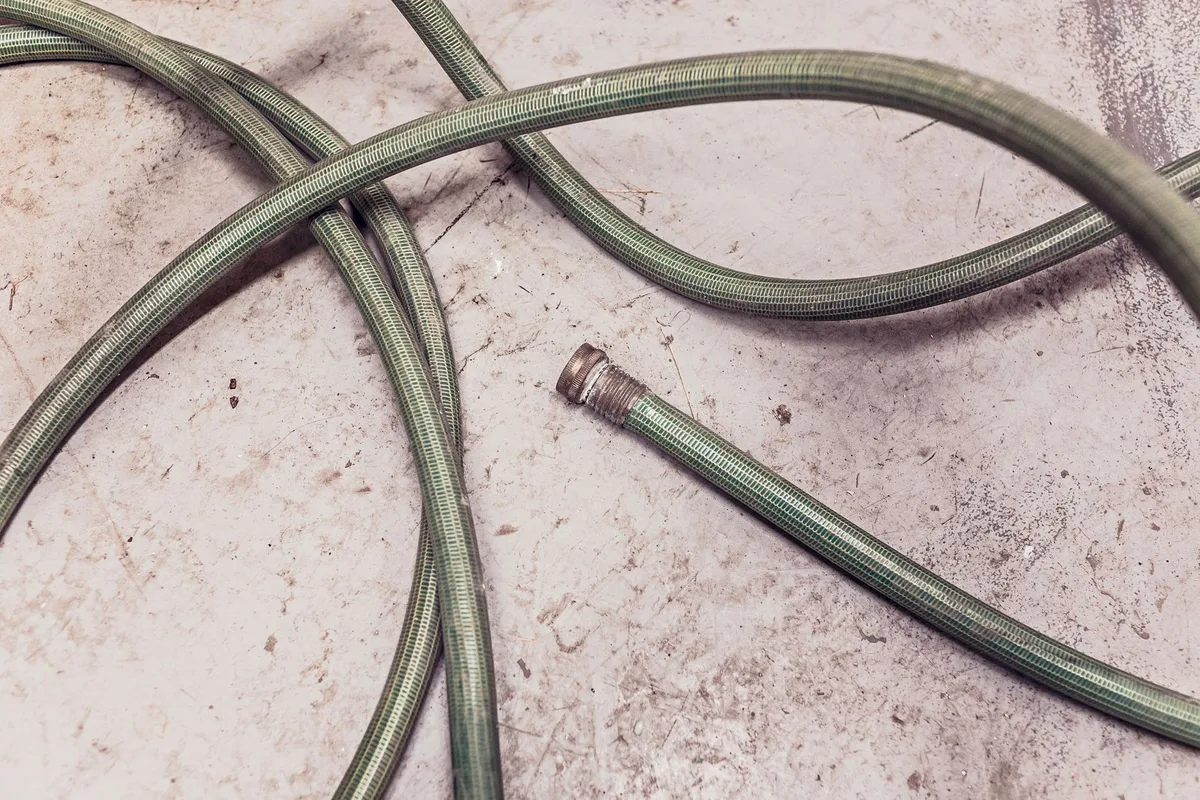
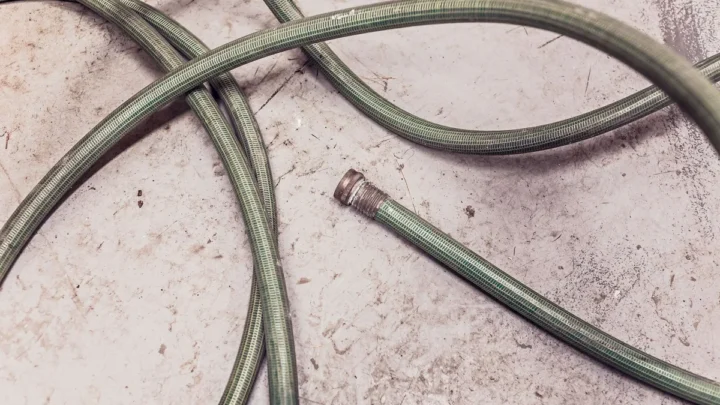
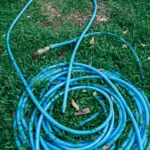
Your old garden hose finally split, and now you're standing over the recycling bin wondering if it belongs there. Here's the honest answer: are garden hoses recyclable through your normal curbside bin? Almost never.
But that's not the whole story, and chucking it straight in the trash isn't your only move.
Most hoses are built from layered PVC or rubber wrapped around reinforcing mesh, which recycling machines can't pull apart. As of 2026, the U.S. Environmental Protection Agency still counts this kind of mixed-material plastic among the hardest household items to recycle.
The good news? The parts that matter most have real second lives. Let's sort out exactly what to do with yours.
Quick Answer
Garden hoses aren't recyclable in standard curbside bins. Their mixed rubber, vinyl, and mesh layers jam sorting machines. Cut off the brass or aluminum fittings first.
Those metal ends can go to a scrap yard. The hose body usually heads to landfill or gets repurposed into something useful.
Why Garden Hoses Are a Recycling Headache
Recycling plants are built to handle clean, single-material items. A garden hose is the opposite of that.
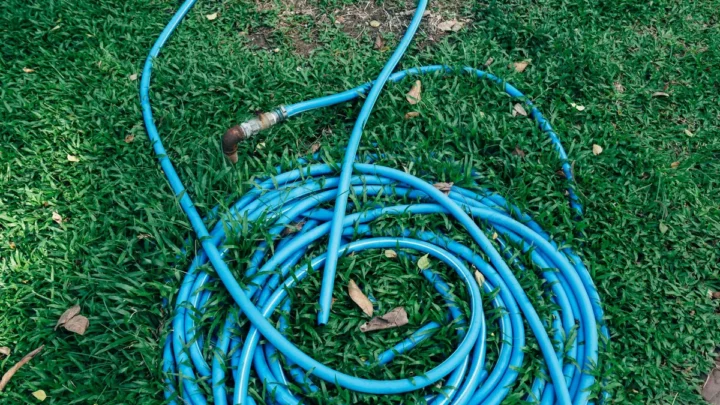
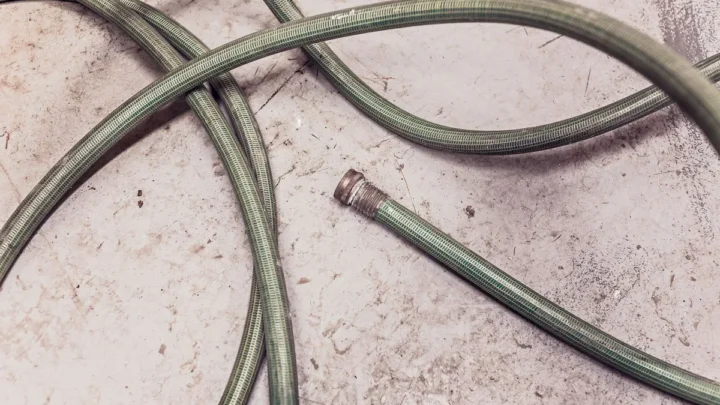
A typical hose stacks several materials into one flexible tube. You've got an inner PVC or rubber core, a woven reinforcement layer, and an outer coating. Those layers are bonded together.
No curbside facility can separate them cheaply, so the whole thing gets rejected.
There's a second, bigger problem. Long, flexible items are known in the recycling world as "tanglers." They wrap around the spinning shafts and rollers inside a materials recovery facility. Workers then have to shut the line down and cut them out by hand.
That's why hoses, cords, and holiday lights are banned from most household bins.
Toss a hose in loose, and you risk more than a rejected item. You can get your entire bin flagged as contaminated. When that happens, the crew may skip your whole load and send it to landfill.
One hose can undo a full week of careful sorting.
Know Your Hose: Vinyl, Rubber, or Expandable
Before you decide anything, figure out what your hose is actually made of. The material changes your options.
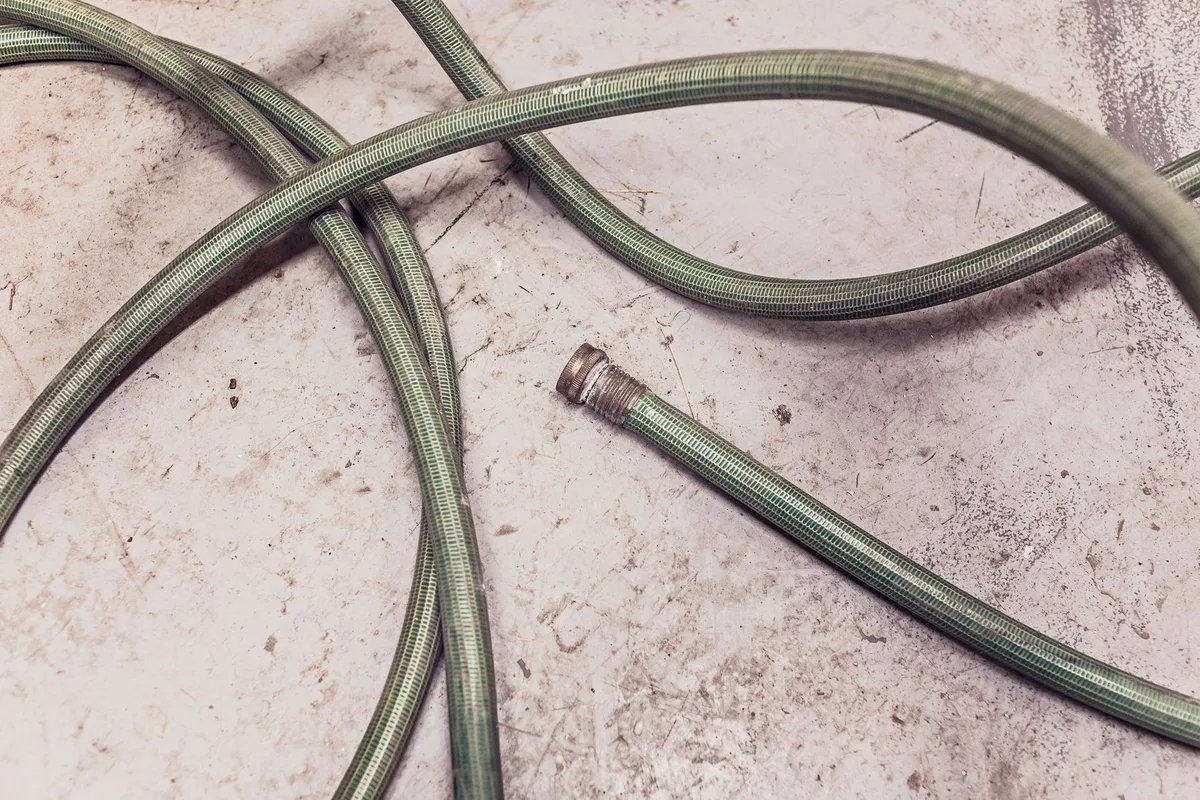
Most home hoses fall into one of three camps. Here's how to tell them apart and what each means for disposal.
- Vinyl (PVC) hoses. Lightweight, often the cheapest option, and prone to kinking. PVC is one of the least accepted plastics in recycling streams. These almost always end up landfilled or repurposed.
- Rubber hoses. Heavier, thicker, and more durable. Pure rubber has a slim chance at a tire or rubber recycler, though many hoses are a rubber-vinyl hybrid that still can't be processed.
- Expandable hoses. A stretchy latex or TPC inner tube wrapped in a fabric sleeve. The mixed textile-and-plastic build makes these the hardest of all to recycle.
If your hose has a printed label reading "drinking water safe," it's likely a higher-grade rubber or polyurethane blend. That won't make it curbside-recyclable, but it does mean the hose is worth repairing or reusing rather than binning. A quality hose that still holds pressure has plenty of life left for garden jobs.
The 4 End-of-Life Paths for an Old Hose
Every worn-out hose ends up on one of four routes. Match yours to the right one instead of defaulting to the trash.
Curbside Recycling: Almost Always a No
Don't put a hose in your household recycling bin. This is the single most common mistake, and it backfires.
The only exception is a rare municipal program that specifically lists hoses for a special drop-off. Those are uncommon. If you're unsure, check your local council or waste authority's website before you assume.
When in doubt, keep it out of the bin.
Scrap Yards: Where the Fittings Actually Pay Off
The metal ends of your hose are genuinely recyclable, even when the tube isn't. This is the part people overlook.
Cut off the couplings at each end. Brass fittings carry real scrap value, and aluminum ones are accepted too. A local scrap metal yard will take a small bag of them.
It won't make you rich, but it keeps clean metal in circulation and out of the ground.
Specialty and Rubber Recycling Programs
If you've got a genuine rubber hose, a few specialty recyclers may accept it. Some rubber and tire processors take flexible rubber goods for grinding into crumb or mulch.
These programs are regional and not guaranteed. Call ahead and confirm they'll take a hose specifically. For most vinyl and expandable hoses, no such program exists, and that's fine.
It just means repurposing is your best play.
Landfill as the Last Resort
Sometimes landfill really is the only honest answer. A crumbling, moldy vinyl hose with no reuse potential isn't worth agonizing over.
Before it goes, strip the metal fittings for scrap. That one step recovers the recyclable portion and shrinks what actually gets buried. Do that, and you've done right by the hose even on its way out.
Decision Guide: What to Do With Your Specific Hose
Here's the simple if/then logic. Find your situation in the left column and follow the action.
| If your hose is… | Then your best move is… |
|---|---|
| Still holding water, minor leak | Repair it with a coupling or repair kit |
| Good rubber, cracked in spots | Convert it into a soaker hose |
| Vinyl, kinked but intact | Repurpose for yard and storage jobs |
| Rubber, beyond reuse | Call a rubber or tire recycler |
| Any metal fittings attached | Cut them off for the scrap yard |
| Crumbling vinyl, no reuse left | Landfill, after removing the fittings |
Work down the list in order. Repair beats reuse, reuse beats recycling the raw material, and recycling beats the bin. Landfill sits dead last for a reason.
A hose that still holds pressure is worth keeping around. Use it for low-stakes tasks like edging a fresh planting bed or washing tools. If you're building out a cozy backyard setup, a spare hose is handy for temporary watering runs before you install anything permanent.
There's no rush to dispose of a working hose just because it looks tired.
For the ones that truly can't be saved, the steps ahead walk through prepping, repairing, and repurposing so nothing usable goes to waste. You'll find more seasonal tips across our other garden guides too. A dead hose still has parts and uses worth pulling out before you let the rest go.
Prep Work Before You Recycle or Toss Anything
A little prep turns a landfill-bound hose into recoverable parts. Two steps do most of the work.
Cutting Off the Brass and Aluminum Fittings
Removing the metal ends is the highest-value five minutes you'll spend on an old hose. This is where the recyclable material actually lives.
Grab a utility knife or a sturdy pair of shears. Cut through the hose an inch behind each coupling, then peel the tube away from the metal collar. You'll end up with two clean fittings.
Sort them by metal. Brass feels heavier and has a gold tone, and it fetches the best scrap price. Aluminum is lighter and silver.
Drop both in a bag and set them aside for your next scrap yard run.
If a fitting is seized on with rust, don't fight it. Cut a little deeper into the hose and take a small rubber collar along with the metal. The scrap yard can still process it.
Draining and Cleaning the Hose
Drain every hose fully before storage or disposal. Standing water inside breeds mold and adds dead weight.
Stretch the hose out on a slope or drape it over a fence so gravity empties it. Give it a day to dry. A clean, dry hose is easier to repurpose and won't leave slime on your hands later.
Repair Instead of Recycle: When It's Worth It
Repair beats every disposal option when the hose still holds pressure. A single leak rarely means the hose is finished.
Most failures happen at predictable spots. A cracked fitting, a pinhole near the coupling, or one bad kink point are all fixable in minutes.
Here's the quick math on when to bother:
- Worth repairing: a quality rubber or reinforced hose with one leak or a damaged end. A brass repair coupling costs a few dollars and adds years.
- Not worth it: a cheap vinyl hose that's split in several places or gone brittle. Once the wall is crumbling, patches won't hold.
To fix a mid-hose leak, cut out the damaged inch and join the two ends with a barbed mender and clamps. For a bad fitting, snip it off and screw on a replacement male or female end. Both parts sit in any garden aisle for under ten dollars.
Repurposing Ideas That Beat the Bin
A hose too leaky to water the lawn is still useful for a dozen other jobs. Repurposing keeps it out of landfill entirely.
Turning It Into a Soaker Hose
Converting a leaky hose into a soaker hose is the smartest reuse going. You're taking the exact flaw that retired it and making it the feature.
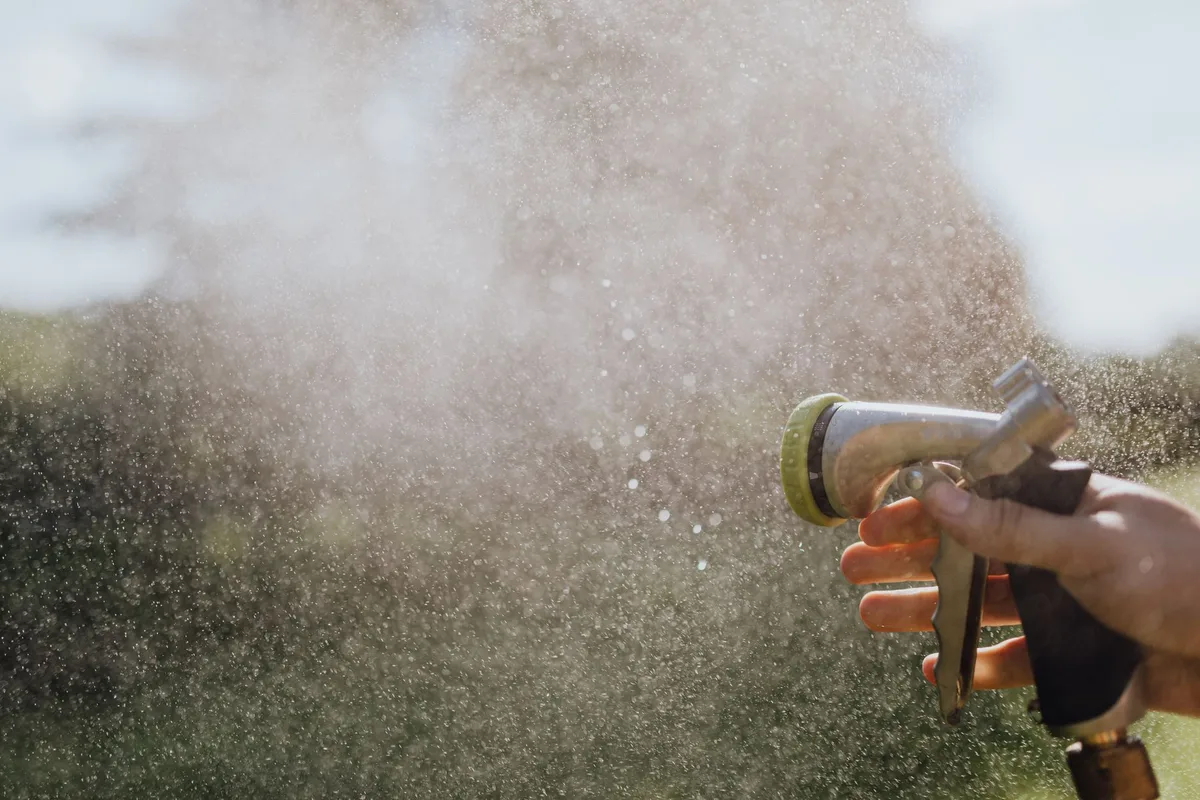
Cap one end with a hose cap or a tight knot. Then use a drill with a small bit, or a nail, to punch tiny holes every few inches along the length. Lay it among your plants, connect the open end to the tap, and turn the pressure down low.
Water seeps out slowly right at the roots. It's ideal for a vegetable row or a new bed you're trying to establish. This slow-soak trick works well when you're getting a fresh planting bed settled in.
Around-the-Yard Reuse Tricks
Cut-up hose sections solve small problems all over the garden. None of these need the hose to hold water.
- Blade and edge guards. Slit a short piece lengthwise and slip it over a saw blade or a sharp tool edge.
- Tree and chain protection. Thread a chain or wire through a hose section before wrapping a young trunk. The soft tube stops the metal from cutting bark.
- Bucket handle cushions. A split length over a wire handle saves your fingers on heavy loads.
- Plant ties. Thin strips make gentle, reusable ties for staking tomatoes or climbers.
Longer offcuts can even soften the look of a bare wire boundary. If you're already dressing up a drab boundary, a few hose sleeves on sharp fence ties are a tidy touch. Reuse first, and the disposal question mostly takes care of itself.
Mistakes That Get Your Whole Recycling Bin Rejected
The biggest error is the one we flagged early: putting a hose in the curbside bin. It's worth spelling out the other traps too, because each one costs you.
Here are the slip-ups our research sees most often:
- Binning the hose whole. It tangles the sorting line and can contaminate your entire load.
- Leaving metal fittings on a landfill-bound hose. You're burying recyclable brass and aluminum for no reason.
- Assuming "recyclable plastic" applies. The resin code you might expect isn't printed on most hoses, and PVC is rarely accepted anyway.
- Storing a wet hose. Trapped water grows mold and can freeze and crack the tube over winter.
- Trashing a hose that only needs a coupling. A ten-dollar fix beats buying a new one.
Avoid those five, and you'll recover more value while keeping your recycling load clean. The reject bin is almost always a preventable outcome.
Local Rules That Change the Answer (US and UK)
Where you live decides your real options, so always check locally before you act. Curbside rules vary street by street.
In the United States, recycling is handled at the city or county level. A few municipal programs run special collections for hard-to-recycle plastics, but most explicitly ban hoses from curbside carts. Your county waste authority's website is the fastest place to confirm.
The U.S. Environmental Protection Agency also publishes general guidance on which household plastics cause sorting problems.
In the UK, your local council sets the rules, and hoses almost never go in the household recycling bin. Your better bet is the local Household Waste Recycling Centre (HWRC), where staff can direct rigid plastics and scrap metal to the right skips.
Season matters too. Spring and autumn cleanouts are when hoses pile up, and that's also when scrap yards and recycling centres are busiest. Sort your fittings and repurpose pieces before you drive over, so you're not hauling a full hose for nothing.
Safety Notes: Lead, PVC, and Non-Potable Hoses
Never drink from a standard garden hose, and don't reuse one for anything a person or pet will ingest. Many vinyl hoses contain additives you don't want in your water.
PVC hoses can leach compounds like phthalates and, in older or cheaper models, trace lead from brass fittings or stabilizers. That's why manufacturers print a separate "drinking water safe" label on the hoses rated for it. If your hose doesn't carry that label, treat its water as non-potable.
This matters when you repurpose. A converted soaker hose is fine for flower beds and lawns. Think twice before running unlabeled hose water onto edible crops you'll eat raw.
One more caution. Don't burn old hoses to get rid of them. Burning PVC releases toxic fumes, and it's illegal in most areas.
Frequently Asked Questions
Can I put a garden hose in my recycling bin?
No. Garden hoses are banned from nearly every curbside recycling program. They tangle the sorting machinery and can get your whole bin flagged as contaminated.
Cut off the metal fittings for scrap, then repurpose or landfill the tube. Check your local waste authority for any rare special-collection option.
Are rubber garden hoses recyclable?
Sometimes, but not through curbside bins. A pure rubber hose may be accepted by specialty rubber or tire recyclers that grind it into crumb. Many hoses are a rubber-vinyl hybrid that these facilities won't take.
Call ahead to confirm before making the trip.
What can I do with an old garden hose instead of trashing it?
Plenty. Convert a leaky one into a soaker hose for slow root watering. Cut sections into blade guards, tool-handle cushions, tree-wrap padding, or plant ties.
If it still holds pressure, keep it for washing tools and other rough jobs around the yard.
Are the brass fittings on a hose worth recycling?
Yes. Brass carries real scrap value and is readily accepted at metal recyclers. Cut the couplings off an inch behind the metal collar and sort brass from aluminum.
Even a small handful of fittings is worth dropping at a scrap yard rather than burying in landfill.
How do I know if my hose is PVC or rubber?
Feel the weight and flex. Vinyl (PVC) hoses are light, thin-walled, and kink easily. Rubber hoses are noticeably heavier, thicker, and hold their shape.
A "drinking water safe" label usually points to a higher-grade rubber or polyurethane blend.
Your Old Hose, Sorted: The Quick Decision Recap
Work the ladder from top to bottom, and disposal rarely means the trash can. Repair first, repurpose next, recycle the parts you can, and landfill only what's truly spent.
The one move that always pays off: cut off the brass and aluminum fittings before anything else. That single step recovers the recyclable metal no matter where the tube ends up.
Skip the curbside bin, check your local rules, and give a leaky hose a second job as a soaker or garden helper. Do that, and a worn-out hose leaves almost nothing behind for the landfill.

Similar Posts