Industrial Wire Fence Panels Design for Metal Grid Boundary Systems
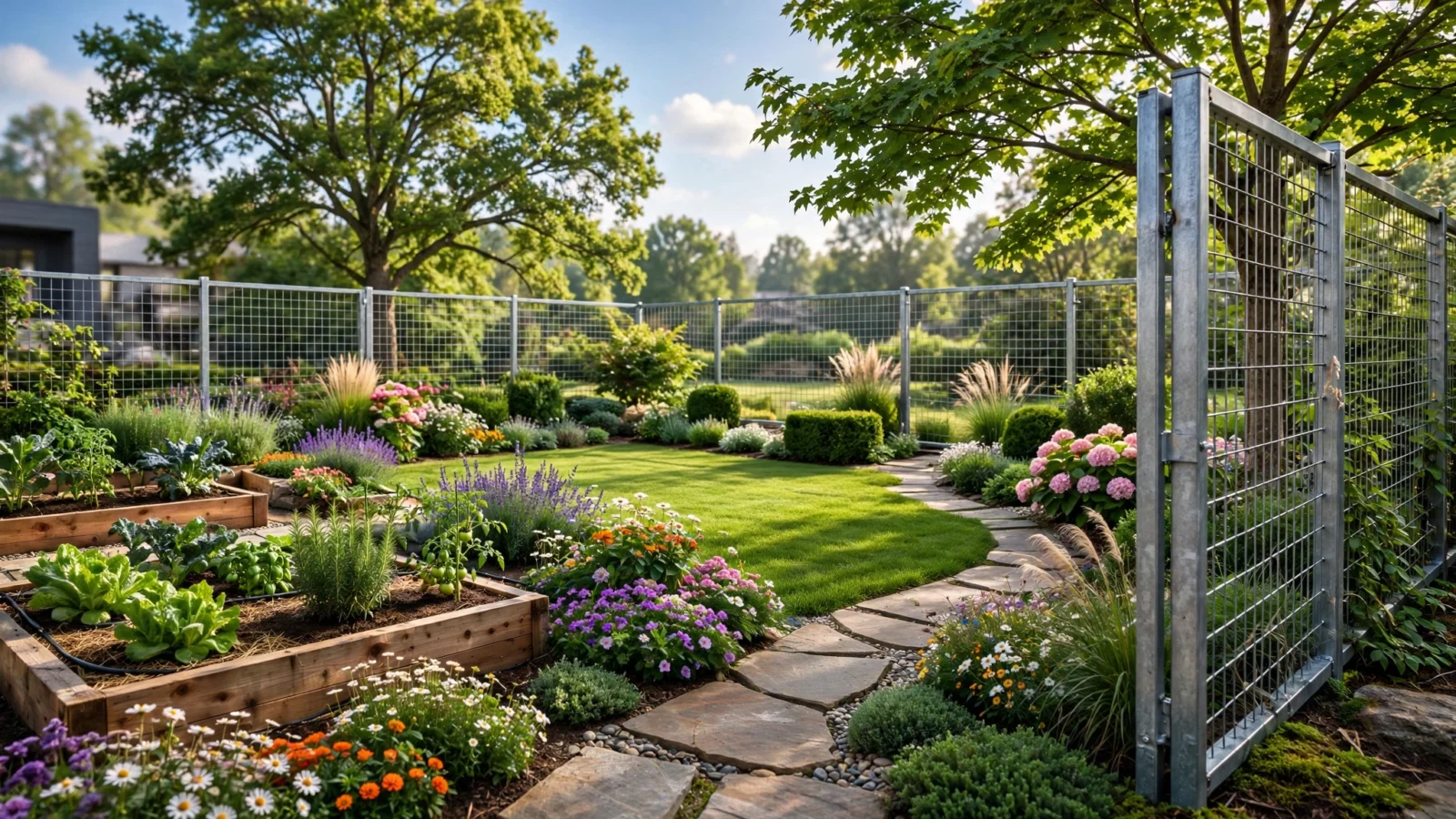
Industrial wire fence panels are the backbone of durable boundary systems for manufacturing plants, distribution centers, agricultural operations, and public infrastructure. Unlike residential fencing, these panels must withstand heavy impact, harsh weather, and continuous use while maintaining a clear line of sight and airflow. A well-designed metal grid boundary system balances material strength, corrosion resistance, cost, and ease of installation. This guide covers the engineering behind panel design, material choices, structural considerations, and real-world application trade-offs that professionals need to know in 2026.
Key Design Elements of Industrial Wire Fence Panels

Wire Material and Gauge
The wire itself determines the panel’s tensile strength and long-term durability. Most industrial panels use either low-carbon steel (typically AISI 1006–1018) or high-tensile steel (yield strength above 550 MPa). High-tensile wire allows larger mesh openings and lighter panels without sacrificing strength, but it is harder to cut and requires specialized tools for field modifications.
Gauge choice depends on the application:
| Gauge (AWG) | Diameter (inches) | Typical Use |
|---|---|---|
| 6 gauge | 0.192 | Heavy-duty perimeters, vehicle barriers |
| 9 gauge | 0.148 | Standard industrial yards, equipment enclosures |
| 11 gauge | 0.120 | Light commercial, pedestrian barriers |
| 14 gauge | 0.080 | Temporary or interior partitions |
A common mistake is specifying too-light gauge for a high-security site. In practice, 6-gauge panels are mandatory for locations where forklifts or vehicles may accidentally impact the fence. Always factor in the force of potential collisions — not just static load.
Mesh Configuration and Opening Size
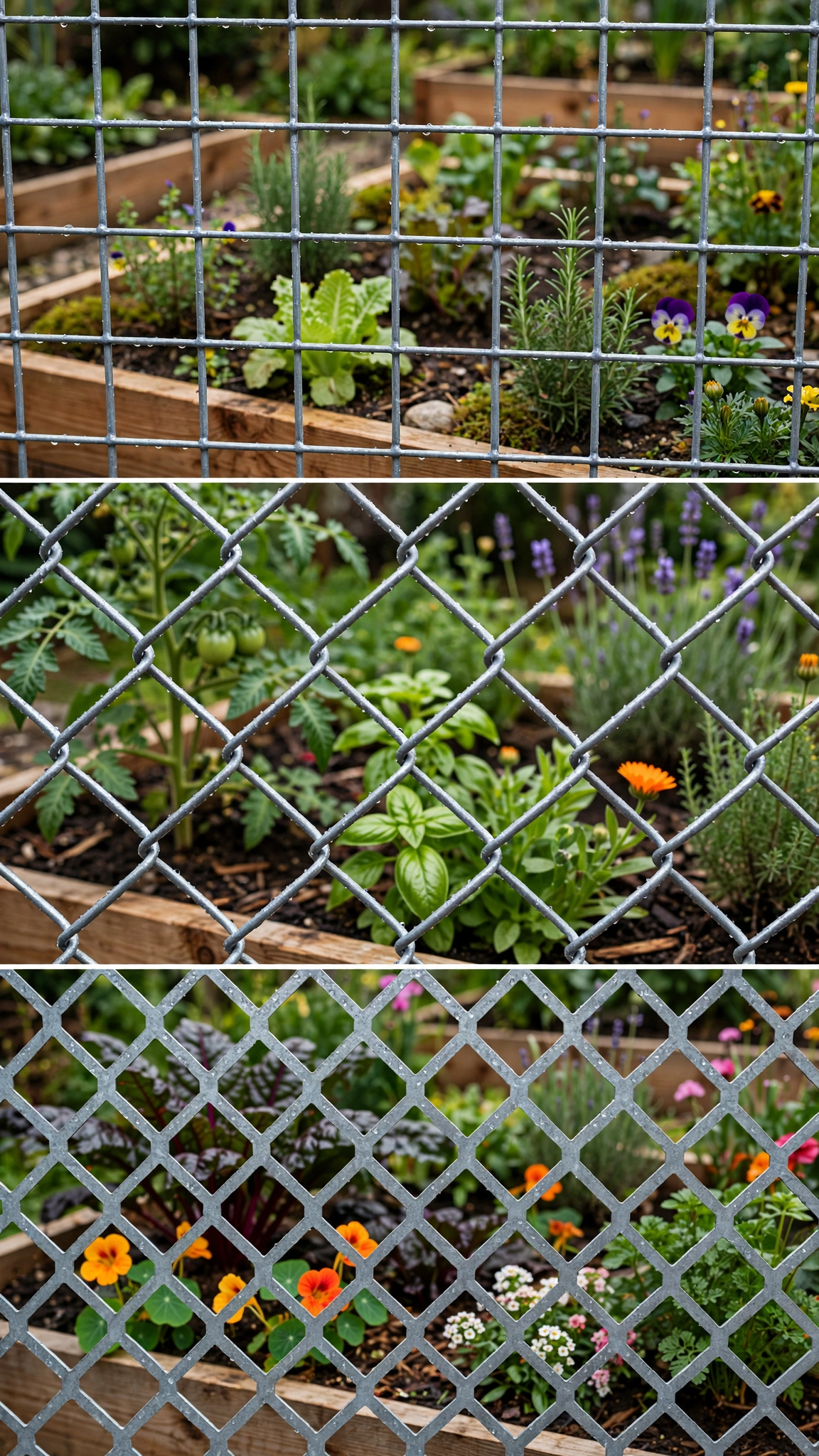
Mesh patterns fall into three categories:
- Welded wire mesh – uniform square or rectangular openings, rigid and easy to fabricate. Preferred for security because it resists climbing when the openings are small (2 in × 2 in or less).
- Chain link mesh – diamond pattern, flexible, and faster to install over long runs. Less rigid than welded wire but more forgiving on uneven terrain.
- Expanded metal mesh – diamond openings created by slitting and stretching a solid sheet. Extremely high tear strength; used for machine guards and high-impact barriers.
Opening size affects both security and visibility. For perimeter security, 2 in × 1 in or 2 in × 2 in openings prevent individuals from getting a toehold, while larger openings (4 in × 4 in) reduce wind load but allow climbing. In environments with high debris or snow, larger openings also reduce accumulation.
Panel Framing and Edge Reinforcement
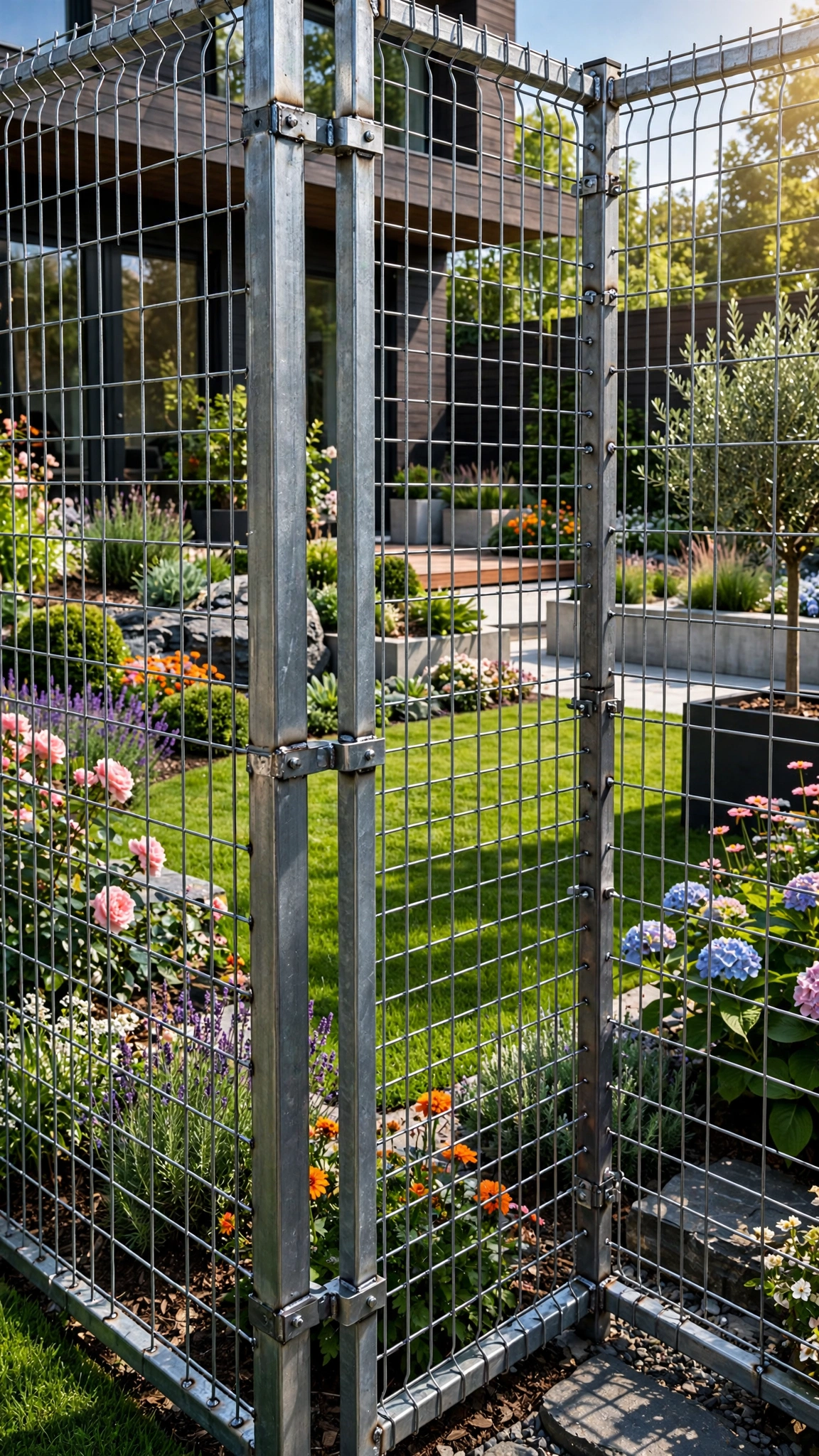
Roughly half the load-bearing capacity of a fence panel comes from its frame. Common frame profiles include:
- Angle iron frame (1.5 in × 1.5 in × ¼ in thick minimum) – economical, provides a stiff perimeter, and allows easy bolt-on mounting to posts.
- Pipe frame (schedule 40 galvanized steel) – stronger per pound, better for curved runs, but more expensive to fabricate.
- Flanged channel frame – used when panels must be removable for equipment access; the flange sits in a receiver bracket.
Edge reinforcement is often overlooked. A plain wire edge leaves the panel vulnerable to distortion when tensioned. Specifying a selvage edge—where the wire is bent back into the mesh—or a frame-welded edge doubles the puncture resistance at the perimeter. For high-security installations, consider adding a continuous steel rod around the outer edge before welding.
Coatings and Corrosion Resistance
Galvanization remains the industry standard, but the coating weight matters:
- Hot-dip galvanized after welding (HDGAW) – offers the best protection because the zinc flows into weld points. Minimum coating weight 2.0 oz/ft² for moderate industrial environments.
- Pre-galvanized wire – cheaper but weld areas lose zinc and must be touched up with zinc-rich paint, which is a common failure point.
- PVC-coated – adds UV-stabilized polymer for color matching and additional corrosion barrier, but the coating can peel if not applied by fusion bonding. Best for coastal or chemical-exposure sites.
In practice, a panel with hot-dip galvanizing and a top coat of polyester powder (baked at 400°F) will outlast a plain galvanized panel by 8–12 years in corrosive environments. Always ask for a salt-spray test report (ASTM B117) from the manufacturer.
Structural Performance and Load Ratings
Wind Load and Impact Resistance
For open-area industrial sites, wind load is often the governing design factor. The International Building Code (IBC) provides wind pressure maps, but a simplified rule of thumb: a solid wall experiences 100% of wind force; a panel with 70% open area (e.g., 2 in × 4 in mesh) sees only about 35% of that force. However, the frame and post must still be sized for the full wind load on the area if the mesh is blocked by debris or snow.
Impact resistance is measured by dropping a 100-lb bag from a specified height onto the panel. Premium panels exceed a 12-inch drop without permanent deformation. For vehicle barriers, the crash rating (e.g., ASTM F3013) should match the site’s risk level.
Post and Foundation Design
The panel is only as strong as its weakest post. Round steel posts (2.875 in OD, schedule 40) are common, but for spans over 10 feet, post diameter should increase to 4 in. Concrete footings must extend below the frost line—at least 24 inches in most northern climates. A deeper footing also improves lateral stability against horizontal pressure from wind or leaning vehicles.
Bolt-on base plates allow easy panel replacement but require anchor bolts embedded in concrete. Sleeve-type posts, where the post is inserted into a pre-set ground sleeve, simplify future panel swaps and are recommended for rental properties or temporary boundaries.
Applications Across Industries

| Industry | Typical Use | Recommended Panel Spec |
|---|---|---|
| Manufacturing | Equipment enclosure, storage yard | 9-gauge welded, 2 in × 2 in, hot-dip galvanized, angle frame |
| Agriculture | Livestock containment, crop protection | 11-gauge chain link, 4 in × 2 in mesh, PVC-coated for UV |
| Logistics | Truck yard perimeter, loading dock barriers | 6-gauge high-tensile welded, 2 in × 1 in, pipe frame with crash posts |
| Public infrastructure | School perimeters, park boundaries | 9-gauge welded, 2 in × 4 in, hot-dip galvanized with black polyester top coat |
| Energy | Solar farm enclosure, substation security | 9-gauge expanded metal, 1 in × 2 in openings, HDGAW + 10-year warranty |
Installation Best Practices
- Stake the alignment – Use string lines and a laser level to ensure posts are plumb and evenly spaced. A deviation of more than ½ inch over 100 feet creates noticeable sag in the panels.
- Set posts to correct height – Panel height plus 6 inches below grade for concrete footing. Height consistency prevents having to shim panels later.
- Use a template for post holes – This ensures bolt patterns align with panel brackets, especially important for pre-fabricated panels with fixed bolt-hole spacing.
- Pre-assemble panels on the ground – Joining two or three panels flat can reduce installation time by up to 30%. Use a roller table if available.
- Tension mesh evenly – For chain link, tension bar and turnbuckle should pull the fabric uniformly; a single wind-up from one corner will distort the panel. For welded panels, ensure the frame is bolted down before the mesh is fully tightened.
- Inspect all welds and connections – A loose clip or missed weld on a corner can lead to complete panel failure within a year. Torque every bolt to the manufacturer’s specification (typically 35–50 ft-lb for ½-inch hardware).
Compliance and Safety Standards
Industrial wire fence panels are covered by several standards. For design and testing, refer to ASTM F1043 (Strength and Protective Coatings for Chain Link Fence Framework) and ASTM F3048 (Welded Wire Mesh Fence Panels). For workplace safety around moving machinery, OSHA Standard 1910.217 requires that guarding panels have openings no larger than what prevents a finger or tool from contacting moving parts—typically ½ in or less.
Always verify that your panel supplier can provide a certificate of compliance for the specified standard. A lack of third-party testing is a red flag; many low-cost imports skip it entirely.
For industry-leading guidelines on metal building enclosure safety, consult the safety resources page on OSHA’s website (osha.gov). For material testing methods, ASTM’s technical publications (astm.org) provide the most current specification sheets.
Maintenance and Longevity
A well-designed panel system with hot-dip galvanizing should last 20–25 years in most environments. But three factors shorten that life:
- Galvanic corrosion – where steel contacts aluminum or copper components (e.g., gate hinges or wiring attachments). Use stainless steel or galvanized fasteners to avoid it.
- Weld-zone failure – if the panel was pre-galvanized, the weld area rusts first. Apply cold-galvanizing spray at every weld after installation.
- Debris accumulation – dirt and leaves trap moisture against the base of the panel. Clean the bottom rail annually with a pressure washer.
Every 12 months, check for loose bolts, rust spots, and any bent or missing wires. Catch repairs early—replacing a single panel is cheaper than replacing an entire run after unnoticed damage accelerates.
Frequently Asked Questions
What gauge wire is best for industrial security fencing?
For exterior perimeters exposed to vehicle traffic or vandalism, 6-gauge wire is the minimum. It provides enough structural stiffness to resist cutting tools and impact. For interior partitions where only pedestrian containment is needed, 9-gauge may suffice.
Can industrial wire fence panels be installed on sloped terrain?
Yes, but you must either step the panels (each panel at a different elevation) or rack the mesh. Racking is more common for chain link panels and can handle slopes up to 1:12. Welded panels generally require stepping to avoid stress fractures at the frame corners.
How deep should fence posts be for industrial panels?
At least one-third of the post height should be below ground, with a minimum of 24 inches for posts up to 8 ft tall. For gates or areas with high wind loads, increase depth to 36 inches and use a wider concrete footing (12 in diameter minimum).
What is the difference between hot-dip galvanized and electro-galvanized wire?
Hot-dip galvanizing creates a thicker zinc coating (2.0–5.0 oz/ft²) that bonds metallurgically to the steel. Electro-galvanizing applies a thinner layer (0.3–0.6 oz/ft²) and is not suitable for outdoor industrial use—it corrodes within two years in moist conditions.
Are welded wire panels better than chain link for industrial use?
Welded wire panels offer greater rigidity, better climbing resistance, and a cleaner appearance, but they are heavier to transport and harder to field-trim. Chain link is more flexible over uneven ground and faster to install for long runs. Choose welded for discrete enclosures and chain link for perimeter boundaries over 500 feet.
What is the typical lifespan of an industrial wire fence panel?
With hot-dip galvanizing and routine maintenance, expect 20–25 years. Panels in coastal or chemical plants may need replacement after 10–12 years unless they have an additional powder-coat or PVC coating.
Conclusion
Designing an industrial wire fence panel system is a balancing act between material selection, structural requirements, and site-specific threats. The best approach starts with a clear load rating—wind, impact, and security—then works backward to choose wire gauge, mesh pattern, frame style, and coating. Always specify hot-dip galvanized materials, use certified testing standards, and plan for periodic inspection. Spend the extra budget on proper post foundations and corrosion protection; that investment pays back tenfold in longevity.
Your next step: Review the layout drawings for your site and match them against the load and exposure criteria outlined here. If you need a starting point, browse our blog for more detailed installation guides, or contact us through the about page for a panel specification checklist tailored to your property.

Similar Posts