How Long to Fill a Large Koi Pond With a Garden Hose
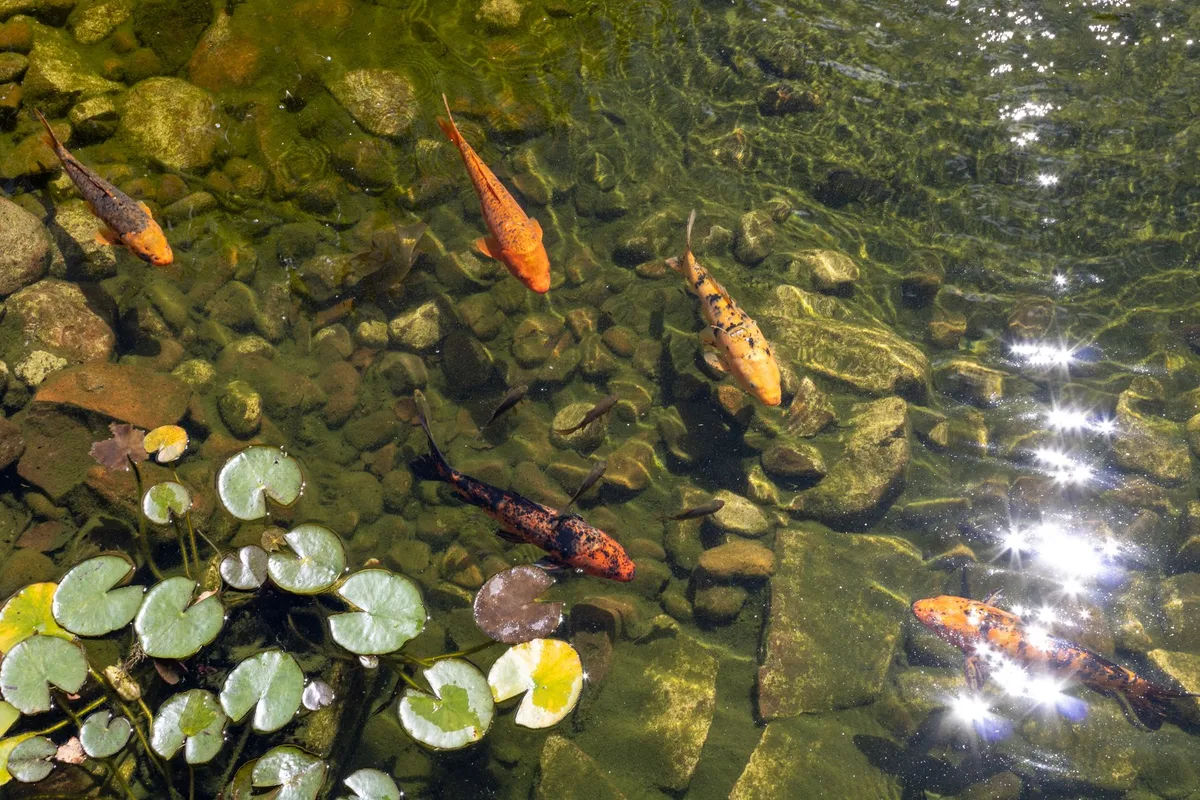
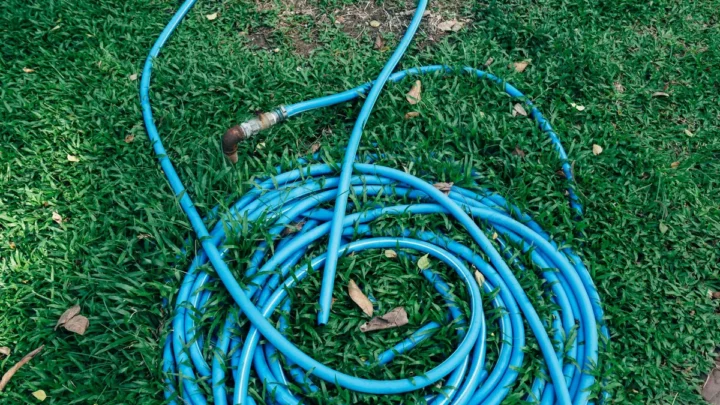
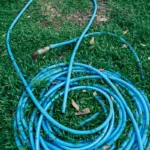
Watching a large koi pond is filled from a garden hose looks simple enough. You screw on the hose, crank the spigot, and walk away. But the calm surface hides two clocks running at once.
One is how long the water takes to reach the top. The other is how long until that water is actually safe for koi.
Those two clocks rarely match. A standard 5/8-inch garden hose pushes only about 9 to 17 gallons per minute at the tap, and far less at the nozzle. Fill a 5,000-gallon pond and you're looking at most of a day, plus dechlorination time before any fish go near it.
Here's what really happens once the water starts flowing.
What Really Happens When You Fill a Large Koi Pond From a Garden Hose
Filling isn't one event. It's a slow process with chemistry happening the whole time.
City tap water carries chlorine or chloramine to keep it germ-free. That's great for your kitchen sink. It's toxic to koi gills.
As the pond fills, incoming water is also colder than the pond you already have, so temperature starts shifting too.
Meanwhile the water level creeps up far slower than most people expect. A garden hose is a thin pipe. It can only move so much volume per minute, no matter how big your pond is.
So a large fill is really three things stacked together:
- Moving enough gallons to reach your target depth
- Neutralizing chlorine or chloramine so it won't burn gills
- Keeping temperature swings small if koi are already in the water
Get the gallons right but skip the chemistry, and you can lose fish. That's why the process matters more than the raw fill time.
The Short Answer: How Long It Takes and What It Costs
A large koi pond fills from a garden hose in about 3 to 14 hours. The exact time depends on pond volume and hose flow rate. A typical hose delivers 6 to 12 GPM at the end.
Most large ponds hold 2,000 to 10,000 gallons. Always add dechlorinator before returning koi.
Cost is usually modest. Water for a 5,000-gallon fill often runs a few dollars to around twenty, depending on local rates. The bigger expense is your time and attention.
Leaving a hose running unwatched is where fills go wrong, whether that's an overflow, a flooded bed, or fish stress from untreated water.
If you keep water features or ponds near planted areas, the same care you'd give a tidy flower bed border applies here. Slow, controlled, and watched beats fast and forgotten.
Figuring Out Your Pond's Real Volume in Gallons
Start here, because every other number depends on it. You can't estimate fill time or dechlorinator dose without knowing your gallons.
For a rectangular pond, the formula is simple:
Gallons = length (ft) × width (ft) × average depth (ft) × 7.48
The 7.48 converts cubic feet to gallons. Use average depth, not the deepest point, since koi ponds usually slope.
Say your pond is 12 ft long, 8 ft wide, and averages 3 ft deep. That's 12 × 8 × 3 × 7.48, which lands around 2,150 gallons. For round or kidney shapes, measure the widest points and treat it as a rough rectangle, then trim 15 to 20 percent.
| Pond size (L × W × avg depth) | Approx. gallons |
|---|---|
| 10 × 6 × 2 ft | ~900 |
| 12 × 8 × 3 ft | ~2,150 |
| 16 × 10 × 3 ft | ~3,600 |
| 20 × 14 × 3.5 ft | ~7,300 |
Write your number down. You'll use it twice: once for timing, once for dosing conditioner.
Garden Hose Flow Rate: Why Your GPM Is Lower Than You Think
Your hose almost never hits the flow rate on the box. Real-world output is lower because of diameter, length, and pressure loss along the way.
Three things drag your GPM down:
- Hose diameter: A 1/2-inch hose moves far less than a 3/4-inch hose at the same pressure.
- Hose length: A 100-foot hose loses noticeable pressure to friction versus a 25-foot run.
- Head height and kinks: Filling uphill, or a pinched line, quietly steals flow.
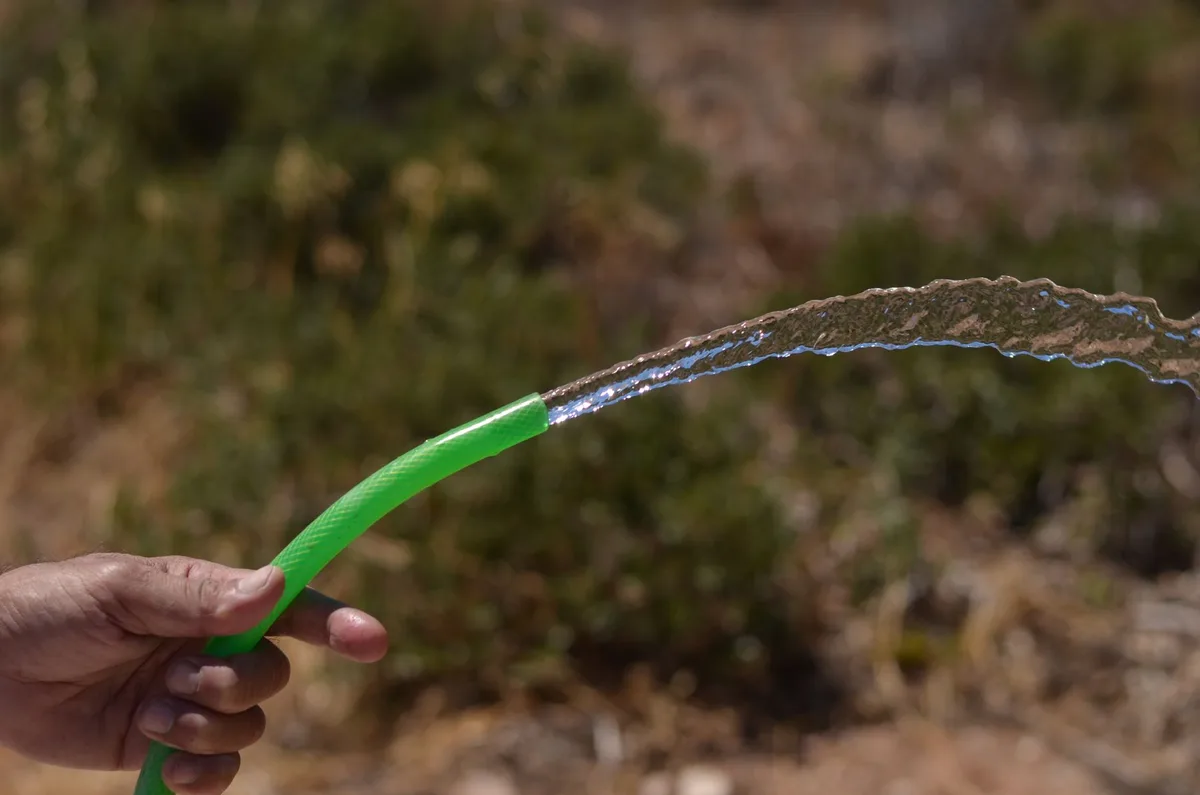
The 5-Gallon Bucket Test
Don't guess your GPM. Measure it in under a minute.
- Grab a 5-gallon bucket.
- Run the hose exactly as you'll use it for the fill, same length and nozzle.
- Time how many seconds it takes to fill the bucket.
- Divide 5 by those seconds, then multiply by 60.
If the bucket fills in 40 seconds: 5 ÷ 40 × 60 = 7.5 GPM. That's your real number, and it beats any spec sheet. University extension programs like the University of Minnesota Extension offer solid background on pond water and flow if you want to dig deeper.
How Hose Diameter, Length, and PSI Change the Numbers
Residential water pressure usually sits between 40 and 60 PSI. Higher PSI means more flow, but the hose still caps how much gets through.
Swap a long 1/2-inch hose for a shorter 3/4-inch one and you can nearly double your GPM. If you're filling often, that upgrade shaves hours off every fill.
Real Fill-Time Numbers for 2,000 to 10,000-Gallon Ponds
Once you know your gallons and your measured GPM, fill time is basic division. Fill time (minutes) = gallons ÷ GPM. Divide by 60 for hours.
The table below shows realistic fills at three common hose-end flow rates. As of 2026, these ranges still match what most homeowners see on standard municipal pressure.
| Pond volume | ~6 GPM hose | ~10 GPM hose | ~15 GPM hose |
|---|---|---|---|
| 2,000 gal | ~5.5 hrs | ~3.3 hrs | ~2.2 hrs |
| 5,000 gal | ~13.9 hrs | ~8.3 hrs | ~5.6 hrs |
| 10,000 gal | ~27.8 hrs | ~16.7 hrs | ~11.1 hrs |
A few things jump out. First, big ponds on a slow hose can take longer than a full day. Second, hose size matters more than pond size for your afternoon.
That 6 GPM versus 15 GPM gap more than doubles your wait.
Plan around it. Start early, set a phone timer for the estimated finish, and check often. Left running overnight, a hose can overflow the pond and soak nearby beds or a garden boundary line before you notice.
Chlorine, Chloramine, and Why Raw Tap Water Can Kill Koi
Untreated tap water is the single biggest risk in any pond fill. Chlorine and chloramine both damage koi gill tissue, and even low levels cause stress or death.
Chlorine is the easier one. Left in an open pond with aeration, it gasses off within a day or two on its own. Chloramine is the problem child.
It's chlorine bonded to ammonia, and it does not evaporate. It lingers, and when it breaks down it releases ammonia, which is also toxic to fish.
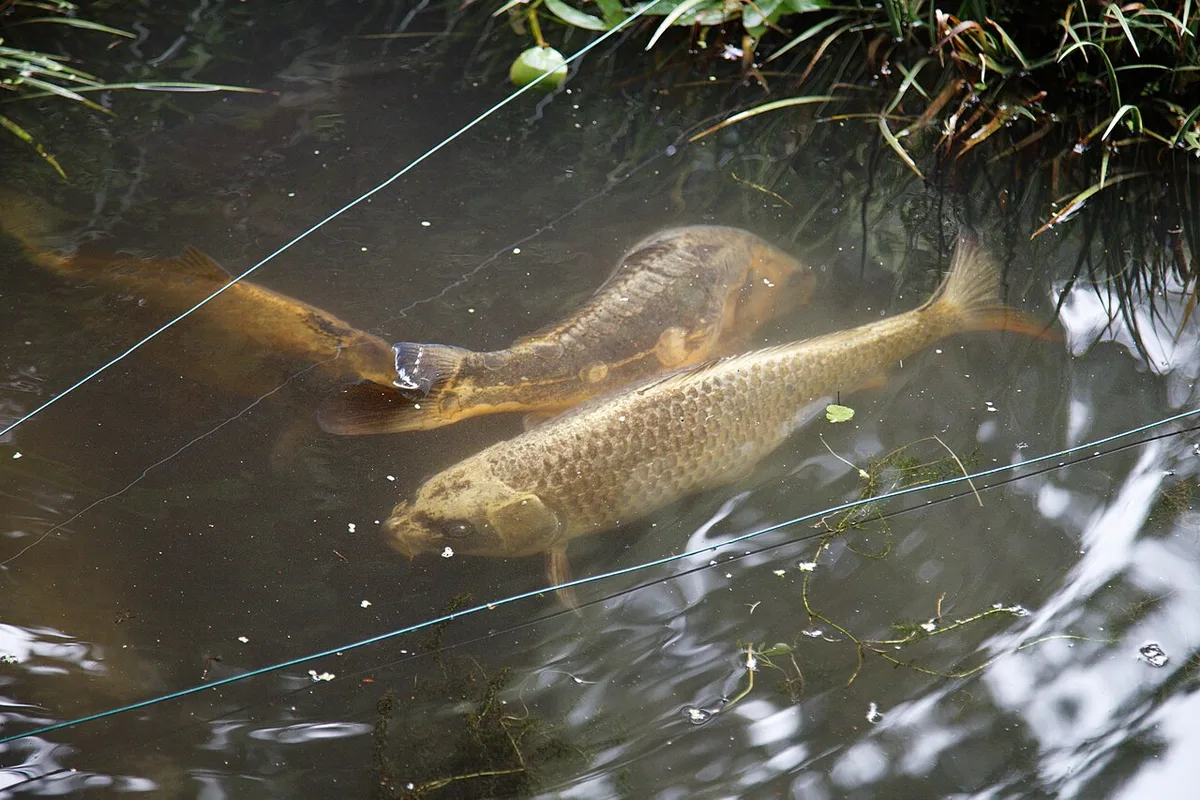
Many municipal systems switched to chloramine years ago because it holds up longer in pipes. The U.S. Environmental Protection Agency covers disinfection methods in its drinking water standards.
Check your annual water quality report to see which one your utility uses. That single detail decides whether you can wait it out or must treat the water.
The safe rule is simple. Never add koi to freshly filled tap water until chlorine and chloramine read at or near zero.
Dechlorinating as You Fill: Manual Dose vs. Inline Hose Filter
You've got two solid ways to neutralize the water. Both work. They just fit different fill styles.
A liquid dechlorinator (water conditioner) is dosed to your total pond volume, which is why you calculated gallons earlier. Good conditioners bind both chlorine and chloramine, plus the ammonia that chloramine leaves behind. Add it to the pond before or during the fill, following the label rate.
An inline hose-end filter uses activated carbon to strip chlorine as water passes through. It's tidy and hands-off, but flow slows a bit, and carbon capacity runs out over a large fill.
| Method | Best for | Watch out for |
|---|---|---|
| Liquid conditioner | Large fills, chloramine systems | Must dose full volume correctly |
| Inline carbon filter | Top-offs, smaller adds | Carbon exhausts, slower flow |
For a big initial fill on chloramine water, a liquid conditioner rated for chloramine is the safer pick. For routine top-offs, an inline filter is convenient. Many keepers use both.
Temperature Shock: The Silent Koi Killer During Big Fills
Cold water hitting a warm pond can stress koi even when the water is perfectly dechlorinated. Fish are cold-blooded, so a fast temperature swing throws their whole system off.
The danger climbs in winter, when incoming tap water can be 20 or more degrees colder than your pond. Dumping that in fast, with fish present, is a recipe for shock. Aim to keep any swing within about 2 to 3°F when koi are in the water.
If fish are present, fill slowly. A gentle trickle lets the new water blend and warm as it goes. Spread a large add over several hours instead of blasting it in.
When the pond is empty, temperature doesn't matter much, so you can run full flow.
Step-by-Step: Filling the Pond the Right Way
The process changes depending on whether koi are already in the water. Here's how each one goes.
Empty Pond (New Build or Clean-Out)
An empty pond gives you room to move fast, then slow down for chemistry.
- Confirm the liner sits flat with no pinch points.
- Position the hose outlet on a rock or plate so it won't scour the liner.
- Run full flow and fill to your target depth.
- Add dechlorinator dosed to full volume, or run an inline carbon filter.
- Start the pump, filter, and aeration to circulate.
- Let the pond cycle before stocking. New ponds need beneficial bacteria to build first.
Don't rush fish into a brand-new pond. The nitrogen cycle needs days to weeks to establish. Adding koi too early spikes ammonia and puts them at real risk.
Filling With Koi Already in the Pond
Here caution wins over speed. You're topping off or doing a partial water change with live fish present.
- Pre-dose the pond with dechlorinator for the volume you're adding.
- Set the hose to a slow trickle, not full blast.
- Keep the temperature swing small by adding gradually.
- Never replace more than roughly 20 to 30 percent of the water at once.
- Watch the fish. Gasping at the surface means stop and check your water.
Big single water changes strip out beneficial bacteria and swing your chemistry. Small, frequent changes keep the pond stable. It's the same steady-hands logic that keeps any backyard planting scheme healthy over time.
Well Water, City Water, and Harvested Rainwater Compared
Your water source changes the whole game. Each one brings a different set of quirks.
City water is convenient and predictable, but it carries chlorine or chloramine that must be neutralized. Well water skips the chlorine entirely, though it can bring high iron, odd pH, low oxygen, or dissolved gases. Harvested rainwater is soft and chemical-free, but it's usually too limited in volume for a large fill and can carry roof runoff contaminants.
| Source | Upside | Downside |
|---|---|---|
| City / municipal | Reliable, always available | Chlorine or chloramine |
| Well water | No chlorine | Iron, pH swings, low oxygen |
| Rainwater | Soft, free | Low volume, runoff pollutants |
Well water often benefits from aeration before it meets fish, which drives off gases and adds oxygen. Whatever the source, test before you trust it. A quick check of pH, hardness, and chlorine tells you what you're actually working with.
Costs of a Full Fill: Water, Metering, and Sewer Charges
Filling a large pond costs less than most people fear. Water itself is cheap in most places.
At typical municipal rates, a 5,000-gallon fill often lands between a few dollars and roughly twenty. Rates vary by region, so check your bill's per-gallon or per-cubic-foot charge to get an exact figure.
One hidden cost catches people out: sewer charges. Many utilities bill sewer based on water used, assuming it goes down the drain. Pond water doesn't.
Some areas offer a deduct meter or irrigation exemption for outdoor use, so it's worth a call to your utility to ask.
Mistakes That Flood Yards and Stress Fish
The most common fill mistakes come from walking away. Unattended hoses cause both floods and fish loss.
Watch for these:
- Leaving the hose running overnight, then overflowing the pond
- Skipping dechlorinator on chloramine water
- Blasting cold water in fast with koi present
- Replacing too much water at once and crashing the cycle
- Trusting box GPM instead of your bucket-test number
- Forgetting warm, stagnant water sits in a sun-baked hose
That last one matters. Let the first minute of hose water run off before it hits the pond. It clears out hot, stale water and anything the hose has leached.
Backflow Prevention and Local Water-Use Rules to Check
Backflow prevention keeps pond water from siphoning back into your drinking supply. A drop in house pressure can pull contaminated pond water up the hose if nothing stops it.
Fit a hose bibb vacuum breaker on the spigot. It's a cheap brass fitting that screws on and blocks reverse flow. Many local plumbing codes already require one on outdoor taps.
Also check local water rules before a big fill. Drought-prone regions often set watering days or restrictions, and a multi-hour pond fill can bump against them. A quick look at your utility's site, much like reviewing sturdy metal grid boundary systems before a build, saves grief later.
Testing Water Before You Add or Return the Koi
Always test before koi touch fresh water. Guessing is how fish get hurt.
Run a basic pond test kit and check these four:
- Chlorine and chloramine: should read at or near zero
- Ammonia: near zero, especially after chloramine treatment
- pH: stable and in a koi-friendly range, roughly 7.0 to 8.5
- Temperature: within 2 to 3°F of where the fish are held
If chlorine still shows, wait or add more conditioner. If ammonia spikes, your chloramine treatment wasn't complete. Only when the numbers check out should koi go in.
This one habit prevents most fill-related losses.
Pro Tips for Faster, Safer Top-Offs and Water Changes
Small, regular water changes beat big rare ones every time. They keep chemistry steady and stress low.
A few practical moves from aggregate keeper feedback and our research:
- Upgrade to a 3/4-inch hose to cut fill time nearly in half
- Keep an inline carbon filter on the spigot for quick top-offs
- Set a phone timer to your calculated finish, every single time
- Pre-dose conditioner into the pond before the water arrives
- Top off before evaporation drops the level far, so changes stay small
Aim to swap 10 to 20 percent weekly rather than 50 percent monthly. Your koi stay in stable water, and your beneficial bacteria never take a hit. For more seasonal pond and garden routines, our gardening notes and guides go deeper.
Frequently Asked Questions
How long does it take to fill a large koi pond with a garden hose?
Most large ponds fill in 3 to 14 hours. A 2,000-gallon pond on a 10 GPM hose takes about 3.3 hours. A 10,000-gallon pond on a slow hose can run past a full day.
Measure your hose flow first.
Can I put koi in right after filling with tap water?
No. Chlorine and chloramine in tap water harm koi gills. Add a dechlorinator rated for chloramine, then test until chlorine and ammonia read near zero.
Only then are the fish safe to add.
Does chloramine evaporate from pond water like chlorine?
No, chloramine does not gas off on its own. Chlorine can dissipate in a day or two with aeration. Chloramine stays put and releases toxic ammonia as it breaks down, so it needs a conditioner made to neutralize it.
How much water should I change at once in a koi pond?
Keep single changes to 10 to 20 percent for routine upkeep, and never exceed 30 percent with fish present. Bigger swaps strip beneficial bacteria and swing your chemistry. Small, frequent changes keep the pond stable and the koi calm.
Your Fill-Day Game Plan
Boil the whole job down to a short checklist and you'll never lose a fish to a rushed fill.
- Calculate gallons, then bucket-test your hose for real GPM.
- Estimate fill time and set a timer to the finish.
- Pre-dose dechlorinator for chloramine, or fit an inline carbon filter.
- Trickle slowly if koi are present, keeping temperature swings tiny.
- Fit a vacuum breaker and check local water rules.
- Test chlorine, ammonia, pH, and temperature before fish go in.
Do those six things and the two clocks finally line up. The pond reaches the top, the water tests clean, and your koi settle in without a hitch. That's the whole difference between a fill that just adds water and one that keeps your fish thriving.

Similar Posts