Are All Garden Hose Fittings the Same Size? Explained
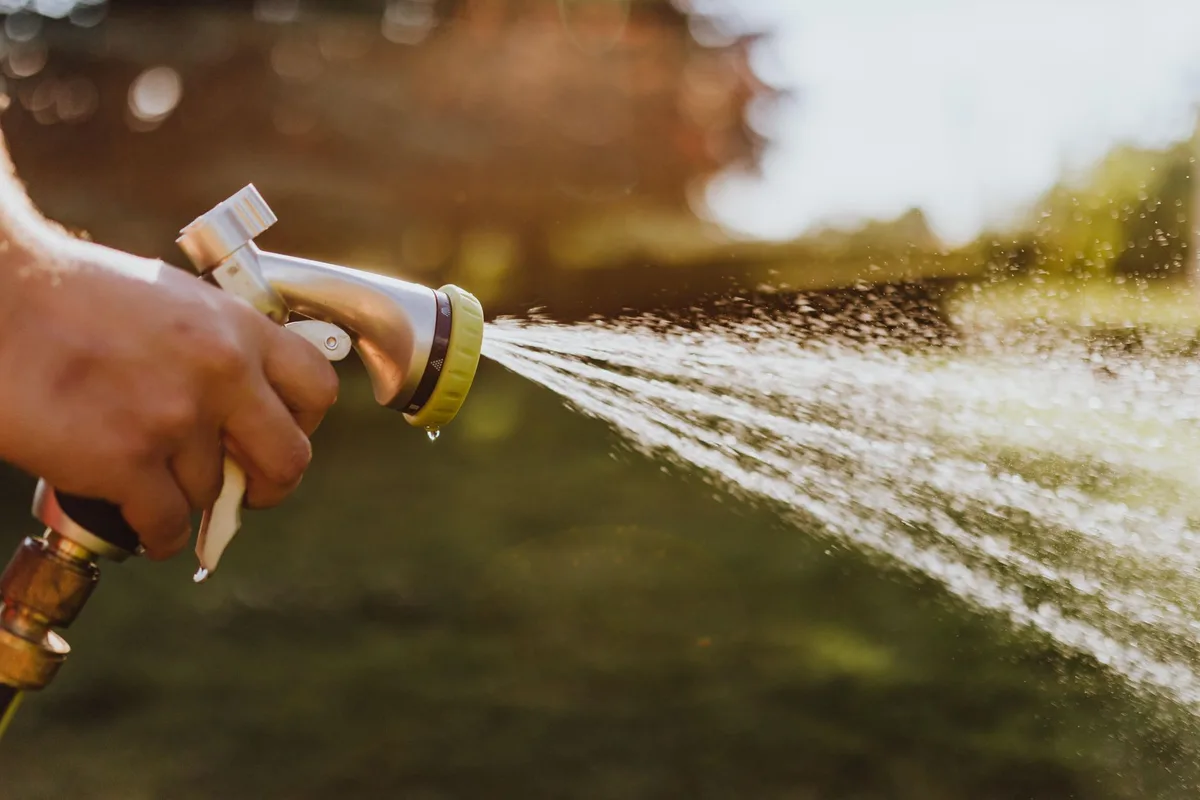
If you've ever screwed a shiny new nozzle onto your hose and watched water spray out the sides, you already know the frustration. So are all garden hose fittings the same size? Not really.
Most of them look identical at a glance, but a handful of small differences decide whether a fitting seals tight or leaks all over your shoes.
Here's what trips people up. In the US and Canada, hose ends follow the Garden Hose Thread (GHT) standard, sized at ¾ inch with 11.5 threads per inch. The UK, Europe, and Australia lean on British Standard Pipe (BSP) instead.
That one split causes most of the mismatch headaches, and as of 2026 it still catches out plenty of gardeners. Let's clear it up.
So, Are All Garden Hose Fittings Actually the Same Size?
No, they're not all the same size. Within your own country, most hose-end fittings share one standard, so they generally swap around fine. Cross regions or mix hose ends with tap threads, and the sizes stop matching.
Think of it in three layers:
- The hose-end thread (usually one national standard)
- The tap or spigot thread (often a different standard)
- The internal hose diameter, or bore (⅜", ½", ⅝", or ¾")
The confusion happens because two fittings can both say "¾ inch" and still refuse to join. One might be GHT, the other BSP. Same number, different thread shape.
If your fittings won't connect, that mismatch is almost always why.
Our research across manufacturer spec sheets shows the same pattern again and again. Standardization is real, but only inside each system. Once you know which system your gear belongs to, the guesswork disappears.
What "¾ Inch" Really Means on a Hose Fitting
The "¾ inch" stamped on a fitting refers to the nominal thread size, not the width of the water channel. This is the single biggest source of confusion, so it's worth slowing down on.
Nominal size is a naming convention, not a precise measurement. A ¾" GHT fitting actually measures about 1-1/16 inches across the outer thread crest. It's called ¾ inch by tradition, not because a ruler agrees.
Meanwhile, the hose bore is a separate number entirely. That's the internal diameter of the hose itself, and it controls flow rate:
- ⅜" bore: light-duty, low flow
- ½" bore: most common household size
- ⅝" bore: strong all-rounder, good pressure
- ¾" bore: high flow, longer runs
So a hose can have a ½ inch bore and still wear a ¾ inch GHT fitting on the end. The two numbers describe different things. When you're kitting out a bigger backyard or one of those tidy flower bed border projects, the bore affects water flow, but the thread decides the connection.
The Two Standards That Change Everything: GHT vs BSP
If you only remember one thing, make it this: GHT and BSP are not interchangeable. They differ in thread pitch and shape, so forcing one onto the other strips threads and causes leaks.
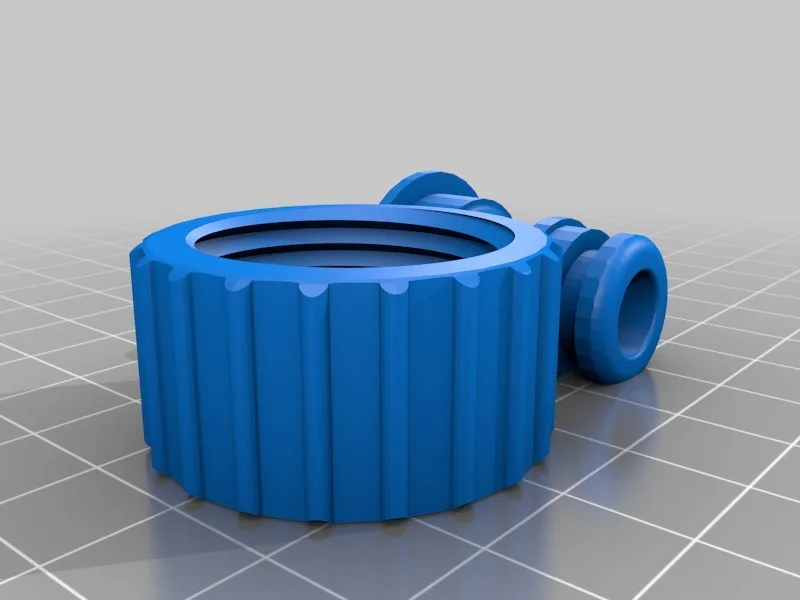
Garden Hose Thread (GHT), What You'll Find in the US and Canada
GHT is the North American default for hose ends. It's a straight (parallel) thread cut at 11.5 threads per inch. You'll also see it labeled NH or NHR on packaging.
The standard behind it is documented by ASME, the body that maintains thread specifications like ASME B1.20.7 for garden hose connections. Because nearly every US hose, nozzle, sprinkler, and splitter uses GHT, they mostly play nicely together straight out of the box. That's why American gardeners rarely think about thread compatibility until they buy something imported.
British Standard Pipe (BSP), the UK, Europe, and Australia Default
BSP is the norm across the UK, most of Europe, and Australia. It runs at 14 threads per inch, a tighter pitch than GHT. It comes in two flavors, BSPP (parallel) and BSPT (tapered), which changes how the seal forms.
Here's the practical catch. A ¾" BSP thread measures around 0.90 to 0.93 inches across, noticeably narrower than ¾" GHT. So even though both say ¾ inch, they simply don't mate.
Many UK gardeners skip threaded ends and use push-fit quick-connect systems instead, which sidesteps the thread question at the hose end.
Male vs Female Ends, Tap Connectors, and Quick-Connects
Even inside one standard, a fitting can still refuse to connect because of how it's oriented. Threads come in male and female, and you always need one of each.
- Male fitting: threads on the outside, screws into a female part
- Female fitting: threads on the inside, receives a male part
A standard hose has a male end and a female end so hoses can chain together. Try to join two male ends or two female ends, and nothing happens. That's not a size problem, it's an orientation mismatch.
Then there's the tap connector. Outdoor taps and spigots often use a different thread than your hose end, especially in the UK. That's exactly why a threaded tap connector exists, to bridge the tap to the hose.
Quick-connect systems add another layer. Brands like Hozelock and Gardena use their own click-on couplings. They're fast and leak-free within one brand, but they don't cross-fit between brands.
Pick one ecosystem and stick with it, or you'll end up with a drawer full of parts that won't click together.
How to Figure Out Which Fitting You've Actually Got
Start by answering three questions: what region is your gear from, is the end male or female, and what's the thread pitch? Nail those, and you'll know exactly what you're holding.
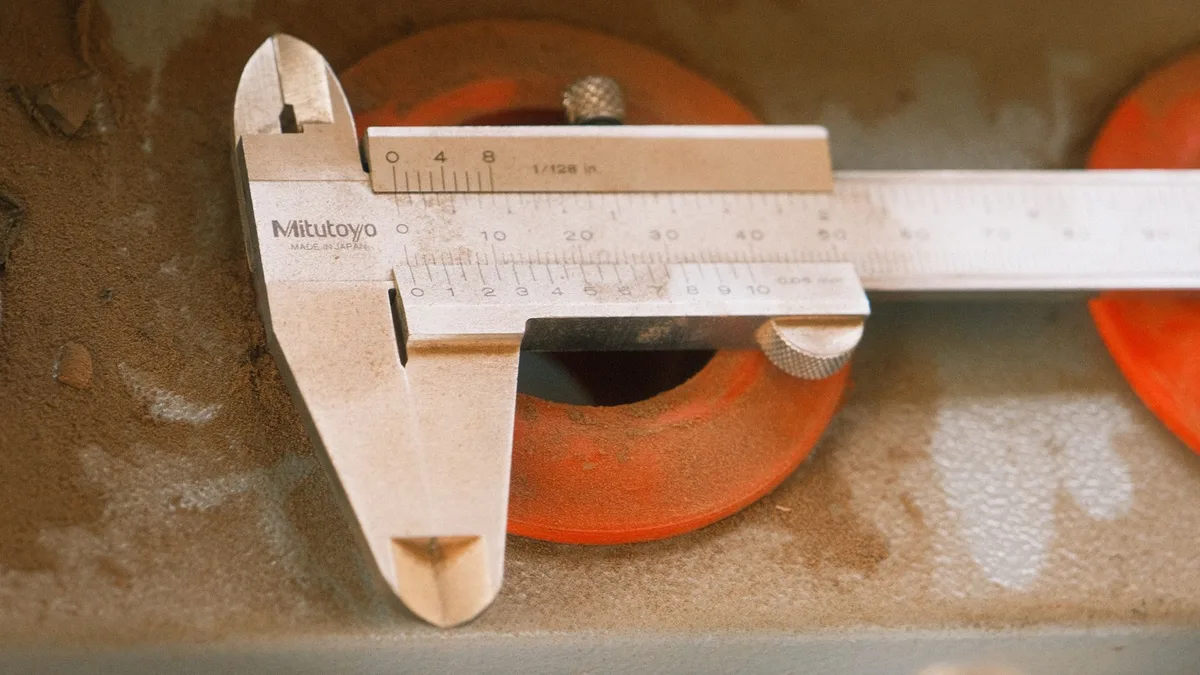
Measuring Thread Diameter and Counting TPI
Grab a caliper and a thread gauge if you have one. If not, a ruler and a steady eye will do.
- Measure the outside diameter of a male thread, or the inside of a female one.
- Roughly 1-1/16" points to ¾" GHT. Around 0.90" points to ¾" BSP.
- Count the threads in one inch. 11.5 TPI means GHT. 14 TPI means BSP.
- Note whether the thread is straight or slightly tapered.
Those two numbers, diameter and TPI, settle almost every case. When the diameter is close but the fit still fails, the TPI is doing the talking.
Spotting Male, Female, and Push-Fit Ends
You can identify most ends by eye once you know the tells:
- External threads you can see and touch: male
- Threads recessed inside a collar: female
- A smooth click-on collar with no visible thread: push-fit quick-connect
- A rubber washer sitting inside the female end: normal, and needed for the seal
Check that washer while you're looking. A missing or cracked washer causes leaks that feel like a size problem but aren't. If you keep a running list of garden gear the way you might browse the seasonal how-to posts, jotting down each fitting's standard saves you from repeat mismatches down the line.
Your Fitting Doesn't Match, Here's the Decision Path
When two fittings won't connect, work through this quick path before blaming the gear. Each branch points to a fix.
- Both ends male or both female: you need a gender-changer or the opposite hose end, not an adapter.
- Threads look different in width or pitch: you've got a GHT-to-BSP clash, so grab a converter.
- Fit looks right but leaks: check for a missing or flattened washer first.
- Push-fit that won't click: the brand doesn't match, so swap to the matching coupling.
- Thread feels gritty going on: stop, it's cross-threading, back it off and realign.
Run through it in order. Nine times out of ten you'll land on the answer in the first two checks. The trick is diagnosing before you force anything, because forcing turns a cheap fix into a ruined fitting.
Adapters That Bridge the Gaps (GHT to BSP and Beyond)
An adapter is the cheapest way to make mismatched threads talk to each other. It carries one thread type on each end, so it translates between standards without replacing your hose.
The common ones worth knowing:
- GHT to BSP: connects US hoses to European or UK taps and back again
- Male-to-male or female-to-female: fixes gender mismatches
- ¾" to ½": steps a bigger thread down to a smaller one
- Quick-connect to threaded: bridges a Hozelock or Gardena system to a standard end
Brass adapters last longer and resist stripping, which matters if you'll be swapping often. Plastic works fine for occasional use and costs less. Either way, add a fresh rubber washer and hand-tighten only.
Over-cranking a brass adapter can crack a plastic tap fitting on the other side.
Threads Per Inch, Diameters, and the Numbers That Matter
Here's the reference table that settles most disputes. Keep it handy when you're comparing a fitting in one hand against a tap in the other.
| Standard | Where It's Used | Nominal Size | Actual Thread Diameter | TPI | Thread Type |
|---|---|---|---|---|---|
| GHT (NH) | US, Canada | ¾" | ~1.06" (1-1/16") | 11.5 | Straight |
| BSP (parallel) | UK, EU, Australia | ¾" | ~0.90"–0.93" | 14 | Straight |
| BSP (tapered) | UK, EU, plumbing | ¾" | ~0.90"–0.93" | 14 | Tapered |
| GHT small | Older US gear | ⅝" | ~0.94" | 11.5 | Straight |
The takeaway is simple. Same nominal number, different real diameter and pitch. That 11.5 versus 14 TPI gap is why a GHT nozzle spins loose on a BSP tap and never bites.
Hose bore sits outside this table because it doesn't affect the thread. A ½" bore hose and a ¾" bore hose can wear the exact same GHT end. Bore is about flow, thread is about connection.
Mistakes That Cause Leaks, Cross-Threading, and Stripped Fittings
Most hose leaks trace back to a few repeat offenders. Aggregate user reviews point to the same culprits over and over.
- Forcing GHT onto BSP: the mismatched pitch strips the softer thread almost instantly.
- Skipping the washer: even a perfect thread leaks without that rubber seal in place.
- Over-tightening: crushing the washer or cracking a plastic collar makes leaks worse.
- Cross-threading: starting the fitting at an angle chews the threads on the first turn.
- Mixing quick-connect brands: two systems that look alike but won't lock.
To avoid cross-threading, start the fitting by hand and turn it backward half a turn first. You'll feel it drop into the groove, then thread it forward. If it resists early, back off and realign rather than push through.
A worn washer is the sneakiest one. It looks fine but has gone hard and flat, so it stops sealing under pressure. Swapping it costs pennies and fixes more leaks than any other single move.
The same care that keeps privacy screening and trellis setups watered without drips starts right at the fitting.
Brass vs Plastic Fittings and When Each One Wins
Neither material wins for everyone, so match it to how you'll use it. Brass suits heavy or frequent use, while plastic suits light-duty and budget setups.
| Factor | Brass Fittings | Plastic Fittings |
|---|---|---|
| Durability | High, years of use | Lower, can crack |
| Cost | Higher | Budget-friendly |
| Cold weather | Handles freeze better | Brittle in frost |
| Weight | Heavier | Light |
| Seizing risk | Can seize if over-tightened | Won't seize |
Brass is the pick for tap connectors, adapters, and anything you unscrew often. It grips well and shrugs off UV and cold. The downside is price and the small chance of two brass parts seizing together over a season.
Plastic makes sense for seasonal nozzles, cheap splitters, and gear you replace often. It won't corrode or seize. Just keep it out of hard frost and don't overtighten it against a brass thread.
For a first garden or a rented plot, plastic gets you going cheaply, and you can upgrade the parts you reach for daily. The indoor and outdoor growing guides are a fair reminder that watering gear only matters if it seals.
Backflow, Vacuum Breakers, and Drinking-Water-Safe Connections
Your fitting choice ties into water safety, not just convenience. A backflow event can pull dirty hose water back into your drinking supply, which is why outdoor taps often need protection.
A vacuum breaker (also called an anti-siphon device) screws onto the tap and stops that reverse flow. Many US hose bibbs come with one built in. If yours doesn't, an add-on vacuum breaker uses the same GHT thread, so it fits between the tap and hose.
If you drink from the hose or fill pet bowls, look for lead-free, potable-safe fittings. These meet the NSF/ANSI 61 standard for drinking-water components. Guidance from the [U.S.
Environmental Protection Agency](https://www.epa.gov) treats backflow prevention as basic cross-connection protection, so it's worth doing right.
Standard hoses and brass fittings can contain trace lead, so don't assume a random fitting is safe to sip from. Pick a hose marked drinking-water-safe if that matters to you.
Pro Tips for a Leak-Free Connection Every Time
A tight seal comes down to a few habits, not brute force. Get these right and most leaks never start.
- Replace the rubber washer once a season, or the moment it looks flat.
- Hand-tighten only. If it still weeps, add a wrap of PTFE tape on tapered threads.
- Match materials sensibly: brass connector to brass adapter, plastic to plastic where you can.
- Store hoses drained in winter so trapped water can't freeze and split a fitting.
- Keep one GHT-to-BSP adapter in the shed if you ever buy imported gear.
PTFE tape belongs on tapered BSPT threads, not on straight threads that seal with a washer. Wrapping tape over a washer seal just gets in the way. Two or three turns in the thread direction is plenty.
FAQs on Garden Hose Fitting Sizes
What size are most garden hose fittings?
Most household hose-end fittings are ¾ inch nominal. In the US that means ¾" GHT at 11.5 threads per inch. In the UK and Europe it's usually ¾" BSP at 14 TPI.
The nominal number matches, but the actual diameter and pitch differ between the two standards.
Are US and UK garden hose fittings interchangeable?
No, they aren't directly interchangeable. US hoses use GHT and UK hoses use BSP, which have different thread pitches. Forcing one onto the other strips the threads.
A cheap GHT-to-BSP adapter bridges the gap and lets the two systems connect without leaks.
Why won't my hose fitting screw onto the tap?
Usually because the tap and hose use different threads or genders. Outdoor taps often carry a different thread than the hose end, especially in the UK. Check whether both are male or both female, then confirm the thread standard.
A tap connector or adapter fixes almost every case.
Does hose diameter affect which fitting I need?
Not directly. The hose bore (⅜", ½", ⅝", or ¾") controls water flow, not thread compatibility. A ½" bore hose and a ¾" bore hose can carry the same GHT end fitting.
Match the thread standard for connection, and pick the bore for the flow you want.
Are quick-connect fittings universal?
No, quick-connect systems aren't cross-compatible between brands. A Hozelock coupling won't click into a Gardena one, even though they look similar. Stick to one brand's ecosystem for your nozzles and hose ends.
To mix systems, use a threaded adapter to link them at the tap.
Quick Decision Guide: Match Your Hose in Under a Minute
Run these checks in order and you'll know exactly what fits.
- Where's your gear from? US or Canada means GHT. UK, Europe, or Australia means BSP or push-fit.
- Male or female end? You always need one of each to connect.
- Count the threads. 11.5 TPI is GHT, 14 TPI is BSP.
- Different standards? Grab a GHT-to-BSP adapter.
- Right fit but leaking? Swap the washer before anything else.
Keep one thing in mind. The words "¾ inch" describe the naming, not a guarantee of compatibility. Once you know your standard, your gender, and your thread count, mismatched fittings stop being a mystery and become a two-dollar fix.

Similar Posts