Are All Garden Hoses the Same Diameter? What to Know
If you've ever grabbed a replacement hose and just hoped it would fit, here's the honest answer: no, garden hoses are not all the same diameter. The question "are all garden hoses the same diameter" trips people up because it mixes two very different measurements. The threaded ends are standardized.
The actual water channel inside is not.
In the US and Canada, nearly every hose uses the same Garden Hose Thread (GHT), officially the 3/4-inch-11.5 NH standard defined by ASME's threading standards. That's why your nozzle screws onto almost any hose. But the inner diameter, the part that controls flow, usually runs 1/2, 5/8, or 3/4 inch.
Let's clear up what actually changes from hose to hose.
Quick Answer: Are Garden Hoses All the Same Diameter?
No, garden hoses are not all the same diameter. Their threaded ends share one standard, GHT 3/4-inch-11.5. But the inner diameter varies.
The common sizes are 1/2, 5/8, and 3/4 inch. As of 2026, the 5/8-inch hose is the everyday default for most homes.
The Three Measurements People Mix Up: Bore, Outer Diameter, and Thread
Most confusion comes from treating a hose as having one single "size." It actually has three separate measurements. They don't have to match, and usually they don't.
Inner Diameter (ID): The Number That Actually Controls Flow
The inner diameter is the width of the water channel inside the hose. This is the number that decides how much water moves through. A wider bore carries more water at the same pressure.
When a package says 5/8 inch, that's the ID. It's the spec that matters most for sprinklers, filling jobs, and long runs. If you only remember one measurement, make it this one.
Outer Diameter: Why It Varies and Why It Barely Matters
The outer diameter is the full width of the hose including its walls. Two hoses with the same 5/8-inch bore can have different outer diameters. Thicker, reinforced hoses simply have more rubber around the same channel.
A heavier wall usually means better kink resistance and a longer life. It rarely changes flow. So don't shop by how fat the hose looks.
Garden Hose Thread (GHT 3/4-inch-11.5): The One Size That Really Is Standard
Here's the part that fools people. The threaded coupling on the end is standardized across almost all US garden hoses. It's GHT, sometimes labeled 3/4-inch-11.5 NH, meaning 11.5 threads per inch.
That "3/4 inch" refers to the thread, not the bore. A 1/2-inch hose and a 3/4-inch hose can share the exact same GHT connector. That's why a nozzle from an old hose still fits a brand-new one.
The Common Garden Hose Sizes: 1/2", 5/8", and 3/4"
Three inner diameters cover almost every hose you'll find on a shelf. Each one suits a different job. Here's how they break down.
- 1/2-inch ID: The lightweight option. Cheaper, easier to coil, and fine for short runs, hand watering, and small patios. Flow drops off fast on longer lengths.
- 5/8-inch ID: The all-rounder. It balances flow, weight, and price. This is the default for most yards, sprinklers, and general watering.
- 3/4-inch ID: The high-volume choice. Best for long runs, low household pressure, or filling pools and tanks. It's heavier and pricier, and often used by landscaping crews.
You'll occasionally see a 3/8-inch hose too. Those are usually specialty or coil hoses for tight spaces, not general yard use.
If you're setting up watering near a new flower bed, hose diameter matters as much as the layout of your planting edges. Too narrow a bore on a long run, and your sprinkler at the far end simply underperforms.
How Diameter, Length, and Pressure Work Together
Diameter never works alone. Length and water pressure pull on the same rope. Get the mix wrong, and even a good hose feels weak.
The logic is simple. Water loses energy to friction as it travels through a hose. That loss is called friction loss.
Longer hoses and narrower bores both increase it.
- If your run is short (under 50 feet): A 1/2-inch or 5/8-inch hose is usually plenty.
- If your run is long (75 to 100 feet): Step up to 5/8-inch or 3/4-inch to hold pressure at the far end.
- If your home pressure is low (rural or well systems): A wider 3/4-inch bore helps recover the volume you're losing.
- If you daisy-chain two hoses: Expect more pressure drop, so size up rather than down.
Typical residential supply sits around 40 to 60 PSI. That's fine for one sprinkler on a 5/8-inch hose. Run 100 feet of narrow 1/2-inch hose, though, and you'll feel the difference at the nozzle.
The EPA's WaterSense program is a solid reference if you also want to water efficiently while you're at it.
1/2" vs 5/8" vs 3/4": Side-by-Side Flow and Weight
When you line the three sizes up together, the trade-off gets obvious. More bore means more water and more weight. Here's the quick comparison.
| Inner Diameter | Approx. Flow (50 ft, ~40 PSI) | Weight & Handling | Best For |
|---|---|---|---|
| 1/2 inch | ~9 GPM | Lightest, easiest to coil | Short runs, hand watering, patios |
| 5/8 inch | ~17 GPM | Moderate, easy for most people | Everyday yards, sprinklers, general use |
| 3/4 inch | ~23 GPM | Heaviest, tiring to drag | Long runs, low pressure, filling pools |
Treat those flow numbers as ballpark figures. Real output shifts with your pressure, fittings, and any kinks in the line. Manufacturer specs on the packaging give you the exact rating for a given hose.
The takeaway is simple. Bigger isn't automatically better. A 3/4-inch hose delivers serious volume, but hauling 100 feet of it around a tidy cottage-style garden gets old fast.
For most people, 5/8 inch hits the sweet spot, and it's why it dominates store shelves.
Which Diameter Fits Your Situation
The right diameter depends on the job, not on what's cheapest or fattest. Run through your setup and the answer usually picks itself. Here's the branching logic.
Light Watering, Patios, and Balconies
If you're watering pots, a small bed, or a balcony, a 1/2-inch hose is your friend. It's light, coils easily, and stores in a small space. You're not moving much water, so the narrow bore costs you nothing.
Keep the length short too. A 25-foot or 50-foot 1/2-inch hose stays easy to handle. For a compact space filled with container plants and greenery, that's all you need.
Everyday Yards and Sprinklers
For a typical suburban lawn, go with a 5/8-inch hose. It feeds one oscillating sprinkler comfortably at normal house pressure. It also handles car washing, general cleanup, and hand watering without complaint.
This is the size that fits the most situations. If you're unsure and only buying one hose, buy this one.
Long Runs, Low Pressure, and Big Fills
Reach for 3/4-inch when volume is the whole point. Long 100-foot runs, filling a pool or stock tank, or a home with weak well pressure all benefit from the wider bore. You'll trade some weight and cost for that flow.
Landscaping crews lean on 3/4-inch for the same reason. More water moves per minute, so jobs finish faster.
Mistakes People Make When Sizing a Hose
Most hose regrets trace back to a handful of avoidable errors. Knowing them saves you a return trip to the store.
- Buying by thread, not bore. The "3/4 inch" on a nozzle package is the thread size. It tells you nothing about the water channel.
- Going too long on a narrow hose. A 100-foot 1/2-inch hose can starve your sprinkler. Match length to bore.
- Chasing the widest hose. A 3/4-inch hose is heavy. For a small yard, it's overkill you'll curse every time you drag it.
- Ignoring kinks. A kinked hose chokes flow no matter the diameter. Cheap, thin-walled hoses kink the most.
- Mixing sizes carelessly. Connecting a 3/4-inch hose to a 1/2-inch hose bottlenecks flow at the narrow section.
One quieter mistake: assuming an expandable hose behaves like a fixed one. Expandable hoses change effective diameter as they fill. They're handy for light jobs, but they don't match a rigid 5/8-inch hose for steady, high-volume flow.
Do All Nozzles, Splitters, and Connectors Fit Any Hose?
Yes, in almost every case. Because US garden hoses share the GHT 3/4-inch-11.5 thread, nozzles, splitters, and quick-connect adapters fit across diameters. Your nozzle doesn't care whether the bore behind it is 1/2 inch or 3/4 inch.
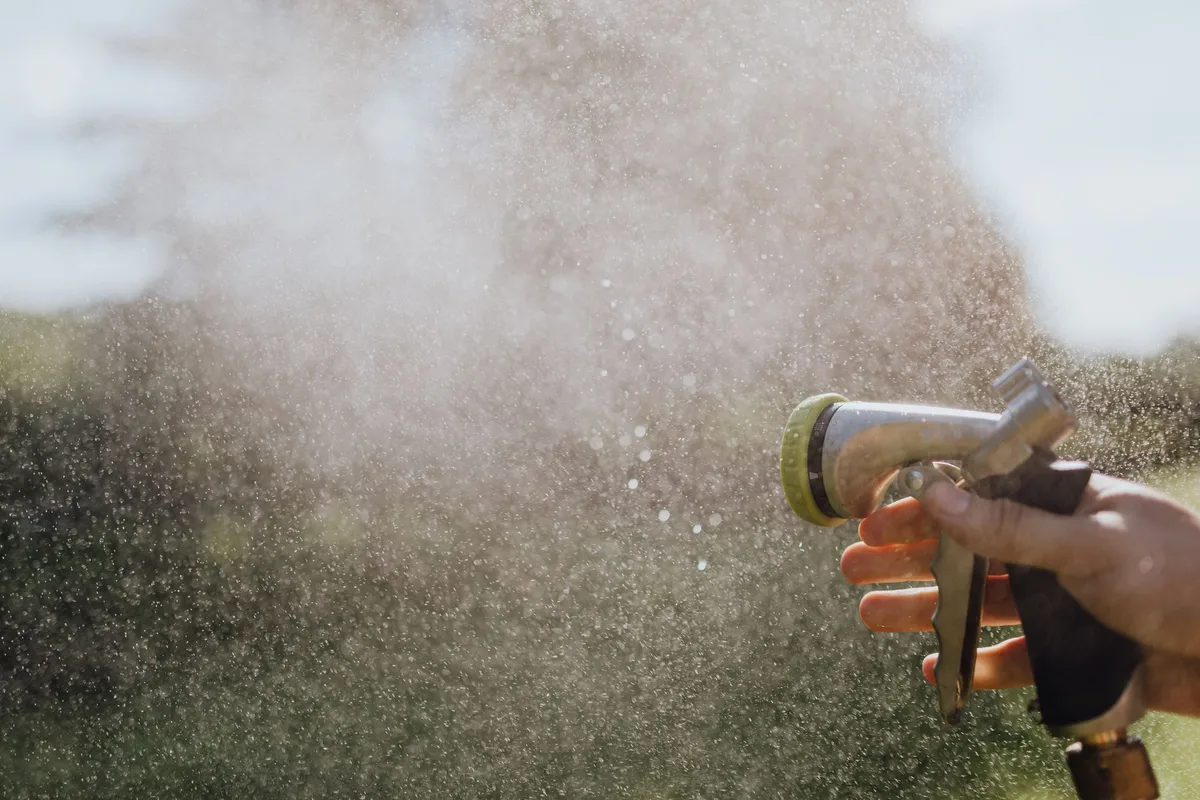
That's the whole point of a shared thread standard. A splitter bought years ago still threads onto a new hose today. The same goes for spray guns, timers, and Y-connectors.
A few things still trip people up. The male and female ends must face each other correctly, so check which end you're connecting. Cheap plastic couplings cross-thread easily, and brass fittings hold up far better over time.
If a connection leaks, a fresh rubber washer usually fixes it before anything else.
Reading the Label: Specs, GPM, and What to Check Before Buying
The label tells you almost everything, once you know which numbers matter. Don't guess in the aisle. Scan for these specs.
| Spec on the Label | What It Means | Why It Matters |
|---|---|---|
| Inner diameter (ID) | Width of the water channel | Controls flow: pick 1/2, 5/8, or 3/4 inch |
| Length | Total reach in feet | Longer runs need a wider bore |
| Burst / working pressure (PSI) | Pressure the hose can take | Higher rating means tougher hose |
| Ply or reinforcement | Layers in the wall | More plies resist kinks and last longer |
| Coupling material | Brass or plastic ends | Brass threads survive rough handling |
Flow rate, shown in gallons per minute (GPM), depends on your home pressure as much as the hose. So treat any printed GPM as a guide, not a promise. Check the ID first, then length, then coupling quality.
If durability matters, favor a rubber or reinforced hybrid hose over thin vinyl. Vinyl is lighter and cheaper, but it kinks and cracks sooner, especially in sun. Rubber costs more and weighs more, and it lasts.
Planning a tidy watering setup around your garden's boundary and beds is easier when the hose holds up season after season.
Drinking-Water Safety and Potable Hose Ratings
Not every garden hose is safe to drink from, and that catches people off guard. Standard hoses can leach lead and other compounds from fittings or the hose material. If a person or pet might drink from it, use a hose rated for potable water.
Look for a label that says "drinking-water safe," "lead-free," or that references NSF/ANSI potable-water certification. RV and marine water hoses are built to this spec, which is why they're often white or blue instead of green. They cost a bit more for good reason.
- Use a potable-rated hose for: filling pet bowls, kids' water play, camping, or drinking water.
- A standard hose is fine for: lawns, gardens, car washing, and general cleaning.
- Add a backflow preventer at the spigot to stop hose water siphoning back into your home supply.
One practical tip from aggregate user feedback: let a standard hose run for a few seconds before watering anything you'll eat. Water that's been sitting in a warm hose can pick up taste and compounds you don't want on your vegetables.
US GHT vs UK/Europe BSP: Why Region Changes the Answer
Your country changes which "standard" applies. The US and Canada use GHT (Garden Hose Thread), while the UK and much of Europe use different systems. So a fitting bought in one region may not thread onto a hose from another.
In the UK and Europe, threaded fittings often follow BSP (British Standard Pipe). More commonly, though, European hoses use push-fit click connectors instead of screw threads. You size those hoses in millimeters, like 12mm, 15mm, or 19mm bore.
Those metric sizes map roughly to the US inch sizes. A 12mm hose is close to 1/2 inch, and 19mm sits near 3/4 inch. If you're importing a nozzle or ordering online, check the connector type before you buy.
A mismatched thread won't seal.
Pro Tips for Flow, Storage, and Longer Hose Life
A hose lasts years longer when you treat it well. These habits protect both flow and the hose itself.
- Drain before storing. Standing water breeds mildew inside and freezes in winter, which can split the hose.
- Coil it loosely. Tight, repeated bends at the same spot weaken the wall and invite kinks.
- Keep it out of direct sun. UV cracks vinyl fast. A shaded reel or hose box adds seasons of life.
- Store fittings capped. Dinged threads are a top cause of leaks and cross-threading.
- Keep spare rubber washers. A worn washer, not the hose, causes most spigot drips.
For flow, keep runs as short as the job allows. Every extra 25 feet costs you pressure. If your sprinkler feels weak, shorten the hose before you blame the bore.
Winter deserves special care in cold climates. Disconnect the hose from the spigot, drain it fully, and store it indoors. A frozen hose left attached can also damage the outdoor faucet behind it.
Picking the Right Diameter: Your Quick Decision Guide
Here's the whole decision boiled down. Match your answer to the row that fits.
| Your Situation | Best Inner Diameter | Suggested Length |
|---|---|---|
| Pots, patio, balcony | 1/2 inch | 25 to 50 ft |
| Standard lawn and sprinkler | 5/8 inch | 50 to 75 ft |
| Long runs or big fills | 3/4 inch | 75 to 100 ft |
| Low or well-water pressure | 3/4 inch | Keep as short as possible |
| Drinking or pet water | Potable-rated, any bore | As needed |
When in doubt, 5/8 inch is the safe pick. It handles the widest range of jobs and stays easy to move. Only step up to 3/4 inch when volume or low pressure forces your hand.
Step down to 1/2 inch when weight and easy storage matter most.
Remember the one rule that clears up all the confusion. The thread is standard, but the bore is not. Buy for the inner diameter, and your hose will do exactly what you need.
Frequently Asked Questions
Are all garden hose fittings the same size?
In the US and Canada, yes. Almost every garden hose uses the GHT 3/4-inch-11.5 thread, so nozzles and connectors interchange freely. The exception is region.
UK and European hoses often use BSP threads or push-fit click connectors, which won't match US fittings.
Is a 5/8 or 3/4 inch hose better?
It depends on your job. A 5/8-inch hose suits most homes, balancing flow, weight, and price. Choose 3/4 inch only for long runs, filling pools, or low household pressure, where the wider bore recovers volume you'd otherwise lose.
What does the 3/4 inch on a hose actually mean?
Usually the thread, not the water channel. The GHT standard is written as 3/4-inch-11.5, describing the coupling that screws onto spigots and nozzles. A hose with a 3/4-inch thread can still have a 1/2-inch or 5/8-inch inner diameter inside.
Why is my hose water pressure so weak?
Often it's length and bore, not the tap. A long, narrow hose loses pressure to friction before water reaches the nozzle. Shorten the run, size up the diameter, or clear any kinks.
Check the spigot and any splitters too.
Can I connect two different diameter hoses together?
Yes, since the threads match, but flow suffers. Water bottlenecks at the narrowest section, so a 3/4-inch hose joined to a 1/2-inch hose flows like the 1/2-inch. For steady pressure over distance, use one continuous hose of the same bore.

Similar Posts