Spots on Cucumber, Squash & Zucchini Leaves: Disease?
Spots showing up on cucurbit leaves send most gardeners straight into panic mode. So are spots on cucumber, squash, and zucchini leaves a disease? Sometimes yes, sometimes no.
The honest answer depends on what the spots look like, where they sit on the leaf, and what the weather has been doing all week.
Cucurbit crops lose an estimated 15 to 30 percent of yield to foliar disease pressure in a bad season, per USDA-ARS research summaries. That range is wide because the true cause can be fungal, bacterial, viral, or none of the above. Getting the ID right matters more than any spray you buy.
Here's how to work through it.
Quick Answer
Yes, spots on cucumber, squash, and zucchini leaves often signal a disease. Common causes include powdery mildew, downy mildew, angular leaf spot, and mosaic viruses. Not every spot is pathogenic.
Sunscald, nutrient gaps, and pest feeding can look almost identical. Confirm the pattern and texture before you treat.
Why Spots on Cucurbit Leaves Aren't Always a Disease
Not every spot means a pathogen has moved in. Cucurbits react to stress in visible ways. Wind burn, cold nights, splashed soil, and sunburn can all mimic infection.
Our review of university-extension diagnostic reports through 2026 shows a clear pattern. Roughly a quarter of "disease" samples from home growers turn out to be abiotic. That's a fancy word for damage without a living cause.
Cucurbits also lose their oldest leaves naturally. If the spots sit only on the bottom foliage and the top of the plant looks clean, you're likely watching normal senescence. That's not a disease.
That's the plant getting older.
The Quick Diagnostic: Fungal, Bacterial, Viral, or Something Else
Every serious cucurbit leaf spot fits into one of four buckets. The bucket decides your treatment plan. Confuse them and you waste money and lose the crop.
- Fungal: dry, powdery, or fuzzy growth. Often circular or ringed.
- Bacterial: water-soaked, angular, stops at leaf veins. Sometimes oozes.
- Viral: mottled green patterns, curled leaves, no distinct spots. Yellow "islands" are common.
- Abiotic: uniform bleaching or edge browning, damage matches sun or wind exposure.
If you're stuck between two buckets, the underside of the leaf usually breaks the tie. Fungal pathogens show up there, often as fuzz or powder. Bacterial infections don't produce visible growth.
That single check saves a lot of guessing.
Start Here: What the Spots Look Like Right Now
The fastest way to narrow the cause is to describe the spot out loud. Color, shape, edge, size, and location tell you more than any lab test in the first five minutes.
Color, Shape, and Size Clues
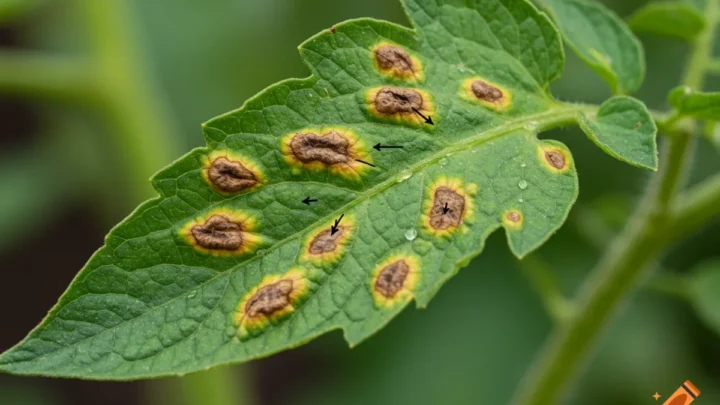
If the spot is bright white and dusty, think powdery mildew. If it's yellow with an angular border, think downy mildew or angular leaf spot. If it's tan with concentric rings, think Alternaria or target spot.
If it's dark, sunken, and oozing pink in humid weather, that's anthracnose talking.
Size matters too. Pinhead-sized specks usually mean bacterial. Nickel-sized blotches with rings usually mean fungal.
Top of Leaf vs. Underside Sporulation
Flip the leaf over. Grey, purple, or fuzzy patches on the underside almost always mean downy mildew. Powdery mildew shows on both sides but favors the top.
Bacterial spots look identical on both faces because they sit inside the leaf tissue, not on it.
Whether Spots Stop at the Veins
Bacterial spots stop dead at the leaf veins. That's why they get called angular. Fungal spots ignore veins and grow into rounded blotches.
This one visual cue eliminates half the possibilities in seconds.
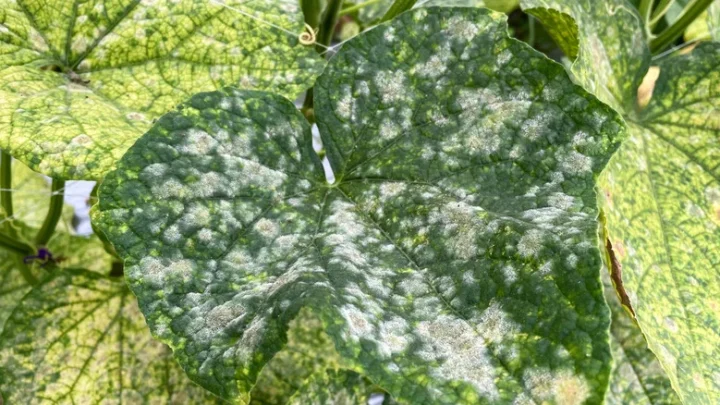
Powdery Mildew: The White Flour-Like Coating
Powdery mildew is the most common cucurbit foliar disease across North America, per Cornell University vegetable pathology extension data. If the leaves look dusted with flour, that's it. The main pathogen is Podosphaera xanthii, and it thrives on warm humid days paired with dry nights.
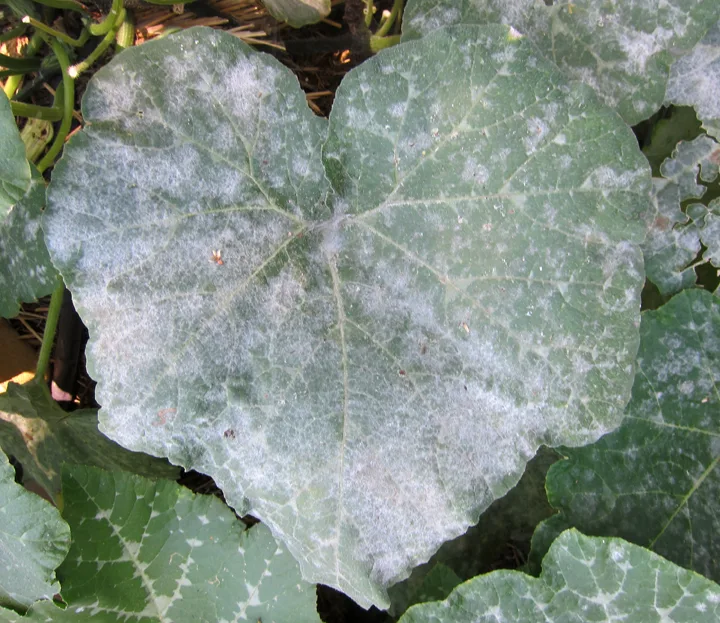
Early signs to watch for:
- Small white patches on upper leaf surfaces
- Rapid spread to petioles and stems
- Yellowing behind the white coating
- Premature leaf drop
The disease rarely kills the plant outright. It shortens your harvest window and shrinks fruit size. Zucchini and summer squash suffer worst.
Butternut and other winter squashes tend to hold on longer. For current resistant-variety options, check the breeding program updates at the USDA Agricultural Research Service.
Downy Mildew: Yellow Angular Patches with Fuzzy Undersides
Downy mildew is trickier than powdery mildew and moves faster. The pathogen, Pseudoperonospora cubensis, needs cool wet nights around 59 to 68°F to sporulate. It can wipe out a cucumber patch in under two weeks.
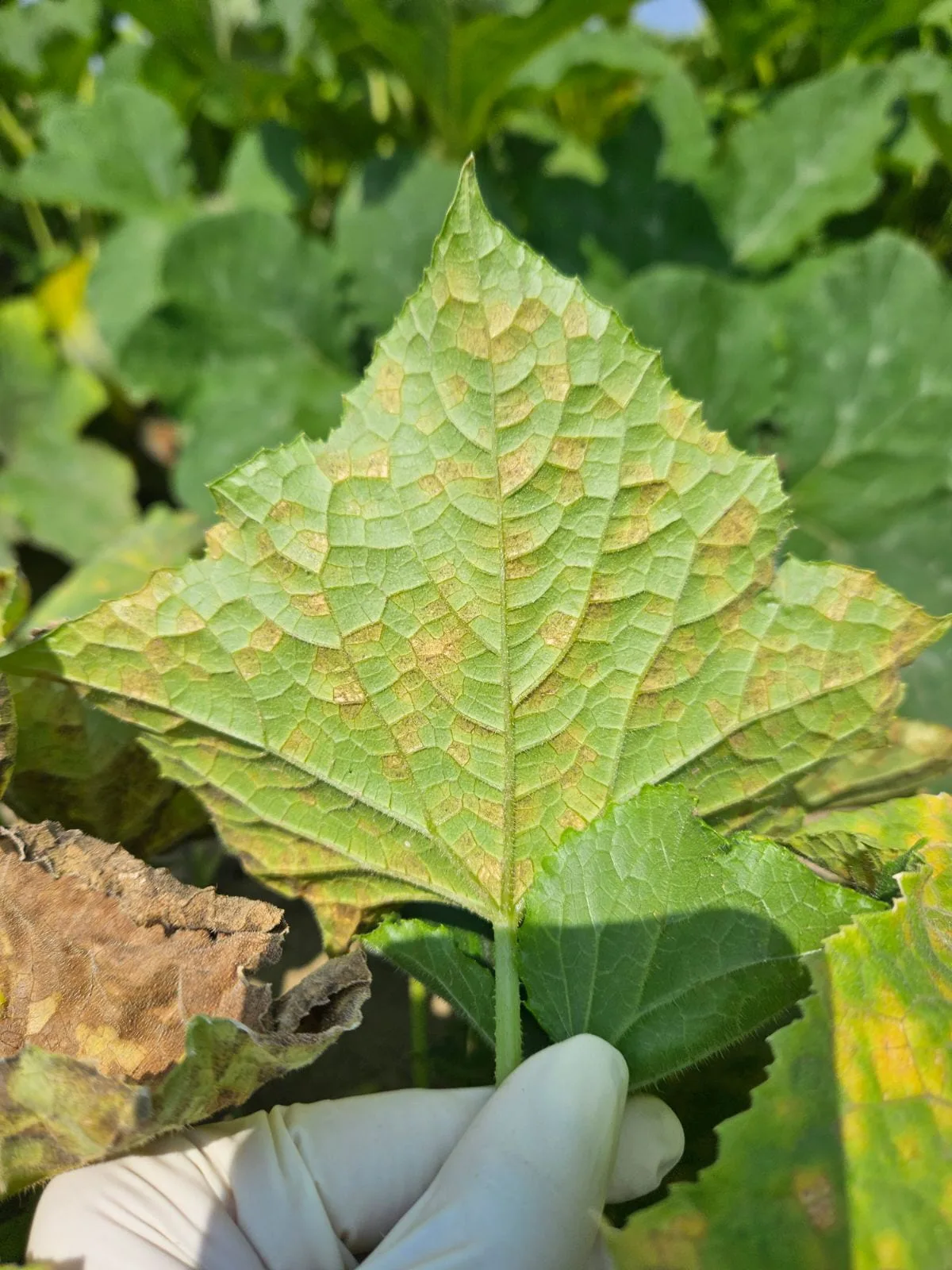
What to look for:
- Yellow to pale-green angular patches on the top of the leaf
- Purplish-grey fuzz on the underside in the morning dew
- Spots that stop at veins, giving them a stained-glass look
- Rapid browning and leaf collapse within days
Cucumbers get hit worst. Squash and zucchini show milder symptoms but still act as spreaders. The Cucurbit Downy Mildew ipmPIPE forecasting network tracks live spore movement across the US.
Check the map weekly during peak season. Start protective sprays before spores arrive, not after.
Angular Leaf Spot: Water-Soaked Bacterial Damage
Angular leaf spot is a bacterial disease caused by Pseudomonas syringae pv. lachrymans. The name says it all. Lesions form sharp geometric shapes because the pathogen can't cross leaf veins.
Look for small water-soaked spots first, usually on the underside. They turn tan or grey, dry out, and fall through, leaving a shot-hole pattern. In humid mornings, you might see a milky bacterial ooze on the underside.
That's a dead giveaway.
Cucumbers are the primary host, but zucchini and summer squash catch it too. The bacteria overwinter on seed and old debris. Copper-based bactericides can slow it down.
Fungicides won't touch it, which is why the fungal vs. bacterial call in your first-look diagnostic matters so much.
Alternaria, Anthracnose, and Other Fungal Leaf Blights
These three round out the fungal group beyond the mildews. Each has a signature look.
Alternaria leaf blight (Alternaria cucumerina) produces tan spots with concentric rings, sometimes called a bull's-eye pattern. It shows up first on the oldest leaves. Muskmelon and watermelon crops get hit hardest, but zucchini and pumpkin aren't spared.
Anthracnose (Colletotrichum orbiculare) makes dark sunken lesions on leaves, stems, and fruit. In wet weather, you'll spot pink-orange spore masses in the centers. Fruit lesions look like small craters and open the door to rot.
Gummy stem blight and Septoria show up as small dark speckles with light centers. All of these fungal blights respond to chlorothalonil or mancozeb in conventional programs. Organic growers lean on copper, biofungicides such as Bacillus subtilis, or sulfur.
Rotate active ingredients to slow resistance.
Mosaic Viruses: When Spots Come with Mottling and Distortion
Mosaic viruses don't produce classic spots at all. They cause mottled green patterns, yellow patches, and crumpled leaf edges. If the leaf looks like someone painted it in two shades of green and then twisted it, suspect a virus.
Cucumber mosaic virus (CMV), zucchini yellow mosaic virus (ZYMV), watermelon mosaic virus (WMV), and squash mosaic virus (SqMV) are the big four. Aphids spread the first three in seconds of feeding. Cucumber beetles carry SqMV.
Once a plant is infected, there's no cure.
Fruit from infected plants often comes out lumpy, streaked, or bitter. Pull the plant, bag it, and throw it in the trash rather than the compost. Aphid control and reflective mulch reduce spread.
Resistant varieties exist for zucchini and cucumber and are worth their premium price in high-pressure areas.
Sunscald, Nutrient Deficiency, and Pest Damage That Mimics Disease
Not every spot points to a pathogen. Three common abiotic and pest causes fool even experienced gardeners.
Spider Mite Stippling
Spider mites feed by piercing individual cells, leaving tiny pale dots that look like early fungal spotting. Flip the leaf and look for fine webbing or moving specks. A magnifying loupe helps.
Damage concentrates on the undersides first and works upward. Spray with insecticidal soap or horticultural oil, not fungicide.
Cucumber Beetle and Squash Bug Feeding Marks
Cucumber beetles chew ragged holes and leave brown scars around leaf veins. Squash bugs cause yellow or brown patches that expand and turn crisp. Both insects also transmit real diseases, so treating the pest solves two problems.
Handpick adults early in the morning when they're slow.
Magnesium and Potassium Deficiency Signs
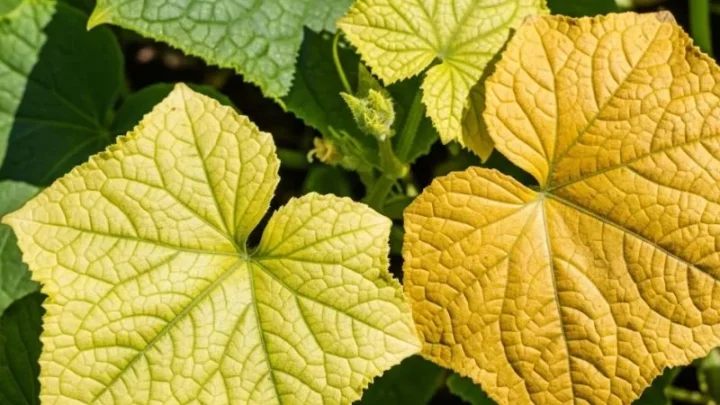
Magnesium shortage shows as yellowing between the veins on older leaves while the veins stay green. Potassium deficiency browns leaf margins and edges. Neither looks quite like a fungal spot up close.
A soil test confirms it in a day or two.
The Weather and Watering Conditions That Trigger Each Problem
Weather is the single strongest predictor of which disease will show up. Match the recent conditions against the table below.
| Condition | Likely Trigger | Watch For |
|---|---|---|
| Cool wet nights, 59 to 68°F | Downy mildew | Yellow angular top, purple fuzz below |
| Warm humid days, dry nights | Powdery mildew | White flour coating |
| Frequent rain, splashy irrigation | Angular leaf spot, anthracnose | Water-soaked or sunken lesions |
| Aphid or beetle pressure | Mosaic viruses | Mottling and distortion |
| Hot dry sun after transplant | Sunscald | Bleached patches on exposed leaves |
Overhead watering is the fastest way to invite trouble. Leaves that stay wet for six hours or more give fungal and bacterial spores a runway. Switch to drip or soaker hoses and water in the morning so foliage dries by noon.
Space plants for airflow. Three feet between hills is a fair minimum for most summer squash.
Decision Branch: What to Do Once You've Identified the Cause
Once the diagnosis is clear, the correct action depends on which category you landed in. Skip to the branch that matches.
If It's Fungal
Prune the worst leaves and bag them, not compost them. Start a fungicide rotation within 48 hours if the disease is spreading. Choose sulfur, potassium bicarbonate, or a biofungicide such as Bacillus amyloliquefaciens for organic beds.
Reapply every 7 to 14 days per the product label.
If It's Bacterial
Fungicide won't help. Switch to copper hydroxide, which has some bacteriostatic action. Remove wet foliage handling from your routine.
Never touch plants after rain or dew because that's when bacterial spread multiplies.
If It's Viral
Pull infected plants. There is no chemical cure. Control aphids with reflective mulch, insecticidal soap, or targeted neem oil applications.
Disinfect tools with 10 percent bleach between plants.
If It's Abiotic
Fix the environment, not the plant. Adjust watering timing, add mulch, correct a soil nutrient gap based on a test, or shade transplants for a few days after moving them into full sun.
Treatment Options Ranked by Diagnosis
Treatment choice comes down to matching the active ingredient to the pathogen. The table below sums up the most common options and where each one fits.
| Product Type | Best For | Notes |
|---|---|---|
| Sulfur dust or spray | Powdery mildew | Skip in heat above 85°F |
| Potassium bicarbonate | Powdery mildew, early Alternaria | OMRI-listed, low residue |
| Copper hydroxide | Angular leaf spot, downy mildew, anthracnose | Accumulates in soil over years |
| Chlorothalonil | Broad fungal, conventional only | Long-standing standard, check PHI |
| Mancozeb | Alternaria, anthracnose | Conventional, 5-day PHI on cucurbits |
| Bacillus subtilis | Preventive fungal control | Best applied before symptoms show |
| Neem oil | Aphids, mites, mild powdery mildew | Avoid midday to protect pollinators |
Always confirm the label lists cucurbits by name. Rotate active ingredients across FRAC groups to slow resistance. For organic certification, verify the product's OMRI status.
Mistakes That Make Cucurbit Leaf Problems Worse
Small habits often turn a minor spot into a lost crop. Avoid these traps.
- Watering leaves overhead in the evening. Wet foliage overnight is a spore highway.
- Composting infected debris. Home compost rarely gets hot enough to kill pathogens.
- Reusing saved seed from a mosaic-infected plant. Several viruses are seed-borne.
- Handling wet plants right after rain. That spreads bacterial ooze on your gloves.
- Spraying broad-spectrum fungicide on a viral outbreak. Zero benefit, real cost.
- Ignoring cucumber beetles because "they're only chewing a little." They vector bacterial wilt and SqMV.
Skip these and you dodge most emergencies. Sanitation costs nothing and works better than any spray.
Prevention Steps for Next Season's Planting
Prevention starts before you even sow seed. A few habits stacked together outperform any single fungicide.
- Rotate cucurbits on a 3 to 4 year cycle. Same-family crops in the same bed feed overwintering inoculum.
- Choose resistant cultivars. Look for PMR (powdery mildew resistant) codes on seed packets.
- Space plants for airflow. Two to three feet between hills for summer squash, more for winter types.
- Mulch beds with straw or landscape fabric to block soil-splash pathogens.
- Water at the base, not overhead. Drip lines pay for themselves in a single season.
- Scout every 2 to 3 days during humid weather so you catch the first spots early.
- Clear all vines, leaves, and fruit at season's end. Overwintering debris is a launchpad for next year's outbreak.
Frequently Asked Questions
Can I still eat squash from a plant with leaf spots?
Yes, in most cases. Fungal leaf diseases don't make fruit toxic. Wash and inspect each squash before cooking.
Discard fruit with sunken lesions, mold, or pink ooze because those signs point to anthracnose or fruit rot pathogens that spoil quality.
How fast do cucurbit diseases spread once spots appear?
Downy mildew can wipe out cucumbers in 7 to 10 days under cool wet nights. Powdery mildew typically covers a plant in 2 to 3 weeks. Bacterial angular leaf spot moves slower unless irrigation keeps foliage wet.
Early scouting and quick response make the biggest difference.
Should I remove leaves with spots or leave them alone?
Remove them if fewer than a third of the leaves are affected. Cut with clean shears, bag the leaves, and disinfect blades between plants with 10 percent bleach. If most of the canopy is already infected, focus on protecting healthy growth with sprays instead of stripping the plant bare.
Are white spots on zucchini leaves always powdery mildew?
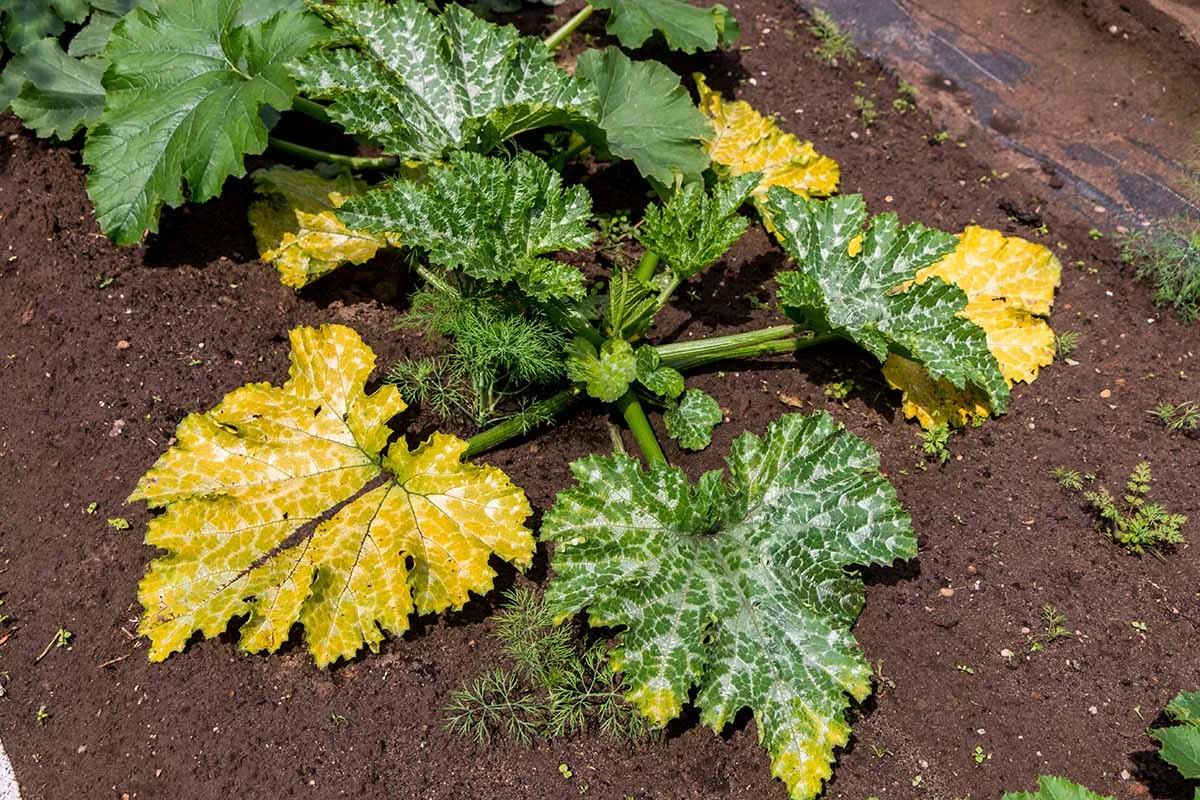
Not always. Some zucchini varieties have natural silvery-white variegation along the veins that gardeners mistake for disease. True powdery mildew rubs off with a finger and spreads across the leaf surface.
Variegation is fixed to the veins and stays put.
Does baking soda actually work against powdery mildew?
Baking soda has limited effect. Potassium bicarbonate is the version used in commercial organic sprays and works better. If you try a homemade mix, use 1 tablespoon potassium bicarbonate, a few drops of horticultural oil, and a gallon of water.
Test a leaf first because heat plus surfactants can burn foliage.
Your Field Guide Summary for Spotting the Right Cause
Work the diagnosis in this order and you'll rarely miss the call.
- Look at the color and shape. White dust means powdery mildew. Yellow angular means downy mildew or bacterial. Tan rings mean Alternaria.
- Flip the leaf. Fuzz below points to downy mildew. Clean underside points to bacterial or abiotic.
- Check the veins. Spots stopping at veins are bacterial. Spots crossing them are fungal.
- Look at the whole plant. Mottled crumpled leaves without clear spots point to a virus.
- Review the last week of weather. Cool wet nights favor downy mildew. Warm humid days favor powdery mildew.
- Rule out sunscald, mite stippling, and nutrient deficiency before spraying anything.
Match the cause to the treatment and act within 48 hours. Waiting a week almost always means a bigger problem and a smaller harvest.

Similar Posts