Why are tomato leaves turning yellow?
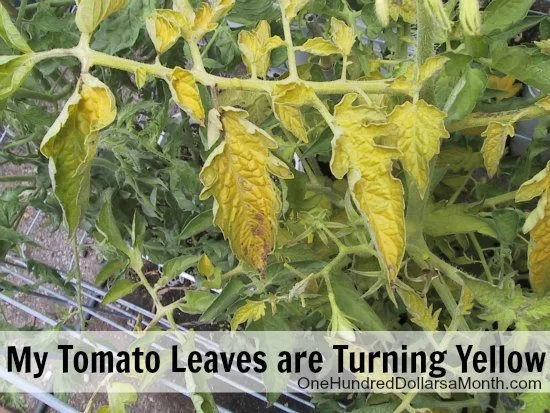
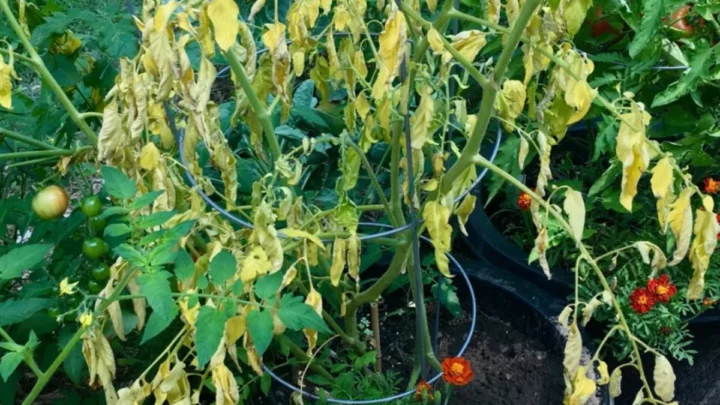
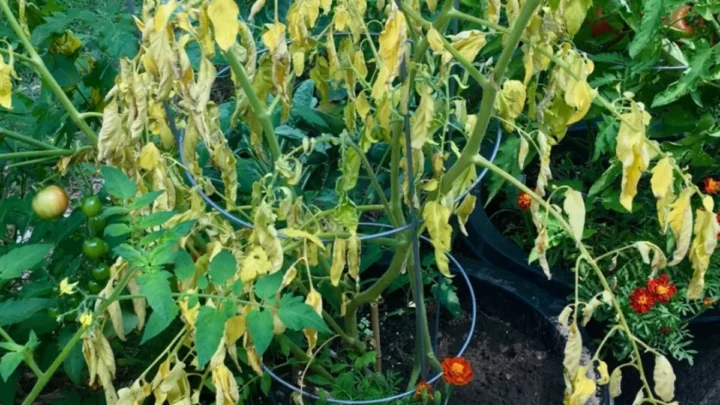
Yellow leaves on a tomato plant aren't one problem. They're a symptom with a dozen possible causes, and the fix depends entirely on which leaves are yellowing and what pattern they show. If you've been asking why are tomato leaves turning yellow, the honest answer is that the plant is telling you something specific.
You just need to read the message correctly.
The good news: roughly 80% of yellow-leaf cases trace back to three things (watering, nutrients, or fungal disease). Our editorial research pulled from university extension guides and current tomato pathology references as of 2026. Below, we'll walk through the exact diagnostic sequence a working grower uses.
Start at the top and work down.
Quick Answer
Tomato leaves turn yellow because of watering stress, nutrient deficiencies, disease, pests, or natural aging. Bottom leaves yellowing on older plants usually means nitrogen shortage or normal aging. Yellowing with brown spots often signals early blight or Septoria.
Yellow new growth points to iron or magnesium lockout. The leaf position and pattern reveal the real cause.
Why Tomato Leaves Turn Yellow: The Fast Diagnostic Question
Before you reach for a fertilizer or a fungicide, answer one question. Where on the plant is the yellowing showing up? Location tells you more than color intensity ever will.
- Bottom leaves only, older plant: usually harmless aging or a nitrogen shortfall
- Bottom leaves plus wilting: often a watering or root issue
- Middle leaves with spots or rings: fungal or bacterial disease
- New top growth yellow: iron, magnesium, or a soil pH problem
- Whole plant, all at once: root damage, transplant shock, or herbicide drift
Get the location right and you've narrowed the cause to two or three suspects instead of twelve. Everything below builds on this step.
Which Leaves Are Yellowing? Start Here
Different leaf positions point to different causes because nutrients move differently inside the plant. Mobile nutrients (nitrogen, phosphorus, potassium, magnesium) travel from old leaves to new growth when supplies run low. Immobile nutrients (iron, calcium, sulfur) stay put where they landed.
That single fact drives the whole diagnosis.
Bottom Leaves Only
The oldest two or three leaves turning yellow on a healthy-looking plant is often normal. As tomato plants shift energy into flowering and fruiting, they cannibalize lower foliage for nitrogen and magnesium. If the rest of the plant looks strong, this isn't a problem.
Pinch off the yellowed leaves and move on.
Middle Leaves and Working Upward
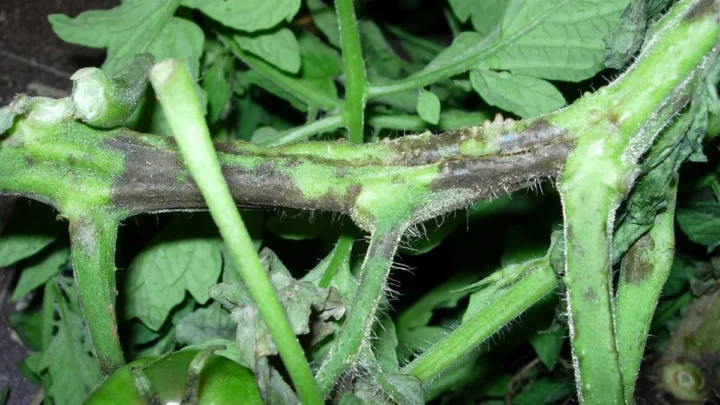
When yellowing climbs from the base up through the middle canopy, think disease or serious deficiency. Early blight, Septoria leaf spot, and Fusarium wilt all follow this pattern. Check for spots, wilting on one side of the plant, or a musty smell near the soil line.
New Growth at the Top
Yellow new leaves are almost always an iron or manganese lockout, not a true shortage. High soil pH (above 7.0) blocks uptake even when the nutrients are present. Cold, wet soil does the same thing.
Check pH before adding anything to the ground.
Random Leaves All Over the Plant
Scattered yellowing across the whole plant usually means viral infection, herbicide drift from a neighboring lawn, or spider mite damage. Look under the leaves for tiny webs or specks. Curling and distortion combined with the yellowing points to a virus or 2,4-D drift from a nearby weed treatment.
What the Yellowing Pattern Tells You
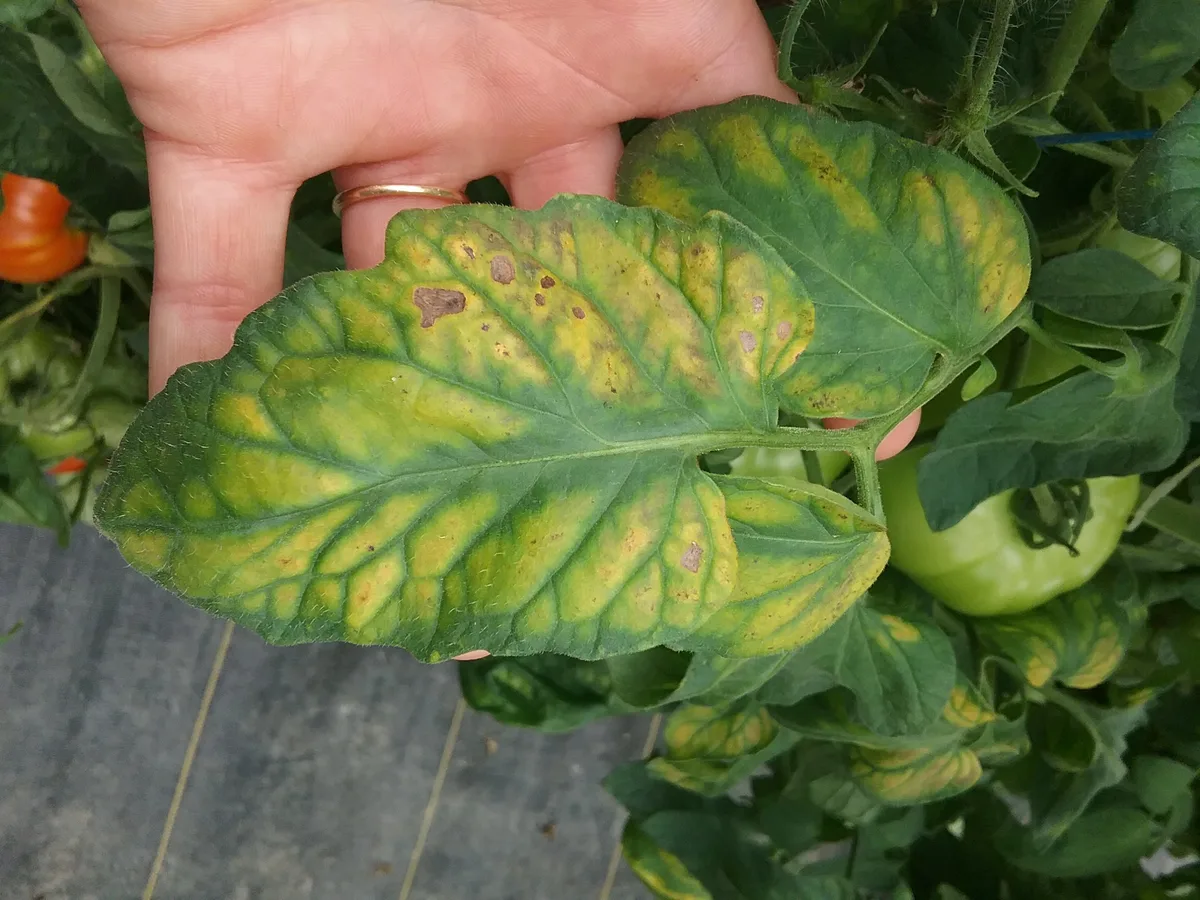
Once you know which leaves are affected, look at the pattern on the leaf itself. Color distribution is a second diagnostic layer that narrows the cause fast.
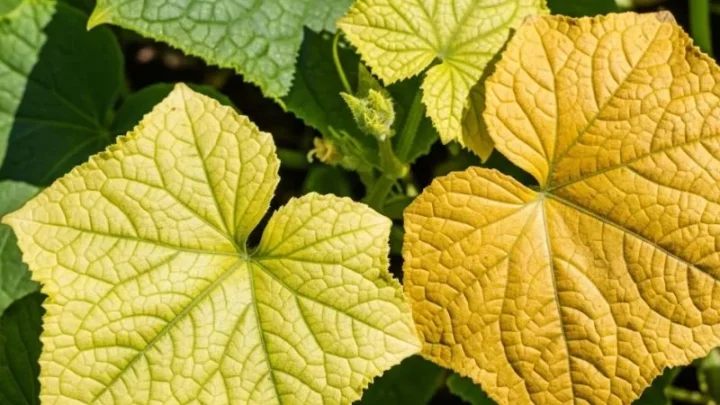
Uniform Yellowing
The whole leaf turns pale yellow with no spots and no green veins showing through. This is textbook nitrogen deficiency, especially when it starts on lower leaves. In containers, uniform yellowing also shows up when soluble fertilizer flushes out after heavy watering.
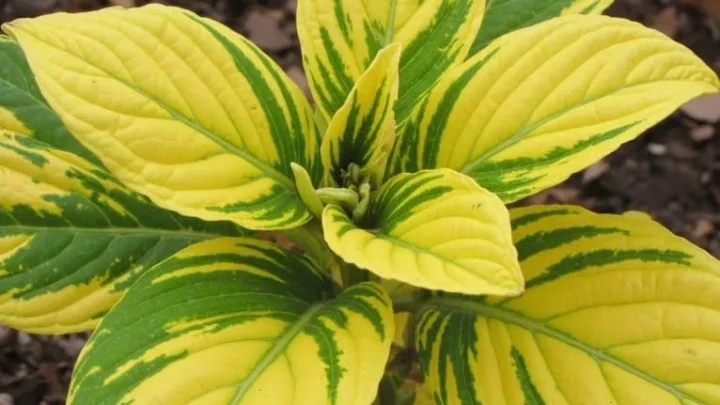
Interveinal Yellowing (Green Veins, Yellow Tissue)
Yellow tissue with sharply green veins is classic chlorosis. On lower leaves, magnesium is usually the culprit. On new top growth, suspect iron.
The leaf almost looks like a green skeleton against a yellow background.
Yellow with Brown Spots or Bullseye Rings
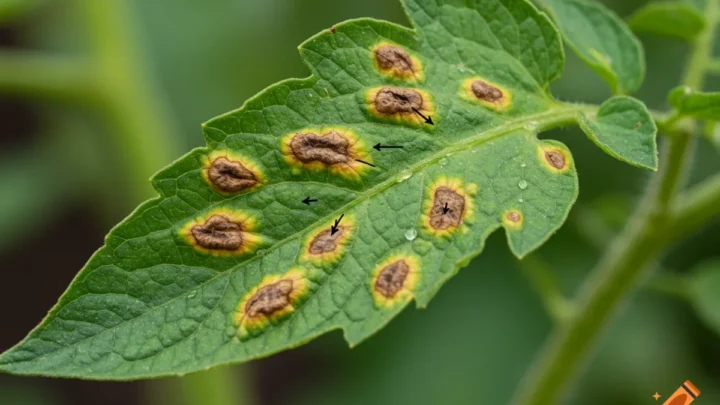
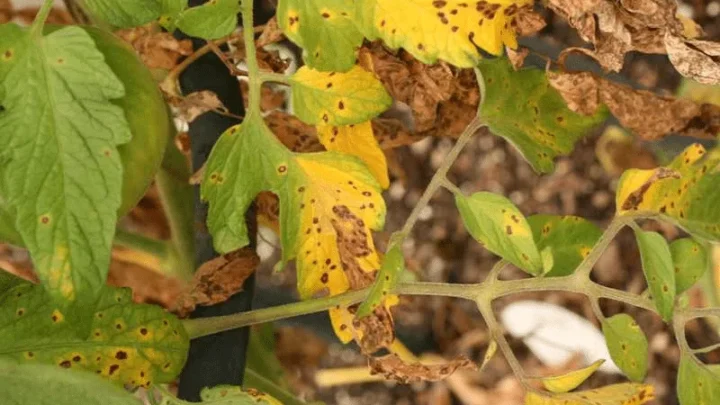
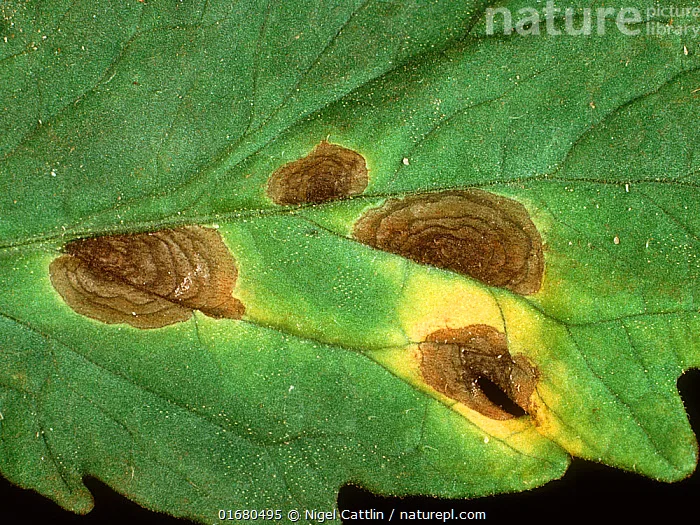
Yellow with dark spots that show concentric rings means early blight (Alternaria solani). Small dark spots with tan centers and yellow halos scattered like buckshot is Septoria leaf spot. Both are fungal.
Both spread fast in warm, wet weather.
Yellow and Curling
Curling plus yellowing usually points to viruses like tomato yellow leaf curl virus, or to herbicide drift. If neighboring plants show the same distortion, chemical drift is likely. Check under the leaves for whiteflies, which spread TYLCV between plants.
Watering Problems: The Most Common Culprit
Water issues cause more yellow tomato leaves than every disease combined. Both too much and too little produce the same first symptom: yellowing lower leaves that may or may not wilt.
Overwatering drowns roots and starves them of oxygen. The plant can't move nitrogen up the stem, so lower leaves yellow first. The soil feels heavy and stays wet more than a day after watering.
Container plants without drainage holes almost always end up here.
Underwatering is the opposite. Leaves yellow, then crisp at the edges and drop. The soil pulls away from the pot edges and feels like dust two inches down.
Tomato plants want roughly 1 to 2 inches of water per week, delivered deep and infrequent rather than shallow and daily. Mulch the soil surface 2 to 3 inches thick. Mulch steadies moisture, cuts evaporation, and blocks the soil-splash that carries fungal spores up onto lower leaves.
Nutrient Deficiencies and How to Read Them
Nutrient problems rarely announce themselves clearly. A soil test that shows adequate nitrogen can still produce a yellow, starved-looking plant when the pH is wrong or the roots are damaged. Symptoms come first.
Soil test comes second.
Before adding any fertilizer, test soil pH. Tomatoes want 6.2 to 6.8. Outside that range, nutrients get chemically locked and no amount of feeding fixes the yellowing.
A cheap probe or a mail-in test from your local extension office (the USDA Cooperative Extension System covers every US state) is the fastest way to know for sure.
Nitrogen, Magnesium, Iron, and Potassium at a Glance
| Deficiency | Where It Shows | Pattern | Fix |
|---|---|---|---|
| Nitrogen | Bottom leaves first | Uniform pale yellow, whole leaf | Balanced feed (5-10-10 during fruiting) |
| Magnesium | Lower to mid leaves | Yellow between green veins | 1 tbsp Epsom salt per gallon, foliar spray |
| Iron | Top new growth | Yellow with fine green veins | Chelated iron, verify pH first |
| Potassium | Older leaves | Yellow/brown leaf edges, curling | Sulfate of potash or wood ash |
Foliar sprays give the fastest visible response, usually within 3 to 5 days. Soil corrections work slower but hold longer through the season.
Fungal and Bacterial Diseases That Cause Yellow Leaves
Diseases account for most stubborn yellowing that doesn't respond to water or fertilizer changes. Fungal infections dominate in warm, humid weather. Bacterial ones spread through splashing rain and dirty tools.
Get a diagnosis early, because once a disease establishes, you're managing spread, not curing the infected foliage.
Early Blight vs. Septoria Leaf Spot
Early blight and Septoria are the two most common fungal yellowers, and gardeners mix them up constantly. Both start on lower leaves. Both spread upward.
The lesions themselves are the tell.
- Early blight (Alternaria solani): brown spots with concentric bullseye rings, surrounded by a yellow halo, usually larger than a pencil eraser
- Septoria leaf spot: many small circular spots with dark borders and tan centers, scattered like buckshot across the leaf
Both respond to sanitation, better airflow, and copper-based or chlorothalonil fungicides applied on label rates. Remove infected leaves immediately and bag them. Do not compost.
Fusarium and Verticillium Wilt
Fusarium and Verticillium are soilborne fungi that plug the plant's water-carrying vessels, so leaves yellow and wilt even when the soil is moist. Fusarium often shows yellowing on just one side of the plant or one side of a leaf. Verticillium tends toward V-shaped yellow patches at leaf tips.
Neither has a cure once the plant is infected. Fusarium spores persist in soil for 10 or more years. Pull affected plants, avoid replanting tomatoes in that spot, and choose resistant varieties (look for VFN codes on the tag) next season.
Viral Infections and Pest Damage
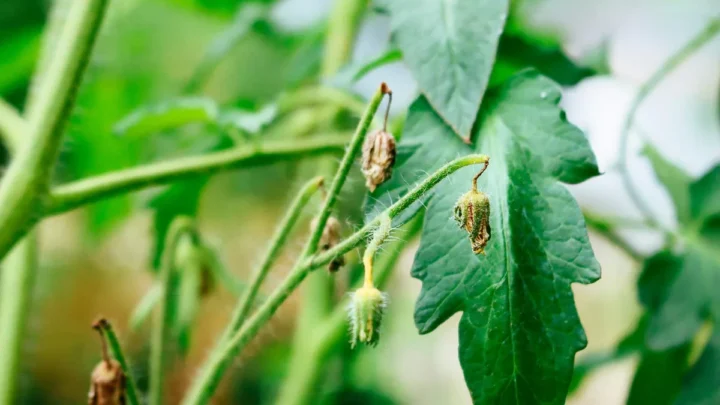
Viruses and heavy pest feeding produce yellowing that looks nothing like disease spots. Instead you get mottled, mosaic patterns, curled leaves, or stippled bronze speckling.
Tomato mosaic virus (ToMV) and tomato spotted wilt virus (TSWV) create patchy yellow-green mottling and distorted leaves. Tomato yellow leaf curl virus (TYLCV) causes upward curling with yellow margins and stunts new growth. All three are incurable.
Remove and destroy affected plants to stop spread.
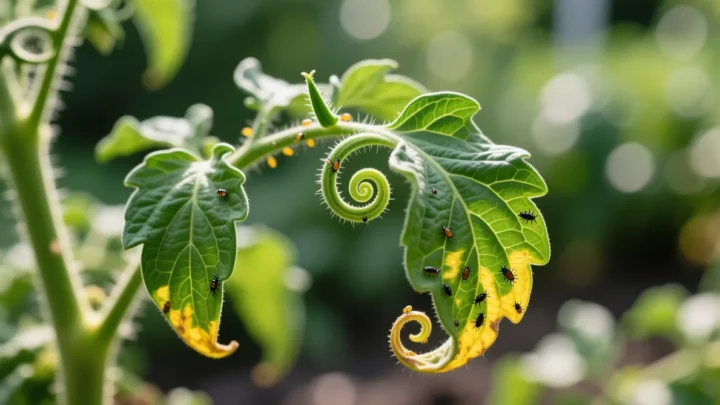
Pests do their damage differently. Spider mites suck chlorophyll from the underside, leaving a fine yellow stippling that turns bronze under a hand lens. Whiteflies and aphids weaken leaves and transmit viruses at the same time.
Thrips scar the surface and leave silvery trails.
Check under leaves whenever you diagnose yellowing. If you see webbing, tiny moving specks, or clouds of small white insects when you brush the foliage, treat with insecticidal soap or horticultural oil before the population explodes.
Soil pH, Root Issues, and Environmental Stress
Sometimes the plant has plenty of nutrients and no disease, but yellowing shows up anyway. That's almost always a root, pH, or stress problem preventing normal uptake.
Soil pH drives everything. Below 6.0, phosphorus and calcium lock up. Above 7.0, iron, manganese, and zinc become unavailable.
Adding fertilizer to a pH-locked plant does nothing except waste money.
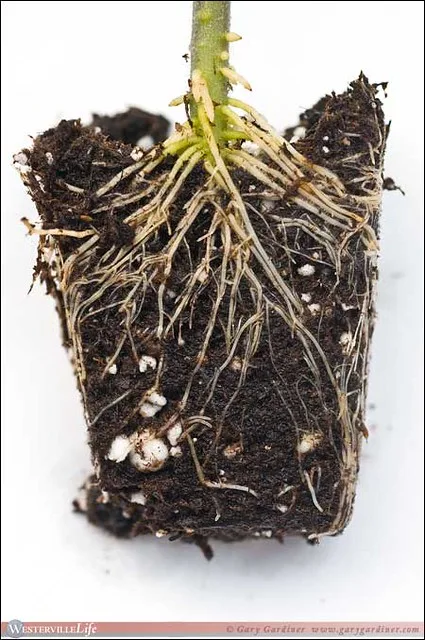
Root problems come from waterlogging (Pythium and Phytophthora root rots), compacted clay, or physical damage during transplanting. Pull a struggling plant and look at the roots. Healthy roots are white to pale tan and firm.
Rotted roots are brown, mushy, and smell sour.
Environmental stress adds another layer. Cold soil below 60°F (16°C) at planting stunts uptake for weeks even after warming. Sudden heat waves above 95°F (35°C) trigger leaf drop and yellowing as the plant conserves water.
Salt buildup in containers from repeated feeding also burns roots and yellows leaves from the tips inward.
The 5-Minute Field Diagnosis Workflow
Use this quick sequence any time yellowing appears. It gets you to a working diagnosis without lab tests.
- Note which leaves are yellow (bottom, middle, top, or scattered)
- Look at the pattern on a single leaf (uniform, interveinal, spotted, curled)
- Push a finger 2 inches into the soil. Wet, dry, or just right?
- Flip 3 leaves and check the undersides for mites, whiteflies, or eggs
- Check the stem base for lesions, cankers, or a musty smell
- If in doubt, ease the plant up and inspect roots (white and firm vs. brown and soft)
- Match findings against the tables and patterns already covered above
Ninety percent of cases resolve at step 3 or step 4. Watering issues and pests are that common. Reserve pH probes, soil tests, and disease samples for the stubborn 10%.
Fixes That Actually Work (Matched to the Cause)
The wrong fix wastes time and often makes things worse. Adding nitrogen to a diseased plant fuels the pathogen. Pouring water on an overwatered plant kills it faster.
Match the action to the diagnosis.
| Cause | First Move | Follow-Up |
|---|---|---|
| Overwatering | Stop watering, improve drainage | Repot container plants if soil stays soggy |
| Underwatering | Deep soak, then mulch 2 to 3 inches | Water 1 to 2 inches per week going forward |
| Nitrogen shortage | Side-dress with balanced fertilizer | Retest in 2 weeks, avoid over-feeding |
| Magnesium shortage | Foliar spray, 1 tbsp Epsom salt per gallon | Repeat weekly until new growth greens |
| Iron chlorosis | Check pH, apply chelated iron if pH is fine | Amend with sulfur if pH is above 7.0 |
| Early blight or Septoria | Remove infected leaves, mulch, improve airflow | Copper or chlorothalonil on label rates |
| Fusarium or Verticillium | Pull and destroy the plant | Rotate crops, plant VFN-resistant varieties |
| Viral infection | Remove plant, control aphids and whiteflies | Sanitize tools with 10% bleach |
| Spider mites | Spray insecticidal soap on undersides | Repeat every 5 to 7 days for 3 cycles |
| Herbicide drift | Water deeply, wait it out | Cover plants next time neighbors spray |
A useful rule: give any correction 5 to 7 days before judging results. New leaves emerging green means the fix worked. Continued yellowing on new growth means the diagnosis was wrong.
Go back to step 1 of the workflow.
Mistakes That Make Yellow Leaves Worse
The instinct to "do something" is what turns a fixable issue into a lost plant. A few common moves consistently backfire.
- Watering more when leaves yellow. If the cause is overwatering or root rot, you're speeding the decline. Check soil moisture first.
- Dumping high-nitrogen fertilizer on a diseased plant. Extra nitrogen fuels lush new growth that fungi and bacteria love. It also delays fruit set.
- Overhead watering in the evening. Wet leaves overnight are a fungal spore delivery system. Water at the base in the morning.
- Composting infected foliage. Home compost piles rarely hit the 140°F required to kill Fusarium or Verticillium spores. Bag and trash instead.
- Reusing container soil after a diseased plant. Pathogens live on. Discard the soil or solarize it under clear plastic for 4 to 6 weeks.
- Chasing every yellow leaf with a spray. Some yellowing is normal aging. Diagnose before treating, every time.
When to Remove Yellow Leaves (and When to Leave Them)
Yes, you should remove yellow leaves in most cases. They no longer photosynthesize and they invite disease when they touch soil or hang in humid canopies.
Pinch or snip cleanly at the stem. Never rip, which tears healthy tissue and opens wound sites. Sanitize pruners with 70% isopropyl alcohol between plants to avoid moving pathogens.
Leave the yellow leaf alone in one situation: when only 1 or 2 lowest leaves are yellow on a young transplant. Those cotyledons and first true leaves feed the plant while the root system establishes. Let them drop on their own.
Never remove more than a third of the foliage at once. Aggressive stripping stresses the plant and can trigger sunscald on newly exposed fruit.
Prevention for Next Season's Crop
Most yellow-leaf problems repeat year after year because the root causes stay in the soil. A few off-season moves cut the risk dramatically.
- Rotate tomatoes on a 3 to 4 year cycle. Don't plant tomatoes, peppers, potatoes, or eggplants in the same bed until the rotation is complete.
- Choose resistant varieties. Look for tags with V (Verticillium), F (Fusarium), N (nematodes), T (tobacco mosaic), and A (Alternaria) codes.
- Test soil in fall or early spring. Amend pH to 6.2 to 6.8 before planting, not after symptoms appear.
- Mulch every plant. Straw, shredded leaves, or grass clippings 2 to 3 inches deep block soil splash and steady moisture.
- Space plants 24 to 36 inches apart. Airflow prevents most fungal outbreaks better than any spray.
- Stake or cage every plant. Foliage off the ground stays drier and cleaner.
- Water at the soil line, not the foliage. Drip irrigation or soaker hoses beat sprinklers for tomato health.
- Sanitize stakes, cages, and tools with a 10% bleach solution at season's end.
Frequently Asked Questions
Should I cut off yellow tomato leaves or leave them on?
Cut them off in nearly every case. Yellow leaves don't recover, and they attract fungal spores that spread upward. Snip cleanly at the stem with sanitized pruners.
The only exception is 1 or 2 low leaves on a young seedling, which still feed the plant while roots establish.
Can Epsom salt fix yellow tomato leaves?
Only if the cause is magnesium deficiency, which shows as yellow tissue between green veins on lower leaves. Mix 1 tablespoon of Epsom salt per gallon of water and spray the foliage. Expect visible greening within 3 to 5 days.
It won't help with nitrogen, iron, or disease-related yellowing.
Why are my tomato leaves turning yellow after transplanting?
Transplant shock is common in the first 7 to 10 days. Roots need time to establish before they can pull water and nutrients efficiently. Keep the soil evenly moist, avoid fertilizing for the first week, and shade new transplants during hot afternoons.
New green growth confirms recovery.
Is it too late to save a tomato plant with yellow leaves?
Usually no, if the growing tip and stem are still healthy. Diagnose the cause, apply the matched fix, and give the plant 7 to 10 days to respond. If new leaves emerge green, you've saved it.
If yellowing continues on new growth or the stem softens, pull it and protect neighboring plants.
Do yellow leaves mean my tomatoes won't produce fruit?
Not on their own. A plant with a few yellow lower leaves usually still fruits normally. Widespread yellowing across the canopy cuts photosynthesis and reduces both yield and fruit sugar.
Fix the cause quickly and most plants recover full production.
How often should I water tomatoes to prevent yellowing?
Deep and infrequent beats shallow and daily. Aim for 1 to 2 inches of total water per week, split into 2 or 3 sessions. Container plants may need daily watering in hot weather.
Always check the top 2 inches of soil first, and never water on a set schedule without feeling the soil.

Similar Posts