Why Tomato Flowers Drop Off Before Fruit Sets: Fixes
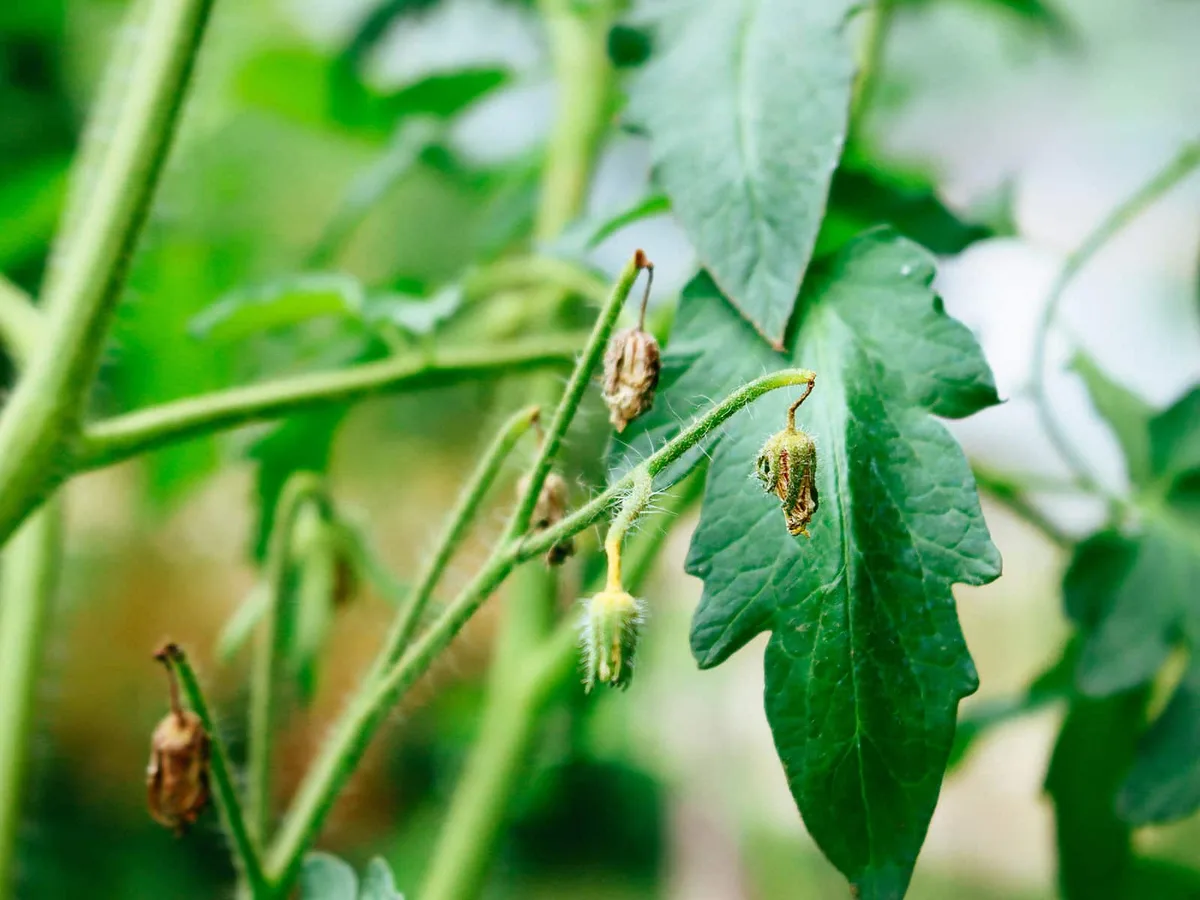
Watching tomato flowers turn yellow, wither, and drop off before setting fruit is one of the most frustrating problems in a home garden. If you've been asking yourself, "Why are tomato flowers falling off without producing fruit?", the answer usually comes down to a specific stress the plant is reacting to, not bad luck or bad seed. Most of the time, it's fixable within one or two flower trusses.
Tomatoes are self-pollinating, but pollen only stays viable inside a narrow window: roughly 70°F to 85°F daytime and 55°F to 70°F at night, with humidity between 40% and 70%. Step outside those numbers and fruit set stalls fast. Here's how to figure out what's going wrong in your garden as of 2026, and exactly what to do about it.
Quick Answer
Tomato flowers fall off without setting fruit when pollen fails. The top triggers are daytime heat above 85°F, night temperatures above 70°F or below 55°F, humidity outside the 40% to 70% band, excess nitrogen, drought stress, or still air that blocks pollination. Fix the specific stressor and the next truss usually sets normally.
Why Your Tomato Flowers Keep Dropping Before Setting Fruit
Blossom drop is a physiological stress response, not a disease. When a tomato plant senses conditions its flowers can't handle, it aborts the bloom and releases it at the abscission joint on the pedicel. You'll see the little stem turn yellow, then the whole flower falls cleanly.
The plant isn't broken. It's protecting resources for flowers that have a better shot at becoming fruit. Once you correct the stressor, the next truss up typically sets normally within 7 to 10 days.
The Quick Diagnosis: What Blossom Drop Actually Looks Like
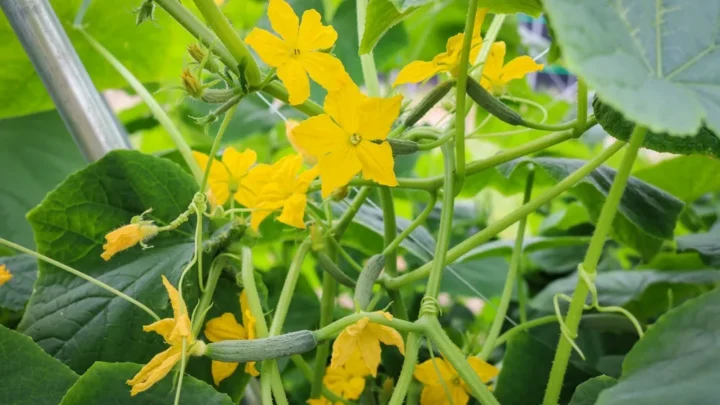
Real blossom drop has a specific look. The pedicel (the tiny stem holding each flower) turns yellow, and the entire flower falls off at that joint. If petals are dropping but a tiny green pea-sized fruit remains behind, that's normal petal drop after successful pollination.
That one is a good sign.
Here's what to check on the plant:
- Yellow, dry pedicels with flowers still attached and hanging limp
- Whole intact flowers on the soil beneath the plant
- Trusses where every flower drops in sequence over 3 to 5 days
- No swelling behind the flower base, meaning no fruit forming
If half a truss sets and half drops, you had a mild stress event. If every flower on multiple trusses drops, the stress is ongoing and needs correcting now.
How Tomato Flowers Pollinate and Set Fruit (The Part Most Guides Skip)
Tomato flowers are "perfect" flowers. Each bloom holds both male and female parts. The anthers form a cone around the central pistil.
Pollen releases inside that cone and falls onto the stigma whenever the flower vibrates. Wind, a passing bumblebee, or a gardener tapping the truss all do the same job.
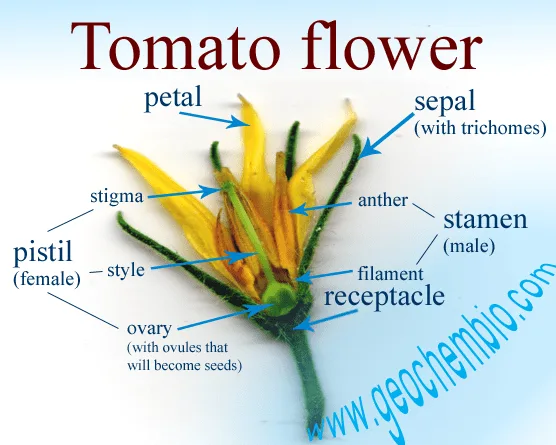
Bees aren't strictly required, but they help enormously. Bumblebees use "buzz pollination," vibrating flowers at a frequency that shakes pollen loose far more efficiently than wind alone.
For pollen to actually fertilize the flower, three things must line up:
- Pollen has to be viable (temperature and humidity dependent)
- Pollen has to reach the stigma (needs vibration or airflow)
- The stigma has to be receptive (also temperature dependent)
Break any one of those links and the flower drops. Research summarized by the USDA Agricultural Research Service on Solanum lycopersicum shows pollen viability starts collapsing above 95°F. It stops working almost entirely once night temperatures sit above 75°F for several days in a row.
The 7 Real Causes of Tomato Flower Drop
Every case of blossom drop traces back to one of these seven causes. Work through them in order, because heat and pollination issues account for most complaints from June through August.
Heat Stress: Day and Night Temperature Thresholds
The single biggest cause in summer. Daytime highs above 85°F (29°C) start reducing pollen viability. Night temperatures above 70°F (21°C) do more damage because the plant can't cool down and recover.
Sustained days above 95°F sterilize pollen almost completely.
Cold Nights and Early-Season Drop
The opposite problem hits northern gardens in spring. Night temperatures below 55°F (13°C) stop pollen tubes from growing after they reach the stigma. This is why the first truss on early transplants often drops entirely, then later trusses set normally as the weather warms.
Humidity Outside the 40 to 70% Sweet Spot
Below 40%, pollen dries out and won't stick to the stigma. Above 70%, pollen clumps and can't shake free from the anther cone. Desert gardens and steamy greenhouses run into opposite ends of the same problem.
Too Much Nitrogen and the "All Leaves, No Fruit" Problem
Heavy nitrogen pushes leaf and stem growth at the expense of flowers and fruit. If your plants look dark green and rangy with sparse flowering, cut the nitrogen. Switch to a fertilizer higher in phosphorus and potassium, something like a 5-10-10 blend.
Inconsistent Watering and Root Stress
Wide swings between bone-dry and soaking wet trigger flower abortion. Aim for 1 to 2 inches of water per week, applied evenly. Container tomatoes are especially prone because their small root zone dries out fast on hot afternoons.
Pollination Failure in Still Air or Enclosed Spaces
Greenhouses, patios, and screened-in gardens block both wind and bees. Without vibration, pollen never leaves the anther cone. Even outdoor plants in dense, crowded plantings can suffer if airflow is poor and no pollinators visit.
Thrips, Mites, and Other Flower-Damaging Pests
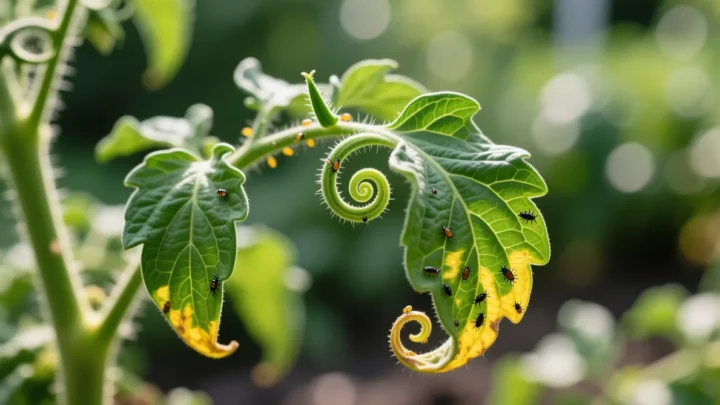
Western flower thrips feed inside the bloom and damage the pistil. Tomato russet mites can attack flowering trusses too. Check three flowers with a hand lens.
Tiny moving specks or brown streaks on the petals mean pests are your culprit.
Your Step-by-Step Diagnostic Workflow
Run this quick check before you change anything. The order matters, because temperature and pollination issues dwarf everything else in mid-summer.
- Check your local 7-day forecast for both high and low temperatures.
- Note current humidity in the morning and again in the afternoon.
- Inspect three flowers with a hand lens for thrips or mite damage.
- Recall what fertilizer you used in the last 4 weeks and at what rate.
- Push a finger 3 inches into the soil to gauge moisture.
- Look at the plant. Deep green foliage with weak flowering points to nitrogen.
- Watch a truss for 2 minutes on a sunny afternoon. If nothing moves it, airflow is your bottleneck.
The first cause you confirm is almost always the primary one. Fix that stressor and give the plant 7 to 10 days before judging the next truss. Tomato plants recover surprisingly fast once conditions improve.
Decision Guide: Match the Symptom to the Fix
Match what you're seeing on the plant to the most likely cause. That keeps you from throwing three unrelated fixes at one problem.
| What you're seeing | Most likely cause | First fix |
|---|---|---|
| Drop during a heat wave | Daytime highs above 85°F or nights above 70°F | Shade cloth and deep watering |
| Drop in early spring | Nights below 55°F | Row cover or wait for warmer nights |
| Lush leaves, few flowers | Excess nitrogen | Switch to low-N fertilizer |
| Wilting between waterings | Drought stress | Even watering, mulch |
| Greenhouse or patio plants | No airflow or bees | Fan, tap trusses, hand pollinate |
| Brown streaks on petals | Thrips or mites | Insecticidal soap, spinosad |
| Dark green plant, dry soil crust | Compact roots, uneven water | Loosen mulch, water deeply |
If two symptoms overlap, fix the environmental one first. Temperature and water beat everything else on the list.
Fixes That Actually Work for Heat-Related Drop
Heat is the top complaint from June through August across most of the US. The goal isn't to cool the whole yard, just to buy the plant a few degrees at the canopy and root zone.
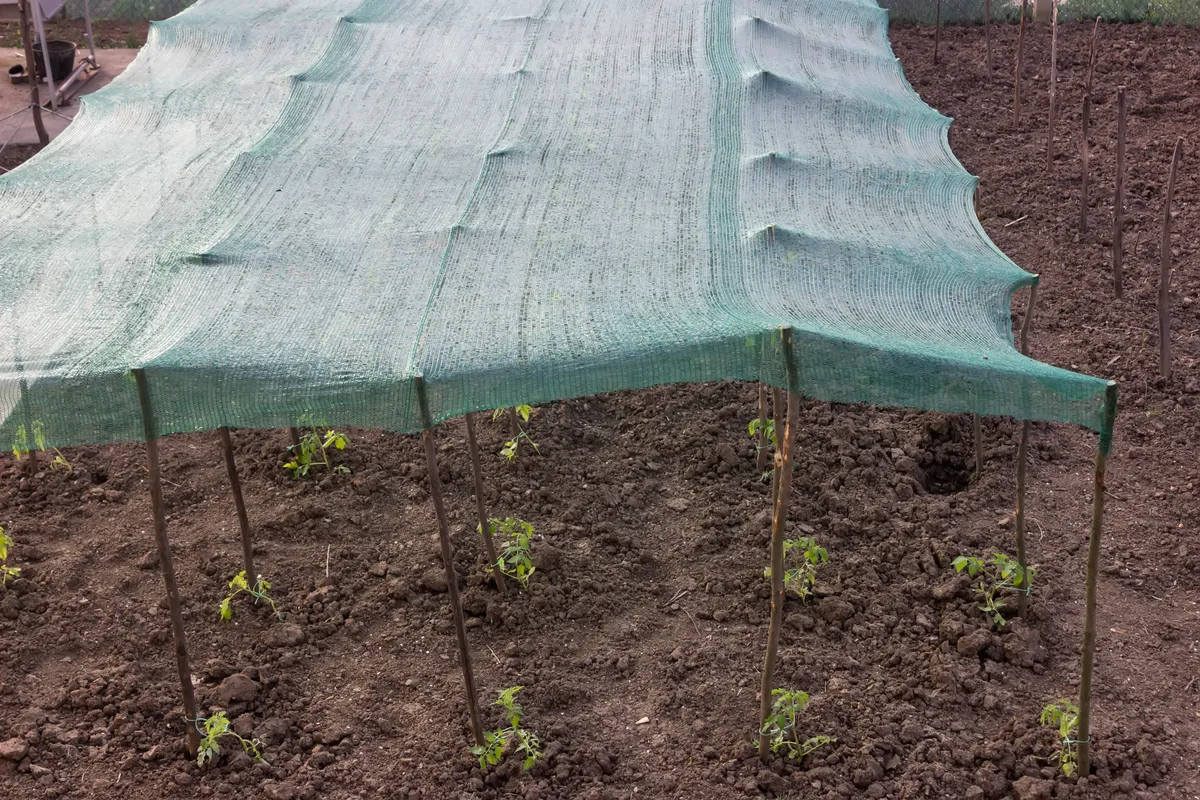
Shade cloth rated 30% to 50% is the most reliable single fix. Stretch it over hoops or a simple PVC frame 18 to 24 inches above the plants. Leave the sides open for airflow.
Guidance from the University of Florida IFAS Extension points to 30% cloth as a solid sweet spot for tomatoes in Zones 8 through 11.
Other high-impact heat fixes:
- Mulch 2 to 3 inches deep with straw or shredded leaves to hold soil moisture and drop root-zone temperature
- Water early in the morning, deeply, so roots aren't hitting stress by mid-afternoon
- Move container tomatoes into afternoon shade during heat waves above 95°F
- Skip foliar fertilizers during heat spikes because they add stress
Blossom set sprays (kinetin-based hormones) sometimes force fruit under heat, but the resulting fruit are often small, seedless, and misshapen. They're a last resort, not a routine tool.
Fixes for Cold, Humidity, and Greenhouse Issues
Cold-caused drop is easiest to solve because it fixes itself as the season warms. If nights are still dipping below 55°F, use a row cover or a water-filled cloche around each plant. These trap daytime heat and hold the microclimate 5 to 10 degrees warmer overnight.
For low humidity (desert Southwest, dry mountain valleys):
- Mulch heavily to raise humidity at the plant base
- Group plants closer for a shared humid microclimate
- Skip overhead misting during flowering because wet flowers won't pollinate
For high humidity (Gulf Coast, greenhouses, polytunnels):
- Increase spacing to 24 to 36 inches between plants
- Run a small oscillating fan for 4 to 6 hours daily
- Prune lower foliage to open up airflow
- Vent the greenhouse aggressively on warm afternoons
Greenhouse growers often hit both extremes in the same day. Combined venting plus a low-speed fan is the most reliable way to hold humidity in the 50% to 65% range during flowering.
How to Hand Pollinate Tomatoes the Right Way
Hand pollination takes 20 seconds per plant and works whenever airflow or bees are the bottleneck. Do it on a warm, sunny day between 10 a.m. and 2 p.m., when pollen releases most freely and humidity is at its daily low.
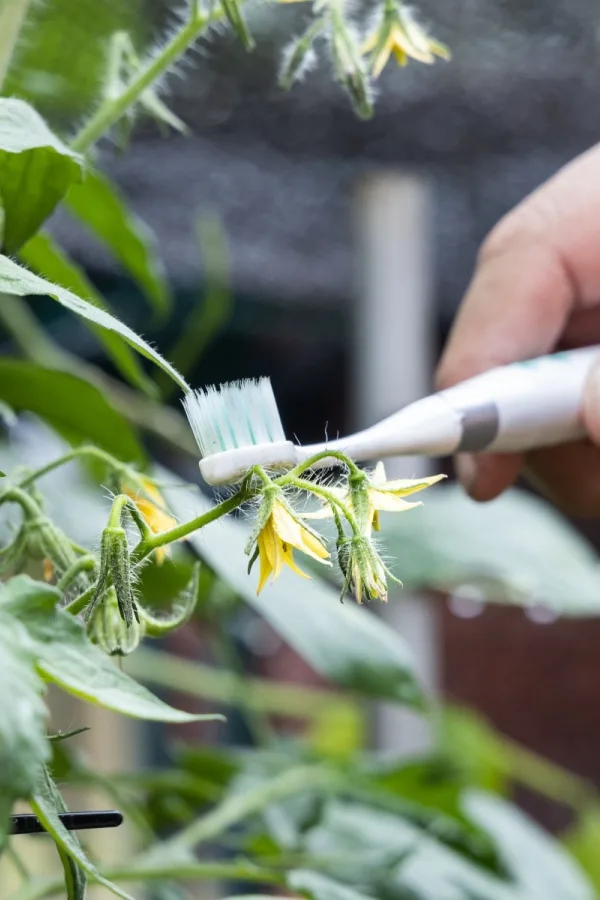
Three methods work, in order of effectiveness:
- Battery-powered pollinator or electric toothbrush. Touch the vibrating head to the back of each flower truss for 2 to 3 seconds. This mimics buzz pollination and shakes pollen loose inside the anther cone.
- Finger tap or pencil flick. Tap the main stem behind each truss firmly enough to make the flowers bounce.
- Oscillating fan on low, running 3 to 4 hours a day. This works for a whole greenhouse or patio at once, not just one plant.
Repeat every other day while flowers are open. You'll know it worked when tiny green fruit swell behind the petals within 5 to 7 days. If nothing sets after two rounds, the problem isn't pollination.
Recheck temperature and pest damage.
Fertilizer Adjustments When Flowers Keep Falling
Excess nitrogen is a common self-inflicted cause, especially with lawn-adjacent beds or gardeners using a general-purpose 10-10-10 too often. If your plants are tall, dark green, and rangy with sparse flowers, the fertilizer is the first thing to change.
Practical adjustments:
- Stop all high-nitrogen feeds immediately (blood meal, fish emulsion, urea, lawn-grade fertilizer)
- Switch to a bloom-boost blend like 5-10-10 or 3-15-15 for the next 4 to 6 weeks
- Side-dress with 1/4 cup of bone meal per plant for a slow phosphorus boost
- Confirm soil pH sits between 6.2 and 6.8 with a cheap test kit
A soil test through your state Cooperative Extension is the smartest single step if problems repeat every summer. It costs $15 to $25 and tells you exactly what's short and what's already saturated. Feeding blind is how most gardens end up nitrogen-heavy.
Skip Epsom salts unless a soil test confirms magnesium deficiency. Adding magnesium when calcium is the actual limit only makes things worse.
Best Heat-Tolerant and Cool-Set Tomato Varieties
Variety choice does more heavy lifting than any product you can buy. If your region regularly sees stretches above 90°F or nights below 55°F, pick a cultivar bred for that stress from the start.
| Region challenge | Recommended varieties | Type |
|---|---|---|
| Extreme summer heat (Zones 8 to 11) | 'Heatmaster', 'Solar Fire', 'Phoenix', 'Florida 91' | Determinate hybrid |
| Long humid summers | 'Sun Leaper', 'Sun Chaser', 'Arkansas Traveler' | Indeterminate |
| Cool nights, short seasons | 'Oregon Spring', 'Siberian', 'Glacier', 'Stupice' | Cool-set determinate |
| Container gardens | 'Patio Choice', 'Tumbler', 'Bush Early Girl' | Compact determinate |
| Reliable all-rounder | 'Celebrity', 'Better Boy', 'Sungold' cherry | Mid-range |
Cherry and grape tomatoes almost always outperform beefsteaks when conditions turn extreme. Their small flowers set fruit at wider temperature and humidity ranges. If a summer is looking brutal, plant one heat-tolerant cherry as insurance.
Mistakes That Make Blossom Drop Worse
Most gardeners react to blossom drop by doing too much at once. That often deepens the problem instead of solving it.
Avoid these common missteps:
- Ripping off healthy leaves to "give flowers more sun" (removes cooling shade for the truss)
- Adding a nitrogen-rich fertilizer to "boost" a stressed plant
- Deep watering every day (creates soggy roots and oxygen starvation)
- Spraying insecticides for flowers already dropping (adds chemical stress with no pest present)
- Panicking after one hot week and pulling the plant
- Repotting a container tomato mid-summer
- Applying blossom set sprays on the first truss instead of fixing the underlying cause
Do one thing at a time and wait 7 days before adding a second intervention. Overlapping fixes make it impossible to see what actually worked.
When to Accept the Loss and Wait for the Next Truss
Sometimes the smartest move is patience. During a genuine heat wave with daytime highs above 95°F for a week or more, no fix will force fruit set. The plant will simply drop those flowers.
Keep the plant healthy through the stretch. Water deeply, shade if you can, and skip fertilizer. As soon as nights drop back below 70°F, the next round of flowers will set and mature normally.
Established indeterminate tomatoes produce a new truss every 7 to 10 days across a whole summer. Losing two trusses to a heat wave still leaves plenty of production time. Pulling a plant early is almost always premature.
Frequently Asked Questions
How long does it take tomatoes to recover from blossom drop?
Most plants recover within 10 to 14 days once the stressor is gone. The truss that was open during the stress event is lost. The next truss up sets normally, and you'll see tiny green fruit swell behind the petals within a week of successful pollination.
Should I remove flowers that already dropped?
No, flowers drop themselves cleanly at the abscission joint on the pedicel. You don't need to prune anything. If dropped petals or pedicels are stuck to lower leaves, brush them off to reduce hiding spots for pests and moisture-related fungal issues.
Do tomato plants need bees to set fruit?
Tomatoes are self-pollinating, so bees aren't required. Wind, vibration, or a simple tap on the truss will move pollen inside the flower. Bees speed things up through buzz pollination, but hand pollination or a small fan can fully replace them in enclosed or windless spaces.
Can I use Epsom salt to stop blossom drop?
Only if a soil test confirms magnesium deficiency. Epsom salt (magnesium sulfate) does nothing for pollination or temperature stress. Adding it blindly can worsen calcium uptake and trigger blossom end rot.
Fix the actual cause first, then correct nutrients based on a test.
Why do only the first few flowers drop then the rest set?
First-truss drop is usually cold nights below 55°F or transplant stress. Both resolve as the season warms and the root system fills the pot or bed. Later trusses form after conditions have normalized, so they set fruit without issue.
It's the most common and least worrying pattern.
Your Blossom Drop Recovery Checklist
Print this or bookmark it for next season. Work down the list in order.
- Check 7-day temperature forecast (highs, lows)
- Measure humidity at midday
- Inspect three flowers with a hand lens for thrips or mites
- Push a finger 3 inches into the soil to check moisture
- Review the last 4 weeks of fertilizer applications
- Watch a truss for 2 minutes to gauge airflow
- Apply the single most likely fix (shade, water, fan, or fertilizer swap)
- Wait 7 to 10 days before adding a second intervention
- Track which truss recovers so you learn your garden's pattern
Handle the biggest stressor first and the plant will usually reward you within two weeks. Blossom drop is a message from the plant, not a death sentence.

Similar Posts