Yellow New Leaves: Iron Deficiency or Nitrogen? How to Tell
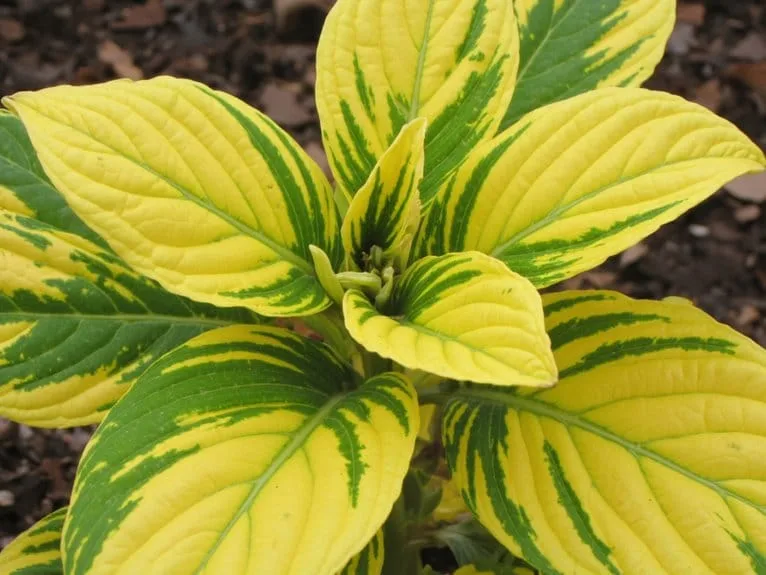
Yellow leaves on fresh new growth almost always point to a micronutrient issue, not nitrogen. Are yellow new leaves caused by iron deficiency or nitrogen deficiency? In nine out of ten cases, iron is the culprit when the youngest leaves turn yellow while the veins stay green.
Nitrogen deficiency behaves in the opposite direction, showing up on the oldest, lowest leaves first.
That single rule, top of the plant versus bottom, is the fastest way to tell them apart. As of 2026, university extension programs still classify iron as immobile and nitrogen as highly mobile in the phloem. Get this call right and you save a plant.
Get it wrong and you can make it worse.
The Fast Answer: Where the Yellowing Shows Up Tells You Everything
Yellow new leaves point to iron deficiency, not nitrogen. Iron is immobile once it enters a leaf. New growth can't pull iron out of older leaves.
Nitrogen is mobile, so shortages appear on old leaves first. Check the plant's top versus bottom before you treat anything.
Why Nitrogen and Iron Get Mixed Up So Often
Both deficiencies turn leaves yellow. That's where the confusion starts. Gardeners see any yellow leaf and reach for a nitrogen fertilizer, which is the wrong move when iron is actually short.
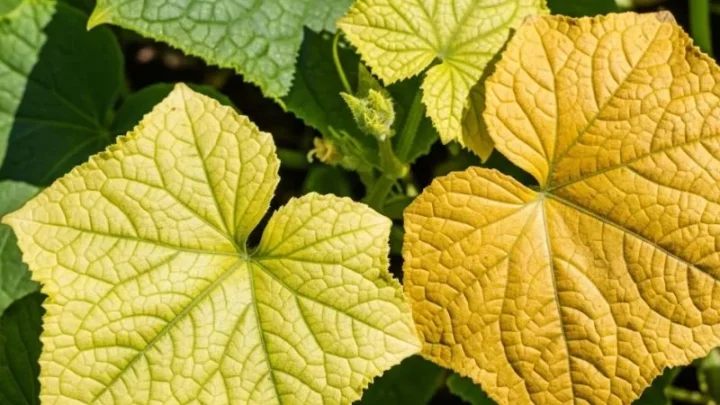
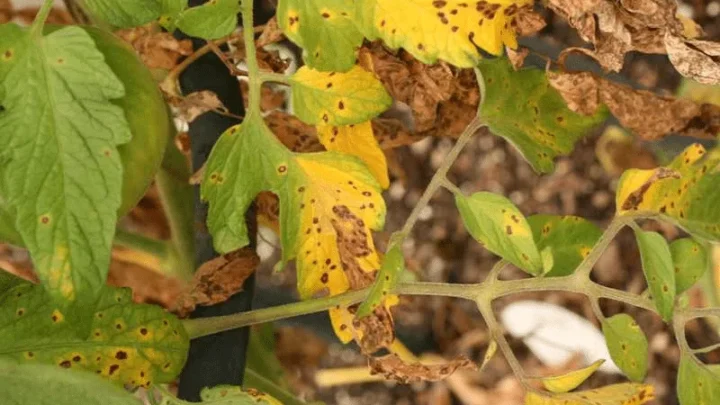
The visual clues are subtle if you don't know what to look for. Iron chlorosis leaves the veins bright green while the tissue between them fades. Nitrogen deficiency turns the whole leaf a uniform pale yellow, veins included.
Add in look-alikes like magnesium and manganese, and it's easy to misread the plant.
Aggregate extension-service records suggest iron chlorosis is one of the most commonly misdiagnosed nutrient problems, especially on blueberries, azaleas, and citrus in alkaline soil. It's often mistaken for other deficiencies because the yellow color looks so similar to the untrained eye. For a classic diagnostic reference, the University of Minnesota Extension publishes clear material on iron chlorosis in trees and shrubs.
How Nutrient Mobility Decides Which Leaves Turn Yellow First
Nutrient mobility is the whole game here. It decides whether the plant can shift a nutrient from old leaves to new ones.
Mobile nutrients move freely through the phloem. When the plant runs short, it pulls from older leaves and sends the supply up to fresh growth. Old leaves yellow first.
Immobile nutrients get locked into the leaf they landed in. If the roots stop supplying more, only the newest leaves show the shortage.
Here's the quick reference:
| Nutrient | Mobility | Where symptoms show first |
|---|---|---|
| Nitrogen (N) | Mobile | Old, lower leaves |
| Phosphorus (P) | Mobile | Old leaves |
| Potassium (K) | Mobile | Old leaves |
| Magnesium (Mg) | Mobile | Old leaves |
| Iron (Fe) | Immobile | New, top leaves |
| Manganese (Mn) | Immobile | New leaves |
| Calcium (Ca) | Immobile | New growth, growing tips |
| Sulfur (S) | Mostly immobile | Young leaves |
That's why "yellow new leaves" almost always means an immobile nutrient. Iron sits at the top of that list for most home gardens.
What Iron Deficiency Actually Looks Like on New Leaves
Iron deficiency has a signature look. Once you spot it, you won't forget it.
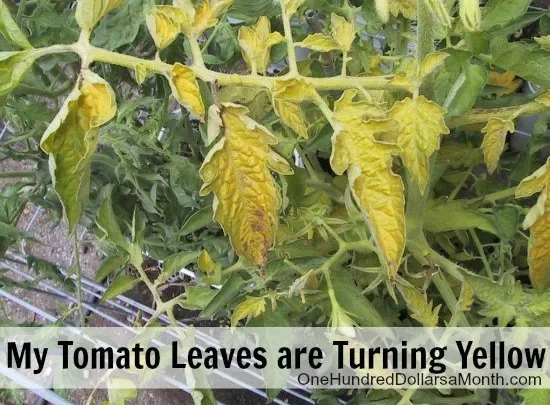
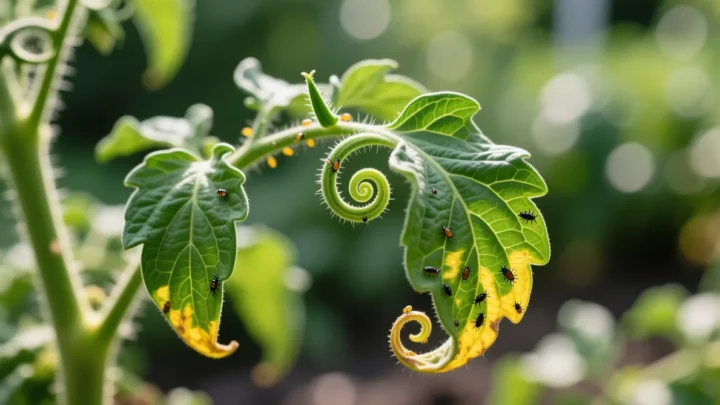
The youngest leaves at the growing tips turn pale yellow while the veins stay a sharp, contrasting green. That pattern has a name: interveinal chlorosis. Under advanced deficiency the tissue can bleach almost white.
Brown patches, called necrosis, then appear at the leaf margins.
Key visual cues to watch for:
- Symptoms start on the newest growth, never the old leaves
- A green vein network stands out against yellow leaf tissue
- Progression runs pale green, then yellow, then bleached white
- Whole shoots at the top can look stunted or small
- Older leaves further down usually stay green
Iron chlorosis often shows up in cool, wet spring soils even when a soil test reads "sufficient" for iron. Low root activity and high bicarbonate in irrigation water block iron uptake. The iron is in the soil.
The plant just can't reach it.
What Nitrogen Deficiency Actually Looks Like (and Why It Starts on Old Leaves)
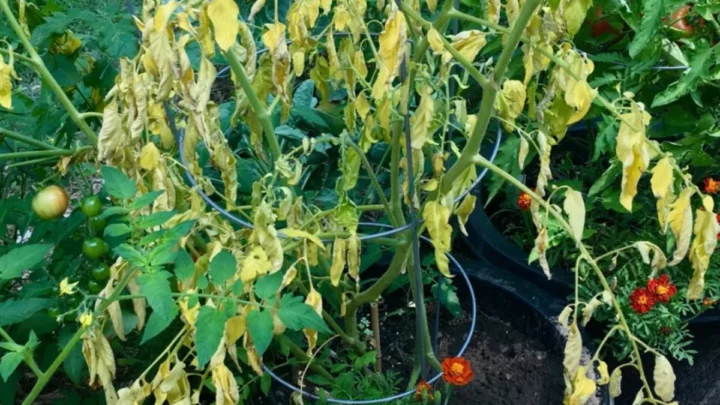
Nitrogen deficiency works in reverse. The oldest, lowest leaves fade first while the top of the plant stays greener for longer.
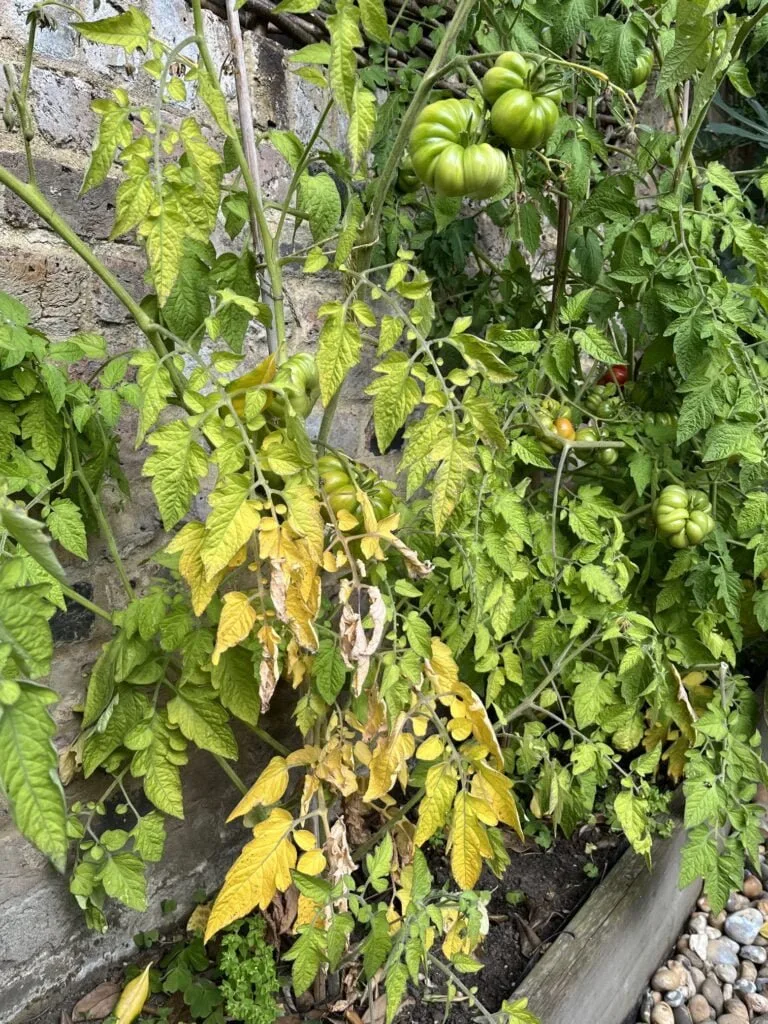
Nitrogen is highly mobile inside the plant. When soil supply drops, the plant robs nitrogen from mature leaves and sends it up to the growing tips. Those bottom leaves turn a uniform pale yellow-green, with no vein contrast.
Left long enough, they yellow completely and drop off.
Key visual cues to watch for:
- Yellowing starts on the oldest leaves near the base of the plant
- The whole leaf pales uniformly, veins included
- Overall growth slows and looks thin or spindly
- Stems may look weak, or turn purplish in some species
- New top leaves stay greener until deficiency becomes severe
Published tissue-analysis references put the sufficiency range for most vegetables and ornamentals at roughly 2.5 to 4.5 percent nitrogen by dry weight. Below that, symptoms show fast. Above that, extra nitrogen won't fix yellow new leaves.
It'll only push soft, leggy growth and mask the real problem.
The 4-Question Diagnostic Walkthrough
Work through these four questions in order. Each one narrows the diagnosis fast.
Question 1: Which leaves are yellow, new or old?
If the newest leaves at the top are yellow, you're looking at an immobile nutrient issue, most likely iron. If the oldest leaves at the bottom are yellow, you're looking at a mobile nutrient issue, most likely nitrogen. Middle leaves alone usually point to manganese or magnesium.
Question 2: Are the veins still green or is the whole leaf pale?
Green veins with yellow tissue between them means interveinal chlorosis, the fingerprint of iron. Uniform pale color across the whole leaf, veins and all, is the fingerprint of nitrogen. Get this wrong and you'll fertilize the wrong nutrient.
Question 3: What's your soil pH?
Test the soil before you buy anything. A pH above 6.8 to 7.0 blocks iron uptake even when soil iron is plentiful. A pH below that range, and iron is usually available.
Nitrogen is available across a much wider pH band, so pH mostly points at iron trouble, not nitrogen.
Question 4: How's the watering and drainage?
Waterlogged roots, compacted soil, or cold spring soil all mimic iron deficiency by shutting down root uptake. If your plant sits in soggy soil, fix drainage first. Correcting nutrients in a drowning root zone rarely works.
Look-Alike Culprits: Manganese, Magnesium, Sulfur, and Root Problems
Iron isn't the only cause of yellow new leaves. A few other issues copy the pattern closely enough to fool most gardeners.
Manganese deficiency looks nearly identical to iron chlorosis. The veins stay green, the tissue turns yellow, and symptoms hit new growth. The main difference is that manganese chlorosis shows finer green veining and a slightly greener background color.
It's common on the same alkaline soils that cause iron problems.
Magnesium deficiency shows interveinal yellowing too, but on old leaves first because magnesium is mobile. Sulfur deficiency mimics nitrogen with uniform pale color, only it appears on new growth instead of old. Sulfur is only weakly mobile.
Root damage is the hidden trap. Overwatering, root rot, transplant shock, and nematodes all reduce nutrient uptake. The plant then shows iron-deficiency symptoms even though soil nutrients are fine.
Always check the roots before you dose fertilizer.
Quick differentiation:
- Iron: yellow new leaves, sharp green veins, alkaline soil
- Manganese: yellow new leaves, fine green vein network
- Magnesium: yellow old leaves with green veins
- Sulfur: pale new leaves, uniform color, no vein contrast
- Nitrogen: pale old leaves, uniform color, plant looks stunted
- Root damage: mixed symptoms, wilting, and slow growth
How Soil pH Locks Out Iron Even When It's Already There
Iron availability crashes as soil pH climbs. That's the single biggest reason gardeners see chlorosis on plants growing in soil that tests high for iron.
At a pH above 7.0, iron oxidizes into insoluble forms the roots can't absorb. Bicarbonates in tap water and lime-rich soils push pH even higher near the root zone. This is called lime-induced chlorosis.
The USDA's Natural Resources Conservation Service maps calcareous, high-pH soils across much of the western United States, which is why iron chlorosis is so common in those regions.
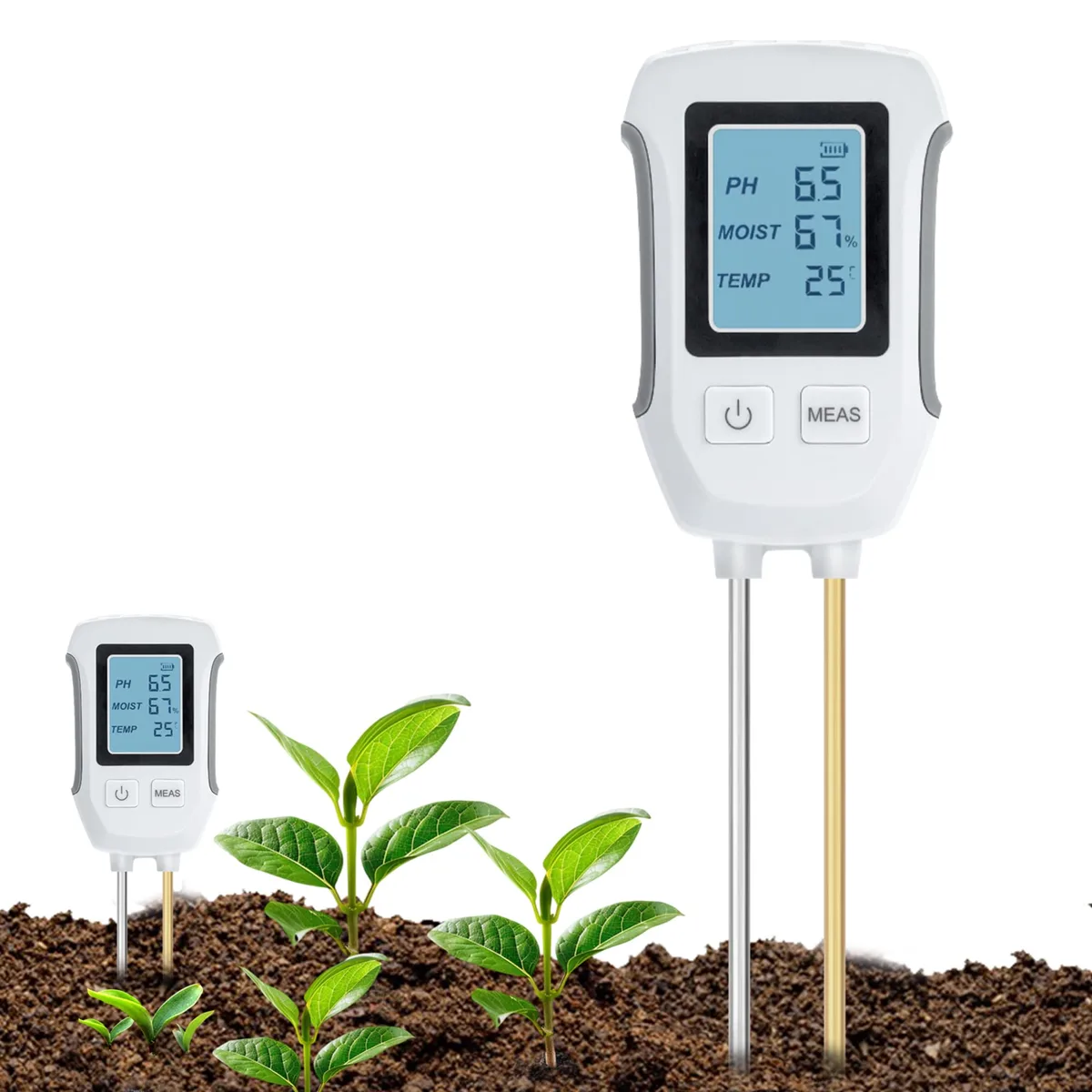
A basic pH check takes minutes. Use a soil probe, a strip test, or send a sample to a lab. Aim for these ranges:
| Plant type | Preferred soil pH |
|---|---|
| Blueberries, azaleas, rhododendrons | 4.5 to 5.5 |
| Citrus, gardenias, camellias | 5.5 to 6.5 |
| Most vegetables and lawns | 6.0 to 6.8 |
| Alfalfa, some brassicas | 6.5 to 7.5 |
If pH is above the target for your plant, lowering it with elemental sulfur is the durable fix. Adding iron alone without correcting pH is a short-term patch, not a solution.
Fixing Iron Deficiency: Chelates, Foliar Sprays, and pH Adjustment
The right fix depends on your soil pH and how fast you need results.
For alkaline soil (pH above 7.0), use a chelated iron product formulated to stay stable at high pH. Fe-EDDHA is the standard choice because it holds iron in a plant-available form up to about pH 9. Fe-EDTA and Fe-DTPA work in mildly acidic to neutral soils but fail in alkaline conditions.
Apply as a soil drench per label rate, usually 1 to 5 grams per shrub.
For acidic to neutral soils, iron sulfate (ferrous sulfate) works and costs less. Broadcast around the root zone and water in. Warning: iron sulfate stains concrete, brick, siding, and clothing.
Rinse hardscape immediately.
For fast temporary green-up, a foliar spray puts iron straight into the leaves. Mix a 0.5 to 1 percent solution of iron sulfate (roughly 5 to 10 grams per liter) and spray early morning or evening. New growth after the spray still depends on root uptake, so foliar feeding is a bridge, not a cure.
Long-term fix: lower soil pH with elemental sulfur based on a soil test recommendation. Recheck pH every few months. Iron chelate applications become far more effective once the root zone drops into the target range.
Fixing Nitrogen Deficiency: Fast Sources vs. Slow-Release Options
Nitrogen deficiency responds fast to almost any nitrogen source. Choose based on how quickly you need color back and how much control you want over release.
Fast-acting sources:
- Calcium nitrate: quick uptake, no pH shift, good for vegetables
- Ammonium sulfate: fast, mildly acidifies soil, useful on alkaline ground
- Urea: high-analysis, cheap, but can volatilize if left on the surface
- Fish emulsion or liquid organic: gentle, works in 3 to 7 days
Slow-release sources:
- Blood meal: organic, releases over 2 to 6 weeks
- Composted manure: mild, feeds soil biology too
- Coated urea (polymer-coated): steady release for 2 to 6 months
- Alfalfa meal or feather meal: slower organic release
Side-dress vegetables and annuals during active growth. For lawns and shrubs, split applications work better than one heavy dose. That reduces nitrate leaching and cuts fertilizer waste.
A typical vegetable garden target is around 0.1 to 0.2 pounds of actual nitrogen per 100 square feet per application.
Don't overdo it. Excess nitrogen produces soft leggy growth, delays fruiting, and can trigger iron lockout in some soils. Recovery of green color on older leaves usually shows within 5 to 10 days after a fast-acting application.
Mistakes That Make Yellow Leaves Worse
The wrong response to yellow new leaves can push a plant further into decline. These are the errors we see most often in extension-service Q&A logs.
- Dumping nitrogen fertilizer on iron-deficient plants. Extra nitrogen forces new growth the plant can't green up, making chlorosis worse.
- Adding iron without checking pH. In alkaline soil, cheap iron sulfate binds up within days and does nothing.
- Watering more when leaves yellow. Saturated soil often causes the problem, not thirst.
- Using Fe-EDTA in high-pH soil. It falls apart above pH 6.5. Choose Fe-EDDHA instead.
- Ignoring root health. Root rot, girdling, or nematode damage mimics iron chlorosis exactly.
- Spraying foliar iron under hot sun. Leaf burn is likely above about 85°F.
Test first, then treat. Guessing is what turns a fixable problem into a dead plant.
Plants Most Prone to Iron Chlorosis (Blueberries, Citrus, Azaleas, and More)
Some species are magnets for iron chlorosis, especially outside their preferred pH range. Recognize the pattern before you plant.
High-risk plants include:
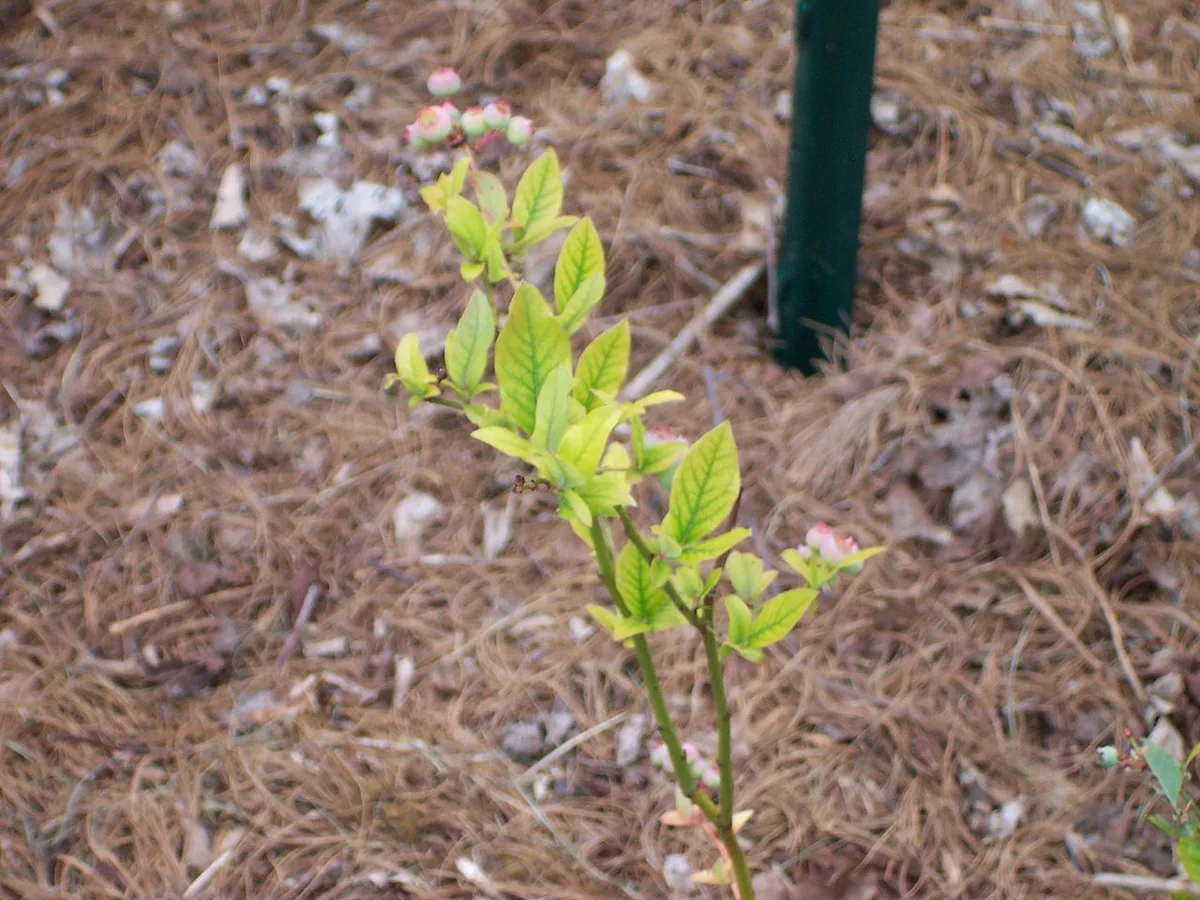
- Blueberries (need pH 4.5 to 5.5, chlorosis appears above 6.0)
- Azaleas and rhododendrons
- Camellias and gardenias
- Pin oak, river birch, sweetgum, red maple
- Citrus (lemon, orange, grapefruit) in alkaline soils
- Hydrangeas (also color-sensitive to soil pH)
- Roses in calcareous soils
If your soil sits above pH 7.0 and you're growing any of these, expect trouble. Either amend the soil down aggressively with elemental sulfur or grow in containers with an acid-loving mix. Choosing the right plant for your native soil pH is far easier than fighting chemistry every season.
How Long Recovery Actually Takes After You Correct It
Recovery timing depends on which nutrient you corrected and how you applied it. Set the right expectation before you judge whether the treatment worked.
| Treatment | First visible response | Full green-up |
|---|---|---|
| Foliar iron spray | 2 to 5 days on sprayed leaves | 7 to 14 days |
| Soil Fe-EDDHA drench | 7 to 14 days | 2 to 4 weeks |
| Elemental sulfur (pH drop) | 6 to 12 weeks | 1 to 2 seasons |
| Fast nitrogen (calcium nitrate, urea) | 3 to 7 days | 10 to 14 days |
| Slow-release nitrogen | 2 to 4 weeks | 4 to 8 weeks |
Already-chlorotic leaves may never fully re-green, especially with iron. Judge success by the color of new growth that emerges after treatment. If new leaves come in green, the fix worked.
If new leaves are still yellow after three weeks, retest and reconsider the diagnosis.
When to Send a Soil or Tissue Test Instead of Guessing
Any time yellow leaves persist after one correction attempt, stop guessing and get a lab test. It's the cheapest step in the whole process.
Soil tests report pH, macronutrient levels, and often extractable micronutrients using standards like Mehlich-3, Bray, or Olsen. Cooperative Extension labs at land-grant universities run them for around $15 to $40 as of 2026. Ask for a micronutrient package if iron is your suspect.
Tissue (leaf) analysis is the gold standard for confirming a specific deficiency. Sample recently mature leaves, not the yellow ones or the newest tips. Compare results against published sufficiency ranges for your crop.
If leaf iron reads below roughly 50 ppm and pH is high, iron lockout is confirmed. If leaf nitrogen reads below the crop's sufficiency threshold, apply nitrogen. Testing turns "I think it's iron" into "I know it's iron."
Frequently Asked Questions
Can yellow leaves ever mean both iron and nitrogen deficiency?
Yes, but the pattern gives it away. Iron shows on new top growth with green veins, while nitrogen shows on old bottom leaves in uniform pale color. If both appear at once, the plant is severely stressed and you should soil-test before treating.
Correct pH and iron first, then feed nitrogen once new growth greens up.
Do coffee grounds or vinegar fix iron chlorosis?
Not reliably. Used coffee grounds are near-neutral in pH and add only trace iron. Vinegar drops pH briefly, then soil buffering restores it within days.
For alkaline soils, elemental sulfur plus a chelated Fe-EDDHA product is the researched fix. Home remedies rarely deliver enough plant-available iron to reverse chlorosis.
Why do my new leaves keep turning yellow even after fertilizing?
Because you probably fertilized the wrong nutrient, or your soil pH is blocking uptake. Nitrogen won't fix an iron problem, and iron sulfate won't help in alkaline soil. Check pH first.
If it's above 7.0, apply Fe-EDDHA and start a sulfur amendment program. If pH is fine, look for root damage or overwatering.
Is yellowing on new leaves always a deficiency?
No. Overwatering, root rot, transplant shock, herbicide drift, cold soil, and viral infection can all yellow new growth. Deficiency is the most common cause but never the only one.
Check roots, drainage, and recent chemical exposure before dosing fertilizer. If the whole plant declines rapidly, disease is more likely than nutrition.
Can I use rusty water or iron nails to fix iron deficiency?
No. Rust particles and iron nails release iron too slowly and in forms plants can't absorb, especially in alkaline soil. Use a labeled chelated iron product formulated for garden use.
Fe-EDDHA works across a wide pH range and delivers plant-available iron in days, not years.
Your Quick Decision Guide for Yellow New Leaves
Use this as a rapid triage before you touch any fertilizer.
- Yellow on new top leaves, green veins: iron deficiency. Check soil pH first.
- Yellow on old bottom leaves, uniform color: nitrogen deficiency. Side-dress with a fast source.
- Soil pH above 7.0: apply Fe-EDDHA and start elemental sulfur amendments.
- Soil pH below 7.0 and iron symptoms persist: check drainage and root health.
- Both patterns at once: soil test before treating anything.
If new growth stays yellow after 2 to 3 weeks of the right correction, retest and reconsider look-alike causes like manganese, sulfur, root rot, or bicarbonate-heavy irrigation. The right diagnosis, not the biggest dose, is what brings a plant back.

Similar Posts