Water Garden Easily with a Hose: Limited Mobility Guide
How do I water a garden with a hose if I have limited mobility? You don't have to drag heavy hoses or spend hours bending over anymore. The right combination of lightweight gear, automated timers, and adaptive tools makes garden watering manageable, even effortless.
Our research into accessible gardening solutions shows that matching your specific limitation to the right watering system makes all the difference. Whether you use a wheelchair, live with arthritis, struggle with balance, or need to conserve energy, there's a proven setup that removes the physical barrier between you and a healthy garden.
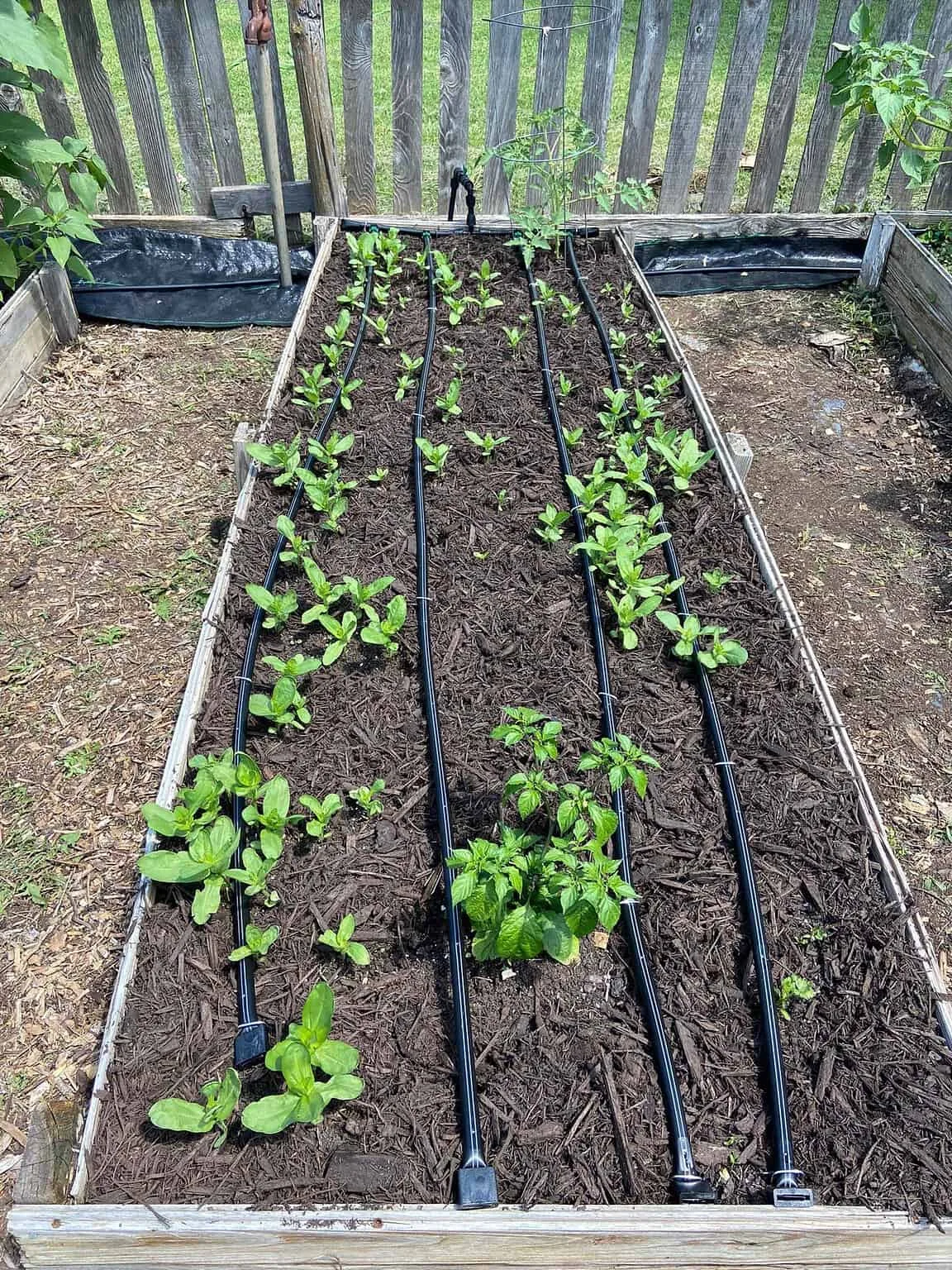
Image source: Bing (Web (fair-use with source credit))
Quick Answer
How do I water a garden with a hose if I have limited mobility? Use a drip irrigation kit paired with a battery-powered timer for zero-effort watering. Choose soaker hoses for budget-conscious growers who want quick setup.
Pick a wheeled hose cart if dragging is your main problem. Pair any system with mulch and hydrozoning to cut watering frequency by up to fifty percent.
The Problem: Why Manual Hose Watering Feels Impossible
Dragging a full sixty-foot rubber hose across uneven terrain is physically demanding for almost anyone. Add limited mobility into the mix and that simple task can become painful, unsafe, or completely impossible. The reality is that most standard garden watering setups assume you can stand for twenty minutes, grip a trigger nozzle firmly, and maneuver equipment without assistance.
That assumption leaves a huge number of gardeners behind.
Manual hose watering creates multiple physical barriers at once. Bending to connect fittings puts strain on your back and knees. Gripping small nozzles with reduced hand strength causes joint pain that builds quickly.
Walking across the garden with a heavy hose in hand creates serious balance risks, especially on slopes or soft ground. Standing for extended periods triggers fatigue that makes the whole experience miserable.
The consequences are real and measurable. People with mobility limitations often abandon their gardens entirely because the watering task feels insurmountable. Others push through and end up with joint injuries, falls, or chronic pain flare-ups.
Our research into adaptive gardening tools consistently shows that the single biggest factor in long-term gardening success for people with physical limitations is finding a watering system that matches their specific body mechanics.
This isn't about finding a workaround. It's about recognizing that the standard approach simply wasn't designed for your situation. The good news is that the gardening industry has responded to accessibility needs in significant ways.
Equipment designed with ergonomics, automation, and adaptive use in mind now exists across every price point. Understanding which barriers you face individually is the essential first step toward choosing a solution that actually works for your body and your garden layout.
The Best Watering Setups Compared for Limited Mobility
Choosing the right watering system starts with understanding what each option actually does and who it serves. Different mobility limitations demand different approaches, and what works brilliantly for one person could be completely wrong for another. Let's break down the five setups that consistently deliver results for gardeners with limited mobility.
Drip Irrigation Systems
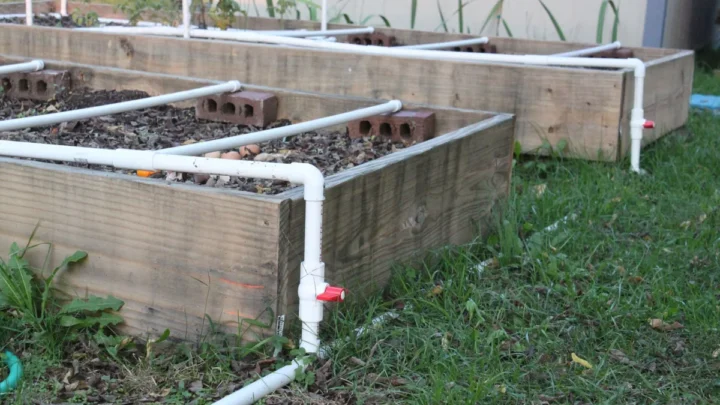
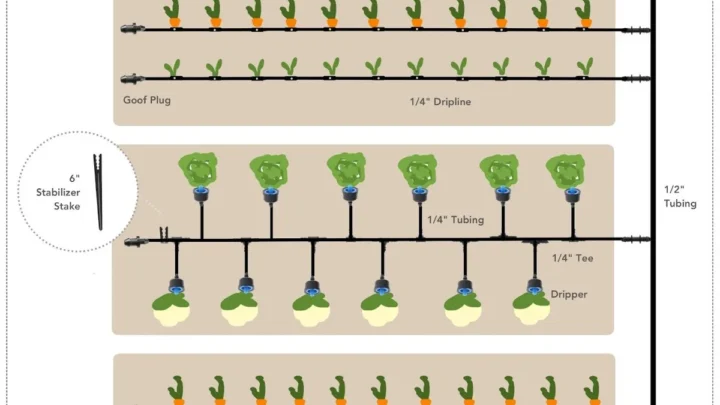
A drip irrigation system delivers water directly to plant roots through a network of tubing and small emitters. Water flows slowly and continuously from each emitter, eliminating runoff and evaporation waste. Once installed and programmed with a timer, the system waters your garden completely on its own schedule.
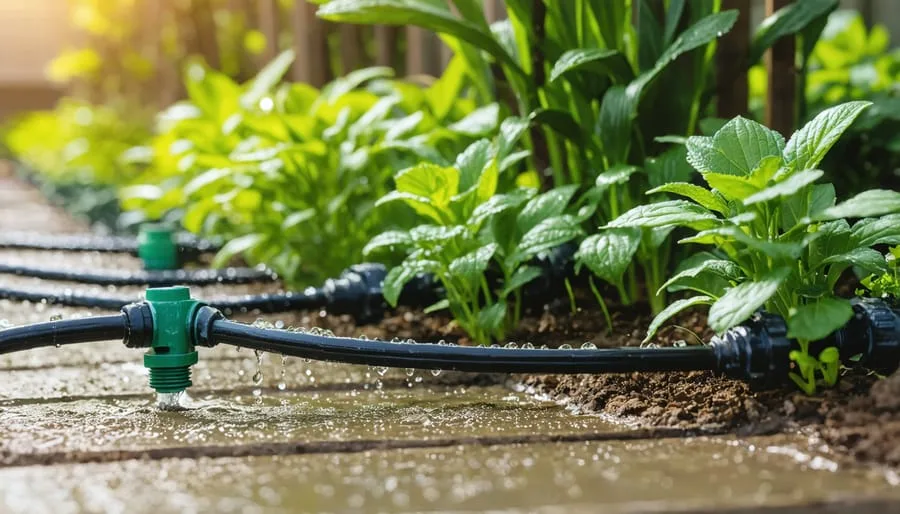
Image source: Bing (Web (fair-use with source credit))
The core components include distribution tubing, individual emitters placed at each plant, a timer to control watering cycles, a pressure regulator to protect delicate emitters, and a filter to prevent clogging. Entry-level drip kits cost between thirty and eighty dollars and typically cover small to medium garden spaces. Custom-built systems for larger gardens run significantly higher but remain far cheaper than professional installation.
Drip systems excel at automation. You set the timer once and never think about watering again unless conditions change dramatically. This eliminates the physical act of carrying, dragging, and aiming a hose entirely.
The targeted root watering also improves plant health by keeping foliage dry and reducing disease pressure.
The main drawbacks involve initial setup complexity and ongoing maintenance. Installing a full drip system can take sixty to ninety minutes for beginners working through manufacturer instructions. Emitters occasionally clog from sediment in your water supply, requiring periodic filter cleaning or replacement.
In cold climates, you must drain and winterize the system each fall to prevent freezing damage that destroys tubing and emitters.
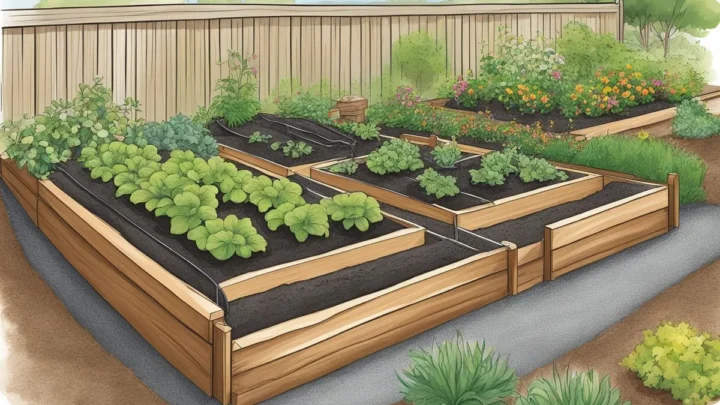
Drip irrigation suits raised bed gardens, container collections, and established vegetable beds exceptionally well. People with upper-body limitations, balance disorders, or chronic fatigue benefit most because the system removes nearly all manual intervention after installation.
Soaker Hoses
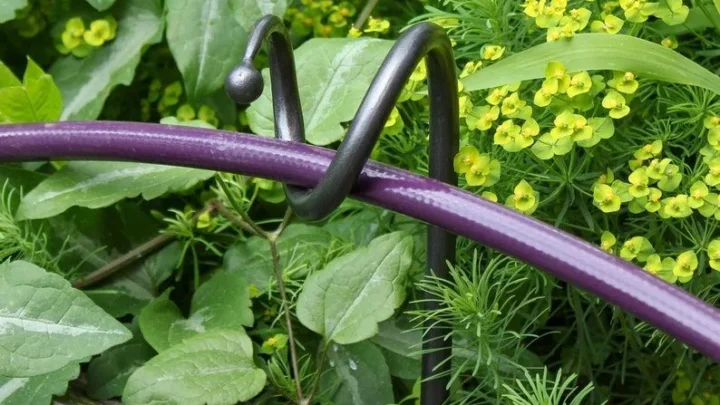
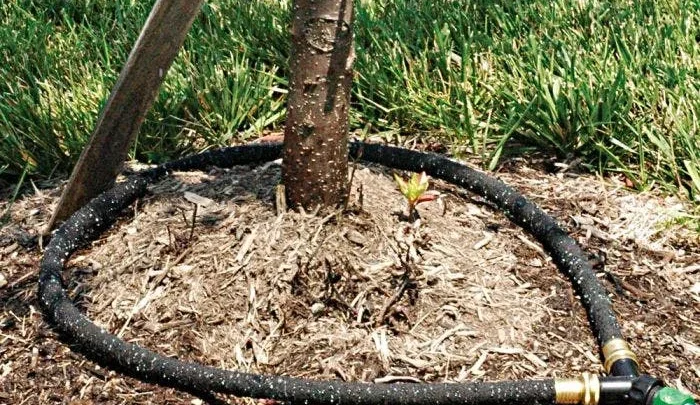
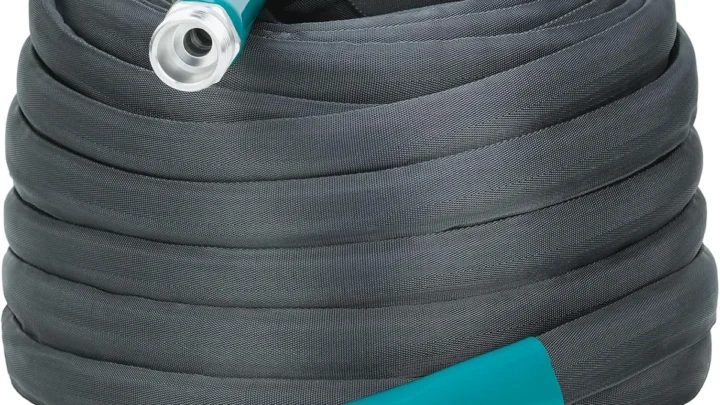
Soaker hoses are porous tubes that seep water along their entire length directly into the soil. You lay them along garden rows, connect them to your spigot, and turn on the water. The hose itself becomes the delivery system with no individual emitters to place or clog.
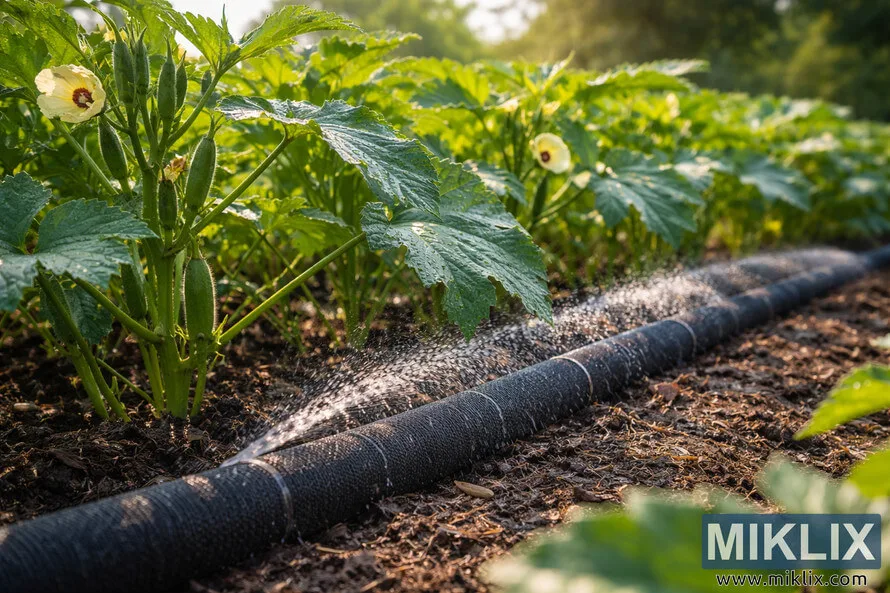
Image source: Bing (Web (fair-use with source credit))
The setup is remarkably simple. A soaker hose costs fifteen to forty dollars depending on length and material quality. Adding a basic mechanical timer runs another fifteen to thirty dollars.
Total initial investment often stays under fifty dollars for a complete working system.
Soaker hoses work best in straight rows or along the edges of raised beds where you can lay them flat. They deliver water slowly to the root zone without wetting surrounding soil excessively. This targeted approach conserves water compared to overhead sprinklers while remaining far simpler than drip tubing networks.
The trade-offs involve durability and precision. Soaker hoses degrade faster than drip systems, typically lasting two to four seasons before porosity diminishes and flow becomes uneven. Performance depends heavily on adequate water pressure, which not all residential spigots provide consistently.
Repositioning a soaker hose requires kneeling or bending unless you've designed your garden beds for easy side access.
Budget-conscious gardeners, people who want minimal setup time, and those growing row vegetables all benefit most from soaker hoses. They're an excellent entry point if you're unsure whether automated watering will fit your routine.
Wheeled Hose Carts
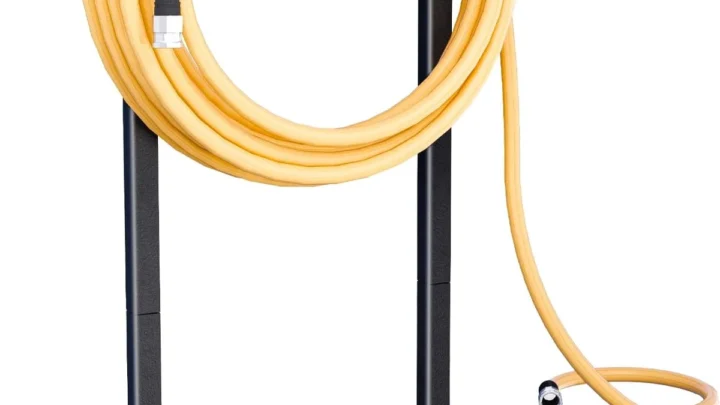
Wheeled hose carts solve the single most common physical complaint among gardeners with limited mobility: dragging heavy hoses. A cart holds your hose on a rotating reel with large wheels that roll smoothly over grass, gravel, and paved surfaces. You pull the hose from the cart to where you need it, water, then roll the cart back to its storage spot.
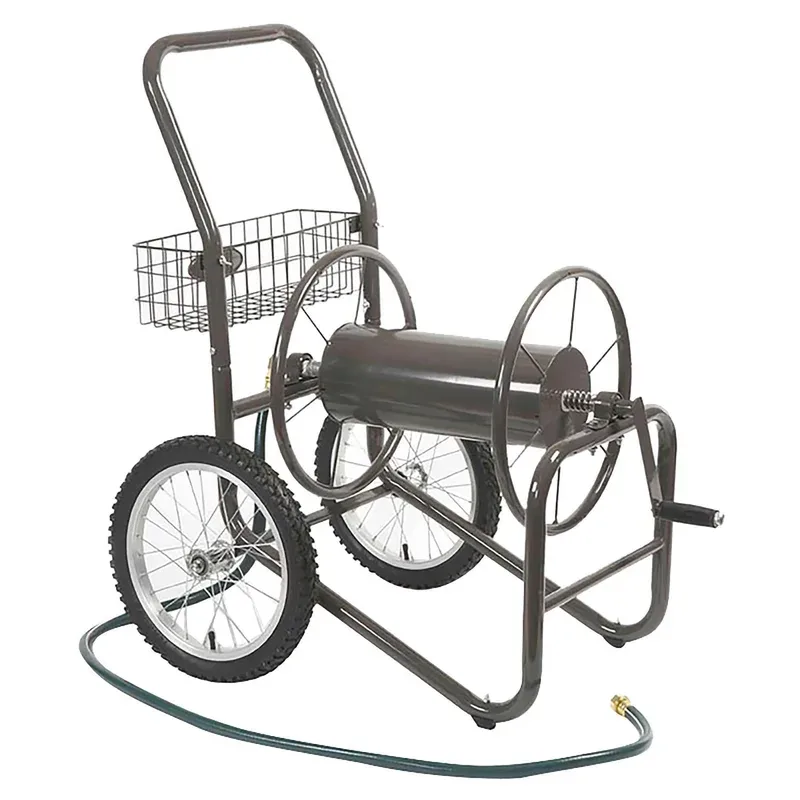
Image source: Bing (Web (fair-use with source credit))
Quality carts cost forty to one hundred and twenty dollars. Wide pneumatic wheels handle uneven terrain better than narrow plastic wheels. Models with locking brakes let you secure the cart position during use.
Handle height matters significantly for seated users, so look for adjustable or low-profile designs if standing isn't an option.
The cart eliminates hose dragging entirely, which removes shoulder strain, grip fatigue, and balance challenges associated with pulling equipment across your garden. It also keeps hoses organized and tangle-free, preventing the frustrating kinks and knots that develop when hoses lie stored randomly on the ground. If you're working with a garden hose that won't unkink, a cart keeps yours coiled properly and ready to roll.
Carts don't automate watering, so you still need to position the hose manually and turn the spigot on and off. They're not standalone solutions but rather force multipliers that make manual watering significantly less physically demanding. Combined with a timer or a lightweight hybrid hose to reduce overall weight, they become genuinely transformative.
Ergonomic Sprinkler Wands
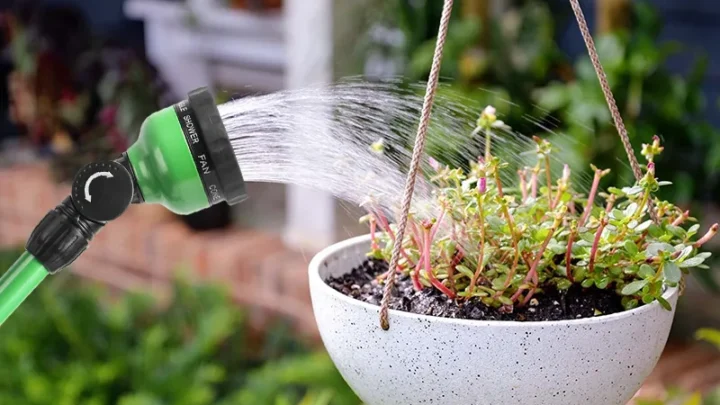
When you still need to water manually, an ergonomic sprinkler wand eliminates the grip strain and wrist fatigue that standard nozzles create. These tools extend your reach while providing a trigger-style handle designed for comfortable one-handed operation.
Quality wands range from twenty to fifty dollars. Look for models with oversized trigger grips, padded handles, and flow controls positioned at the handle rather than at the spray head. Lightweight aluminum or composite construction keeps fatigue low during extended use.
Adjustable spray patterns let you switch between gentle mist for seedlings and broader coverage for established plants without changing positions.
Trigger-action wands require significantly less hand closing force than traditional twist nozzles. This matters enormously for anyone with arthritis, reduced grip strength, or conditions like carpal tunnel syndrome. The extended wand length also means less bending and reaching, which protects your back and shoulders.
These tools shine for container gardens, potted herbs, and spot watering tasks that drip systems or soaker hoses can't address efficiently. They're also useful as backup systems in case your automated setup requires maintenance.
Fully Automated Sprinkler Systems
Complete automation represents the most involved but most convenient option for gardeners with significant mobility limitations. Professional in-ground sprinkler or drip systems divide your garden into zones, each programmed to water independently on a set schedule. Smart controllers adjust automatically based on weather data and rainfall detection.
These systems cost five hundred to two thousand dollars or more depending on garden size and zone count. Installation typically requires professional help, though some homeowners tackle simplified above-ground versions. Smart Wi-Fi controllers pair with smartphone apps for remote schedule changes and real-time monitoring.
The payoff is absolute hands-off watering. You program the system once, add a rain sensor, and never touch a hose again. This level of automation eliminates every physical barrier associated with manual watering forever.
The high upfront cost and installation complexity make this option better suited for permanent gardens where you plan to stay long-term. It's the right choice when budget isn't the primary constraint and complete independence from manual watering is worth the investment.
Which Setup Matches Your Specific Mobility Situation
Limited mobility isn't one-size-fits-all. Someone with arthritis needs different solutions than someone with balance issues or someone who uses a wheelchair daily. Matching your specific limitation to the right system makes the difference between a frustrating hobby and a sustainable one.
For Wheelchair Users
Wheelchair users face unique spatial challenges. Standard spigot placement, hose routing, and equipment storage often assume you can walk freely around your garden. That assumption doesn't hold, which means your setup needs deliberate planning.
Raised beds positioned at wheelchair-accessible height eliminate bending and allow edge access from a seated position. Pair these beds with drip irrigation kits designed specifically for raised bed contours. Place timers and controls at waist height where they're reachable without leaning or stretching awkwardly.
A wheeled cart positioned near your primary spigot lets you roll the hose to any raised bed without manual dragging.
Check how garden hoses are measured to select lengths that reach all your accessible beds without excess material pooling on the ground. Excess hose creates tripping hazards and complicates cart movement.
For Arthritis and Hand Grip Limitations
Arthritis changes how your hands function. Gripping small triggers, twisting knobs, and sustaining closure force all become painful and unreliable. Equipment selection should prioritize ease of grip and minimal sustained hand force.
Ergonomic trigger wands with wide, padded grips are essential for manual watering tasks. Select timers with large, easy-to-turn dials rather than small digital buttons if you prefer mechanical models. Skip thin metal spray nozzles entirely.
Instead, invest in drip or soaker systems that require zero daily hand manipulation after initial programming.
Consider connecting your hose to a sprayer only if the sprayer model features an oversized trigger mechanism. Standard spray nozzles with tiny triggers are particularly problematic for arthritic hands.
For Balance Issues and Fall Risk
Balance problems turn garden watering into a genuine safety hazard. Long hose walks across uneven ground, shifting weight while managing equipment, and sudden adjustments to avoid obstacles all increase fall risk substantially.
Fixed-location setups eliminate walking during watering entirely. Install drip irrigation zones around permanent garden beds and use a Wi-Fi timer you can control from your phone while seated indoors. Route hoses along established pathways rather than across grass or gravel.
Keep watering areas clear of tools, pots, and tripping hazards. Consider placing a sturdy chair or stool near your spigot so you can sit during any necessary manual tasks.
If you must walk while watering, use a wheeled cart on smooth, level surfaces only. Never attempt to pull a hose across slopes, loose mulch, or uneven ground while balancing yourself.
For Energy Conservation and Fatigue
Chronic fatigue and low energy reserves mean every physical task must earn its place. Watering shouldn't consume energy you need for other parts of your day or garden care. Automation and efficiency are your priorities.
Drip irrigation with programmable timers delivers maximum automation with minimum daily interaction. Pair it with hydrozoning techniques that group plants by water needs, allowing a single timer setting to serve your entire garden effectively. Mulch heavily around all plants to reduce watering frequency by up to fifty percent, cutting your active engagement time in half.
Choose equipment that stays set and forgettable. Avoid systems requiring daily adjustments, repositioning, or manual oversight whenever possible.
For Lower Back and Kneeling Problems
Bending and kneeling damage backs and knees over time. Even occasional deep bends during watering accumulate into chronic pain and reduced mobility. Your setup should keep your spine neutral and your joints relaxed throughout the entire process.
Raised beds positioned at waist height allow edge-access watering without any bending. Drip emitters and soaker hoses placed along bed edges deliver water from standing or seated positions. Never compromise on bed height, because inadequate elevation forces the very movements your body needs to avoid.
Also evaluate your hose size and weight since heavier hoses increase strain on your lower back during any manual handling. Lighter hybrid or vinyl hoses reduce this burden significantly.
What These Setups Actually Cost and How Long They Take
Budget and time investment are practical concerns that determine whether a solution actually fits your life. Let's look at realistic costs and timelines so you can plan accordingly.
Pricing Breakdown by Option
Drip irrigation kits range from thirty to eighty dollars for entry-level models covering small gardens. Custom drip systems built from individual components run one hundred to three hundred dollars depending on garden size. Soaker hoses cost fifteen to forty dollars per hose, with timers adding another fifteen to thirty dollars.
Wheeled hose carts range from forty to one hundred and twenty dollars based on wheel quality and frame materials. Ergonomic trigger wands run twenty to fifty dollars. Smart Wi-Fi timers cost twenty-five to sixty dollars.
Professional in-ground irrigation installation runs five hundred to two thousand dollars or more.
Installation Time Estimates
Soaker hoses paired with a timer require ten to twenty minutes for basic setup. Basic pre-sized drip kits for raised beds take thirty to forty-five minutes to assemble and place. Custom drip systems for larger in-ground gardens need sixty to ninety minutes for layout, assembly, and testing.
Hose cart setup involves unboxing, wheel attachment, and hose loading, totaling fifteen to thirty minutes. Pairing a smart timer with your spigot takes five to ten minutes. Professional installation timelines vary widely but typically span one to three days depending on system complexity.
Ongoing Costs and Replacement Cycles
Budget for routine maintenance to keep any system running efficiently. Clean or replace filter screens every one to three months depending on your water quality. Replace individual clogged emitters every two to three growing seasons.
Expect soaker hoses to degrade and require replacement every two to four seasons. Battery-powered timers need annual battery changes. Quality hose carts with protected wheels last five or more years with normal use.
Common Mistakes That Waste Money and Cause Frustration
Even with the best intentions, certain mistakes derail accessible watering setups repeatedly. Knowing what to avoid saves time, money, and unnecessary frustration.
Buying one-size-fits-all drip kits without checking spigot compatibility wastes money on equipment that won't connect properly. Always verify your spigot thread type and diameter before purchasing timers and connectors.
Placing timers at uncomfortable heights creates a new mobility barrier. Wheelchair users and seated gardeners need controls at reachable waist level, not mounted high on a wall where extension cords become hazards.
Skipping pressure regulators damages drip emitters instantly. Most residential spigots deliver pressure far exceeding what delicate drip components can handle. A basic pressure regulator costs under twenty dollars and prevents expensive emitter failures.
Using soaker hoses on slopes without erosion control creates runoff problems that defeat the purpose. Terracing or bundting uphill sides prevents water from washing away from your plants.
Overwatering out of habit instead of adjusting timer settings remains the most common mistake. Drip systems deliver water efficiently, so longer runs create saturated soil and root rot rather than healthier plants. Start with shorter durations and increase gradually only if needed.
Ignoring mulch means watering twice as often. Two to three inches of organic mulch retains soil moisture dramatically and reduces your timer frequency substantially.
Choosing heavy rubber hoses over lightweight alternatives ignores how much weight matters for limited mobility. Hybrid or vinyl hoses weigh significantly less and resist kinking far better than traditional rubber construction.
Failing to winterize drip systems in cold climates guarantees freeze damage and expensive spring repairs. Drain all tubing and disconnect timers before temperatures consistently drop below freezing.
Selecting decorative wands instead of ergonomic trigger models misses the mark entirely. Grip comfort and trigger force matter far more than spray pattern variety when your hands are the limiting factor.
Assuming all smart timers work with low water pressure creates connection headaches. Check manufacturer specifications for minimum pressure requirements before purchasing any electronic controller.
Real-World Scenarios: How Different Setups Perform
Theory meets reality when we examine how these systems perform for actual gardeners with specific limitations. These scenarios reflect patterns observed across countless accessible gardening consultations.
Scenario 1: Retired Gardener With Knee Arthritis and a Raised Bed Vegetable Garden
This gardener chose a raised bed drip kit paired with a battery timer and heavy mulch application. The result was zero kneeling during watering, fully automated daily cycles, and a forty percent reduction in water usage compared to previous manual methods. The key lesson was starting with a pre-sized kit rather than attempting custom DIY tubing layout immediately, which saved considerable frustration and component errors.
Scenario 2: Wheelchair User With a Container Herb Garden on a Patio
The chosen setup combined a lightweight hose cart, short hybrid hose, soaker hose placed inside large containers, and an ergonomic trigger wand for precision spot watering. Repositioning the cart became effortless, dragging disappeared entirely, and precise watering remained possible for individual herbs that needed extra attention. The critical learning was ensuring cart wheels were wide enough for patio surface stability rather than assuming narrow wheels would roll smoothly on hard landscaping.
Scenario 3: Couple With Balance Issues Tending a Mixed In-Ground Garden
A multi-zone drip system paired with a Wi-Fi timer, rain sensor, and hardscape hose routing eliminated garden walking during all watering events. Smartphone control allowed schedule adjustments from inside the house, automatic rain adjustment prevented overwatering, and the couple maintained their garden health without any balance risk. Zoning plants by water needs rather than by geographic location proved essential for efficient single-schedule watering.
Scenario 4: Solo Gardener With Wrist Tendonitis and a Small Flower Bed
An ergonomic trigger wand, lightweight hose, and mechanical timer for background soil moisture created a sustainable routine. Reduced grip strain eliminated pain flare-ups, the ability to pause and resume watering flexibly accommodated energy fluctuations, and overall physical demand dropped dramatically. Selecting trigger handle diameter carefully proved more impactful than choosing multiple spray pattern options.
Safety, Legal, and Practical Compliance Notes
Safety and legal requirements protect both you and your water supply. Ignoring these details can create hazards or violate local regulations.
Backflow preventers are required in many municipalities when attaching timers to outdoor spigots. These devices prevent contaminated garden water from flowing backward into your drinking water supply. Check with your local water authority for specific requirements before installation.
Outdoor watering restrictions vary significantly by region. Drought-prone areas like California and the Southwest enforce strict watering day schedules. Non-compliance can result in fines.
Many regions now require rain sensors on automated systems to prevent unnecessary watering during rainfall.
Winterizing drip systems requires careful drainage to prevent freeze damage. Frozen water expands inside tubing and bursts components permanently. Disconnect timers, drain all tubing lines, and store lightweight equipment indoors before consistent freezing temperatures arrive.
Tripping hazards from hoses and carts require deliberate routing. Keep watering paths clear of equipment when not actively in use. Place timers and controls where they're visible and accessible without navigating around obstacles.
Non-slip surfaces near your spigot and watering stations reduce fall risk. Wet concrete or smooth patio surfaces become hazardous when water sprays during manual adjustments. Add textured mats or choose rubberized equipment bases.
Weight limits on hose carts matter for wheelchair users and elderly gardeners. Verify that cart wheel capacity exceeds your loaded hose weight. Overloaded carts tip easily on slopes or uneven ground.
Frequently Asked Questions
What's the easiest watering system for someone who can't bend at all?
Raised bed drip irrigation paired with a battery timer is the easiest hands-free option. You program the schedule once and never touch the system again.
Do soaker hoses work with low water pressure?
Soaker hoses work poorly with water pressure below forty PSI. Low pressure produces uneven seepage and dry spots along the hose length. Test your pressure before purchasing.
Can I use a drip system in my raised beds without professional help?
Yes. Pre-sized drip kits designed for raised beds install in thirty to forty-five minutes with basic hand tools. Manufacturer instructions guide most assembly steps.
How do I winterize a drip system if I can't get on my knees?
Use compressed air blow-out methods with an adapter, or design your system with drain valves positioned at accessible heights for gravity drainage.
Where can I find ADA-compliant gardening tool guides?
University cooperative extension services and occupational therapy publications provide detailed adaptive gardening resource lists for all mobility limitations.
What timer features matter most for limited mobility users?
Large easy-turn dials, battery operation removing cord hazards, and Wi-Fi control enabling phone-based schedule changes without physical interaction.
Is it worth paying for professional irrigation installation?
Professional installation pays off for large gardens with complex zoning needs. Small raised bed or container gardens save money with DIY kits.
How do I choose between a hose cart and a fixed hose reel?
Hose carts offer mobility for reaching different garden areas. Fixed reels suit permanent spigot locations with consistently planned watering routes.

Similar Posts