How to Water Raised Beds Evenly With a Hose
You've probably noticed it, some corners of your raised beds stay bone-dry while others turn to soup after a good watering. The problem isn't your plants or your soil. It's that most people just spray water from a hose and hope for the best. How do I water raised beds with a garden hose evenly? The real answer depends on a few key factors, and getting it right means the difference between stressed plants and a thriving garden.
A standard garden hose delivers between 5 and 12 gallons per minute, depending on your home's water pressure. That's plenty of water. The challenge is distributing it evenly across your raised beds without waste or dry spots.
Let's walk through how to actually solve this problem.
Quick Answer
How do I water raised beds with a garden hose evenly? Use a multi-pattern dial sprayer on its gentlest setting, walk a slow overlapping pattern, and test your coverage with the bucket test. If your beds are far from the spigot or you want hands-off watering, switch to a soaker hose under mulch.
The Even Watering Dilemma: Why Your Raised Beds Are Drying Out Unevenly
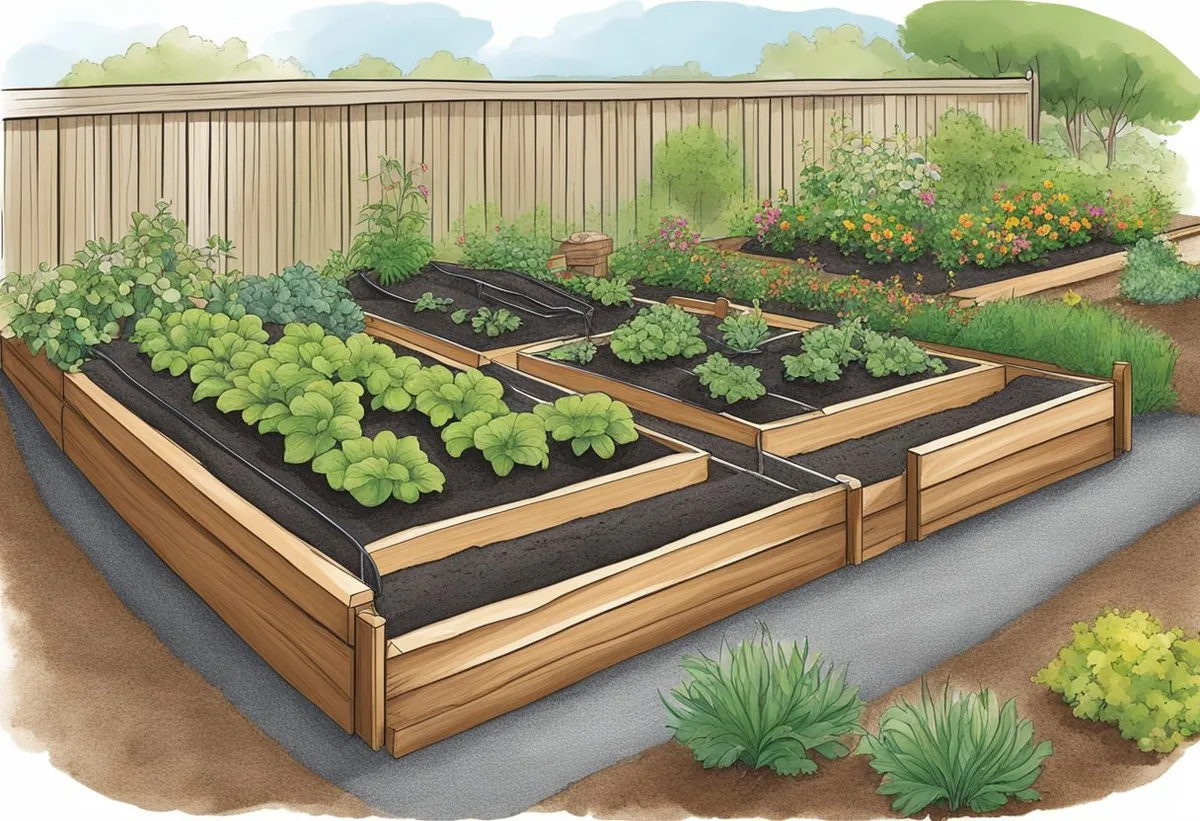
Picture this: you wander over to your garden with a hose, crank the nozzle to full spray, and wander along the length of your raised bed. Twenty minutes later, you're done. Sound familiar?
Here's what probably happened. The area closest to where you started got drenched. The middle got a decent soaking.
But that far end? Barely damp. And if you moved too slowly somewhere along the way, you created a muddy puddle in one spot while another section stayed dry.
Raised beds make this problem worse, not better. They drain faster than in-ground gardens because water escapes out the bottom and through the sides. The soil mix inside them tends to be lighter and looser, which means water zips through instead of soaking in slowly.
On hot days, that surface moisture evaporates before it ever reaches the deeper root zone where your plants actually need it.
So you end up watering more often, using more water, and still dealing with uneven moisture. Some plants sit in soggy soil while their neighbors crack open from thirst. That uneven stress weakens plants, invites disease, and reduces your harvest.
It's not a plant problem. It's a distribution problem.
The good news is that fixing it doesn't require expensive equipment or a plumbing degree. You just need the right approach for your setup. Getting started with a basic multi-pattern dial sprayer is a solid first step.
Learn about how garden hose nozzles work so you can get the most out of your current setup. Understanding garden hose sizing basics also helps you pick the right equipment for your water pressure and bed layout.
The Four Factors That Change Your Watering Strategy
Before you grab a hose and start spraying, pause for a moment. The strategy that works perfectly for your neighbor might fail miserably in your garden. Why?
Because four key variables determine whether your watering lands evenly or misses the mark entirely. Get these right, and the rest of the process becomes straightforward. Miss them, and you'll keep fighting the same problems season after season.
Bed Size and Shape
A long narrow bed ten feet long and two feet wide needs a completely different approach than a square bed that's six feet by six feet. Narrow beds benefit from running the hose along the length and using a gentle spray pattern that reaches across the width. Square beds let you work from multiple angles, but they also expose more surface area to evaporation.
Wide beds often suffer from runoff at the edges before the center ever gets wet.
If you're working with a how big is a standard garden hose diameter, remember that wider beds need more coverage time and often benefit from boosting your garden hose pressure to maintain consistent flow across the full width.
Hose Length and Water Pressure
Your spigot's location relative to your beds is a silent game-changer. A bed right next to the outdoor faucet gets strong, steady pressure. A bed thirty feet away through a half-inch hose?
You'll lose significant flow to friction in the line. Manufacturer specifications typically rate garden hoses at 5 to 12 gallons per minute, but that drops fast as length increases and as you add fittings, timers, and nozzle restrictions.
Low-flow problems often stem from hidden issues. Diagnosing low flow through a garden hose can reveal blockages or kinks you'd never spot just by looking. If you notice water leaking only when pressure builds, fixing pressurized hose leaks might restore the flow you need for even coverage.
Also worth checking: can a garden hose reel restrict water flow when it's still wound up? A restrictive reel can choke your pressure before the water even reaches the nozzle, and it's easy to overlook.
Your Soil Mix
This is the factor most gardeners ignore until it's too late. Professional potting blends contain peat moss, vermiculite, and perlite, materials engineered to hold moisture while still draining. Homemade mixes often lean heavy on compost and garden soil, which can compact over time and shed water instead of absorbing it.
Sand-heavy mixes drain too fast. Water runs through in minutes, leaving the root zone dry before plants can use it. Clay-heavy mixes stay wet too long, creating runoff and uneven saturation.
The ideal raised bed soil holds moisture like a damp sponge, wet but not soggy, and it should absorb water readily when you water again. If you're mixing your own soil, aim for roughly equal parts compost, coconut coir or peat moss, and perlite or vermiculite. Understanding whether a rubber garden hose is more environmentally friendly than PVC might also influence your choice of irrigation materials if sustainability matters to you.
Climate and Sun Exposure
A bed in full sun all day loses moisture dramatically faster than one in partial shade. Hot, dry, windy conditions demand more frequent and longer watering sessions. Humid, mild climates let you water less often but still need even distribution to prevent surface crusting.
If your area experiences frequent afternoon thunderstorms, you might get away with hand-watering on alternating days. In an arid climate, daily even watering becomes essential.
Tracking your local conditions helps you calibrate. The USDA Plant Hardiness Map gives you a starting point for understanding your growing zone and seasonal patterns.
Choose Your Method: A Simple Decision Path
Now comes the part where most gardeners feel stuck. There are a dozen ways to water a raised bed, and each one has advocates. The trick isn't finding the single best method.
It's matching your method to your specific situation. The decision path below covers the four approaches that actually work for the vast majority of raised bed gardens.
| Your Situation | Recommended Method | Why It Works |
|---|---|---|
| Beds within 15 feet of spigot, strong water pressure, occasional hand-watering | Multi-pattern dial sprayer on shower setting | Easy to control, adjustable pattern, no setup required |
| Beds 15 to 40 feet from spigot, moderate to low pressure | Soaker hose under mulch | Delivers water slowly and directly to the root zone with minimal pressure loss |
| Multiple beds, tight schedule, willing to invest upfront | Drip irrigation kit with timer | Automates watering, uses the least water, highly customizable |
| Small garden, infrequent visits, very limited budget | Static spray wand on gentle setting | Low cost, portable, sufficient for light watering needs |
Each of these methods can be fine-tuned for even coverage once you understand the basics. But picking the wrong one to start with means fighting your equipment instead of working with it. Here's how to think through each option.
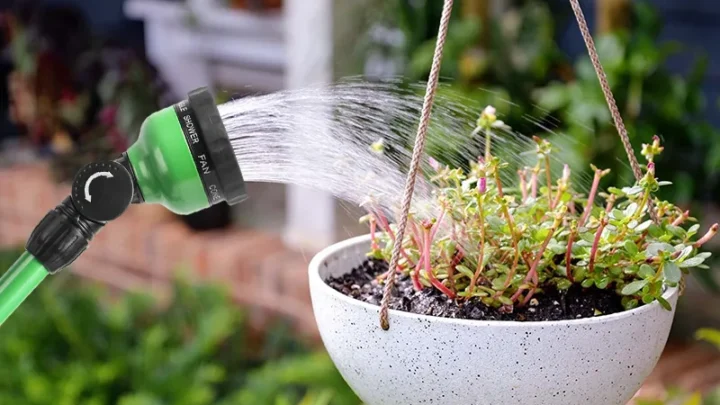
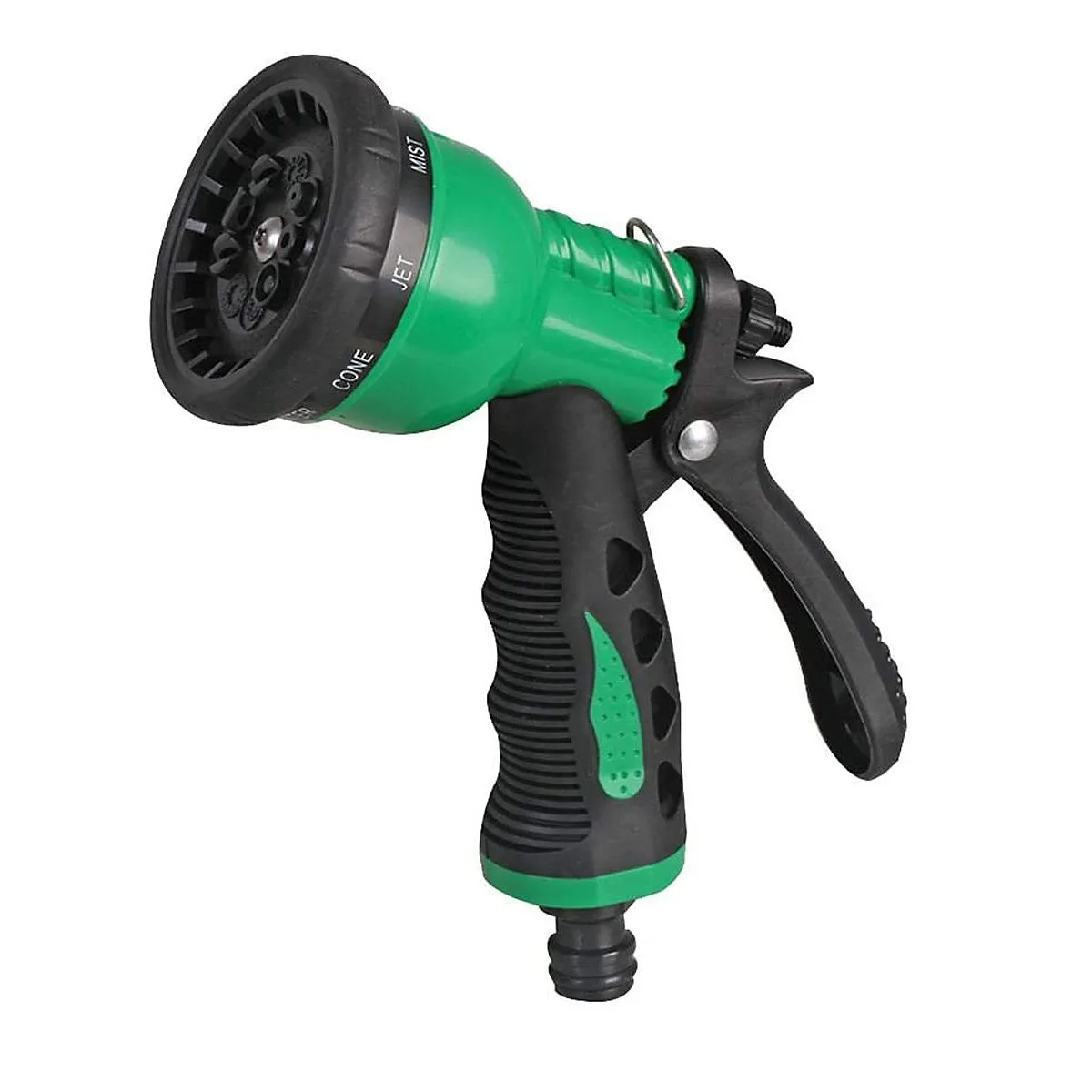
The dial sprayer is the most common approach and honestly the best starting point for most gardeners. A good multi-pattern dial gives you settings from jet to flat fan to full shower. For raised beds, the gentle shower or flat fan setting is what you want.
It breaks the water stream into fine droplets that settle evenly across the soil surface instead of hammering it into hard crust. Think of it like rain instead of a fire hose. If you ever need to connect your garden hose to a sprayer, making sure that connection is tight prevents the pressure drops that ruin even coverage.
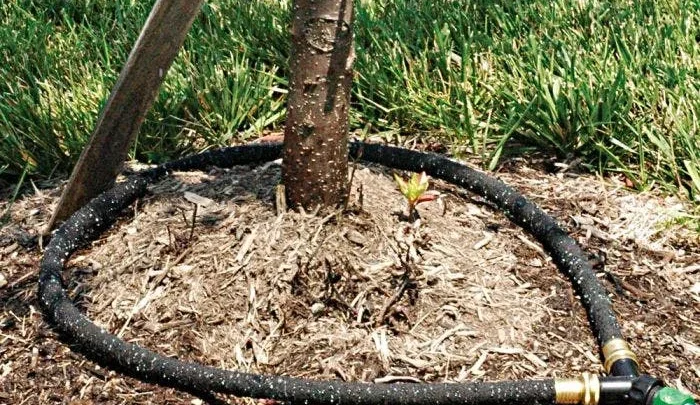
Soaker hoses work by seeping water through tiny pores along their entire length. They lay on or just under the soil surface and deliver water slowly, directly to the roots. This method virtually eliminates runoff and evaporation because the water goes straight into the soil.
They also tolerate lower water pressure better than any other method, which matters if your spigot is far from your beds. Properly connecting two garden hoses together ensures you maintain adequate flow when extending your soaker system across multiple beds.
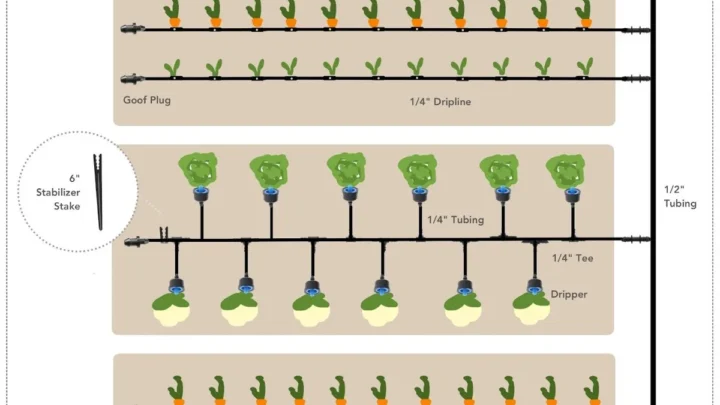
Drip irrigation kits take the soaker hose concept further by using emitters placed at individual plants. They're the most water-efficient option by a wide margin and the only one that truly automates watering. The trade-off is upfront cost and a bit more setup.
If you plan to extend the life of your garden hose and protect your irrigation investment, proper maintenance matters just as much as the initial installation.
The static spray wand is the budget-friendly option. It's basically a rigid tube with a spray nozzle on the end, attached to your hose. No moving parts, no pattern switching.
You point it and move it. It works fine for small beds if you're disciplined about your technique. The downside is that it requires constant attention and doesn't work well for long beds or uneven terrain.
The key insight here is that none of these methods are wrong. They're just right for different situations. Once you pick the one that matches your setup, the next step is learning how to set it up for maximum evenness.
Setting Up Your Chosen System for Even Coverage
Picking the right method is only half the battle. Setting it up correctly is what separates even watering from the frustrating patchwork most gardeners accept as normal. Each system has its own setup quirks, and getting them right takes about ten minutes the first time.
After that, it becomes second nature.
For dial sprayers, your technique matters more than the tool. Start by attaching the sprayer to your hose and checking that every connection is hand-tight plus a quarter turn. Loose connections cause pressure loss, and pressure loss creates uneven spray patterns. Set the dial to the gentlest setting, usually a wide fan or soft shower, and test the spray against a white wall or sheet of paper held at arm's length.
You want to see a fine, consistent mist, not distinct streams or dry patches in the pattern. If you see gaps, adjust the pattern ring slightly until coverage looks uniform.
When you actually water, walk slowly and deliberately. Start at one end of the bed and move along the length while sweeping side to side in gentle arcs. Overlap each pass by about a third.
That overlap is the secret to even coverage, it fills in the slight thinning that happens at the edges of any spray pattern. Don't rush. Two minutes per bed is usually enough for thorough soaking.
If you find yourself going back over the same spot repeatedly, you're either moving too slowly or your spray pattern isn't wide enough. Checking whether your INNAV8 heavy-duty nozzle versus alternatives performs better for even distribution can guide your equipment choice if you're unsure about your current nozzle.
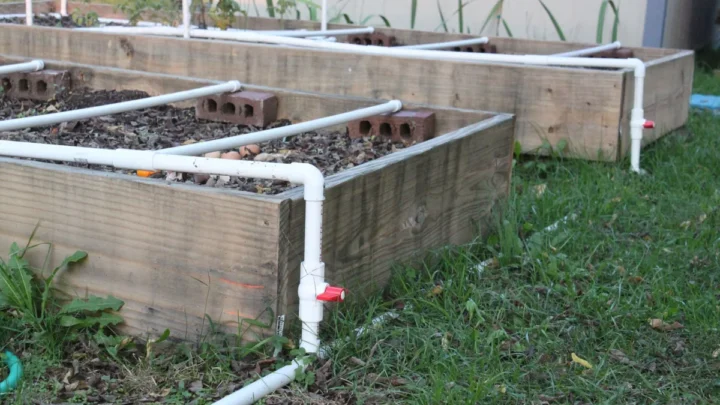
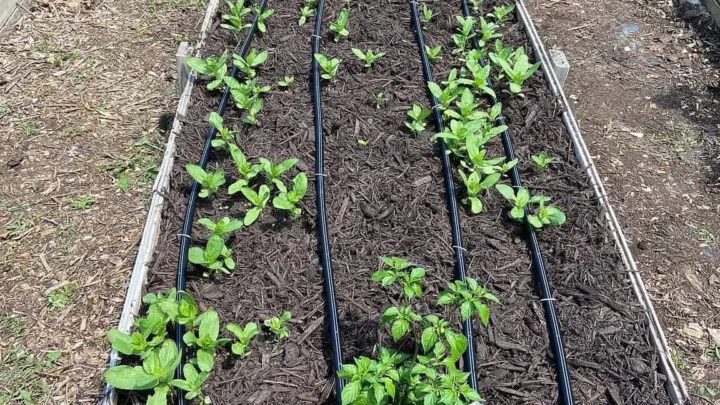
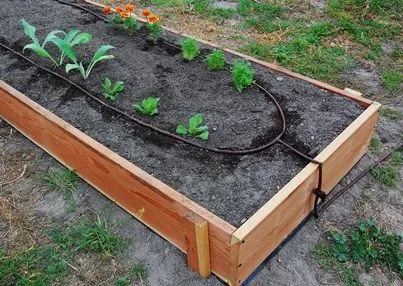
For soaker hoses, placement is everything. Lay the hose along the center of each bed, running the full length. If your bed is wider than three feet, run a second line parallel to the first, offset by about a foot. Cover the hose with two to three inches of mulch, straw, shredded leaves, or wood chips all work.
The mulch keeps the hose from drying out in the sun and reduces evaporation from the soil surface. Before you commit to permanent placement, run the hose for fifteen minutes and check that water emerges evenly along its entire length. Dry spots mean a clog or a manufacturing defect.
Puddling means the slope is working against you.
For drip irrigation, zoning makes the difference between success and frustration. Group plants with similar water needs on the same emitter line. Leafy greens and herbs that prefer consistent moisture go on one zone. Tomatoes and peppers that tolerate slightly drier conditions between waterings go on another.
Install a simple timer on your spigot, even a basic $15 battery model, and set it to water early in the morning. Early watering gives plants moisture before the heat of the day and lets foliage dry out, reducing disease risk.
The Bucket Test: How to Know Your Coverage Is Actually Even
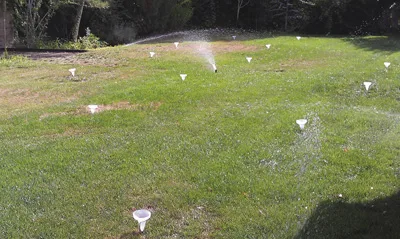
Here's the single most useful trick for verifying even watering, and it takes five minutes. Place ten empty cans or small buckets around each raised bed before you water. Space them evenly, along the edges and in the center.
Run your watering routine as normal. Then go outside and measure the water depth in each container with a ruler.
If the measurements vary by more than a quarter inch across the containers, your coverage is uneven. Adjust your technique or equipment accordingly. Maybe you need to slow your walking pace with the sprayer.
Maybe your soaker hose needs repositioning. Maybe your spray pattern has a weak spot you didn't notice. The bucket test tells you exactly where the problem is, so you can fix it instead of guessing.
This simple verification step catches issues that other methods miss. You might think your soaker hose is distributing evenly because the soil looks wet everywhere. But a bucket test could reveal that one section is absorbing water twice as fast as another, meaning that area is actually getting overwatered while others stay borderline dry.
Catching this early prevents root rot in some plants and drought stress in others, both serious problems that compound over a growing season.
Common Mistakes That Waste Water and Stress Plants
Even with the right method and good setup, certain habits will sabotage your efforts every time. These mistakes are so common that most gardeners never connect them to their uneven watering problem. They just accept patchy moisture as normal.
It isn't. Fixing these habits often solves more problems than upgrading your equipment ever will.
Holding the hose in one spot too long is the number one mistake. It feels productive in the moment, you're putting water right where you need it. But soil can only absorb so much water per hour.
When you exceed that absorption rate, the excess water runs off the sides of the bed or pools on the surface instead of soaking down to the roots. The result is a wet spot that turns into a puddle and a surrounding area that never got adequate water. Move steadily.
Overlap your passes. Let the water soak in before you revisit.
Using a harsh jet spray compacts the soil surface and damages tender stems. High-pressure water punches tiny craters in loose raised bed soil, creating hard crusts that repel future watering. Water beads up and rolls off instead of soaking in.
It also physically damages young seedlings and can strip mulch away from plant bases. Switch to the gentlest setting on your nozzle and hold the sprayer higher above the soil, about two feet up, to let the water break apart before it lands.
Watering at midday wastes a significant portion of your effort to evaporation. Hot sun hitting wet soil all afternoon turns water into vapor before it penetrates deeply. Morning watering, ideally between 6 and 9 AM, gives plants a full day of access to moist soil and allows any water that lands on leaves to dry quickly in the sunlight.
Evening watering is the second choice, it works but leaves foliage damp overnight, which encourages fungal diseases. Avoid watering at night whenever possible.
Ignoring runoff on steep or coarse soil mixes means you're watering more than you realize and still not getting even coverage. If water beads up and rolls off your bed within seconds of application, your soil mix is too coarse or has developed a hydrophobic layer from repeated dry-down cycles. The fix is to water in shorter, more frequent sessions.
Apply water for five minutes, wait ten minutes for absorption, then apply another five-minute session. Repeat until the bed is thoroughly soaked. This builds moisture gradually instead of overwhelming the soil's capacity to absorb.
Letting hoses kink unnoticed reduces flow to a fraction of what it should be. A kinked hose might still have water coming out the other end, but at dramatically reduced pressure and volume. That means uneven spray patterns, weak soaker hose output, and longer watering times that mask the underlying problem.
Before each watering session, unroll the hose fully and check the entire length for kinks or sharp bends. Learning how to repair a garden hose that stays flattened after a kink is useful knowledge since kink damage is one of the most common causes of flow problems.
Skipping the bucket test is a mistake in its own right. Without a way to verify your coverage, you're flying blind. You assume everything is even because the soil looks wet from the surface.
But surface wetness is the easiest thing to fake. A quarter inch of rain on a dry day might soak only the top two inches of soil while leaving everything belowbone dry. The bucket test reveals what's actually happening at root depth, where it counts.
Most of these mistakes share a common root cause: rushing. Gardens don't reward speed. They reward consistency and attention to detail.
Taking an extra five minutes to set up properly, verify coverage, and water methodically pays off throughout the entire growing season. Your plants will thank you with steadier growth, fewer disease problems, and bigger harvests.
Costs, Pricing, and Data for Even Watering Setups
Understanding the financial side helps you plan without surprise expenses. Here's what typical raised bed watering setups cost as of 2026.
| Setup | Typical Cost Range | Best For | Lifespan |
|---|---|---|---|
| Multi-pattern dial sprayer | $8 to $25 | Occasional hand-watering | 5+ years with care |
| Soaker hose (50-foot roll) | $20 to $45 | Low-pressure or long-run beds | 3 to 5 years |
| Basic drip kit (4 beds) | $40 to $90 | Automated regular watering | 5 to 8 years |
| Battery-operated timer | $12 to $30 | Anyone wanting consistency | 3 to 5 years |
| Smart Wi-Fi timer | $50 to $150 | Tech-savvy gardeners | 5+ years |
A garden hose timer at the low end of that range handles most home gardens well. You don't need the most expensive option to get even results. The budget sprayer and the premium one produce similar patterns when set correctly.
Water usage is another practical consideration. A standard hose running at 8 gallons per minute for 20 minutes uses roughly 160 gallons. At most municipal rates, that's between $1 and $3 per watering session.
Drip systems and soaker hoses cut that usage by about 30 to 50 percent because they reduce evaporation and runoff. Over a full growing season, that difference adds up meaningfully on your water bill.
If you're looking to dispose of an old garden hose responsibly, making sure it doesn't end up in a landfill is part of being a sustainable gardener. Understanding whether your garden hose can be recycled helps you choose equipment that aligns with your environmental values.
Maintenance: Keeping Your Setup Working Well Year After Year
Even the best watering system degrades without basic maintenance. A few simple habits prevent most problems before they affect your plants.
Clean your nozzle filter quarterly. Most spray nozzles have a small screen inside the connection point that catches sediment. When it clogs, spray patterns become uneven and flow drops.
Remove the screen, rinse it under clean water, and pop it back in. Takes thirty seconds.
Drain and store your hose properly each fall. Trapped water freezes, expands, and cracks the inner tube from the inside out. That's the #1 reason hoses fail prematurely.
Knowing how to fix a hole in the middle of a garden hose is handy, but prevention through proper winterization makes repairs unnecessary.
Check for kinks and sharp bends before each use. A kink might seem minor until you notice your spray pattern thinning on one side. Unroll the hose fully and walk the entire length.
Straighten any tight curves. If you struggle with a garden hose that won't unkink, consider switching to a kink-resistant model made with reinforced materials.
Inspect soaker hoses for clogs each spring. Run clean water through them before laying them in beds. If flow is weak at one end, you might have mineral buildup or debris.
Soaking the affected section in a vinegar solution for an hour usually clears it.
Frequently Asked Questions
How often should I water raised beds?
Most raised beds need watering two to three times per week during active growth. Hot, dry weather may require daily watering. Check soil moisture by sticking your finger two inches into the soil.
If it feels dry at that depth, it's time to water. If it's still moist, wait another day.
Can I use a regular garden hose sprinkler instead of a sprayer?
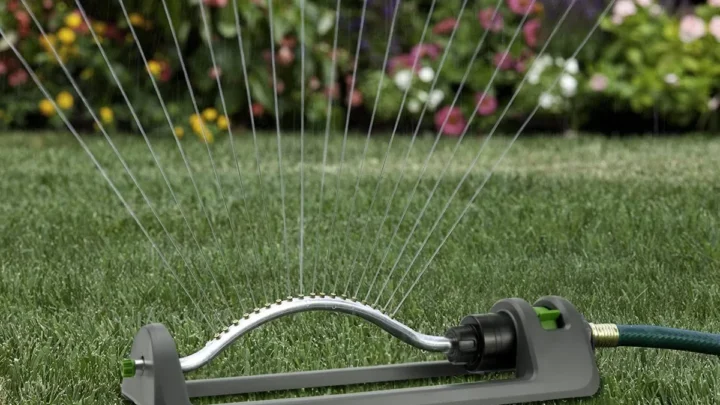
Yes, but you'll need to move it frequently to avoid waterlogging one area. Stationary sprinklers work better for lawns than for raised beds because beds have confined space and varied plant heights. If you do use one, position it at the edge of the bed and let it sweep across rather than spraying directly downward.
How do I know if my watering is actually even?
The bucket test described earlier is the simplest method. Ten containers placed around the bed reveal exactly where water lands most heavily and where it falls short. Without this test, you're guessing.
With it, you can make precise adjustments to your technique or equipment placement.
What's the best time of day to water raised beds?
Early morning between 6 and 9 AM is ideal. Soil absorbs water efficiently before heat increases evaporation. Leaves dry quickly in morning sun, reducing fungal disease risk.
Late afternoon works as a backup. Avoid evening watering whenever possible because damp foliage overnight invites disease.
How can I reduce my water bills while keeping beds healthy?
Switching to soaker hoses or drip irrigation cuts water use by 30 to 50 percent compared to hand-watering with a spray nozzle. Adding two to three inches of mulch on top of your soil also dramatically reduces evaporation. Together, these changes can halve your garden's water consumption while keeping plants healthier.
Should I water my raised beds differently in summer versus spring?
Yes. Spring soils are cooler and absorb water more slowly, so longer gentle sessions work well. Summer soils dry faster and may develop hydrophobic conditions, requiring shorter more frequent sessions with pauses for absorption.
Adjust your timing based on current conditions rather than following a fixed schedule.

Similar Posts