Watering a Tree? Here’s Exactly Where the Hose Goes
Where should I place a hose when watering a tree? The answer changes depending on whether your tree is young or established, but the general rule is simple: position it at the drip line, not against the trunk. This is the outer edge of the canopy where most feeding roots live.
Placing water there delivers moisture exactly where the tree needs it most.
Research from the USDA Forest Service indicates established trees need roughly 10 to 15 gallons per inch of trunk diameter each week during growing months. Younger trees require less volume but more frequent applications to help roots establish. Getting the placement wrong can suffocate roots or invite decay straight into the trunk.
Here's how to get it right every time.
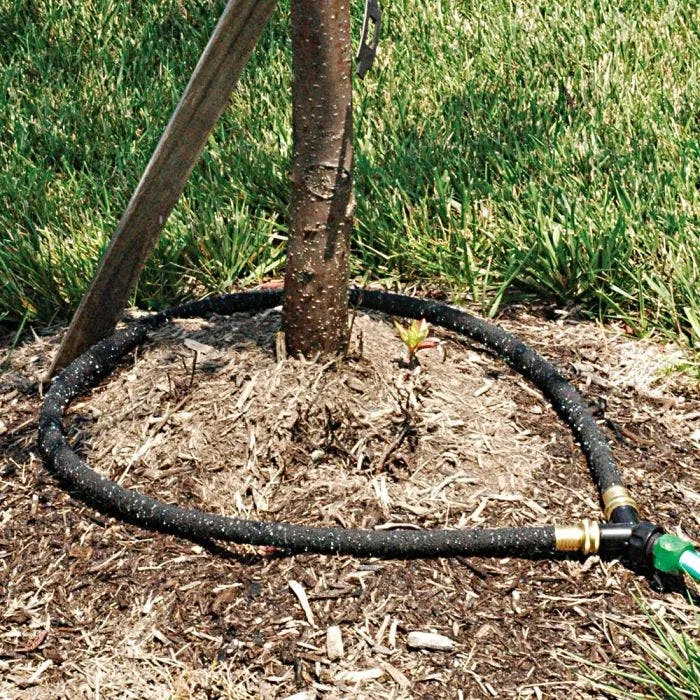
Image source: Web (Bing) / fity.club (Web image (fair-use with source credit))
Quick Answer
Place your hose at the drip line, which sits under the outer edge of the canopy. This is where the majority of fine feeder roots absorb water and nutrients. Never run the hose directly against the trunk, as this invites rot and disease.
Water slowly and deeply until the soil is moist 12 to 18 inches down.
How to Find Your Drip Line
What exactly is the drip line?
The drip line marks the outermost edge of a tree's canopy. Rain and irrigation water naturally fall from these outer branches into the soil below. Fine root hairs, the tree's main water-absorbing organs, concentrate in this zone.
Placing your hose here mimics natural rainfall and reaches the right roots.
How to measure it
Find the trunk first, then look up to see how far the branches spread. The distance from the trunk to the farthest branch tip is your drip line radius. For most mature shade trees, this falls between 10 and 20 feet out.
Small ornamental trees may only need a 4 to 8 foot radius.
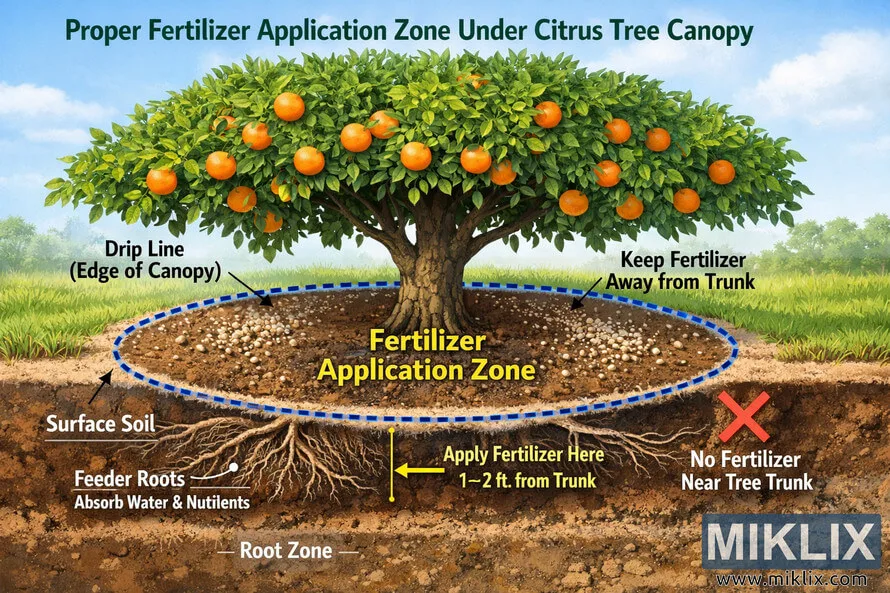
Image source: Web (Bing) / miklix.com (Web image (fair-use with source credit))
When the drip line shifts
Newly planted trees have tiny canopies, so their drip lines sit close to the trunk. As the tree grows, the canopy widens and the drip line moves outward. You'll need to adjust your hose placement each year to match.
Check your proper hose maintenance routines to keep the setup clean and functional.
Trees grown near structures or sidewalks often have uneven canopy spread. Wind and sunlight bias can push branches to one side. Follow the canopy shape, not an imaginary perfect circle.
Use a tape measure to mark the widest branch tips, then connect those points. This gives you an accurate ring for hose placement.
Reading the soil tells you more
Dig a small test hole near where you plan to place the hose. Check how deep the moisture reaches after watering. If water pools on the surface, your soil is likely clay-heavy and draining poorly.
Clay holds water longer, so reduce your run time by half. Sandy soils drain fast and need shorter, more frequent sessions instead.
Your Decision Tree: Where to Place the Hose
Step one: Is your tree young or established?
If the tree was planted within the last three years, it is still establishing its root system. Place the hose 2 to 3 feet from the trunk in a small circle. Water this zone every 2 to 3 days during the first summer.
Keep the soil consistently moist but never soggy. Established trees get a different treatment altogether.
Step two: What is the trunk diameter?
Measure the trunk at breast height, about 4.5 feet above the ground. Use that number to calculate your weekly water needs. Each inch of trunk diameter requires roughly 10 to 15 gallons per week.
Split that total into 1 to 3 watering sessions depending on your soil type. A 6-inch tree needs about 60 to 90 gallons weekly during peak heat.
Step three: What soil are you working with?
Clay soils absorb water slowly and hold it longer. Run your hose for shorter bursts spread over more days. Sand soils drain quickly and dry out fast.
Run the hose longer once or twice a week instead. Loam soils sit somewhere in between and accept moderate watering schedules.
| Soil Type | Absorption Speed | Recommended Schedule |
|---|---|---|
| Clay | Very slow | Short runs, frequent days |
| Sandy | Very fast | Longer runs, fewer days |
| Loam | Moderate | Balanced approach |
Step four: What tool are you using?
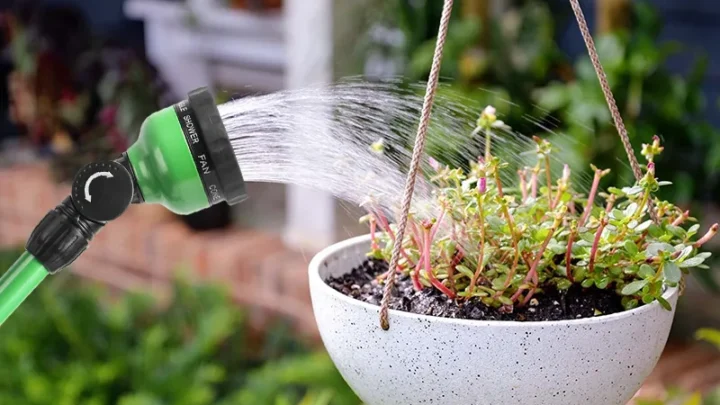
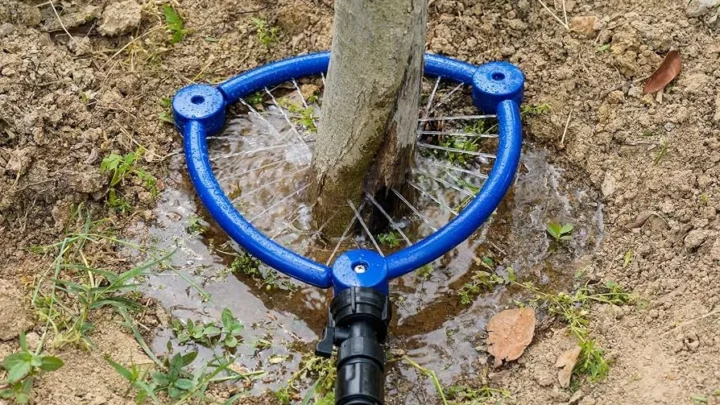
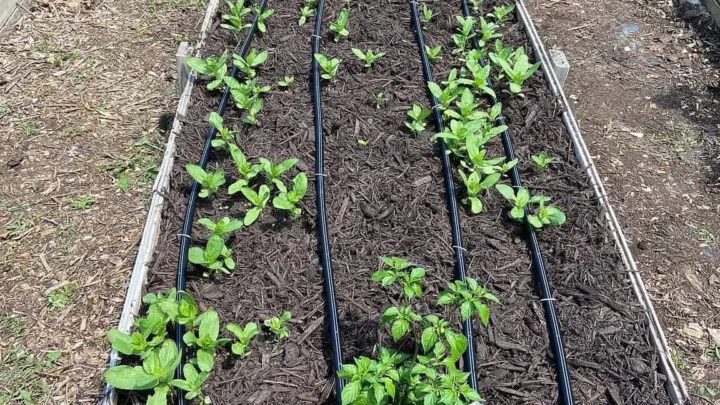
A regular garden hose with a spray nozzle works fine for spot watering. Set it to a gentle shower or soak setting. A soaker hose lays in a circle and drips slowly along its length.
This method saves time and reduces runoff significantly. For understanding hose diameter options, check our sizing guide before picking your gear.
Hydration bags like Ollie Bags attach directly to the trunk and release water slowly. These work well for newly planted trees and hard-to-reach spots. They hold 25 to 50 gallons and empty over 5 to 10 hours.
Make sure the bag sits slightly above the soil line to prevent bark contact. Avoid unkinking problems by storing hoses coiled loosely when not in use.
Putting it all together
Young tree in clay soil? Place a soaker hose 2 feet from the trunk, run it 30 minutes every other day. Mature tree in sand?
Lay the hose at the full drip line, run it 60 minutes twice weekly. The exact numbers vary by species and local climate. Monitor the soil moisture after each session and adjust from there.
Check out how to increase water pressure if your flow feels weak during long watering sessions.
Common Mistakes That Kill Trees
Watering too close to the trunk
This is the most destructive error homeowners make. Running a hose against the bark keeps the trunk constantly wet. Moisture trapped against bark invites fungal infections and bacterial decay.
It also attracts borers and other wood-boring pests that bore straight into the cambium layer. Always leave at least a 6-inch gap between the hose and the trunk.
Only wetting the surface
Light daily sprinkling encourages shallow root growth. Roots that stay near the surface dry out fast and stress easily during heat waves. Deep roots access groundwater and weather drought far better.
Aim to soak the top 12 to 18 inches of soil each session. Push a screwdriver or soil probe into the ground to check penetration depth.
Overwatering in clay soils
Clay swells when saturated and cracks when bone-dry. Both extremes damage fine roots and restrict oxygen flow. Soggy clay suffocates roots just as effectively as drought does.
Signs include yellowing leaves, premature leaf drop, and moss growing at the base. Reduce watering frequency and extend the dry periods between sessions.
Using the wrong nozzle setting
A spray jet blasting from a garden hose can erode mulch and compact soil. It also scatters water wildly, wasting moisture to runoff. Switch to a soaker hose, a bubbler attachment, or a gentle soak setting.
This directs water where it belongs without disturbing the root zone. Learn how to identify your hose size to ensure proper flow rates.
Ignoring seasonal changes
Summer heat drives up water demand dramatically. Fall and spring bring cooler temperatures that slow growth and reduce thirst. Winter dormant trees need little to no supplemental watering unless the ground stays frozen.
Adjust your schedule monthly rather than following a rigid calendar. Check how to connect your hose properly to avoid leaks that waste water during critical periods.
Leaving hoses in direct sun
Black rubber hoses left baking in full sun can cook roots sitting underneath them. The heat transfers through the hose and into the surrounding soil. Root cells die at sustained temperatures above 95°F.
Move hoses to shade after each watering session, or switch to lighter-colored soaker hoses that absorb less heat.
Tools for the Job
Soaker hoses
Soaker hoses are porous tubes that weep water along their entire length. They lay flat on the soil surface and deliver moisture slowly and evenly. A standard 50-foot soaker hose releases about 0.5 gallons per hour per foot at normal household pressure.
This makes them ideal for circling trees without runoff or pooling. They cost between $20 and $50 depending on length and quality.
Regular garden hoses
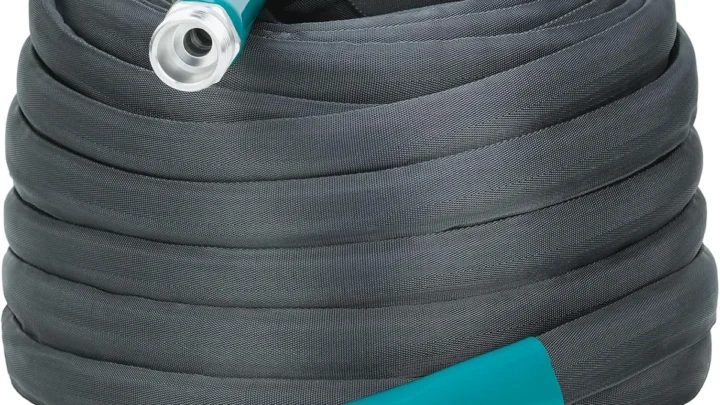
A standard 5/8-inch garden hose works well if you control the flow carefully. Attach a nozzle set to a gentle shower or soak pattern. Keep the stream moving slowly around the drip line ring.
This method requires more attention but uses equipment you likely already own. Understanding how garden hoses are measured helps you pick the right length for your landscape.
Ollie bags and hydration bags
These silicone or fabric bags attach to the trunk and fill with water from a hose. They release moisture slowly over several hours, deep into the root zone. Most hold between 25 and 50 gallons and run for 5 to 10 hours per fill.
They are especially useful for newly planted trees and young specimens.

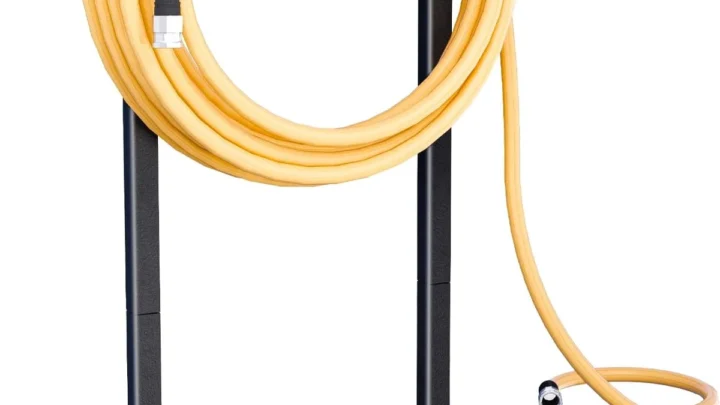
Image source: Web (Bing) / grainger.com (Woodward Company / Grainger (Web image (fair-use with source credit)))
Soil moisture probes
A simple probe or screwdriver tells you how deep water has penetrated. Push it into the soil near the hose location after watering. If it slides in easily to 12 inches, your soak depth is adequate.
Hard resistance means you need to run the hose longer next time. More advanced electronic probes give precise moisture readings at different depths.
Timers and smart controllers
Automated timers attach between the spigot and hose, running water on a set schedule. Smart controllers adjust for rain and temperature changes automatically. These remove the guesswork from daily watering decisions.
They pay for themselves quickly by preventing overwatering waste. Verify why your hose reel might slow flow if automation feels sluggish.
Mulch and inspection tools
Mulch retains soil moisture and moderates temperature around the root zone. A 2 to 4-inch layer of organic mulch reduces evaporation significantly. Keep mulch pulled away from the trunk to prevent rot.
A simple trowel or hand rake helps you maintain the mulch ring and check for pests or disease signs each season.
Need help with recycling your old hoses? Many municipalities accept rubber and vinyl hoses for repurposing. Always clean them thoroughly before drop-off to remove soil and chemical residue.
Frequently Asked Questions
How far from the trunk should I place the hose?
Keep the hose 2 to 3 feet from the trunk for young trees and at the full drip line for mature specimens. The drip line usually falls 10 to 20 feet out from the trunk depending on canopy spread. Never let the hose touch the bark directly, as constant moisture against the trunk invites rot and pest infestation.
How often should I water a newly planted tree?
Water newly planted trees every 2 to 3 days during the first growing season. Use about 10 gallons per week for each inch of trunk diameter during this establishment phase. Once the tree shows steady growth for two full seasons, you can gradually extend the interval between waterings to once weekly.
What is the best time of day to water trees?
Water trees early in the morning between 6 AM and 10 AM whenever possible. Morning watering gives roots time to absorb moisture before midday heat drives off evaporation. Evening watering leaves foliage damp overnight and increases fungal disease risk.
Avoid watering during the hottest part of the day when much of the moisture evaporates before reaching the roots.
How do I know if I am overwatering my tree?
Yellowing leaves, premature leaf drop, and soft brown roots signal overwatering. Moss or algae growing at the base of the trunk indicates consistently wet soil. Waterlogged clay soils feel squishy and refuse to drain properly.
Reduce your watering frequency immediately and allow the top few inches of soil to dry between sessions.
Should I water trees during drought conditions?
Yes, water trees deeply even during droughts since stress makes them vulnerable to pests and disease. Deep monthly soakings are better than frequent light sprinklings during dry periods. Established drought-tolerant species may need supplemental water only during extreme heat waves lasting more than two weeks.
Consult your local university extension service for region-specific drought watering guidelines.

Similar Posts