Round vs Flat Hose: Small Space Verdict
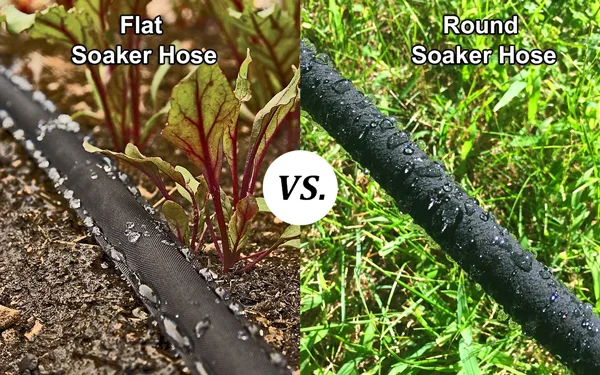
Is a flat garden hose or a traditional round hose better when storage space is limited? The answer depends on how you measure your space. Flat hoses fold into a slim stack that slides into drawers or behind doors.
Round hoses coil into a bulky circle that demands a proper reel or cabinet. Manufacturer specs show a flat 5⁄8-inch by 50-foot hose can store at under two inches thick. A round hose of the same size needs 12 to 18 inches of coiled diameter.
Here is how to pick the right one for your situation.
Quick Answer
Is a flat garden hose or a traditional round hose better when storage space is limited? Flat wins on pure folded thickness. Round wins on flow rate and long-term durability.
If your storage gap is measured in inches, choose flat. If you have a proper reel, round is the better hose.
Flat Garden Hose: Where It Shines and Where It Falls Apart
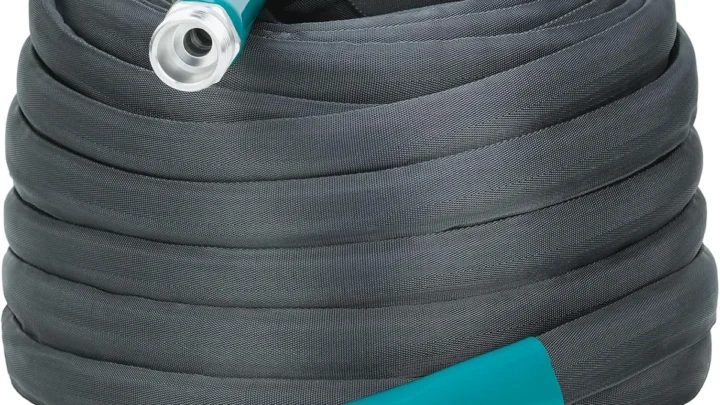
A flat garden hose uses two parallel water channels stacked inside a single flexible sheet. When empty, it collapses to nearly zero profile. That design is what makes it popular for tight storage.
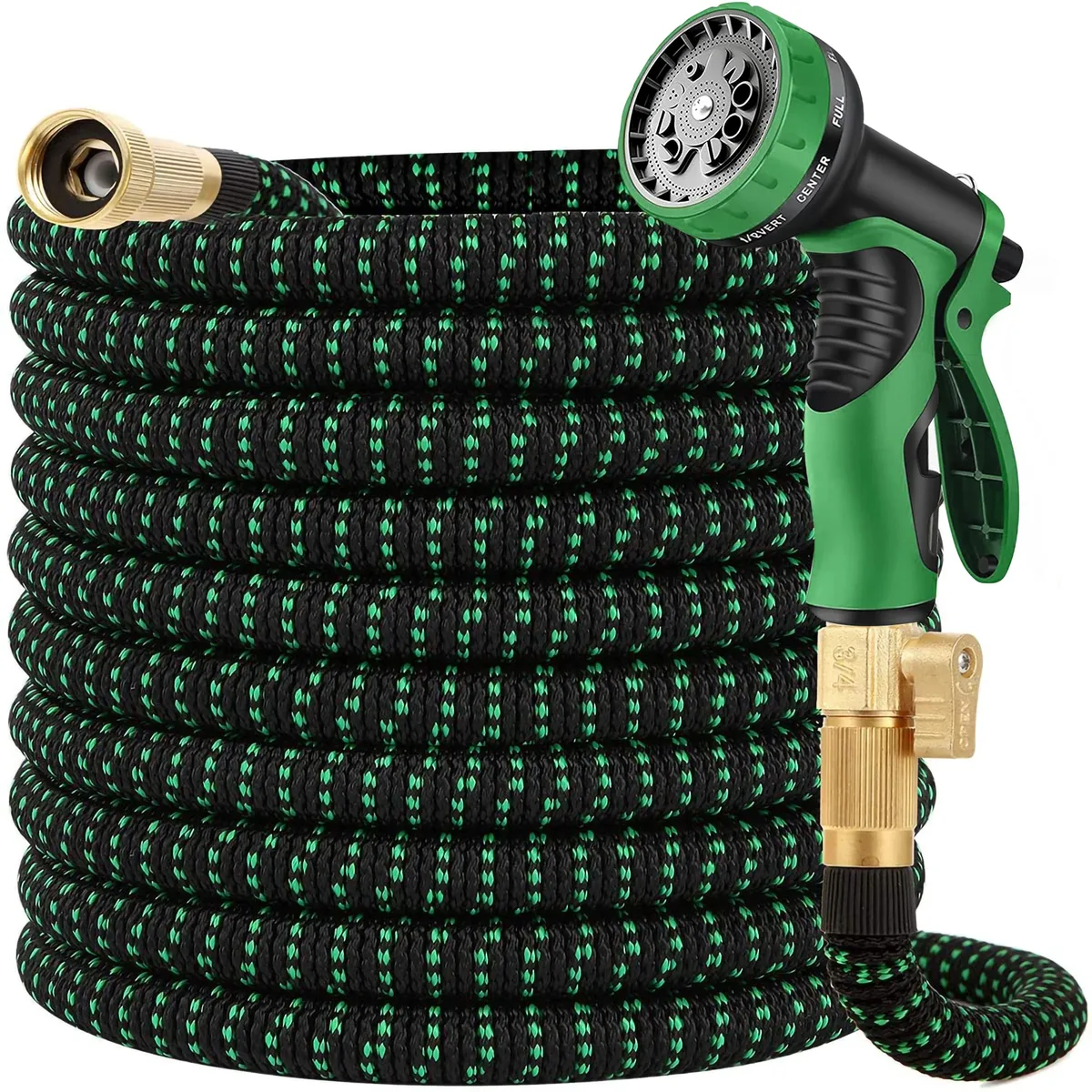
What Makes a Flat Hose Different
Most flat hoses use a 3-ply or 5-ply PVC or hybrid polymer build. The two channels run side by side when pressurized. They fold flat together when the water is shut off.
This creates a storage footprint that looks like a folded blanket instead of a thick coil.
Aggregate reviews report that flat hoses excel at sliding into gaps where a round hose simply will not fit. You can tuck one behind a bathroom door, under a low shelf, or in a narrow side-yard closet. The folded thickness often measures between one and two inches for a standard 5⁄8-inch by 50-foot model.
Real Pros
- Folds into a thin stack that fits in drawers, cabinets, and slim wall niches
- Lighter when empty, usually 3 to 5 pounds for a 50-foot length
- Easy to reposition without dragging a heavy coil
- Stays out of the way on a small balcony or patio
- Often priced lower than quality rubber round hoses
Real Drawbacks
- Creases can lock in place and resist unrolling on first use
- Dual-channel design slightly restricts flow compared to a full round bore
- Cheaper models leak at the couplings after one or two seasons
- The flat-fold memory means rewinding feels like refolding laundry
- Not ideal for tasks that need sustained high flow, like filling a stock tank
If your primary goal is tucking the hose away and you do not need heavy flow, [standard sizing charts] can help you match the right diameter to your spigot output.
Round Garden Hose: Where It Still Has the Edge
The round garden hose is the traditional single-tube design most people grew up with. It coils neatly around a reel and maintains a consistent internal bore from end to end. That consistency is why it remains the go-to for serious watering tasks.
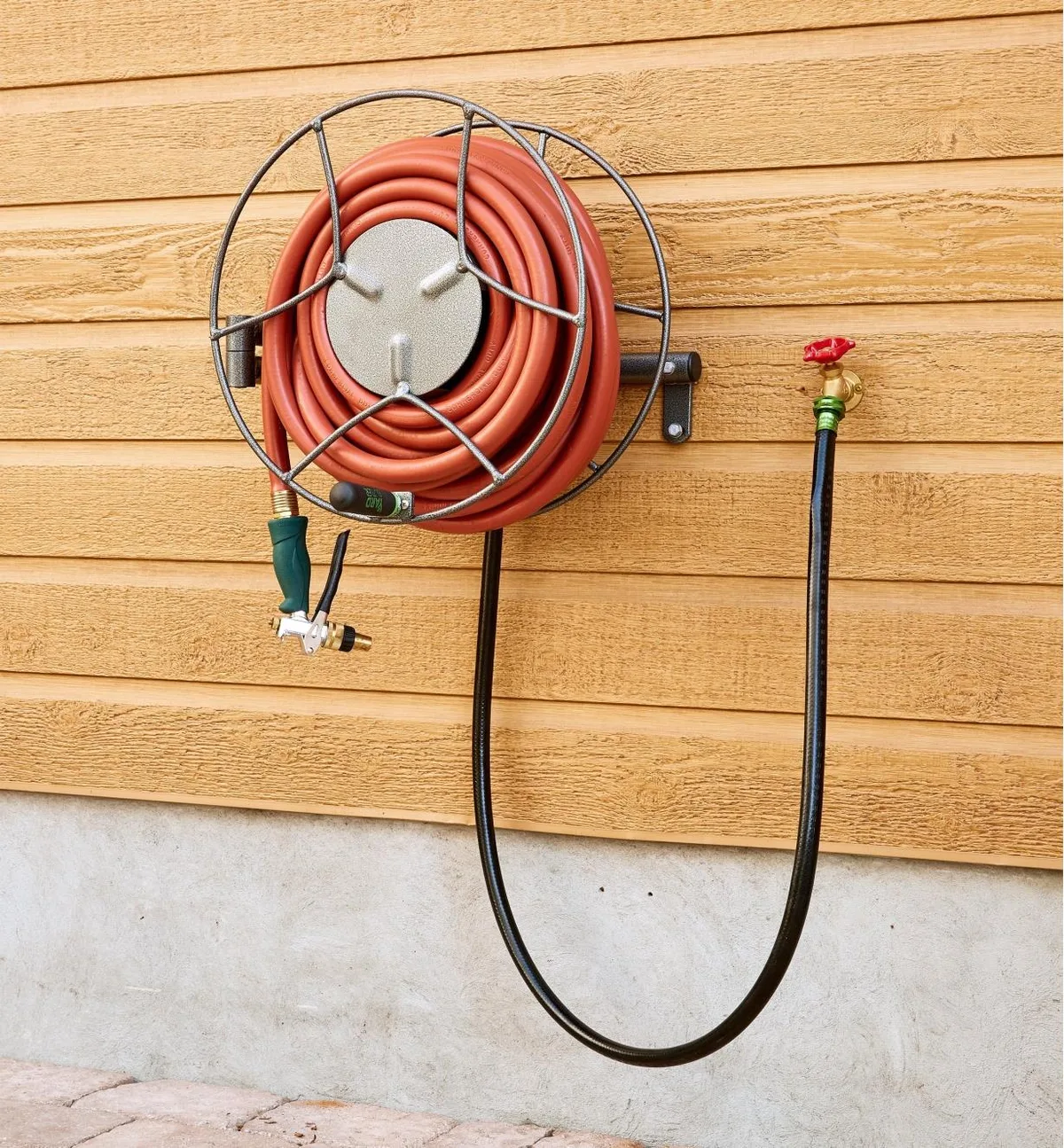
What Makes a Round Hose Different
Round hoses come in rubber, PVC, or reinforced polymer. The key difference is the full circular cross-section. Water flows through an uninterrupted tube, which means less turbulence and better flow rates at the same pressure.
A 5⁄8-inch round hose delivers noticeably more water per minute than a flat hose of the same stated diameter.
Real Pros
- Full internal bore delivers superior flow, especially at 5⁄8-inch and larger
- More abrasion-resistant when dragged across concrete or gravel
- Unrolls completely without fighting stubborn creases
- Wider selection of freeze-rated and heavy-duty models
- Easier to store neatly on any standard hose reel
- Generally lasts longer, often five to ten years with quality rubber
Real Drawbacks
- Coiled diameter takes up significant shelf or floor space
- Heavier when water-filled, particularly rubber versions
- Requires a reel or wall mount to avoid tangled piles
- Budget PVC round hoses can still kink under sharp bends
- The bulkier shape rules out drawer or behind-door storage
If you already own a hose reel, the round hose stores far more acceptably than you might expect. Learning [proper connection techniques] also helps you avoid the leaks that shorten any hose's life.
Side-by-Side: Flow, Weight, Lifespan, and Storage Footprint
The real comparison comes down to four numbers: how fast water moves, how heavy it gets, how long it lasts, and how much room it consumes when stored.
| Factor | Flat Hose (5⁄8″ × 50′) | Round Hose (5⁄8″ × 50′) |
|---|---|---|
| Stored thickness | ~1–2 inches flat | ~12–18 inches coiled |
| Empty weight | ~3–5 lbs | ~6–10 lbs (PVC), ~12–18 lbs (rubber) |
| Water-filled weight | ~25–30 lbs | ~40–60 lbs (PVC), ~70+ lbs (rubber) |
| Typical lifespan | 2–4 years (budget), 4–6 years (premium) | 5–10+ years (quality rubber) |
| Flow rate at 40 PSI | Slightly restricted by dual channels | Full bore flow, noticeably faster |
| Kink resistance | Moderate; creases can lock | Good; rebounds after minor bends |
| Price range (as of 2026) | $15–$60 | $25–$120+ |
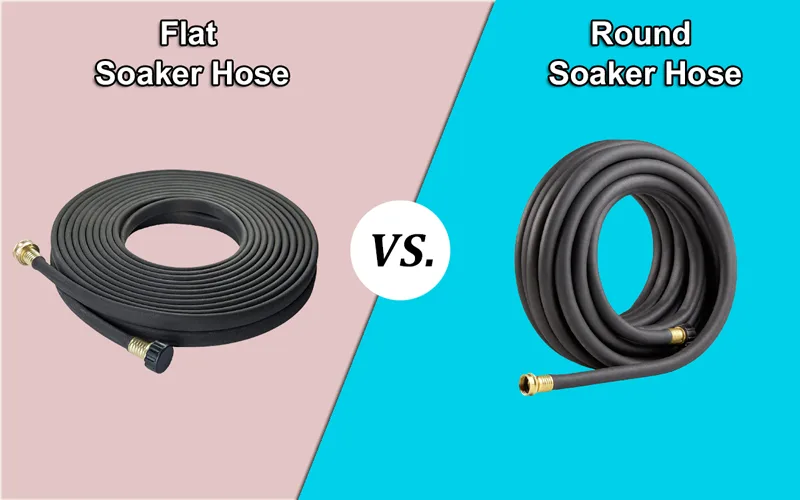
A flat hose clearly wins the storage-thickness category. A round hose clearly wins on flow and durability. The mid-range hybrid hoses bridge the gap somewhat, offering lighter weight than rubber with better kink resistance than basic PVC.
The cost-per-year math matters too. A $30 flat hose replaced every three years costs roughly $10 annually. A $90 rubber round hose paired with a $40 wall reel lasting eight years works out to about $16 per year.
The round hose path often wins on total cost despite the higher sticker price.
Which Hose Fits Your Actual Living Situation
The right choice comes down to three questions: how much space do you have, what will you use the hose for, and how long do you want it to last.
Go Flat If
- Your storage gap measures in inches rather than feet
- You mainly water containers, patio plants, or do light rinsing tasks
- You want something you can toss in a closet and forget about
- Your budget is under $50 and you accept a shorter replacement cycle
- You live in a warm climate where freeze resistance is not a concern
Stick With Round If
- You have a wall-mounted reel, portable coil stand, or storage cabinet
- You water garden beds, fill barrels, or need strong continuous flow
- You want one hose to last five years or more
- You live in a cold climate and need a freeze-rated option
- You wash your car or driveway regularly and need abrasion resistance
The Expandable Hose Wildcard
Expandable hoses collapse to a thin tube when empty, making them even slimmer than flat hoses. But [how expandable designs work] relies on a latex core inside a fabric sleeve, which limits flow rate and durability. They are a valid third option only if your storage constraint is extreme.
When it comes to actual flow needs, understanding [boosting your water pressure] helps you get the most from whichever hose you choose.
Maintenance, Common Mistakes, and What You'll Actually Pay
Good maintenance separates a three-year hose from a ten-year hose. The habits are simple, and they apply equally to flat and round designs.
Keeping Either Hose Lasting Longer
- Always drain standing water before storing. Moisture inside breeds mildew and attracts insects.
- Roll a round hose loosely around your arm or a proper reel. Do not crush it into a tight ball.
- Fold a flat hose gently along its original channels. Do not create new creases in different spots.
- Check couplings and rubber washers yearly. A $2 washer fixes most connection leaks.
- Store out of direct sunlight when possible. UV degradation hits PVC and hybrids hardest.
- For winter storage in cold climates, bring any hose indoors or into a frost-free shed.
Mistakes That Waste Money
- Buying the cheapest flat hose and replacing it twice in one summer
- Picking a 3⁄4-inch round hose when your spigot and tasks only need 5⁄8-inch flow
- Coiling a wet hose tight and trapping moisture inside for months
- Hanging a heavy rubber hose on a wall hook that pulls loose over time
- Ignoring a small leak at the coupling until it bursts under pressure
Fixing a [sealing connection leaks] early saves you from a flooded hose bib and a ruined wall.
What You'll Actually Pay
- Budget PVC flat hose: $15 to $30
- Mid-range hybrid flat hose: $30 to $60
- Quality round PVC hose: $25 to $50
- Heavy-duty rubber round hose: $60 to $150 plus
- Wall-mounted hose reel: $20 to $100
- Freestanding hose cabinet: $80 to $250
The Cost-of-Storage Reality
A flat hose saves space but often costs more per year because of shorter lifespans. A round hose on a reel costs more upfront but usually pays for itself through durability. [Preventing kink damage] extends the life of either type, so factor those habits into your total ownership cost.
Frequently Asked Questions
Can a flat hose really handle normal watering pressure?
Yes. Most flat hoses are rated for 150 to 200 PSI, which exceeds typical household spigot output. You may notice slightly slower fill rates than a 5⁄8-inch round hose, but for plants, patios, and light tasks the flow is perfectly adequate.
Will a flat hose unroll on its own or do I have to fight it?
It usually starts straightening but often keeps a slight curve from its folded state. A quick walk-back pull smooths most of it out. Cheap models can stubbornly resist, which is where material quality and ply count matter most.
Does a round hose really need a reel or can I just coil it on a hook?
A hook works for short-term storage, but a reel keeps the coil neat and prevents kinks. Without a reel, expect tangles within a few months, especially with heavier rubber models.
What diameter should I pick for limited storage?
Five-eighths inch is the sweet spot for most homes, balancing flow and manageability. If your storage is extremely tight, a half-inch flat hose offers the slimmest profile, though flow drops noticeably.
Is an expandable hose a valid third option?
It is worth considering only if your storage gap measures in inches. The flow penalty and shorter lifespan make it a compromise, not a replacement for a proper flat or round hose in most situations.
How do I winterize either hose type?
Drain it completely, disconnect from the spigot, and store indoors or in a frost-free shed. Bringing a rubber round hose inside during freezing weather is the single best habit for doubling its lifespan.
Advanced Storage Solutions for Round Hoses
A round hose does not have to mean clutter. The right storage system turns bulk into order. Here are the options that actually work in small spaces.
Wall-Mounted Reels
A wall-mounted reel keeps the hose off the floor and vertically aligned. Most models hold 50 to 100 feet of 5⁄8-inch hose. The coiled diameter stays compact against the wall.
You get full access without uncoiling everything first.
Look for a reel with a automatic rewind spring. Manual rewind works too, but the spring saves your back. Check the mounting hardware.
A reel loaded with water-filled rubber hose puts real weight on the anchor points. Use studs or heavy-duty anchors rated for at least 30 pounds.
Freestanding Coils and Cranes
A freestanding hose crane stands upright on a small footprint. The hose wraps around a vertical arm instead of lying on the ground. These units typically need a 2-foot by 2-foot base area.
They work well in narrow side yards or against a garage wall.
The trade-off is height. A full 50-foot coil on a crane can reach 4 to 5 feet tall. Make sure your storage area has the clearance.
Some models include a weighted base you can fill with sand or water for stability.
Hose Cabinets
A hose cabinet encloses the coil completely. This protects the hose from UV damage, freezing temperatures, and physical impact. Quality cabinets include a built-in reel and a locked door.
They also hide the hose from view, which matters for curb appeal.
Expect to pay $150 to $400 for a decent cabinet. The space requirement is larger than a wall reel. Measure your intended location before buying.
Some cabinets mount to the wall and fold shut. Others are standalone units you place on the ground.
Over-the-Door and Slim Hooks
If your space is truly tight, consider an over-the-door hose hook. It mounts to the back of a shed or garage door. The hose hangs vertically instead of coiling horizontally.
This works best for lighter PVC hoses under 50 feet.
Slim wall hooks spaced 6 inches apart also work. Run the hose in a figure-eight pattern between them. This prevents kinks and keeps the hose organized.
It is a low-cost solution that fits almost any narrow gap.
When to Upgrade or Replace Your Hose
Not every hose problem means replacement. Some issues are fixable. Other problems signal it is time to move on.
Here is how to tell the difference.
Fixable Problems
A leaking coupling often just needs a new washer. Turn off the water. Unscrew the connection.
Replace the rubber washer inside the female end. Reattach and test. This fixes most drip issues at the connection point.
A kinked section can sometimes be saved. Shut off the water. Gently work the kink toward the nearest coupling.
Do not step on the hose or force it with your hands. If the kink refuses to move, cut out that section and reconnect with a hose mender.
A cracked couplings body requires a replacement coupling. These cost a few dollars online. Use a hose repair kit with a brass insert and clamp.
Crimp the clamp with pliers or a dedicated crimping tool. This creates a permanent fix that lasts for years.
Problems That Mean Replacement
Persistent soft spots along the hose length indicate internal breakdown. The reinforcement layers are separating from the inner tube. Water blisters form under pressure.
No repair fixes this. Replace the hose.
Severe kink chains that lock up repeatedly will not recover. If the hose kinks every time you reposition it, the material memory is too strong. This is common in cheap flat hoses after one season.
A new hose with better kink resistance will save frustration.
Coupling threads stripped beyond repair mean the end is done. If the male threads spin freely or the female threads are rounded out, no connector will seal properly. Cut off the damaged end and install a new coupling, or replace the entire hose if the damage is near the middle.
Signs It Is Time to Upgrade
Your current hose is 5 or more years old and showing multiple wear points. Repair costs approach half the price of a new hose. You need better flow for a new watering task.
Your storage situation has changed and a different hose type would serve you better.
Also consider upgrading if you frequently run into pressure or flow limitations. Moving from a 1⁄2-inch flat hose to a 5⁄8-inch round hose can double your effective flow rate. The upgrade pays for itself in saved time and better plant health.
Match your new hose to your actual needs. Do not buy a 3⁄4-inch heavy-duty rubber hose if you only water a few containers on a balcony. Buy the smallest hose that handles your tasks well.
That is the smartest way to manage both performance and storage space.

Similar Posts