Expandable vs Traditional Garden Hose: Which Is Right for
Should I choose an expandable garden hose or a traditional garden hose for everyday watering? That's the question every homeowner wrestles with when standing in the garden aisle. The answer depends on how you actually use it.
Let's cut through the noise and get you a straight answer.
The real difference comes down to one number: lifespan. A decent traditional hose lasts five to ten years. An expandable hose typically survives one to three seasons with regular use.
View our full size guide before you decide which length makes sense for your yard.
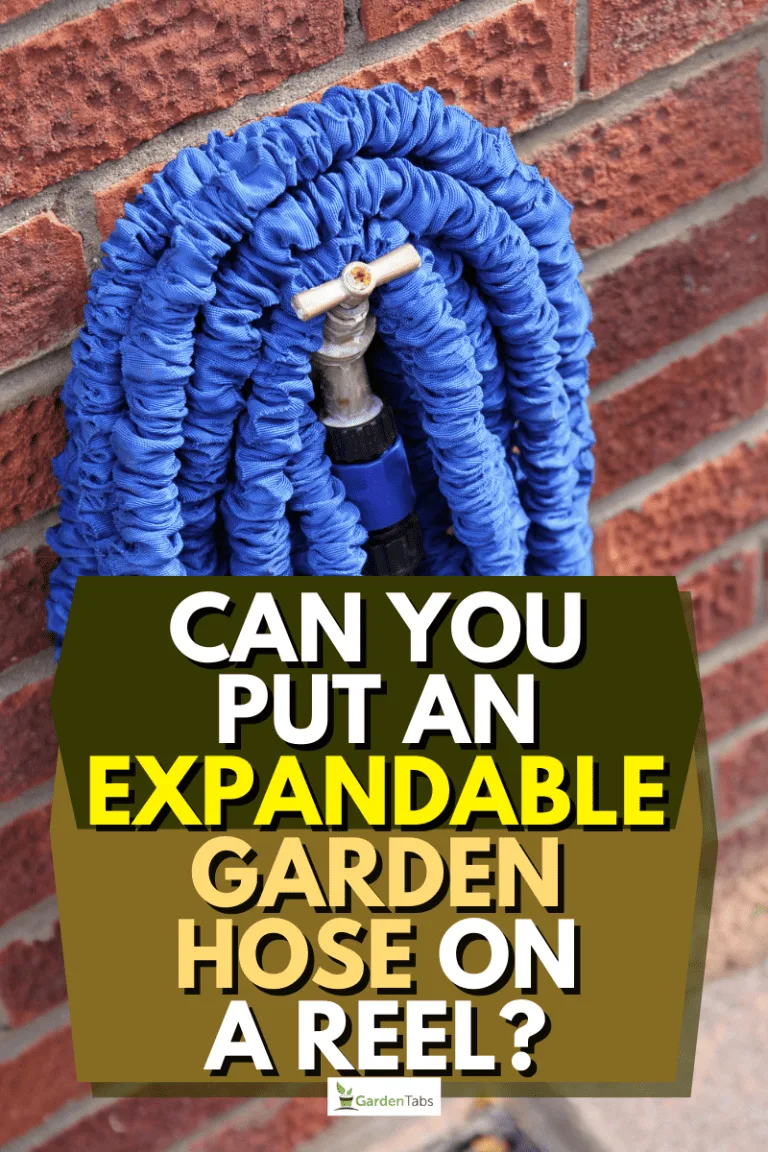
Quick Answer: Which Hose Actually Makes Sense for You?
Should I choose an expandable garden hose or a traditional garden hose for everyday watering? Pick a traditional hose if you water daily or have a yard over a quarter acre. Choose an expandable hose only if storage space is tight and your watering is light.
Expandable hoses are convenient, but they wear out fast. Traditional hoses cost more upfront and weigh more. They last way longer.
That trade-off matters more than anything else.
Expandable Garden Hoses: How They Work and Where They Shine
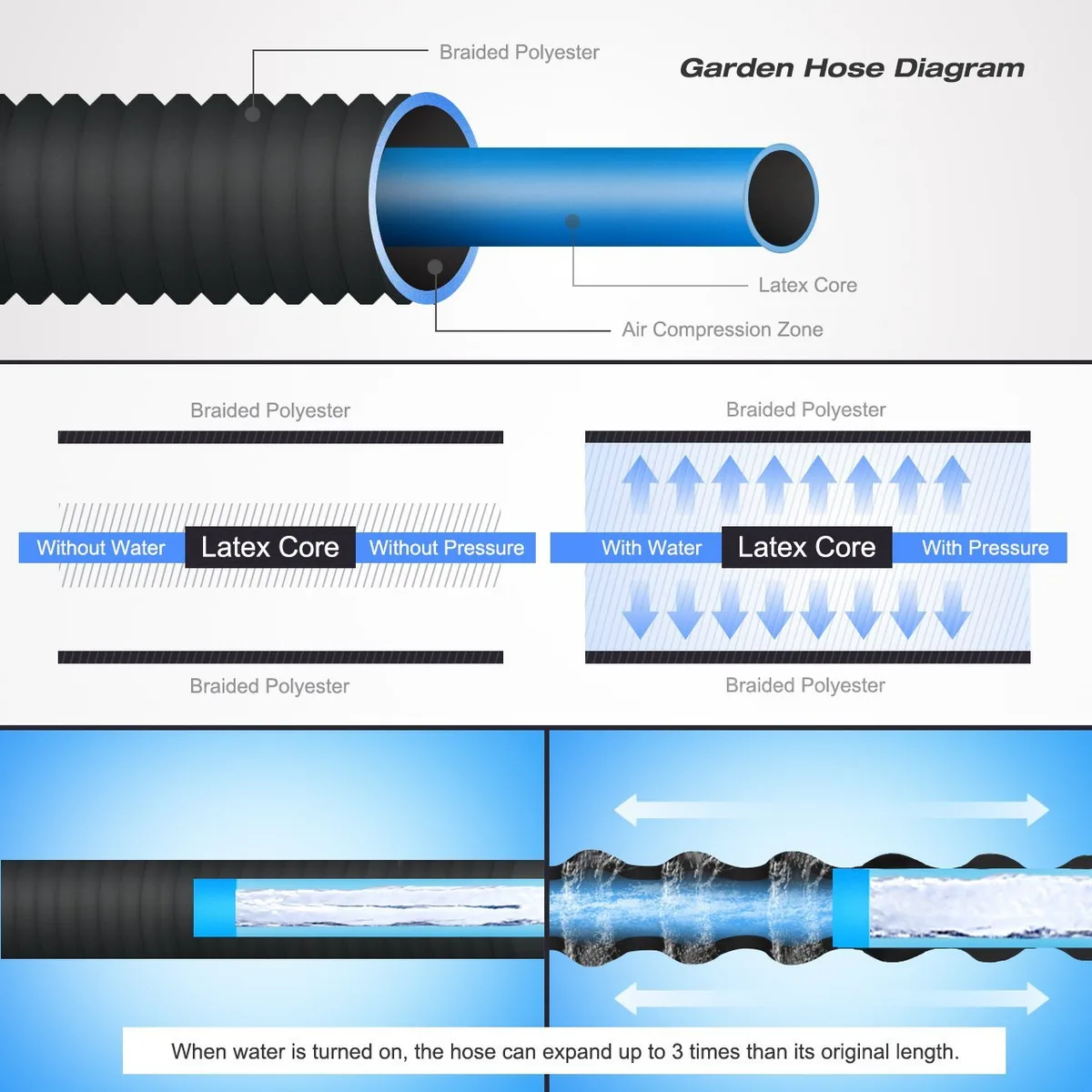
An expandable hose works on a simple principle. Inside sits a thin latex or rubber tube. Outside, a flexible polyester mesh sleeve wraps around it.
When water flows in, the inner tube stretches. The outer mesh holds the shape and limits how far it can expand. Most hoses double or triple their length this way.
A packed-up 25-foot hose can stretch out to 75 feet under pressure.
What's Inside an Expandable Hose?
The construction is straightforward but not indestructible. The inner latex membrane carries the water. The polyester braiding provides structural support.
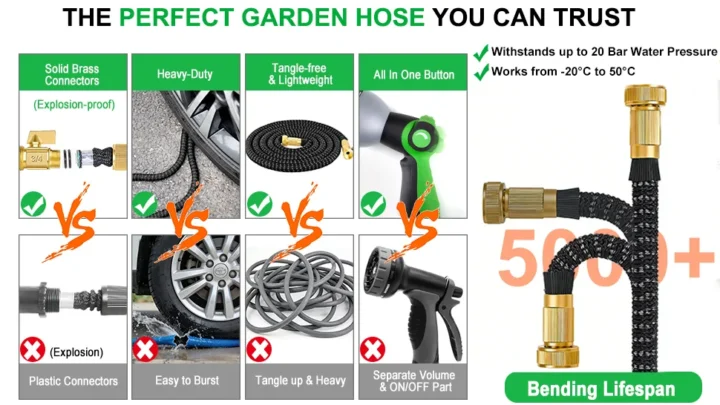
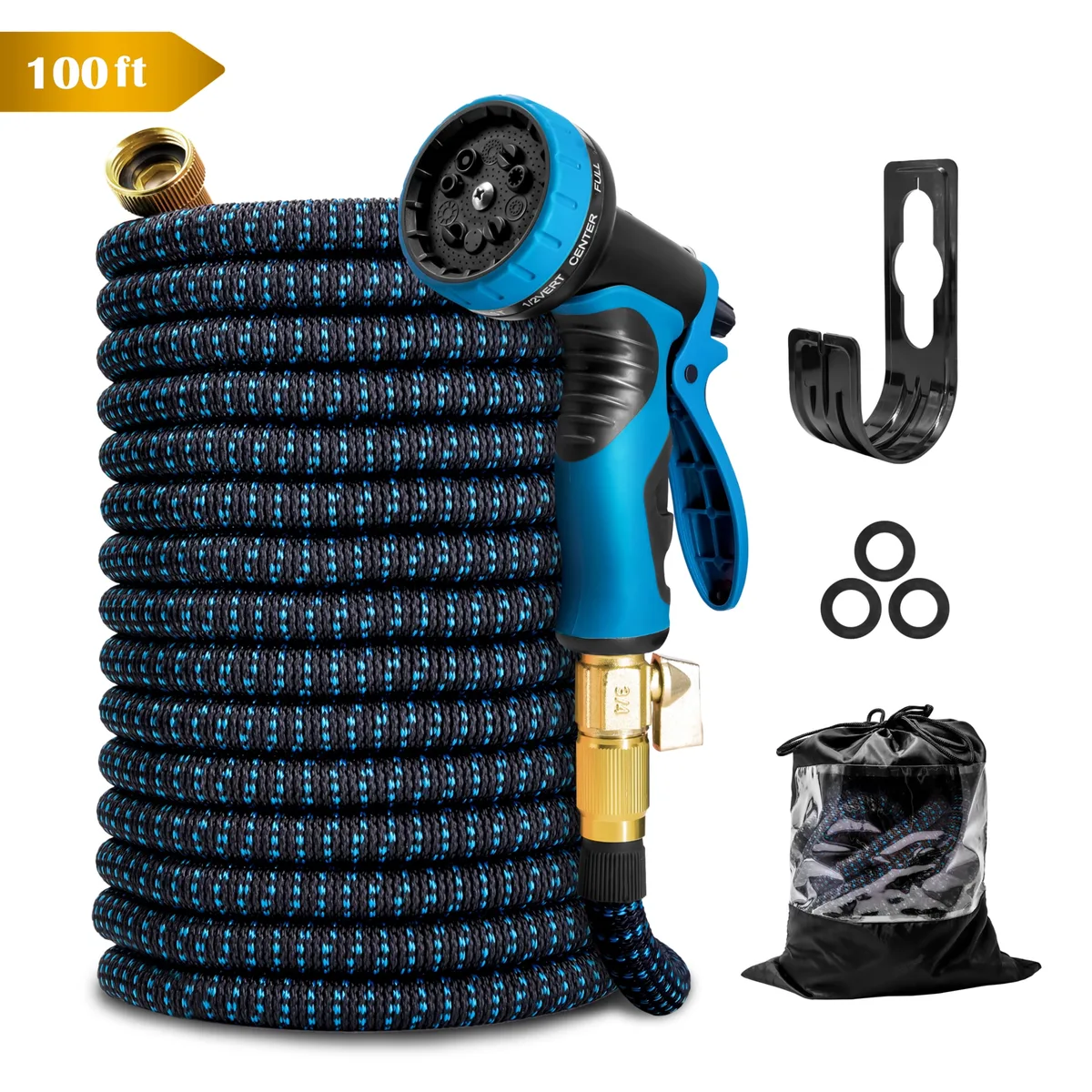
Brass or plastic connectors seal the ends. Cheap versions use thin plastic fittings that crack under stress. Mid-range models upgrade to solid brass.
That change alone cuts leak risk in half.
Performance: Lightweight Convenience vs Lifespan Limits
The main selling point is weight. A 50-foot expandable hose weighs roughly two to four pounds. The same traditional hose tips the scales at eight to twelve pounds.
That difference is huge if you carry your hose across the yard. It's also why expandable models dominate the apartment and balcony market. Storage is another win.
A coiled expandable hose fits in a drawer. A traditional hose needs a reel or wall mount.
But convenience has a cost. The thin inner membrane is vulnerable. Sharp edges from garden tools, rocks, or even hot pavement can pierce it.
Once that latex tears, the hose leaks and dies. Aggregate buyer reviews consistently report failures between the first and third year. That's the baseline expectation.
If you treat it gently, you might squeeze out three seasons. Rough handling cuts that to one.
Who Should (and Shouldn't) Buy an Expandable Hose
You should consider an expandable hose if you live in an apartment, have a small patio garden, or struggle with heavy equipment. It's also fine for occasional use like rinsing a car or filling a kiddie pool. Skip it if you water daily, have a large yard, or live where temperatures drop below freezing without proper storage.
Cold water makes the latex brittle. Freezing temperatures crack it open.
Traditional Garden Hoses: Rubber, Vinyl, and Braided Options Compared
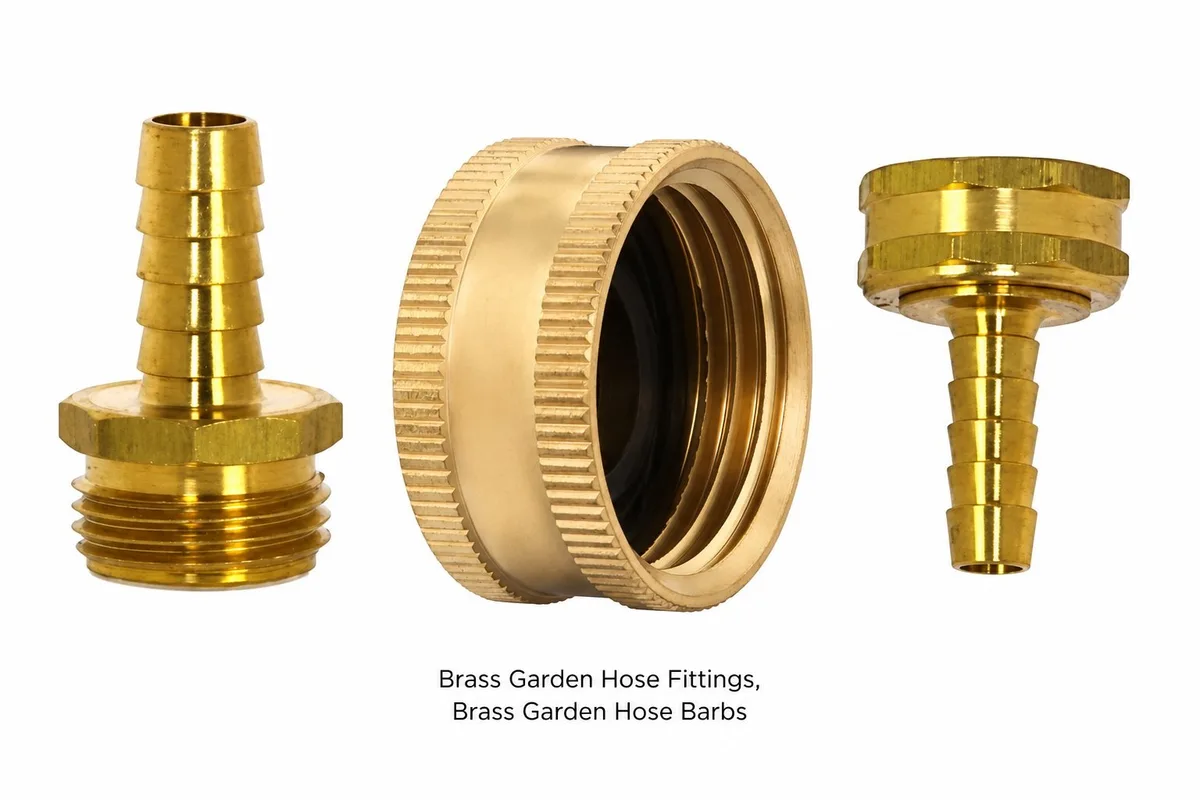
Image source: Bing (Web (fair-use with source credit))
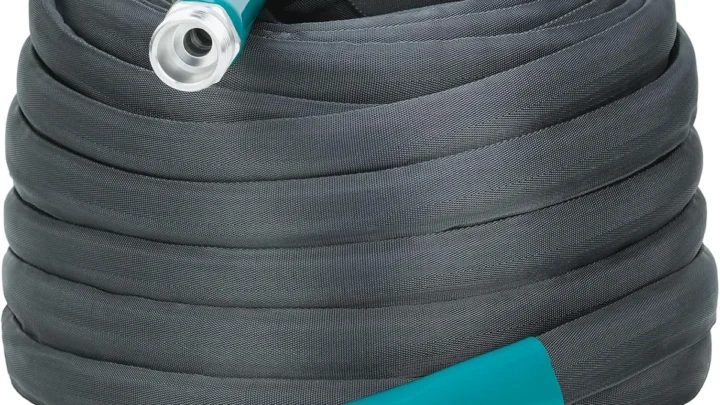
Traditional hoses come in three main builds. Each serves a different need and price point. Understanding the differences prevents you from buying the wrong one.
Rubber Hoses: Built to Last
Solid rubber hoses are the heaviest option but also the toughest. They handle high pressure without bulging. UV exposure doesn't crack them as fast as cheaper materials.
A good rubber hose runs 50 to 100 feet long and costs $40 to $100. The weight is real though. A 50-foot half-inch rubber hose can weigh over ten pounds empty.
That matters when you're dragging it around.
Vinyl Hoses: Budget Friendly but Fragile
Vinyl hoses are the cheapest traditional option. You can find 50-foot lengths for under $20. They're lightweight and flexible.
But they kink easily and crack in cold weather. The inner lining degrades faster than rubber or braided options. If you buy vinyl, treat it gently.
Coil it before storing. Don't leave it coiled tight for months. That sets permanent kinks into the plastic.
Braided Polyester Hoses: The Sweet Spot
Braided hoses sit between rubber and vinyl in both price and performance. A polyester mesh exterior wraps a reinforced inner tube. They resist kinking better than vinyl.
They handle moderate pressure well. Weight lands around five to eight pounds for a 50-foot length. Price runs $25 to $60.
Most homeowners find this the best balance. It's tough without being a back-breaking anchor.
Traditional Hose Construction Details That Matter
Three specs separate good traditional hoses from garbage. First, the diameter. Half-inch hoses flow less water than five-eighths-inch models.
If you water multiple plants at once, go larger. Second, the connector material. Solid brass fittings outlast plastic by years.
Look for threaded GHT connections that seal with a rubber washer. Third, the kink-resistant rating. Some brands add a spiral wire or extra braiding inside to prevent collapse.
That feature alone justifies a higher price for frequent users.
Check our breakdown on how garden hoses are measured so you pick the right diameter and length combo for your space.
Side-by-Side Comparison: Expandable vs Traditional at a Glance
| Feature | Expandable Hose | Traditional Hose |
|---|---|---|
| Weight (50 ft) | 2–4 lbs | 5–12 lbs |
| Typical Lifespan | 1–3 years | 5–10 years |
| Price Range (50 ft) | $15–$60 | $20–$100 |
| Kink Resistance | High | Variable by type |
| Cold Weather Tolerance | Poor | Good (rubber/braided) |
| Storage Space Needed | Minimal | Moderate to large |
| Max Pressure Handling | Moderate (50–100 PSI) | High (100–150 PSI) |
| Best For | Light use, small spaces | Daily use, large yards |
The table makes the trade-offs obvious. Expandable hoses win on convenience. Traditional hoses win on durability.
Your actual usage pattern decides which matters more. If you water once a week for twenty minutes, the expandable hose's short lifespan may still pay off. You save time setting up and storing it.
If you water daily and drag the hose across rough ground, the traditional hose saves you from replacing it every spring.
Where Expandable Hoses Beat Traditional Models
Expandable hoses are lighter, shorter when packed, and easier to carry up stairs or into tight storage closets. They also heat up faster in the sun, which matters in winter when you're washing something out and don't want ice-cold water. The quick-connect fittings on many expandable models also make nozzle swaps faster.
You don't have to wrestle with threaded connections.
Where Traditional Hoses Beat Expandable Models
Traditional hoses handle higher pressure without bulging or leaking. They resist punctures from rocks, roots, and garden tools. They tolerate freezing temperatures far better if you drain them properly.
A good braided hose also flexes in cold weather without cracking. Expandable latex hoses become rigid and fragile below forty degrees Fahrenheit.
Our research into how expandable garden hoses work shows why that temperature sensitivity exists. The latex membrane simply loses elasticity when cold. Traditional materials don't share that weakness.
How to Choose Without Regret: A Practical Decision Guide
The right choice depends on three variables: yard size, watering frequency, and storage constraints. Match those to the table above and you'll avoid buyer's remorse.
Match the Hose to Your Yard Size
Yards under a thousand square feet often fit a 25-to-50-foot hose perfectly. Both expandable and traditional models work here. Yards between one and three thousand square feet usually need 75 feet or more.
Traditional hoses hold up better at that length. Dragging a 75-foot expandable hose across a large lawn puts stress on the seams. Most fail before the third season at that size.
Factor in Water Pressure and Temperature
If your home has strong water pressure above one hundred PSI, an expandable hose may bulge or split at the connectors. Traditional hoses handle that pressure without complaint. Check your garden hose pressure first if you're unsure.
In cold climates, traditional hoses with proper winterization are the safer bet. Expandable hoses trap water inside the membrane. Trapped water freezes and splits the latex from the inside out.
Watch These Common Mistakes
Never leave an expandable hose pressurized when not in use. The constant stretch weakens the latex over time. Always drain traditional hoses completely before storing them for winter.
Kinked sections create weak points that eventually leak. Avoid running over any hose with a lawnmower or vehicle. Even traditional hoses suffer internal damage from being crushed.
And don't cheap out on connectors. Plastic fittings are the number one failure point across both hose types.
Learn how to stop your hose from kinking so your setup stays reliable through every season. Proper coiling technique makes a surprising difference in longevity.
If you do need to join two sections together, our guide on connecting two garden hoses walks you through it in under five minutes.
How to Maintain Either Hose for Maximum Lifespan
Good maintenance adds years to any hose. It's also the easiest way to stretch a budget.
Flush After Every Use
Run clean water through the hose for thirty seconds after each session. This clears out dirt, chemicals, and debris that sit inside and degrade the lining over time. Expandable hoses need this even more since trapped sediment sits against the thin latex membrane.
Store Properly
Coil traditional hoses loosely on a reel or hang them on a wall mount. Keep expandable hoses drained and stored in a cool, dry place. Never leave either type sitting in direct sunlight for weeks at a time.
UV radiation breaks down rubber and polyester fibers. A simple hose cover or shaded storage area makes a real difference.
Inspect Connectors Regularly
Check the washer inside each connector every few months. A cracked or flattened washer causes leaks at the joint. Replacement washers cost pennies.
A leaking connector wastes water and frustrates you every time you turn the tap on. See how to fix a leaking garden hose if you spot seepage around the fittings.
Winterize Before the First Freeze
Drain every inch of water from both hose types. Shake out expandable hoses until no water sloshes inside. Disconnect and store traditional hoses indoors or in a frost-free garage.
Leaving either hose connected to an outdoor spigot in freezing weather risks burst pipes and wasted water. It also ruins the hose you left behind.
Explore our tips on draining a pool using just a garden hose if you need to clear a large volume of water before storing your equipment for winter.
Frequently Asked Questions
Will an expandable hose burst if I leave it pressurized?
Not immediately, but it shortens the hose life significantly. Constant pressure keeps the latex membrane stretched. Over weeks or months that weakens the material.
The seams and connectors face the most stress. Always shut off the water and drain the hose when you're done. That single habit can add a full season to an expandable hose.
Can I use a traditional hose for high-pressure car washing?
Yes. A five-eighths-inch braided or rubber hose handles pressure washer output fine. Just make sure the connectors are rated for the pressure.
Most standard garden hose fittings top out around 150 PSI. If your pressure washer exceeds that, you'll need a specific high-pressure hose. Check your nozzle selection to match the pressure rating too.
How do I fix a kinked garden hose?
Straighten it gently. Don't yank or step on it. For traditional hoses, lay it flat in the sun for twenty minutes.
Warmth relaxes the material and helps the kink release. For expandable hoses, run warm (not hot) water through it while flattening the kinked section by hand. If the kink leaves a permanent flat spot, that area will eventually leak.
Replace the hose if kinks keep forming in the same spot.
Are expandable hoses safe for potable water connections?
Most expandable hoses are not rated for drinking water. The latex inner tube can leach chemicals into standing water. If you need potable-water-safe connections, look for hoses labeled NSF 61 certified.
Traditional rubber hoses without plastic additives are generally safer for drinking water. Always check the manufacturer specifications before connecting to a drinking water source. A proper connection guide helps you identify safe fittings too.
When should I replace my garden hose instead of repairing it?
Replace it when you see cracks in the outer layer, persistent leaks near the connectors that mending can't fix, or soft bulging sections that indicate internal damage. A quick hose repair works for small punctures. But structural failures are safety hazards.
A burst hose under pressure can whip and cause injury. Don't risk it.
What's the longest-lasting garden hose available?
Heavy-duty rubber hoses from established manufacturers regularly reach ten years or more with proper care. Braided polyester hoses in the mid-price range hit five to eight years. No expandable hose has been shown to last beyond three years under normal conditions.
If lifespan is your top priority, traditional rubber or braided hoses are the clear winners. And if you need to get rid of an old one eventually, learn the right way to dispose of a garden hose.
Frequently Asked Questions
What's the real lifespan difference between expandable and traditional hoses?
Expandable hoses typically last one to three years with regular use. Traditional rubber or braided hoses last five to ten years or more. That difference comes down to material durability and construction.
Cheap vinyl hoses fall somewhere in the middle, lasting two to five years.
Can I use a traditional hose for high-pressure car washing?
Yes, a five-eighths-inch braided or rubber hose handles pressure washer output fine. Just verify the connectors are rated for your system's PSI. Most standard garden hose fittings max out around 150 PSI.
For anything beyond that, you need a dedicated high-pressure hose. Check our INNAV8 nozzle review for pressure-compatible spray tips.
How do I fix a stubborn kink without ruining the hose?
Start by shutting off the water and gently walking the kinked section toward a straight line. Never yank or step on the hose. For traditional hoses, lay the kinked area in direct sunlight for twenty minutes to warm the material.
Warmth relaxes the inner lining and helps it spring back. For expandable hoses, run lukewarm water through the section while flattening it by hand.
Are expandable hoses safe for drinking-water-grade connectors?
Most expandable hoses are not rated for potable water. The latex inner tube can leach chemicals into standing water. If you need drinking-water safety, look for hoses certified to NSF/ANSI Standard 61.
Traditional rubber hoses without plastic additives are generally safer for potable connections. Always confirm the manufacturer's certification before attaching to a drinking water source. See our guide on how to connect a garden hose for proper fitting details.
When should I replace my garden hose instead of trying to repair it?
Replace it when you see visible cracks in the outer layer, persistent leaks near the connectors that mending cannot fix, or soft bulging sections indicating internal damage. A simple hose repair kit works for small punctures away from fittings. But structural failures near the connectors or along the main body are usually beyond saving.
A burst hose under pressure can whip and cause injury. Don't risk it.

Similar Posts