Garden Hose Internal Diameter: What Size You Need
Pick up a garden hose having an internal diameter of the wrong size, and you'll feel it the second you crank the tap open. The sprinkler sputters. The pressure washer starves.
Water dribbles when you expected a strong, steady stream. That one number, the bore, quietly controls how much water reaches the far end.
Here's the part most buyers miss. Bore size only works when it's matched to your hose length and your tap pressure. Household supply usually sits around 40 to 60 PSI, and friction inside the hose eats into that as the run gets longer.
Get the pairing right and the whole system just works. Let's start with why that inner measurement matters more than the price tag.
Why Your Garden Hose's Internal Diameter Decides Everything About Flow
The internal diameter is the width of the water channel inside the hose. It's often called the bore or the ID. This single measurement sets the ceiling on how much water can move through at once.
Think of it like a road. A wider lane carries more cars. A wider bore carries more water, with less resistance slapping against the walls.
Squeeze that channel down and flow drops fast.
Most people assume pressure alone decides flow. It doesn't. Pressure pushes the water, but the bore decides how much can pass.
A narrow hose on a high-pressure tap still chokes the volume you get out the other end.
Our research across manufacturer spec sheets shows a clear pattern as of 2026. The three common bores, half inch, five-eighths inch, and three-quarter inch, can differ in delivered flow by more than double. That gap is the whole reason this number matters.
Whether you're feeding a sprinkler along a row of raised beds or topping up a pond, the bore is what you feel.
If you're planning a fresh layout with new borders, sort your watering reach early, the same way you'd plan screening for an unsightly boundary before planting.
The Quick Answer: What Bore Size Do You Actually Need?
A garden hose having an internal diameter of five-eighths inch suits most home gardens. It balances flow, weight, and price well. Choose half inch for light watering and short runs.
Choose three-quarter inch for long runs or high-volume jobs. Match the bore to your hose length and tap pressure, not just the task.
That's the short version. The rest of this guide shows you how to land on the right choice with confidence.
Internal Diameter vs. Outer Diameter: Don't Buy the Wrong Fitting
Internal diameter is the water channel. Outer diameter is the full width including the walls. Fittings and washers are sized to the internal diameter, so this is where buyers slip up most.
Two hoses can look identical outside and still carry different volumes. A thick-walled half inch hose might measure close to a thin-walled five-eighths hose on the outside. Inside, though, they're worlds apart for flow.
Here's the practical rule:
- Buy fittings and connectors by the internal diameter, never the outer.
- A five-eighths inch bore needs five-eighths inch barbed fittings to seal properly.
- Mismatched fittings leak, pop off under pressure, or restrict flow at the joint.
When a listing quotes only one number, assume it's the internal diameter unless it clearly says otherwise. If you're unsure, measure it yourself.
One more thing worth flagging. A hose can neck down at the coupling even when the bore is generous. Cheap connectors often have a narrower throat than the hose.
That hidden pinch point drags your flow back down, so fitting quality matters as much as the bore.
How Bore Size, Length, and Pressure Work Together
Bore, length, and pressure are a team. Change one and the other two shift with it. This is the heart of picking the right hose.
The logic, in short:
- Short run? A smaller bore still delivers strong flow.
- Long run? You need a wider bore to fight friction loss.
- Low tap pressure? Size up the bore to claw back volume.
A five-eighths hose that's brilliant at 25 feet can feel weak at 100 feet. The water is the same. The friction over that extra distance is what steals your flow.
The Friction Loss Problem on Long Runs
Every foot of hose rubs against the moving water. That drag is friction loss, and it climbs the longer and narrower the hose gets. It's the main reason long hoses feel gutless at the nozzle.
Doubling the length roughly doubles the friction loss. A wider bore is the fix, because a bigger channel means slower wall contact for the same volume. So for a long path down to a far corner or an allotment, three-quarter inch earns its keep.
If you're routing a hose the length of a boundary planting, plan the run the way you'd plan a tidy rustic border, with the far end in mind from the start.
The Physics Behind It (Flow Rate, Velocity, and Area)
The math is simpler than it looks. Flow rate equals the cross-sectional area of the bore multiplied by the water's velocity. Area is π times the radius squared, so a small jump in diameter is a big jump in area.
Bump the bore from half inch to three-quarter inch and you don't gain 50 percent of area. You gain more than double. That's why the flow difference between sizes feels dramatic in practice.
Velocity ties in at the nozzle. When water hits a narrow nozzle orifice, the area shrinks, so the speed shoots up. That's how a wide, slow-moving hose feeds a fast, forceful spray.
The U.S. Environmental Protection Agency's WaterSense program is a solid reference if you also want to keep that flow efficient.
The Common Bore Sizes and What Each One Delivers
Three bore sizes cover almost every home job. Each has a sweet spot, and knowing it saves you from over-buying or under-performing.
| Bore (ID) | Metric | Best for | Rough flow* |
|---|---|---|---|
| ½" | 12–13 mm | Light watering, short runs | ~9 GPM |
| ⅝" | 15–16 mm | Everyday all-rounder | ~11–17 GPM |
| ¾" | 19 mm | Long runs, high volume | ~18–23 GPM |
*Delivered flow depends on your tap pressure and hose length. Longer runs pull these numbers down.
½" — Light Watering and Short Runs
Half inch is the lightweight of the group. It's easy to coil, cheap, and fine for hand watering pots, hanging baskets, and small beds. Under about 50 feet, it holds up well.
The trade-off is volume. Push it long or feed a thirsty sprinkler and it runs out of puff. It's a great second hose for patio jobs, and it pairs nicely with a compact setup for houseplant care near the back door.
⅝" — The Everyday All-Rounder
Five-eighths inch is the size most gardens should default to. It carries enough water for sprinklers and general watering without being a beast to drag around. This is the balance point of flow, weight, and cost.
For runs up to around 75 feet at normal household pressure, it rarely disappoints. If you buy one hose to handle nearly everything, this is it.
¾" — Long Runs and High-Volume Jobs
Three-quarter inch is the workhorse. Its wide bore shrugs off friction loss, so it keeps strong flow over 100 feet and beyond. Pool filling, long garden runs, and high-demand sprinkler systems all lean on it.
The downside is real. It's heavier, stiffer, and pricier, and it can be a chore to coil. Reach for it when volume and distance matter more than easy handling.
For a long watering line along wire panel fencing or a big vegetable plot, the extra bulk pays off.
Match Your Hose to the Job: A Decision Walkthrough
Pinning down the right bore takes three quick checks. Work through them in order and the answer falls out on its own.
Step 1: Check Your Tap Pressure
Start at the source, because everything downstream depends on it. Most homes sit between 40 and 60 PSI, and a cheap screw-on pressure gauge confirms yours.
If you're under 40 PSI, treat pressure as your bottleneck and size the bore up. Comfortably above 50 PSI? You have more freedom to run a smaller bore without paying for it at the nozzle.
Step 2: Measure Your Run Length
Measure the actual distance from the spigot to the farthest spot you'll water. Add a little slack for turns and slope. This number decides how hard friction will work against you.
Under 50 feet is short. Between 50 and 100 feet is medium. Past 100 feet is long, and that's where a wide bore stops being optional.
Step 3: Know Your End-Use Flow Demand
Match the bore to what the tool at the end actually drinks. A hand nozzle sips. An oscillating sprinkler or a pressure washer gulps.
Check the tool's GPM rating if it lists one.
High-demand tools need volume delivered without a fight. Feed them through a bore that won't choke.
Step 4: Pick the Bore
Now combine the three answers:
- Short run plus normal pressure: half inch is fine.
- Medium run plus any sprinkler: five-eighths inch.
- Long run, low pressure, or a thirsty tool: three-quarter inch.
When two sizes seem close, pick the wider one. You lose a little on weight and cost. You gain flow you'll never regret.
Flow Rates by Bore Size and Length (Side-by-Side)
Length is the quiet killer of flow. The same bore delivers noticeably less water as the hose stretches out. This table shows the drift at a typical 50 PSI supply.
| Bore (ID) | 25 ft run | 50 ft run | 100 ft run |
|---|---|---|---|
| ½" | Strong | Moderate | Weak |
| ⅝" | Very strong | Strong | Moderate |
| ¾" | Very strong | Very strong | Strong |
Read it as a warning about distance, not just size. A half inch hose that's "strong" at 25 feet slides to "weak" by 100 feet. A three-quarter inch bore barely flinches over the same stretch.
The takeaway is simple. If your run is long, buy bore, not just length. Coupling two short narrow hoses does not fix the friction problem.
It often makes it worse by adding more joints and more restriction.
Best Bore for Each Real-World Use
Different jobs pull different volumes. Here's where each bore earns its spot.
Sprinklers and General Garden Watering
Five-eighths inch is the safe pick for most sprinklers. It carries enough volume to keep multiple heads spraying evenly. Drop to half inch and the outer heads often fall short.
Pressure Washer Supply Feed
Match or exceed the bore your pressure washer specifies, usually five-eighths inch minimum. These machines need steady volume to avoid cavitation and pump strain. Starve the inlet and you risk damaging the pump, not just weak output.
Pool Filling and High-Volume Tasks
Three-quarter inch wins here, hands down. Filling a pool through a half inch hose can add hours you don't need to spend. The wide bore moves serious volume and shortens the wait.
Drip and Soaker Setups
Bore matters less for slow, low-pressure watering. A half inch or five-eighths feeder line is plenty for drip and soaker systems. They meter water gently, so raw flow isn't the goal.
They pair well with tidy planting along flower bed edging where slow soaking beats a heavy spray.
Sizing Mistakes That Kill Your Water Flow
Most flow complaints trace back to a handful of avoidable errors. Spot these and you'll fix weak pressure without buying anything new.
- Running a long hose on a narrow bore, then blaming the tap.
- Buying fittings by outer diameter and pinching the flow at the joint.
- Leaving a flow restrictor or clogged washer in the coupling.
- Coiling a hose so tight it kinks and chokes the channel.
- Chaining several short hoses, stacking up connector restrictions.
Kinks deserve special attention. A single sharp bend can cut flow to a trickle even on a wide bore. Cheap, thin-walled hoses kink easily, so the bore rating means little if the wall collapses.
Store hoses loosely looped, never folded.
Scale and grit are another quiet culprit. Over years, mineral deposits narrow the effective bore. If an older hose feels weaker than its size suggests, that's often why.
How to Measure Your Hose's Internal Diameter
Measuring the bore takes under a minute with basic tools. You want the width of the inner channel, not the outer wall.
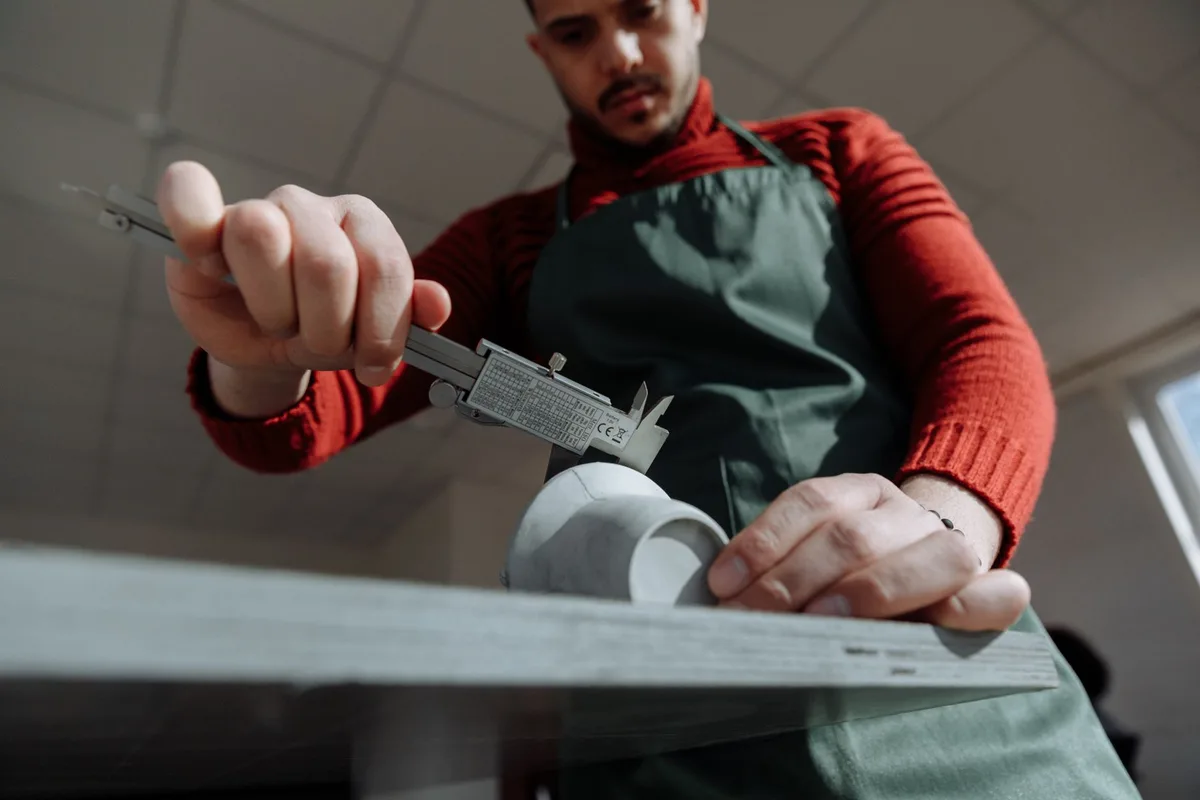
Here's the reliable method:
- Use a clean, open end.
- Set a caliper's inner jaws across the inside of the opening.
- Read the measurement wall to wall, ignoring the rubber thickness.
- Cross-check against standards: 12 to 13 mm is half inch, 15 to 16 mm is five-eighths, 19 mm is three-quarter.
No caliper handy? Slot in a fitting of known size and see what seats snugly. A five-eighths barb that seals cleanly confirms a five-eighths bore.
Measure at the very end, where the hose hasn't been stretched or crushed. A squashed section reads narrow and throws you off. If two readings disagree, trust the one from the undamaged opening.
Thread Standards and Fittings: GHT, BSP, and Metric
Bore controls flow, but the thread standard controls whether anything connects at all. In the US, garden hoses use Garden Hose Thread (GHT), a 3/4-inch-11.5 standard. In the UK and much of Europe, taps and fittings follow BSP threads with push-fit connectors.
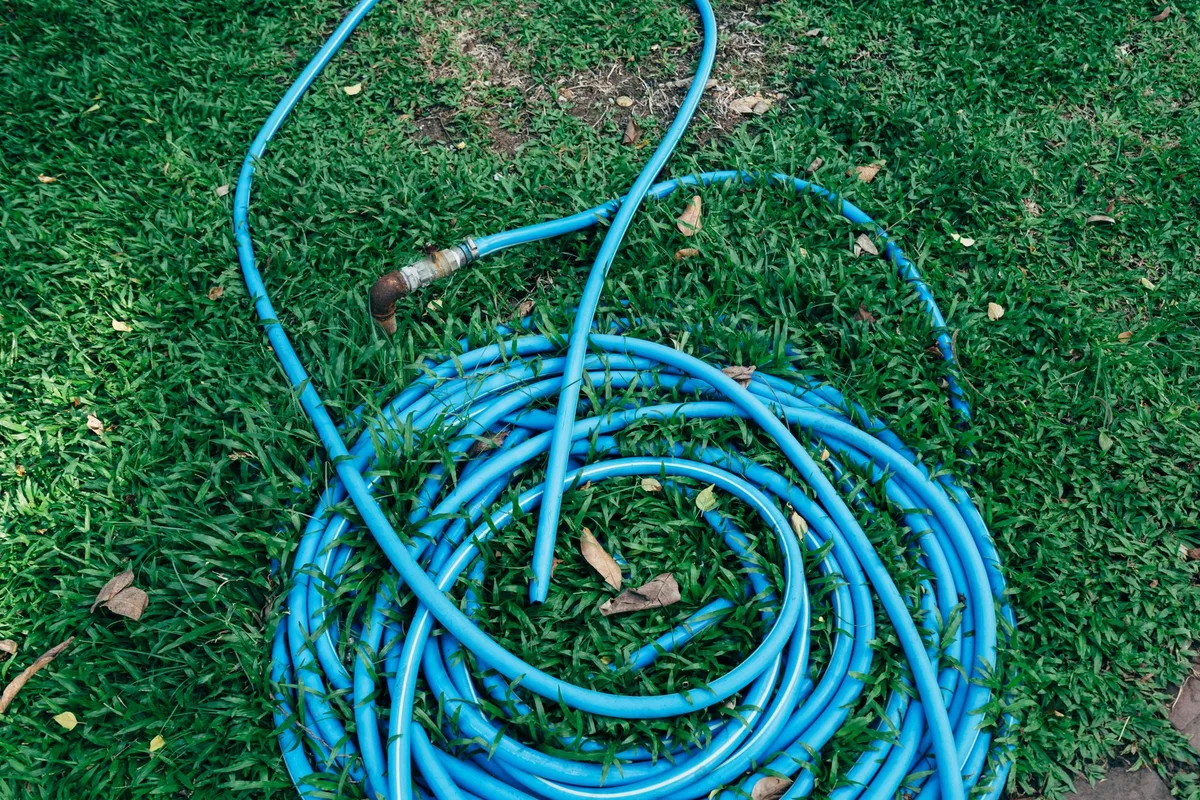
Don't confuse thread size with bore. A hose can have a five-eighths inch bore and still wear a standard 3/4-inch GHT coupling. The thread is the connection spec.
The bore is the water channel inside.
Mixing standards is a common headache with imported gear. If a fitting won't seat, check the thread type before forcing it. A cheap GHT-to-BSP adapter usually solves it without a new hose.
Drinking-Water Safety, Pressure Ratings, and Hosepipe Bans
If anyone might drink from the hose, buy one labeled drinking-water-safe. Standard hoses can leach compounds and aren't meant for potable use. Look for lead-free wording and NSF/ANSI 61 compliance on the packaging.
Respect the pressure rating too. Every hose lists a working pressure and a higher burst pressure. Stay under the working figure, especially with pressure washers feeding the line.
Seasonal rules matter in some regions. UK hosepipe bans can restrict garden watering during droughts, so check local guidance in dry spells. A backflow preventer at the tap protects your drinking supply from siphoning.
Keeping Flow Strong: Storage, Kinks, and Maintenance
Good habits keep a hose flowing at its rated bore for years. Drain it after each use so standing water can't freeze and split the walls. Store it loosely coiled on a reel or hook, never folded tight.
Check washers and couplings every season. A cracked washer leaks and drops pressure at the joint. Flush grit out of the bore now and then to stop buildup narrowing the channel.
Pro Tips for Squeezing Maximum Flow From Any Hose
- Keep runs as short as the job allows to cut friction loss.
- Open the tap fully, a half-open valve throttles everything downstream.
- Remove unused restrictors and clean the nozzle orifice.
- Size up one bore if flow feels weak before blaming the tap.
- Uncoil the whole hose, a coiled hose still restricts flow.
Frequently Asked Questions
What internal diameter is a standard garden hose?
Five-eighths inch (about 15 to 16 mm) is the most common standard bore. It suits everyday watering and sprinklers for most homes. Half inch and three-quarter inch cover lighter and heavier jobs respectively.
Does a bigger internal diameter mean more water pressure?
Not exactly. A bigger bore increases flow volume, not static pressure. It reduces friction loss, so more of your tap's pressure reaches the nozzle over long runs.
Can I connect two different bore hoses together?
Yes, if the couplings match, but the narrowest bore sets your flow limit. Joining a wide hose to a narrow one won't recover lost volume. Extra connectors also add small restrictions.
How do I measure my hose's bore without a caliper?
Slot in a fitting of known size and see which seats snugly. A five-eighths barb that seals cleanly confirms a five-eighths bore. Measure at an undamaged, unstretched end for an accurate read.
Your Bore-Size Decision Guide in One Glance
Boil it all down to one line: match the bore to your longest run and your tap pressure, then round up when unsure.
- Short runs, pots, and patios: half inch.
- General watering and sprinklers: five-eighths inch.
- Long runs, pool filling, or a pressure washer: three-quarter inch.
If flow feels weak, check the easy stuff first. Uncoil fully, open the tap all the way, and clear any clogged washer. Still weak over distance?
That's your cue to size up the bore.
Buy fittings by internal diameter, keep the hose kink-free, and drain it before winter. Get those right and you'll pull strong, steady flow from every foot of the run.

Similar Posts