What Causes Extreme Leaf Curl on Tomato Plants?
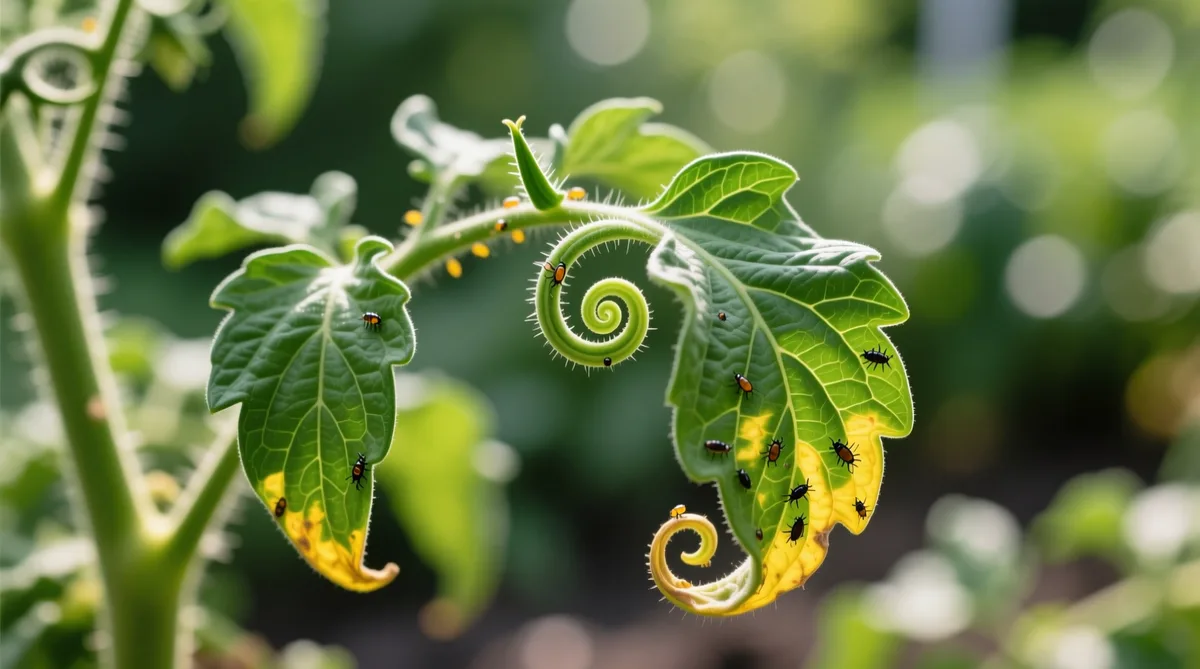
"What causes extreme leaf curl on tomato plants?" is one of those questions with six different right answers, and picking the wrong one can cost you the entire plant. Rolled leaves might be harmless heat stress that fixes itself by sunset. Or they could be permanent herbicide damage from compost that scorches every tomato you plant in that bed for three years.
The trick is reading the pattern. Which leaves curled first, how they're twisted, and what happened in the last 72 hours all point to different causes. Our research across university extension bulletins from UC ANR, Cornell, and Texas A&M AgriLife (current as of 2026) shows growers misdiagnose curl roughly half the time.
Let's fix that.
Quick Answer
Extreme leaf curl on tomato plants has six main causes. Physiological heat and water stress causes harmless upward rolling. Herbicide drift or contaminated compost causes twisted, strap-like new growth.
Viruses like TYLCV and curly top cause yellow, cupped, stunted foliage. Broad mites, aphids, and whiteflies distort growing tips. Root damage, overwatering, and heavy pruning trigger stress rolling.
The pattern of curl tells you which cause is yours.
Why Extreme Leaf Curl on Tomatoes Isn't Always What You Think
Most gardeners treat leaf curl like a single problem with a single fix. It isn't. The same curled leaflet can mean your plant is thriving through a heat wave.
Or it can mean the mulch you bought is loaded with aminopyralid and every tomato in that soil is doomed.
That's why "just water more and add mulch" often makes things worse. Water a herbicide-damaged plant harder and you pull more toxin up through the roots. Prune a virus-infected plant to "help it recover" and you spread the virus to healthy tomatoes on your snips.
Diagnosis has to come first. Then the fix.
The Fast Diagnosis: Match Your Curl Pattern in 60 Seconds
Find the row that matches what you're seeing, then jump to that cause below.
| Curl Pattern | Which Leaves Affected | Likely Cause |
|---|---|---|
| Upward cupping, leathery, healthy color | Older, lower leaves first | Physiological heat and water stress |
| Twisted, fern-like, strap-thin new growth | Newest top growth | Herbicide drift or contaminated compost |
| Yellow, cupped, stunted, purple veins | Young leaves and shoot tips | TYLCV or curly top virus |
| Bronzed, downward-curled, brittle tips | Growing tips only | Broad mites |
| Downward roll, wilted, dull color | Whole plant, sudden onset | Root damage or overwatering |
| Mild upward roll after heavy pruning | Recently pruned zones | Over-pruning stress |
Three follow-up questions sharpen the answer. Did you spray anything, or does a neighbor treat their lawn? Have temperatures cracked 90°F recently?
Did you mulch with hay, straw, or fresh manure this season?
How Tomato Leaves Actually Curl (and Why the Pattern Matters)
Tomato leaves don't just "curl." They roll, cup, twist, or crinkle, and each motion points to a different cause.
- Upward cupping: leaf edges lift toward the sky, creating a taco shape. Usually water or heat stress.
- Downward rolling (epinasty): the whole leaf droops and rolls under. Points to root problems or waterlogging.
- Twisted, strap-like distortion: new leaves come out narrow, curled, and fern-shaped. Almost always growth regulator herbicides.
- Puckered or mottled cupping: leaves cup with yellow patches and darkened veins. Viral infection.
Age of the affected leaves matters just as much. If the oldest leaves curl first and new growth looks normal, you're usually looking at an environmental or nutritional issue. If new growth distorts while old leaves stay flat, think herbicide, virus, or mite damage.
That single question, "old leaves or new leaves?", solves about 70% of diagnoses on its own.
Cause #1: Physiological Leaf Roll from Heat and Water Stress
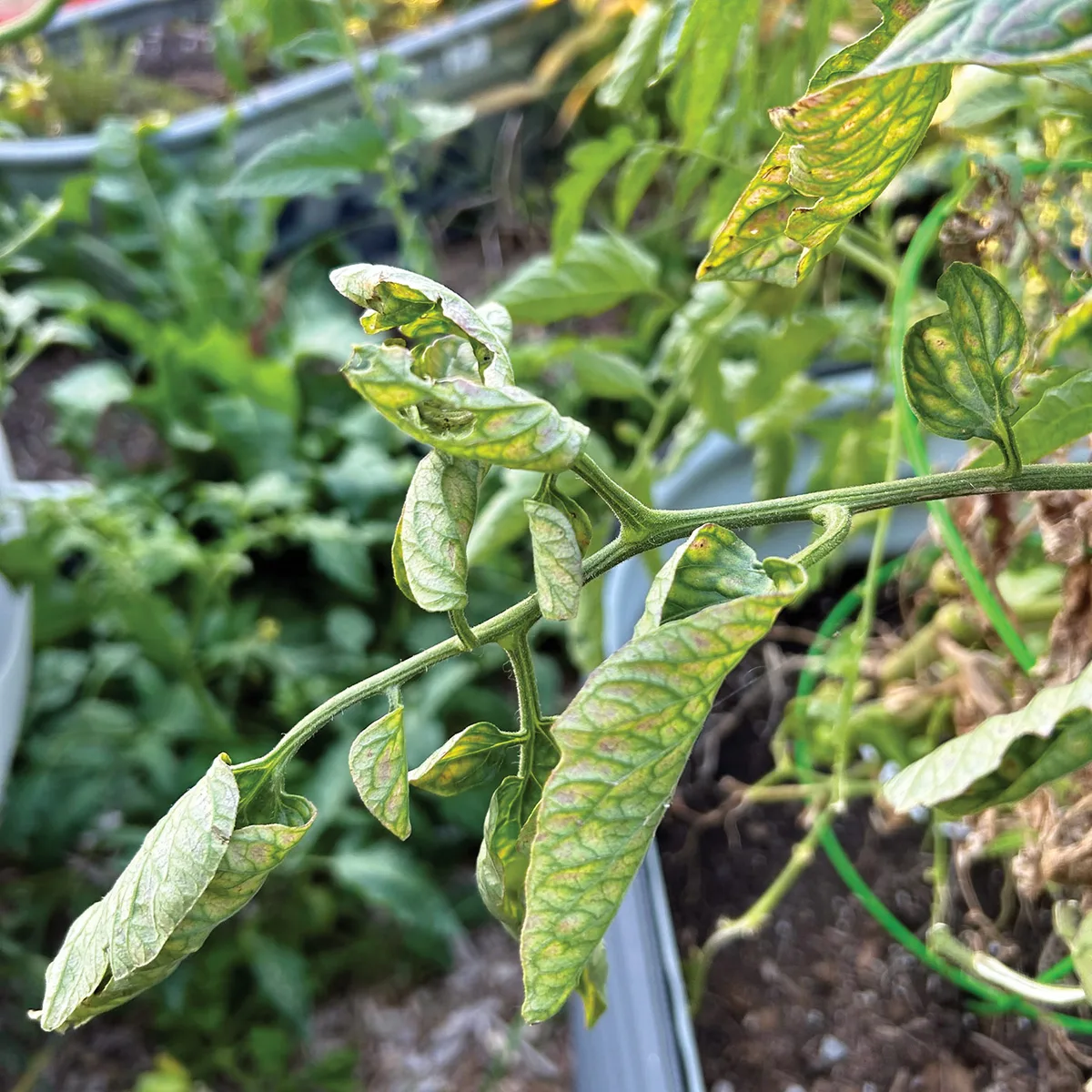
This is the good-news cause. When afternoon temperatures push past 85 to 90°F (29 to 32°C), tomato plants roll their leaves upward to reduce sun exposure and slow water loss. It's a defense mechanism, not a disease.
You'll see it most on:
- Determinate varieties like Roma and San Marzano
- Plants in black plastic pots that heat up fast
- Beds with thin or no mulch
- Any tomato hit by a sudden heat spike after a cool spell
How to tell if it's just physiological rolling:
- Leaf color stays deep green
- Leaves feel firm and leathery, not soft or brittle
- Older, lower leaves curl first
- New growth stays flat and normal
- Flowers keep setting fruit
Fix it by regulating temperature and moisture, not by panicking:
- Water deeply once or twice a week to a depth of 6 to 8 inches. Shallow daily watering makes it worse.
- Mulch with 2 to 3 inches of straw or shredded leaves to keep soil below 85°F.
- Hang 30 to 50% shade cloth during heatwaves above 95°F.
- Avoid pruning during hot spells. Every cut removes a coping leaf.
Most physiological curl unrolls overnight once temperatures drop. If your leaves flatten by morning, you don't have a problem worth fixing.
Cause #2: Herbicide Drift and Contaminated Compost Damage
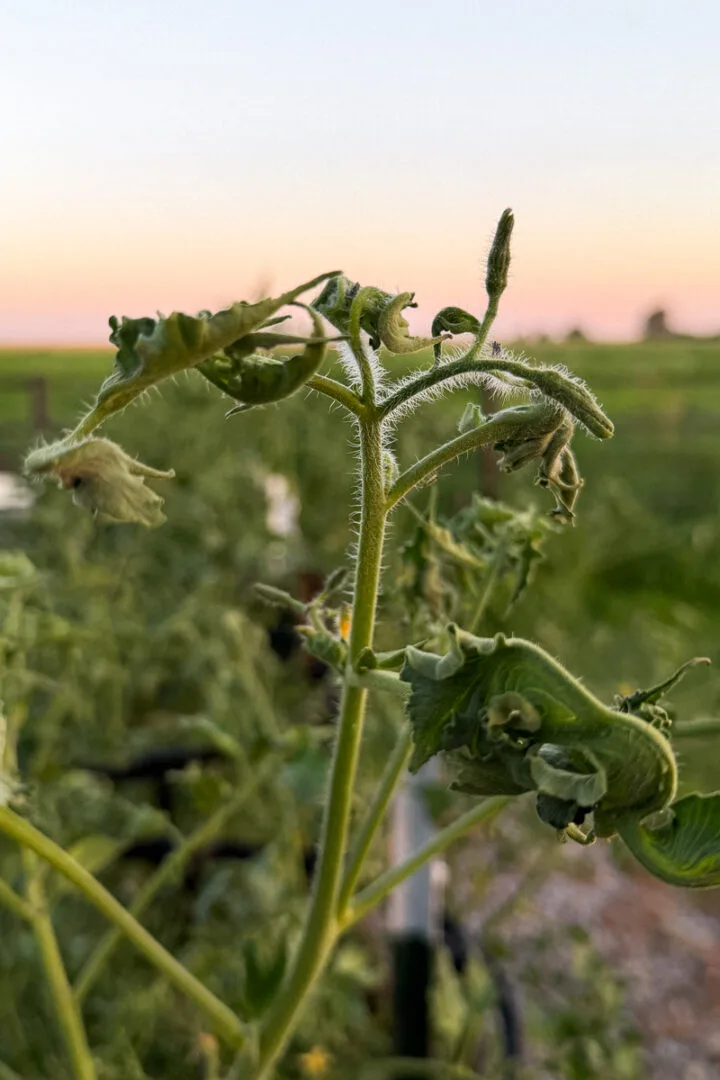
This is the worst one. Growth regulator herbicides in the phenoxy and pyridine families mimic plant hormones. Tomatoes are hypersensitive.
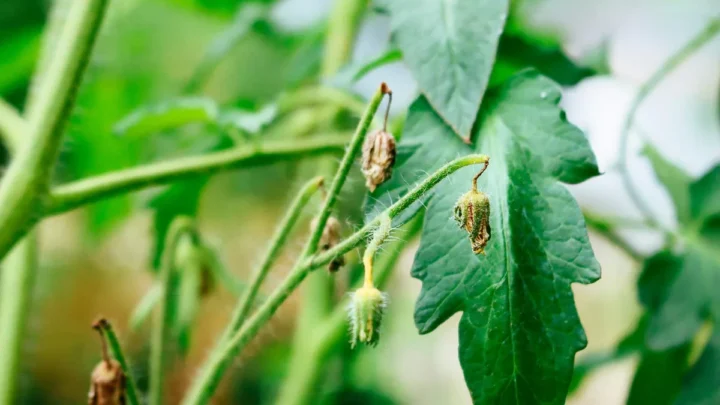
Even trace exposure twists new growth into unrecognizable, fern-shaped, strap-thin leaves within 3 to 7 days.
The signature is unmistakable:
- Only new growth is deformed. Older leaves look normal.
- Leaves are narrow, cupped, and stringy, like parsley or a stretched fern.
- Stems may spiral or bend at odd angles.
- Fruit, if it forms, is often hollow, catfaced, or seedless.
2,4-D, Dicamba, and Growth Regulator Signatures
Airborne drift from lawn or pasture spraying is the usual path. 2,4-D and dicamba can travel hundreds of yards on a warm, breezy day, especially when a neighbor sprays on a hot afternoon. If you smelled fresh herbicide in the air within a week of the symptoms appearing, that's your cause.
The University of California IPM program tracks these symptoms through UC Agriculture and Natural Resources, and their bulletins document that even trace concentrations of growth regulator herbicides can visibly damage tomato foliage.
Aminopyralid and Clopyralid Carryover in Hay, Straw, and Manure
The sneakier route is through compost. Aminopyralid and clopyralid, sold under names like Grazon and Milestone, stay active in hay for years. They pass through grazing animals unchanged, stay potent in manure, and survive most home composting temperatures.
Growers who mulched with "free horse manure" or straw from an unknown source often see damage within three weeks.
Aminopyralid can persist in soil for three or more years. There's no spray or compost tea that reverses it. If contaminated compost is your cause, pull the affected plants, remove the mulch, and grow tomatoes elsewhere for at least two seasons.
Test suspect compost with a bean or pea bioassay before ever using it again.
Cause #3: Viral Infections (TYLCV, Curly Top, Mosaic)
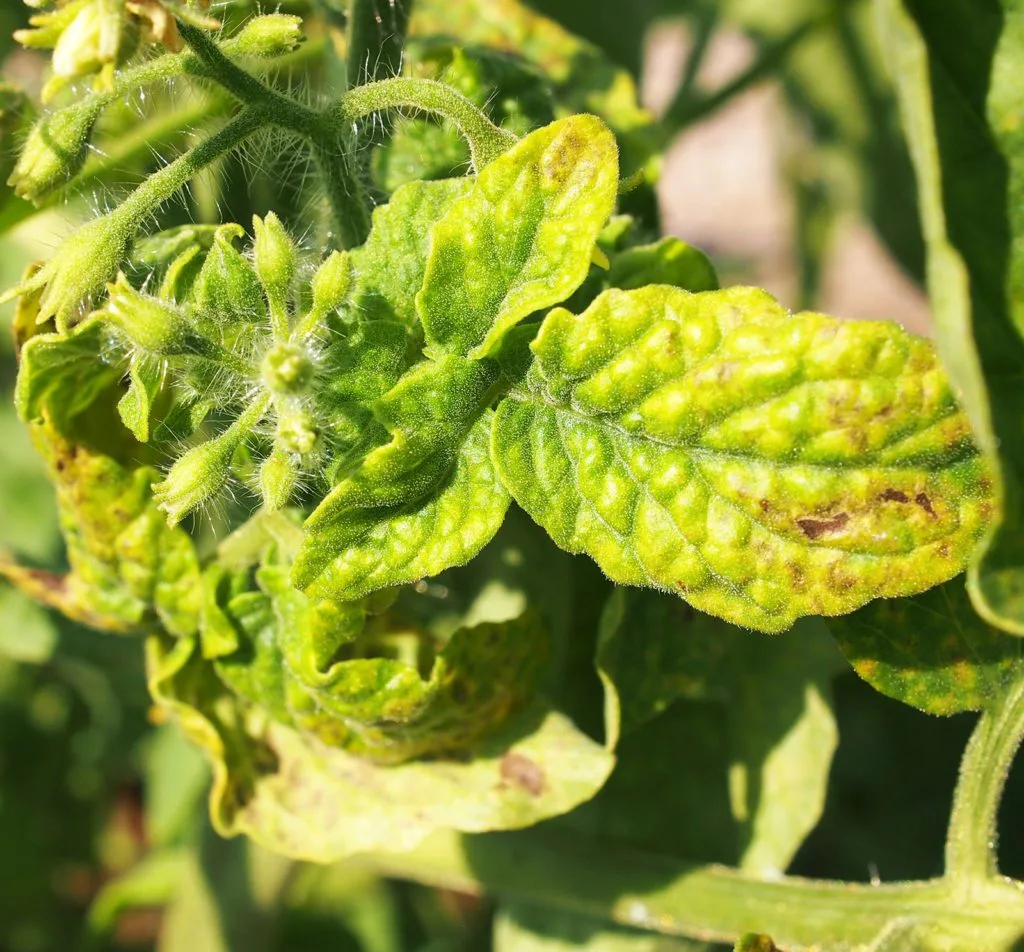
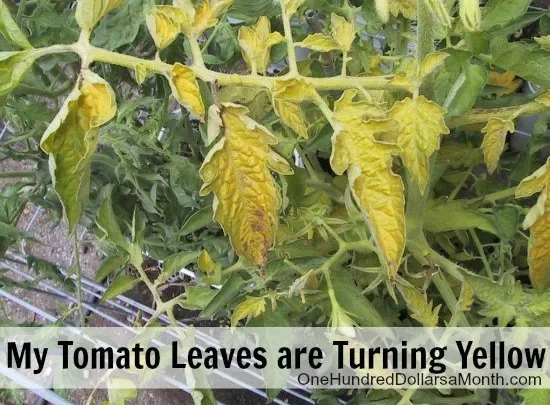
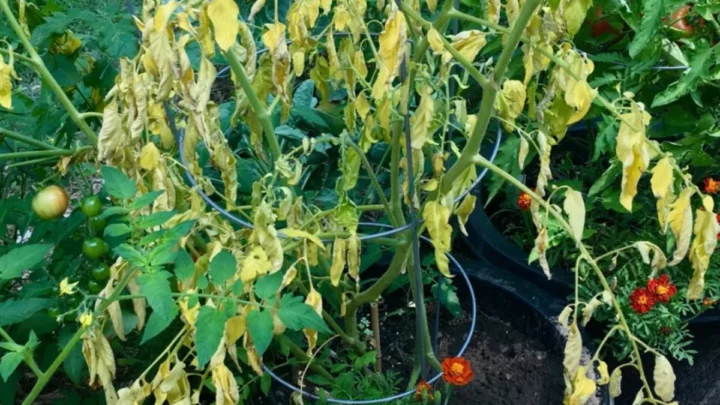
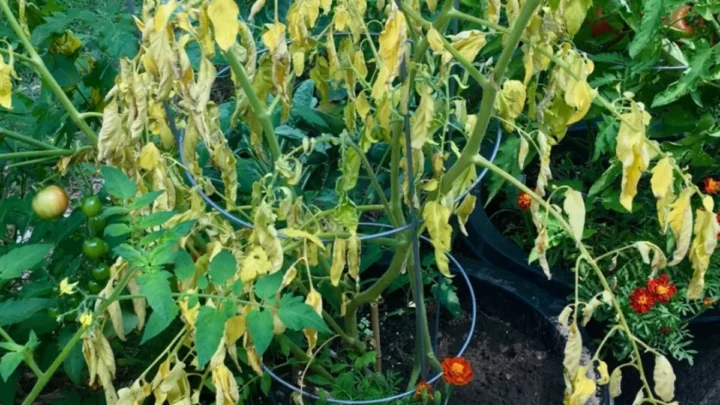
Viral leaf curl looks different from every other cause. Leaves cup and yellow at the same time. Growth stunts.
Fruit set collapses. There's no fix, only containment.
Three viruses cause most of the damage:
- Tomato yellow leaf curl virus (TYLCV): transmitted by whiteflies, symptoms appear 2 to 3 weeks after feeding. Upper leaves cup upward, yellow between veins, and shrink to half normal size.
- Curly top virus (CTV): spread by beet leafhoppers, common in the arid western US. Leaves thicken, roll upward, and turn purple on the underside. Plants often die within weeks.
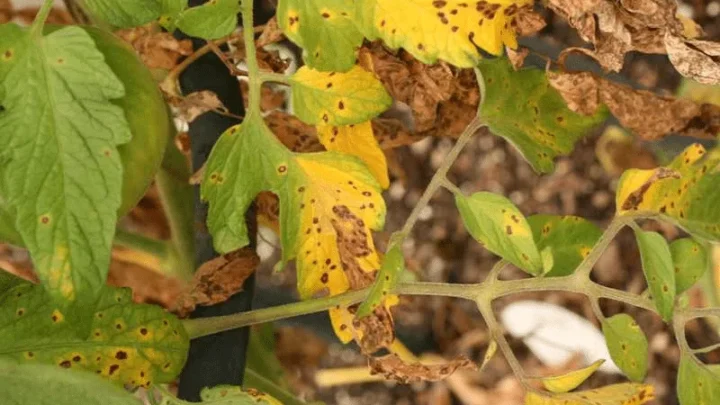
- Tomato mosaic virus (ToMV): spread by contaminated tools and hands. Foliage develops mottled yellow-green patches with mild puckering.
Confirm virus by ruling out heat stress and herbicide first. If new growth is stunted, yellow, and cupped while nothing else in the garden is affected, assume virus.
Pull infected plants immediately. Bag them for the trash, never the compost pile. Sanitize pruners with 10% bleach between plants.
Control whiteflies with reflective mulch and yellow sticky traps to protect neighbors.
Cause #4: Broad Mites, Aphids, and Whitefly Damage
Tiny sap-feeding pests distort tomato leaves in ways that mimic herbicide damage, so a hand lens is your best diagnostic tool.
Broad mites (Polyphagotarsonemus latus) are the worst offenders. They're invisible without magnification. Their toxic saliva twists new growth into bronze, downward-curled, brittle claws.
If the top 3 inches of the plant look scorched and shepherd-crooked while lower leaves stay normal, broad mites are likely. Treat with sulfur dust or horticultural oil on the growing tips every 5 to 7 days.
Aphids cluster on undersides of leaves and along tender stems. Heavy feeding causes leaves to cup downward and turn sticky with honeydew. A hard spray of water knocks them off.
Insecticidal soap finishes stragglers.
Whiteflies matter less for direct feeding and more for what they carry. They vector TYLCV. If you see clouds of tiny white insects lift off when you brush the plant, hang yellow sticky traps and lay reflective mulch to disrupt landings.
Cause #5: Root Damage, Overwatering, and Transplant Shock
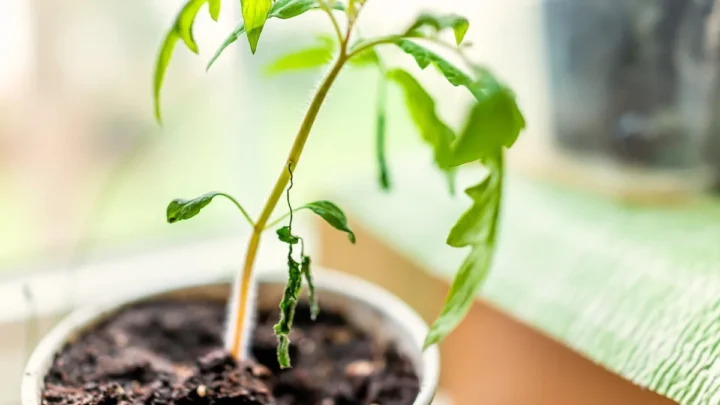
Root problems produce downward rolling, not upward cupping. The leaves droop, roll under, and often dull in color. This is epinasty, and it means the roots aren't delivering water and oxygen properly.
Common triggers include:
- Waterlogged soil after heavy rain or overwatering
- Compacted or clay soil that suffocates roots
- Deep cultivation that severs feeder roots
- Transplant shock in the first 7 to 14 days
- Root-knot nematodes creating galls that block water uptake
Check soil moisture 4 inches down before doing anything. If it's soggy, stop watering, aerate the bed with a garden fork, and let the top few inches dry. If it's bone dry, water deeply and mulch.
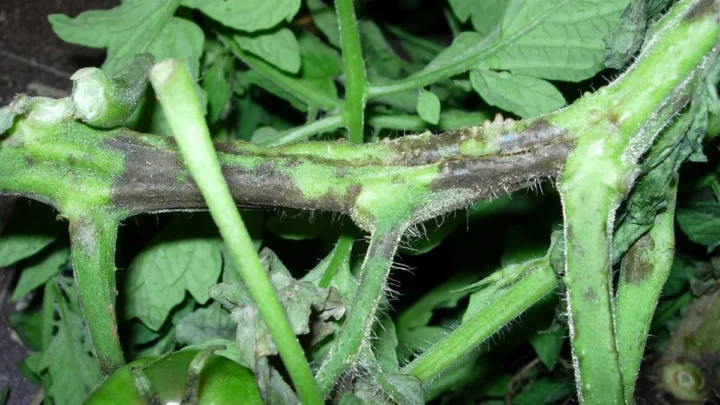
If roots feel mushy or smell sour when you dig, root rot has set in and the plant likely won't recover.
Transplant shock usually self-resolves in 10 to 14 days if you keep watering steady and skip fertilizer until new growth restarts.
Cause #6: Over-Pruning and Nutrient Imbalance
Aggressive pruning shocks the plant. Every leaf you remove is a solar panel gone. Strip too many suckers in a single session and remaining foliage cups upward as the plant reallocates water.
Keep pruning light. Remove no more than one third of foliage in any 7-day window. Skip pruning during heatwaves and right before rain.
Nutrient imbalance is the quieter cause. Excess nitrogen pushes soft growth that rolls upward under any stress. Calcium and magnesium deficiencies distort young leaves.
High soil salt levels from over-fertilizing pull water out of roots and cause chronic mild curl.
Fix it with a soil test through your local university extension. Adjust based on real numbers, not guesswork. Aim for balanced NPK with adequate calcium and magnesium, and flush salt-heavy soils with a deep, slow watering.
The Decision Tree: Which Cause Is Yours?
Work through the questions in order. Stop at the first "yes."
- Is the twisted growth only on the newest leaves, and does it look strap-like or fern-shaped? Herbicide damage.
- Are new leaves yellow, cupped, and stunted while nothing else in the garden is affected? Viral. Pull and bag the plant.
- Do the top 3 inches look bronzed, brittle, and shepherd-crooked? Broad mites. Treat with sulfur or horticultural oil.
- Have temperatures been above 90°F with older leaves cupping upward in healthy color? Physiological. Mulch, shade, water deep.
- Are leaves rolling downward with dull color, or did the plant just get transplanted? Root or shock issue. Check moisture and wait.
- Did you prune heavily or push a high-nitrogen feed in the last week? Over-pruning or nutrient imbalance. Back off and stabilize.
If two answers seem to fit, weight the newer symptom and the more damaging cause first. Herbicide and virus always take priority.
What to Do for Each Cause (Fix, Manage, or Pull the Plant)
Every cause has one of three outcomes: fix, manage, or destroy.
| Cause | Action | Timeline to Recovery |
|---|---|---|
| Physiological heat stress | Fix with mulch, shade cloth, deep watering | Overnight to 3 days |
| Herbicide drift (airborne) | Manage: rinse foliage, wait for new growth | 2 to 4 weeks (mild cases) |
| Contaminated compost | Destroy: pull plant, remove mulch, relocate crop | 2 to 3 years soil recovery |
| Viral infection | Destroy: bag plant, sanitize tools | Immediate removal |
| Broad mites | Manage: sulfur or horticultural oil on tips | 7 to 14 days |
| Aphids or whiteflies | Manage: soap spray, sticky traps, reflective mulch | 5 to 10 days |
| Root damage or overwatering | Fix: adjust water, aerate soil | 10 to 14 days |
| Over-pruning or excess nitrogen | Fix: pause pruning, stop feeding | 7 to 14 days |
Stuck between two possibilities? Act on the more damaging one first. Pulling a healthy plant costs one season.
Leaving a virus-infected plant in place can wipe out the whole bed.
Mistakes That Make Tomato Leaf Curl Worse
- Watering more when leaves curl upward in heat. The soil is likely wet enough. Overwatering rots roots.
- Spraying fungicide on viral or herbicide damage. Neither responds to fungicide.
- Composting infected or contaminated plants. Home piles rarely hit 140°F long enough to kill viruses or break down persistent herbicides.
- Pruning affected leaves off "to help." You spread virus on your snips and remove coping foliage.
- Replanting into the same bed after herbicide damage. Contaminated soil stays toxic for years.
- Using the same pruners across plants without a bleach dip. Mosaic viruses move on tool surfaces.
How to Bioassay Suspect Compost Before Planting
A bioassay tells you if your compost, manure, or straw carries herbicide residue. It costs nothing and takes two weeks.
- Fill three small pots with the suspect compost mixed 50/50 with clean potting soil.
- Fill three more pots with clean potting soil only. These are your controls.
- Plant 3 pea or bean seeds per pot. Peas and beans react to trace herbicide fastest.
- Water evenly and keep in the same light and temperature.
- Watch for 10 to 14 days. Compare seedlings side by side.
If the compost-grown seedlings show twisted, cupped, or fern-like leaves while the controls look normal, your compost is contaminated. Do not use it near tomatoes, peppers, potatoes, or beans.
Prevention: Setting Up Next Season to Avoid Repeat Curl
A few habits shift the odds sharply in your favor.
- Choose resistant varieties labeled with TYLCV, ToMV, or F, V, N resistance codes.
- Source compost and mulch carefully. Ask suppliers if hay or manure came from pastures treated with aminopyralid or clopyralid.
- Install reflective silver mulch at transplant to deter whiteflies and aphids.
- Set drip irrigation on a timer. Consistent moisture prevents most physiological curl.
- Rotate tomato beds every 2 to 3 years to break virus and nematode cycles.
- Mulch heavily by early June to keep soil below 85°F.
- Check the weather forecast before pruning. Skip cuts within 24 hours of a heatwave or storm.
The USDA extension network publishes region-specific tomato guides through USDA National Institute of Food and Agriculture, which link to your local university extension office for climate-appropriate variety recommendations.
Tomato Leaf Curl FAQs
Can a tomato plant recover from leaf curl?
Yes, for most causes. Physiological curl, mild pest damage, over-pruning, and root shock all reverse within 1 to 3 weeks once the trigger is corrected. Viral infections and severe herbicide exposure are not recoverable.
In those cases, remove the plant and protect the rest of the garden.
Should I remove curled leaves from my tomato plant?
Usually no. Curled leaves still photosynthesize and often flatten as the underlying stress passes. Removing them stresses the plant further and, for viruses, spreads infection on your tools.
Only prune leaves that are dead, diseased, or actively rotting.
Does epsom salt fix curling tomato leaves?
Only if the cause is a confirmed magnesium deficiency, which is uncommon. Epsom salt does nothing for heat stress, herbicide damage, viral infection, or pest damage. Applying it as a blanket "cure" can worsen calcium uptake by throwing soil chemistry out of balance.
How can I tell herbicide damage from a virus?
Herbicide damage produces twisted, fern-shaped, strap-thin new growth with normal green color. Viruses produce cupped, yellow, stunted leaves with mottling or purple veins. If neighboring pepper or bean plants show the same twisted growth, herbicide is the answer.
Viruses tend to hit one plant at a time.
Will curled leaves affect tomato fruit?
Sometimes. Physiological curl rarely hurts fruit set. Viral and herbicide damage often produce hollow, catfaced, or seedless fruit not worth eating.
Pest damage on growing tips reduces yield by limiting new flower clusters.
When to Save the Plant vs When to Start Over
Save the plant when the cause is heat stress, mild pest damage, root shock, over-pruning, or nutrient imbalance. These conditions reverse within days or weeks once the trigger is corrected.
Start over when the cause is a confirmed virus, severe herbicide drift, or contaminated compost. No amount of care fixes DNA-level damage, and infected plants risk spreading the problem to healthy tomatoes nearby.
When in doubt, isolate the plant, watch new growth for 10 to 14 days, and let the next flush of leaves decide. Flat, healthy new leaves mean recovery. More twisted, cupped, or yellow growth means it's time to pull.

Similar Posts