Can Garden Hoses Be Left Outside in Winter?
Every fall, the same question pops up in garden forums: can garden hoses be left outside in winter without wrecking them? The honest answer is "sometimes," and it depends on what you do before the first freeze. A hose left full of water in a hard freeze can split.
The same hose, drained and disconnected, often rides out winter just fine.
Here's the part most people miss. Water expands about 9% when it turns to ice, and that pressure has to go somewhere. In our research, the costliest damage isn't the hose at all.
It's the frozen water backing into your outdoor faucet and cracking the pipe behind the wall.
Quick Answer
Yes, garden hoses can be left outside in winter if you prep them first. Drain every drop of water from the hose. Disconnect it from the outdoor faucet before freezing weather hits.
Trapped water is what cracks hoses and bursts pipes. Rubber hoses handle cold better than vinyl. When in doubt, store it indoors.
What Really Happens to a Hose When It Freezes
A frozen hose fails for one reason: the water inside turns to ice and expands. That expansion pushes outward on the hose wall. If the wall can't flex, it splits.
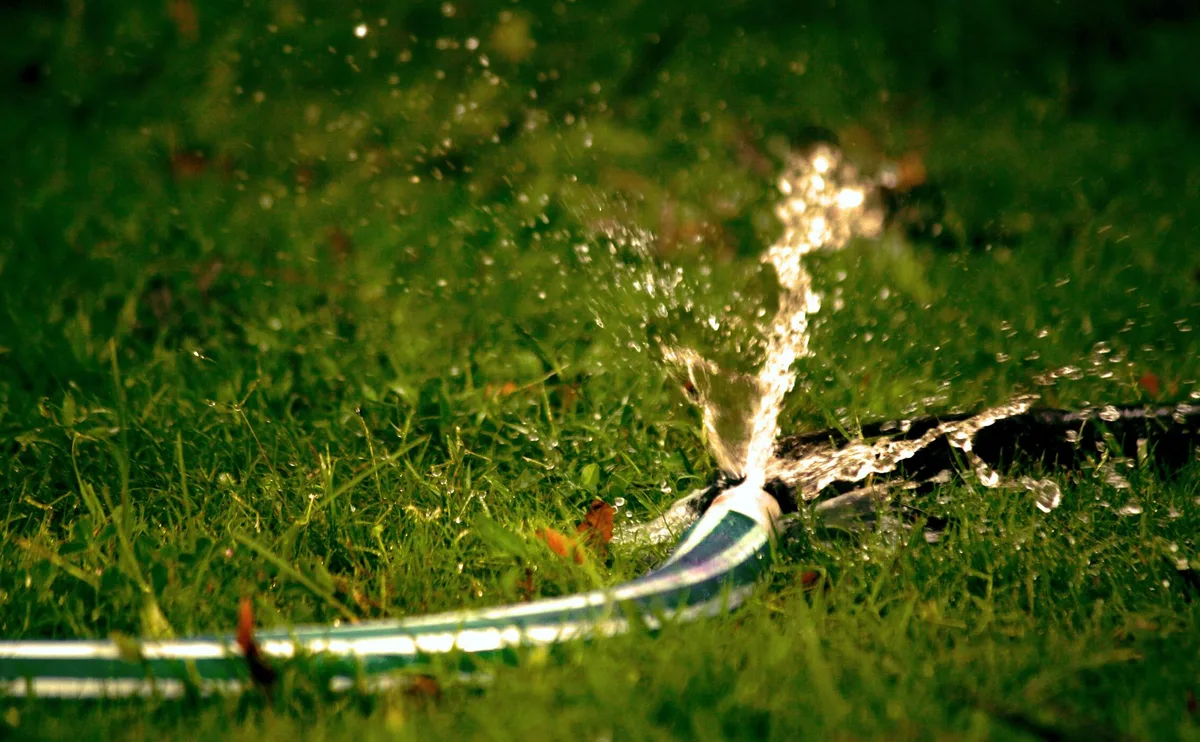
You'll usually see the damage at three spots:
- Along a kink or tight bend, where water pools and can't drain
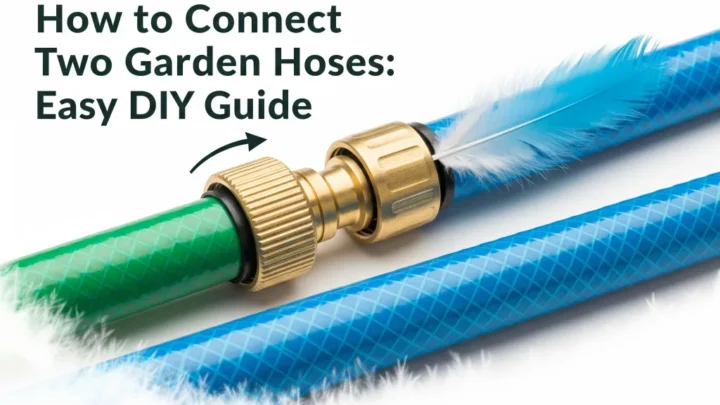
- At the brass or aluminum couplings, which trap the last bit of water
- Near old cracks that widen with each freeze-thaw swing
Vinyl hoses take the worst of it. They get brittle in deep cold and can shatter like cheap plastic. Reinforced rubber hoses flex more, so they survive freezing far better.
One more thing worth knowing. Repeated freeze-thaw cycles age a hose even if it never fully bursts. A hose that sees 30 freeze nights a winter won't last as long as one tucked in a shed.
The 4 Things That Decide Whether Your Hose Survives Outside
Whether your hose makes it through winter comes down to four variables. Run through each one, and you'll know exactly what to do.
How Cold Your Winter Actually Gets
Your climate is the first filter. Water freezes at 32°F (0°C), and the more nights you spend below that, the higher your risk.
A quick way to gauge your winter is the USDA Plant Hardiness Zone Map, which maps average low temperatures across the country. As of 2026, it's the standard reference gardeners use for cold planning.
- Zone 8 or warmer (mild coastal, Deep South): brief, light frosts. A drained hose can usually stay out.
- Zones 5 to 7: real freezes are common. Drain, disconnect, and store indoors if you can.
- Zone 4 or colder (Upper Midwest, Mountain West): hard, sustained freezes. Bring the hose inside.
Even in mild zones, one surprise cold snap can crack a full hose. The map tells you your odds, not a guarantee.
What Your Hose Is Made Of
Material decides how much cold your hose can shrug off. This is where rubber and vinyl part ways.
| Hose Type | Cold Tolerance | Best Winter Move |
|---|---|---|
| Reinforced rubber | High, stays flexible | Can stay out if fully drained |
| Hybrid / polymer | Medium | Drain, disconnect, store if easy |
| Vinyl (economy) | Low, turns brittle | Always bring indoors |
Not sure what you own? Rubber hoses feel heavier and thicker. Vinyl ones are lighter and cheaper, and they're the first to fail in a freeze.
Whether It's Still Connected to the Spigot
This is the single most important variable, and most people underrate it. A hose left screwed onto the faucet traps water in the line behind it.
- Disconnected: water can drain out of the faucet, and the big risk is gone.
- Still connected: ice can travel back into the pipe and crack it inside your wall.
Always disconnect. Every time.
If There's Water Trapped Inside
A hose is only winter-safe when it's truly empty. "Mostly drained" isn't good enough. Kinks, coils, and couplings all hold hidden pockets of water.
- Bone dry: freezing has nothing to expand.
- Any water trapped: that spot is where it'll split.
Draining is the non-negotiable part of leaving any hose outdoors.
Leave It Out or Bring It In: Your Decision Path
Put the four variables together and you get a clean decision path. Follow the branch that matches your setup.
- Zone 4 or colder: bring the hose indoors, whatever it's made of.
- Vinyl hose: bring it indoors, even in a mild zone.
- Drained rubber hose in Zone 8+: leaving it out is fine.
- Zones 5 to 7 with a rubber hose: drain and disconnect, then store indoors if you have space.
- No indoor space at all: drain fully, disconnect, coil loosely, and keep it off the frozen ground.
Draining and disconnecting protect you in almost every scenario. Storing indoors is the bonus that adds years of life. If you're already tidying the yard for the season, our roundup of ways to dress up a plain boundary pairs nicely with a fall cleanup weekend.
One rule overrides all the branches: never leave a hose connected to a live spigot through a freeze.
The Bigger Risk Isn't the Hose. It's Your Burst Pipe
Here's what nobody tells you when you're worried about a $30 hose. The real danger sits behind your outdoor wall. A connected hose can push ice back into the faucet's supply line, and a cracked pipe there can flood a wall or basement.
The mechanism is simple. When a hose stays attached, water can't drain out of the faucet. That water freezes, expands, and the pressure travels up the pipe.
The pipe splits where it's coldest, often inside the wall where you can't see it.
Two things protect that pipe:
- Disconnect the hose so the faucet can drain freely.
- On a standard (non-freeze-proof) faucet, shut off the interior valve, then open the outdoor spigot to bleed the line.
A frost-free (freeze-proof) sill cock helps, because it shuts the water off deep inside the warm wall. But even a frost-free faucet can't drain properly with a hose choking the outlet. So the hose still has to come off.
The math is lopsided. A replacement hose is pocket change. A burst pipe means a plumber, drywall repair, and possible water damage across a room.
How to Drain and Disconnect a Garden Hose for Winter
Draining a hose takes about five minutes. Do it on a dry day before your first hard freeze.
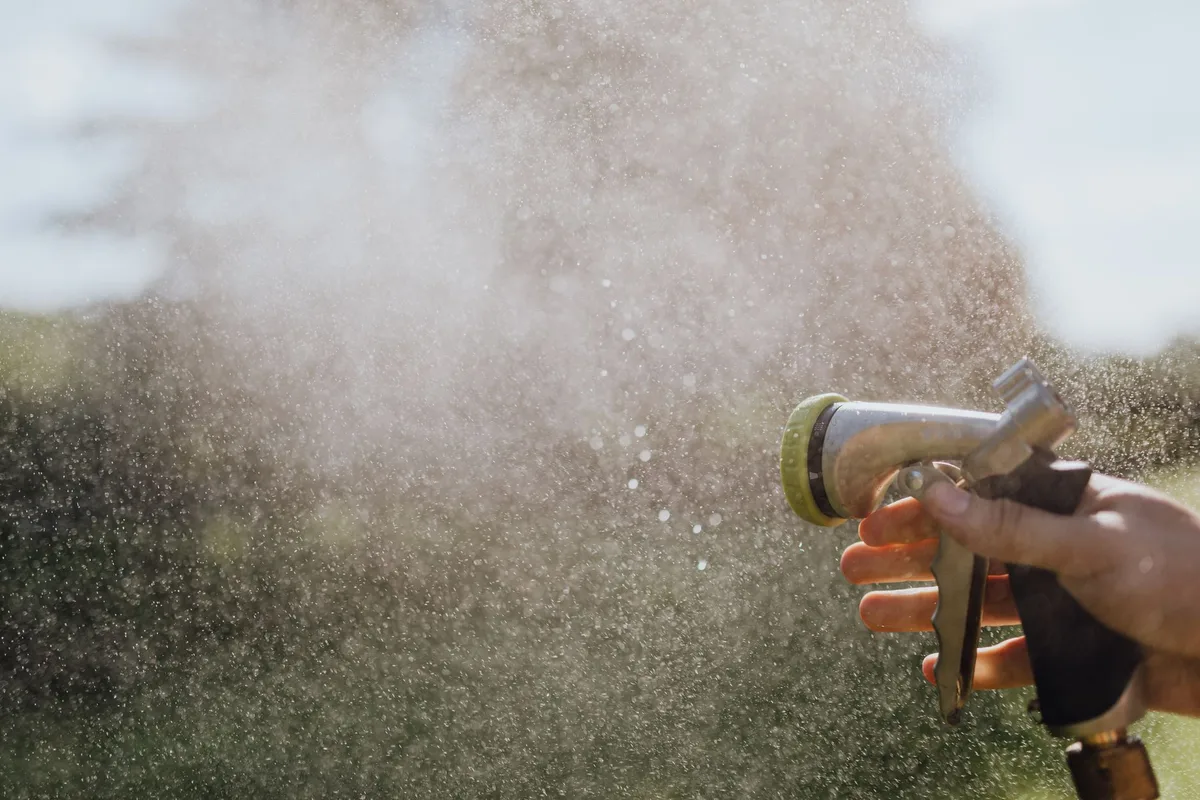
- Turn off the water at the spigot.
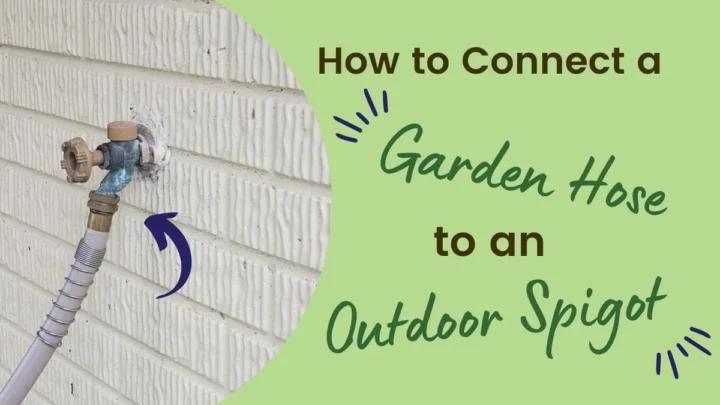
- Unscrew the hose from the faucet.
- Stretch it downhill, or drape it over a fence or deck rail so gravity pulls the water out.
- Walk the length, lifting one end and working the water toward the low end.
- Once it runs dry, cap or plug the ends to keep bugs and grit out.
If your yard is flat, the lift-and-feed method works best. Start at one end, raise it above your head, and let the water chase downhill as you move along.
Bleeding the Outdoor Faucet Line
A frost-free faucet drains itself once the hose is off. A standard faucet doesn't, so you bleed it by hand.
- Find the interior shut-off valve that feeds the spigot. It's usually in the basement, crawlspace, or a utility closet near the exterior wall.
- Close that valve.
- Go back outside and open the spigot fully.
- Leave it open so trapped water drains and expanding ice has room.
If your valve has a small bleed cap (a stop-and-waste valve), open it to release the last of the water.
Draining Nozzles, Splitters, and Attachments
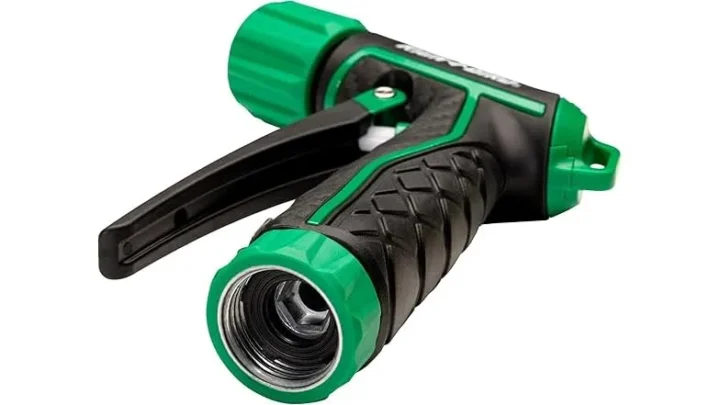
Nozzles, sprayers, and two-way splitters trap water in tiny channels that crack easily.
- Remove every attachment from the hose and faucet.
- Shake them out and let them dry.
- Store nozzles and timers indoors, since their plastic and springs hate the cold.
A brass shut-off left on the spigot will hold water and split. Take it off with everything else.
Storing a Hose the Right Way So It Lasts
Storage turns a two-season hose into a ten-season one. Cold, sun, and sitting on wet ground all shorten its life.
Coiling, Hanging, and Reel Options
How you store the hose matters as much as where. Tight, sharp coils create kinks that trap water and weaken the wall.
- Coil in wide, loose loops, at least the size of a bucket lid.
- Hang it on a wall hook or hose hanger to keep the shape.
- A hose reel (wall-mounted or cart-style) is the tidiest option and prevents kinks.
Never cram a hose into a tight bucket for months. It'll take a set and crack at the bends.
Best Storage Spots When You Have No Basement
No basement? You still have good options. The goal is a spot above freezing, or at least out of the wind and off the frozen ground.
- An insulated or attached garage
- A garden shed with the hose up off the floor
- A mudroom, utility closet, or covered porch bin
If everything you have is unheated, drain the hose extra thoroughly and keep it off the concrete. The same tidy-yard instinct behind cozy rustic boundary looks applies here: a hose on a reel just ages better than one in a heap.
Frost-Free Spigots and Insulated Faucet Covers
A frost-free (freeze-proof) sill cock is the best long-term defense for your outdoor faucet. It shuts the water off deep inside the warm wall, so nothing sits in the cold section to freeze.
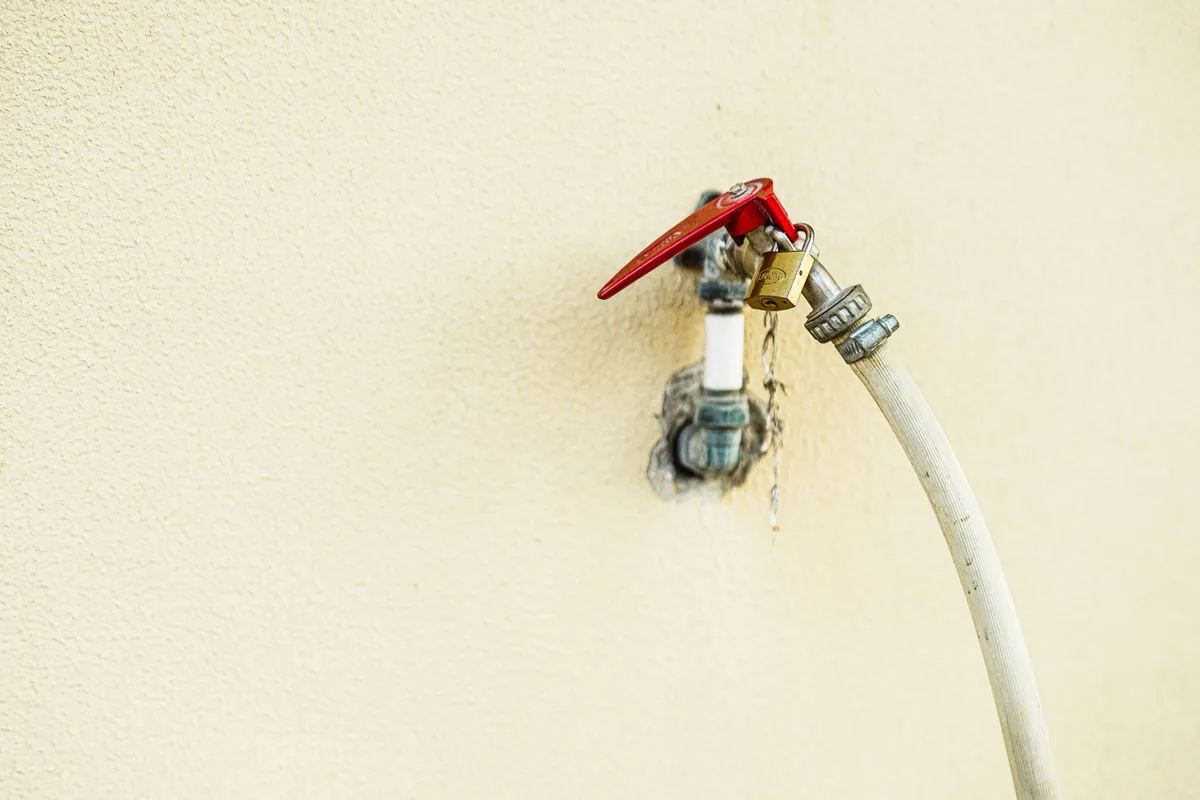
Got an older standard spigot? An insulated faucet cover is a cheap backup. It's a foam or hard-shell dome that slips over the bib and traps a pocket of warm air.
- Install the cover only after the hose is off and the faucet is drained.
- Make sure it seals snugly against the wall.
- Pair it with the interior shut-off for real protection in cold zones.
A cover alone won't save a spigot that still has a hose attached. In hard-freeze regions, a frost-free faucet plus a disconnected hose is the combination that actually works.
Keeping a Hose Usable Through Winter
Sometimes you need running water all winter, for a chicken coop, livestock tank, or a cabin. A standard hose isn't built for that. Left charged with water in the cold, it'll freeze solid and split.
Your options for winter use:
- A heated garden hose, with a built-in element rated for below-freezing use.
- Draining the hose completely after every use, then storing it indoors between fills.
- Running water only during the warmest part of the day, then disconnecting and draining right after.
For animals, the drain-after-every-use routine is the low-cost path, but it's a chore. A heated hose costs more upfront and saves you the daily hassle. Cabin owners usually shut the water off entirely and drain the whole system.
Mistakes That Crack Hoses and Burst Pipes Every Year
Most winter hose damage comes from a short list of avoidable slip-ups.
- Leaving the hose connected to the spigot. The number one cause of burst outdoor pipes.
- Assuming "mostly drained" is dry. Kinks and couplings hide water.
- Storing a vinyl hose outdoors. It gets brittle and shatters.
- Coiling too tight, which traps water and creates weak crack points.
- Forgetting nozzles and splitters, which crack from the inside.
- Leaving a standard spigot closed without bleeding the line.
- Waiting too long. Prep before the first hard freeze, not after.
The pattern is trapped water plus cold. Remove one, and the hose survives.
What It Costs You to Get This Wrong
The money side makes the case for five minutes of prep. A hose is cheap. The pipe it's attached to is not.
| Item | Rough Cost to Replace / Repair |
|---|---|
| Standard garden hose | $20 to $60 |
| Nozzle or splitter | $10 to $30 |
| Frost-free sill cock (installed) | $150 to $350 |
| Burst pipe repair + drywall | $500 to $2,000+ |
| Water damage cleanup (severe) | Several thousand |
Skipping the drain-and-disconnect step to save five minutes can cost you a plumber, a patched wall, and a ruined floor. The prep is free. The failure is not.
Garden Hose Winter Care by Climate Region
Your region sets the baseline for how careful you need to be. Use this as a quick gut check.
| Region / Zone | Winter Severity | What To Do |
|---|---|---|
| Deep South, coastal (Zone 8+) | Light frost | Drain and disconnect. Storing out is fine. |
| Mid-Atlantic, Midwest (Zones 5–7) | Regular freezes | Drain, disconnect, store indoors if possible. |
| Upper Midwest, Mountain West (Zone 4 or colder) | Hard, long freezes | Bring hose in. Frost-free spigot recommended. |
| Pacific Northwest, mild coast | Occasional freeze | Drain and disconnect before cold snaps. |
Microclimates matter too. A shaded north wall freezes harder than a sunny south one. When a surprise cold snap is forecast, treat it like your normal winter.
For gardeners planning ahead, our notes on greenery you can grow inside help scratch the itch until spring.
Frequently Asked Questions
Will a garden hose crack if left outside in winter?
It can, if water is trapped inside when it freezes. The ice expands and splits the hose wall, usually at kinks or couplings. A fully drained, disconnected rubber hose often survives.
A water-filled or vinyl hose is the one most likely to crack.
Do I need to bring my garden hose in for winter?
Not always, but it's the safest choice in cold zones. In mild regions, a drained and disconnected rubber hose can stay out. In Zone 4 or colder, or with a vinyl hose, bring it indoors.
Storing it inside also adds years to its life.
Does disconnecting the hose really protect my pipes?
Yes, and it's the most important step. A connected hose traps water in the faucet line, and freezing ice can back up and crack the pipe inside your wall. Disconnecting lets the faucet drain freely.
That one move prevents the most expensive winter failure.
What temperature is too cold to leave a hose out?
Water freezes at 32°F (0°C), so any night below that carries risk if the hose holds water. A single light frost rarely hurts a drained hose. Sustained freezes, or repeated freeze-thaw cycles, are what cause splits and shorten a hose's lifespan.
Can I leave a hose reel outside all winter?
The reel itself is usually fine, but the hose on it needs draining first. Water left in a coiled hose freezes in the loops and cracks. Drain the hose fully, then either cover the reel or move the whole unit into a shed.
Your Quick Winter Hose Decision Guide
When in doubt, run this short checklist and you'll rarely go wrong.
- Disconnect the hose from the spigot. Always, no exceptions.
- Drain it completely, using gravity or the lift-and-feed method.
- Remove and dry every nozzle and attachment.
- Store rubber hoses indoors when you can. Bring vinyl hoses in every time.
- Bleed the line and cover the faucet on standard spigots.
- In Zone 4 or colder, don't leave the hose out at all.
Nail the first two steps and you've handled 90% of the risk. The rest is about making a good hose last. A few minutes each fall beats a plumber bill every time.
For more seasonal tips, the latest garden guides are a good place to keep browsing.

Similar Posts