Can I Use a Hose to Water My Garden? What to Know
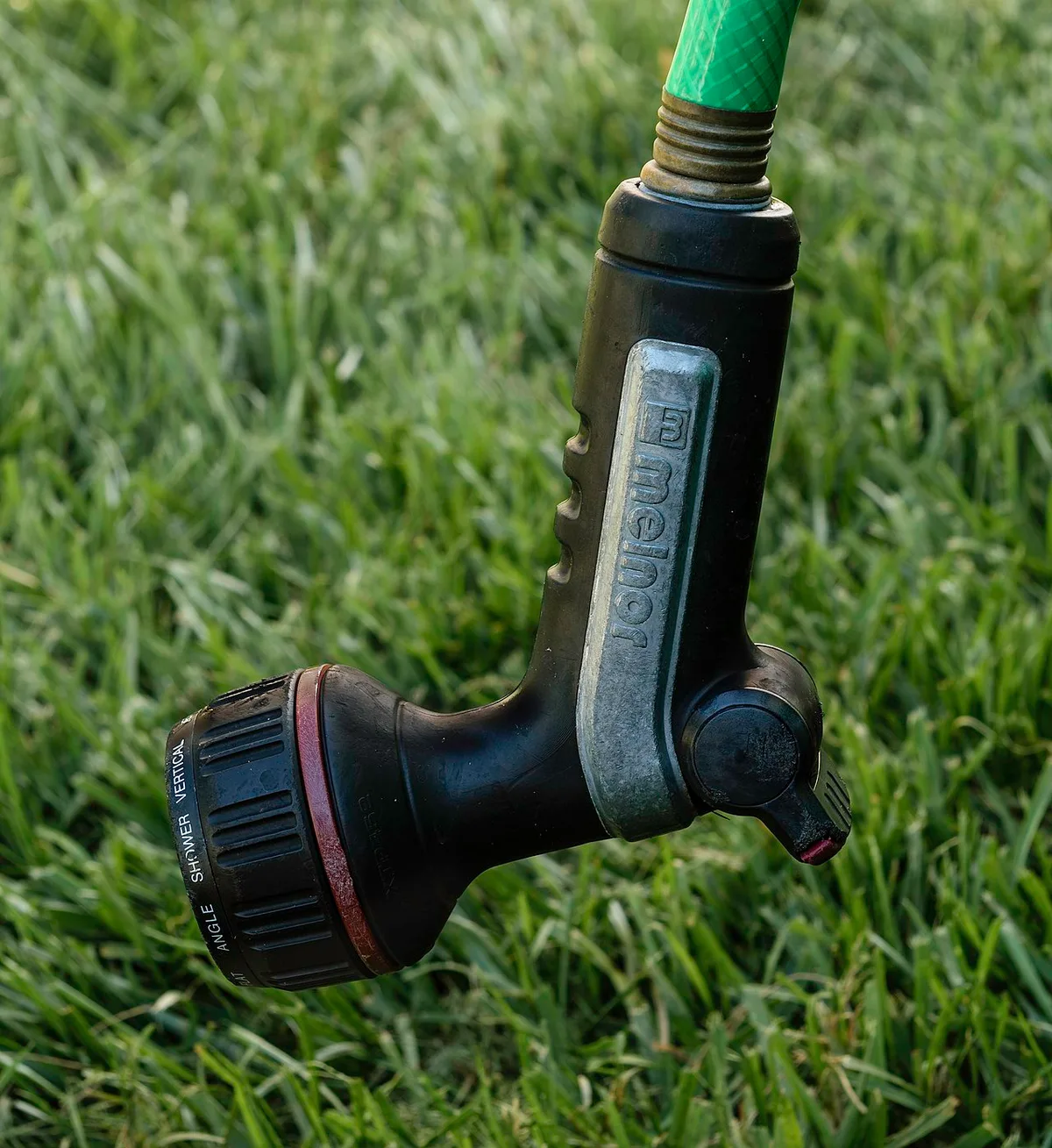
Wondering if you can use a hose to water my garden the right way? Short answer: yes, a hose is one of the easiest ways to keep plants happy. The catch is that "how" matters more than "whether." Blast the wrong plant at the wrong time and you'll waste water and stress the roots.
Timing and technique do the heavy lifting here. As of 2026, the US EPA's WaterSense program still points to watering deeply and less often as the smart approach. Roughly one inch of water a week covers most lawns and beds.
So before you drag the hose out, let's run through a few quick checks.
Quick Answer
Yes, you can water your garden with a hose. Check for a local hosepipe ban first. Water early in the morning for the least waste.
Aim at the soil, not the leaves. Water slowly and deeply, then let the soil dry before the next round.
Yes, You Can Water Your Garden With a Hose (The Honest Answer)
A garden hose is perfectly safe for watering plants. It's fast, it reaches far, and it lets you control the flow. Millions of gardeners rely on one every summer.
The real question isn't "can I," it's "how do I do it well." A hose can help or hurt depending on how you use it. Here's the honest breakdown.
When a hose works great:
- Watering large beds, borders, and lawns quickly
- Deep-soaking established shrubs and trees
- Filling watering cans or a rain butt
- Reaching spots too far for hand-watering
When you need more care:
- Delicate seedlings that a strong jet can flatten
- Midday sun, when much of the water evaporates
- Overhead spraying that leaves foliage wet and disease-prone
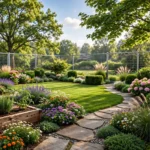
So the tool is fine. Your habits decide the outcome. If you're also planning the look of your beds, some framing ideas for a flower border pair nicely with a good watering routine.
Check This First: Is There a Hosepipe Ban Where You Live?
Always check for watering restrictions before you turn the tap. A hosepipe ban makes garden hose use illegal, and fines can follow. This is the one step people skip most.
In the UK, regional water companies issue Temporary Use Bans during droughts. These usually stop you watering with a hose but still allow a watering can. In the US, many towns and states set watering-day schedules, especially across California and the Southwest.
Here's a simple if/then to run:
- If your area has an active ban, then use a watering can or collected rainwater instead.
- If watering is allowed on set days, then mark those days and stick to them.
- If there are no restrictions, then you're clear to use the hose.
You can usually check your status in minutes on your water supplier's website. Bans change fast during a dry spell, so recheck through the summer. A quick look now saves a fine later.
What You're Watering Changes Everything
The right hose technique depends entirely on the plant. A jet that's fine for a lawn will wreck a tray of seedlings. Match the flow to the job.
Seedlings and Young Transplants
Go gentle here. Use a fine mist or shower setting, never a jet. A strong stream washes out soil and snaps tender stems.
Water at the base, close to the ground. Keep the soil damp but not soaked. Young roots are shallow, so little and often works better than one big blast.
Vegetables and Raised Beds
Vegetables want steady, deep watering at the roots. Aim the flow at the soil, not the leaves. Wet foliage invites mildew on crops like courgettes and tomatoes.
A slow soak lets water sink 15 to 30 cm down. That's where you want roots reaching. Raised beds drain fast, so check them more often in hot weather.
Lawns, Borders, and Established Plants
These handle a hose with ease. A sprinkler or wand covers ground quickly. Established shrubs and trees prefer a long, deep soak once or twice a week.
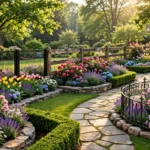
Deep watering trains roots to grow down, which builds drought resistance. Shallow daily sprinkling does the opposite. If you're styling a cottage-style plot, those mixed borders still follow the same deep-soak rule.
Pots, Baskets, and Containers
Containers dry out fastest of all. In peak summer, some need water twice a day. Use a wand to reach hanging baskets without climbing.
Water until it runs from the drainage holes. That tells you the whole root ball is wet. The same base-watering logic applies to houseplant care indoors, just on a smaller scale.
The Best Time of Day to Water With a Hose
Early morning is the best time to water, ideally before 10 am. The air is cool, so less water evaporates before it reaches the roots. Leaves also dry through the day, which cuts disease risk.
Evening is a solid second choice. Just water the soil, not the foliage. Wet leaves overnight can encourage slugs and fungal problems.
Midday is the weakest window. Sun and heat steal water fast, and you'll use more for less benefit. The old "water droplets scorch leaves" myth is largely overblown, but midday watering is still wasteful.
Here's a quick guide:
| Time of day | Water loss | Best for |
|---|---|---|
| Early morning (before 10 am) | Low | Everything, the top pick |
| Evening (after 5 pm) | Low to medium | Established beds, lawns |
| Midday (11 am to 3 pm) | High | Emergency rescue only |
For more seasonal watering habits, the EPA's WaterSense outdoor guidance is a solid, non-commercial reference. Pick a consistent slot and your plants settle into a rhythm.
How to Water Deeply and Slowly at the Base
Deep, slow watering at the base is the single best habit you can build. It sends water to the roots, where it counts, and skips the leaves. Quick surface sprinkling just teases the topsoil.
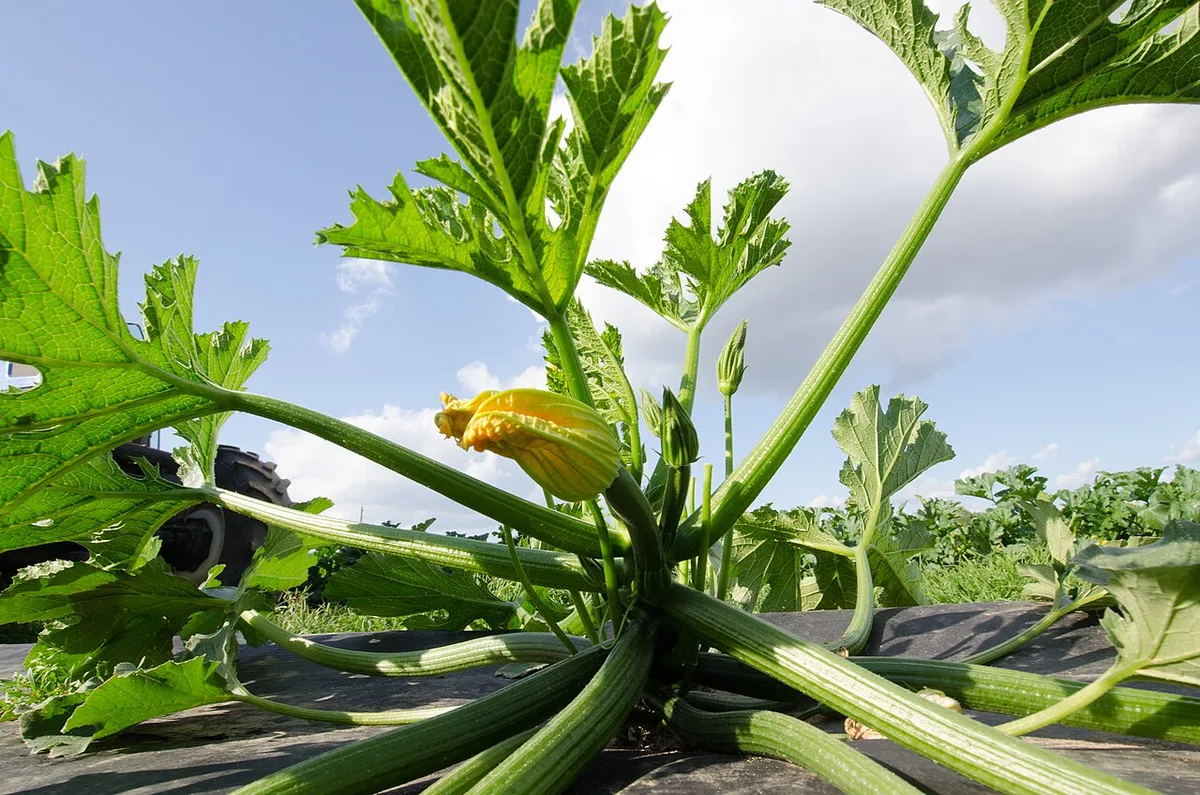
Follow these steps:
- Turn the flow to low or medium, not full blast.
- Hold the hose at the base of the plant, near the soil.
- Let water soak in slowly for several seconds per plant.
- Move on, then circle back for a second pass so it sinks deep.
- Check depth by pushing a finger in. You want moisture 15 cm down.
A slow soak beats a fast flood every time. Fast water runs off and pools on the surface. Slow water actually penetrates.
One more tip: let the hose run for a few seconds before aiming it at plants. Water sitting in a sun-baked hose can get surprisingly hot. Clearing it first protects tender roots and leaves.
Pair this with a layer of mulch and you'll hold moisture in the soil far longer.
Picking the Right Nozzle, Wand, or Attachment
The right attachment turns a plain hose into a precise tool. Different plants need different flows, and the nozzle is how you control that. A single adjustable nozzle covers most home gardens.
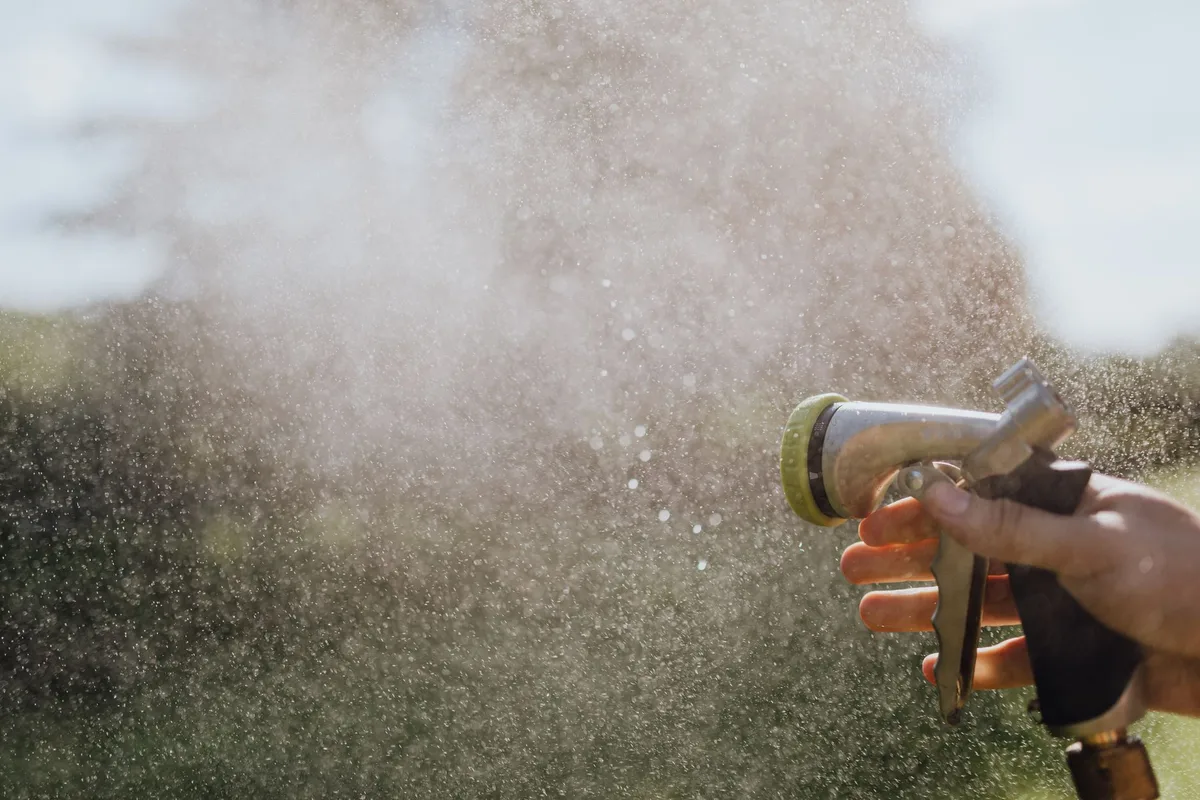
Here's what each option does best:
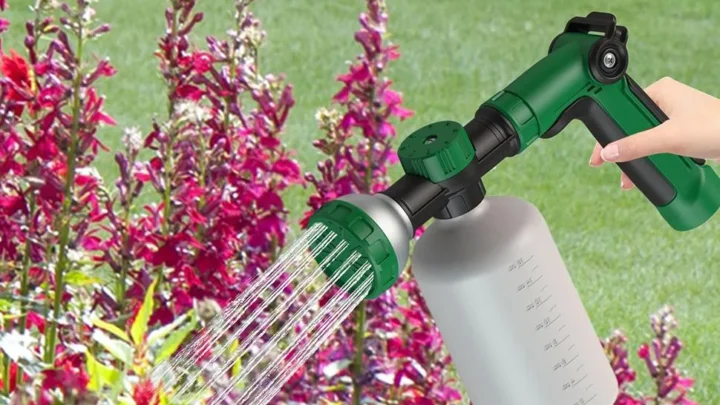
- Adjustable spray nozzle: switches between mist, shower, and jet. The most versatile pick for mixed beds.
- Watering wand: long reach for hanging baskets and the back of borders. Gentle shower head, easy on seedlings.
- Soft rain or shower head: wide, soft flow for veg and young plants.
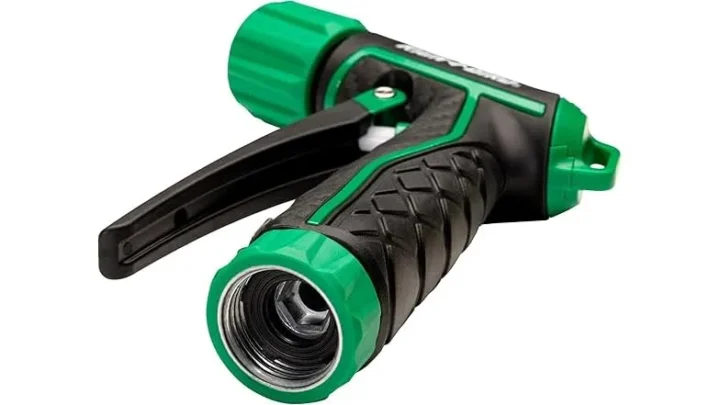
- Trigger spray gun: quick on/off control, saves water between plants.
Skip the high-pressure jet for anything delicate. It compacts soil and washes away mulch. Save the jet setting for cleaning paths, not feeding plants.
If you garden in containers or tight spaces, a wand pays for itself fast. No more crouching or splashing walls. For sprawling lawns, a sprinkler on a timer frees you up entirely.
Tap Water vs Rainwater: Does It Matter for Your Plants?
For most gardens, tap water is perfectly fine. Chlorine levels in mains water are far too low to harm established plants. The bigger benefit of rainwater is cost and conservation, not plant health.
That said, a few situations favor rainwater. Seedlings and acid-loving plants like blueberries prefer it. Rainwater is soft and slightly acidic, while tap water can be hard and alkaline.
Here's a quick call:
- If you're watering a lawn, borders, or veg, then tap water works fine.
- If you're raising fussy seedlings or ericaceous plants, then collected rainwater is gentler.
- If there's a hosepipe ban, then a water butt keeps you legal and self-sufficient.
A rain butt fitted to a downpipe stores 100 to 200 litres easily. It cuts your bills and gives plants a steady backup. Fill your watering can from it and you sidestep restrictions too.
Hose vs Watering Can vs Drip vs Soaker Hose
Each watering method suits a different job and garden size. A hose is fast and flexible, but it isn't always the smartest tool. Here's how the main options stack up.
| Method | Best for | Water efficiency | Effort |
|---|---|---|---|
| Garden hose | Large beds, lawns, quick jobs | Medium | Low |
| Watering can | Pots, seedlings, small plots, bans | High | High |
| Drip irrigation | Veg beds, precise root watering | Very high | Setup, then low |
| Soaker hose | Rows, borders, slow deep soaking | High | Low once laid |
When a Hose Wins
A hose is the best all-rounder for medium and large gardens. It covers ground fast and reaches far corners. Pair it with a timer and you get hands-off watering without a full irrigation install.
It's also ideal for deep-soaking trees and shrubs. Few watering cans can deliver that volume without a dozen trips. For general upkeep across a mixed plot, the hose stays king.
When Another Method Beats It
Drip and soaker systems win on efficiency and precision. They drip water straight to the roots, cutting evaporation and leaf disease. For a dedicated veg patch, they're hard to beat.
A watering can wins for delicate work and during hosepipe bans. It gives you total control over each plant. Many gardeners run a hose for the big jobs and a can for the fiddly ones.
You'll find more setup ideas across our range of garden guides.
Watering Mistakes That Quietly Damage Plants
Most watering damage comes from small, repeated errors, not one big mistake. The plant looks fine, then slowly declines. Here are the culprits worth catching early.
- Shallow, daily sprinkling: trains roots to stay near the surface. They dry out fast and struggle in heat.
- Overhead watering in the evening: leaves stay wet overnight and invite mildew and slugs.
- Overwatering: soggy soil starves roots of oxygen and causes root rot. Yellow, droopy leaves often mean too much, not too little.
- Hot hose water: the first burst from a sun-baked hose can scald tender growth. Run it off first.
- High-pressure blasting: flattens seedlings and erodes soil around roots.
Watch for warning signs. Wilting in the morning usually means dry soil. Wilting despite wet soil usually means rot from overwatering.
A quick finger test settles most doubts. Push a finger 5 cm into the soil. If it's damp, wait.
If it's dry, water. That one habit prevents most of these problems. A tidy, well-screened plot helps too, and some ideas for hiding a tired fence keep the whole space looking cared for.
How Much Water Your Garden Actually Needs
Most gardens need about one inch, or 2.5 cm, of water per week. That includes rainfall, so you only top up the shortfall. Deep and infrequent always beats little and often.
Different areas drink at different rates. Sandy soil drains fast and needs more frequent watering. Clay holds moisture longer, so ease off to avoid waterlogging.
Here's a rough weekly guide in normal summer weather:
| Plant type | Water need | Frequency |
|---|---|---|
| Lawns | 2.5 cm/week | 1 to 2 deep soaks |
| Veg beds | 2.5 to 4 cm/week | 2 to 3 times |
| Established shrubs | Deep soak | Once a week |
| Containers | Until it drains | Daily in heat |
To measure a sprinkler's output, set an empty tin on the lawn. Time how long it takes to collect 2.5 cm. That tells you exactly how long to run it each session.
In a heatwave, bump up the frequency, not the pressure. Containers may need a second drink by evening. When rain does the job, skip watering entirely and save the water.
Safety and Setup: Hot Hose Water, Backflow, and Potable Hoses
A few safety basics keep your water clean and your plants unharmed. Most hoses are made for general use, not drinking water. That matters more than people think for edible gardens.
Standard hoses can leach small amounts of chemicals into standing water. For a veg patch, choose a drinking-water-safe (potable) hose. Manufacturer specs confirm these are lead-free and rated for edible use.
Two more quick checks:
- Hot water: always run off the first burst from a sun-heated hose before watering.
- Backflow: fit an anti-siphon or backflow preventer on the outdoor tap. It stops garden water siphoning back into your drinking supply.
Also avoid leaving water to stagnate in a hose for weeks. Warm, still water can harbor bacteria. If you mist plants, fresh water is the safer bet.
Expert Habits That Save Water and Grow Healthier Plants
Small habits separate a thriving garden from a thirsty one. These are the tricks seasoned gardeners lean on to cut waste and boost growth.
- Mulch every bed: a 5 cm layer of bark or compost slows evaporation and can halve your watering frequency.
- Water the roots, not the air: aim low and slow, every time.
- Group thirsty plants together: it lets you water efficiently instead of soaking the whole garden.
- Use a timer: an inexpensive tap timer waters at dawn while you sleep.
- Check the forecast: skip watering if rain is due within a day.
One more pro move: water deeply just before a hot spell. A well-soaked bed holds reserves that shallow watering can't match. Your plants coast through the heat instead of wilting.
Hose Care: Storing, Draining, and Keeping It Algae-Free
A little upkeep keeps a hose working for years. Neglect it and you get kinks, leaks, and green sludge inside. Basic care is quick.
- Drain after use: empty the water and coil it loosely to prevent kinks.
- Store out of sun: UV rays crack rubber and plastic over time. A shady spot or reel helps.
- Beat algae: empty hoses fully and keep them out of direct light. Algae grows in warm, standing water.
- Winterize: drain completely before the first frost. Trapped water freezes, expands, and splits the hose.
Check washers and connectors each spring. A worn rubber washer causes most leaks at the tap. Swapping it takes seconds and stops wasted water.
Common Questions About Watering the Garden With a Hose
Is it OK to water plants with tap water from a hose?
Yes, tap water from a hose is fine for almost all garden plants. Chlorine levels in mains water are too low to cause harm. Only fussy seedlings and acid-loving plants truly prefer softer rainwater.
How long should I water my garden with a hose?
Water long enough to soak the soil 15 to 30 cm deep. That usually means a slow pass of several seconds per plant, then a second pass. For lawns, aim for about 2.5 cm of water per week.
Can I water my garden with a hose during a hosepipe ban?
No, a hosepipe ban makes using a garden hose illegal, and you risk a fine. You can still use a watering can or stored rainwater from a butt. Always check your water company's current status before watering.
Does watering with a hose in the sun scorch leaves?
No, the "water droplets act like magnifying glasses" idea is largely a myth for garden plants. The real risks are wasted water from evaporation and hot water from a sun-baked hose. Water in the early morning and run off the first hot burst.
Is a hose better than a watering can?
A hose is better for large beds, lawns, and deep-soaking shrubs. A watering can wins for pots, seedlings, precise control, and during hosepipe bans. Many gardeners keep both and match the tool to the job.
Your Quick Decision Guide
Run through this before you turn on the tap:
- Is there a hosepipe ban? If yes, switch to a watering can or rainwater. If no, carry on.
- What are you watering? Seedlings get a gentle mist. Lawns and shrubs get a deep soak.
- What time is it? Early morning is best. Evening works. Skip midday if you can.
- Where's the water going? Aim at the base, never the leaves.
- How much? Slow and deep, then let the soil dry before the next round.
Get those five right and a hose becomes the most useful tool in your shed. Water smart, not often, and your garden rewards you with steady, healthy growth all season.
Similar Posts