How Long Does a Garden Hose Last? Tips to Extend Its Life
How long does a garden hose typically last? The short answer is three to ten years, but that range swings wildly depending on what it's made of and how you treat it. A budget vinyl hose left baking on a hot driveway may give you just one or two seasons.
A solid rubber hose stored in a garage or on a reel can easily stretch past a decade.
The difference comes down to material, storage habits, and your local climate. Per NSF/ANSI testing standards and manufacturer lifespan data, heavier-duty hoses use reinforced rubber layers that resist UV cracking and temperature swings far better than single-layer vinyl. If you're trying to squeeze the most years out of your next purchase, the choices you make today will pay off for a long time.

Image source: Bing (Web (fair-use with source credit))
Quick Answer
How long does a garden hose typically last? Vinyl hoses last about one to three years. Rubber hoses last five to ten years or more.
Hybrid hoses sit in the middle at five to eight years. Expandable hoses rarely survive beyond two to three years. The biggest factors are material quality, UV exposure, and whether you store it properly each season.
The Quick Answer: Average Garden Hose Lifespan by Type
Getting a straight number out of this topic is tougher than it sounds. Every manufacturer gives slightly different ranges, and real-world conditions shift the timeline a lot. What we can do is map out the typical lifespan bands so you know what to expect before you buy.
| Hose Type | Typical Lifespan | Best Use Case |
|---|---|---|
| Vinyl | 1–3 years | Light, occasional watering |
| Rubber | 5–10+ years | Daily use, harsh climates |
| Hybrid | 5–8 years | Balanced budget and durability |
| Expandable | 1–3 years | Short distances, easy storage |
If you are buying a hose with the intention of using it for more than a season or two, the vinyl route is usually a false economy. You will save money upfront but spend it again a year later when cracks and kinks force a replacement. Rubber remains the gold standard for longevity, and hybrid designs have closed the gap significantly as of 2026 with newer multi-layer constructions.
The numbers above assume reasonable care. Toss a rubber hose into a trash pile and drag it across gravel, and even that durable material will underperform its typical range. Proper storage and winterization can add years to almost any hose type.
That brings us to what actually drives degradation in the first place.
Why Your Hose's Lifespan Varies (And What Actually Controls It)
A garden hose does not fail for one single reason. It breaks down through a combination of UV damage, water pressure stress, temperature cycling, and physical abuse. Understanding which forces are at work helps you pick a hose that survives your specific situation instead of guessing and replacing it repeatedly.
UV radiation is the number one enemy. Sunlight breaks down the polymers in vinyl and weakens the outer layer of rubber over time. This is why a hose coiled on a sunbaked patio in Arizona ages much faster than one stored in a shaded shed in the Pacific Northwest.
Learn more about keeping your hose from kinking since kinking creates weak points that accelerate crack formation.
Temperature swings cause expansion and contraction in the hose walls. In freeze-prone areas, water left inside a hose turns to ice and expands from the inside out. That internal pressure pushes against already-weakened material and creates splits that appear overnight.
Always drain your hose completely before freezing temperatures arrive.
Water pressure matters more than most people realize. Standard residential supply pressure runs between 40 and 80 PSI. A hose rated for 150 PSI handles that without stress.
One rated for only 75 PSI will fatigue faster at the couplings and along the body. Checking the PSI rating before you buy is a small step that pays off over years.
Physical abrasion against rough surfaces like concrete, gravel, and brick wears through the outer jacket. Once the jacket thins, the reinforcement layer underneath is exposed. Water pressure then finds those thin spots and pushes through.
This is why you should avoid dragging your hose across bare ground whenever possible.
Material Matters: Rubber, Vinyl, Hybrid & Expandable Breakdown
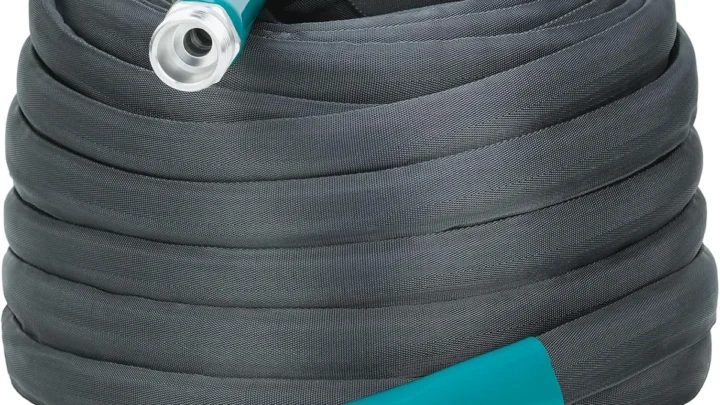
The material your hose is built from sets the ceiling for how long it will last. Each type has trade-offs between price, weight, durability, and maintenance needs. Knowing what you get with each option helps you avoid overpaying for a hose that will not survive your climate, or buying cheap and replacing it twice a season.
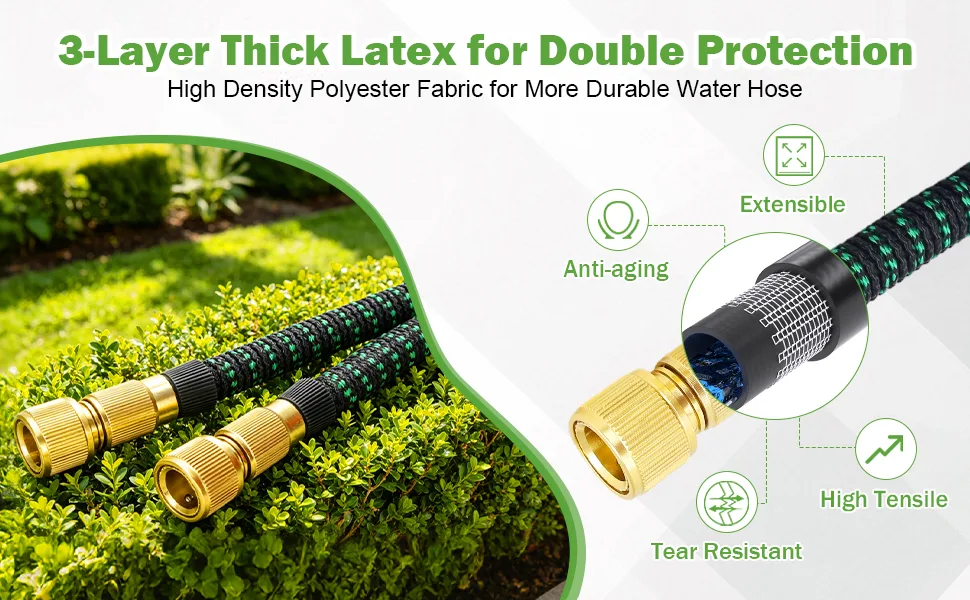
Image source: Web (Bing) / amazon.co.uk (Web image (fair-use with source credit))
Vinyl hoses are the entry-level option. They cost the least and are light enough for most adults to handle without fatigue. The downside is clear: vinyl becomes brittle with UV exposure and cold temperatures.
Expect surface cracking within one growing season if the hose sits in direct sun year-round. If you store it indoors every winter and only use it for light watering, three years is realistic.
Rubber hoses cost two to three times more than vinyl but deliver correspondingly longer life. Reinforced rubber handles pressure spikes better, resists kinking, and tolerates temperature extremes without becoming brittle. A quality rubber hose stored properly will routinely reach seven to ten years.
They are heavier, which some users find tiring during long watering sessions.
Hybrid hoses combine a rubber or synthetic inner tube with a woven or mesh outer layer. This design aims to deliver rubber-like durability at a lower price and lighter weight. Real-world performance varies by brand, but a well-made hybrid typically lands between five and eight years.
They are a strong middle-ground choice for most homeowners.
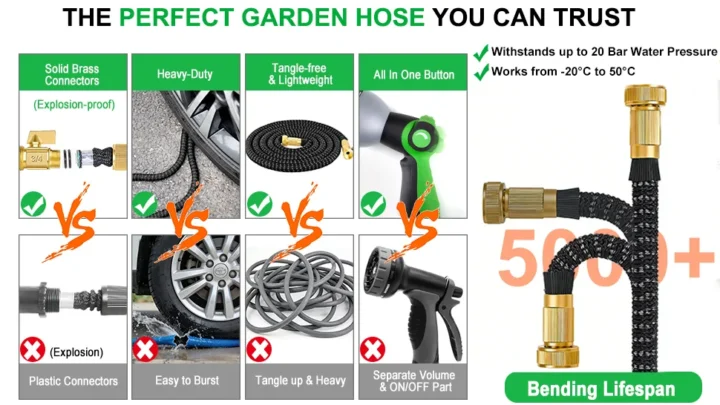
Expandable hoses stretch when water flows and collapse when drained. They are incredibly light and compact for storage, which is their main selling point. The trade-off is fragile construction.
The latex or TPU core degrades quickly under UV light, and the outer fabric sleeve offers little protection. Most expandable hoses fail within two years, often from seam separation or core punctures.
When comparing how to increase water pressure from your garden hose, remember that a weaker hose will bulge and stress at the seams under higher pressure, shortening its life regardless of material.
How Storage Habits and Climate Make or Break Longevity
You can buy the most expensive rubber hose on the market and still kill it in a year if you store it incorrectly. Storage habits and regional climate are the two environmental factors that matter most after material quality. Getting these right is where the biggest lifespan gains come from.
Keep your hose off the hot pavement. A hose coiled directly on black asphalt in summer can reach surface temperatures above 140 degrees Fahrenheit. That heat accelerates polymer breakdown faster than any other single factor.
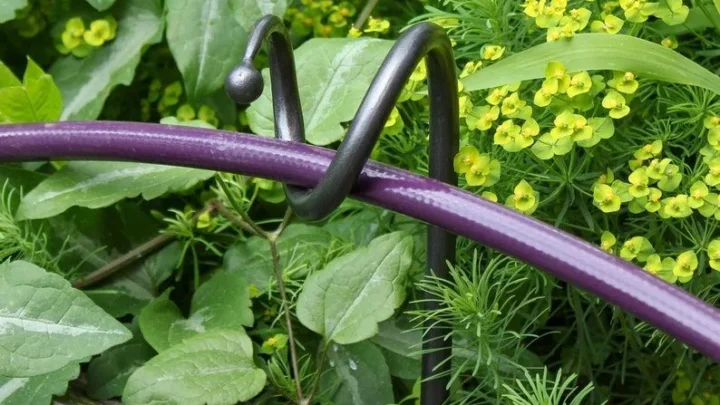
A simple hose reel or a wall-mounted hook keeps the tube elevated and shaded. See how to properly connect your hose to make coiling and uncoiling part of a smooth routine rather than a chore.
Drain before you store. Any water trapped inside a hose will freeze and expand in cold weather. Even a few ounces left in the loops can create splits that take weeks to become obvious.
After each use, disconnect both ends and let gravity empty the full length. Store the hose in a dry space when possible, such as a garage, shed, or covered porch.
In hot, dry climates with intense sun, UV protection becomes critical even for rubber hoses. Look for hoses labeled UV-resistant and consider a light-colored hose cover or a shade structure near your spigot. In humid or coastal climates, salt air and moisture accelerate coupling corrosion.
Stainless steel or brass fittings resist this far better than plain plastic nuts.
If you live in a region with hard freezes, winterizing your hose is non-negotiable. Shut off the water supply, detach the hose, drain it fully, and bring it indoors. Leaving an empty hose outside in sub-freezing temps for months will still cause micro-cracks that show up the following spring.
This single habit can add two to four years to the life of any hose.

Image source: Bing (Web (fair-use with source credit))
When to Replace vs. Repair: Failure Signs Worth Knowing
Knowing when to patch a hose and when to walk away saves money and frustration. Minor leaks and small kinks are often fixable. Serious structural failure is not worth your time.
Learning to read the warning signs early means you catch problems before a burst leaves your yard flooded.
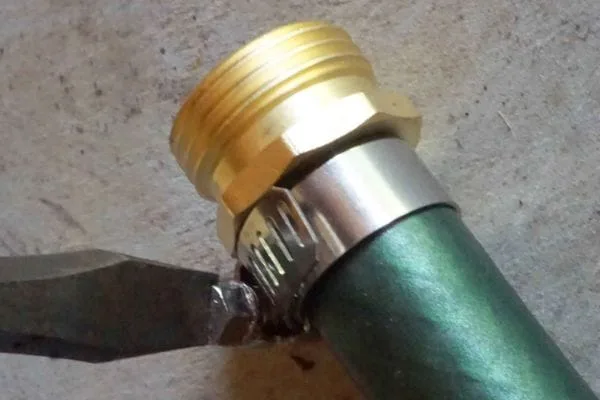
Image source: Bing (Web (fair-use with source credit))
Replace the hose if you see any of these:
- A crack running along the body that leaks even when pressure is low
- Bulging or swelling in one section that indicates internal delamination
- Couplings that will not tighten or strip threads repeatedly
- Multiple repair points within a three-foot span
- Crumbling or flaking material that feels soft to the touch
Small pinhole leaks or a single cracked coupling can usually be fixed with a repair kit for your garden hose. A simple hose mender or a replacement coupling costs under five dollars and takes five minutes. That is worth attempting before trashing a perfectly good hose.
Kinks are different from cracks. A kink is a temporary fold that blocks water flow. If you gently roll the kinked section back into shape while water runs through it, the hose often recovers.
Persistent kinks that refuse to straighten suggest the inner tube has collapsed. That is a structural failure and the hose should be replaced.
Barely noticeable weeping at the coupling is often just a loose washer or a slightly cross-threaded nut. Tighten it carefully and replace the rubber washer if it looks flat or cracked. If the coupling itself is cracked or the metal is corroded through, no amount of tightening will help.
Learn how to stop a leaking garden hose for a quick reference on the common fixes.
The general rule is straightforward: one small issue on a newer hose deserves a repair attempt. Repeated issues or any crack in the main body mean the hose has reached the end of its useful life. Investing in a better hose now prevents the cycle of cheap replacements that drains your budget faster than a quality hose ever would.
5 Mistakes That Cut Your Hose's Life Short
Most garden hoses die young because of avoidable habits. You do not need to be careless to shorten a hose's life. Simple daily choices add up to years of lost durability if you repeat them regularly.
Avoid these five mistakes and your next hose will likely outlast its expected range.
Dragging the hose across rough surfaces wears through the outer jacket fastest. Concrete, gravel, and brick act like sandpaper with every pull. Once the jacket thins, water pressure reaches the reinforcement layer and pushes through.
Lift the hose when moving it instead of dragging it along the ground.
Leaving it coiled in direct sun accelerates UV degradation dramatically. A dark hose on a black driveway can exceed 150 degrees Fahrenheit on a summer afternoon. That heat softens vinyl and cracks rubber faster than any other single factor.
Store your hose in shade or bring it indoors when not in use.
Ignoring kinks instead of fixing them creates permanent weak spots. A kinked section collapses the inner tube and stresses the outer wall. Over time that spot develops cracks that leak even after you straighten the hose.
Roll out kinks gently and avoid sharp bends around corners.
Over-tightening couplings with pliers strips threads and cracks plastic nuts. Hand-tight is usually enough. If you need extra grip, use a rubber grip pad for leverage instead of metal pliers directly on the coupling.
Crushed washers inside the fitting are also a common source of leaks that people misdiagnose.
Storing the hose full of water before winter guarantees freeze damage in cold climates. Ice expands inside the tube and splits the walls from within. Always disconnect both ends and run water through until it flows free.
Learn how to properly store your equipment to keep your outdoor gear in working order.
These habits are so common that replacing a damaged hose feels normal. Breaking just one or two of them will noticeably extend your current hose and protect your next purchase.
Your Decision Guide: Which Hose and Setup Fits Your Situation
Choosing the right hose comes down to matching three variables: your climate, your usage frequency, and your storage options. Getting this alignment right prevents regret purchases that sit unused or fail within a year.
| Your Situation | Recommended Hose Type | Why This Works |
|---|---|---|
| Light watering, occasional use, indoor storage | Vinyl or lightweight hybrid | Cost-effective when abuse is minimal |
| Daily use, hot/sunny climate, outdoor storage | Heavy-duty rubber with UV rating | Withstands heat and sun without cracking |
| Mixed indoor/outdoor use, moderate budget | Reinforced hybrid hose | Balances price, weight, and durability |
| Small patio, short distances, compact storage | Expandable hose (accept 1-2 year life) | Ultra-light and easy to stow |
| Freeze-prone area, winter storage possible | Rubber hose, winterize properly | Survives cold if drained correctly |
| High water pressure area (60+ PSI) | Rubber or hybrid rated 200+ PSI | Handles pressure without bulging |
If your spigot is near your garden and you only water a few beds weekly, a budget vinyl hose stored in a shed is perfectly reasonable. You will likely get two to three years from it with zero problems.
If you live in a region with intense sun and do not have indoor storage, skip vinyl entirely. A UV-rated rubber hose costs more upfront but outlasts three vinyl replacements in the same timeframe. The math favors the pricier option after year two.
People who want the lightest possible hose often reach for expandable models. They are genuinely convenient for short tasks like rinsing a patio or filling a small pool. Just accept that you will replace them every couple of years and factor that recurring cost into your decision.
A well-chosen hose paired with proper storage habits delivers the longest possible lifespan for your budget. Check our guide on proper hose sizes and measurements to make sure you pick the right diameter and length for your space before you buy.
FAQs: Real Questions About Garden Hose Longevity
Can a garden hose last 15 years?
Yes, but only under ideal conditions. A high-quality rubber hose stored indoors, used moderately, and protected from extreme temperatures can reach 15 years. Most hoses never see that kind of care, which is why the realistic average stays lower.
Does hose diameter affect lifespan?
Not directly, but larger diameters reduce flow resistance and pressure stress on the walls. A 5/8-inch hose typically outlasts a 1/2-inch hose under the same usage because water moves through it with less turbulence and strain on the joints.
How do I know if my hose is still safe to use?
Inspect it annually for cracks, bulges, or soft spots. Run water through it at full pressure and watch for leaks or excessive bulging. If the hose feels brittle, leaks at multiple points, or has persistent kinks that will not straighten, it is time for a replacement.
Is it worth buying a brass-fitting hose over plastic fittings?
Brass fittings resist corrosion and stripping far better than plastic. They also tighten more securely without cracking. If you live in a humid or coastal climate, brass couplings add years to your hose life compared to plastic alternatives.
How does cold weather affect garden hose longevity?
Cold makes vinyl brittle and prone to cracking. Rubber tolerates cold better but still suffers if water freezes inside the tube. Proper drainage and indoor storage eliminate cold-weather damage entirely.
Leaving any hose outside uncovered in freezing temps without draining it is the fastest way to destroy it.
What is the best way to clean a garden hose internally?
Flush it with a mixture of one cup white vinegar and five gallons of water, then run clean water through until the smell disappears. This kills mildew and removes mineral buildup without damaging the inner tube. Read more about nozzle maintenance to keep your entire watering setup running cleanly.

Similar Posts