5/8-Inch Garden Hose: Sizing, Uses & Buying Guide
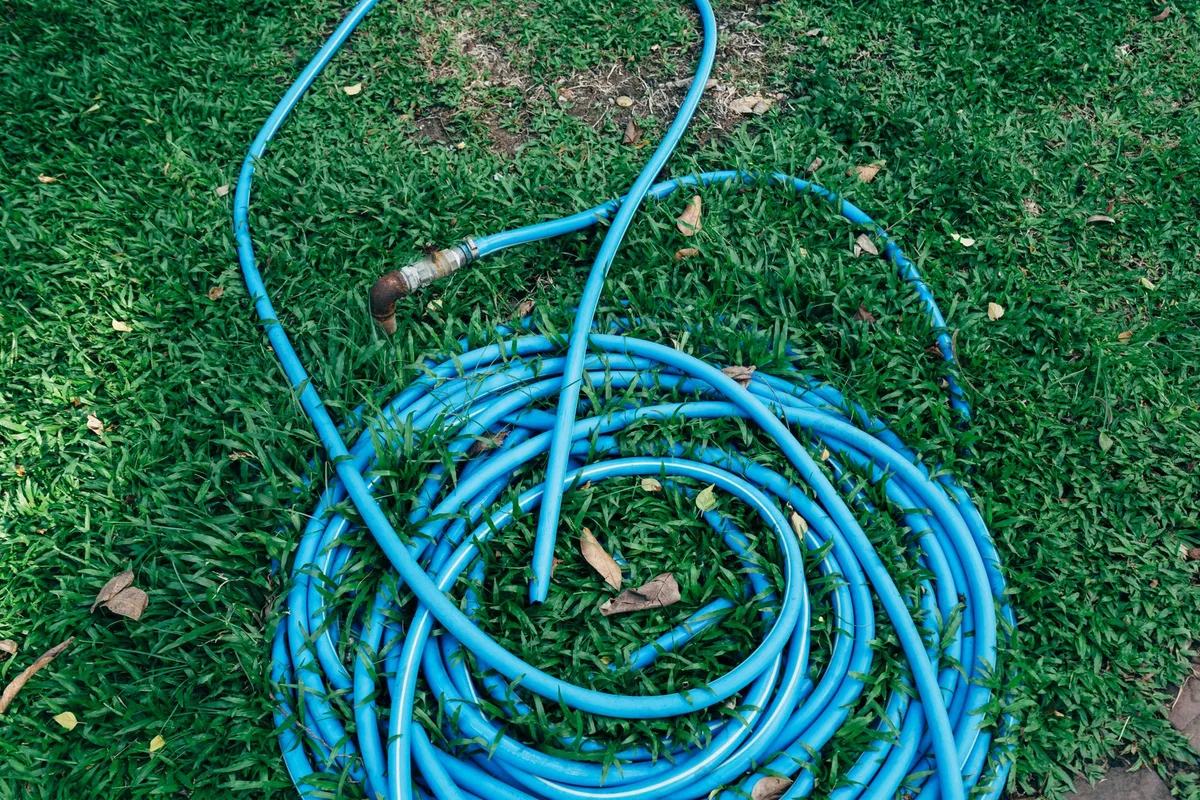
Picking a garden hose sounds simple until you're standing in the aisle staring at numbers. If you've ever wondered what a 5 8 in diameter garden hose really gives you, the short version is this: that fraction refers to the inner width of the hose, and it's the size most homes are built around. It's not marketing.
It's a real spec that decides how much water reaches your nozzle.
Here's the thing most listings gloss over. The "5/8" is the inner diameter (ID), not the outside, and per common industry sizing, residential hoses come in 1/2", 5/8", and 3/4". As of 2026, 5/8" remains the default choice for the average yard.
Let's unpack why that middle number does so much work.
Quick Answer
A 5/8 in diameter garden hose measures 5/8 inch across the inside. That inner width sets how much water can flow through. It's the most common size for everyday home use.
It balances strong flow with easy handling. Most standard nozzles, sprinklers, and fittings thread right onto it.
What "5/8-Inch Diameter" Actually Means on a Garden Hose
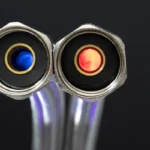
The 5/8 inch is the inner diameter, the open space inside the hose where water travels. It is not the outside measurement, and it is not the thread size on the end.
That distinction trips people up constantly. The fitting on nearly every home hose uses a 3/4" Garden Hose Thread (GHT), no matter the ID. So a 1/2", 5/8", and 3/4" hose can all screw onto the same spigot.
The number that changes performance is the bore, not the coupling.
Think of the inner diameter like the size of a straw. A wider straw moves more liquid with less effort. A 5/8" bore sits right in the sweet spot for typical household water pressure.
Manufacturer specifications usually print the ID on the hose jacket or the packaging. If yours doesn't, measure the opening at the cut end with a small ruler or calipers. Measure the hole, not the rubber around it.
Why Hose Diameter Matters More Than You'd Think
Diameter decides flow, and flow decides how fast you get things done. A hose that's too narrow leaves you waiting on a bucket that won't fill.
Water pressure at the spigot is only half the story. The bore controls how much of that pressure turns into real volume at the nozzle. Two hoses on the same tap can deliver very different results if their inner diameters differ.
For most day-to-day jobs, 5/8" gives you plenty of muscle without the weight penalty. That covers rinsing a patio, filling a watering can, or soaking beds behind a country-style garden border. It's enough flow for a sprinkler, and it won't wear out your arm.
Go too big and the hose gets heavy and stiff. Go too small and you starve high-demand tools like pressure washers. If you like matching gear to specific projects, our other garden guides walk through plenty of them.
How Inner Diameter, Length, and Water Pressure Work Together
Three things decide what comes out of your nozzle: the inner diameter, the hose length, and your home's water pressure. Change one and the whole equation shifts.
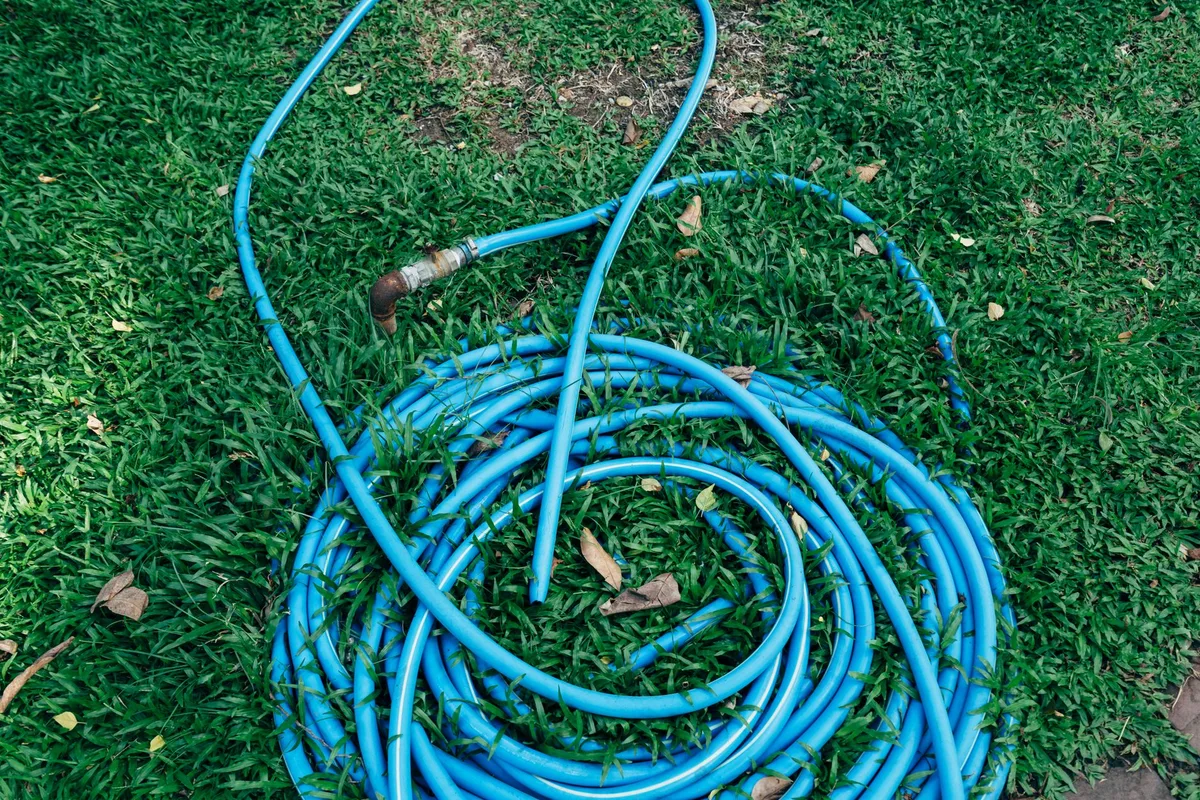
Longer hoses lose pressure. It's called friction loss, and it's simple physics. Water rubbing against the hose walls sheds energy the farther it travels.
A 25-foot hose delivers noticeably more punch than a 100-foot hose of the same bore.
A wider bore fights that loss. On a long run, stepping up in diameter helps water hold its flow. That's why a 5/8" hose feels strong at 50 feet but weaker at 100 feet.
Most U.S. homes supply water at roughly 40 to 80 PSI. The U.S. Environmental Protection Agency's WaterSense program offers guidance on efficient outdoor watering if you want to trim waste.
Match your hose to that pressure and your run length, and you'll rarely be disappointed.
Here's the practical rule. If your run is short, 5/8" is more than enough. If you're stretching past 75 feet, think about a wider bore or a shorter hose.
5/8 in vs 1/2 in vs 3/4 in: The Real Trade-Offs
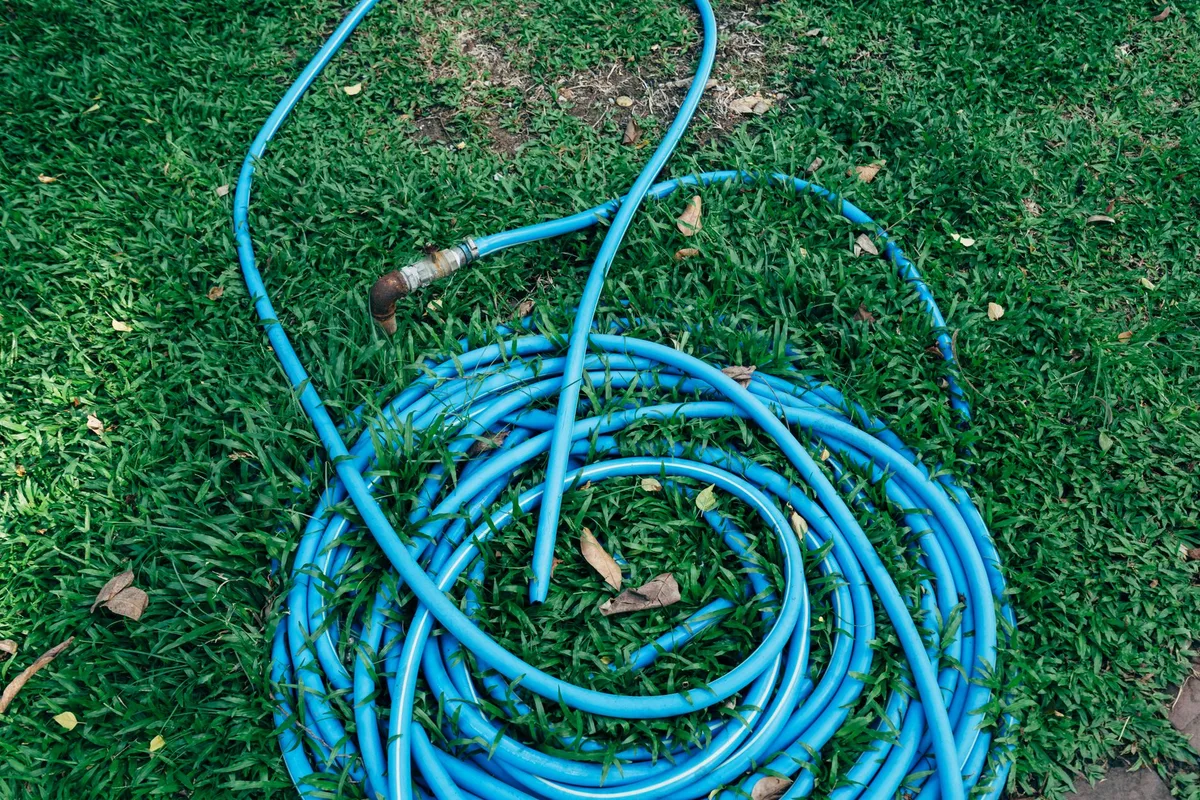
The right diameter depends on your run length, your water pressure, and how much weight you want to drag around. Here's how the three common sizes stack up.
| Inner Diameter | Best For | Relative Flow | Relative Weight | Typical Run |
|---|---|---|---|---|
| 1/2 in | Light watering, containers, small yards | Lowest | Lightest | Up to 25 ft |
| 5/8 in | All-purpose home use | Balanced | Medium | 25 to 75 ft |
| 3/4 in | Long runs, high volume, pressure washers | Highest | Heaviest | 75 ft and up |
Flow Rate at Different Lengths
Flow is where these sizes separate. A 1/2" hose moves the least water and fades fast over distance. It's fine for a balcony or a few pots near the tap.
A 5/8" hose carries solid volume through mid-length runs. That's why it's the go-to for lawns, borders, and beds along a raised flower-bed edge. A 3/4" hose pushes the most water, but you only feel the benefit on long runs or high-demand tools.
Weight and Handling
Bigger bore means more material, and more material means more weight. A 3/4" rubber hose gets heavy and awkward once you pass 50 feet.
That's the hidden cost of sizing up. Aggregate user reviews report that 3/4" hoses feel great on flow but tiring to coil and drag. A 5/8" hose lands in the comfortable middle, strong enough to work, light enough to move.
Price and Availability
5/8" wins on choice and cost. It's the most stocked size, so you'll find more lengths, materials, and fittings at any price point.
Replacement washers, menders, and quick-connects are built around it too. That makes repairs cheaper and parts easier to find. A 3/4" hose costs more per foot and shows up in fewer options.
Where 5/8-Inch Hoses Shine and Where They Fall Short
The 5/8" bore is a jack-of-all-trades, and that's exactly its strength. It handles the everyday jobs most yards throw at it without breaking a sweat.
It shines on runs up to about 75 feet. Watering lawns, filling buckets, rinsing tools, and feeding a single sprinkler all sit within its range. Flow stays strong and the hose stays manageable.
Where does it fall short? High-demand tools and long distances. A pressure washer that wants steady volume can outpace a 5/8" feed.
Stretch the hose past 100 feet and you'll feel the flow sag.
It also struggles as a shared line. Running two sprinklers off one 5/8" hose splits the flow thin. For that job, a 3/4" bore holds up better.
Materials That Change How a 5/8-Inch Hose Performs
Bore size sets the ceiling for flow, but material decides how the hose feels and how long it lasts. Two 5/8" hoses can behave nothing alike depending on what they're made from.
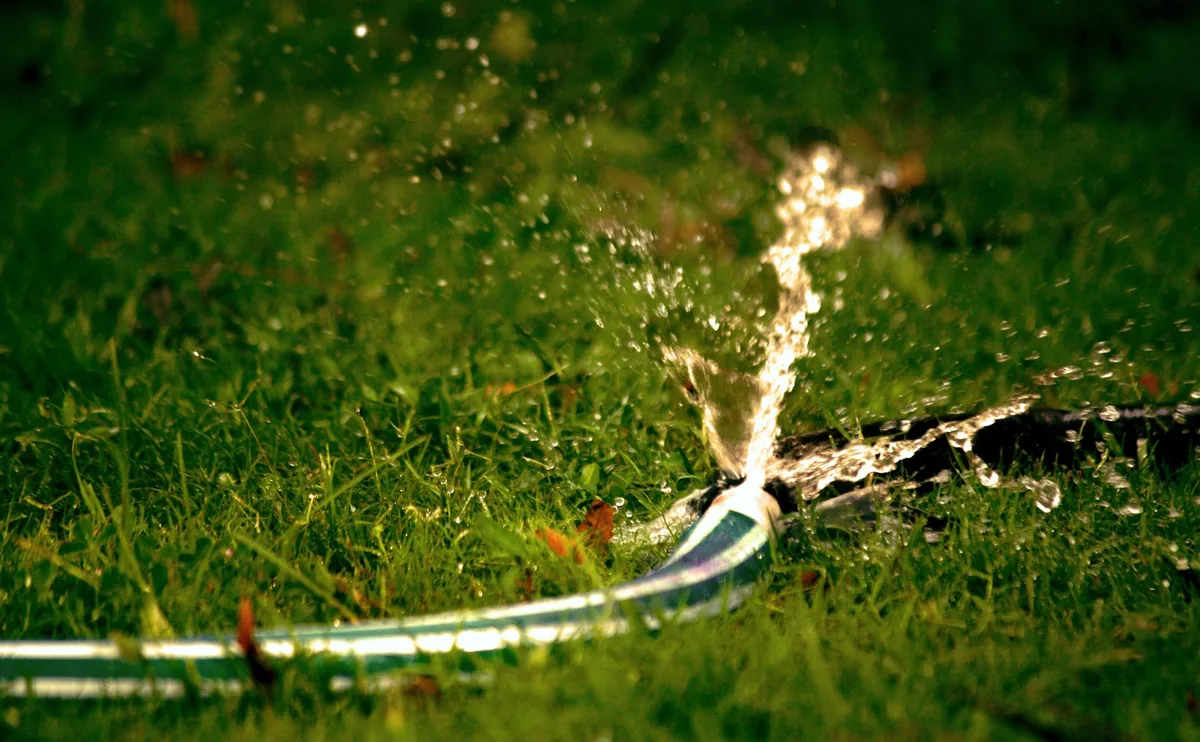
Rubber vs Vinyl vs Hybrid
Rubber is the workhorse. It resists kinks, handles hot water, and shrugs off sun better than cheap vinyl. The trade-off is weight, since rubber hoses are heavy to haul.
Vinyl (PVC) is light and cheap. It's easy to carry, but it kinks fast and gets stiff in cold weather. Aggregate reviews report vinyl hoses cracking sooner under UV exposure.
Hybrid hoses blend rubber and vinyl for a middle ground. They stay flexible in the cold and lighter than pure rubber. Polyurethane and TPE hoses are a newer lightweight option that resists kinks well.
| Material | Weight | Kink Resistance | Best For |
|---|---|---|---|
| Rubber | Heavy | High | Heavy-duty, hot water |
| Vinyl (PVC) | Light | Low | Light watering, tight budgets |
| Hybrid / TPE | Medium | High | All-purpose, cold climates |
Fittings, Couplings, and Washers
The coupling is where most hoses fail first. Brass fittings outlast plastic by a wide margin, and they resist cross-threading on the spigot.
Look for octagonal or crush-proof collars. They grip better with a wrench and won't flatten if stepped on. A cheap stamped-plastic collar strips easily.
Inside every female fitting sits a rubber washer. It's a two-cent part that stops most leaks. Keep a few spares in a drawer, because a worn washer, not the hose, causes most drips.
Best Uses for a 5/8-Inch Hose and Who Should Size Up
If your watering happens within 75 feet of the tap, 5/8" is the right call for almost everyone. That covers the bulk of suburban and small-property needs.
It's ideal for these folks:
- Home gardeners watering lawns, beds, and borders
- Car and driveway washers using a standard nozzle
- Anyone running one sprinkler or soaker line
- Renters who want one do-it-all hose
Size up to 3/4" if you fit a different profile. Long-run users past 100 feet, small-farm and livestock waterers, and pressure-washer owners all benefit from the wider bore. So does anyone feeding multiple sprinklers at once.
Step down to 1/2" only for the lightest duty. Container gardens, balconies, and short reaches near the tap don't need more. If you're dressing up borders around an awkward boundary line, a light 1/2" hose keeps things simple.
Mistakes People Make When Buying a 5/8-Inch Hose
The most common mistake is confusing inner diameter with outer diameter. Shoppers see a fat-looking hose and assume it's 5/8" when the extra bulk is just thick walls. Always check the ID printed on the jacket.
Here are the errors that trip buyers up most:
- Buying on price alone and ending up with brittle vinyl
- Ignoring fitting material and getting flimsy plastic collars
- Choosing a hose far longer than the run they actually water
- Overlooking a drinking-water-safe rating for RV or pet use
- Assuming every "5/8" label is accurate, since nominal sizing varies by brand
Length is a sneaky one. A 100-foot hose sounds convenient until you're dragging its weight and losing pressure daily. Buy the shortest length that reaches your farthest point.
Another miss is skipping the potable rating. If you'll drink from it, fill a pet bowl, or run it to a metal-grid enclosure like these wire panel setups, choose a lead-free, drinking-water-safe hose.
What a 5/8-Inch Garden Hose Costs and What Drives the Price
Price tracks material, length, and fitting quality far more than the bore itself. A 5/8" hose can be a budget buy or a premium one depending on how it's built.
Cheap vinyl hoses sit at the low end. They're fine for light, occasional watering, but they won't survive years of sun and dragging. Reinforced rubber and hybrid hoses cost more upfront and last far longer.
Three things push the price up:
- Material: rubber and polyurethane cost more than plain vinyl
- Fittings: brass couplings add a few dollars over plastic
- Warranty: lifetime and 10-year guarantees signal thicker, tougher builds
Value comes from cost per season, not the sticker. A pricier hose that lasts a decade beats replacing a cheap one every year. As of 2026, a well-built 5/8" rubber or hybrid hose remains the best long-term value for most homes.
Drinking-Water Safety and Certifications to Check
Not every 5/8" hose is safe to drink from, and that matters more than most buyers realize. Standard garden hoses can leach lead, BPA, or phthalates into the water sitting inside them.
If you'll fill a pet bowl, a kiddie pool, or an RV tank, buy a hose labeled drinking-water-safe. Look for lead-free construction and an NSF certification on the packaging.
A few markers worth checking:
- NSF/ANSI 61 compliance for potable-water components
- "Lead-free" and "phthalate-free" printed on the label
- A California Proposition 65 note, which flags chemical exposure
For general watering, a standard hose is fine. Just don't sip from it after it's been baking in the sun. Warm water pulls more chemicals out of the hose walls.
Making Your 5/8-Inch Hose Last: Kinks, Storage, and Winterizing
A good hose can last a decade if you treat it right, or fail in one season if you don't. The two biggest killers are kinks and freezing.
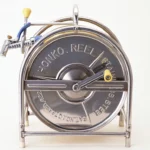
Kinks weaken the hose wall every time they fold. Store the hose on a reel or a wide hook, not looped over a nail. Coil it in big, loose loops that follow its natural curve.
Winterizing is non-negotiable in cold climates. Water left inside can freeze, expand, and split the hose or crack a fitting. Follow these steps before the first hard frost:
- Disconnect the hose from the spigot.
- Stretch it downhill or over a fence to drain fully.
- Coil it loosely once empty.
- Store it indoors, like a shed or garage.
Sun is the slower enemy. UV rays dry out rubber and vinyl over years. Keeping the hose shaded when idle buys you extra seasons.
Pro Tips for Getting the Most Flow From a 5/8-Inch Hose
Want stronger flow without buying a wider hose? Start with length. Use the shortest hose that reaches your target, since every extra foot costs you pressure.
A few more moves that pay off:
- Fully open the spigot, since a half-turned valve chokes flow at the source.
- Clear the aerator screen in the nozzle, because grit builds up and cuts pressure.
- Swap kinked or crushed fittings, as a pinched coupling strangles the bore.
- Skip stacking multiple adapters, which each add a small restriction.
Water pressure also drops if the hose lies uphill. Run it as flat as your yard allows. And check the washer first whenever flow suddenly weakens, because a swollen washer can block the opening.
Frequently Asked Questions
Is a 5/8-inch hose better than a 1/2-inch hose?
For most homes, yes. A 5/8" bore moves more water and holds pressure better over mid-length runs. A 1/2" hose is lighter and cheaper, but it's really meant for light watering near the tap.
Choose 5/8" if you want one all-purpose hose.
Does hose diameter really affect water pressure?
Diameter affects flow more than pressure. Your spigot sets the pressure, but the bore controls how much water actually reaches the nozzle. A wider inner diameter delivers more volume, especially over long runs where friction loss adds up.
That's why 5/8" outperforms 1/2" on longer stretches.
How do I measure my hose's inner diameter?
Measure the opening at a cut end, not the outer rubber. Hold a ruler or calipers across the inside of the hole. A 5/8" hose measures about 0.625 inch across the bore.
The number is often printed on the hose jacket too, so check there first.
Can I drink from a 5/8-inch garden hose?
Only if it's labeled drinking-water-safe. Standard hoses can leach lead, BPA, or phthalates, especially when warm. For pets, RVs, or kids, buy a lead-free hose with NSF/ANSI 61 certification.
Regular garden hoses are fine for watering plants, just not for drinking.
Why does my 5/8-inch hose lose pressure at the end?
Length and restrictions are the usual culprits. Longer hoses shed pressure through friction, so a 100-foot run feels weaker than a 25-foot one. Check for kinks, a clogged nozzle screen, or a swollen washer.
Opening the spigot fully often restores the flow you're missing.
The Verdict: When 5/8-Inch Is the Smart Choice
For the average yard, a 5/8" hose is the size to beat. It carries strong flow, stays light enough to drag around, and fits every standard fitting you already own. That combination is hard to argue with.
Reach for it when your watering happens within 75 feet of the tap. Lawns, beds, car washing, and single sprinklers all sit comfortably in its wheelhouse. It's the practical default for a reason.
Size up to 3/4" only for long runs, pressure washers, or multiple sprinklers at once. Drop to 1/2" only for balconies and light container work. Everyone in between is well served by 5/8".
Pick a rubber or hybrid build with brass fittings, match the length to your actual reach, and store it out of the sun. Do that, and a good 5/8" hose will quietly do its job for years.

Similar Posts