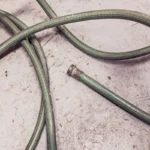
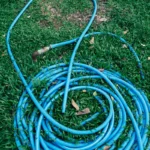
Are Rubber Garden Hoses Recyclable? What You Should Know
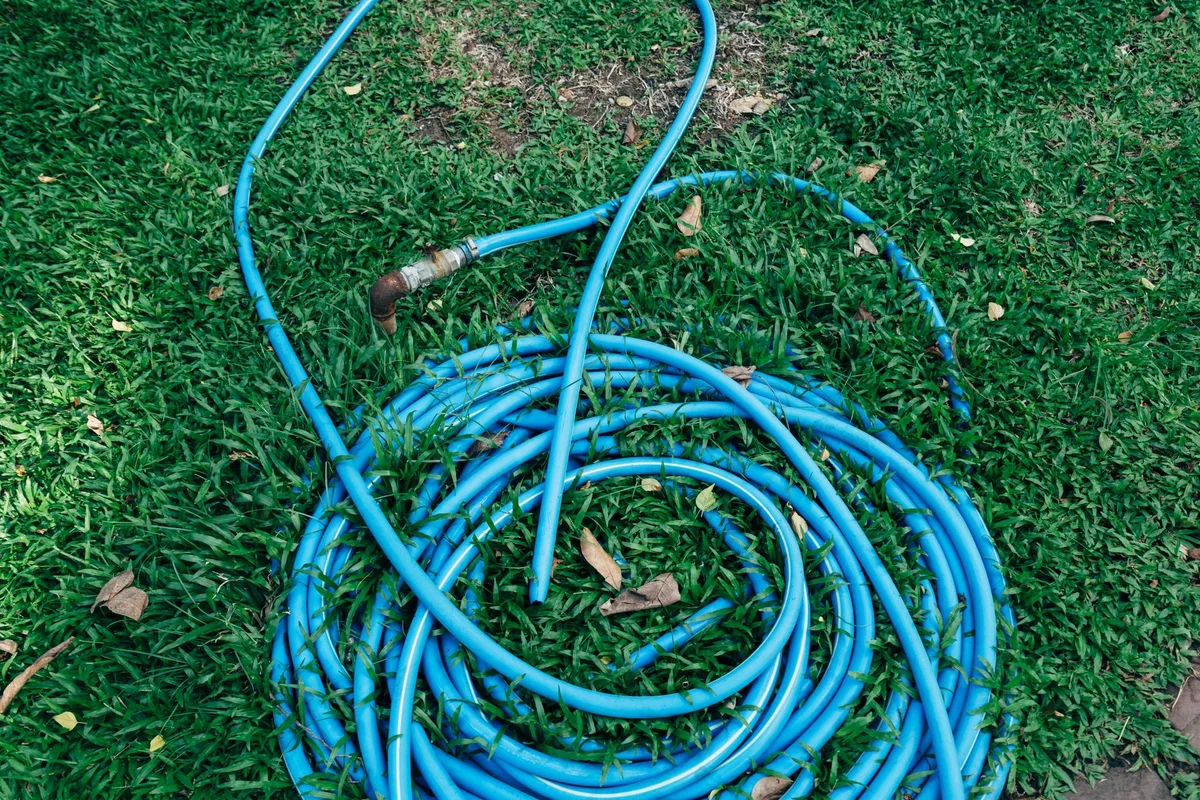
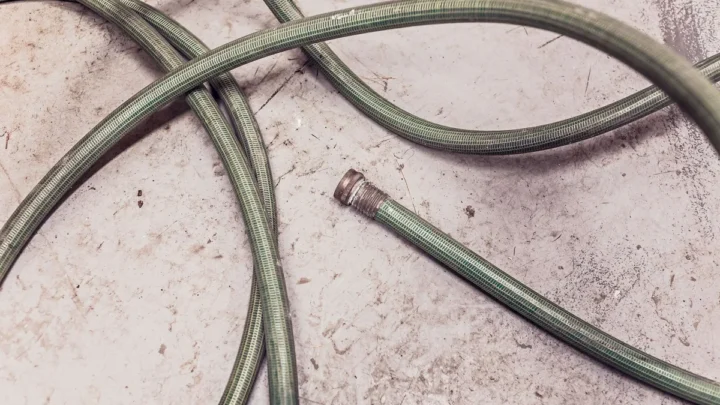
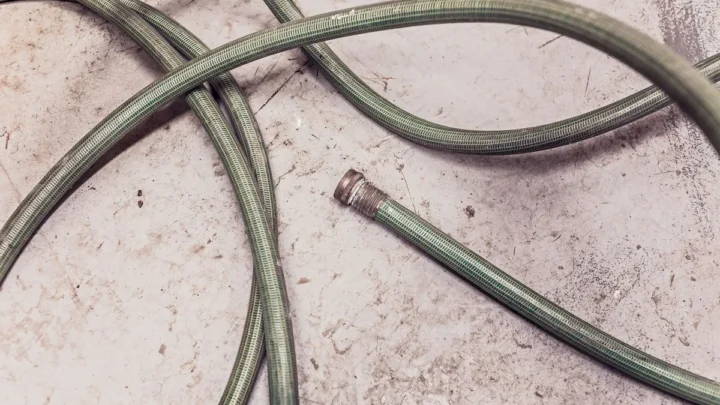
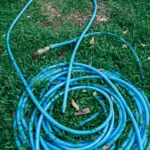
You've got an old, cracked hose coiled in the corner of the garage, and you're staring at the blue bin wondering. So here's the real question: are rubber garden hoses recyclable through your regular curbside pickup? Almost never.
But that's not the whole story, and where your hose ends up depends a lot on what it's made of.
As of 2026, the U.S. Environmental Protection Agency still lists hoses and cords among the worst "tanglers" that jam recycling machinery. That's why curbside programs reject them nearly everywhere.
The good news is you've got real options: scrap recyclers, salvage value in the fittings, and reuse projects that give the hose a second life. Let's start with the honest answer.
The Short Answer: Can You Actually Recycle a Rubber Garden Hose?
No, not the way you recycle a soda can or a cardboard box. A rubber garden hose can't go in your household recycling bin. It has to take a different route.
Here's the quick logic:
- If you're thinking curbside bin, then the answer is no. Every major program bans hoses.
- If your hose is solid rubber and still in decent shape, then a scrap rubber recycler or tire facility may take it.
- If it's cracked, moldy, or dry-rotted, then reuse or scrap salvage beats the trash.
- If it has brass fittings, then those are worth saving for the metal, no matter the hose condition.
So the honest summary is this. Whole hoses aren't recyclable through normal channels. But parts of them are, and most hoses have a useful second life left in them.
The trick is matching your specific hose to the right path.
Why Garden Hoses Get Kicked Out of Curbside Bins
Garden hoses get rejected because they wreck the machines that sort your recycling. At a Materials Recovery Facility, or MRF, everything rides along fast conveyor belts and spinning screens. A long, floppy hose wraps around those spinning parts like spaghetti on a fork.
Workers then have to stop the line and cut the tangle out by hand. That costs time and money, and it's dangerous. This is exactly why hoses share the "tangler" label with things like Christmas lights, cords, and chains.
There's a second reason too. A garden hose isn't one clean material. Most are a blend of rubber or vinyl, a reinforcing mesh, and metal or plastic fittings.
Recycling systems are built to sort single, clean materials. A mixed-up product like a hose has nowhere to go in that stream.
Tossing it in the bin anyway has a name: wishcycling. That's when you toss something in hoping it'll get recycled, but it just contaminates the batch. In some areas, enough contamination can get a whole load sent to the landfill.
So that hopeful toss can backfire on everyone's recycling.
First, Figure Out What Your Hose Is Actually Made Of
Before you decide anything, identify the material, because the answer changes based on it. A solid rubber hose has more recycling and scrap value than a cheap vinyl one. Knowing which you own tells you which branch to follow.
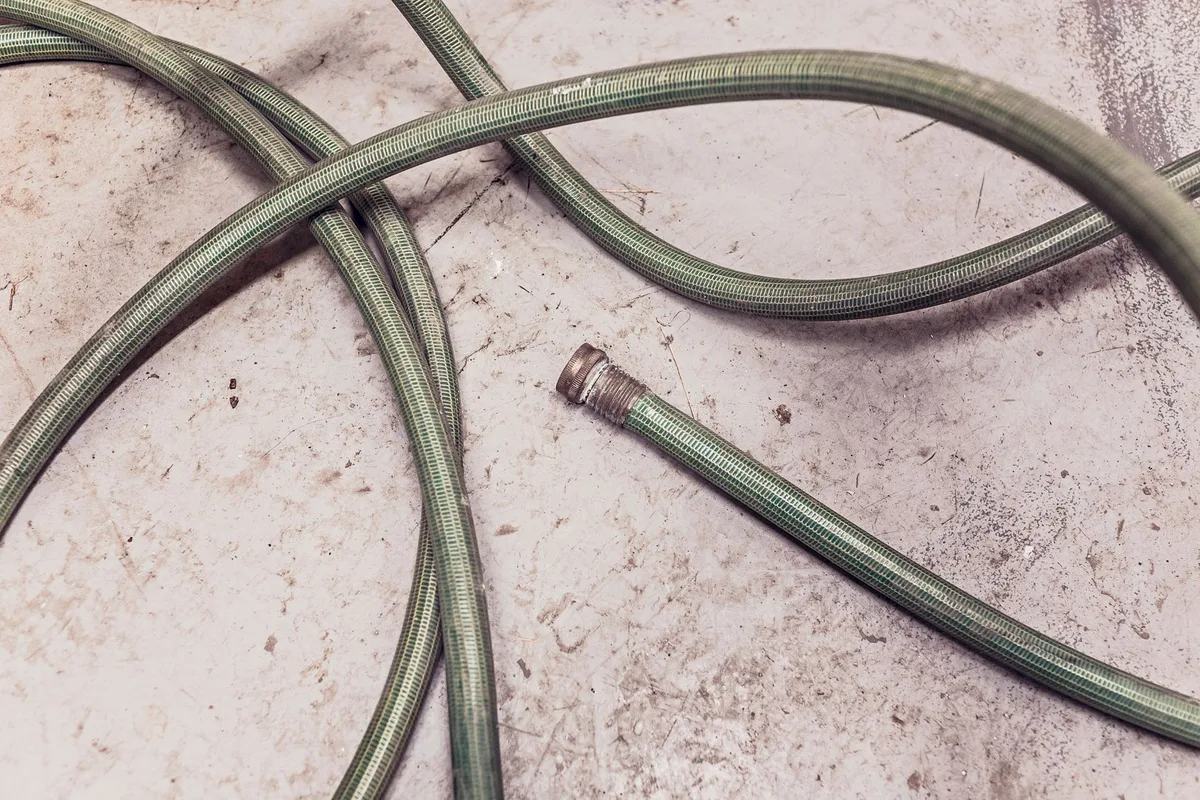
Rubber vs. Vinyl vs. Reinforced Hybrid Hoses
Cut the end of the hose or look at a cross section, and you can usually tell them apart fast.
| Hose Type | How to Spot It | Recycling Potential |
|---|---|---|
| Natural or EPDM rubber | Heavy, thick wall, dull black finish, flexible in cold | Best chance with a scrap rubber recycler |
| Vinyl (PVC) | Lightweight, shiny, kinks easily, stiff in the cold | Very low, usually landfill or reuse only |
| Reinforced hybrid | Visible mesh layer between rubber and vinyl | Hardest to recycle, mixed materials |
Rubber hoses feel dense and heavy for their size. Vinyl feels light and plasticky. If you see a woven crisscross layer inside the wall, that's the reinforcement, and it means the hose is a hybrid.
The Multi-Material Problem That Wrecks Recyclability
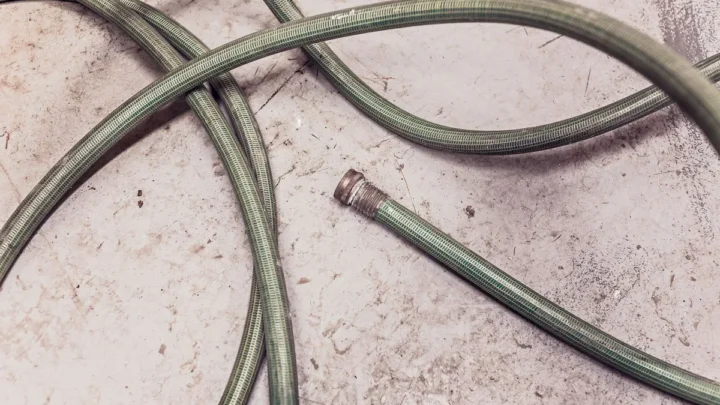
That reinforcing layer is the real villain here. A reinforced hose stacks polyester or nylon mesh between an inner tube and an outer jacket. Then it's capped with brass or plastic couplings and metal crimp bands.
To recycle it properly, you'd have to separate all those materials. That's slow, expensive, and rarely worth it. No standard recycler is going to peel a hose apart by hand.
This is the same layered-construction headache you run into with other outdoor gear, from tarps to some metal grid boundary systems that mix coatings and cores.
One more thing to check: there's no resin code on a hose. Bottles and tubs have that little number in the triangle. Hoses don't, which is another signal your curbside program was never meant to handle them.
Your Recycling Options, Branch by Branch
You've got four realistic paths, and the right one depends on your hose and what's near you. Work through them in order. The first one that fits is your answer.
Curbside Program (Almost Always a No)
Start here only to rule it out. Check your hauler's website or give them a quick call. In our research, the vast majority of municipal programs explicitly list hoses as "do not recycle" items.
If yours somehow accepts them, great, but don't count on it.
Scrap Rubber and Tire-Recycling Facilities
This is your best bet for a solid rubber hose. Facilities that process scrap tires and industrial rubber sometimes accept clean rubber hose. Call ahead and ask two things: do they take garden hose, and does it need the fittings removed.
Rubber that gets reclaimed can end up as crumb rubber for mats, mulch, or playground surfacing.
Mail-In and Manufacturer Take-Back Programs
Some specialty recyclers run mail-in programs for hard-to-recycle items. A handful of hose brands also offer take-back or trade-in options. These usually cost a small fee or shipping, so they make the most sense when you're recycling several hoses at once, or when you want to be sure it stays out of the landfill.
Salvaging the Brass Fittings for Scrap Metal
Don't overlook this one. Even a trashed hose has value at the couplings. Brass fittings are worth money at a scrap yard, sold by the pound.
- Cut the male and female fittings off both ends.
- Toss any plastic collars, keep the solid brass.
- Save them in a jar until you've got a batch worth a trip.
Brass prices shift, but scrap yards buy it steadily. It's a small payout, yet it keeps good metal in circulation instead of buried. If you like tidy, low-waste projects around the yard, you'll find plenty more in our garden how-to library.
How to Prep an Old Hose Before You Get Rid of It
A little prep makes every other option easier, whether you're recycling, donating, or repurposing. Skipping it is the most common reason a reclaimer or reuse group turns your hose away. Five minutes now saves you a wasted trip later.
Here's the simple order:
- Drain it fully. Stretch the hose out, let the water run off, then dry it so it won't grow mold in storage.
- Cut off and save the fittings. Remove the brass ends for scrap, as covered above.
- Coil it loosely. A neat coil is easier to transport and won't tangle in your car.
- Sort by condition. Set aside hoses that still hold water for donation or reuse. Send the cracked, split ones to scrap or repurposing.
- Wipe it down. If you're donating, a quick rinse and dry makes it far more likely someone says yes.
One quick tip from verified reuse-group feedback: a clean, drained hose gets snapped up on local Buy Nothing and Freecycle groups within days. A dirty, dripping one sits forever. Presentation matters, even for a giveaway.
And if the hose still works, holding onto it for a garden task often beats recycling it at all.
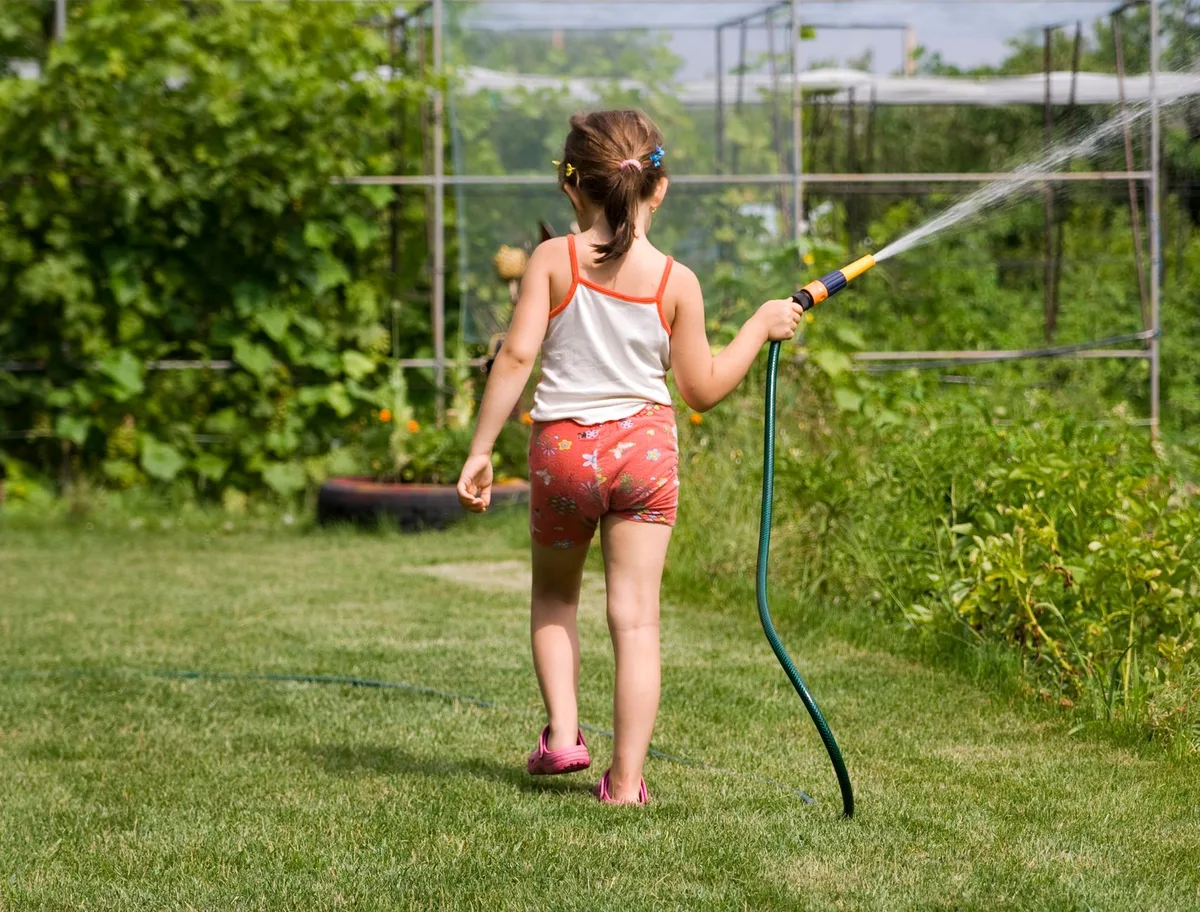
Repurpose It Instead: Reuse Projects That Actually Work
If your hose still holds pressure, reuse beats recycling every time. It skips the trip, costs nothing, and solves a garden problem you already have. Here are the projects that genuinely pay off.
Turn It Into a Soaker Hose or Drip Line
This is the best second life for an old rubber hose. Poke small holes every few inches along one side with a nail or drill bit. Cap the far end, hook up the good end, and lay it along your beds.
Water now seeps out slowly, right at the roots. That means less evaporation and deeper watering than a sprinkler. It works well tucked behind privacy-friendly fence plantings where a sprinkler can't reach.
A cracked hose is fine here, since leaks are the whole point.
Everyday Fixes Around the Yard and Garage
Short leftover sections solve a dozen small problems. Cut, slit, and slide them wherever you need padding or grip.
- Slit a length and slip it over a bucket handle for a softer grip.
- Wrap it around a tree stake so the tie doesn't cut the bark.
- Pad the edge of a sharp tool or a saw blade for storage.
- Coil a piece as a kneeling pad for planting.
- Protect chains or cables from rubbing where they cross metal.
None of this needs the hose to be watertight. That's why even a dry-rotted hose earns its keep before the trash. For more low-cost yard ideas, our cottage-style border guide pairs nicely with these fixes.
When the Landfill Is the Honest Answer
Sometimes the trash really is the right call, and that's okay. If your hose is a cheap vinyl one, badly degraded, with no scrap facility nearby, forcing it into recycling helps no one. A rejected load does more harm than one hose in the bin.
Go the landfill route when all three of these are true:
- The hose is vinyl or a shredded hybrid, not solid rubber.
- No local scrap rubber or mail-in program will take it.
- It's too far gone for any reuse project.
Even then, pull the brass fittings off first. That one habit keeps good metal out of the ground. Bag the rest for your bulky-waste or general-waste pickup, not the recycling bin.
Common Mistakes That Cause Wishcycling
The biggest mistake is tossing a hose in the blue bin and hoping. We covered why that jams the sorting line, but a few other slip-ups trip people up too. Avoiding them saves you time and keeps recycling clean.
- Leaving the fittings on. You lose the brass value and add metal to a rubber load.
- Recycling it wet. Trapped water breeds mold and gets donations rejected.
- Assuming all hoses are rubber. Vinyl looks similar but has almost no scrap value.
- Cutting it into short bits for the bin. Small pieces still tangle and still aren't accepted.
- Skipping the phone call. Facility rules vary, so a two-minute call prevents a wasted trip.
Feedback from recycling coordinators points to the same theme. Most contamination comes from good intentions, not laziness. A quick check beats a hopeful guess.
What Your Local Rules and Region Change About the Answer
Your zip code changes everything, because there's no national rule for hoses. What one city bans, the next town might collect at a special drop-off. Always confirm locally before you act.
In the US, curbside is run by your city, county, or private hauler. Each sets its own list. Scrap rubber and tire facilities cluster near bigger metro areas, so rural readers may drive farther for that option.
In the UK, kerbside collection is set by your local council. Hoses are usually a household waste recycling centre item, not a kerbside one, so check your council's page before you load the car.
Season matters too. Spring and fall garden cleanups flood facilities with yard gear. Call ahead during those peaks, since drop-off hours and acceptance can tighten.
This regional patchwork is the same reason boundary and fencing choices vary so much from one area to the next.
Buying Smarter Next Time: Hoses That Last and What Happens at End of Life
The greenest hose is the one you don't replace for a decade. A quality rubber hose outlasts several cheap vinyl ones, so it cuts waste at the source. Spending more upfront usually means fewer hoses in the landfill later.
Here's how the common types stack up for lifespan and end-of-life:
| Hose Type | Typical Lifespan | End-of-Life Options |
|---|---|---|
| Solid rubber | 5 to 10 years | Scrap rubber, brass salvage, reuse |
| Vinyl (PVC) | 2 to 5 years | Mostly reuse or landfill |
| Reinforced hybrid | 4 to 7 years | Reuse, brass salvage, limited scrap |
When you shop, look for solid rubber construction and brass fittings, not plastic. Store the hose out of direct sun and drain it before winter. UV and freezing are what crack hoses early, so basic care doubles their life.
Treat a hose like a long-term tool, not a throwaway. Buy once, maintain it, and repurpose it when it finally quits. That mindset does more for your waste footprint than any recycling bin, and it fits right in with a low-waste approach to greener indoor and outdoor spaces.
Frequently Asked Questions
Can I put a garden hose in my recycling bin if I coil it up neatly?
No. A coiled hose still tangles the spinning screens at a sorting facility, and it's still a mixed-material item with no resin code. Coiling only makes it easier to carry to a scrap yard or drop-off.
Your curbside bin will reject it either way.
Are rubber hoses worth anything as scrap?
The rubber itself has little cash value, but the brass fittings do. Scrap yards buy brass by the pound, so cutting the couplings off is worth the effort. The rubber body may still be accepted for free at a scrap rubber or tire facility.
That keeps it out of the landfill even without a payout.
How can I tell if my hose is rubber or vinyl?
Pick it up and check the wall. Rubber hoses feel heavy, thick, and stay flexible in cold weather. Vinyl hoses are light, shiny, and kink easily, especially when it's cold.
A cut cross section shows rubber's dull, dense wall versus vinyl's thin, glossy one.
What's the most eco-friendly thing to do with an old hose?
Reuse it before you recycle it. Converting it to a soaker hose or cutting it into padding and grips keeps it working with zero processing. Reuse always beats recycling on your waste footprint.
Save recycling and scrap for hoses that are truly finished.
Will a specialty program really take my hose by mail?
Some will, for a fee. A few hard-to-recycle recyclers and certain hose brands run mail-in or take-back options. They make sense when you have several hoses or want a guaranteed non-landfill route.
For a single cheap hose, local reuse or scrap is usually the smarter choice.
Your Quick Decision Guide: What to Do With That Old Hose
Run your hose through these questions in order. Stop at the first yes, and you've got your answer.
- Does it still hold water? If yes, reuse it or donate it. That's the greenest and cheapest path.
- Is it too damaged to hold pressure? If yes, repurpose the pieces into soaker lines, grips, or padding.
- Is it solid rubber with no reuse left? If yes, call a scrap rubber or tire facility.
- Does it have brass fittings? Always cut and save those for scrap metal, whatever else you do.
- Is it degraded vinyl with no facility nearby? If yes, the general or bulky waste bin is the honest call.
The one rule that never changes: keep it out of the curbside recycling bin. That single habit protects the sorting machines and keeps everyone's recycling clean. Everything else just depends on what you're holding and what's near you.

Similar Posts