Torn Leaves & Small Holes: Squirrels or Insects to Blame?
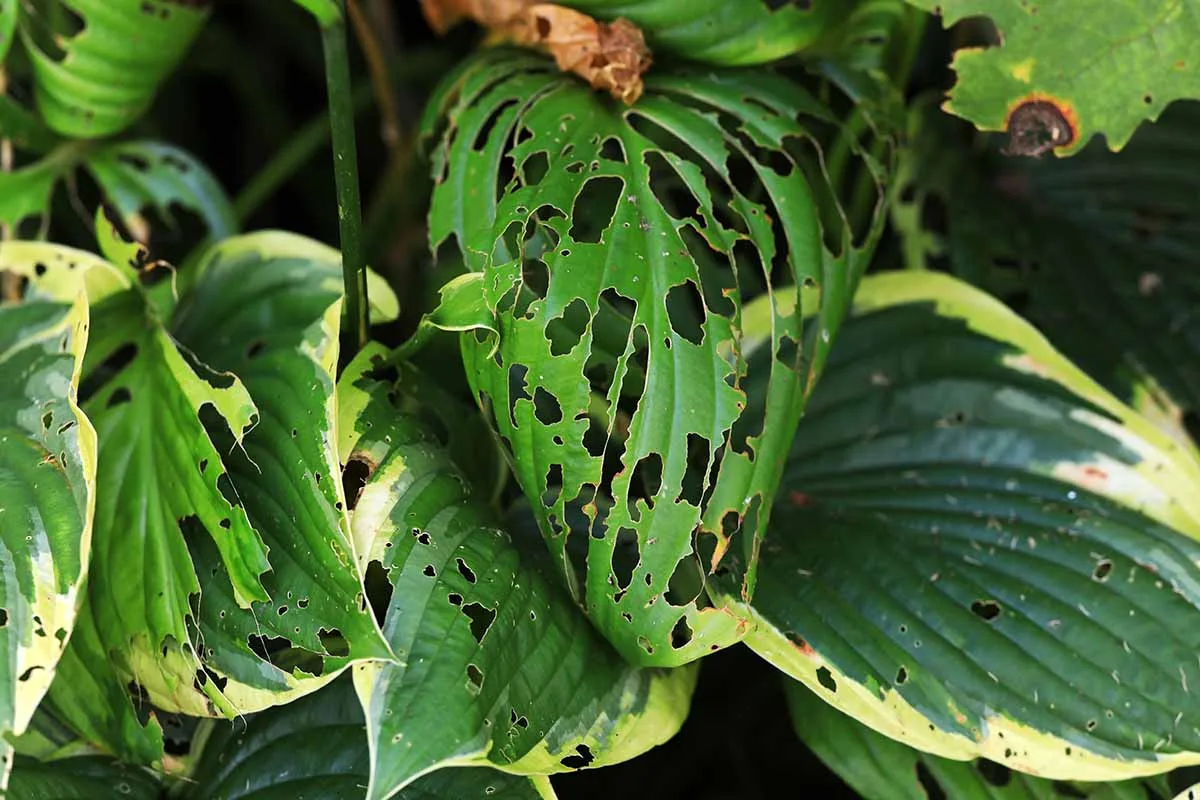
Are torn leaves and small holes caused by squirrels or insects? Both can chew your plants, but the damage patterns look very different once you know what to check. Squirrels rip, tear, and clip whole pieces off.
Insects graze in tiny, patterned bites.
As of 2026, university extension programs still list mistaken pest ID as the top reason for wasted garden treatments. Guidance from the University of California Statewide IPM Program shows a spray aimed at the wrong culprit almost always fails. Below, we'll walk through the visual tells that quickly separate mammal damage from insect damage.
Quick Answer
Torn leaves and small holes usually point to different culprits. Ragged tears, clipped stems, and dropped leaf pieces suggest squirrels. Small round holes, skeletonized tissue, and frass point to insects.
Squirrel bite marks measure roughly 5 to 10 mm wide. Insect bites are typically under 3 mm.
Why Correct ID Matters Before You Reach for a Spray
Wrong ID leads to wrong action. Spraying insecticide won't stop a squirrel. Bird netting won't stop caterpillars.
The plant keeps losing leaves while you spend on the wrong fix.
The stakes stack up fast:
- Money wasted on treatments that never touch the real pest
- Continued damage while the true culprit keeps feeding
- Harm to bees and beneficial insects from needless pesticide use
- Legal limits on some vertebrate controls in urban areas
Match the fix to the culprit, or the damage returns within days. That's why the visual read comes first, before anything else.
The Fast Visual Test: Squirrel Damage vs. Insect Damage at a Glance
You can usually settle the question in under a minute. Look at the size, the shape, and the location of what's been eaten.
| Signal | Squirrel | Insect |
|---|---|---|
| Bite scale | 5 to 10 mm gouges | Under 3 mm bites |
| Edge quality | Ragged, torn like paper | Clean, scalloped, or lacy |
| Missing pieces | Whole leaves, petioles, fruit | Small patches, dots, holes |
| Debris nearby | Fur, gnawed leaf halves | Frass pellets, silk, slime |
| Timing | Dawn and dusk | Overnight (slugs) or midday (beetles) |
| Height on plant | Waist height and above | Any level, often undersides |
If most rows lean one column, you have your answer. If signals split, the plant may have both.
What Squirrel Damage Actually Looks Like
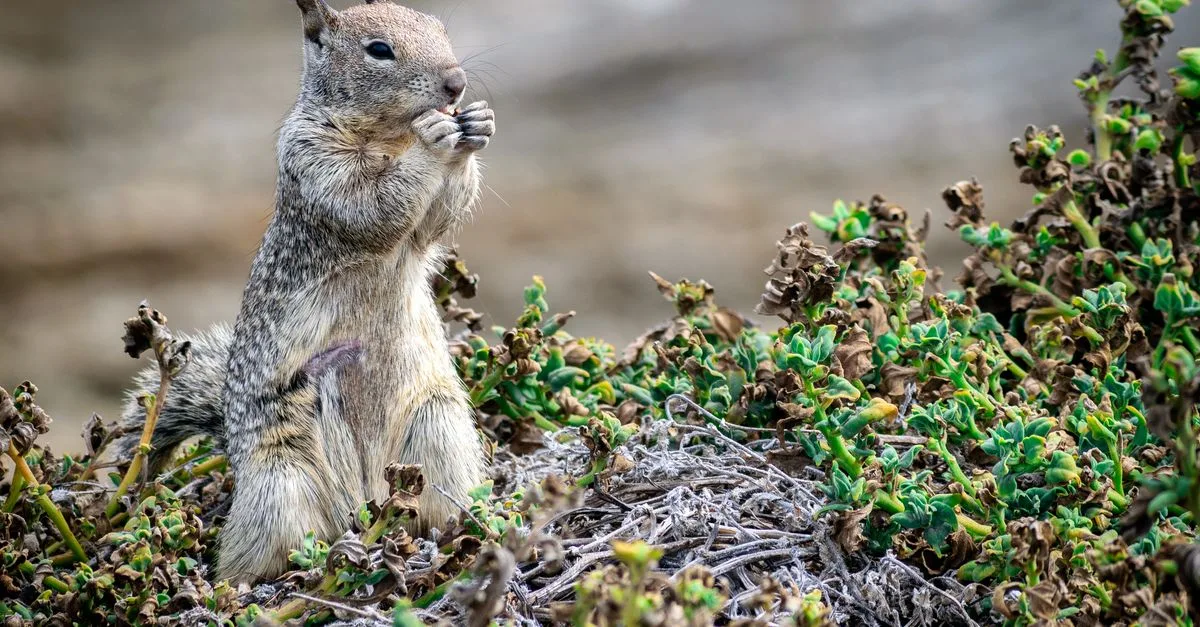
Squirrels don't nibble. They bite, tear, and haul off what they want in a single visit. You'll often see the aftermath scattered on the ground below the plant.
The 45-Degree Petiole Cut and Ragged Tears
Squirrels use their incisors like garden shears. The result is a clean, angled cut on stems and petioles, often at roughly 45 degrees. Leaves themselves look ripped, not evenly grazed.
Edges appear torn, with fibers dangling.
This is the single most reliable squirrel signature. A clean angled cut on a stem, with the missing leaf lying nearby, almost never means insects.
Dropped Leaf Fragments, Tooth Marks, and Damage Height
Look down at the soil. Squirrels drop half-eaten leaves, chewed buds, and bitten fruit under the plant. That litter of fresh green pieces is a giveaway.
Tooth marks on green tomatoes or apples show two parallel gouges, roughly 2 to 3 mm apart per incisor pair. Damage tends to sit from about knee height up, along stems and branches a squirrel can climb.
What Insect Damage Actually Looks Like
Insect damage is smaller, more patterned, and often more subtle. You usually see many bites of similar size, not one big rip.
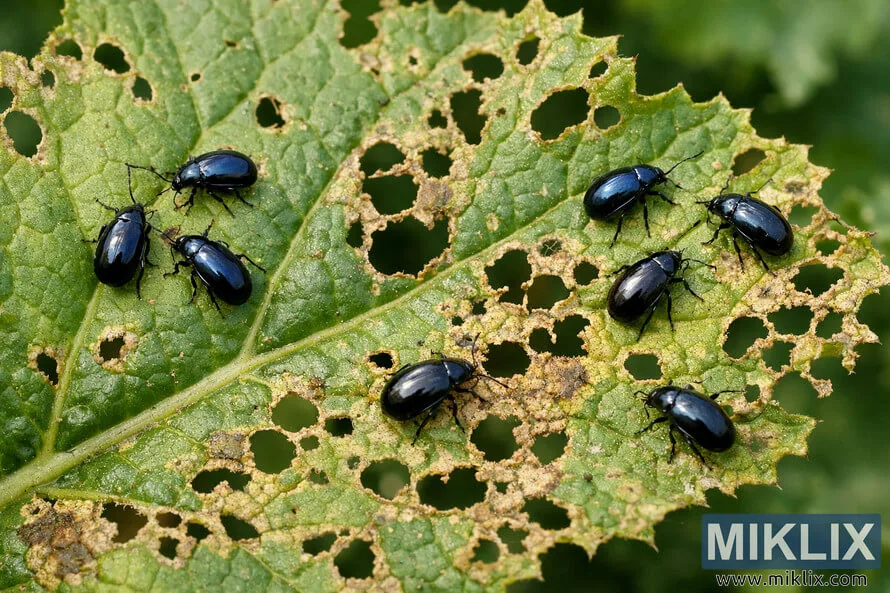
Shot Holes, Skeletonization, and Windowpane Patches
Each insect leaves a distinct pattern. Learn these five and you'll ID most cases:
- Flea beetles: pinprick shot-holes, 1 to 2 mm across, scattered like buckshot
- Caterpillars: irregular chewed patches with fairly clean margins
- Japanese beetles: leaves stripped to lace, veins left intact
- Sawfly larvae: windowpane patches of thin, translucent tissue
- Leaf miners: pale winding tunnels visible inside the leaf itself
Two dozen small identical holes almost never mean squirrels. That regularity is an insect signature.
Frass, Silk Webbing, Slime Trails, and Mine Tunnels
Insects leave calling cards a squirrel never does. Frass is tiny pellet droppings, often colored like what the pest ate. Silk webbing points to leafrollers, tent caterpillars, or spider mites.
Silver slime trails on leaves or soil mean slugs or snails. Serpentine pale trails inside the leaf mean leaf miner larvae are still working. Check the undersides too, since many insects and their eggs hide there.
Bite Radius: The One Measurement That Settles Most Arguments
Grab a ruler or a pair of digital calipers. Bite size alone rules out one side of the argument in seconds.
| Feeder | Typical bite mark | What to look for |
|---|---|---|
| Squirrel (incisor pair) | 5 to 10 mm gouges | Two parallel scrape marks |
| Caterpillar | Under 3 mm per bite | Consistent chew radius |
| Flea beetle | 1 to 2 mm round holes | Scattered pinpricks |
| Slug or snail | 3 to 8 mm ragged holes | Silver slime nearby |
| Earwig | 2 to 5 mm irregular holes | Damage after dark, plant intact by day |
The rule of thumb: if a single bite mark is wider than a pencil eraser, you're looking at a mammal, not a bug. If bites are all tiny and repeat across the leaf, it's insects.
Time of Day and Season: When Each Culprit Feeds
Timing narrows the suspect list fast. Different feeders show up on different clocks.
- Squirrels: most active at dawn and dusk, with peak raiding in late summer and autumn caching season (September to November)
- Slugs and snails: overnight, especially after rain or watering
- Earwigs: strictly nocturnal, hiding by day in mulch or under pots
- Japanese beetles and flea beetles: warm, sunny hours between mid-morning and mid-afternoon
- Caterpillars: often feed at night, though many chew through the day
- Deer and rabbits: dawn and dusk, occasionally overnight
Fresh damage that appears while you're asleep points to slugs, earwigs, or caterpillars. Damage that shows up mid-morning while you're inside the house often means squirrels or beetles.
Season matters too. Spring damage often ties to nesting squirrels and young caterpillars. Autumn spikes usually mean squirrels caching food before winter.
Plant-by-Plant Clues (Tomatoes, Sunflowers, Hostas, Fruit Trees)
Different plants attract different pests, and each one gives away the culprit in a slightly different way.
Tomatoes:
- Green tomatoes with one big bite and two visible tooth gouges: squirrel
- Fruit hollowed from inside with a dark cavity: tomato hornworm caterpillar
- Small pinprick holes on new leaves: flea beetles
Sunflowers:
- Whole flower heads clipped off at the stem: squirrel
- Seeds gone but head intact: birds or squirrels foraging
- Chewed leaf edges with black frass on lower foliage: sunflower moth larvae
Hostas:
- Whole leaves gone or entire crown ripped up: squirrel or rabbit
- Irregular holes with silver slime trails: slugs
- Ragged edges without slime: earwigs or vine weevils
Fruit trees (apple, plum, peach):
- Fruit with paired incisor gouges and bark chewed along branches: squirrels
- Fruit with small entry holes and internal tunnels: codling moth larvae
- Leaves rolled and stitched with silk: leafrollers
Ornamentals (dahlia, hibiscus):
- Buds and blooms clipped clean off overnight: squirrels or deer
- Petals riddled with small holes: earwigs or beetles
If damage fits more than one pattern on the same plant, treat the largest, freshest bite marks as the primary suspect. Smaller pests often follow the first attacker into the wound.
Look-Alikes: Rabbit, Deer, Vole, Bird, and Slug Damage Compared
Squirrels aren't the only mammal chewing your garden. Sort them apart by height, cut style, and calling cards.
| Culprit | Cut style | Height on plant | Signature clue |
|---|---|---|---|
| Squirrel | Clean 45-degree, ragged tears | Waist high and above | Dropped fragments, climbing paths |
| Rabbit | Clean 45-degree slice | Below 24 inches | Round dark pellet droppings |
| Deer | Torn, jagged ends | 2 to 6 feet up | Split hoof tracks, browsed tips |
| Vole | Gnawed bark at soil line | Below 3 inches | Runways in grass, girdled stems |
| Bird | Pecks, not chews | Anywhere | Missing seeds, no leaf tearing |
| Slug | Rasped holes | Low, damp foliage | Silver slime trails |
Deer damage looks torn because deer lack upper incisors and rip the tissue. Rabbits leave a razor-clean angled cut because they have full upper incisors, just like squirrels. The tiebreaker is height and location.
Voles chew bark at the base of shrubs and young trees, often under snow or mulch. If your leaves are fine but the stem is stripped near the soil, think vole, not squirrel.
Common Mistakes People Make When Reading Leaf Damage
Even experienced gardeners misread the signs. These are the errors that show up most often.
- Assuming any hole in a leaf means bugs. Squirrels punch small holes too when they bite through folded leaves.
- Missing the slime trail. Slug damage looks identical to earwig damage until you check for silver residue at sunrise.
- Ignoring the ground. The debris under the plant is often more diagnostic than the plant itself.
- Blaming caterpillars for petiole cuts. Caterpillars almost never sever a stem cleanly at 45 degrees.
- Treating one plant only. If a pest is hitting one tomato, it's likely hitting neighbors too.
- Reaching for broad-spectrum sprays. These kill beneficial insects and do nothing to a mammal.
- Skipping the underside of leaves. Aphids, mites, and eggs live there and often escape a top-down inspection.
- Confusing hail or wind damage for pests. Storm damage leaves torn tissue with no bite pattern and no droppings.
Slow down on the first inspection. A five-minute check with good light usually beats a fast guess and a wrong spray.
How to Confirm the Culprit in 24 Hours
If the visual read is unclear, a short surveillance window settles it. This is standard practice from most university extension programs, including Cornell Cooperative Extension.
Step by step:
- Photograph the current damage with a coin or ruler in frame for scale
- Clear all obviously damaged leaves, so any new damage is fresh evidence
- Sprinkle a light dusting of flour or fine soil at the base of the plant to catch tracks
- Set a motion-activated wildlife camera facing the plant, or a phone on time-lapse
- Check at sunrise and sunset the next day
- Look for footprints, fresh droppings, slime, and new bite marks
- Compare the fresh bite radius against the ruler in your photo
What the evidence tells you:
- Five-toed tracks and dropped debris: squirrel
- Small oval pellets and low browsing: rabbit
- Silver trails at dawn: slugs or snails
- No tracks, no slime, but new pinprick holes by afternoon: flea beetles
- Frass appearing overnight below foliage: caterpillars
Twenty-four hours of clean observation almost always names the pest. Only after that should you commit to a control method.
Matching the Fix to the Damage: Exclusion, Repellents, and Targeted Controls
Once you know the culprit, the fix is straightforward.
For squirrels:
- Hardware cloth cages (1/2-inch mesh) around ripening tomatoes and young transplants
- Chicken wire cylinders on sunflower heads once seeds start filling
- Capsaicin-based repellents on foliage (reapply after rain)
- Motion-activated sprinklers along raid paths
- Removing bird feeders within 30 feet of vegetable beds
For insects:
- Bacillus thuringiensis (Bt) for caterpillars, applied to leaf surfaces
- Iron phosphate baits for slugs and snails, spread at dusk
- Floating row cover on brassicas from planting until harvest
- Handpicking Japanese beetles into soapy water at dawn
- Neem oil or insecticidal soap for soft-bodied insects like aphids
Match the tool to the pest. Netting stops mammals but often traps beneficial pollinators, so use mesh sized for the target. Bt only affects caterpillar larvae, so it spares bees, ladybugs, and lacewings when used correctly.
If squirrels and insects both hit the same plant, tackle the squirrel first. Exclusion cuts the biggest bites and lets targeted insect controls do their job on smaller pests.
Legal and Safety Notes Before You Trap, Spray, or Deter
Rules on squirrel control vary by state and country. In the US, tree squirrels are classed as game animals in many states, so trapping and relocation often need a permit from the state fish and wildlife agency. Guidance from the USDA Animal and Plant Health Inspection Service explains which vertebrate controls need federal or state authorization.
In the UK, grey squirrels are listed as an invasive species under the Wildlife and Countryside Act 1981. Live release after capture is illegal. Check with Defra or your local council before setting any trap.
For pesticides, only apply EPA-registered products labeled for edible crops if the plant is food. Follow the label interval before harvest. Never spray when bees are active on open flowers.
Quick Reference Chart: Damage Signs and Likely Culprit
Keep this chart handy for the next mystery bite.
| Damage sign | Likely culprit | Confirm with |
|---|---|---|
| Ragged tears, 45-degree stem cut | Squirrel | Dropped leaf debris, dawn or dusk activity |
| Small round shot-holes (1 to 2 mm) | Flea beetles | Tiny jumping beetles on foliage |
| Skeletonized leaf, veins intact | Japanese beetles | Metallic green beetles clustered on top |
| Irregular chewed patches | Caterpillars | Green frass pellets under leaves |
| Silver slime trail, ragged holes | Slugs or snails | Slime visible at sunrise |
| Winding pale tunnels inside leaf | Leaf miners | Trails widen at one end |
| Rolled leaves stitched with silk | Leafrollers | Larva inside the roll |
| Clean angled cut, low on plant | Rabbit | Round dark pellets nearby |
| Bark stripped at base | Vole | Runways in grass or mulch |
Match two rows before you commit to a treatment. One clue can mislead, two rarely do.
Frequently Asked Questions
Do squirrels eat tomato leaves or just the fruit?
Squirrels usually target the fruit, but they'll chew leaves and stems too, especially in dry weather when they need moisture. You'll often see torn foliage along the same stem where a green tomato has vanished. Leaf damage without fruit damage is more often caterpillars or flea beetles.
Why does my plant have holes but no bugs on it?
Many chewing insects feed at night and hide by day, so daylight inspections often turn up nothing. Check the undersides of leaves, the mulch, and the soil surface at dawn or after dark with a flashlight. Slugs, earwigs, and cutworms are the usual culprits when the plant looks eaten but empty.
How can I tell squirrel damage from rabbit damage?
Both leave a clean 45-degree cut, so height is the tiebreaker. Rabbits stay below about 24 inches and leave round dark pellet droppings. Squirrels reach higher, climb stems, and drop fresh leaf fragments on the ground rather than pellets.
If browsing runs from ground level to head height, suspect a squirrel.
Will pesticides stop a squirrel from eating my plants?
No, insecticides have no effect on squirrels or any other mammal. You need physical exclusion, a taste repellent like capsaicin, or a motion deterrent. Applying pesticide against a mammal wastes money, harms beneficial insects, and leaves the squirrel free to keep feeding.
What eats hostas at night in one big bite?
Whole leaves gone overnight almost always mean a mammal, most often deer, rabbits, or squirrels. Slugs and earwigs leave holes and ragged edges, not entire missing leaves. Set a camera or check for tracks, droppings, and browsing height the next morning to name the exact culprit.
Are torn petioles always a squirrel sign?
A clean angled cut on a petiole is the strongest squirrel signature, though rabbits leave the same cut on shorter plants. Insects almost never sever a petiole. If the cut looks like it came from small scissors and the leaf is lying nearby, mammal damage is the safe call.

Similar Posts