Is a 5/8-Inch Garden Hose Its Inside or Outside Diameter?
Does a 5/8-inch garden hose size refer to inside diameter or outside diameter? Yes, and it means the inside diameter. That's the opening water flows through, not the total width including the rubber or vinyl walls.
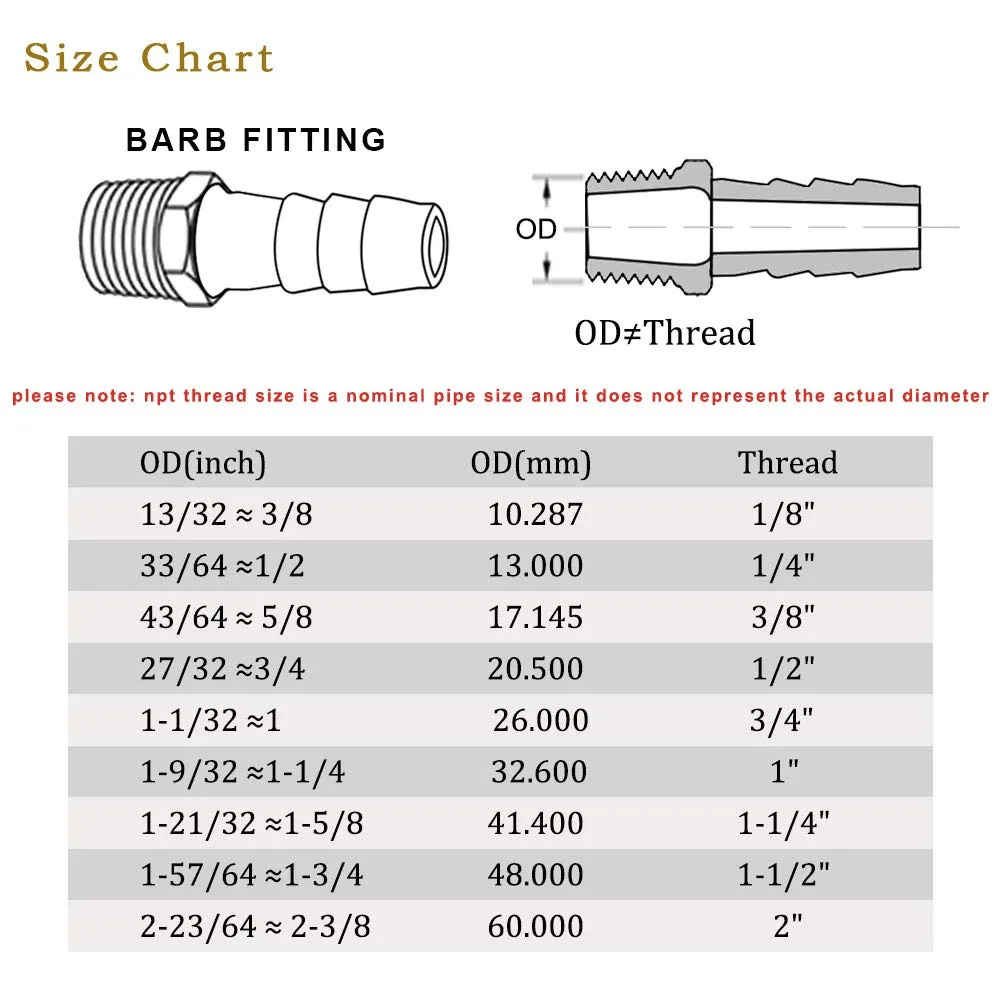
Manufacturers label hoses by their internal flow diameter because that's what determines how much water moves per minute. A 5/8-inch hose with thin walls might measure 0.85 inches across the outside. A heavier model with thick reinforced walls could hit 0.92 inches outside.
But both still deliver the same flow rate.
If you're trying to match a new hose to existing sprinkler fittings, this distinction matters more than you'd think. See how garden hoses are actually measured for a fuller breakdown of the trade-name system.
Source: Web (Bing) / buzzlyo.com (Web image (fair-use with source credit))
That's why buying by flow needs beats buying by connector size alone. A 5/8-inch hose will give you noticeably better gallons-per-minute than a 1/2-inch hose. But if your sprinkler head uses 1/2-inch threads, you'll need an adapter regardless of the hose size you pick.
Understanding nominal sizing comes before making that purchase decision.
How Garden Hose Sizing Really Works
Garden hose sizes follow a naming convention that dates back decades. The number stamped on the box, 3/8, 1/2, 5/8, 3/4, refers to the nominal inside diameter. It never means the exact measurement in inches.
That's the first thing most buyers miss.
Nominal sizing lets manufacturers build hoses with different wall thicknesses while keeping the same trade name. A lightweight vinyl 5/8-inch hose might have walls only 1/16 inch thick. A heavy-duty rubber model could pack walls up to 1/4 inch thick.
The outside diameters end up wildly different. The inside diameter stays roughly the same.
Source: Web (Bing) / exyhgjebd.blob.core.windows.net (Web image (fair-use with source credit))
The real variation shows up in manufacturing tolerance. Most quality brands hold their ID within ±1/16 inch of the nominal size. That means a "5/8-inch" hose could measure anywhere from 9/16 inch to 11/16 inch inside.
Cheaper models sometimes stretch that tolerance even further. Always check the spec sheet if flow matters to you.
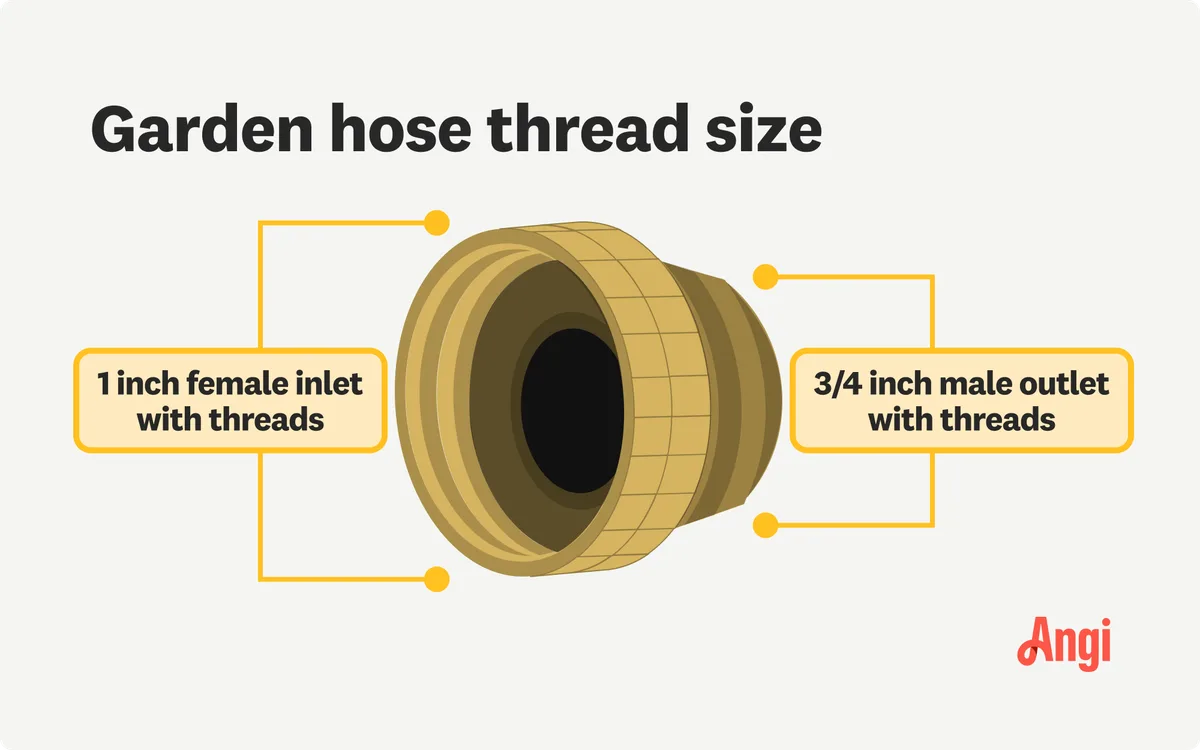
Standard garden hose threads, called GHT, are separate from the hose ID entirely. A GHT connector measures 3/4 inch by 11.5 threads per inch on the outside. That thread size is universal across all hose diameters.
You can connect a 1/2-inch hose to a 3/4-inch nozzle without any adapter. The threads match regardless of how wide the hose itself is.
This disconnect between hose ID and connector thread is what causes the most confusion at the hardware store. People assume bigger hose means bigger threads. They don't.
Knowing that separation helps you stop second-guessing every purchase.
What Size Hose You Actually Need (Decision Guide)
Choosing the right hose size comes down to two questions. First, what flow rate do you need? Second, what connectors are you working with?
Answer both and the decision becomes straightforward.
| Your Situation | Recommended Hose Size | Why |
|---|---|---|
| Watering flower beds with a gentle spray | 1/2 inch | Lightweight and easy to handle |
| Running a standard sprinkler system | 5/8 inch | Best balance of flow and manageability |
| Filling a pool or running multiple zones | 3/4 inch | Maximum residential flow capacity |
| Connecting to a pressure washer | Check specs | Some demand smaller ID |
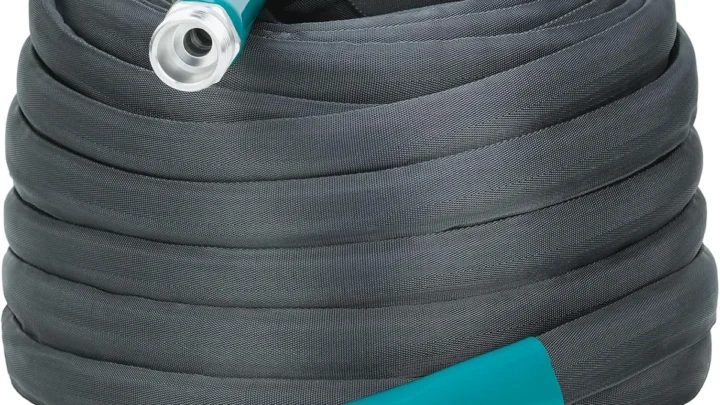
A 5/8-inch hose delivers roughly double the cross-sectional area of a 1/2-inch hose. That translates to significantly higher flow at the same water pressure. If you've ever watched a 1/2-inch hose struggle to fill a above-ground pool, you know why this matters.
Source: Web (Bing) / walmart.com (Web image (fair-use with source credit))
However, bigger isn't always better. A 3/4-inch hose can weigh twice as much as a 5/8-inch version when fully extended. That stiffness makes it harder to drag around the yard.
If your main task is basic garden watering, a 5/8-inch model gives you 90 percent of the flow with far less effort.
Your faucet's supply line also factors in. Most residential spigots feed 3/4-inch pipes internally. They can support full flow through a 5/8-inch hose without restriction.
Older homes with narrow supply lines might bottleneck even a small hose. If your water pressure feels weak at the spigot, upgrading the hose won't fix it.
Check whether your existing setup already matches the hose size you want. If you're replacing a worn 1/2-inch hose, moving up to 5/8-inch usually pays off. Just verify that your connectors accept the new diameter.
Most do, but some connectors have tighter tolerances than others.
Real Scenarios: Matching Hose Size to Your Setup
You're standing in the garden center holding two hoses. One says 1/2-inch. The other says 5/8-inch.
Both cost roughly the same. Here's how to pick without guessing.
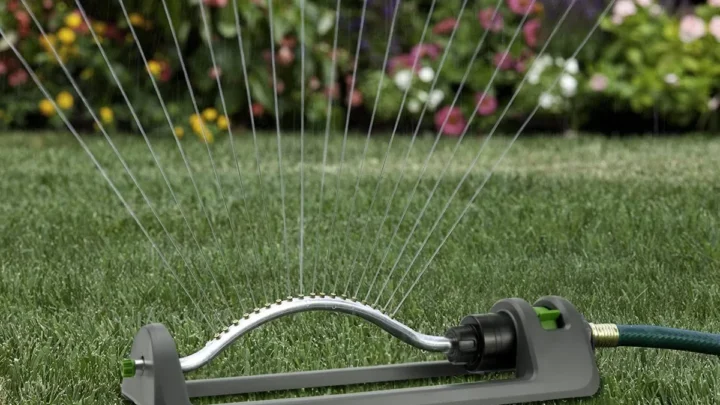
Scenario one: You water a quarter-acre lawn with oscillating sprinklers. The sprinklers sit 50 feet from your spigot. A 1/2-inch hose works fine here, but a 5/8-inch hose cuts your fill time nearly in half.
You'll notice the difference immediately. Your grass gets watered faster. You spend less time moving the sprinkler around.
Scenario two: You have a mix of light and heavy tasks. Some days you mist herbs. Other days you fill a rain barrel.
A 5/8-inch hose covers both without complaint. It handles gentle spray just as well as high-flow filling. The extra diameter doesn't hurt performance at low flow.
It only helps at high flow. This flexibility makes it the smart default for most homeowners.
Scenario three: Your sprinkler system uses compact drip emitters rated for 1/2-inch input. A 5/8-inch hose will still work if you add a reducer fitting. But you're adding a potential leak point.
In this case, sticking with 1/2-inch keeps your setup simpler and more reliable. Sometimes the smaller hose is actually the better call.
Source: Web (Bing) / thewateringvine.com (Web image (fair-use with source credit))
Scenario four: You're connected to a pump system rather than a house spigot. Pumps generate pressure differently than municipal water. A larger hose ID reduces friction loss and lets the pump perform closer to its rated output.
If you run a garden pump regularly, sizing up to 5/8-inch or 3/4-inch matters more than it does for faucet-only setups.
The key insight across all four scenarios is this: match the hose to your highest-demand task, not your lowest. If you occasionally fill a large container or run multiple sprinklers, size for that peak need. You'll rarely regret extra flow.
You'll often regret struggling with too little.
Mistakes Homeowners Make With Hose Sizing
Most sizing mistakes stem from one assumption: that the number on the box tells the whole story. It doesn't. Here's where people go wrong and how to sidestep each trap.
Mistake one: Assuming nominal size equals actual size. A 5/8-inch hose rarely measures exactly 0.625 inch inside. Wall thickness eats into that dimension. Budget hoses with thick walls can shrink the ID to 9/16 inch or less.
If flow matters, look past the label and check the actual ID on the spec sheet.
Mistake two: Buying the biggest hose without checking weight. A 75-foot 3/4-inch rubber hose can weigh over 20 pounds when full of water. That's not a hose you want to drag around a garden. Pick the smallest size that still handles your peak flow demand.
Heavier hoses also kink less, so weight isn't always a pure downside.
Mistake three: Ignoring connector compatibility before purchasing. You might buy a 5/8-inch hose only to discover your sprinkler head has 1/2-inch threads. Adapters exist, but each one adds cost and a potential failure point. Measure your existing connectors before you buy.
A quick caliper check saves a trip back to the store.
Mistake four: Expecting a larger hose to fix low water pressure. If your spigot flows slowly, a wider hose won't change that. The restriction lives upstream, inside your home's plumbing. Upgrading to a 5/8-inch or 3/4-inch hose only reveals the true flow ceiling your supply line can deliver.
Diagnose the pressure issue first. Then size the hose accordingly.
Mistake five: Overlooking hose length as a flow factor. A 100-foot 5/8-inch hose loses more pressure to friction than a 25-foot one. Long runs benefit from larger diameters. If your yard demands 100-plus feet of hose, size up to 3/4-inch to compensate for friction loss.
That's why hose length and diameter interact so closely.
Mistake six: Confusing hose ID with thread size. These are two separate measurements. The 3/4-inch GHT thread fits every standard garden hose connector regardless of whether the hose is 1/2-inch or 5/8-inch inside. Mixing these up causes unnecessary confusion at the checkout line.
Keep them distinct in your head.
Each of these mistakes is fixable with a little pre-purchase research. Check the specs. Measure your connectors.
Know your flow needs. The rest follows naturally.
Frequently Asked Questions
Does 5/8-inch mean exactly 0.625 inches inside?
No. The nominal label allows for manufacturing variance. A quality 5/8-inch hose typically measures between 9/16 and 11/16 inch inside.
Always check the manufacturer's actual ID specification if precise flow matters for your project.
Will a 5/8-inch hose fit my 1/2-inch sprinkler?
Usually yes. Garden hose threads are standardized at 3/4-inch by 11.5 threads per inch regardless of the hose's internal diameter. The connector will thread on.
You may want a reducer if the sprinkler body itself is narrow.
Does a thicker hose wall reduce water flow?
It can. Thicker walls mean less internal space for water to pass through. Two 5/8-inch hoses from different brands can have noticeably different flow rates if their wall thicknesses vary.
Compare actual IDs rather than relying on the nominal label alone.
Is a 5/8-inch hose better than a 1/2-inch hose?
For most tasks, yes. The larger diameter delivers roughly double the cross-sectional flow area. The trade-off is added weight and stiffness.
If you only water a small garden, 1/2-inch is lighter and easier to handle. Choose based on your heaviest typical use.
Should I buy a 3/4-inch hose instead?
Only if you regularly run high-flow tasks like filling pools or operating multiple sprinklers simultaneously. A 3/4-inch hose moves significantly more water but weighs considerably more. Most homeowners get the best value from a quality 5/8-inch model.
Can I use a larger hose if my faucet is small?
Yes. The hose ID doesn't need to match your faucet pipe size. Your faucet's supply line sets the maximum flow available.
A larger hose simply lets you use more of that flow without restriction. It won't create water your plumbing can't deliver.
FAQs About Garden Hose Sizes
What's the difference between nominal and actual hose size?
Nominal size is the trade name stamped on the box. Actual size is the real measurement you'd get with calipers. A 5/8-inch nominal hose might measure 0.56 inches inside due to thick walls.
The nominal label stays constant while the actual ID changes with construction quality.
Can I mix different hose sizes on one line?
Yes, you can connect different sizes using couplings or adapters. But each transition creates a small restriction point. Flow rate drops slightly at every size change.
For best results, keep your entire run the same diameter whenever possible.
How do I measure my garden hose at home?
Use calipers or a ruler to measure the inside opening with the hose disconnected from anything. Press the ends flat first, then measure across the circle. For outside diameter, measure around the full circumference and divide by pi.
Writing down both numbers helps you compare brands accurately.
Does hose length affect flow rate more than diameter?
Both matter, but diameter has a bigger impact. Doubling the hose diameter quadruples flow capacity. Doubling the length only halves it.
A short 3/4-inch hose flows more than a long 1/2-inch hose in most cases.
Should I store my hose coiled or hung up?
Both work if you follow the right method. Coiling a 5/8-inch or larger hose loosely prevents kinks that permanently damage the inner liner. Hanging on a reel keeps it straight and ready.
Avoid tight coils smaller than 12 inches in diameter.
What causes a hose to feel like it has low flow?
Several things can restrict flow: kinks in the hose, partially closed valves, clogged nozzles, or an undersized hose for your task. Your home's supply pressure also sets the ceiling. Start by checking for kinks and cleaning the nozzle before blaming the hose itself.
Is there a standard for garden hose thread size?
Yes. Garden Hose Thread, or GHT, measures 3/4 inch by 11.5 threads per inch in the US and Canada. This standard applies regardless of the hose's internal diameter.
A 1/2-inch hose and a 5/8-inch hose both use the same connector threads.
How often should I replace a garden hose?
Replacement depends on usage and storage conditions. A well-maintained hose lasts 5 to 10 years. Cracks, persistent kinks, and leaks that won't seal indicate it's time for a new one.
Proper maintenance can extend hose life significantly. Check the manufacturer warranty for expected lifespan guidelines.

Similar Posts