How to Increase Water Pressure in Your Garden Hose
If you've ever turned on the outdoor tap and watched water dribble out when you needed a real spray, the fix is usually closer than you think. Figuring out how do I increase water pressure in my garden hose comes down to one thing: finding exactly where the pressure is being lost. There are four possible causes, and the right fix depends entirely on which one applies to you.
Normal residential water pressure sits between 40 and 80 PSI, according to the American Water Works Association. Below 40 PSI at your outdoor faucet, something specific is causing that drop. Here's how to trace it.
Quick Answer
To increase water pressure in your garden hose, start by measuring PSI at the outdoor faucet with a hose bib gauge. Pressure below 40 PSI at the bare tap points to a source supply, PRV, or well system issue. Normal tap pressure means the hose, nozzle, or a leaking coupling is the real culprit.
Common fixes include widening hose diameter, shortening the run, clearing a blocked nozzle screen, or installing an inline booster pump.
Why Your Garden Hose Has Low Pressure (And Where the Problem Actually Lives)
Low hose pressure is a symptom, not a single problem. It can come from four completely different places, and each one needs a different fix.
Here's where pressure gets lost:
- Your water source: municipal supply or a well system delivering under 40 PSI at the tap
- The outdoor faucet or hose bib: corroded valve, only partially open, or restricted by a backflow preventer
- The hose: too narrow, too long, kinked, or leaking at a connector
- The nozzle or end fitting: clogged filter screen, worn washer, or an overly restrictive spray pattern
Most low-pressure problems trace back to the hose or nozzle. Jumping straight to fixes without testing first means you'll likely solve the wrong problem. Use the diagnosis section below to find your exact cause in under five minutes.
Step One: Test Your Actual Pressure Before Touching Anything
A hose bib pressure gauge is the right starting point. These gauges screw directly onto your outdoor faucet, cost $8 to $20, and give you a PSI reading in seconds. Without one, every fix you try is guesswork.
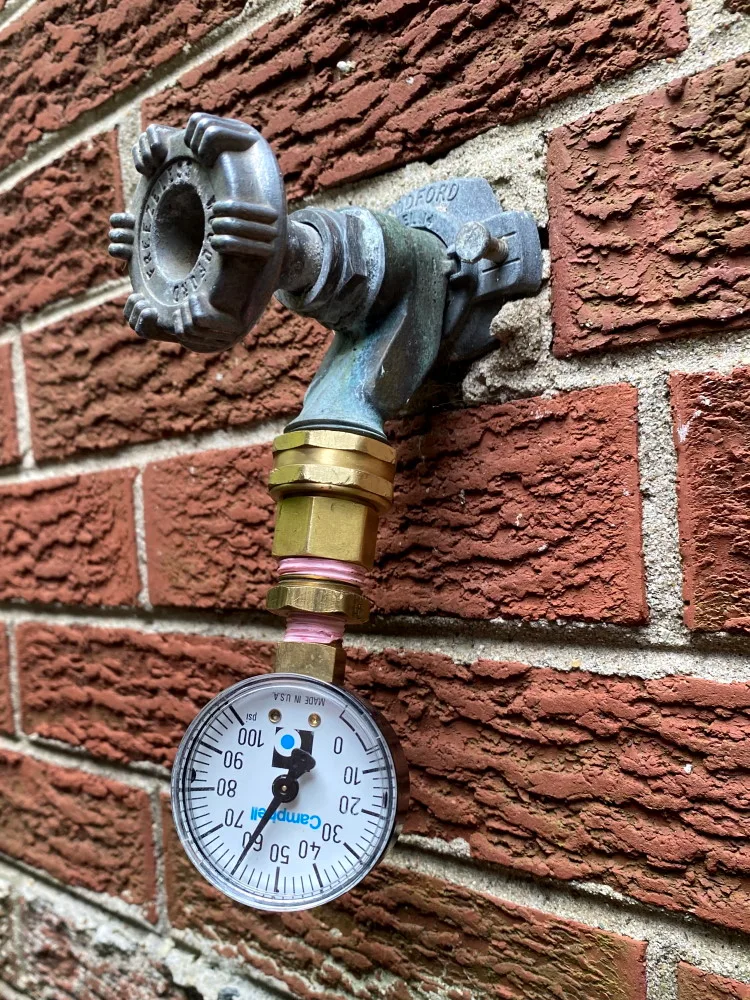
Attach the gauge to the bare faucet with no hose connected, open the valve fully, and note the reading. Then use this table to understand what you're seeing:
| PSI Reading | What It Tells You |
|---|---|
| 40–80 PSI | Normal supply pressure. Focus on the hose, nozzle, or couplings. |
| Below 40 PSI | Low source pressure. Investigate the PRV, well pump, or municipal supply. |
| Above 80 PSI | Too high. Can stress fittings, hose connections, and indoor plumbing. |
| Builds then drops fast | Possible waterlogged well pressure tank. |
Now attach your hose and retest. If pressure drops the moment the hose is connected, the hose is your problem. If pressure was already low before the hose went on, the issue lives upstream.
Run one more check: test a second outdoor faucet if you have one. All taps low? It's a source or PRV issue.
One tap weak while others flow normally? That specific faucet or its supply pipe is the culprit.
The Four Root Causes of Low Garden Hose Pressure
Low Source Pressure (Municipal or Well Supply)
A gauge reading below 40 PSI at the bare faucet confirms that supply pressure is genuinely low. On a municipal system, your home's pressure reducing valve (PRV) is the first component to check. It sits on the main supply line where water enters the house, shaped like a bell or dome with an adjustment screw on top.
Over time, the internal spring and seat wear, causing the set pressure to drift downward.
On a well system, the pressure switch on the pump sets the cut-in and cut-out PSI. Common factory settings are 30/50 or 40/60. A waterlogged pressure tank, where the internal bladder has failed, causes pressure to build fast and then drop sharply under any demand.
The Outdoor Faucet or Hose Bib Is the Bottleneck
Supply pressure can be perfectly fine while the outdoor faucet itself creates the restriction. Old hose bibs develop mineral scale inside the valve over years of use. Frost-free sillcock valves, common in colder climates, restrict flow if they're not opened fully counterclockwise.
A backflow preventer fitted to the faucet can also reduce flow. These devices are required in many municipalities to protect drinking water from contamination. An aging or partially stuck backflow preventer acts like a built-in flow restrictor until it's cleaned or replaced.
The Hose Itself Is Killing Your Flow
This is the most common cause, and it usually comes down to diameter, length, or a physical restriction.
Water loses pressure as it travels through any hose due to friction. A longer, narrower hose loses significantly more pressure than a short, wide one. Upgrading to a larger inner diameter makes the biggest practical difference on runs over 50 feet.
The full numbers are in the comparison table further down.
Expandable hoses are particularly vulnerable. They work under normal supply pressure but collapse and choke when supply is weak. Leaking couplings also bleed pressure at every joint.
Replacing a worn fitting at the hose end is one of the quickest and cheapest fixes available.
The Nozzle or End Fitting Is the Culprit
A blocked nozzle filter screen is one of the most missed causes of weak spray. Most hose nozzles include a small mesh filter inside the inlet that fills with grit and mineral deposits over time.
If pressure is fine at the bare hose end but drops when you attach the nozzle, the nozzle is your problem. Jump straight to Fix 4.
One note: if you're running low-flow watering setups like soaker hoses or drip emitters, those systems are designed to operate at 8 to 15 PSI. Weak output in that context is intentional, not a fault worth chasing.
How to Diagnose Which Problem You Have (Decision Flowchart)
Work through these steps in order. Each one takes about 60 seconds.
Step 1: Measure pressure at the bare faucet (no hose attached)
- Below 40 PSI? Supply pressure is the problem. Jump to Fix 1.
- 40 PSI or higher? Move to Step 2.
Step 2: Make sure the outdoor valve is fully open
- Fully open, then retest. Pressure improved significantly? The valve was throttled. You're done.
- Still weak with the hose attached? Move to Step 3.
Step 3: Test with a shorter hose or remove the hose entirely
- Better pressure on a short hose? Your hose is too long or too narrow. Jump to Fix 3.
- Still weak at the nozzle end? Move to Step 4.
Step 4: Remove the nozzle and test bare-end flow
- Strong flow without the nozzle? The nozzle is blocked or too restrictive. Jump to Fix 4.
- Still weak? Inspect every coupling for dripping or spraying. Jump to Fix 3 (leaks section).
Step 5: Test at a second outdoor faucet
- Only one tap is weak? That faucet or its supply pipe is the problem. Jump to Fix 2.
- All outdoor taps are weak? Source or PRV is the issue. Jump to Fix 1.
Fix 1: When Your Source Pressure Is Too Low
A reading below 40 PSI at the bare faucet confirms the supply side is the problem. Here are the three fixes, starting with the most common.
Adjusting or Replacing the Pressure Reducing Valve (PRV)
Your PRV sits on the main water supply line, typically near the meter or where the line enters the house. It's recognizable by its dome or bell shape and the adjustment bolt on top.
Most PRVs leave the factory set between 45 and 60 PSI. Turning the adjustment screw clockwise raises pressure. Make small incremental turns and test with your gauge after each one.
Don't raise the PRV above 70 PSI. The EPA's WaterSense program recommends household pressure at or below 60 PSI to protect pipes, fixtures, and appliances from stress. If the PRV doesn't respond to adjustment or keeps drifting back low, the valve itself needs replacing.
Parts run $25 to $75. Many local plumbing codes require a licensed plumber for this work, so check your jurisdiction first.
Fixing Low Pressure on a Well System
The pressure switch controls when the pump kicks on and off. Moving from a 30/50 setting to 40/60 gives noticeably more usable pressure for outdoor tasks. A 50/70 setting is possible on some systems but requires confirming the pump can handle the higher demand without running continuously.
The pressure switch involves electrical components. If you're not comfortable working around those, a well service technician is the right call.
A waterlogged tank is a separate problem. If pressure builds fast and drops immediately when you open a tap, the tank's internal bladder has likely failed. Recharging the air via the Schrader valve on the tank can help temporarily.
Replacing the tank is the permanent fix.
Installing an Inline Garden Hose Booster Pump
When adjusting source pressure isn't practical, an inline booster pump is the most direct workaround. These compact electric pumps connect between your outdoor faucet and hose, boosting pressure before water reaches the nozzle.
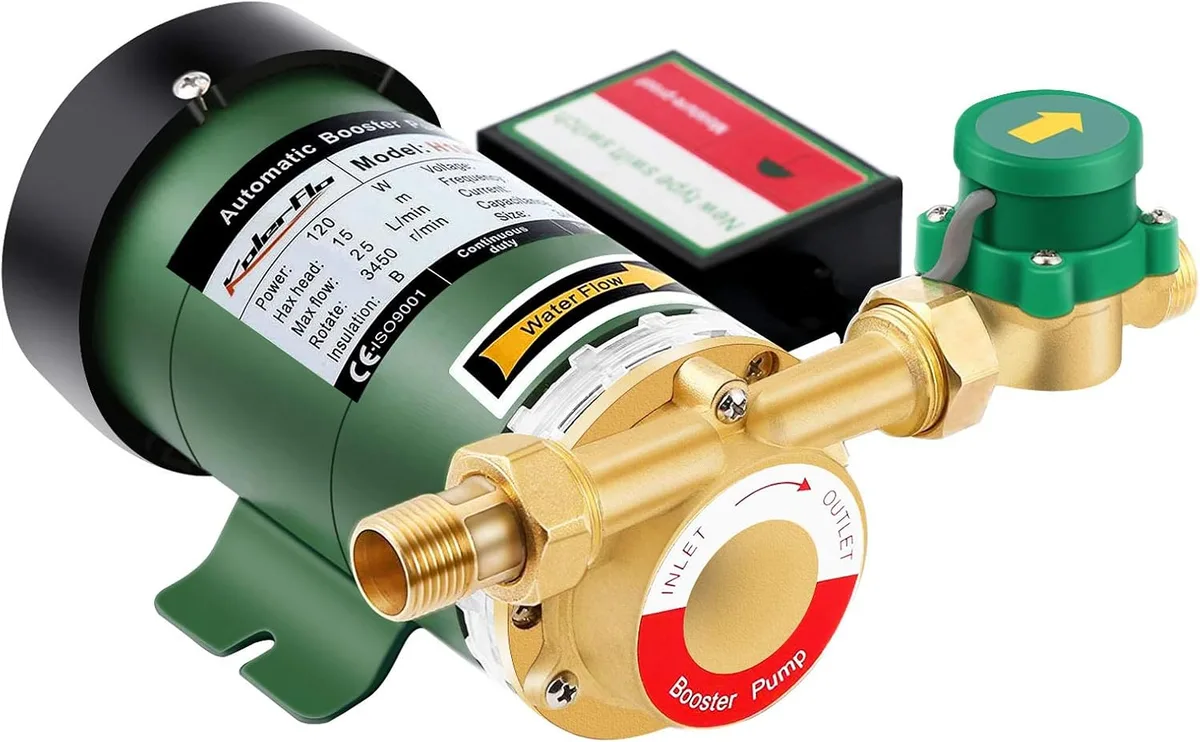
Most units output 40 to 70 PSI and deliver 1 to 2 GPM. Pricing as of 2026 runs from $50 to $300 depending on flow capacity. They require a nearby power outlet and are a practical option for renters or anyone who can't modify the main plumbing.
One firm limit: a booster pump amplifies existing flow. It can't generate pressure from nothing. If supply is barely moving at all, a pump won't solve that.
Fix 2: When the Outdoor Faucet Is the Problem
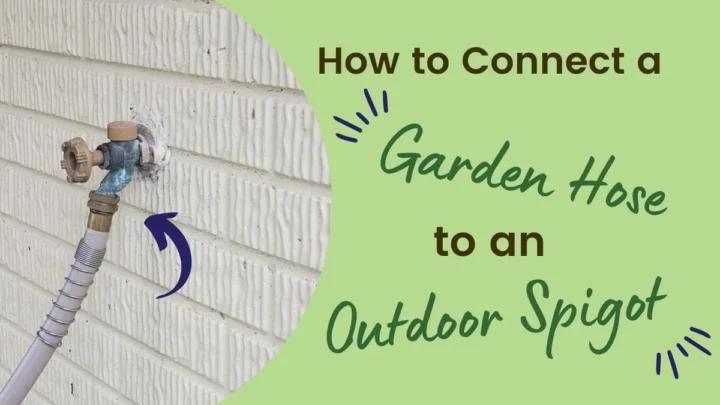
Start by confirming the faucet is fully open. Outdoor spigots, especially frost-free sillcock valves, need a complete counterclockwise rotation. A partially open valve restricts flow before water even enters the hose.
If full opening doesn't help, mineral scale inside the valve seat is likely the cause. Replacing an aging hose bib costs $10 to $30 in parts and takes about an hour. If the fitting is seized or the hose won't break free from the tap, dealing with a stuck outdoor connection is worth sorting before attempting valve work.
A backflow preventer can also choke flow quietly. Remove it, rinse the internal screen, and reinstall. If the internal check valve is seized, a replacement unit is the cleaner fix.
Fix 3: When the Hose Is Restricting Your Flow
Upgrade to a Larger Inner Diameter Hose
Switching from half-inch to three-quarter-inch hose is the biggest pressure gain available without touching the plumbing. The larger bore cuts friction loss dramatically on runs over 50 feet. For users covering a wide garden area from a single connection, this is usually the fix that delivers the clearest improvement.
Shorten Your Hose Run to Recover Lost Pressure
Every extra 25 feet costs you PSI. Use the shortest hose your task allows. If that's not practical, adding a second outdoor tap closer to where you need water is a longer-term solution worth considering.
Fix Leaks, Kinks, and Damaged Couplings
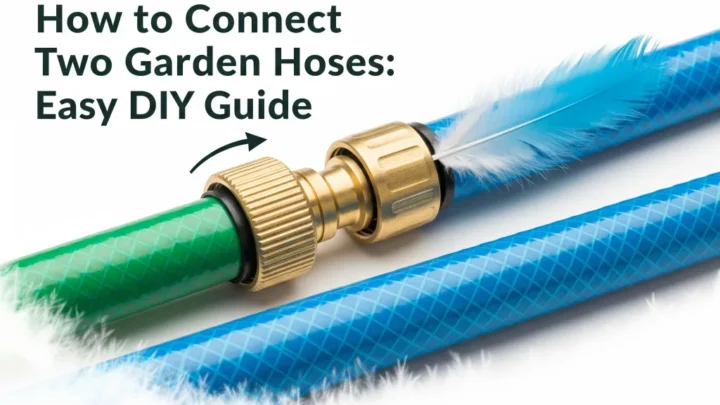
Inspect the hose from end to end for kinks, collapsed sections, and leaking joints. Kinks are easy to fix: straighten the hose and store it on a reel between uses. Leaking couplings need a washer replacement or new fitting.
A hose with multiple damaged joints is worth replacing outright rather than patching repeatedly.
Fix 4: When the Nozzle or End Fitting Is Blocked
Remove the nozzle and check the inlet screen. Hold it up to light: if you can barely see through it, soak it in white vinegar for 20 to 30 minutes, then rinse. Mineral scale dissolves quickly and the screen is usually good as new.
While the nozzle is off, check the rubber washer at every coupling. A cracked or missing washer lets pressure escape through a small gap. Replacement washers cost pennies and fix the problem immediately.
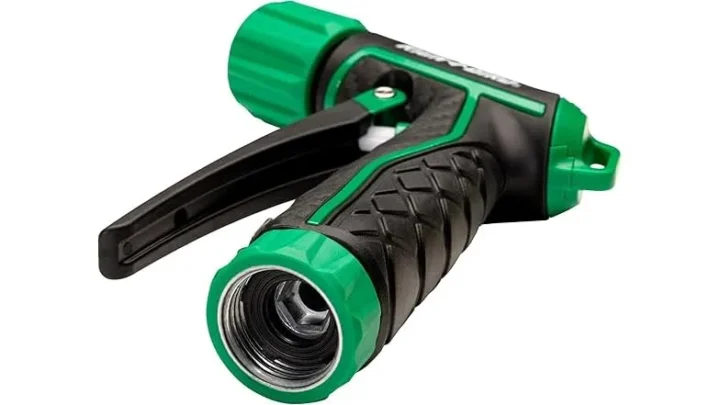
If the screen is clear and washers are intact but pressure is still weak at the nozzle, the orifice itself is too restrictive. Switching to a standard trigger nozzle with a wider outlet often restores sufficient spray strength without any other changes.
Hose Size vs. Pressure: What the Numbers Actually Mean
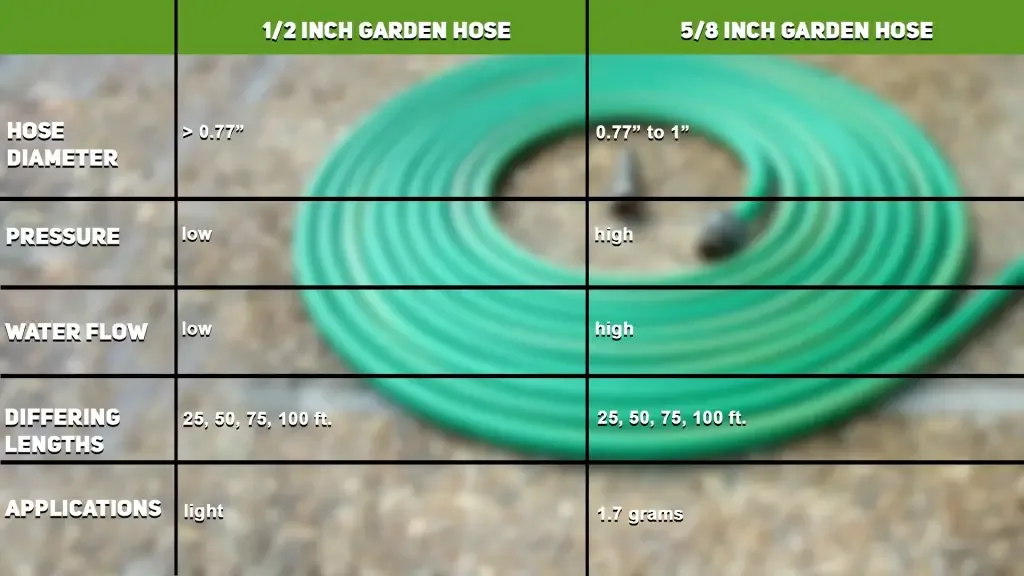
Hose inner diameter is the variable most people overlook when chasing better pressure. A wider bore means less friction, which means more of your source PSI survives the trip to the nozzle.
| Hose Inner Diameter | Best Use | Approx. Pressure Loss per 100 ft (at 5 GPM) |
|---|---|---|
| ½ inch | Short runs, light watering | 15–20 PSI |
| ⅝ inch | Standard garden use | 8–12 PSI |
| ¾ inch | Long runs, high demand | 4–5 PSI |
For most gardens, ⅝ inch is the practical default. The ¾-inch size pays off on runs over 75 feet or when powering a hose-end sprinkler at the far end. Understanding what your hose actually delivers in total volume helps you match the right diameter to your setup.
Inline Booster Pumps for Garden Hoses: Are They Worth It?
They're worth it when source pressure is genuinely stuck below 35 PSI and can't be fixed at the PRV or well. Verified buyer feedback on popular models reports good results for garden watering and light irrigation in that pressure range.
They're not worth it when the real issue is hose diameter, a blocked nozzle, or a leaking coupling. Those fixes cost far less and take minutes.
When comparing units, look for at least 60 PSI output, a minimum 1.5 GPM flow rate, and a built-in pressure sensor that triggers the pump only when water is actively moving. Models without auto-shutoff run continuously between uses and wear out significantly faster.
Mistakes That Make Low Pressure Worse
- Daisy-chaining hose runs: each 50-foot extension adds friction. Two 50-foot hoses in series deliver noticeably weaker pressure than a single 50-foot hose to the same point.
- Splitting flow at the faucet: a Y-splitter running two hoses simultaneously halves available flow to each one.
- Leaving connections hand-tight: loose fittings bleed pressure silently. Give every coupling a firm quarter-turn with pliers after hand-tightening.
- Buying a pump before diagnosing: a $5 washer replacement often solves the same problem a $150 pump would.
- Leaving the hose pressurized when idle: sustained pressure fatigues couplings over time. Turning off the supply at the faucet between uses extends hose life meaningfully.
Safety and Code Considerations Before You Adjust Pressure
Don't raise your PRV above 70 PSI when adjusting. High household pressure accelerates wear on washers, pipe joints, and appliances throughout the home. The EPA WaterSense target of 60 PSI is the practical aim for most residential systems.
On well systems, never set the pressure switch cut-out above the pump's nameplate rating. Exceeding it causes overheating and shortens pump life.
Check local plumbing codes before adjusting supply-side pressure or installing a booster pump on the main line. Many jurisdictions require licensed work for these changes. Backflow preventer replacement is also regulated in most areas to protect municipal water quality.
Frequently Asked Questions
Why is my garden hose pressure suddenly low?
A sudden drop usually means a new leak has developed somewhere. Check every coupling for drips, inspect the hose body for punctures, and clear the nozzle screen. If the drop happened after a cold snap, a frost-cracked fitting is the most likely cause.
Does a longer garden hose reduce water pressure?
Yes. Longer hoses create more friction loss, which lowers pressure at the nozzle. A 100-foot half-inch hose loses 15 to 20 PSI at 5 GPM.
Switching to a wider-diameter hose or shortening the run recovers most of that loss.
What is normal water pressure for a garden hose?
Most garden tasks work well at 40 to 60 PSI at the nozzle. Hose-end sprinklers typically need at least 30 PSI. Drip irrigation and soaker hoses operate at just 8 to 15 PSI.
Your home's PRV should be set in the 45 to 60 PSI range for balanced performance.
Can I increase hose pressure without buying anything?
Often, yes. Fully opening the outdoor faucet, unkinking the hose, cleaning the nozzle screen, and tightening loose couplings all cost nothing. In many cases, one of these free fixes is all it takes.
Your Pressure Problem, Diagnosed: Quick-Reference Decision Guide
| Symptom | Most Likely Cause | First Fix |
|---|---|---|
| Weak at bare faucet | Low source pressure or PRV | Adjust PRV or call a plumber |
| Fine at tap, weak with hose | Hose too narrow or too long | Upgrade to ⅝-inch or ¾-inch hose |
| Pressure fine, spray weak | Clogged nozzle screen | Clean or replace nozzle filter |
| Dripping at joints | Worn washer or loose coupling | Replace washer, tighten fitting |
| All outdoor taps weak | PRV or well system issue | Check PRV setting, inspect pressure tank |
| One tap weaker than others | Mineral scale or faulty valve | Replace or descale the hose bib |

Similar Posts