How to Revive Cucumbers From Transplant Shock Fast
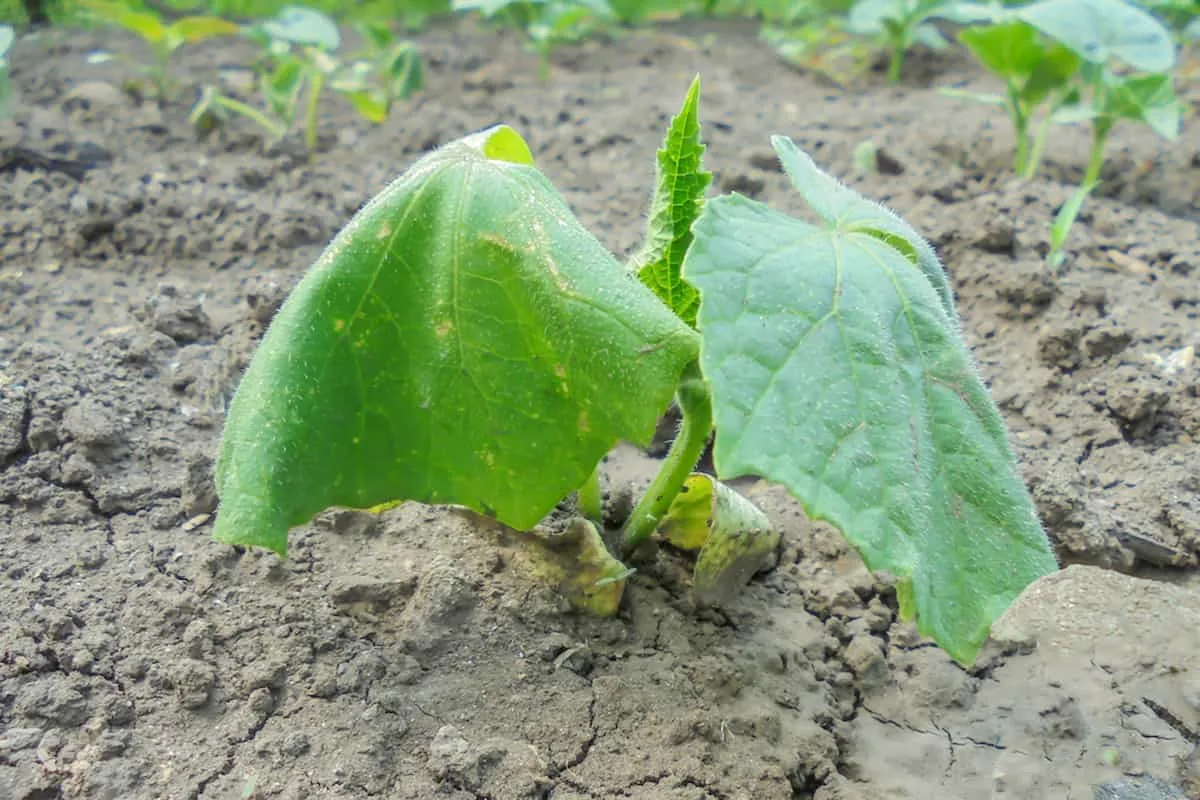
If your cucumber transplant is drooping like a wet noodle two hours after you put it in the ground, you're not alone. The real fix for how do I recover cucumbers from transplant shock? is mostly about doing less, not more. Cucumbers are famously dramatic when moved.
Their thin leaves, shallow roots, and warm-season wiring make them react hard to any change.
The good news is that most shocked cucumbers bounce back inside 5 to 14 days if you protect them and resist the urge to fuss. Cucumbers prefer soil temperatures between 65 and 75°F (18 to 24°C). Anything below 60°F stalls them fast, per University of Minnesota Extension guidance on cucurbits.
Get the basics right in the first two days, and the plant usually forgives you. Here's why they crash so hard, and what to actually do about it as of 2026.
Quick Answer
To recover cucumbers from transplant shock, shade the plant for 3 to 5 days. Water it once, deeply, then leave it alone. Skip fertilizer for the first two weeks.
Keep the soil moist, not soggy. Most plants bounce back in 5 to 14 days.
Why Cucumbers React So Dramatically to Transplanting
Cucumbers (Cucumis sativus) are hardwired to hate being moved. Their root system is shallow and fibrous, with a sensitive taproot that resents disturbance. Break even a few fine roots, and the plant can't pull up enough water to feed those big, thin leaves.
Transpiration outpaces uptake, so the leaves collapse within hours. That's what wilting actually is. It's not always thirst, and it's rarely rot.
Add cold soil, wind, or bright sun, and the plant panics harder. Cucumbers are warm-season annuals. Below 60°F soil, root function slows to a crawl.
Most of what you're seeing is a temporary water and temperature crisis, not death.
First 48 Hours: What to Do (and What to Leave Alone)
The first two days after transplant are make-or-break. Cucumbers need calm, not intervention. Every fix you pile on stacks stress on a plant that's already scrambling.
Here's the short list of what to do:
- Water once, deeply, right at the base (about 6 to 8 inches of soil moisture)
- Shade the plant with a light cover, shade cloth, or even a propped-up lawn chair
- Block the wind with a cloche, cut-open milk jug, or row cover
- Firm the soil gently around the root ball if it's loose
And what to leave alone:
- Don't fertilize
- Don't spray the leaves with anything
- Don't dig, replant, or check the roots
- Don't water again until the top 2 inches of soil dry out
- Don't panic-prune yellowed leaves in the first 24 hours
Cucumbers droop hard but often recover overnight if the roots are intact. If the plant looks dead by evening, check again at sunrise before doing anything drastic.
How to Tell What Kind of Shock Your Cucumber Is In
Different symptoms mean different problems. Get the diagnosis right, and the fix is obvious. Get it wrong, and you'll end up watering a plant that's already drowning.
Wilting and Droopy Leaves
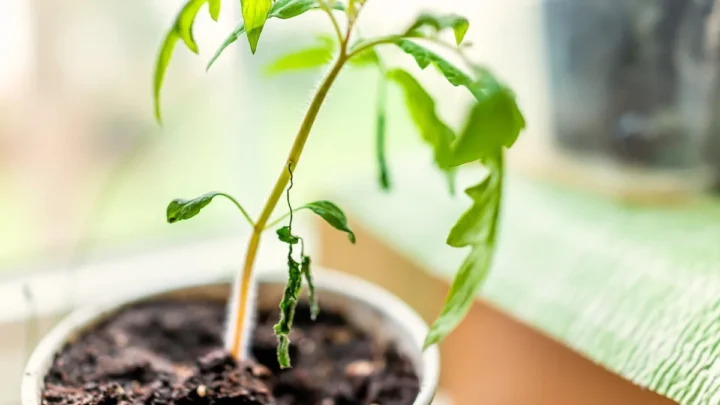
Classic transplant shock. Leaves hang like wet paper by midday. If the soil is moist, it's root disturbance, not thirst.
Recovery usually happens overnight.
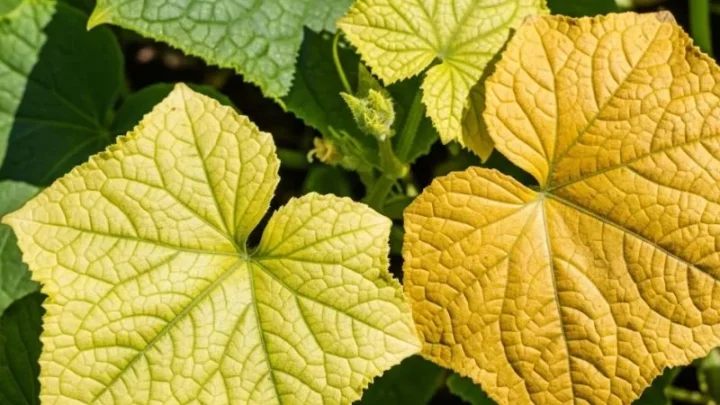
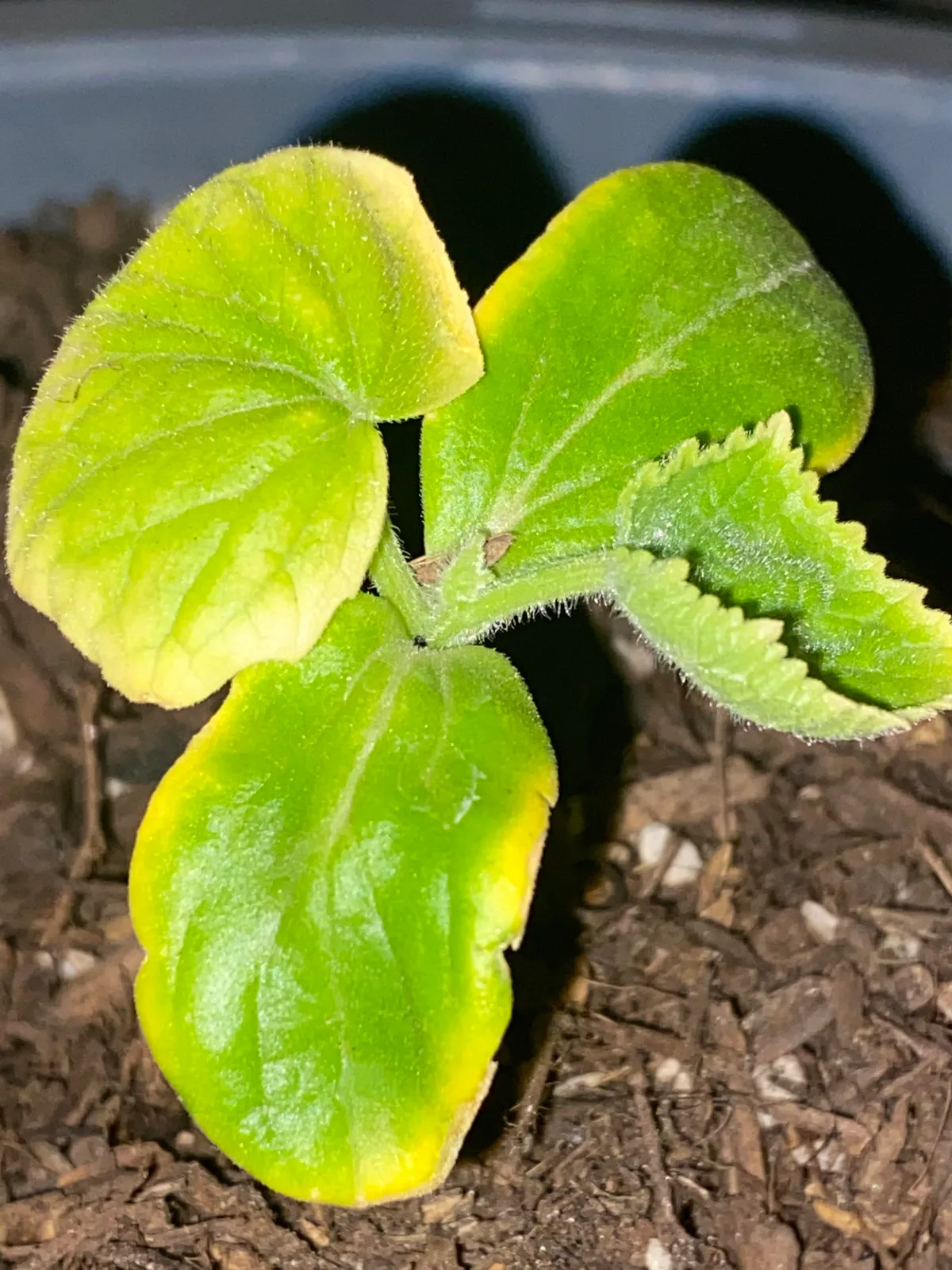
Yellowing or Pale Leaves
Lower leaves fading to yellow means the plant is pulling nutrients from old growth to feed new roots. Common in the first 5 to 10 days. Not an emergency.
Crispy Brown Edges or Sun Scorch
Dry, brown leaf margins mean too much sun on tender greenhouse-grown foliage. Add shade for 3 to 5 days. New leaves will grow in tougher and better adapted.
Purple Undersides and Stalled Growth
Purple leaf undersides usually signal phosphorus lockout from cold soil (below 60°F). Warm the soil with black plastic mulch, wait a week, and the color usually normalizes on its own.
Snapped Stems or Wind Damage
If the stem is fully snapped, the plant is done. If it's bent or cracked but still attached, splint it with a toothpick and floral tape, then prop the plant with a stake.
The Cucumber Recovery Decision Tree
Use this as rapid triage. Read the symptom, follow the branch.
| Symptom | Likely Cause | Do This | Do NOT Do This |
|---|---|---|---|
| Wilting, soil moist | Root disturbance | Shade, wait 24 hours | Water again |
| Wilting, soil dry | Underwatering | Deep soak once | Water daily |
| Yellow lower leaves | Nutrient reset | Wait 5 to 10 days | Fertilize |
| Crispy leaf edges | Sun scorch | Shade cloth 3 to 5 days | Prune all damaged leaves |
| Purple undersides | Cold soil | Black mulch, wait | Add phosphorus fertilizer |
| Snapped stem | Wind or handling | Splint or replace | Ignore it |
| No growth after 14 days | Stalled or dying | Assess roots, consider replant | Wait indefinitely |
If two conditions overlap (say, wilting plus cold nights), fix the temperature first. Cucumbers can't recover from anything else until soil warms above 60°F.
Step-by-Step Recovery Plan for a Shocked Cucumber
Follow these steps in order. Skip nothing, but don't add extras.
- Stop and assess. Look at the leaves, the soil, and the stem before you touch the plant.
- Water in ONCE if the root ball feels dry. Use plain water at the base, roughly 1 to 2 cups per seedling.
- Firm the soil gently around the base so the root ball has contact with garden soil.
- Rig temporary shade. A shade cloth (30 to 50% density) or an overturned bucket propped for airflow works for 3 to 5 days.
- Block wind with a cloche, a milk jug with the bottom cut off, or a row cover on hoops.
- Skip fertilizer for 10 to 14 days. Roots need to re-establish before they can safely process nutrients.
- Check moisture with the finger test at 2 inches depth. Water again only when it feels dry.
- Pinch off any early flowers so the plant sends energy back to roots and leaves.
- Remove leaves only if they're fully brown and crispy. Yellowing leaves can still photosynthesize.
- Wait. Give the plant 5 to 14 days before you judge whether it's recovering or dying.
Most cucumbers push out green new growth from the center by day 7. That's your sign the plant is winning.
When Watering Helps vs When It Kills the Plant
Water is the single fastest way to kill a shocked cucumber. Overwatering suffocates roots that are already struggling to function. If the top 2 inches of soil still feel damp, don't water.
Stick a finger in first, every single time.
The right approach is deep and infrequent. One thorough soak at transplant, then nothing until the soil dries. Shallow daily sips train roots to stay near the surface, where they cook in heat and freeze on cold nights.
Here's a simple rule of thumb:
| Situation | Water Action | Frequency |
|---|---|---|
| Just transplanted | Soak to 6 to 8 inches | Once |
| Leaves wilted, soil dry | Deep water at base | Once, then wait |
| Leaves wilted, soil moist | Do nothing | Wait 24 hours |
| Soil surface dry at 2 inches | Water slowly at base | Every 3 to 5 days |
| Rainfall over 0.5 inches | Skip watering | Wait for soil to dry |
Water in the early morning, not the evening. Wet foliage overnight invites damping off and powdery mildew, both of which finish off weak seedlings fast. Aim the hose or watering can at the soil, not the leaves.
Bottom watering works well for container transplants. Set the pot in a tray of water for 15 to 20 minutes, then let it drain. Roots pull moisture up without waterlogging the crown.
Shade, Row Covers, and Wind Protection That Actually Work
Protection buys the plant time to rebuild roots without fighting the elements. The goal is to cut stress by roughly half for the first 3 to 5 days, not to seal the plant in a bubble.
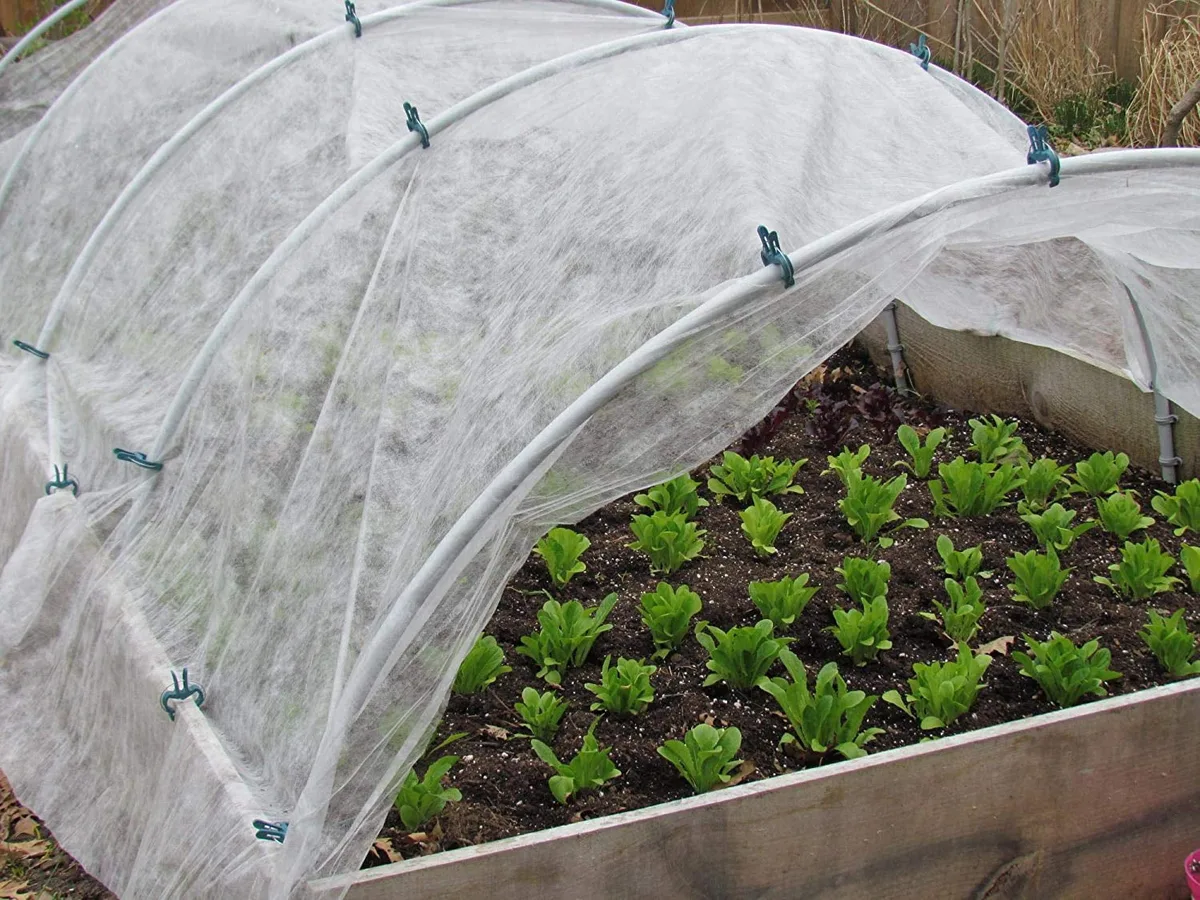
Shade cloth in the 30 to 50% density range is the sweet spot. Denser than that, and the plant stops photosynthesizing. Lighter, and the sun still scorches tender greenhouse-grown leaves.
Prop it 12 to 18 inches above the plant so air can move underneath.
For wind, physical barriers beat sprays every time. Options that work:
- Cloches (glass or clear plastic domes) for individual plants
- Cut-open plastic milk jugs, bottom removed, pushed 2 inches into soil
- Floating row cover on wire hoops (0.5 to 1 oz weight)
- Straw bales staggered on the windward side of a bed
Row covers do double duty in cool weather. They trap 4 to 8°F of extra heat during the day, which helps warm-season cucumbers recover faster. Watch the daytime temperature though.
Once air hits 85°F under the cover, vent or remove it or you'll cook the plant.
Remove all protection gradually. Take shade off during cloudy afternoons first, then during full sun mornings. Rip it off suddenly, and you'll shock the plant a second time.
Should You Feed a Stressed Cucumber? The Honest Answer
No. A stressed cucumber cannot absorb nutrients efficiently, and fertilizer on damaged roots often makes things worse. Wait 10 to 14 days after transplant before feeding anything.
The reason is simple. Root hairs are the part that actually takes up nutrients. Transplanting destroys a huge share of them.
Until the plant grows new ones, salts in fertilizer just sit in the soil and pull water OUT of the roots by osmosis. That's called fertilizer burn, and it looks a lot like worse shock.
What about foliar feeds or kelp? Aggregate garden research and cooperative extension guidance suggests a diluted seaweed or kelp spray (half the label rate) can help mildly stressed plants. Foliar spraying skips the damaged roots.
Still, don't spray in direct sun, and don't spray if leaves already show scorch.
Once new growth appears from the center of the plant, resume feeding cautiously:
- Start with a half-strength balanced liquid fertilizer (something like 5-5-5)
- Feed every 10 to 14 days during vegetative growth
- Switch to a lower-nitrogen, higher-potassium blend once flowers form
- Skip high-nitrogen products entirely on struggling plants (they push soft, weak leaves)
If the soil was prepped well before planting (compost, aged manure, or a slow-release organic blend), the plant already has what it needs for the first 3 to 4 weeks. No rescue feeding required.
Mistakes That Turn Shock Into a Dead Plant
Most cucumber deaths after transplant aren't from the shock itself. They're from what the gardener does next. Here's what pushes a survivable situation into a lost plant.
Watering every day. Constant moisture rots the crown and suffocates roots. Roots need oxygen too, and waterlogged soil has none.
Digging the plant up to check the roots. Every disturbance restarts the recovery clock. If a cucumber is still standing, leave it alone for at least 5 days.
Replanting into cold soil. Transplanting cucumbers before the soil holds 60°F at 4 inches depth is a common early-season mistake. Cold soil means no root activity, no water uptake, and a slow death spiral.
Full sun with no shade in the first 48 hours. Greenhouse-raised transplants are used to filtered light. Direct summer sun on soft leaves scorches them within hours.
Fertilizing to "help" the plant recover. Salt burn is a top killer of stressed cucumbers. Wait.
Pruning too aggressively. Yellowed leaves still make sugars for the plant. Only remove leaves that are fully brown and dry.
Skipping wind protection. A single windy afternoon can whip stems against soil and abrade the crown. Cheap barriers prevent it.
Planting too deep. Cucumbers don't root along the buried stem the way tomatoes do. Burying the stem invites stem rot.
Mulching before the soil warms. Mulch keeps cold soil cold. Wait until soil temps hit 65°F, then apply 2 to 3 inches of straw or grass clippings.
Judging the plant at noon. Cucumbers wilt hard in midday heat even when healthy. Always assess at sunrise, when the plant has recovered overnight.
How Long Recovery Really Takes (Realistic Timelines)
Most cucumbers show clear recovery signs within 5 to 14 days. The exact timing depends on how much root damage happened, how warm the soil is, and how well you protected the plant in the first week.
Here's what a typical recovery timeline looks like:
| Day | What You'll See | What's Happening |
|---|---|---|
| 0 to 1 | Severe wilting, drooping leaves | Water loss, roots not yet functioning |
| 2 to 3 | Leaves upright in mornings, wilted midday | Roots starting to take up water |
| 4 to 7 | Full turgor through the day | Root hairs regenerating |
| 7 to 10 | New leaf pushing from center | Active new growth |
| 10 to 14 | Steady vertical growth resumes | Full recovery |
| 14+ | First true tendrils forming | Ready to remove protection |
If nothing has changed by day 14, the plant is probably not recovering. Check the base of the stem for softness or discoloration. A firm green stem means there's still hope.
A brown, mushy, or hollow stem means it's over.
Cool weather stretches every stage. Below 65°F daytime air, add 3 to 7 days to each phase. Above 80°F, recovery can move faster but heat stress starts stacking on top.
Verified grower feedback across cooperative extension trials consistently shows that plants which look "half dead" at day 3 often become the strongest producers of the season. Cucumber roots are surprisingly resilient once they get going. Patience pays.
Signs Your Cucumber Won't Bounce Back: Time to Replant
Some plants are past saving. Recognizing the point of no return saves time and space in your garden.
Pull and replant when you see:
- Stem is brown, mushy, or hollow at the base
- No new growth from the center after 14 days
- Complete leaf collapse that doesn't recover overnight
- Blackened or rotting root ball (gently lift the plant to check)
- Cotyledons (seed leaves) and true leaves all yellow or dropped
Cucumbers germinate fast, so replanting isn't a lost season. Direct-sown seeds catch up quickly once soil hits 70°F. Grab a bush or short-season variety if you're planting late.
How to Prevent Transplant Shock the Next Time Around
Prevention is a lot easier than recovery. The single biggest fix is proper hardening off.
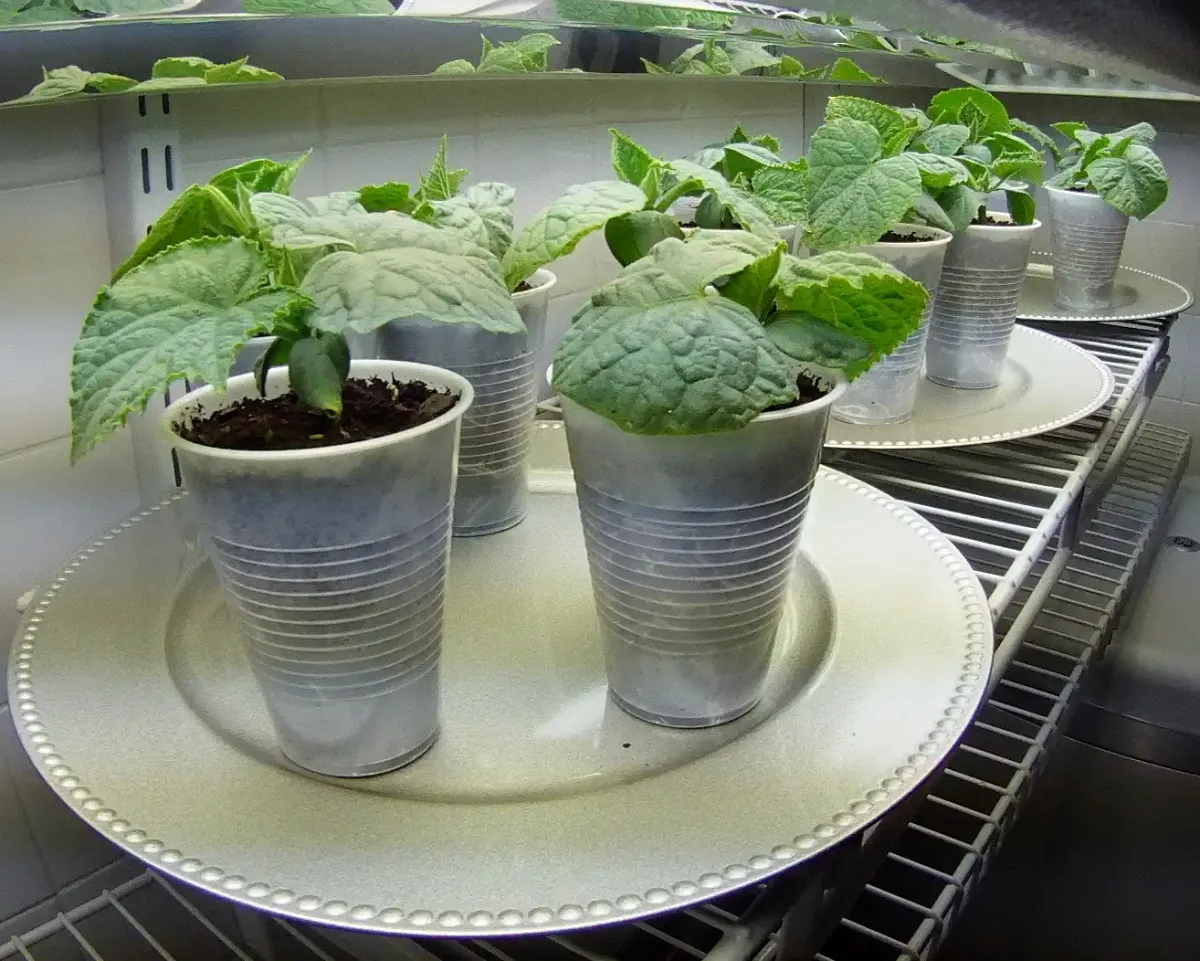
Harden off over 7 to 10 days:
- Day 1 to 2: 1 to 2 hours in shade, out of wind
- Day 3 to 4: 3 to 4 hours in filtered light
- Day 5 to 7: Half a day in morning sun, sheltered from wind
- Day 8 to 10: Full day outside, bring in only if frost threatens
A few more prevention moves worth building into your routine:
- Transplant on a cloudy afternoon or right before a stretch of mild weather
- Wait until soil temperature holds 65°F at 4 inches for three straight days
- Use peat pots or soil blocks so roots stay undisturbed
- Water the plant thoroughly the night before transplanting
- Dig the hole first, then handle the seedling once
- Firm soil gently, water in, and shade immediately
Get those right, and most cucumbers barely notice the move.
Frequently Asked Questions
How long does cucumber transplant shock last?
Most cucumbers recover within 5 to 14 days if roots are intact and soil is warm. Wilting usually eases in 24 to 48 hours. Full vertical growth typically resumes by day 10.
Cold soil below 60°F extends every stage by up to a week.
Should I cut off wilted leaves on a shocked cucumber?
No, not right away. Wilted leaves often perk up overnight and continue photosynthesizing during recovery. Only remove leaves that are fully brown, crispy, or dry to the touch.
Cutting healthy tissue forces the plant to spend energy healing instead of rebuilding roots.
Can a cucumber recover if the stem is bent but not broken?
Yes, most bent stems recover if the outer skin is intact. Splint the stem with a toothpick or small stake, wrap loosely with floral tape or a strip of soft cloth, and support the plant. Remove the splint after 7 to 10 days once the stem firms up.
Is it too late to save a yellow cucumber seedling?
Not usually. Yellow lower leaves during the first 10 days after transplant are normal. Check for firm green stems and any new growth from the center.
If the growing tip is still green, the plant is recovering.
Should I use rooting hormone on a transplant?
No, rooting hormone is for cuttings, not established seedlings. What actually helps is a diluted seaweed or kelp spray at half the label rate. Manufacturer directions on kelp products typically recommend one application per week for stressed plants.
Your Quick Recovery Checklist
Print this or screenshot it before your next transplant.
- Water once, deeply, at the base
- Shade for 3 to 5 days (30 to 50% cloth)
- Block wind with a cloche or row cover
- Skip fertilizer for 10 to 14 days
- Finger-test soil at 2 inches before watering again
- Pinch early flowers to redirect energy
- Remove only fully brown leaves
- Wait 5 to 14 days before judging recovery
- Watch for new center growth as the recovery signal
- Replant only if the stem turns brown or mushy

Similar Posts