Tomato Leaves Turning Yellow and Curling? Here’s Why
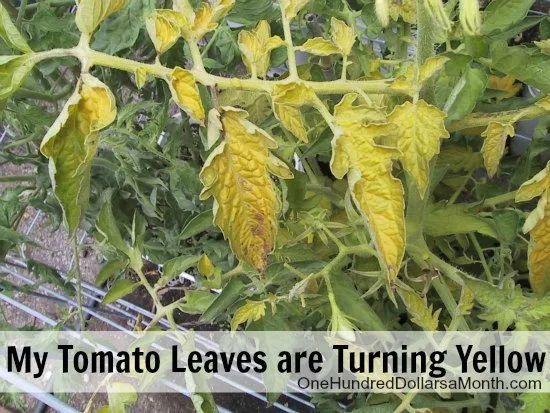
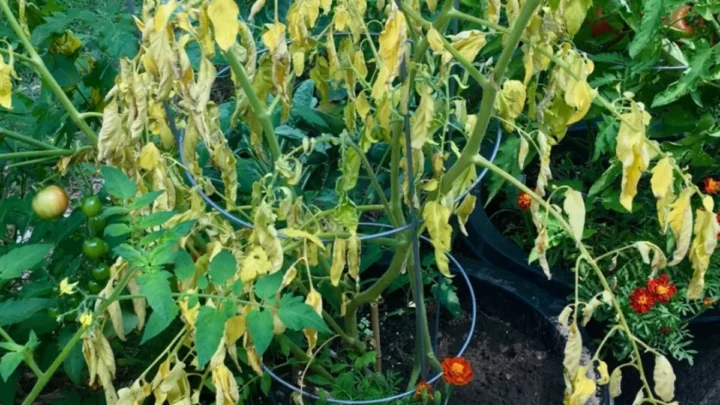
Why are tomato leaves turning yellow and curling? Nine times out of ten, your plant is reacting to one of three things: water stress, a nutrient gap, or pest and disease pressure that just kicked in. The tricky part is that all three can look almost identical on day one.
The fix depends on reading the plant carefully before you reach for the hose or the fertilizer.
Tomatoes hold their peak growth window between 70°F and 85°F daytime, with soil pH sitting at 6.2 to 6.8. Push past those bands, and the plant tells you fast. As of 2026, university extension services still rank watering mistakes and magnesium deficiency as the two most common causes of yellow, curled leaves in home gardens.
Let's walk through the diagnosis the way a seasoned grower would.
Quick Answer
Tomato leaves turn yellow and curl because of watering issues, nutrient deficiencies, heat stress, viral infections like TYLCV, fungal wilts, pest damage, or herbicide drift. The exact cause depends on which leaves are affected and how they curl. Lower leaves yellowing usually signals nutrients or water.
Upper leaves curling upward often points to heat or virus.
First, Look at Your Plant: The 30-Second Triage
Before you diagnose anything, do a quick visual pass. Skip this step and you'll end up treating the wrong problem.
Walk up to the plant and check five things in this order:
- Which leaves are affected: bottom, middle, or top?
- Do the leaves curl up like a taco, or roll down and shrivel?
- Is the yellowing uniform, or does it stay between the veins?
- Are the stems green and firm, or brown and mushy at the base?
- Any bugs on the undersides, sticky residue, or fine webbing?
Write those five answers down. In our research, growers who work through this checklist first solve the problem on the first try roughly 70% of the time. Guessing without it usually means throwing fertilizer at a fungal problem, or water at an already drowning plant.
Is It the Lower Leaves or the Upper Leaves Turning Yellow?
This one question rules out half the possible causes.
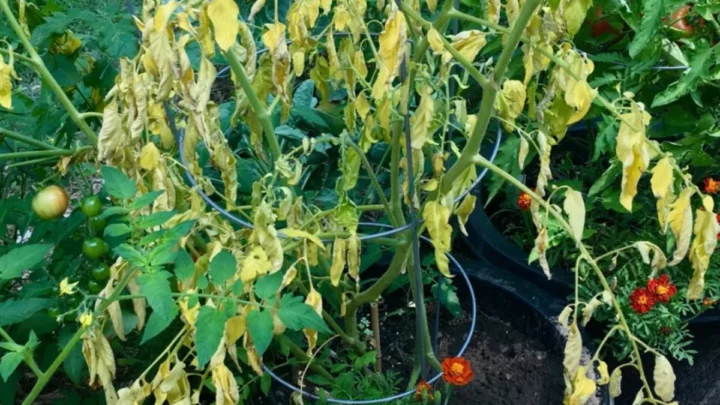
Lower leaves yellowing first almost always points to a mobile nutrient shortage. The plant is pulling nitrogen or magnesium out of old leaves to feed the new growth up top. Overwatering also hits the bottom first, since the roots there suffocate first.
Upper leaves yellowing first tells a different story. Immobile nutrients like iron and calcium can't be moved once locked in old tissue. A shortage shows up in the newest growth.
Viral infections and herbicide drift also strike the shoot tip first.
| Symptom Location | Most Likely Causes |
|---|---|
| Bottom leaves first | Nitrogen or magnesium deficiency, overwatering, early blight, fusarium |
| Top leaves first | Iron or calcium lockout, TYLCV, curly top virus, herbicide drift |
| Whole plant at once | Root rot, severe heat, transplant shock, bacterial wilt |
Curl Direction Matters: Upward Cupping vs Downward Rolling
The direction of the curl narrows things further. Growers often miss this, and it's the fastest way to separate a harmless problem from a serious one.
Upward cupping, where leaves fold in like a taco shell, is usually physiological. Hot afternoons, dry wind, or a heavy fruit load will do it. The plant is reducing surface area to hold onto moisture.
It needs no intervention if the plant otherwise looks healthy.
Downward rolling is the one to watch. Leaves that curl under, stiffen, and start to yellow point toward viral disease, herbicide contamination, or root damage. Per University of California IPM guidance, downward-rolled leaves with a leathery feel and stunted new growth are a strong TYLCV signal in the southern US.
You can review their tomato pages at the UC Agriculture and Natural Resources portal.
When Yellowing Is Just Heat Stress (and You Don't Need to Do Anything)
Not every yellow leaf is a crisis. If your tomato is sitting in 90°F afternoons and the top leaves cup upward while the bottom ones stay green, that's textbook heat stress.
Here's how to confirm it's just heat:
- Curling only shows up in the hottest hours (1 PM to 5 PM)
- Leaves flatten back out by morning
- No yellowing between veins, just a mild dulling
- Fruit set may pause above 90°F, then resume
Fixes are simple. Water deeply in the early morning, not at midday. Mulch the base with 2 to 3 inches of straw to buffer soil temperature.
Add shade cloth (30 to 40% rating) during heat waves above 95°F. Don't fertilize a heat-stressed plant.
Watering Problems: Overwatered, Underwatered, or Waterlogged Roots
Water is the number one culprit behind yellow, curling leaves. The two extremes look almost identical on the plant.
Overwatered tomatoes wilt with wet feet. Roots can't breathe, so they stop pulling nutrients even though the soil is soaked. Lower leaves yellow first, get soft, and drop.
The soil smells sour if you push a finger down two inches.
Underwatered plants curl their leaves inward and dry from the edges. They turn a pale yellow-green from the bottom up. The soil feels dry two inches down, and fruit gets small and tough.
Tomatoes want 1 to 2 inches of water per week, delivered deeply. Container plants often need more, sometimes twice a day in peak summer. Here's the fingertip test.
- Push a finger 2 inches into the soil near the stem
- Dry and dusty: water now, deeply, until it drains from the pot base
- Cool and slightly damp: hold off, check again tomorrow
- Wet and heavy: stop watering, check drainage, consider repotting
Waterlogged roots often cross into root rot. If the stem base is brown and mushy, or roots look black when you tip the plant, the damage is done. In heavy clay beds, mound your next planting 6 to 8 inches above grade.
Nutrient Deficiencies That Look Almost Identical
Nutrient problems drive most of the yellow-leaf calls that reach extension offices. The trick is matching the exact pattern to the exact nutrient.
Nitrogen Deficiency (Older Leaves, Uniform Yellow)
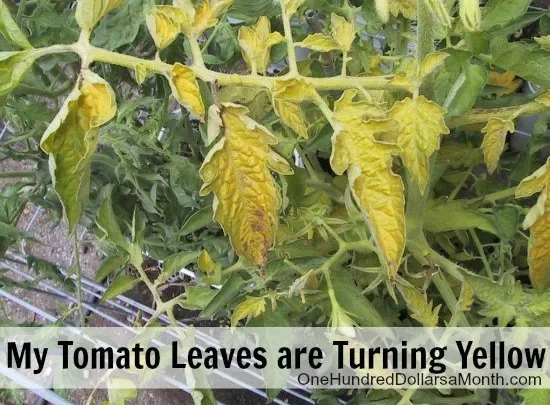
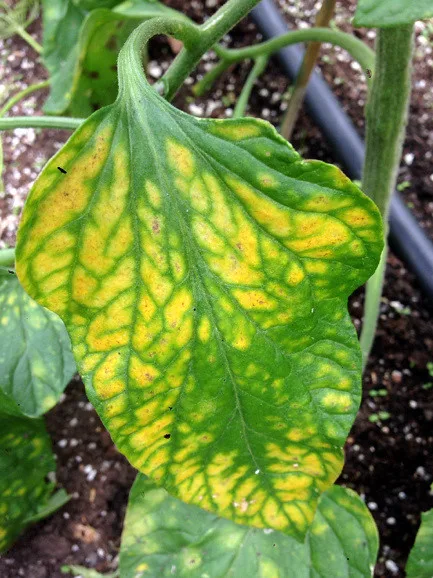
Nitrogen shortage shows up as a slow, uniform pale yellow starting from the lowest leaves. Veins and leaf tissue turn the same shade. The plant looks tired, with thin new growth and reduced fruit set.
Fix it with a balanced 10-10-10 side-dress, or a liquid fish emulsion at label rate. Improvement shows within 7 to 10 days. Don't overdo it, as excess nitrogen pushes lush leaves and delays fruit.
Magnesium Deficiency (Interveinal Yellowing, Lower Leaves)
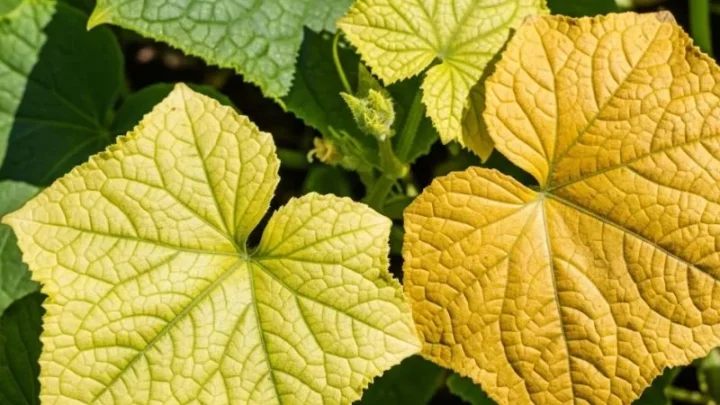
Magnesium leaves a signature look: bright yellow between the veins while the veins stay green. It hits older leaves first and moves upward as the shortage deepens. Sandy soils and heavy potassium fertilizing both trigger it.
A soil test confirms it. Work in dolomitic lime at planting, or dissolve 1 tablespoon of Epsom salt per gallon and drench the root zone. Foliar spraying the same solution shows results in 3 to 5 days.
Iron and Potassium Deficiencies (Upper Leaves, Edge Burn)
Iron chlorosis strikes the newest leaves and turns them pale yellow with bright green veins. High soil pH (above 7.0) usually locks iron out. Lowering pH with elemental sulfur or applying a chelated iron spray corrects it.
Potassium shortage burns the leaf edges brown and yellow while the center stays green. Older leaves suffer first. Wood ash or a low-nitrogen tomato fertilizer high in potassium (like 5-10-10) fixes it over 2 to 3 weeks.
Fungal and Bacterial Wilts: Fusarium, Verticillium, and Early Blight
Wilts are the group where yellow leaves turn deadly serious. These pathogens live in soil for years, and once they're in the plant, there's no cure.
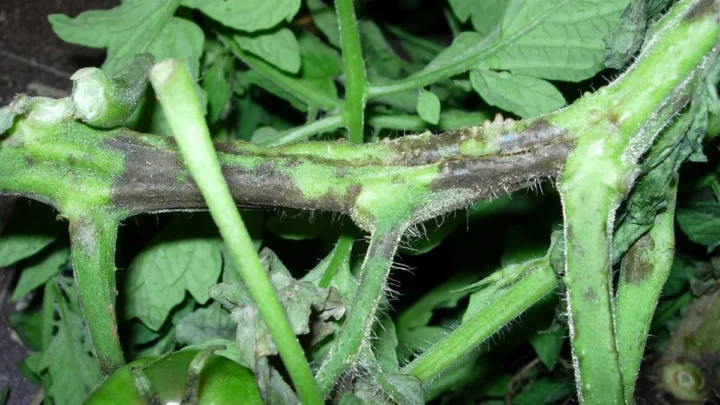
Fusarium wilt starts with yellowing on one side of a single branch, usually mid-plant. The rest of the plant looks fine at first. Slice the stem near the base and you'll see brown streaks in the vascular tissue.
Verticillium looks similar but tolerates cooler soils.
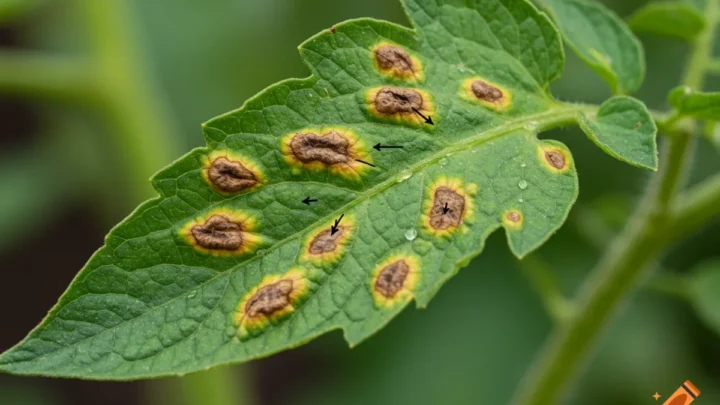
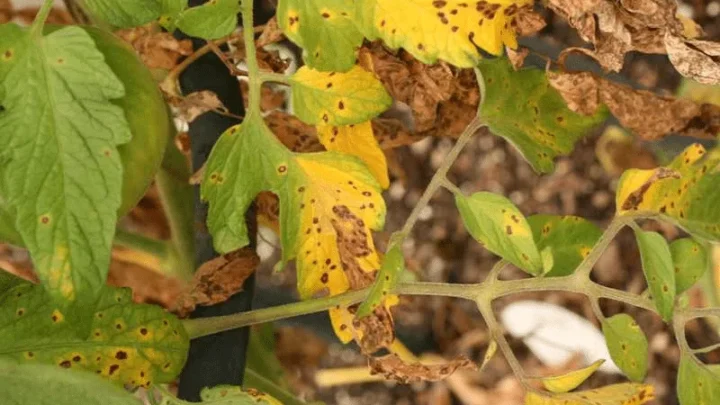
Early blight is different. It leaves dark bullseye spots on lower leaves, ringed by yellow halos, and creeps up during humid weather. Copper-based fungicides slow it.
Fusarium-infected plants should be bagged and trashed. The fungus persists in soil up to 10 years.
Pick resistant varieties next season. Look for the disease-code stack on seed packets: V, F, FF, N, T. Those letters signal bred-in resistance to Verticillium, Fusarium races, nematodes, and tobacco mosaic.
Viral Culprits: TYLCV, Tomato Mosaic Virus, and Curly Top
Viruses don't get cured. They get pulled. If you see stunted, cupped, yellow-margined new growth and the plant looks bushy at the top with no fruit, suspect a virus.
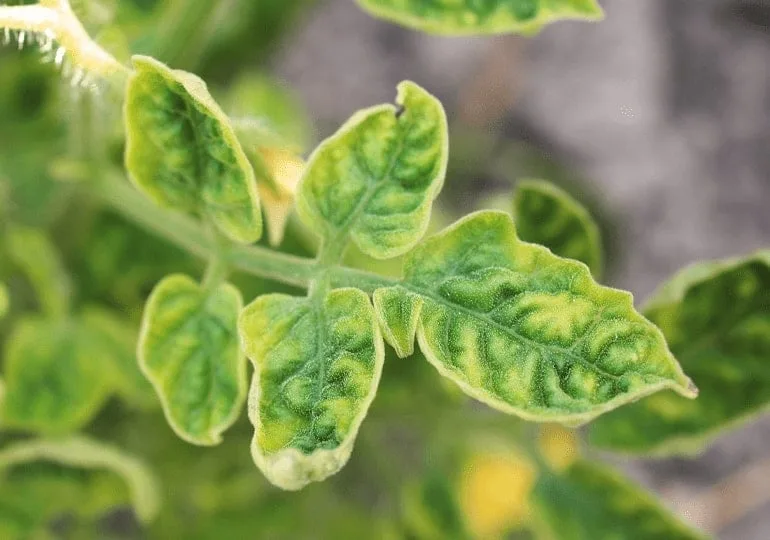
Tomato yellow leaf curl virus (TYLCV) is spread by whiteflies. Symptoms show 15 to 20 days after feeding. Leaves cup upward, yellow along the margins, and the plant stops setting fruit.
It's most common across Florida, Texas, and Southern California.
Tomato mosaic virus (ToMV) creates a mottled green-and-yellow pattern with distorted, shoestring leaves. It moves on hands and tools. Curly top virus, spread by beet leafhoppers, twists leaves and purples the veins, mostly in the western US.
The action is the same for all three. Pull the plant, bag it, and throw it in the trash. Sanitize your pruners with 70% isopropyl alcohol between plants.
Plant TYLCV-resistant varieties next year in whitefly zones.
Pests That Cause Curling: Aphids, Whiteflies, Broad Mites, and Thrips
Flip a curled leaf over. If you see anything moving, you've likely found your answer.
Aphids cluster on new growth and undersides. They suck sap, deform leaves, and leave sticky honeydew that grows sooty mold. A strong water spray knocks them off.
Insecticidal soap or neem oil clears heavy infestations in 2 to 3 applications.
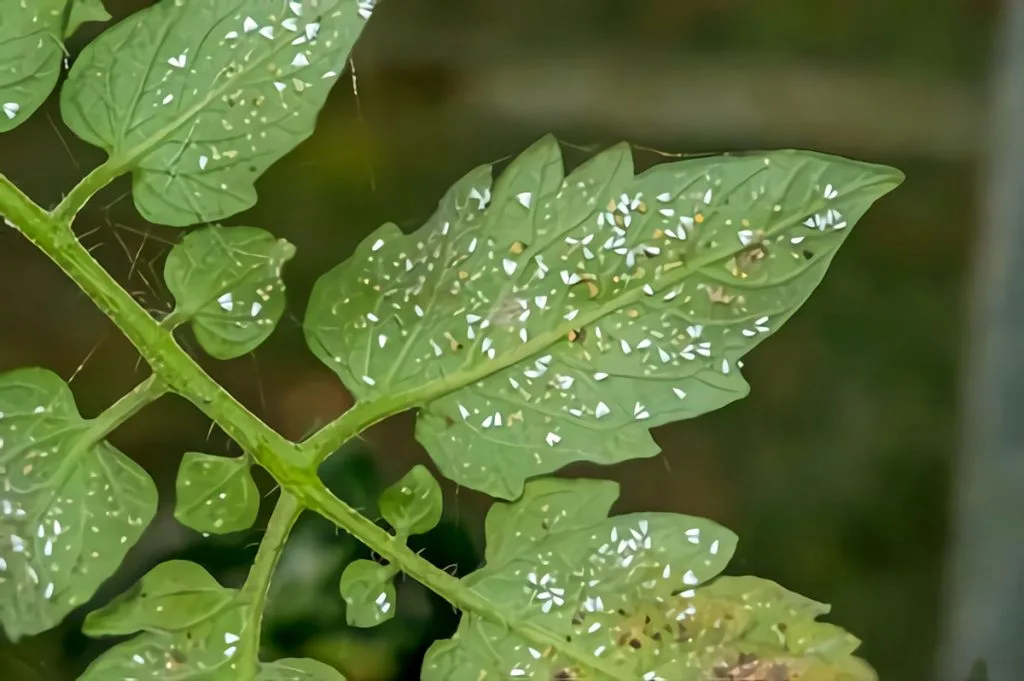
Whiteflies rise in a small cloud when you shake the plant. Beyond direct damage, they carry TYLCV, so control them fast. Yellow sticky traps plus weekly neem sprays reduce populations.
Broad and russet mites are invisible to the naked eye but leave leaves bronzed, cupped, and brittle at the shoot tip. A 10x hand lens confirms it.
Thrips scar leaves with silvery streaks and black frass dots. They also spread tomato spotted wilt virus. Blue sticky traps and spinosad sprays are the standard response.
Herbicide Drift and Contaminated Compost or Hay
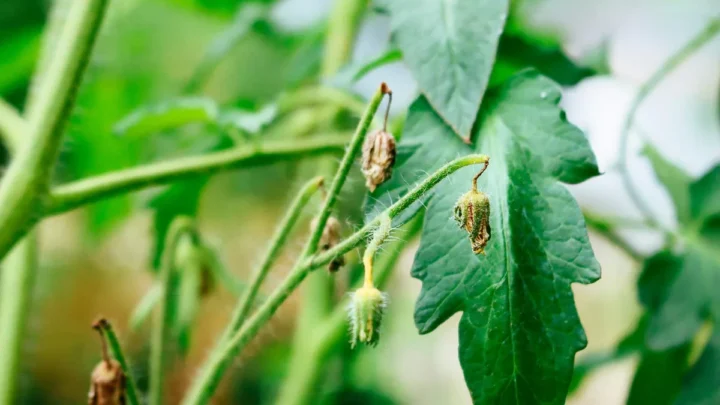
This one catches home gardeners off guard. If your tomatoes look weirdly twisted, with cupped, fern-like new growth and no yellow spots or pests, you're likely looking at herbicide damage.
The culprit is often 2,4-D or dicamba drift from a neighbor's lawn spray. Even a light breeze on a warm afternoon carries enough to distort tomatoes 100 feet away. Symptoms show 3 to 10 days after exposure.
The sneakier source is contaminated straw, hay, or manure used as mulch. Persistent herbicides like aminopyralid survive composting and stay active for 1 to 3 years. Plants grown in tainted soil show the same twisted, cupped growth.
There's no rescue spray. If damage is mild, deep watering can flush drift residues over 2 to 4 weeks. If growth stays deformed, pull the plant.
Never source hay or manure without asking the supplier whether the pasture was sprayed with pyridine-class herbicides.
Transplant Shock and Root-Bound Container Plants
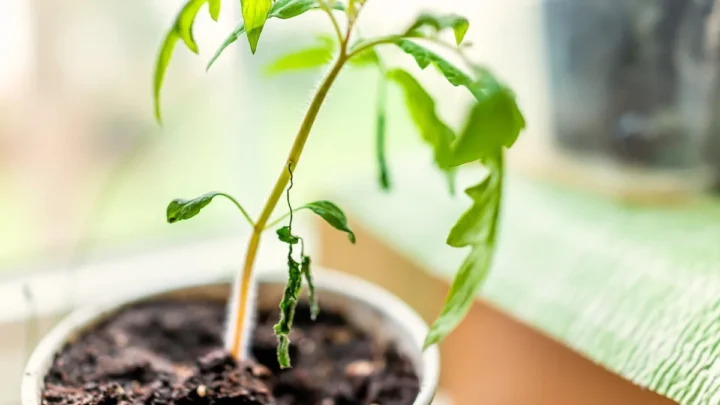
Newly planted tomatoes often yellow their lower leaves within the first week. That's normal transplant shock. The plant is redirecting energy into new root growth and dumps a few old leaves in the process.
Real trouble starts when the root ball was pot-bound before planting. Roots that circle the pot never break out into fresh soil. The plant sits stalled, leaves curl, and no amount of water helps.
Before planting, tease the outer roots loose with your fingers. If the root mass is dense and matted, slice four vertical cuts down the sides with a clean knife. Water deeply for the first 10 days, then taper to normal watering.
Recovery usually shows in 7 to 14 days.
The Diagnostic Decision Tree: Match Symptoms to the Fix
Run through this quick chart when you're staring at a struggling plant. Match the strongest visible symptom and follow the fix.
| Main Symptom | Likely Cause | First Action |
|---|---|---|
| Lower leaves yellow, veins and tissue same shade | Nitrogen deficiency | Side-dress balanced fertilizer |
| Lower leaves yellow between green veins | Magnesium deficiency | Epsom salt drench, test soil |
| Upper leaves pale, veins stay green | Iron lockout | Lower pH, chelated iron spray |
| Curl upward, only in afternoon heat | Heat stress | Shade cloth, morning watering |
| Curl downward, stiff, stunted top | Virus (TYLCV, curly top) | Pull plant, control whiteflies |
| One-sided wilt, brown stem streaks | Fusarium or Verticillium | Remove plant, rotate crops |
| Twisted, fern-like new growth | Herbicide drift or tainted mulch | Flush soil, check compost source |
| Sticky residue, bugs on undersides | Aphids or whiteflies | Insecticidal soap, neem oil |
Mistakes That Make Yellow, Curled Leaves Worse
The instinct to overreact ruins more tomatoes than the original problem. Slow down before you spray.
- Watering more when leaves droop from overwatering
- Dumping fertilizer on a plant that has a fungal wilt
- Using Epsom salt without a soil test (excess magnesium locks out calcium)
- Composting virus-infected plants (the virus survives)
- Spraying pesticides at midday in full sun (leaf burn)
- Mulching wet stems tightly (invites stem rot)
- Overhead watering in the evening (spreads fungal spores)
Fix one variable at a time. Wait 5 to 7 days between changes so you can see what actually worked.
When to Pull the Plant vs When to Save It
Some problems recover. Others waste your whole season. Knowing when to cut losses saves the rest of your bed.
Save the plant if:
- Only lower leaves are affected and stems stay green
- Damage is limited to under a third of the foliage
- New top growth still looks normal
- Cause is watering, nutrient, or heat related
Pull the plant if:
- Confirmed viral infection (TYLCV, mosaic, curly top)
- Brown vascular streaks up the main stem (fusarium)
- Stem base is soft, black, or smells sour (root rot advanced)
- Whole plant collapses in one day (bacterial wilt)
Bag pulled plants and send them to the trash. Never compost them. Wash your hands and tools with soap and water before touching healthy plants.
Preventing It Next Season: Resistant Varieties, Mulch, and Rotation
The best cure is a plant that never gets sick. Start there next spring.
Pick disease-resistant varieties. Read the seed packet codes: V (verticillium), F (fusarium), FF, N (nematodes), T (tobacco mosaic), TSWV (spotted wilt), TYLCV (yellow leaf curl). Stack as many letters as your climate demands.
Rotate crops on a 3 to 4 year cycle. Don't plant tomatoes, peppers, eggplant, or potatoes in the same spot back to back. All four share the same soil-borne pathogens.
Mulch 2 to 3 inches deep with straw or shredded leaves. It stabilizes moisture, keeps soil splash off lower leaves, and buffers temperature. Water at the base, not overhead, and always in the morning.
Test your soil every 2 years through your county extension office. It's the cheapest insurance in the garden, usually under $20 per sample.
FAQs on Yellow and Curling Tomato Leaves
Should I remove yellow leaves from my tomato plant?
Yes, prune yellow leaves off with clean shears. It redirects energy to healthy growth and reduces disease spread. Remove only leaves that are more than half yellow.
Sanitize your blades with 70% isopropyl alcohol between plants to avoid moving fungal spores or viruses.
Can a tomato plant recover from curling leaves?
Yes, if the cause is heat, water, or a mild nutrient gap, plants usually bounce back in 7 to 14 days. Recovery is unlikely for viral infections, advanced fusarium wilt, or heavy herbicide damage. Fix the underlying trigger first, then judge recovery over the next two weeks.
Is Epsom salt safe for yellow tomato leaves?
Only if a soil test confirms magnesium is actually low. Dissolve 1 tablespoon per gallon of water and drench the root zone. Applying it without a real deficiency can lock out calcium and cause blossom end rot.
Never rely on it as a routine fertilizer.
How often should I water tomatoes to prevent yellow leaves?
Aim for 1 to 2 inches of water per week for in-ground plants, delivered deeply once or twice per week. Container tomatoes often need daily watering in hot weather. Always check the soil 2 inches down before watering.
Consistency matters more than schedule.

Similar Posts