Damping Off vs. Leggy Seedlings: How to Tell the Difference
Standing over a tray of seedlings that look wrong is a lonely feeling. Is this damping off or just leggy seedlings? That single question decides whether you can save your crop or lose the whole tray by morning.
Get it wrong and you'll treat legginess like a disease, or worse, ignore a fungal outbreak that spreads in hours.
The difference comes down to the stem. As of 2026, university extension pathologists still point to one telltale sign. A pinched, water-soaked, dark spot right at the soil line means damping off.
A pale, stretched, but firm stem means legginess.
Quick Answer
Damping off is a fungal disease that pinches the seedling's stem at the soil line. The stem turns dark, thin, and water-soaked before collapsing. Leggy seedlings have long, pale, upright stems from too little light.
If the stem is firm, it's leggy. If it's mushy or thread-thin at the base, it's damping off.
Why Confusing Damping Off With Leggy Seedlings Costs You a Whole Tray
The two conditions demand opposite responses. Leggy seedlings get saved by more light, better airflow, and deeper transplanting. Damping off gets stopped by pulling infected cells, drying the media, and isolating the tray before the fungus jumps.
Treating a damping off outbreak like legginess is the classic beginner mistake. You add water, keep the humidity dome on, and by day three the entire flat is gone. Aggregate reports from cooperative extension offices show damping off can wipe out a tray in 24 to 72 hours once symptoms appear.
The reverse mistake wastes fewer seedlings but still hurts. Yank a leggy tomato thinking it's diseased and you've thrown away a plant that just needed to be potted up deeper. Reading the stem correctly is the whole game.
The 10-Second Diagnosis: One Look at the Stem Tells You Everything
Bend down. Look at the stem right where it meets the soil. That's your answer.
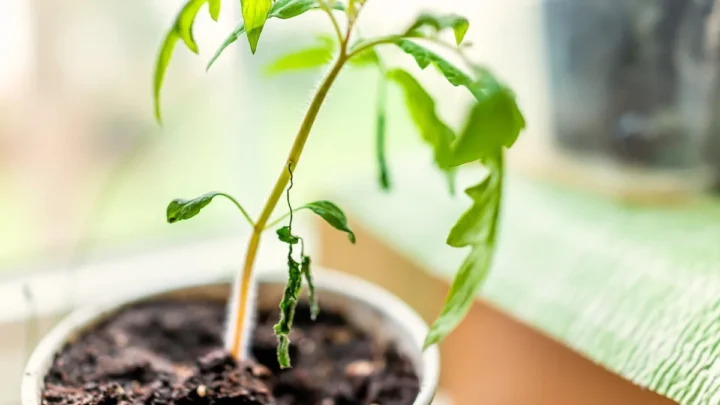
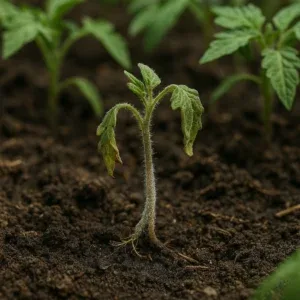
Damping off shows a stem that looks water-soaked, brown or black, and pinched to a thread. The seedling often flops sideways with its cotyledons still green, as if sliced off at the base. Pathologists call this the "wire stem" symptom of post-emergence damping off.
Leggy seedlings look different. The stem is uniformly pale green, long between leaf sets, and still stands up under its own weight. Nudge it gently and it springs back.
Wobble like wet string at the base means it isn't legginess.
One more fast check. Damping off usually starts as a patch, not a whole tray. Legginess hits every cell evenly because every cell shares the same light problem.
What Damping Off Actually Is (and the Fungi Behind It)
Damping off is a seedling disease caused by soil-borne fungi and fungus-like water molds. It attacks the stem at or just below the soil surface, collapsing tissue faster than a young plant can defend itself. Warm, wet, poorly ventilated conditions are the classic trigger.
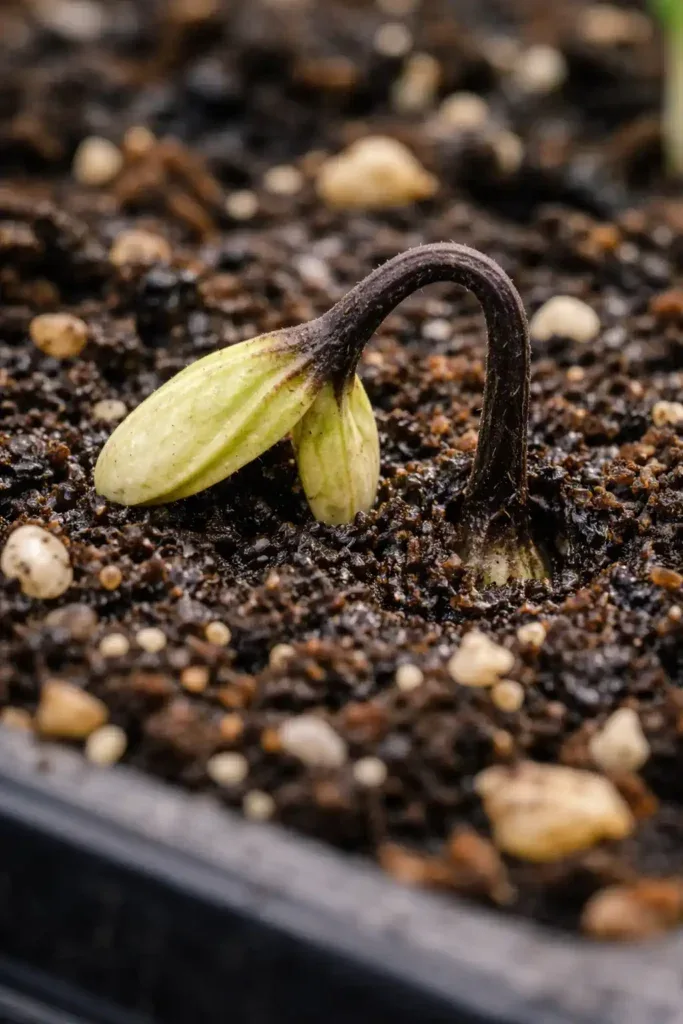
According to the University of Minnesota Extension, the disease is not one pathogen but a cluster of them. That matters because prevention beats treatment in every case.
Pythium, Rhizoctonia, Fusarium, and Phytophthora Explained Simply
Four main culprits show up in home and greenhouse setups.
- Pythium species love cold, wet soil and cause soft, mushy stem collapse.
- Rhizoctonia solani prefers warmer, drier surface soil and leaves the classic dark, sunken lesion at the soil line.
- Fusarium species work slower, often yellowing seedlings before collapse.
- Phytophthora species are aggressive water molds that spread through saturated media.
You don't need to identify the exact species. All four respond to the same fixes: sterile media, drier surfaces, better airflow, and cooler bottom heat.
Pre-Emergence vs. Post-Emergence Damping Off
Pre-emergence damping off kills the seed or seedling before it ever breaks the surface. You just see poor, patchy germination. Post-emergence damping off hits after emergence.
That's the collapse most gardeners recognise.
If your germination rate is unusually low in one section of the tray, pre-emergence damping off is probably already at work.
What "Leggy" Really Means: Etiolation in Plain English
Leggy seedlings are plants that have stretched toward inadequate light. Botanists call it etiolation. The plant is doing exactly what evolution taught it to do, reaching for a stronger light source it can't find.
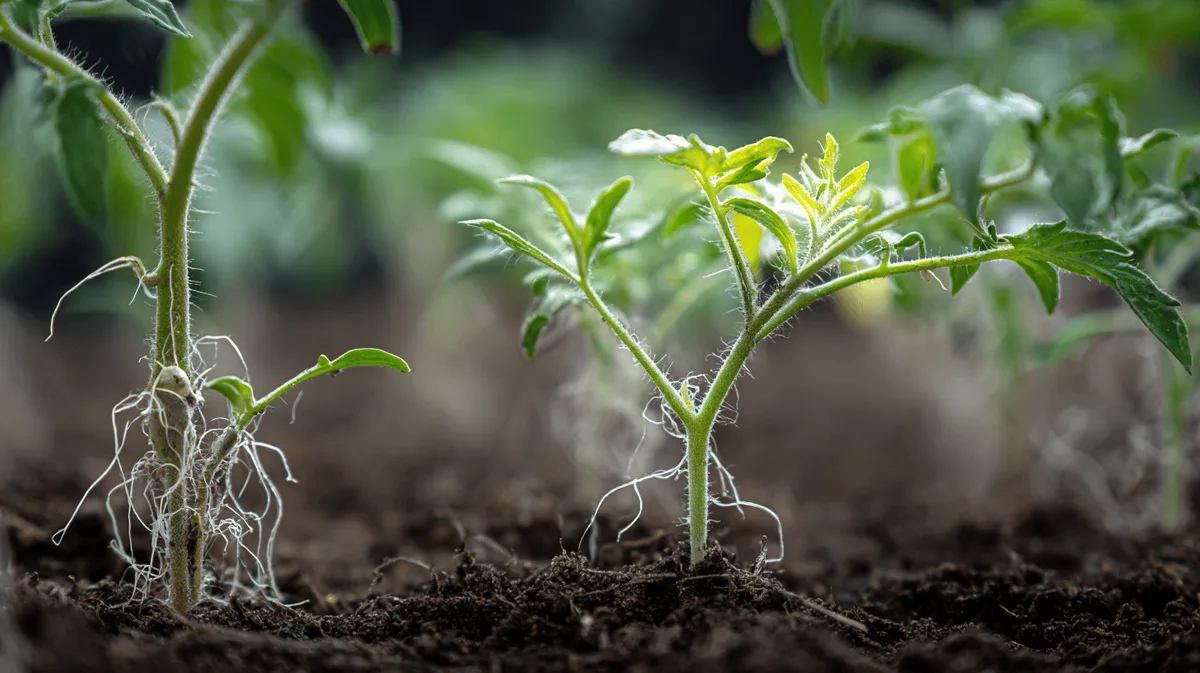
The signs are consistent. Long gaps between leaf pairs, a pale or yellow-green colour, a stem thinner than it should be for its height, and a clear lean toward the nearest window. Firmness stays intact.
Squeeze gently near the base and you'll feel resistance, not mush.
Legginess is a growing condition, not a disease. Nothing is infected. Nothing will spread to the tray beside it.
The seedlings just need more photons and, often, a bit of mechanical stress from moving air to thicken their stems.
Most home setups cause it the same way. A sunny windowsill in March delivers a fraction of the light seedlings actually want. A grow light hung too far above the canopy does the same thing.
Side-by-Side Symptoms: Damping Off vs. Leggy Seedlings
Here's the quick reference to use while you're standing at the tray.
| Symptom | Damping Off | Leggy Seedlings |
|---|---|---|
| Stem at soil line | Pinched, dark, water-soaked | Firm, pale, upright |
| Onset speed | Overnight to 72 hours | Gradual over days or weeks |
| Distribution | Patchy, spreads outward | Uniform across the tray |
| Cotyledons | Often still green when plant flops | Healthy, may be small |
| Response to touch | Wobbles or falls at base | Springs back |
| Soil surface | May show white mycelium or algae | Usually clean |
| Underlying cause | Fungal or water-mold pathogen | Insufficient light |
| Reversibility | Affected seedlings die | Fully fixable with light and airflow |
If your tray checks the left column, jump straight to damping off damage control. If it checks the right, you're in fix-it territory, not funeral territory.
The Stem-Pinch Test and Other Quick Checks at the Soil Line
The stem-pinch test takes two seconds. Hold the seedling's stem gently between your thumb and forefinger, right at the soil surface. Squeeze softly, the way you'd test a ripe berry.
A healthy or leggy stem feels firm and springy. A damped-off stem collapses under the lightest pressure, often smearing between your fingers. Wet, hollow, or thread-thin at the base always means fungal damage.
Three more checks worth doing on the same tray:
- Look for white or grey fuzz on the soil surface. That's mycelium, and it confirms fungal activity.
- Sniff the media. A sour, swampy smell points to overwatering and likely Pythium.
- Lift the tray and check the drainage holes. Standing water is a red flag before symptoms even appear.
Do these four checks together and you'll rarely misdiagnose.
Decision Tree: Walk Your Tray Through These 5 Questions
Answer these in order. The first "yes" that lands on damping off means you skip the rest and act.
Are the Stems Firm or Water-Soaked?
Water-soaked and dark at the soil line points straight to damping off. Firm and pale points to legginess. This one question resolves most cases on the spot.
Did Seedlings Collapse Overnight or Just Stretch Slowly?
Overnight collapse is damping off almost every time. Gradual stretching over a week is legginess. The clock speed of the change is a diagnostic all by itself.
Is There White Fuzz or Mold on the Soil Surface?
Visible mycelium confirms a fungal issue and pushes the diagnosis toward damping off. A clean surface with just algae or salt crust does not. Damp, warm surfaces grow mold before they collapse seedlings.
Are Cotyledons Still Attached and Healthy?
Green, intact cotyledons on a flopped seedling are a classic damping off tell. The plant died from the base up, not from the leaves down. Leggy seedlings keep their cotyledons too, but the stem stays vertical.
Is the Whole Tray Affected or Just One Patch?
Uniform stretching across every cell means legginess. A spreading patch of collapse in one corner means damping off, and it will grow if you don't act. Fungal pathogens move outward from a founding cell.
What to Do If It's Damping Off: Damage Control Before It Spreads
Speed matters more than perfection. Once collapse starts, you have hours, not days.
Do these in order:
- Remove every collapsed seedling, roots and all. Bag the debris. Don't compost it.
- Scoop out the surrounding media in each affected cell. Discard it.
- Stop bottom-watering the entire tray. Let the surface dry until the top half-inch feels dry to the touch.
- Lift the humidity dome for good. Trapped moisture is what feeds Pythium and Rhizoctonia.
- Set up a small clip-on fan on the lowest setting, aimed across the canopy.
- Isolate the tray from any other seedlings in the room.
Skip the chemical fungicides for a home tray. By the time you see symptoms, the fungus is already inside the affected plants. Prevention is where fungicides pay off, not rescue.
If more than half the tray is down, restart. Losses only accelerate from here.
What to Do If It's Just Leggy: Fixes That Actually Work
Leggy seedlings recover fast once the light situation changes. The plant stops stretching within a day or two of getting what it needs.
Lowering Lights and Extending the Photoperiod
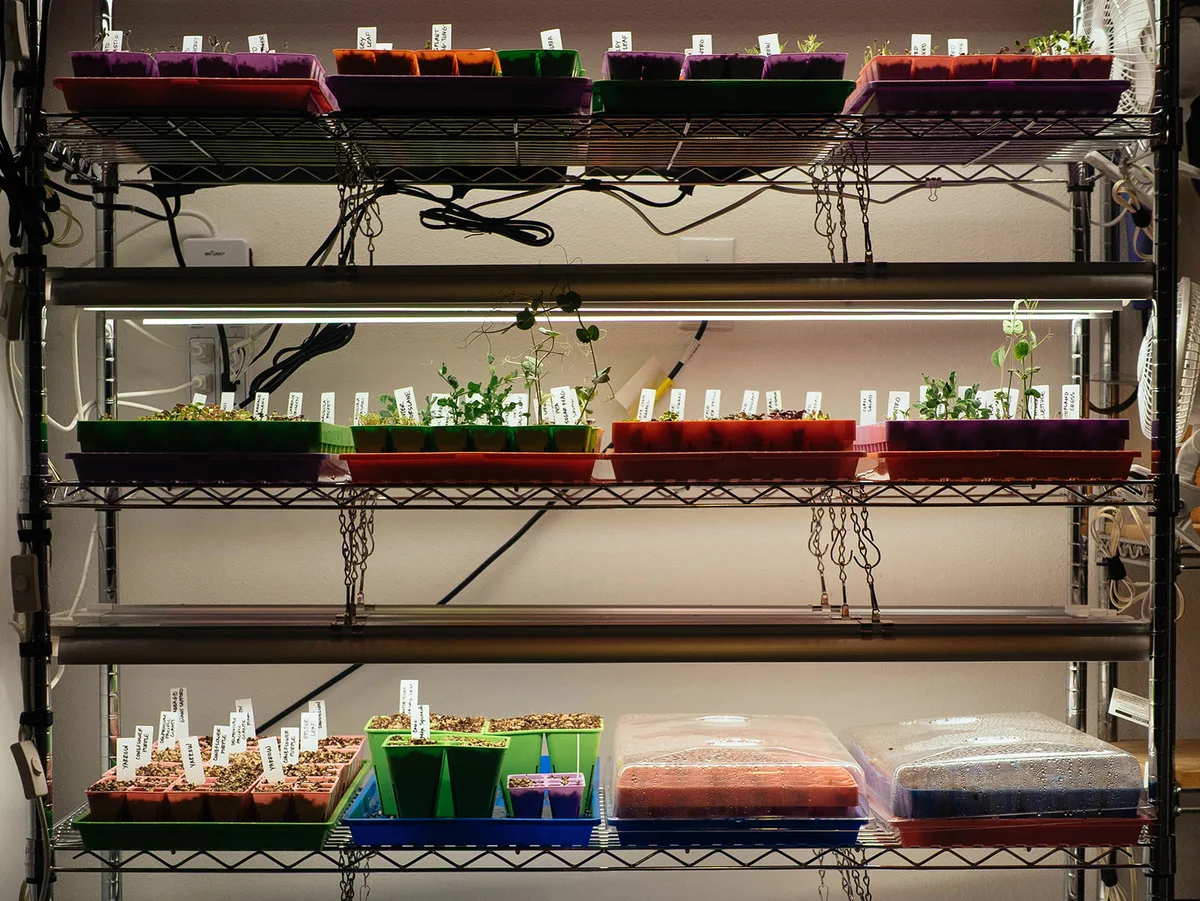
Move your grow light closer, fast. Most modern LEDs want to sit 2 to 6 inches above the canopy for seedlings, per typical manufacturer specifications for horticultural fixtures. A windowsill alone is almost never enough in late winter.
Set the photoperiod to 14 to 16 hours a day. Any less and stretch continues. A basic mechanical timer solves this in five minutes.
Burying the Stem When You Pot Up (Tomatoes Especially)
Tomatoes, peppers, and members of the Solanaceae family root along buried stems. When you pot up a leggy tomato, plant it deep enough to bury the stretched portion, leaving only the top true leaves above soil.
The buried stem grows new roots within a week, converting your weak seedling into a stocky, well-anchored plant. This trick does not work for most non-solanaceous crops. Brassicas, for example, will just rot if buried past the cotyledons.
Adding Airflow to Toughen Stems
A gentle, continuous breeze from a small clip fan thickens stems through a plant response called thigmomorphogenesis. Aggregate greenhouse research reports stockier, more resilient transplants within 7 to 10 days of adding airflow.
Keep the fan on low, and aim it across the tray rather than directly at it.
Growing Conditions That Push Seedlings Toward One or the Other
The same tray in a different room gets different problems. Environment sets the risk.
Soil Temperature, Moisture, and Humidity Sweet Spots
Most vegetable seedlings want soil at 65 to 75°F (18 to 24°C) after germination. Colder media, especially in a basement or garage, slows growth and invites Pythium. Warmer than 80°F on a heat mat can trigger Rhizoctonia.
Aim for 40 to 60% ambient humidity after the cotyledons open. Pull the humidity dome the moment the first seedlings emerge, not a week later.
Light Intensity, Distance, and Daily Hours
Low PPFD (photosynthetic photon flux density) is the single most common cause of legginess. A south-facing window in March delivers maybe a fifth of what seedlings actually want.
If you're using a full-spectrum LED, keep it 2 to 6 inches above the canopy and run it 14 to 16 hours a day. Raise the light as the seedlings grow, checking the distance every couple of days.
Mistakes That Turn Healthy Seedlings Into Sick Ones
Most damping off outbreaks trace back to the same handful of habits. Fix these and the problem rarely returns.
- Reusing last year's trays without washing them in a 10% bleach solution first.
- Starting seeds in garden soil or old, saturated potting mix instead of sterile seed-starting media.
- Leaving the humidity dome on past emergence.
- Watering from the top with cold water, which chills the media and wets the crown.
- Sowing too thickly, so airflow between seedlings drops to nothing.
- Feeding tiny seedlings full-strength fertilizer, which burns roots and invites secondary infection.
Legginess has its own short list of culprits. Grow light hung too high. Photoperiod under 12 hours.
Windowsill-only setup in winter. Skipping the fan.
Preventing Both Problems in Your Next Sowing
Prevention is boringly consistent. Start with clean gear, sterile mix, and warm, well-drained cells.
- Wash trays in soapy water, then dip in a 1:9 bleach solution and rinse.
- Fill with a bagged seed-starting mix, not compost or garden soil.
- Bottom-heat the tray to 70 to 75°F until germination, then remove the heat mat.
- Pull the dome as soon as 50% of seeds emerge.
- Run a fan on low across the canopy from day one after emergence.
- Water from the bottom, letting the surface stay drier than the root zone.
Set the grow light before you sow, not after you see stretch. Fixture height and photoperiod are what actually decide whether your seedlings come out stocky or pale.
For an authoritative deep dive on seed-starting fundamentals, the USDA and your local land-grant university extension both publish free regional fact sheets.
When to Cut Your Losses and Restart the Tray
If more than half the tray has collapsed, restart. Salvaging a heavily infected flat almost always drags the calendar out longer than starting fresh.
Restart also makes sense when surviving seedlings look stunted, purple, or root-bound after a disease scare. Their growth curve rarely catches up in time for your transplant window. A fresh sowing with corrected conditions usually beats a wounded tray by two weeks in the garden.
For legginess, restart only if the seedlings are so stretched they can't support their own cotyledons. Otherwise, potting up deep and fixing the light nearly always saves the crop.
Frequently Asked Questions
Can damping off spread to nearby healthy trays?
Yes. Pythium and Phytophthora move through splashing water and shared drip trays. Rhizoctonia spreads via infected soil and tools.
Isolate any affected tray, wash your hands after handling it, and disinfect any scoop or dibber that touched the media before using it elsewhere.
Do cinnamon or chamomile tea actually stop damping off?
The evidence is mixed. Cinnamon has documented antifungal activity in lab settings, and gardeners often report a modest benefit as a soil topper. Neither replaces the real fixes: sterile media, correct moisture, and airflow.
Treat them as small insurance, not a cure.
How much light do seedlings need to stay stocky?
Most vegetable seedlings want a full-spectrum LED delivering roughly 200 to 400 µmol/m²/s of PPFD at the canopy for 14 to 16 hours a day. A south-facing window in late winter usually delivers far less. If your seedlings lean toward the window within a day, the light is too weak.
Can I save a leggy tomato seedling?
Almost always. Pot up the seedling deep, burying the stretched portion up to the first true leaves. Tomatoes root along the buried stem within a week.
Add better light and airflow at the same time, and the plant recovers fully.
Does bottom heat cause damping off?
Only when combined with wet media. Bottom heat itself is protective before germination. Leave the mat on too long after seedlings emerge and the warm, damp surface becomes a Rhizoctonia incubator.
Pull the mat once germination is done.
Is damping off dangerous to people or pets?
No. The fungi and water molds involved are plant pathogens, not human ones. Standard hygiene is enough.
Wash your hands after handling infected media and keep the debris out of pet-accessible compost.
Your Quick Decision Guide for the Next Tray You Inspect
Kneel down. Pinch a stem at the soil line. Firm and pale means legginess: lower your light, extend the photoperiod, add a fan.
Mushy, dark, or thread-thin at the base means damping off: pull the collapsed seedlings, dry the surface, kill the dome, isolate the tray. If the outbreak covers half the flat, restart with sterile mix and clean cells.
Every future sowing gets easier once you've read a tray this way once. The stem tells you everything you need. Trust the pinch, act fast, and most trays will still make it to the garden on schedule.

Similar Posts