Why Are My Lettuce & Tomato Seedlings Leggy? Fix It Fast
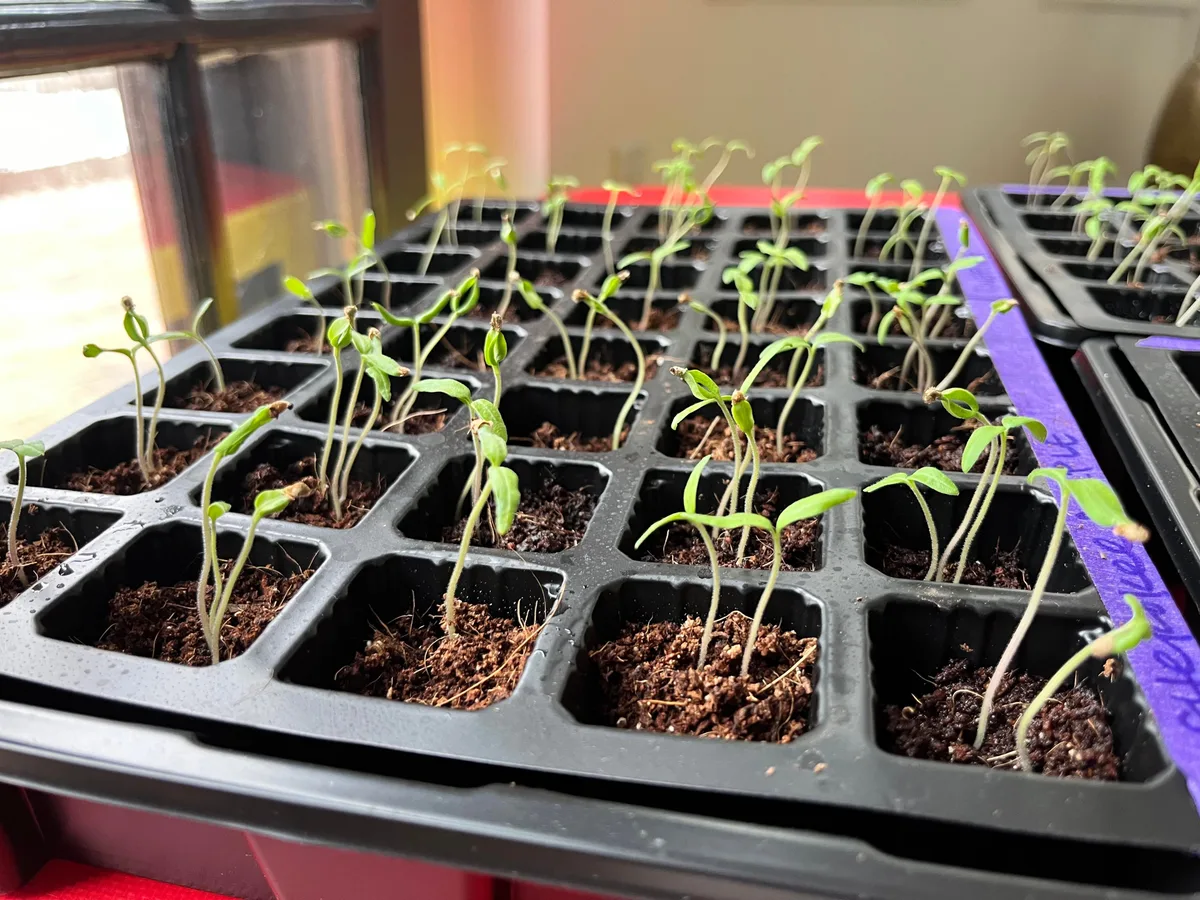
If you've been staring at a tray of tomato seedlings that look more like pale green pipe cleaners than baby plants, you're not alone. The question "Why are my lettuce/tomato seedlings leggy?" hits every home gardener sooner or later, and the honest answer is that stretched, floppy seedlings almost always trace back to one of five specific triggers. Fix the wrong one and nothing changes.
Fix the right one and the tray sturdies up in about a week.
In our research across university extension guides and horticultural literature, healthy seedlings need roughly 200 to 400 µmol/m²/s of light at leaf level and 14 to 16 hours of exposure per day. Miss that window and stems elongate within days. As of 2026, LED grow lights make hitting those numbers cheap and easy at home, provided the setup is right.
Let's walk through what's actually happening in that tray.
Quick Answer
Lettuce and tomato seedlings stretch when light is dim or too far away. Warm nights make it worse. Overcrowded trays force plants to compete upward for space.
Weak airflow leaves stems soft. Diagnose the exact cause first. The right fix pays off in about a week.
What "Leggy" Actually Means: Etiolation vs Healthy Growth
Leggy is gardener shorthand for etiolation. It's the plant's shade-avoidance response, driven by phytochrome red/far-red signaling and a burst of auxin that elongates the hypocotyl (the stem below the seed leaves). In plain English, the stem stretches upward hunting for stronger light.
That leaves the plant top-heavy and fragile.
A healthy lettuce or tomato seedling looks stocky. The stem stays short between the seed leaves (cotyledons) and the first true leaves. Internode spacing is tight.
Leaves are dark green and cupped upward.
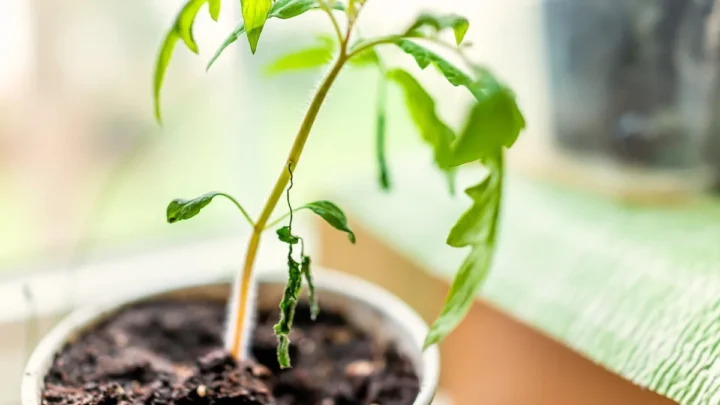
A leggy seedling shows the opposite. Long pale stem. Wide gaps between leaves.
A plant that leans or topples once it hits about 2 inches tall.
The distinction matters because etiolation is not the same as growth. A tall seedling is not a strong seedling. It's a plant burning stored energy on stem length instead of leaf mass and root development.
The 5 Real Causes Behind Stretched Seedlings
Almost every leggy tray traces back to one (or a stack) of these five triggers. Work through them in order of likelihood.
Not Enough Light Intensity or Duration
This is the number one cause, full stop. Even a bright south-facing window delivers a fraction of what seedlings need. In winter, a sunny window in the northern half of the US clocks around 2 to 5 mol/m²/day of DLI (Daily Light Integral).
Seedlings want 12 to 17 mol/m²/day. That gap is why "plenty of sunlight" from a windowsill rarely produces compact trays.
Temperature Too Warm (Especially at Night)
Heat mats stay switched on past germination in most home setups. That pushes soil into the 80s and drives stem elongation. Warm nights combined with cool days flip the natural DIF (day temp higher than night temp) and make things worse.
Once the seeds sprout, kill the heat.
Overcrowded Cells and Skipped Thinning
Two or three seedlings crammed in one cell will race each other upward. This is pure competition for light. Snip the extras at soil line with scissors.
Don't pull, since pulling disturbs the roots of the seedling you want to keep.
Too Much Nitrogen, Too Early
Starter feed heavy in nitrogen pushes soft, fast top growth. Seedlings should get a light feed of 50 to 100 ppm N once true leaves appear, not before. Excess nitrogen produces long, weak stems and pale leaves.
No Airflow to Trigger Stem Strengthening
Stems thicken in response to movement. That process is called thigmomorphogenesis. Without a fan (or a daily brush of your hand across the tray), stems stay slim and floppy.
This one is cheap to fix and wildly underrated.
Lettuce vs Tomato: Why They Get Leggy for Different Reasons
The two crops stretch for related but different reasons. Lettuce is a cool-season leafy green with modest light demands. Tomatoes are warm-season fruiting plants with heavy light needs.
That gap changes how legginess shows up and how you fix it.
Lettuce goes leggy fastest when the tray runs warm. Anything above 70°F encourages stem stretch and pushes plants toward bolting behavior. Tomatoes go leggy fastest when PAR (photosynthetically active radiation) is too weak.
That's the default state on most windowsills.
| Factor | Lettuce | Tomato |
|---|---|---|
| Germination temp | 60 to 70°F | 70 to 85°F |
| Post-sprout temp | 55 to 65°F | 65 to 75°F |
| Light DLI target | 12 to 14 mol/m²/day | 14 to 17 mol/m²/day |
| Main leggy trigger | Heat | Weak light |
| Can bury the stem to fix? | No | Yes |
| Sow to transplant | 3 to 4 weeks | 6 to 8 weeks |
The bury-the-stem rescue is the big one. Tomato stems grow adventitious roots along any buried section, so you can rescue a stretched plant by potting it deeper. Lettuce stems don't do that.
Once a lettuce seedling stretches badly, your options shrink fast. That's why prevention matters more with lettuce than it does with tomatoes.
The Diagnostic Walk-Through: Figure Out Your Exact Cause
Run through these three checks in order. The first "yes" is almost always the culprit. Fix it before you touch anything else, so you can see what the change did.
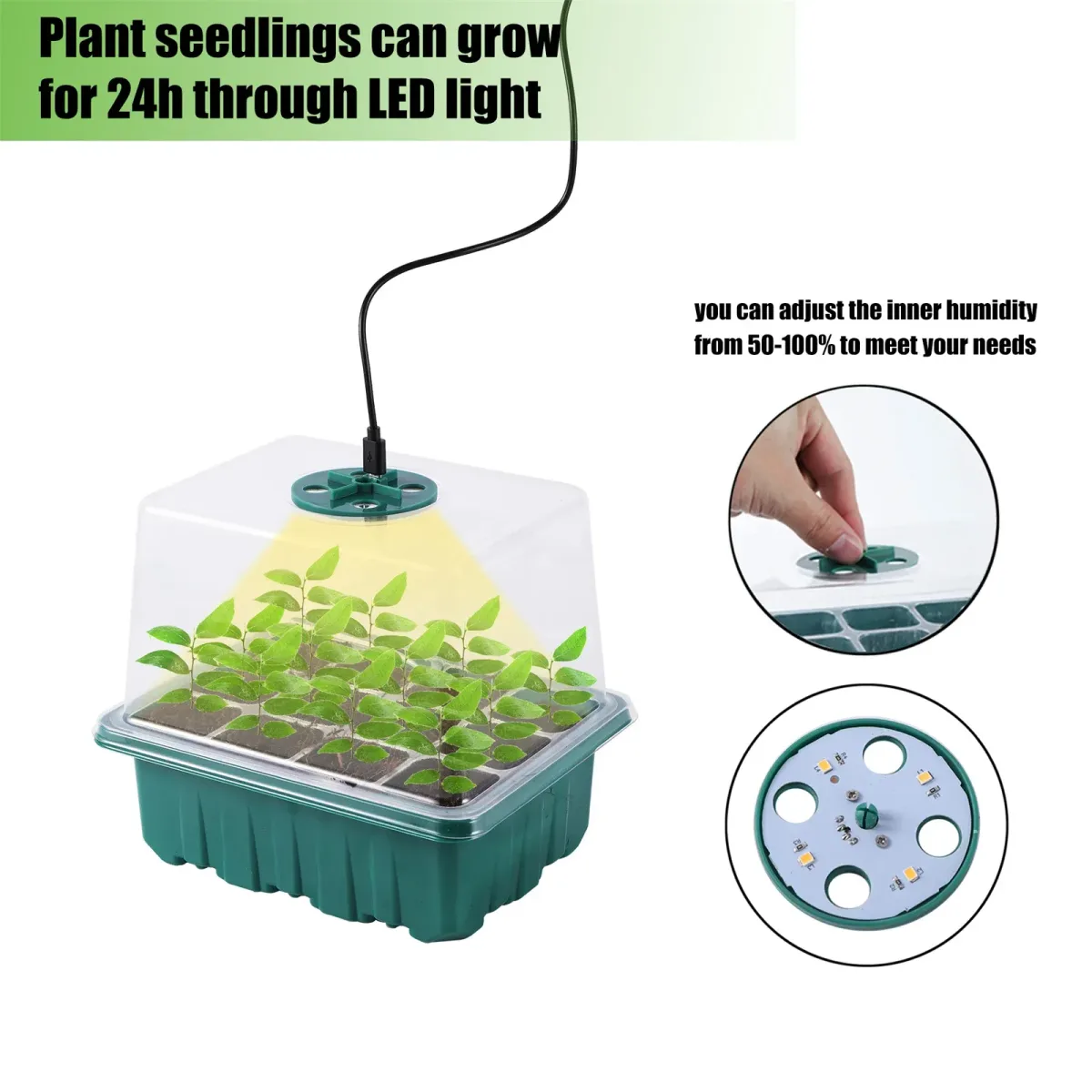
Check Your Light Setup First (Distance, Hours, Type)
Start here because light explains most cases. Measure three things: distance from bulb to leaf tips, hours per day the light runs, and what type of light it is.
- If your only light source is a window, that's almost certainly the cause. Add a grow light.
- If your LED sits more than 6 inches above the canopy, lower it to 2 to 4 inches.
- If your T5 fluorescent sits more than 4 inches above the canopy, lower it to 2 to 3 inches.
- If the light runs fewer than 14 hours a day, extend it to 14 to 16 hours on a timer.
- If you're using a warm-white household bulb, switch to a 5000K to 6500K full-spectrum LED.
Guidance from Penn State Extension notes that indoor seedlings benefit from 14 to 16 hours of bright light daily to stay compact. Anything shorter forces stretch.
Check Your Temperature (Day, Night, and Soil)
Warm nights are the sneakiest cause. Most home setups feel "fine" to the grower but read hot on a soil probe.
- If your heat mat has been on since germination, unplug it now.
- If room temperature stays above 70°F at night, move the tray somewhere cooler.
- If your soil probe reads above 75°F, get the tray off the mat.
- If day and night temps are identical, drop night temps 5 to 10°F below day temps.
Check Spacing, Feeding, and Airflow
The last three variables often stack together in the same tray, and each one nudges seedlings toward legginess in its own small way.
- If cells hold more than one seedling, thin to a single strongest plant per cell.
- If you've fed at full strength before true leaves appeared, flush the tray with plain water and hold off on nutrients.
- If there's no fan and no manual brushing, run an oscillating fan on low for 2 to 4 hours a day.
Fixing Leggy Tomato Seedlings (You Have Options)
Tomatoes are forgiving. Their stems produce adventitious roots along any buried section, so you can convert weak-stem length into extra root mass. Two techniques handle almost every case.
Pick based on how far gone the seedling is. Mildly stretched plants get potted up deeper. Severely stretched plants get trench planted at outdoor transplant time.
Burying the Stem When Potting Up
Once your seedling has its first set of true leaves, move it into a bigger pot. Take a 4-inch container and fill it about a third full with potting mix.
Lower the seedling in so the soil line sits just below the cotyledons. Backfill around the buried stem and firm gently. New roots form along the buried section within 7 to 10 days.
Snip off the seed leaves before burying if they'd end up under the soil. Rotting cotyledons below the surface invite damping off pathogens like Pythium and Rhizoctonia.
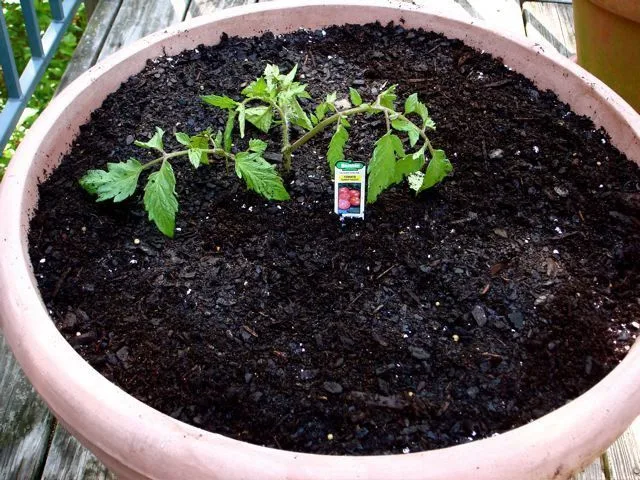
The Trench Planting Method for Severely Leggy Tomatoes
Reserve this for outdoor transplant day when a tomato is truly floppy, 6+ inches tall with a spindly stem.
- Dig a shallow trench (not a deep hole) about 3 to 4 inches deep and long enough to lay the stem sideways.
- Strip the lower leaves, leaving only the top cluster.
- Lay the plant on its side in the trench with the leafy top curved gently upward.
- Cover the buried stem with soil and leave only the top leaves above ground.
The whole horizontal stem grows roots. Within two weeks the plant looks like it was always short and stocky. Trench planting only works outdoors in warm soil, since the shallow root zone dries fast in cold ground.
Fixing Leggy Lettuce Seedlings (Different Rules Apply)
Lettuce doesn't grow roots along its stem. Burying a leggy lettuce seedling doesn't rescue it. It usually rots.
Your options are narrower and depend on how bad the stretch is:
- Mild stretch (stem under 1 inch, plant still upright): improve conditions immediately with cooler temps, brighter light, and thinning. New leaf growth compensates within a week.
- Moderate stretch (stem 1 to 2 inches, leaning): transplant carefully to a slightly deeper cell so the base gets soil support without burying past the cotyledons. A small collar of vermiculite around the stem helps stability.
- Severe stretch (stem over 2 inches, floppy): start over. Sow fresh seed. Lettuce germinates in 5 to 10 days and catches up fast in cool weather.
Prevention is really the only lettuce strategy that works long term. Keep the tray under 65°F, run bright light 14 to 16 hours a day, and thin ruthlessly.
Grow Light Targets That Actually Prevent Legginess
Numbers matter more than product marketing. Hit these targets and legginess rarely shows up in the first place.
| Metric | Target for Seedlings |
|---|---|
| PPFD at canopy | 200 to 400 µmol/m²/s |
| DLI | 12 to 17 mol/m²/day |
| Photoperiod | 14 to 16 hours per day |
| Kelvin color temp | 5000K to 6500K |
| Distance (LED) | 2 to 4 inches above canopy |
| Distance (T5 fluorescent) | 2 to 3 inches above canopy |
A cheap PAR meter or a phone-based light meter app gets you close enough to check. If PPFD (photosynthetic photon flux density) reads under 150 at canopy level, you'll see stretch within days. Above 400 is unnecessary for seedlings and wastes electricity.
Household LED bulbs and warm-white shop lights don't hit these numbers, no matter what the box claims. Full-spectrum horticultural LEDs (T5 fluorescents still work well too) are the reliable choice for indoor starts.
Mistakes That Keep Making Seedlings Stretch
Even after fixing the obvious cause, a few habits keep pulling seedlings back into legginess. Watch for these.
- Raising the light "so it doesn't burn the plants": modern low-wattage LED panels can sit 2 to 4 inches away without scorching. Distance is where stretch happens.
- Leaving the humidity dome on past germination: trapped heat and moisture push stems upward. Pop the dome the moment green shows.
- Watering from the top with cold water: it chills the root zone and slows leaf development, making stems look relatively longer.
- Fertilizing with a bloom formula on baby plants: high phosphorus and high nitrogen both cause soft, weak growth. Stick with a diluted balanced starter feed.
- Skipping thinning because "they might not all sprout": they do. Thin at the first true leaf stage.
Fixing the cause solves the current stretch. Fixing the habit prevents the next one.
Signs Your Fix Is Working (What to Look for in 5 to 7 Days)
Recovery signals are visible within a week, though the sections of stem that already stretched won't shrink back. New growth is what tells you the fix worked.
Look for these changes:
- New internodes (the gaps between leaves) come in shorter and tighter than the earlier ones.
- Stem caliper thickens noticeably at the base, especially on tomatoes.
- Leaves darken from pale yellow-green to a deeper green.
- The plant stands upright without leaning toward the light source.
- Any new true leaves come in wider and flatter, not narrow and cupped.
If you don't see these signals inside a week, the fix probably missed the real cause. Run the diagnostic walk-through again and try the second most likely trigger.
When Leggy Seedlings Aren't Worth Saving
Some seedlings are past the point of rescue. Knowing when to compost the tray and restart saves weeks of babying plants that will never produce well.
Signs the tray isn't worth saving:
- The stem has bent at a sharp angle with a visible crease or bruise (structural failure, won't heal).
- Cotyledons yellowed and dropped weeks before transplant size (the plant burned through its stored energy).
- Fungal fuzz at the soil line (damping off is already active and likely on the neighbors too).
- Lettuce with a stem over 2 inches and no true leaves developing (bolting behavior, not growth).
- Tomato seedlings 8+ weeks old, still under 3 inches of true leaf mass, with pencil-thin stems.
Fresh tomato seed sown in early spring will overtake a rescued 8-week leggy plant by transplant time. Fresh lettuce hits salad size in about 4 weeks. Restarting is usually faster than nursing failure.
Frequently Asked Questions
Can leggy seedlings still produce a good harvest?
Tomatoes yes, lettuce mostly no. A leggy tomato buried deep at transplant recovers full vigor and produces normally. A leggy lettuce plant tends to bolt early and stays bitter.
If the stretch happened before true leaves formed, restart the lettuce seed instead of transplanting.
Should I trim the tops off leggy seedlings?
No. Topping a young seedling with only cotyledons or one set of true leaves removes the growing point and often kills the plant. Wait until the tomato has 4 to 6 true leaves before pruning anything.
Lettuce should never be topped at the seedling stage.
How close can grow lights safely sit above seedlings?
Modern LED panels can sit 2 to 4 inches above the canopy without burning leaves. T5 fluorescents run cool and can sit 2 to 3 inches away. Check leaf temperature with your hand held at canopy level.
If it feels warm, raise the light an inch and check again.
Why do my seedlings get leggy even under a grow light?
The light is likely too far away, too weak, or running too few hours. A grow light 12 inches above the tray delivers a fraction of the PPFD it delivers at 3 inches. Lower the fixture, extend the photoperiod to 14 to 16 hours, and check the wattage against your tray size.
Does putting a fan on seedlings actually help?
Yes, and it's one of the highest-return fixes you can make. Airflow triggers thigmomorphogenesis, the mechanical response that thickens stems and hardens cell walls. An oscillating fan on low, running 2 to 4 hours a day, produces measurably stockier seedlings within a week compared to still-air trays.
Is it too late to fix seedlings that already bloomed?
For tomatoes, no. If your leggy tomato has already set flowers indoors, pinch the flowers off. Pot the plant up deeper and let it focus on roots and leaves for another two weeks before transplant.
Early indoor flowers rarely set fruit anyway and drain the plant.

Similar Posts