What Is Eating Holes in Pepper Plant Leaves? Top Culprits
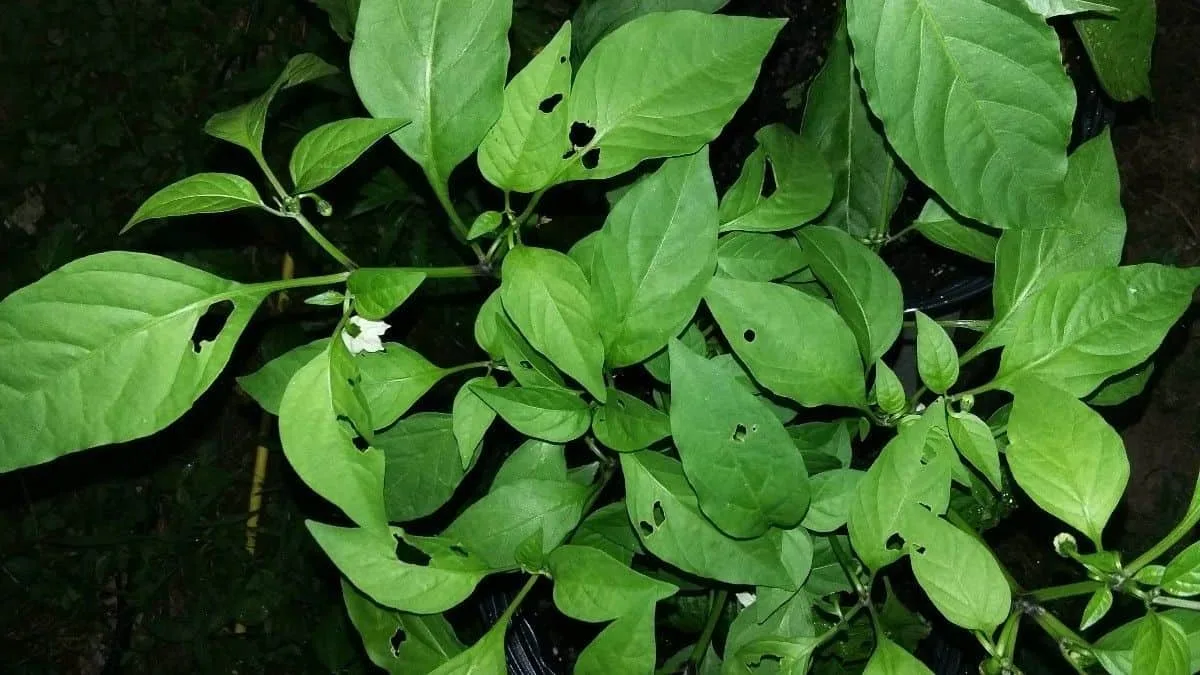
Finding chew holes in your pepper plants is frustrating, and the honest answer to "What is eating holes in pepper plant leaves?" almost always depends on the pattern of damage, not the plant itself. Slugs, flea beetles, hornworms, cutworms, and earwigs all leave different signatures. Reading those clues correctly is the whole game.
Our research across university extension programs (UC IPM, Cornell, Clemson, Penn State) shows misidentification is the top reason home gardeners lose peppers to pests as of 2026. Roughly 20 to 30 percent of leaf loss is tolerable before yield takes a real hit, per Penn State Extension guidance. So you have time to diagnose before spraying.
Quick Answer
Holes in pepper plant leaves are usually caused by flea beetles, slugs, snails, hornworms, cabbage loopers, cutworms, or earwigs. Tiny shot holes point to flea beetles. Ragged edges and slime trails point to slugs.
Big chunks and dark green frass point to hornworms. Overnight damage on seedlings points to cutworms or earwigs. Match the pattern first, then treat.
Why Your Pepper Leaves Have Holes (And Why It Matters to Diagnose First)
Peppers are part of the Solanaceae family, and that family attracts a specific lineup of chewing insects. The mistake most gardeners make is reaching for a broad-spectrum spray before they know which bug is actually eating the plant. That approach kills pollinators and beneficial predators while the real culprit keeps feeding.
Correct diagnosis matters for three reasons:
- The wrong treatment wastes money and time
- Broad sprays harm ladybugs, lacewings, and parasitic wasps that would otherwise control the pest for free
- Some pests (like hornworms) can strip a mature plant in 48 hours if you miss them
According to the University of California Statewide IPM Program, integrated pest management starts with identification, then monitoring, then the least-toxic intervention that works. That order is not optional. Skip it and you'll treat the same problem twice.
Pepper pests give themselves away with visual clues you can read in under five minutes. You just need to know what to look at.
The 60-Second Damage Check: What to Look at Before You Touch Anything
Before you spray, pick, or panic, run through this quick visual check. It narrows the suspect list fast.
Walk out to the plant and look for these six things in order:
- Hole size and shape (pinholes, ragged bites, or crescents)
- Location of damage (top leaves, lower leaves, or right at the soil line)
- Whether stems are chewed or only leaves
- Presence of slime trails on leaves or soil
- Presence of frass (insect droppings) on leaves or below the plant
- Anything visible on the underside of leaves (eggs, larvae, adults)
Use this quick reference to match what you see:
| What you see | Likely culprit |
|---|---|
| Pinprick holes across young leaves | Flea beetles |
| Ragged edges, silver slime trails | Slugs or snails |
| Large chunks gone, dark green pellet frass | Hornworms |
| Seedling clipped at soil line overnight | Cutworms |
| Small notches, damage after dark, no slime | Earwigs |
| Leaves skeletonized to the veins | Cabbage loopers or armyworms |
| Adult beetles visible, holes and defoliation | Colorado potato beetle or blister beetles |
Damage confined to one leaf with brown or yellow edges is often not a pest at all. That's usually bacterial leaf spot, sunscald, or physical wind damage. We'll cover how to rule those out later.
Pest ID by Hole Pattern: Matching Damage to the Culprit
Every chewing pest leaves a signature. Match the pattern first, then confirm the bug with a hands-on inspection.
Tiny Shot Holes All Over Young Leaves
If your pepper leaves look like someone shot them with birdshot, tiny round holes scattered across the surface, you have flea beetles. Flea beetles are 1.5 to 3 mm long, dark, and jump like fleas when disturbed. They love young transplants.
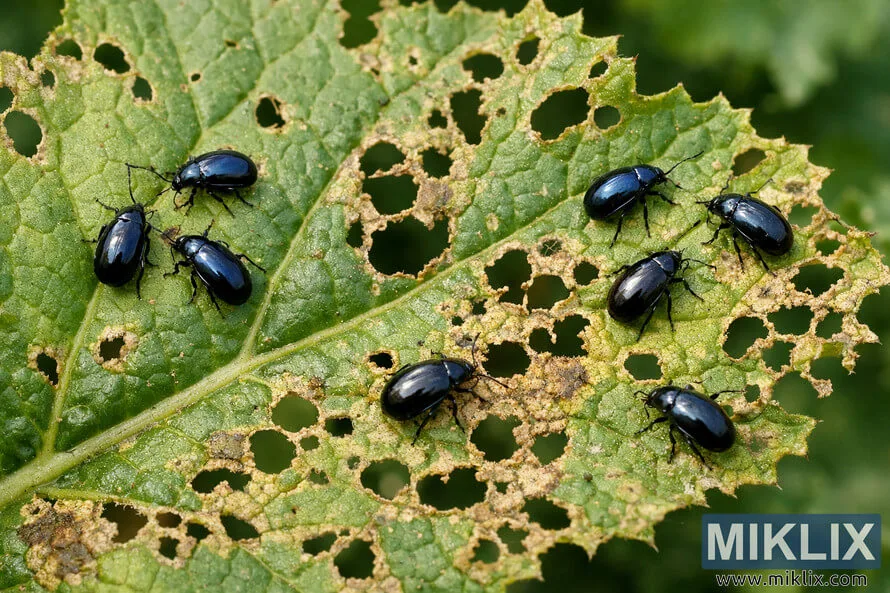
Signs to confirm:
- Holes are round, small, and evenly spread
- Damage worse on the sunniest side of the plant
- Tiny beetles jump when you touch the leaf
- Damage peaks in late spring and early summer
Young transplants are the most vulnerable. Mature pepper plants usually shrug off flea beetle pressure once they have enough leaf area to spare.
Ragged Edges and Large Chunks Missing
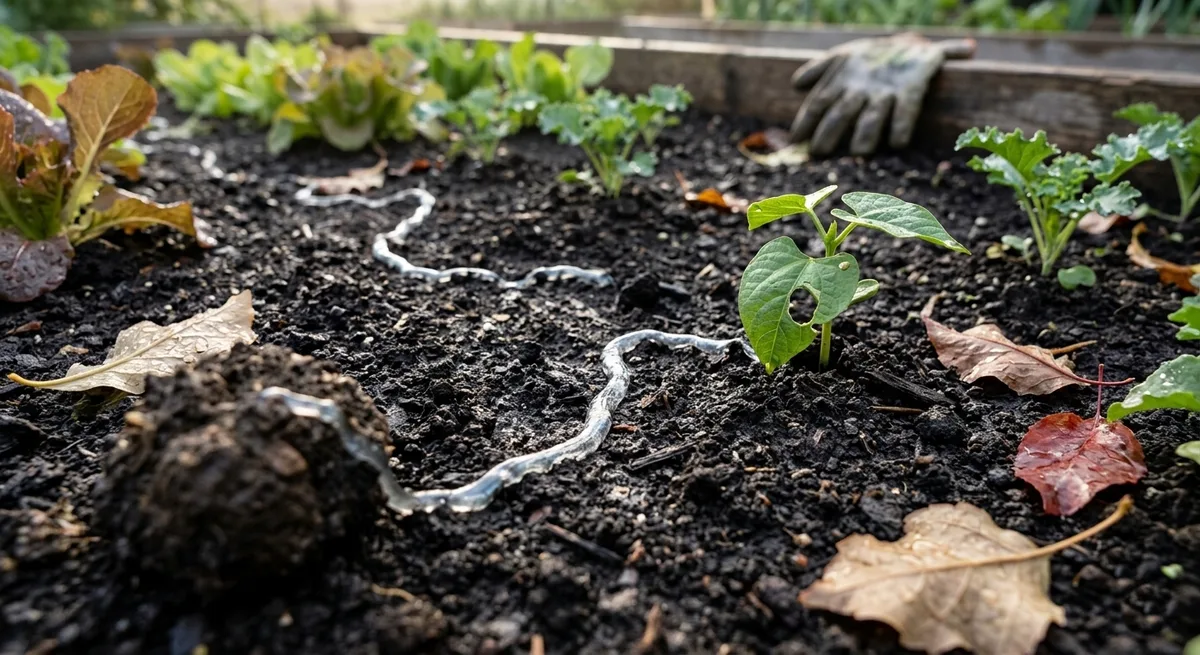
Ragged, irregular edges along the outside of a leaf mean something with a bigger mouth is chewing. Slugs and snails are the top cause when damage appears overnight with a silvery slime trail. Earwigs cause similar edge damage but leave no slime.
Signs to confirm:
- Damage worse after rain or heavy dew
- Slime trails on leaves, mulch, or the soil surface
- Lower leaves hit harder than upper canopy
- Damage stops mid-morning as the day heats up
Slugs feed at 50 to 70 degrees Fahrenheit and hide during the day under mulch, boards, and pots. That hiding habit is also your control opportunity.
Whole Leaves or Seedlings Chewed to the Stem
If a young pepper transplant is clipped clean at soil level, or entire leaves vanish overnight, you're looking at cutworms or hornworms. Cutworms hit at the base. Hornworms strip from the top down.
Cutworms are gray or brown caterpillars that curl into a C-shape when disturbed. They hide in the top inch of soil during the day. One cutworm can take down a whole seedling in a single night.
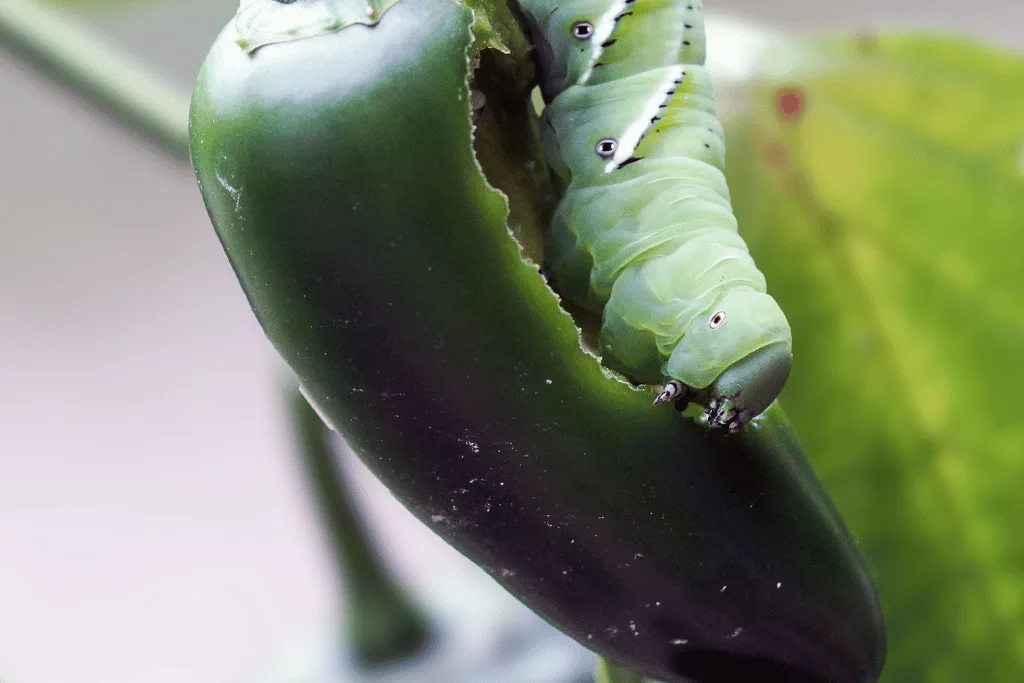
Hornworms are much bigger, up to 4 inches long, bright green, with a distinctive horn on the rear end. They're masters of camouflage. Look for large sections of missing leaf plus dark green or black frass pellets on lower leaves and the ground below.
Skeletonized Leaves With Veins Left Behind
When a leaf is reduced to a lace of veins with all the soft tissue gone, you have caterpillars feeding in numbers. Cabbage loopers (Trichoplusia ni), beet armyworms (Spodoptera exigua), and corn earworms (Helicoverpa zea) all produce this look.
Signs to confirm:
- Green caterpillars visible on leaf undersides
- Small clusters of eggs on the underside of leaves
- Frass sprinkled on lower leaves
- Damage progresses fast, often doubling in 24 to 48 hours
These caterpillars respond well to Bacillus thuringiensis (Bt) treatment. Catching them early matters, because larger larvae eat exponentially more.
The Nighttime Test: How to Catch Nocturnal Pests in the Act
If you can't find a bug during the day but damage keeps appearing, the culprit is almost certainly nocturnal. Slugs, snails, earwigs, cutworms, and smaller hornworms all feed heavily after dark.
Here's how to run a proper nighttime inspection:
- Wait until at least 90 minutes after full sundown
- Bring a bright flashlight or headlamp (red-light mode helps avoid startling some insects)
- Check leaf undersides first, then leaf tops
- Inspect the soil surface within a 6-inch radius of the stem
- Lift any mulch or boards near the plant and check underneath
- Look at the top of the plant last, where hornworms often perch
Slugs and snails will be visibly feeding, often with slime trails glinting in the light. Earwigs scatter fast when the light hits them. Hornworms freeze in place and rely on camouflage, so scan slowly and look for the horn or dark frass on nearby leaves.
If you spot nothing after 10 minutes, try the board trick. Lay a flat piece of cardboard on the soil next to the plant before dusk. Slugs, earwigs, and pill bugs shelter under it by morning.
Flip it at first light to see who's there.
Reading the Evidence: Frass, Slime Trails, and Egg Clusters
Even without seeing the pest, the evidence it leaves behind tells you exactly who to blame. This is the part most gardeners skip and regret later.
Frass is the technical term for insect droppings. Color and size point to different pests:
| Frass appearance | Likely source |
|---|---|
| Large dark green or black pellets, 2 to 4 mm | Hornworms |
| Small dark pellets, sand-grain size | Cabbage loopers, armyworms |
| Tiny brown specks scattered on leaves | Flea beetles |
| No frass, only slime | Slugs or snails |
| No frass, no slime, chewed edges | Earwigs |
Slime trails are the fingerprint of mollusks. They dry into silvery streaks on leaves, soil, and hard surfaces. If you see slime and damage together, you have slugs or snails.
Egg clusters are the other big tell. Check the underside of leaves during the day:
- Small round pale-yellow eggs in clusters, often on lower leaves, suggest cabbage loopers or armyworms
- Single pearl-white eggs scattered on stems point to hornworm moths
- Small oval eggs in tight groups near the leaf midrib often mean stink bugs or leaf-footed bugs
Crushing egg clusters before they hatch prevents an entire generation of feeding damage.
Meet the Usual Suspects Eating Your Pepper Plants
Once you've read the damage pattern, confirm the pest by knowing what each one looks like and how it behaves.
Flea Beetles
Flea beetles (Epitrix and Phyllotreta species) are shiny, dark, and smaller than a sesame seed. They jump when disturbed. Damage peaks on transplants in late spring, then eases once plants harden off.
Slugs and Snails
Slugs (Deroceras reticulatum, Arion species) and snails feed at night in cool, damp conditions. They hide under mulch, pots, and boards during the day. Silvery slime trails are the giveaway.
Damage is heaviest after rain.
Hornworms (Tomato and Tobacco)
Tomato hornworms (Manduca quinquemaculata) and tobacco hornworms (Manduca sexta) are the largest caterpillars on peppers, reaching 4 inches. They blend perfectly with stems and can defoliate a plant in two days. Look for dark green frass pellets on lower leaves.
Cabbage Loopers, Armyworms, and Corn Earworms
These green caterpillars feed in groups and skeletonize leaves fast. Loopers move with an inchworm hump. Beet armyworms and corn earworms often start on lower leaves and work up.
All three respond well to early Bt spray.
Earwigs
Earwigs (Forficula auricularia) chew ragged notches after dark and hide during the day. They leave no slime and no frass. They shelter in mulch, dead flowers, and any dark cavity near the plant.
Cutworms
Cutworms are night-feeding caterpillars in the Noctuidae family. They target seedlings, often clipping the stem clean at soil level. A single cutworm can kill a young transplant in one night.
Pepper Weevils, Blister Beetles, and Grasshoppers
Pepper weevils (Anthonomus eugenii) mostly damage fruit but also chew leaves in the southern US. Blister beetles arrive in swarms and strip foliage fast. Grasshoppers show up in dry mid to late summer and take large irregular bites.
Damage That Isn't a Pest: Ruling Out Disease, Sunscald, and Physical Injury
Not every hole is caused by a bug. Rule out these lookalikes before you spray anything.
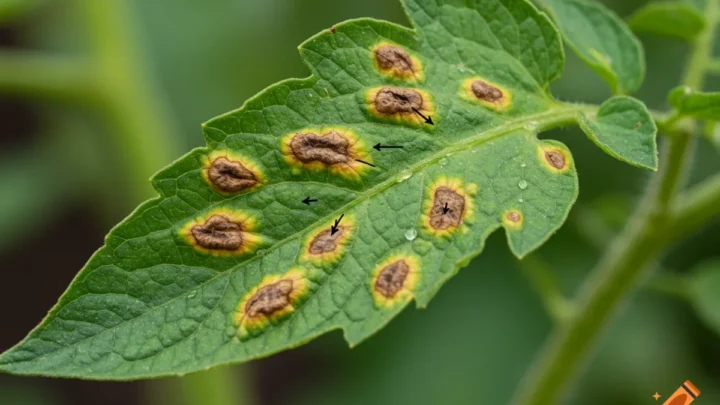
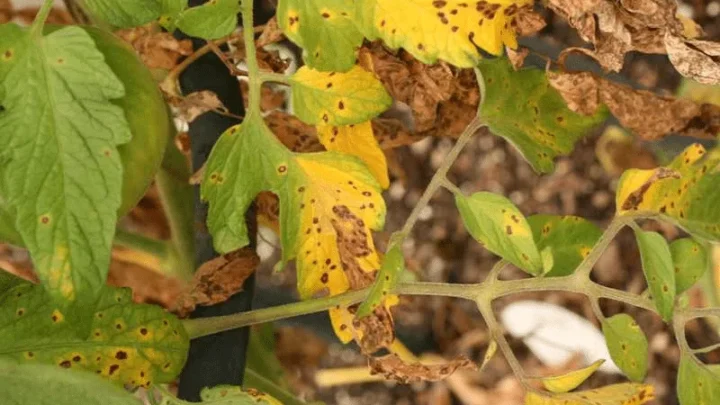
- Bacterial leaf spot creates small dark spots that dry, crack, and drop out, leaving holes. No chewing marks on the edges.
- Sunscald bleaches or browns leaf tissue, which then tears in the wind.
- Hail and heavy rain punch irregular tears with no clean bite pattern.
- Herbicide drift causes twisted, cupped, or bleached leaves without hole edges.
If the edges of a hole look smooth and dry rather than freshly chewed, suspect disease or physical damage first.
Matching the Pest to the Right Treatment
Different pests need different tools. Match the treatment to the pest to avoid wasting time and killing the good bugs.
Organic Options That Actually Work
| Pest | Best organic control |
|---|---|
| Caterpillars (hornworms, loopers, armyworms) | Bacillus thuringiensis (Bt kurstaki), effective within 1 to 3 days |
| Slugs and snails | Iron phosphate bait, roughly 1 lb per 1,000 sq ft |
| Flea beetles | Kaolin clay spray, floating row covers |
| Earwigs | Rolled newspaper or oiled can traps at dusk |
| Aphids, soft-bodied pests | Insecticidal soap or neem oil at 2 tbsp per gallon |
Choose OMRI-listed products for certified-organic gardens.
When to Consider Synthetic Controls
Reach for synthetic pesticides only when organic controls have failed and yield is at real risk. Pyrethrin-based sprays knock down many chewing pests fast but also harm bees. Spray at dusk when pollinators are inactive, and always follow label pre-harvest intervals (PHI).
Check the EPA Pesticide Product Label System before applying anything you're unsure about.
Physical Barriers and Handpicking
Sometimes the low-tech answer wins. Floating row covers (70 to 90 percent light transmission) block flea beetles on young transplants. Copper tape rings deter slugs.
Cutworm collars made from a toilet paper tube stop stem-clipping overnight. Handpicking hornworms at dusk is faster than any spray on small plantings.
Region and Season: What Pest to Expect and When
Where you garden shapes the pest lineup. Time your scouting to match.
- Pacific Northwest: heavy slug and snail pressure, especially in cool wet springs
- Southern US: pepper weevils and grasshoppers dominate mid to late summer
- Northeast and Midwest: flea beetles in spring, hornworms and loopers by mid-summer
- Southwest: blister beetles and grasshoppers in dry stretches
Cutworms are a universal seedling threat in the first three weeks after transplant. Hornworm damage typically peaks 4 to 6 weeks after the first adult moth flight in your region. Your county extension office can confirm local emergence dates.
Mistakes That Make Pepper Pest Problems Worse
Most pest disasters trace back to a handful of avoidable errors.
- Spraying broad-spectrum insecticides before identifying the pest
- Watering in the evening, which creates the damp overnight conditions slugs love
- Piling mulch right against the stem, giving earwigs and slugs a five-star hotel
- Ignoring the underside of leaves during scouting
- Treating once and assuming the problem is solved
- Planting peppers in the same bed year after year, which builds soil-borne pest pressure
- Removing every insect on sight, including the ladybugs and lacewings doing free pest control
Fix these habits and your pest pressure drops noticeably by next season.
Long-Term Prevention: Keeping Peppers Off the Pest Menu
Preventing pests is cheaper than treating them. Build these habits into your season and pressure drops on its own.
- Rotate peppers and other Solanaceae crops on a 2 to 3 year cycle
- Keep mulch 2 to 3 inches away from the main stem
- Water in the morning so foliage dries by dusk
- Plant flowers like alyssum, dill, and cosmos nearby to attract parasitic wasps and lacewings
- Inspect leaf undersides once a week and crush any egg clusters
- Clean up plant debris and fallen fruit at the end of every season
Row covers on transplants for the first three weeks stop the worst early damage from flea beetles and cutworms in one move.
Quick Decision Guide: From Hole Pattern to Action in Under 5 Minutes
Use this as your field cheat sheet. Match the pattern, take the action.
| What you see | Immediate action |
|---|---|
| Tiny shot holes on young leaves | Apply kaolin clay or install row cover |
| Ragged edges with slime trails | Set iron phosphate bait, remove mulch near stem |
| Large chunks and green frass | Handpick hornworms at dusk, spray Bt if young larvae |
| Seedlings clipped at soil line | Install cutworm collars around every transplant |
| Skeletonized leaves, green caterpillars | Spray Bt (Bt kurstaki) in the evening |
| Overnight damage, no slime, no frass | Trap earwigs with rolled newspaper or oiled cans |
| Adult beetles visible in numbers | Handpick into soapy water, check leaf undersides for eggs |
When in doubt, wait one night, scout with a flashlight, and confirm the pest before treating.
Frequently Asked Questions
Will pepper plants recover from leaf damage?
Yes, most healthy pepper plants tolerate 20 to 30 percent leaf loss without a real hit to yield, per Penn State Extension guidance. Recovery is faster on established plants than on young transplants. Keep the plant well watered and lightly fertilized.
Remove the pest first, then let new growth push out over 2 to 3 weeks.
Should I remove damaged pepper leaves?
Only remove leaves that are more than 50 percent chewed, wilting, or showing disease. Healthy tissue on a damaged leaf still photosynthesizes and feeds the plant. Cutting too aggressively slows recovery.
Prune with clean shears, then dispose of damaged leaves away from the garden to reduce pest carryover.
What natural spray kills pepper leaf pests without harming the plant?
Neem oil at roughly 2 tablespoons per gallon works on soft-bodied pests, and Bacillus thuringiensis (Bt kurstaki) targets caterpillars specifically. Both are OMRI-listed and safe for peppers when applied at dusk. Insecticidal soap handles aphids and small beetles.
Avoid spraying in full sun or above 85 degrees Fahrenheit to prevent leaf burn.
Do coffee grounds or eggshells stop slugs on peppers?
Coffee grounds and crushed eggshells have limited real-world impact against slugs, based on trials from Oregon State University Extension. Iron phosphate bait is far more reliable. Copper tape rings around raised beds also work well.
Fix the moisture and mulch conditions that attract slugs in the first place for the best long-term result.
How do I tell flea beetle damage from disease?
Flea beetle damage is small round holes scattered across the leaf surface, with clean chewed edges. Bacterial leaf spot starts as dark wet spots that dry, crack, and drop out, leaving holes with brown or yellow halos. If the holes look chewed, it's insects.
If they look dried and bordered, it's disease.

Similar Posts