Why Are My Cucumber Leaves Turning Yellow? 9 Causes & Fixes
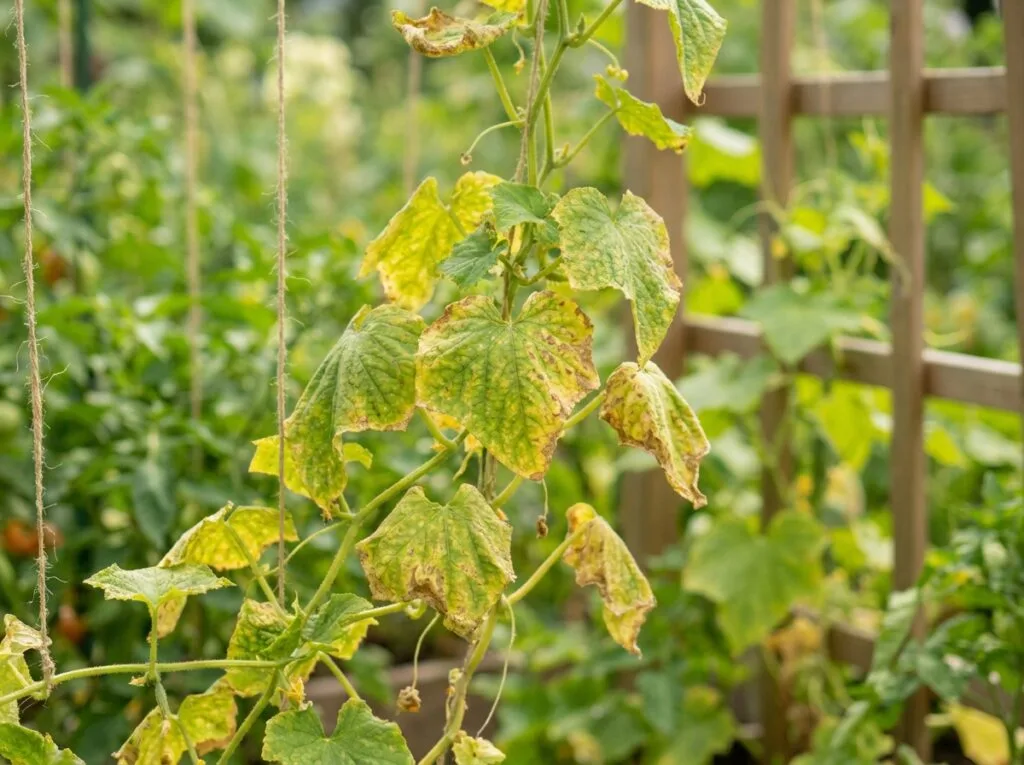
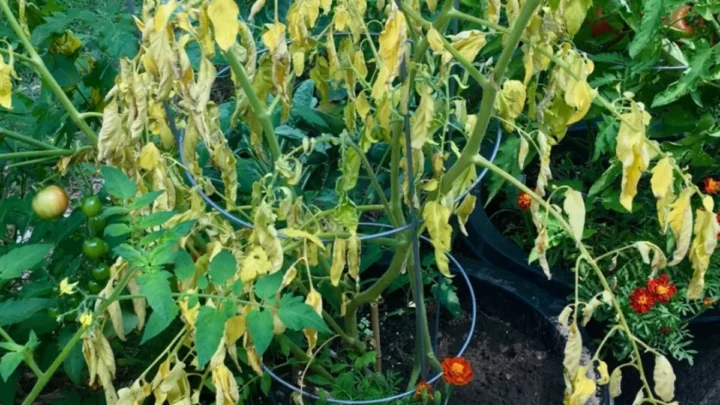
Yellow cucumber leaves are the plant's way of waving a flag, and the flag says something different depending on where and how the yellow shows up. Why are cucumber leaves turning yellow? Usually it's one of six things: overwatering, a nutrient shortage, a fungal or bacterial disease, a pest infestation, a virus, or plain environmental stress.
The trick isn't guessing. It's reading the pattern before you touch anything.
Get the diagnosis wrong and you can genuinely make things worse. Dumping nitrogen on a plant with bacterial wilt won't save it. Spraying fungicide on a magnesium shortage does nothing.
Our research across extension-service diagnostic guides shows cucumbers thrive in a narrow window: soil pH 6.0 to 6.8, roughly 1 to 2 inches of water a week, and night temperatures above 55°F (13°C). Miss any of those and the yellow starts. Here's how to read your plant, step by step.
Quick Answer
Cucumber leaves turn yellow because of overwatering, nutrient deficiencies, disease, pests, viruses, or environmental stress. Location matters. Yellowing on old bottom leaves usually means nitrogen or magnesium shortage.
Yellowing on new top leaves points to iron or sulfur. Angular yellow patches with fuzzy undersides mean downy mildew. Sudden vine-wide yellowing is almost always bacterial wilt from cucumber beetles.
What Yellow Cucumber Leaves Are Actually Telling You
A cucumber leaf turns yellow when its chlorophyll breaks down faster than the plant can rebuild it. That happens for one of two reasons: the plant can't make new chlorophyll (nutrient or root problem), or something is destroying the existing chlorophyll (disease, pest, or environmental damage).
Cucumbers (Cucumis sativus) are heavy feeders on shallow, sensitive roots. They don't tolerate stress the way tomatoes or squash do.
A few yellow lower leaves on a mature vine in August is normal senescence. A yellow seedling in June is a warning. A yellow adult vine with wilting is often an emergency.
The good news is that most yellowing follows predictable patterns. Once you know what to look for, you can usually diagnose the cause in under a minute without lab tests or guesswork.
First, Read the Pattern: Where and How the Yellow Shows Up
Before you reach for fertilizer or a spray bottle, look. Location and pattern narrow the cause faster than any other clue.
Bottom Leaves vs Top Leaves
Nutrients move around inside a cucumber plant, but not all of them move the same way. Mobile nutrients (nitrogen, magnesium, potassium) get pulled out of old leaves and shuttled to new growth when supply runs short. So a deficiency in a mobile nutrient shows up on the oldest, lowest leaves first.
Immobile nutrients (iron, calcium, sulfur, boron) stay put. If they're missing, the newest top leaves yellow first while older leaves stay green. This one distinction cuts your possible causes roughly in half.
Whole-Vine vs Patchy Yellowing
Whole-vine yellowing that appears over a day or two is almost never a nutrient issue. That speed points to a vascular problem: bacterial wilt, Fusarium, root rot, or severe waterlogging. Patchy yellowing scattered across the plant usually means disease or pest damage.
One-sided yellowing on a single vine often signals Fusarium wilt or a damaged root on that side.
Solid Yellow vs Yellow With Green Veins vs Spotted
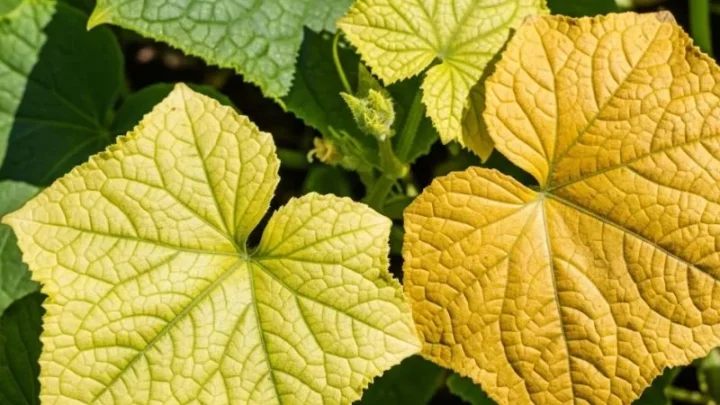
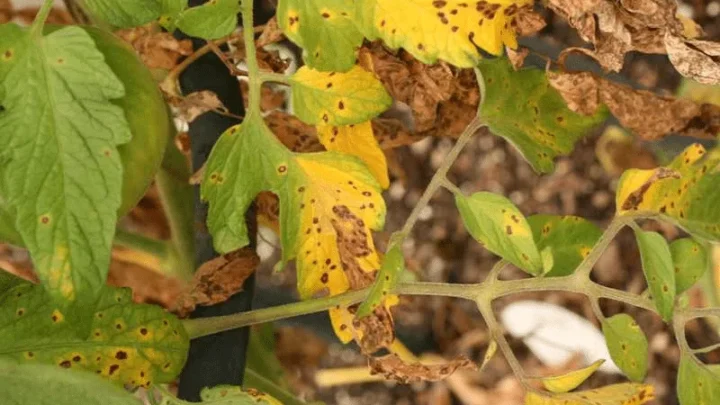
Uniform yellow across the whole leaf usually means nitrogen or plain old age. Yellow tissue with sharply green veins is textbook magnesium or iron. Yellow with distinct spots (angular, circular, or water-soaked) points to a fungal or bacterial disease.
Yellow mottling that looks like paint splashes screams virus, most often cucumber mosaic virus.
The 60-Second Field Check Before You Do Anything
Walk up to the plant with your hands, not a spray. This quick check saves you from misdiagnosing and treating the wrong thing.
- Push a finger 2 inches into the soil. Soggy or bone-dry? Note it.
- Flip a yellow leaf over. Look for fuzzy grey growth, tiny webs, or clusters of insects.
- Check the stem base for cracks, ooze, or holes.
- Snap a wilting stem in half. Squeeze the cut end. Milky sap that strings between your fingers is a positive bacterial wilt test.
- Look at the newest leaves. Are they yellow too, or still green?
- Note the weather. Have you had a cold snap, a heat wave, or heavy rain in the last week?
Write down what you find before you do anything. The pattern you record here feeds directly into every fix in the sections below.
Watering Problems: The Most Common Culprit
Aggregate diagnostic data from university extension services puts water stress at the top of the yellow-leaf list. It's almost always overwatering. Cucumber roots are shallow and need oxygen.
Waterlogged soil suffocates them, roots die back, and the damaged roots can't move nutrients up the vine.
Signs You're Overwatering
- Lower leaves yellow first, then spread upward.
- Soil stays wet 2 inches down for more than a day after watering.
- Leaves feel limp even though the soil is soaked.
- You can smell a slightly sour or swampy odour near the base.
- Roots pulled up look brown, soft, or slimy instead of white and firm.
Signs You're Underwatering
- Leaves yellow from the edges inward, then get crispy.
- Whole vine wilts in the afternoon but perks up overnight.
- Soil is dry more than 3 inches down.
- Fruit is small, curved, or bitter.
- Yellowing is worse on the sun-exposed side of the plant.
How to Fix Each Without Overcorrecting
For overwatering, stop watering completely for 3 to 5 days. Let the top 2 inches dry out. Pull back any mulch touching the stem so air can reach the crown.
If your soil is heavy clay, add a 2-inch mulch of compost or straw once it dries to buffer future rain.
For underwatering, water deeply and slowly. Cucumbers need 1 to 2 inches of water per week, delivered in one or two long drinks rather than daily sprinkles. Deep watering pushes roots down, which makes the plant tougher against future dry spells.
As of 2026, drip irrigation on a timer remains the single most reliable way to keep cucumbers in the sweet spot.
Nutrient Deficiencies and How to Tell Them Apart
If watering checks out, nutrients are the next stop. Cucumbers eat heavily and they'll telegraph exactly which nutrient is short if you know the visual code. Detailed identification photos are hosted by University of Minnesota Extension, an excellent free reference for confirming what you're seeing.
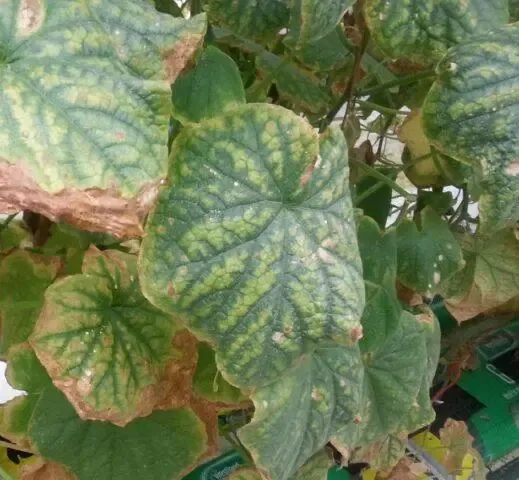
Nitrogen Deficiency (Old Leaves, Uniform Yellow)
Old leaves at the bottom turn a pale, uniform yellow-green and eventually drop. New growth is small and light. The whole plant looks weak and undersized.
Nitrogen is mobile, so the plant robs the oldest leaves first to feed new ones.
Fix it with a balanced liquid feed, fish emulsion, or a side-dressing of compost. Don't overdo it. Excess nitrogen pushes leafy growth at the cost of fruit.
Magnesium Deficiency (Yellow Between Green Veins)
The classic pattern: yellow tissue between sharply green veins on the older leaves. It looks almost like someone traced the veins with a marker. Common in sandy soils, containers, and beds heavily limed with calcium (which blocks magnesium uptake).
Mix 1 tablespoon of Epsom salt in 1 gallon of water and spray the leaves in the evening. Repeat weekly for two or three weeks. For a longer fix, work Epsom salt or dolomitic lime into the soil at the rates on the label.
Iron Deficiency (New Leaves, Pale Yellow)
The newest top leaves come in pale yellow with green veins while older leaves stay dark green. Iron is immobile, so the plant can't relocate it. Iron chlorosis is almost always a pH problem, not a soil-content problem.
If your soil pH is above 7.0, iron gets locked up and the plant can't absorb it.
Test the soil pH first. A chelated iron foliar spray will green up the leaves in a few days, but you have to fix the pH to make it stick.
Potassium and Sulfur Clues
Potassium shortage shows as yellow, then brown, scorched margins on older leaves. Fruit is often misshapen. Add a potassium-rich feed like sulfate of potash or a tomato/vegetable fertilizer.
Sulfur shortage looks like nitrogen but shows on the new top leaves instead of the bottom. It's rare in most soils. If suspected, a soil test will confirm.
Fungal and Bacterial Diseases That Turn Leaves Yellow
Disease is usually easy to tell from a nutrient issue because it leaves marks. Spots, halos, fuzz, powder, or ooze. If the yellowing has texture or a pattern that repeats leaf to leaf, you're looking at a pathogen.
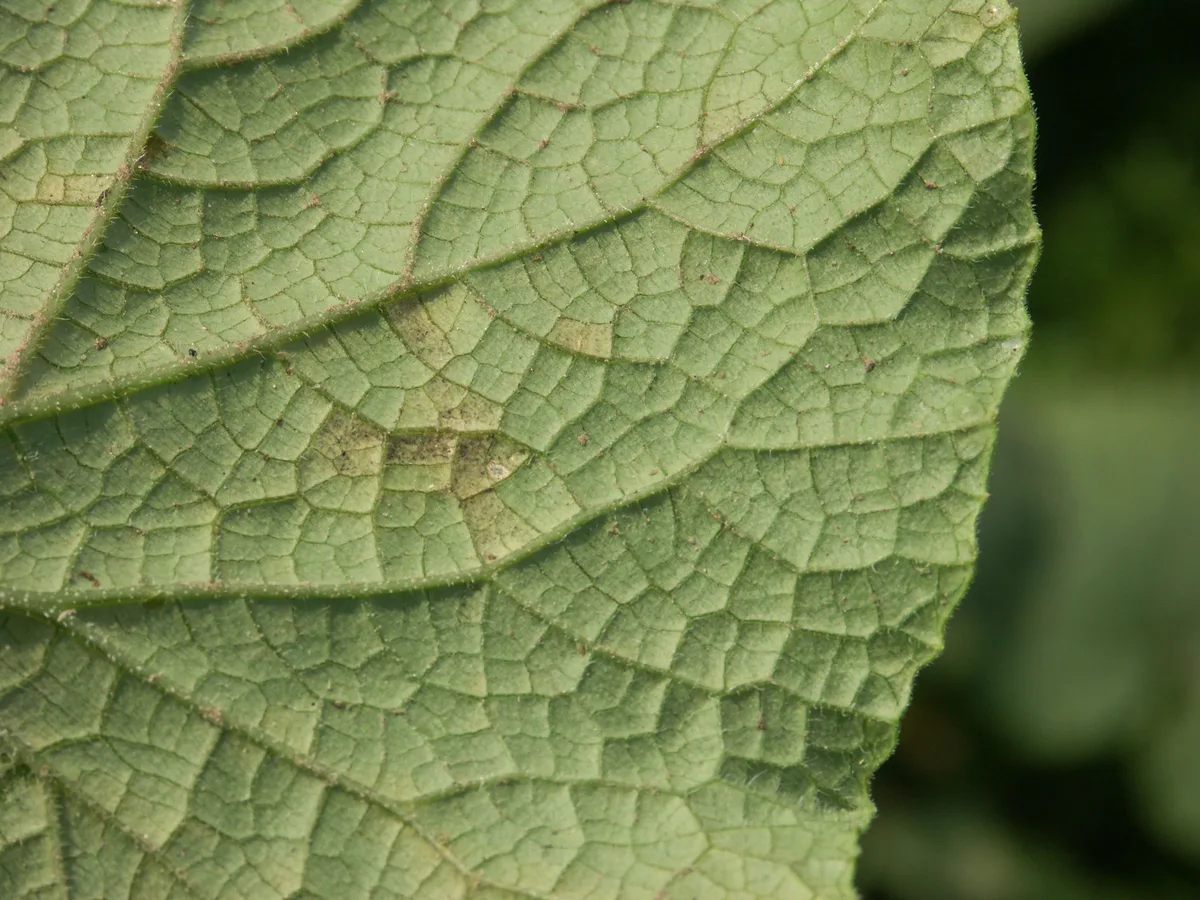
Downy Mildew: Angular Yellow Patches, Fuzzy Undersides
Downy mildew (Pseudoperonospora cubensis) is the number-one leaf killer on cucumbers in humid weather. You'll see sharply angular yellow patches on the top of the leaf, boxed in by veins. Flip the leaf and there's a fuzzy purple-grey growth on the underside.
It spreads fast in warm, wet nights.
Remove infected leaves. Apply a copper-based fungicide or a biofungicide like Bacillus subtilis. Improve airflow by pruning lower leaves and spacing plants further apart next season.
Powdery Mildew: White Dust Before the Yellow
Powdery mildew (Podosphaera xanthii) starts as white powder on the leaf surface. The tissue underneath yellows, then browns and dies. It thrives in dry days with humid nights, the opposite of downy mildew.
Milk spray (1 part milk to 9 parts water) works well early. Potassium bicarbonate and sulfur sprays handle heavier outbreaks. Skip sulfur if temperatures top 90°F.
Fusarium Wilt: One Side of the Vine First
Fusarium wilt (Fusarium oxysporum f. sp. cucumerinum) yellows one vine or one side of a plant while the other looks fine. Cut the stem at the base and you'll see brown streaks in the vascular tissue. There is no cure.
Pull the plant, bag it, and rotate away from cucurbits for 3 to 4 years.
Angular Leaf Spot and Anthracnose
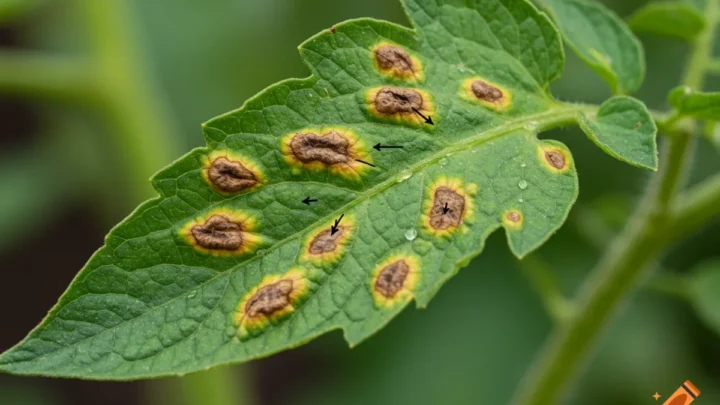
Angular leaf spot leaves water-soaked patches that yellow, then dry and fall out, leaving shot holes. Anthracnose (Colletotrichum orbiculare) makes circular yellow-to-brown spots with dark edges. Both spread on wet leaves.
Water at the base, never overhead, and rotate crops.
Bacterial Wilt: Why Your Vine Yellowed Overnight
If a whole vine wilted and yellowed in a single day with no obvious reason, it's almost certainly bacterial wilt caused by Erwinia tracheiphila. Cucumber beetles carry it in their guts and inject it when they feed.
Confirm it with the ooze test. Cut a wilted stem near the base. Touch the cut end with your fingertip and slowly pull away.
If a fine, milky, stringy thread stretches between finger and stem, that's bacterial slime. Positive test.
There is no cure. Remove and destroy the plant immediately so beetles don't spread it further. Next year, cover young plants with floating row cover until female flowers appear, then remove for pollination.
Pests That Drain the Green Out of Your Leaves
Sucking and chewing pests damage chlorophyll directly. The yellowing they cause is usually stippled, blotchy, or concentrated where the insects feed.
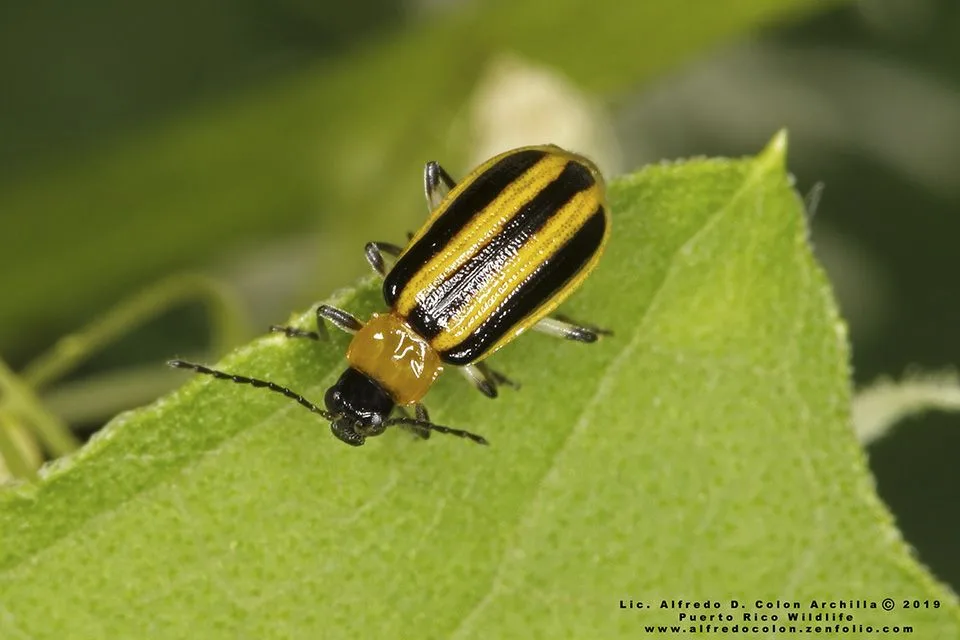
Cucumber Beetles (and the Bacterial Wilt They Carry)
Striped (Acalymma vittatum) and spotted (Diabrotica undecimpunctata) cucumber beetles chew leaves and flowers. The direct damage is minor. The wilt they spread is the real problem.
Hand-pick early morning when beetles are sluggish. Use kaolin clay or pyrethrin sprays for heavy pressure. Yellow sticky traps and row covers help.
A trap crop of Blue Hubbard squash on the garden edge pulls beetles away from your main crop.
Spider Mites, Aphids, and Whiteflies
Two-spotted spider mites cause fine yellow stippling and fine webbing under leaves, worst in hot dry weather. Blast them off with water, then follow with insecticidal soap or neem oil.
Aphids cluster on new growth and leave sticky honeydew. Whiteflies fly up in clouds when disturbed. Both weaken plants and spread viruses.
Insecticidal soap, neem, or a strong hose blast usually breaks the cycle. Reflective mulch under the plants confuses aphids and cuts infestations.
Cucumber Mosaic Virus and Other Viral Yellowing
Cucumber mosaic virus (CMV) shows as yellow and green mottling that looks like paint splashes or a mosaic pattern. Leaves may pucker, curl, or crinkle. Fruit is often small, misshapen, or bumpy.
There's no cure. Aphids spread CMV, so control aphids and reflective mulch helps prevent it. Remove infected plants promptly.
Squash mosaic virus and watermelon mosaic virus produce similar symptoms and follow the same rules: pull, bag, rotate, and plant resistant varieties next year like 'Marketmore 76' or 'County Fair'.
Environmental Stress: Cold Nights, Sunscald, and Transplant Shock
Cucumbers hate cold. Nights below 55°F (13°C) shut down root function, and the leaves yellow within days even though nothing is wrong nutritionally. If you had a cold snap last week, that's your answer.
Warm nights fix it on their own.
Sunscald bleaches patches on the sun-facing side of the plant, especially after sudden exposure. Move containers into partial shade for a few days. For in-ground plants, a light shade cloth during peak heat helps.
Transplant shock yellows seedlings for the first week or two after planting out. Water them in with a diluted seaweed feed and shield them from wind. New green growth usually starts within 10 to 14 days once the roots re-establish.
Soil pH and Nutrient Lockout
Even when nutrients are present in the soil, cucumbers can't absorb them if the pH is off. Below 6.0, phosphorus and calcium lock up. Above 6.8, iron, manganese, and zinc get stuck.
Test with a $10 soil probe or a cheap lab kit before you fertilize. Lime raises pH. Elemental sulfur or peat lowers it.
Small pH shifts take weeks to register, so patience beats guesswork here.
Herbicide Drift: The Cause Most Gardeners Miss
If yellowing came with twisted, cupped, or strap-like new leaves, herbicide drift is the suspect. Even a light breeze can carry 2,4-D, dicamba, or glyphosate from a neighbour's lawn treatment onto your cucumbers.
Contaminated straw mulch and manure from animals fed treated hay cause the same damage. There's no fix. Water heavily to flush the soil, remove damaged growth, and switch mulch sources.
Ask before neighbours spray.
Your Cucumber Yellow-Leaf Decision Tree
Match what you see to what to do.
| What you see | Likely cause | First action |
|---|---|---|
| Old leaves uniform yellow | Nitrogen or age | Side-dress with balanced feed |
| Yellow between green veins, old leaves | Magnesium | Epsom salt spray |
| Yellow new top leaves | Iron, sulfur, or high pH | Test pH, foliar iron |
| Whole vine yellow overnight | Bacterial wilt | Ooze test, remove plant |
| Angular yellow patches, fuzzy underside | Downy mildew | Copper or biofungicide |
| White powder then yellow | Powdery mildew | Milk spray or potassium bicarbonate |
| Mottled yellow-green mosaic | CMV | Remove plant, control aphids |
| Stippled yellow, fine webs | Spider mites | Water blast, insecticidal soap |
| Yellow with soggy soil | Overwatering | Stop watering 3 to 5 days |
| Yellow crispy edges | Underwatering | Deep water, mulch |
Mistakes That Make Yellow Leaves Worse
These are the errors that turn a fixable problem into a dead plant.
- Fertilizing before you diagnose. Nitrogen won't fix disease and will feed pests.
- Watering overhead. Wet leaves invite fungal and bacterial infection.
- Composting infected plant material. Diseases survive and come back next year.
- Ignoring cucumber beetles because "there's only a few." Two beetles can transmit bacterial wilt to a whole row.
- Planting cucurbits in the same bed year after year. Rotate 3 to 4 years minimum.
- Spraying pesticide during flowering. It kills pollinators and hurts fruit set.
When to Save the Plant vs Pull It Out
Save the plant if the yellowing is limited to a few leaves. The growing tip should still be green and the stem firm at the base. Most nutrient, watering, and mild pest problems recover in 7 to 14 days once corrected.
Pull the plant if you confirm bacterial wilt, Fusarium wilt, or any mosaic virus. These don't recover, and leaving the plant in place spreads the problem to healthy cucurbits. Bag infected material and put it in the bin, not the compost.
FAQs on Yellow Cucumber Leaves
Should I remove yellow leaves from my cucumber plant?
Yes, if they're diseased, damaged, or fully yellow. Removing them stops disease spread and lets the plant focus energy on healthy growth. Leave partially yellow lower leaves alone if they're still doing some work and no pathogen is present.
Will Epsom salt fix all yellow cucumber leaves?
No. Epsom salt only helps a confirmed magnesium deficiency, which shows as yellow between green veins on older leaves. Using it on a nitrogen shortage, disease, or overwatering won't help and can throw other nutrients out of balance.
Can yellow cucumber leaves turn green again?
Sometimes. Leaves yellowed by cold or transient stress can partially green up. Leaves yellowed by nutrient shortage or disease usually stay yellow.
New growth after you fix the cause should come in fully green within 10 to 14 days.
Why do my cucumber leaves turn yellow after fruit sets?
Fruit production draws heavily on nitrogen and potassium. Older leaves yellow as the plant reallocates nutrients to the fruit. Side-dress with a balanced feed at first fruit set to keep the vine strong through harvest.

Similar Posts