Yellow Tomato Leaves in Texas: Heat Stress or Disease?
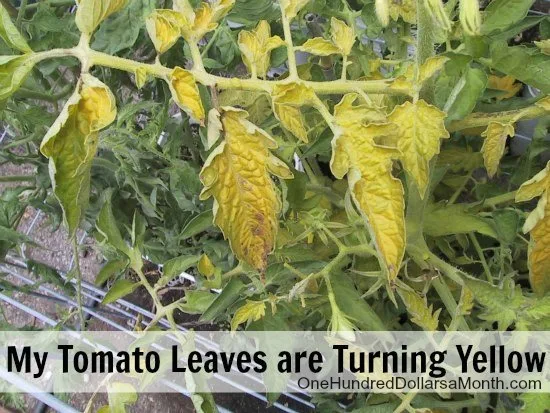
If your tomato leaves are turning yellow in July, you're probably wondering the same thing every Texas gardener asks: are yellow tomato leaves caused by Texas heat or disease? The short answer is that both are common culprits, and they often look nearly identical at first glance. In our research across Texas A&M AgriLife Extension guidance and grower reports, most July and August yellowing traces back to heat stress, watering swings, or spider mites, not fungal disease.
That said, disease pressure spikes fast once daytime highs hover near 95 to 100°F, especially in humid East Texas or along the Gulf Coast. Fusarium wilt, for example, spreads fastest when soil temperatures sit between 80 and 90°F, which is standard for a Texas summer. Getting the diagnosis right, as of 2026, still comes down to reading three simple clues: leaf position, pattern, and pace.
Quick Answer
Yellow tomato leaves in Texas are most often caused by heat stress, not disease. Above 92°F, plants shed lower leaves and slow their growth. True disease usually shows spots, wilting on one side, or vein browning.
Bottom-up fading points to heat or nitrogen. Spreading spots or one-sided wilt point to disease.
Why Yellow Leaves in a Texas Summer Are So Easy to Misread
Yellow tomato leaves are the number one panic call at every Master Gardener help desk in Texas from June through September. The reason is simple. Heat, drought, iron lockout, mites, and vascular disease all trigger yellowing, and they overlap on the same plant.
A stressed tomato pulls nutrients from older leaves first. That's the same shedding pattern early Fusarium wilt shows. Two very different problems, one visual clue.
Layer on Texas realities. Alkaline soils west of I-35 sit at pH 7.5 to 8.2, blocking iron uptake. Clay-heavy central Texas beds hold water unevenly.
Sandy East Texas soils leach nitrogen after every storm. The same yellow leaf can mean five different things depending on your ZIP code.
That's why guesswork fails. Spraying fungicide when the real issue is heat wastes money and stresses the plant harder. Cranking up water when Fusarium is at work speeds up root rot.
Diagnose first, then act.
The 30-Second Check: Heat Stress or Something Worse
Before you touch a hose or spray bottle, walk out at dusk with a flashlight and look at three things. Which leaves are yellow. Whether midday wilt bounces back overnight.
Whether you see spots, webbing, or bronzing.
Here's the quick sort:
- Bottom leaves fading slowly, plant otherwise vigorous, wilt recovers at night = heat and water stress.
- Half the plant wilted, other half fine, no overnight recovery = vascular wilt (Fusarium or Verticillium).
- Tiny yellow specks on upper leaves with fine webbing beneath = spider mites, not disease.
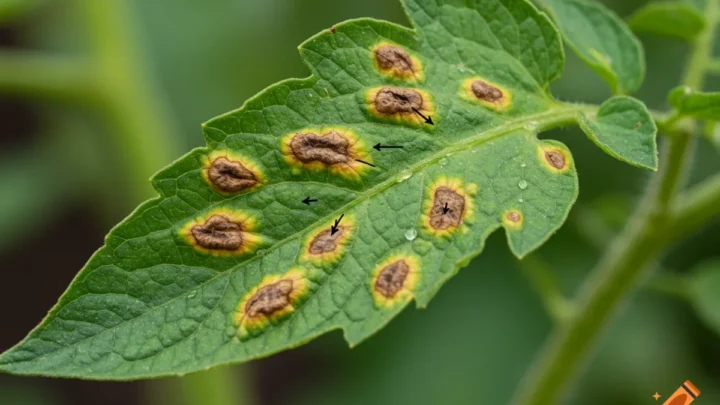
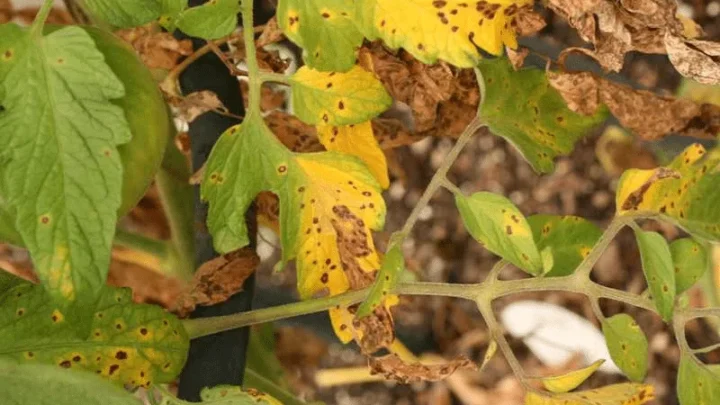
- Dark spots with yellow halos climbing upward = early blight or Septoria leaf spot.
- Cupped, mottled new growth with stunted tips = viral infection.
If none of those match cleanly, dig deeper. The next sections walk you through leaf pattern, position, and disease look-alikes so you can rule causes out one by one.
Reading the Pattern: Where the Yellowing Starts on Your Plant
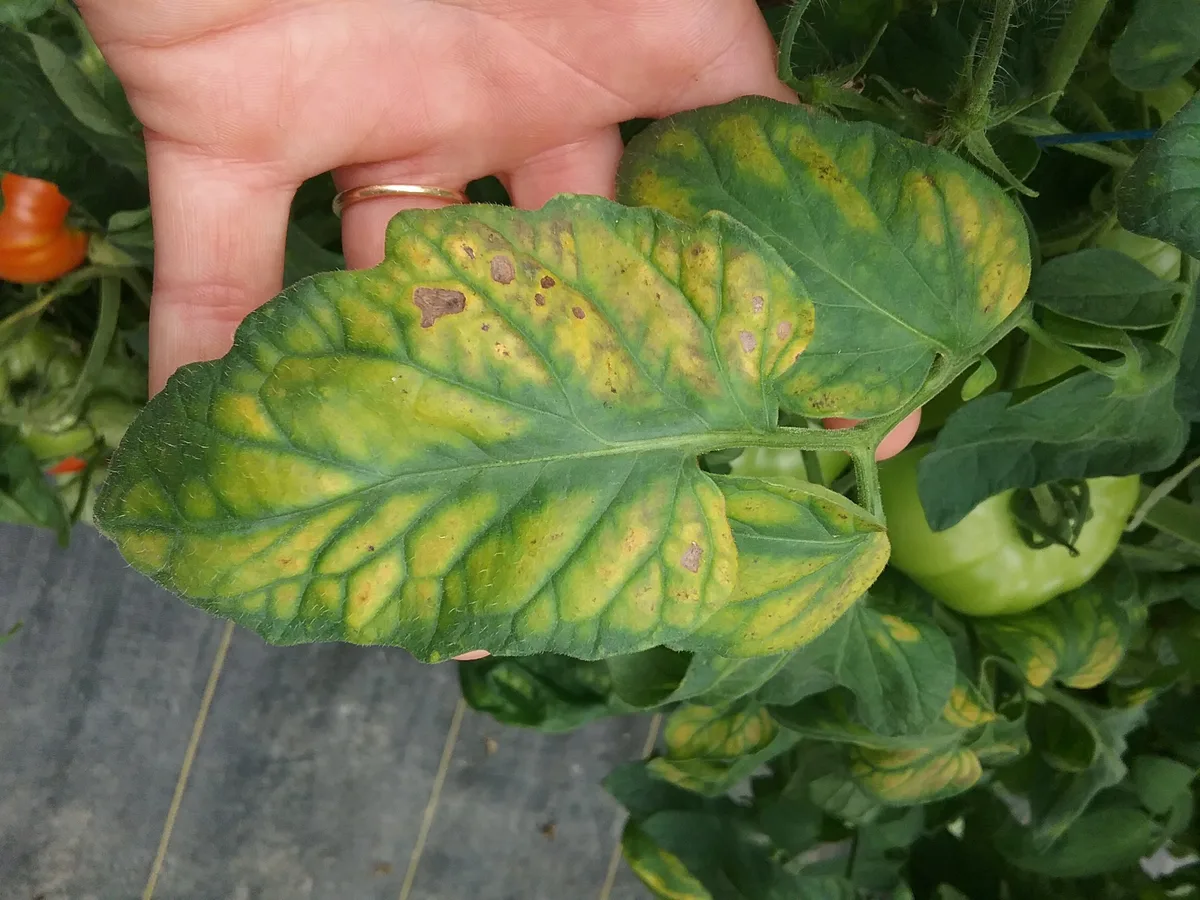
Yellowing follows patterns, and the pattern is your fastest tell. The plant decides which leaves fade first based on exactly what's wrong.
Bottom-Up Yellowing
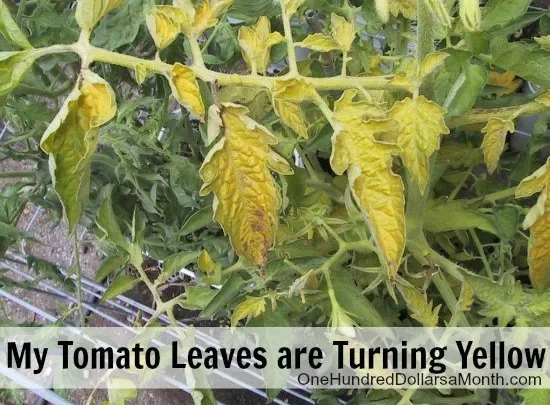
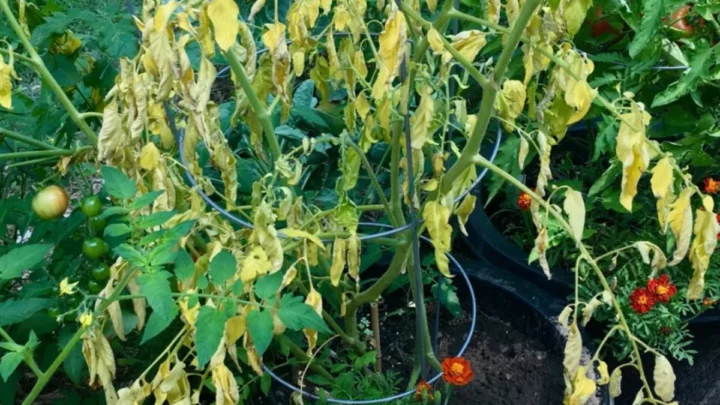
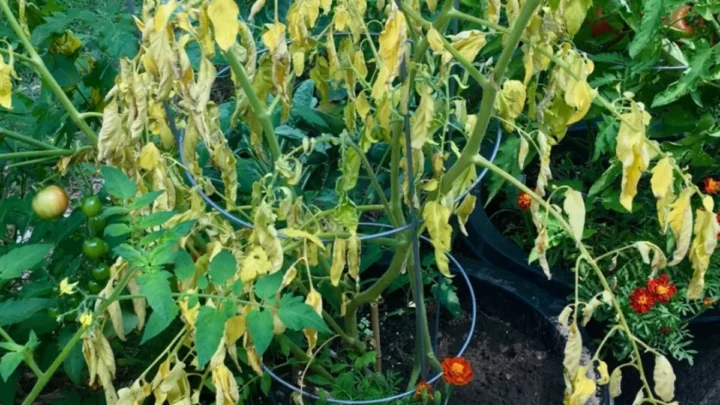
If the lowest leaves fade first and slowly, that's the plant reclaiming nutrients from older tissue. Common causes are heat shedding, nitrogen deficiency after heavy rain, or normal aging. Fusarium can also start here, but it typically yellows one side of the plant before the other, not both sides evenly.
Top-Down or New-Growth Yellowing
Yellow new growth up top means the plant can't move a nutrient upward. On Texas alkaline soils, this is almost always iron chlorosis. It can also signal root damage from nematodes or from waterlogged beds after storms.
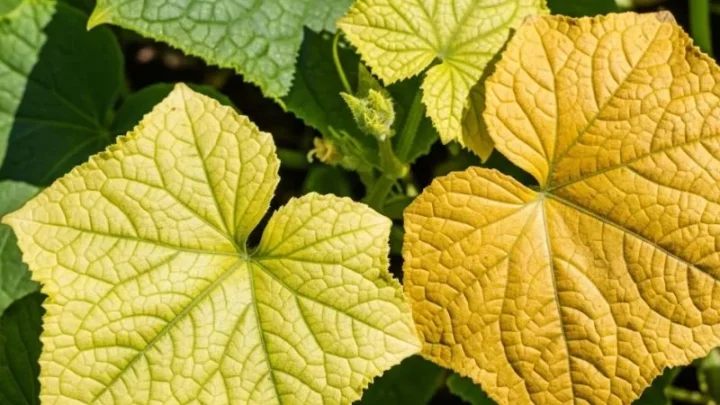
Interveinal Yellowing (Green Veins, Yellow Between)
When leaves turn yellow between the veins while the veins stay green, you're looking at a micronutrient problem. Iron shows on new growth. Magnesium shows on older leaves.
Both are common on Texas soils, especially in raised beds filled with bagged mixes that skip trace minerals.
Texas Heat Stress Symptoms You Can Actually Identify
Heat stress has a fingerprint once you know what to look for. Tomatoes stall above 92°F daytime and 75°F nighttime. Above those numbers, pollen goes sterile and the plant redirects energy inward to survive.
Watch for these signs together:
- Bottom leaves yellowing and dropping while the top stays green
- Upper leaves curling upward or rolling into tubes (physiological leaf roll)
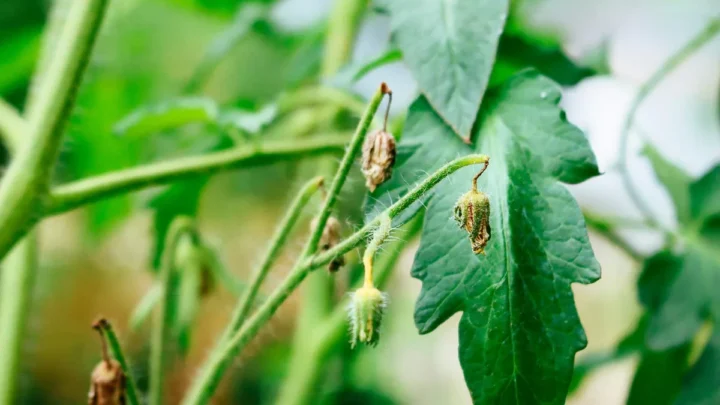
- Flower drop paired with blossom-end rot on the few fruits that do set
- Wilting by 2 p.m. that fully recovers by sunrise
- Sunscald on exposed fruit: pale, papery patches on the sun side
None of those signal fungus. They signal a plant fighting the thermometer. Give it shade cloth and steady watering and it will hold until night temperatures drop back into the 70s.
Disease Symptoms That Mimic Heat Damage
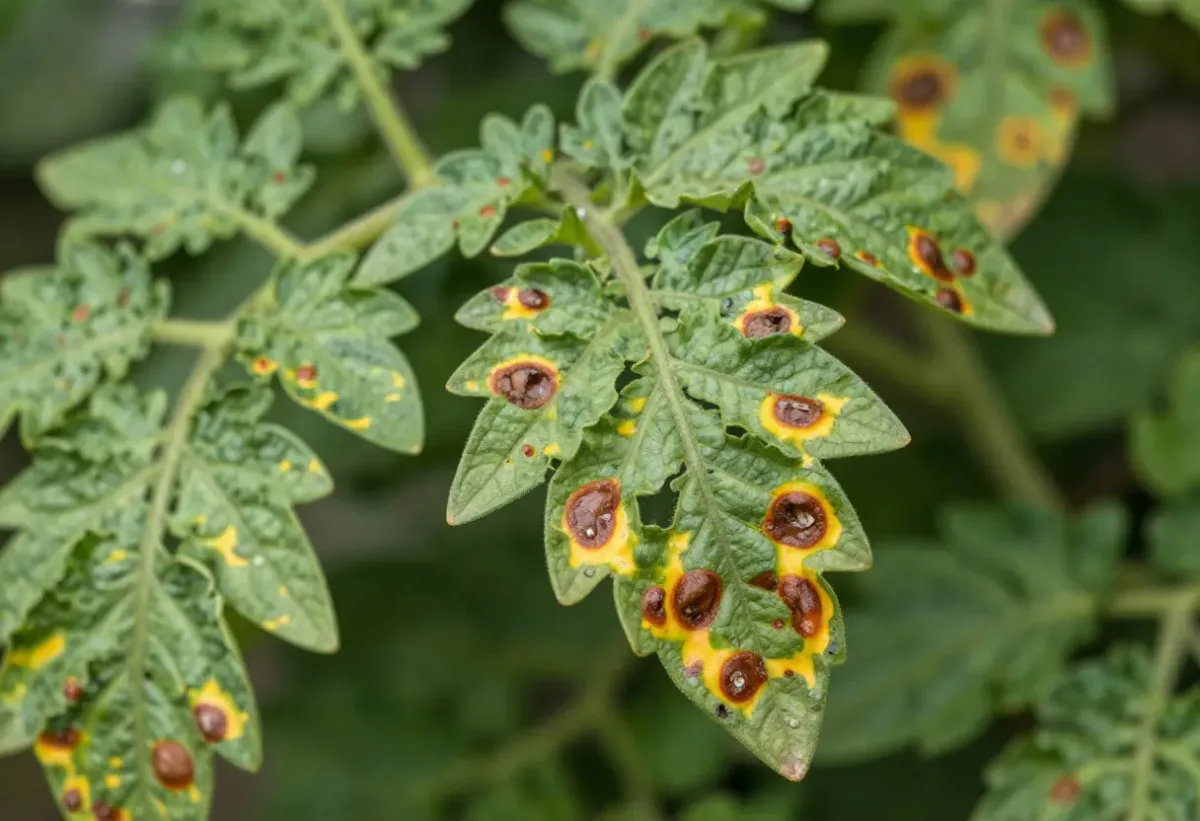
Real disease shows up differently, but the overlap is where gardeners get burned. Learn these four patterns and you'll rarely misdiagnose again.
Fusarium and Verticillium Wilt
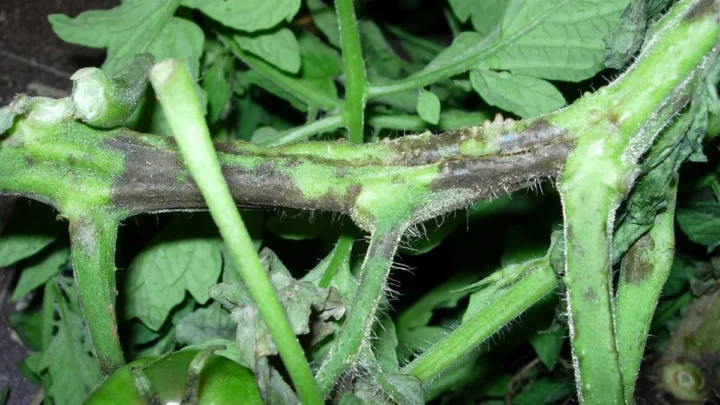
Vascular wilts usually start on one side or one branch of the plant. Leaves yellow, wilt, and don't recover overnight. Cut a lower stem lengthwise.
Brown streaking inside the vascular tissue confirms it. There's no cure. Pull the plant and rotate the bed next season.
Early Blight and Septoria Leaf Spot
Early blight forms dark concentric ring lesions with yellow halos, starting on lower leaves. Septoria produces smaller, more numerous spots with gray centers. Both climb upward in humid weather and explode after summer storms.
Copper fungicide or chlorothalonil at label rates slows both if caught early.
Spider Mite Bronzing (The Sneaky One)
Not a disease, but often blamed as one. Check under leaves for fine webbing and moving specks the size of dust grains. Upper leaves take on a dusty bronze cast that mimics viral damage.
A strong water spray or insecticidal soap knocks the population back quickly.
Viral Yellowing (TSWV and TYLCV)
Viruses cause mottled yellow patches, stunted new growth, and cupped or fern-like leaves. Whiteflies and thrips spread them across the garden. Infected plants can't be cured.
Remove and destroy them fast so neighboring plants stay clean.
The Decision Flow: Working Through the Cause Step by Step
Run through this in order. Each answer either confirms a cause or sends you to the next check.
- Is a heat wave (7+ days above 95°F) hitting right now? If yes and only lower leaves are yellowing with midday wilt, stop here. Heat is the driver.
- Is only one side or one branch wilted and staying wilted? If yes, cut a stem and check for internal browning. Vascular wilt is likely.
- Do you see round spots with yellow halos or gray centers? If yes, it's fungal (early blight or Septoria).
- Is the new growth yellow with green veins? If yes, iron chlorosis from alkaline soil.
- Are lower leaves uniformly pale, plant growing slowly overall? If yes, nitrogen deficiency from leaching or under-feeding.
- Bronzy dust on upper leaves with tiny webs? If yes, spider mites.
- Cupped, mottled, distorted new growth? If yes, likely viral. Remove the plant.
If two branches match, treat the most severe one first. Heat plus mites is common in July. Fusarium plus heat looks worse than either alone.
Soil, Water, and pH Factors Behind Texas Yellowing
Most Texas yellowing has a soil story behind it. Tomatoes want a pH of 6.2 to 6.8, but Central and West Texas soils often test 7.5 to 8.2. At that pH, iron and manganese sit locked up even when they're physically present in the soil.
Watering habits matter just as much. Deep, infrequent watering builds deep roots that survive heat. Shallow daily sprinkling grows shallow roots that fry the first 100°F afternoon.
Aim for 1 to 2 inches per week, delivered at the soil line, early in the morning.
Overhead watering is a fungal invitation. Wet leaves at dusk give early blight and Septoria all night to spread. Drip line or soaker hose keeps foliage dry and puts water where roots can use it.
Container growers face the opposite problem. Pots dry out twice as fast in Texas heat, then flood when you overcorrect. That yo-yo swing shows up as yellow leaves within 48 hours.
| Soil clue | Likely cause | Quick fix |
|---|---|---|
| pH above 7.5, yellow new growth | Iron chlorosis | Chelated iron (Fe-EDDHA) drench |
| Sandy soil after storms, pale plant | Nitrogen leaching | Side-dress with balanced fertilizer |
| Waterlogged bed, wilting despite wet soil | Root suffocation | Improve drainage, hold water back |
| Dry crust, dust-dry root zone | Underwatering | Deep soak, then mulch 2 to 3 inches |
What to Do If It's Heat Stress
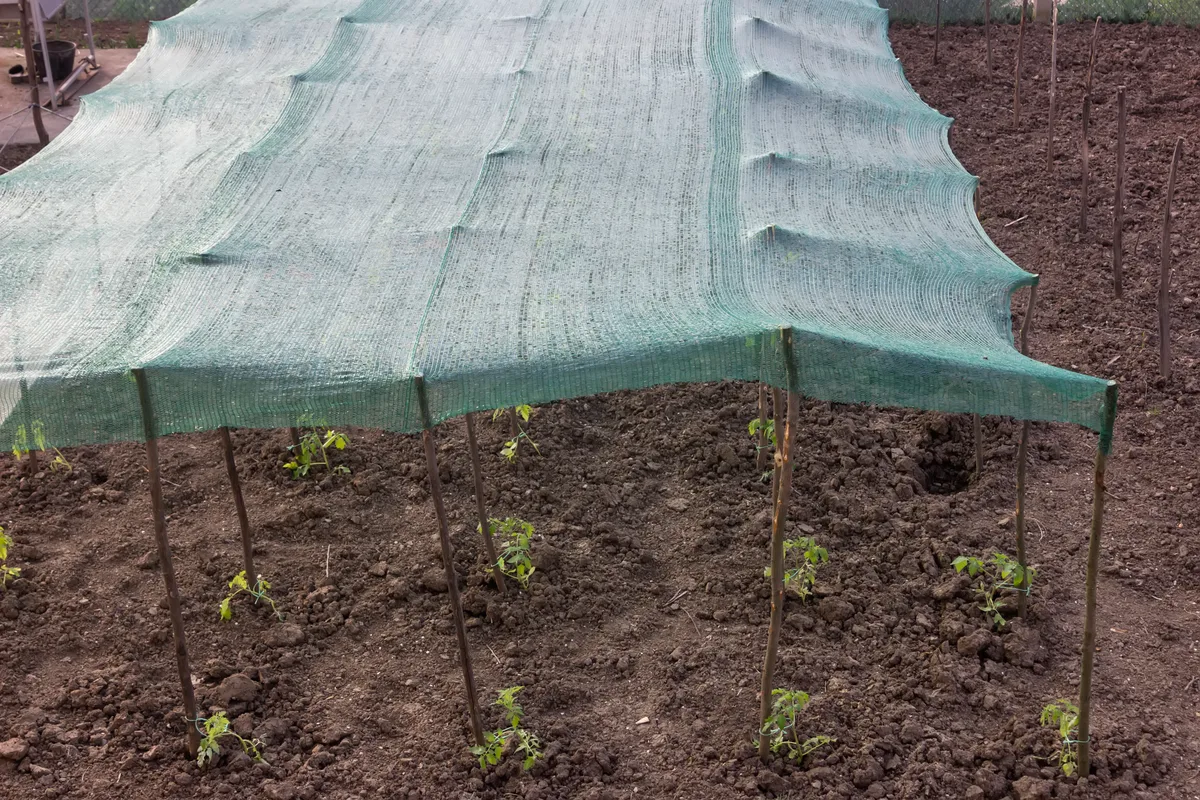
Heat stress is manageable. The plant isn't dying, it's coasting. Your job is to buy it time until nighttime lows drop below 75°F again.
Do these five things this week:
- Install 30 to 40 percent shade cloth over the plants from noon to 6 p.m. Anything denser cuts too much photosynthesis.
- Mulch 2 to 3 inches deep with straw, dried grass, or shredded leaves. Keep it 2 inches off the stem to prevent Southern blight.
- Water deeply at 5 to 7 a.m. Skip evening watering, which invites disease.
- Prune the lower 12 inches of foliage for airflow and to stop soil splash.
- Skip fertilizer until temperatures drop. Feeding a heat-stressed plant forces growth it can't sustain.
Don't strip yellow lower leaves in bulk. They still shade the root zone. Take them off gradually as new growth fills in above.
Fall planting is your reset button. Most of Texas can set new transplants in mid to late July for an October harvest, per Texas A&M AgriLife recommendations. Cooler nights bring pollen back to life and fruit set returns.
What to Do If It's Disease
Disease response depends on which disease you're facing. Guessing is expensive. Confirm the cause first with the pattern checks above, then act fast.
For Fusarium or Verticillium wilt: there's no chemical cure. Pull the plant, roots and all. Bag it and put it in the trash, never the compost.
Solarize the bed for 4 to 6 weeks under clear plastic. Next season, plant only VFN-resistant varieties like Celebrity, Tycoon, or Phoenix.
For early blight and Septoria leaf spot: prune all affected leaves the moment you spot them. Apply copper fungicide or chlorothalonil at label rates. Repeat every 7 to 10 days during humid stretches.
Water at the soil only and space plants 24 inches apart for airflow.
For spider mites: hit the undersides of leaves with a strong water jet three days in a row to knock down the population. Follow with insecticidal soap or a horticultural oil at label rates. Neem works too if temperatures stay below 90°F when you spray.
For viral infections (TSWV, TYLCV): remove and destroy the plant. Control whiteflies and thrips on nearby plants with yellow sticky traps and insecticidal soap. Never save seed from an infected fruit.
For unclear cases, submit a sample to the Texas Plant Disease Diagnostic Lab through your county extension office. It's cheap, official, and stops guesswork.
Mistakes That Kill Texas Tomato Plants Faster
Most tomato deaths in Texas aren't caused by the original problem. They're caused by the response. These are the errors we see most often in grower reports.
- Watering more when leaves wilt in midday. Wilt at 2 p.m. is normal in 100°F heat. Extra water suffocates roots.
- Spraying fungicide before confirming disease. Copper on a heat-stressed plant does nothing but add stress.
- Feeding nitrogen during a heat wave. Forces tender growth that scorches immediately.
- Mulching straight against the stem. Traps moisture and invites Southern blight fungus.
- Planting the same variety in the same bed year after year. Fusarium builds in the soil and wipes out the crop by year three.
- Buying non-resistant transplants because they look bigger at the store. Look for VFN or VFNT codes on the tag.
- Overhead watering at dusk. The worst possible combo for foliar disease spread.
- Ignoring the underside of leaves. Spider mites double every 3 to 5 days in dry heat. By the time bronzing shows up top, the population is huge.
- Composting diseased plants. Home compost rarely gets hot enough to kill Fusarium or Verticillium spores.
Fix the response and the plant often recovers, even from bad-looking yellowing.
Region-by-Region Notes: Central, East, West, and Coastal Texas
Diagnosis shifts with your part of the state. What kills tomatoes in Houston rarely bothers Lubbock, and vice versa.
Central Texas (Austin, Waco, San Antonio): clay soils and pH near 8. Iron chlorosis on new growth is the top summer complaint. Fusarium builds fast in heavy soils.
Raised beds with amended compost help enormously.
East Texas (Tyler, Nacogdoches, Lufkin): sandy loam plus Gulf humidity. Septoria and early blight lead the disease charts. Nitrogen leaches after every thunderstorm.
Side-dress lightly and often.
West Texas (Lubbock, Midland, El Paso): alkaline caliche, low humidity, huge day-night swings. Spider mites explode in the dry heat. Iron chlorosis is severe.
Fungal disease is rarer, but sunscald and heat curl are constant.
Coastal Texas (Houston, Corpus Christi, Galveston): heat and humidity year-round. Bacterial spot, TSWV from thrips, and TYLCV from whiteflies are common. Raised beds and drip irrigation aren't optional here.
North Texas (DFW, Denton): late-May heat spikes catch spring plants before they set fruit. Fall planting in mid-July is the reliable window.
Prevention for the Next Planting Cycle
The best time to prevent yellowing is before the next transplant goes in the ground. Small choices in March save the plant in July.
- Buy VFN or VFNT-resistant varieties. Look for those codes on the tag, not just the variety name.
- Rotate beds. Don't plant tomatoes, peppers, eggplant, or potatoes in the same bed for at least 3 years.
- Test your soil. County extension offices run pH and nutrient tests for a small fee. Adjust before planting.
- Install drip irrigation from day one. Retrofitting mid-season is harder than starting right.
- Mulch at transplant, not in July. Early mulching keeps soil temps under 85°F longer into the season.
- Plan a fall crop. Fresh transplants in late July avoid most of the Fusarium cycle and catch the October fruit-setting window.
- Keep a garden log. Note which varieties yellowed, when, and where. Patterns show up over two or three seasons.
Prevention beats treatment every single time in Texas. The heat is the one variable you can't change, so everything else has to compensate.
Frequently Asked Questions
Should I remove yellow leaves from my tomato plant?
Only remove leaves that are fully yellow, brown, or diseased. Green-yellow transitional leaves still photosynthesize and shade the root zone. Cut cleanly at the stem with sanitized pruners.
If disease is suspected, bag the trimmings and throw them out. Never compost potentially infected foliage.
Will yellow tomato leaves turn green again?
Yellow leaves usually don't turn green again because the chlorophyll has broken down. New growth on top will be green if you fix the underlying cause: heat, watering, iron lockout, or nitrogen deficiency. Focus on healthy new leaves rather than trying to save damaged ones.
The plant recovers upward, not backward.
What temperature is too hot for tomato plants in Texas?
Tomatoes stop setting fruit reliably above 92°F daytime and 75°F nighttime. Sustained days above 95°F trigger heat curl, flower drop, and lower-leaf yellowing. Plants survive far higher temperatures, but they pause growth and fruit set.
Fall planting resumes production when nights drop back below 75°F.
Can I save a tomato plant with Fusarium wilt?
No, Fusarium wilt cannot be cured once it enters the plant's vascular system. Pull the plant, bag it, and dispose in the trash. The fungus stays in the soil for years, so rotate that bed to non-related crops.
Plant only VFN-resistant varieties in that spot next season.
Is it heat stress or overwatering causing yellow leaves?
Check the soil 4 to 6 inches down. Wet, soggy soil with yellow leaves means overwatering or poor drainage. Dry soil with wilt that recovers overnight means heat stress.
Overwatered plants also show mushy stems near the base. Heat-stressed plants stay firm at the stem but droop under sun.
Your Quick Diagnosis Guide
Keep this on your phone for the next hot afternoon.
| Symptom | Most likely cause | First action |
|---|---|---|
| Lower leaves yellow, plant vigorous | Heat shedding | Shade cloth, deep watering |
| One-sided wilt, no overnight recovery | Fusarium or Verticillium | Confirm with stem cut, remove plant |
| Dark ring spots on lower leaves | Early blight | Prune, copper fungicide |
| Small gray-center spots spreading up | Septoria leaf spot | Prune, chlorothalonil |
| Bronzy dust on upper leaves | Spider mites | Water spray, insecticidal soap |
| Yellow new growth, green veins | Iron chlorosis | Chelated iron drench |
| Cupped, mottled new growth | TSWV or TYLCV virus | Remove plant, control insects |
| Pale plant, slow growth | Nitrogen deficiency | Side-dress balanced fertilizer |
Diagnose first. Match the pattern to the cause. Then act with the right tool.
Do that and Texas tomatoes stay productive right through the toughest stretch of summer.

Similar Posts