Why Are Only the Tips of My Plant Leaves Turning Brown?
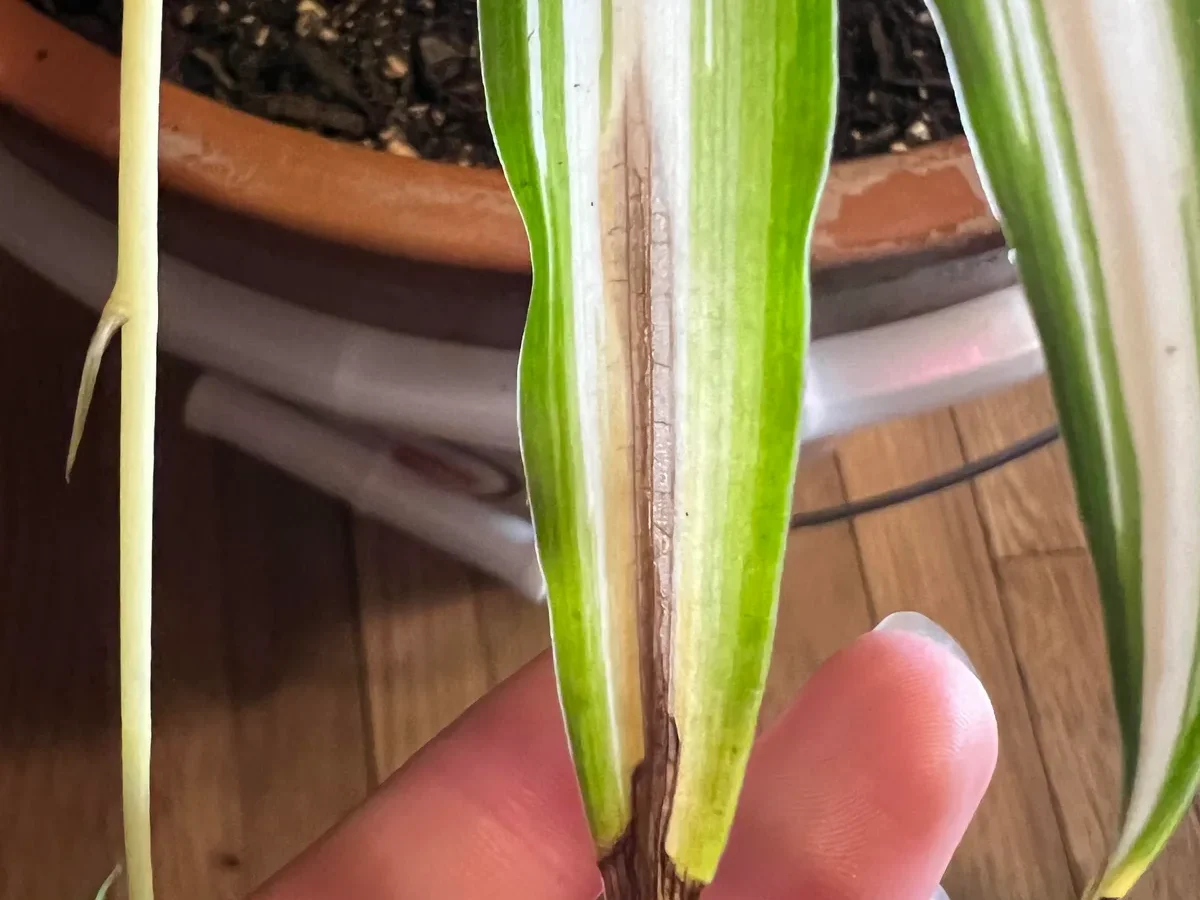
If you've ever stared at a plant and wondered, "Why are only the tips of my plant leaves turning brown?" you're not imagining a picky plant. That symptom almost always points to one of a few specific problems. The middle of the leaf staying green is actually the clue.
It means the plant is coping fine overall. Something is just failing at the very edges of the leaf.
The most common triggers, based on aggregate horticultural guidance, are inconsistent watering, low humidity, and mineral buildup from tap water or fertilizer. Many tropical houseplants sold in North America as of 2026 are humidity-sensitive species like Calathea, Dracaena, and Spider Plant. Those tend to show tip burn first.
Let's start with why the tips, and not the whole leaf, are what break down.
Quick Answer
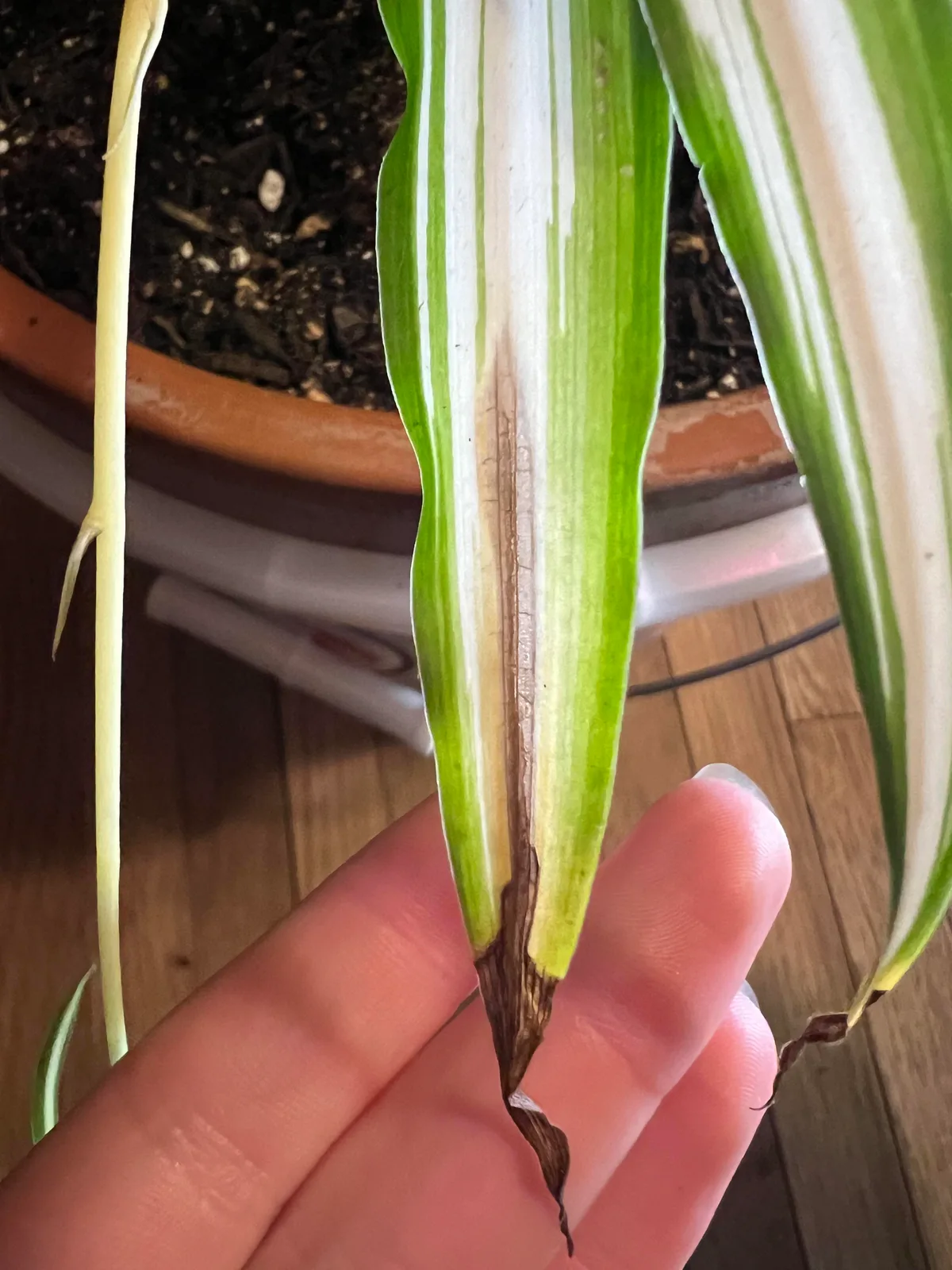
Only the tips brown when water can't reach the leaf edge. The main causes are inconsistent watering and low humidity. Salt buildup from tap water or fertilizer also plays a role.
Fix the underlying cause first, then trim the dead tips. The rest of the leaf stays healthy.
Why Only the Tips Turn Brown (and Not the Whole Leaf)
Leaves work like a plumbing system. Water enters through the roots, moves up the stem, and travels out through tiny veins. The tips and edges are the last stop on that pipeline.
When anything disrupts water flow, the tips are the first tissue to die. The center of the leaf still gets what it needs. The outer edge does not.
This process is called marginal leaf necrosis. It shows up as a crispy or soft brown patch at the tip, often with a yellow halo where healthy tissue meets dead tissue.
A few things make tip burn worse than other symptoms:
- Low humidity pulls extra moisture out of the leaf edges through transpiration.
- Salt and mineral buildup in the soil concentrates in the tips over time.
- Damaged roots can't push water far enough to reach the outer leaf.
- Cold or hot air blowing on the plant dries the tips faster than the base.
The good news is that green tissue means the plant is still working. You're catching a warning sign, not a dying plant. According to the Missouri Botanical Garden, tip browning on tropicals is one of the most common indoor plant complaints.
The Fastest Way to Tell What's Actually Wrong
Before you change anything, spend two minutes looking. Guessing wrong wastes time and can make things worse.
Start with these five observations:
- Touch the tip. Is it crispy and papery, or soft and mushy?
- Push your finger into the soil at 2 inches deep. Dry, damp, or soggy?
- Look at the soil surface. Any white crust or mineral residue?
- Check the plant's location. Is it near a heater, AC vent, or cold window?
- Think about your water. Do you use tap water straight from the faucet?
Each answer points toward a different cause. A crispy tip on dry soil almost always means underwatering or low humidity. A soft tip on soggy soil points to root rot.
White crust means salt buildup. A vent nearby means dry-air stress.
Write down what you notice. You'll use it in the decision tree further down.
Crispy Brown Tips vs. Soft Brown Tips: What Each One Means
The texture of the brown tip is one of the fastest diagnostic tools you have. Crispy and soft mean very different things.
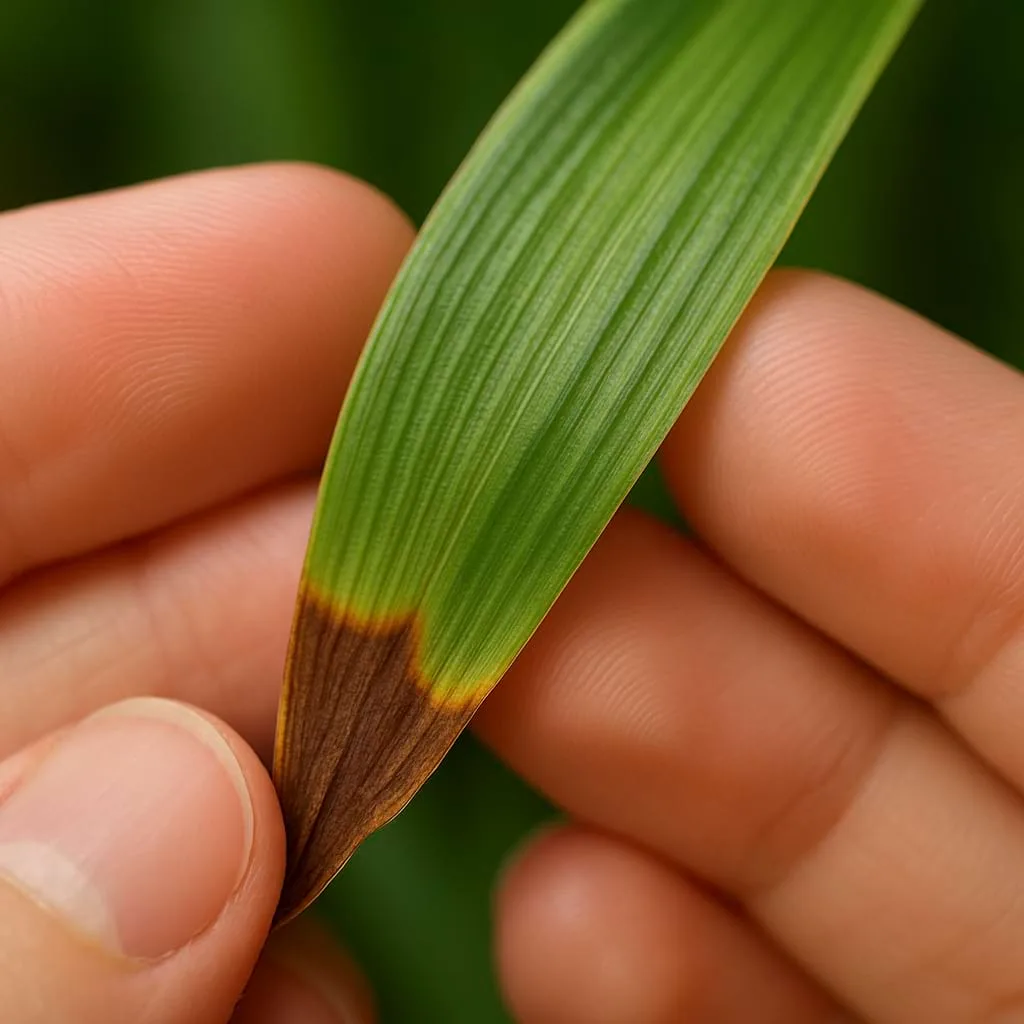
Crispy, papery, dry tips almost always mean the leaf lost water it couldn't replace. Think dehydration. The cell walls collapsed and dried out.
Soft, mushy, dark tips mean the opposite problem. Roots are damaged, usually from too much water or poor drainage. The plant can't move water at all, so cells burst and rot.
| Symptom | Texture | Usual Cause | First Fix |
|---|---|---|---|
| Crispy brown tips | Dry, papery, curled | Underwatering, low humidity, salt buildup, fluoride | Check watering and water source |
| Soft brown tips | Mushy, dark, wet | Overwatering, root rot, poor drainage | Check roots and drainage |
| Yellow halo around tip | Firm but fading | Fertilizer burn or hard water | Flush soil |
| One-sided browning | Crispy on one edge | Sun scorch or heat vent damage | Move the plant |
If you can figure out crispy or soft in the first ten seconds, you've already cut the list of possible causes in half.
The 6 Real Causes of Brown Leaf Tips
Almost every case of tip browning traces back to one of six issues. Here's what each looks like and why it happens.
Inconsistent Watering (Too Little, Too Late)
Plants tolerate a regular rhythm much better than random watering. When soil dries out completely and then gets flooded, the fine feeder roots die back. Those are the roots that push water to the outer leaf.
You'll usually see crispy tips on lower leaves first. New growth stays green. The soil often looks bone-dry or pulls away from the pot's edge.
The fix is a steady schedule based on the plant's needs, not the calendar. Most tropicals want the top inch of soil to dry between waterings.
Overwatering and Early Root Rot
Overwatering is the more common killer. Soggy soil starves roots of oxygen. Damaged roots can't move water, so leaves brown at the tips even though the pot is wet.
Signs to watch for:
- Soft, dark brown tips instead of crispy ones
- Yellowing lower leaves
- A sour smell from the soil
- Roots that look brown or mushy instead of white
Let the soil dry to at least 2 inches down before watering again. If roots already smell off, repot into fresh, well-draining mix.
Low Humidity from Heaters and AC
Tropical houseplants evolved in air that's 60% to 80% humid. Indoor air in heated homes often drops to 20% to 30% in winter. That's desert-level dry.
Leaves then lose water through their pores faster than roots can replace it. The tips dry first because they're farthest from the roots.
Calathea, Maranta, Alocasia, and ferns are the biggest complainers. A room humidifier holding 40% to 60% relative humidity solves most of these cases.
Fluoride, Chlorine, and Hard Water Damage
Municipal tap water often contains fluoride, chlorine, chloramine, and dissolved minerals. Some plants handle it fine. Others take real damage at fluoride levels as low as 1 part per million.
The classic fluoride-sensitive group includes Spider Plant, Dracaena, Cordyline, and Peace Lily. Their tips brown from the outside in, often with a clean yellow band before the dead tissue.
Per US Environmental Protection Agency drinking water data, most municipal supplies contain fluoride near 0.7 ppm. That's enough to injure sensitive species over months. Filtered, rainwater, or distilled water usually solves it.
Letting tap water sit 24 hours removes chlorine but not chloramine or fluoride.
Fertilizer Salt Buildup in the Soil
Every time you fertilize, some salts stay behind in the soil. Over months, they build up and burn the delicate root hairs. Damaged roots can't reach the outer leaf, so tips brown.
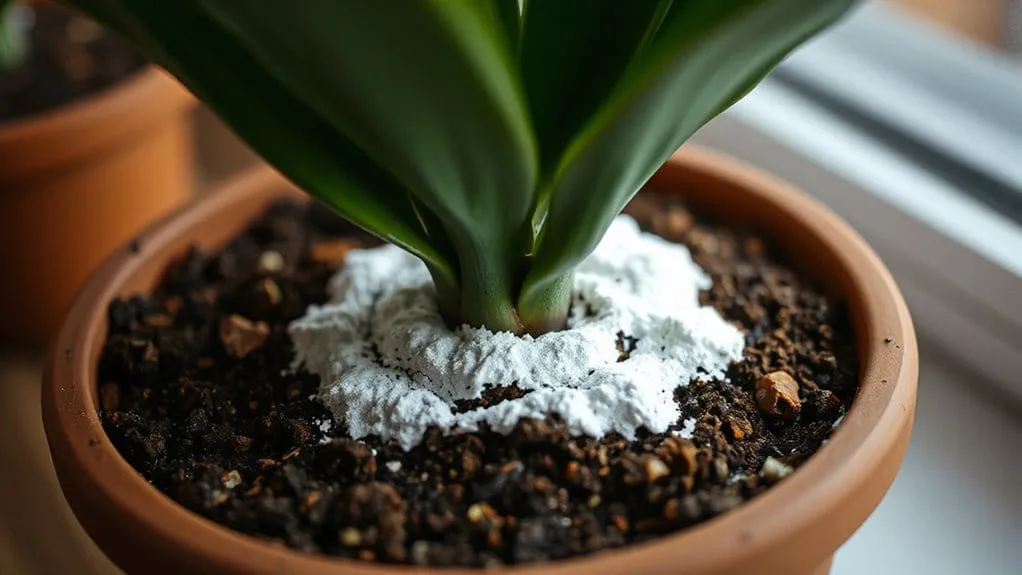
You'll often spot a white or yellowish crust on the soil surface, around the pot rim, or on the outside of a terracotta pot. That crust is the buildup, made visible.
Two habits prevent it:
- Fertilize at half or quarter strength, not full label rate
- Flush the pot with plain water every 2 to 3 months
If you already see crust, skip fertilizer for at least a month and flush the pot thoroughly.
Sunburn, Cold Drafts, and Physical Damage
Sometimes the cause is purely mechanical. A leaf tip pressing against a cold window in winter can freeze and brown overnight. A tip caught in a heater vent dries out in a single afternoon.
Direct hot sun through a south-facing window can scorch tips on plants that prefer bright indirect light. The browning usually appears only on the side that faced the sun.
Move the plant a few feet away from the trigger. New growth will come in clean.
The Decision Tree: Diagnose Your Plant in 5 Questions
Answer these in order. Each answer points to the most likely cause and the right first fix.
Question 1. Are the brown tips crispy or soft?
- Crispy, go to Question 2.
- Soft and mushy, likely overwatering or root rot. Check roots and drainage before doing anything else.
Question 2. Is the soil dry 2 inches down?
- Yes and the plant droops between waterings, likely underwatering. Water more consistently.
- No, the soil stays evenly damp. Go to Question 3.
Question 3. Is there white crust on the soil or pot rim?
- Yes, likely fertilizer or mineral salt buildup. Flush the pot and pause feeding.
- No, go to Question 4.
Question 4. Do you use unfiltered tap water on a sensitive species (Spider Plant, Dracaena, Peace Lily, Calathea)?
- Yes, likely fluoride or chloramine damage. Switch to filtered, distilled, or collected rainwater.
- No, go to Question 5.
Question 5. Is the plant within a few feet of a heater vent, AC vent, radiator, or single-pane window?
- Yes, likely dry-air stress or cold damage. Move it and consider a humidifier.
- No, check for a pot-bound root ball or old, compacted soil. Repotting into fresh mix often solves the last 10% of cases.
Work through the list once and you'll usually land on the real cause. Fix that one thing before changing anything else. Changing three variables at once makes it impossible to tell what actually helped.
Plants That Are Extra Sensitive to Tip Browning
Some species tip-burn at the slightest problem. Others shrug off the same conditions.
The most sensitive common houseplants:
- Spider Plant (Chlorophytum comosum), reacts fast to fluoride and chlorine
- Dracaena (all varieties, including Corn Plant and Janet Craig), fluoride and salt sensitive
- Peace Lily (Spathiphyllum), sensitive to chlorine and low humidity
- Calathea and Maranta (Prayer Plants), demand 50%+ humidity
- Ti Plant (Cordyline), classic fluoride tip burn
- Boston Fern and Maidenhair Fern, dry-air specialists
Tougher plants that rarely tip-burn include Snake Plant, ZZ Plant, Pothos, and Philodendron. If a Pothos shows brown tips, something is seriously off.
The sensitive group needs filtered water or rainwater as a baseline. Skip that step and tips will keep browning no matter what else you fix.
How to Fix Brown Tips Based on the Cause
Once you've pinned down the cause, the fix is usually simple. Match the action to the problem instead of doing everything at once.
Fixing a Watering Problem
Set a rhythm based on the plant, not the day of the week. Push a finger 2 inches into the soil before every watering. If it's damp, wait.
When you water, water thoroughly until it runs out the drainage hole. Empty the saucer within 15 minutes. Standing water suffocates roots.
Flushing Salts Out of the Soil
Move the pot to a sink or tub. Run room-temperature water slowly through the soil for 5 to 10 minutes.
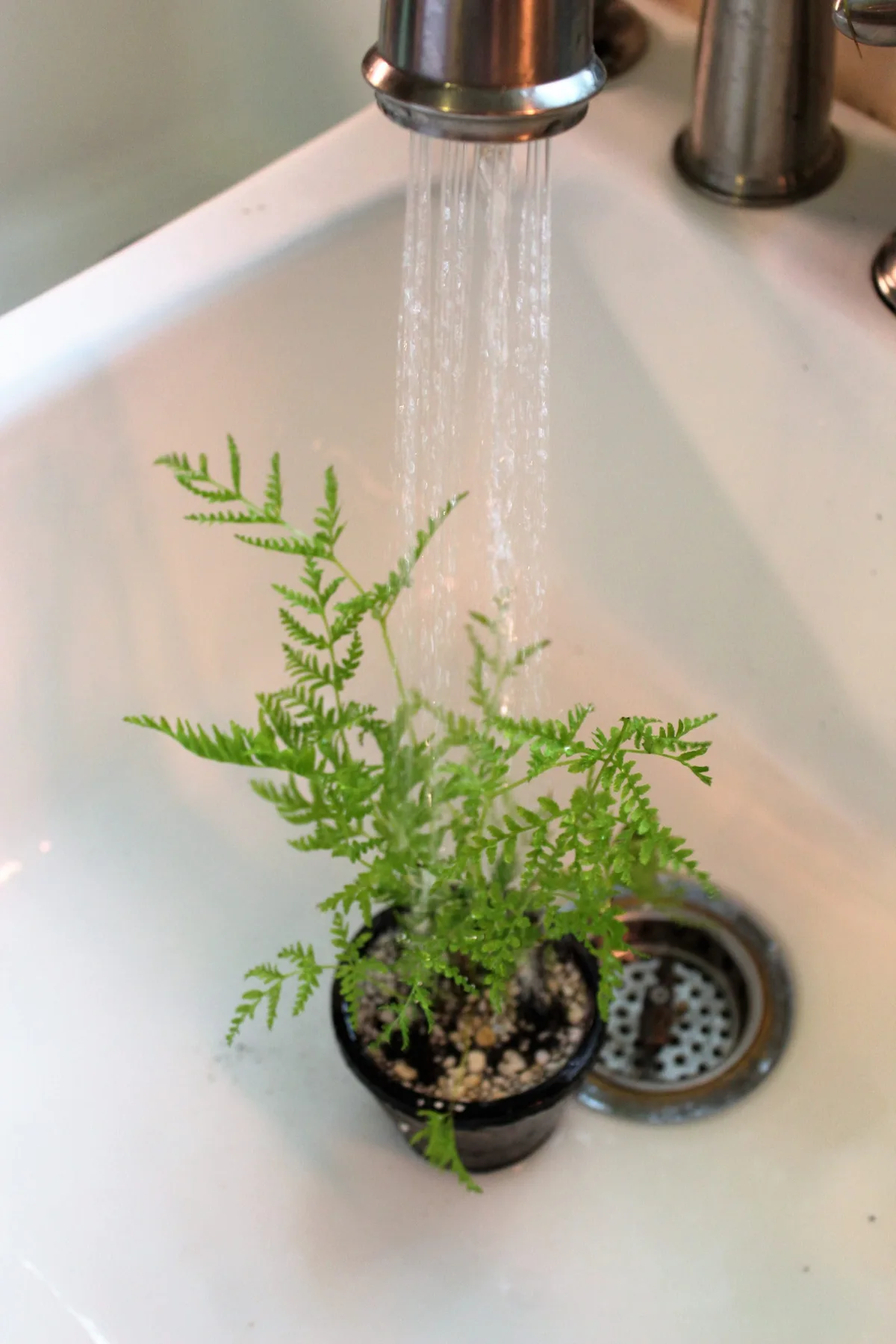
Use roughly 4 times the pot's volume in water. That's enough to leach out most fertilizer salts and mineral buildup. Let the pot drain fully before returning it to its saucer.
Do this every 2 to 3 months for any plant you feed regularly. Skip fertilizer for 4 weeks after flushing.
Switching Your Water Source
For sensitive species, the quickest fix is a different water source. Options ranked by cost:
- Collected rainwater, free and ideal
- Distilled water, cheap and reliable
- Reverse osmosis or filtered water, good middle ground
- Tap water left uncovered 24 hours, only removes chlorine
Avoid softened water from a sodium-based system. It swaps calcium for sodium, which damages roots. If your home has a softener, use the outdoor tap or bottled water for plants.
Raising Humidity the Right Way
A humidifier is the only method that reliably moves the needle. Aim for 40% to 60% relative humidity in the room, measured with a cheap hygrometer.
Misting looks helpful, but the effect lasts minutes, not hours. Pebble trays help slightly. Grouping plants creates a small humid pocket but won't rescue a Calathea in a 20% room.
Repotting When the Mix Is Exhausted
Potting mix breaks down after 18 to 24 months. Compacted mix holds water badly and traps salts. If flushing doesn't help and roots circle the pot, repot.
Use a fresh mix suited to the plant. Most tropicals want a chunky, aroid-style blend with bark, perlite, and peat or coco coir. Go up one pot size only.
Should You Cut the Brown Tips Off?
Yes, and it won't hurt the plant. Dead tissue won't turn green again. Trimming is cosmetic, but it helps you spot new damage.
Use clean, sharp scissors. Cut just inside the brown, following the natural leaf shape. Leaving a thin sliver of brown looks tidier than a blunt straight cut.
If the whole tip is dead but the leaf is otherwise healthy, keep the leaf. The green tissue still feeds the plant through photosynthesis.
Mistakes That Make Brown Tips Worse
A few well-meaning moves usually backfire.
- Watering on a strict weekly schedule instead of checking the soil
- Misting a Calathea daily and calling it humidity
- Fertilizing a stressed plant to help it recover, which burns roots further
- Moving the plant repeatedly while it adjusts, adding stress on top of stress
- Using softened tap water without realizing it damages roots
- Cutting off healthy green leaves along with brown tips
- Repotting into a much bigger pot, which holds excess water and rots roots
Change one variable at a time. Give the plant 2 to 4 weeks to respond before adjusting again.
What to Expect After You Fix the Cause
New growth is the real signal of recovery. Existing damaged leaves stay damaged, but fresh leaves should come in clean and fully green.
| Timeframe | What You Should See |
|---|---|
| Week 1 | No new browning on existing leaves |
| Week 2 to 3 | Plant looks less droopy, soil moisture stabilizes |
| Week 4 to 6 | First new leaves emerge, tips fully green |
| Month 2 to 3 | Older damaged leaves may yellow and drop naturally |
If new leaves still come in with brown tips after 6 weeks, the cause wasn't fully solved. Restart the diagnosis at the decision tree. The answer is usually water quality or a root issue you didn't catch the first time.
When Brown Tips Signal a Bigger Problem
Brown tips are usually cosmetic. But a few patterns mean something worse is happening beneath the soil.
Call it serious when you see:
- Rapid browning that spreads from tip to base within days
- Multiple leaves yellowing and dropping at the same time
- A sour or musty smell from the soil
- Stems turning soft, black, or hollow near the base
Any of these point to advanced root rot or a fungal issue. Unpot the plant, trim mushy roots with clean scissors, and repot into fresh, dry mix.
Quick Reference Chart: Symptom to Solution
| Symptom | Most Likely Cause | First Action |
|---|---|---|
| Crispy tips, dry soil | Underwatering | Water on a steady rhythm |
| Soft tips, wet soil | Root rot | Check roots, repot if needed |
| White crust on soil | Fertilizer salt buildup | Flush pot, pause feeding |
| Tips on Spider Plant or Dracaena | Fluoride in tap water | Switch to rainwater or distilled |
| Tips near a vent or window | Dry air or cold draft | Move the plant |
| New leaves also brown-tipped | Cause not fully fixed | Restart diagnosis |
Frequently Asked Questions
Will brown leaf tips grow back green?
No. Dead leaf tissue can't regenerate color. Once cells collapse and brown, that section stays brown for the life of the leaf.
Fix the underlying cause so new growth comes in fully green. You can trim the dead part off for looks.
How often should I flush my potted plants?
Every 2 to 3 months for any plant on a regular fertilizer schedule. Run plain, room-temperature water through the pot for 5 to 10 minutes until it drains freely. This removes built-up salts before they burn root hairs and trigger tip browning.
Does misting actually help with humidity?
Not really. Misting raises humidity for minutes, not hours. A hygrometer will show the reading drop back within 20 minutes.
For humidity-sensitive plants like Calathea, a room humidifier holding 40% to 60% is the only reliable fix.
Is tap water safe for houseplants?
For tough plants like Pothos and Snake Plant, yes. For sensitive species (Spider Plant, Dracaena, Peace Lily, Ti Plant, Calathea), tap water often causes tip burn from fluoride, chloramine, or hard-water minerals. Use filtered, distilled, or collected rainwater instead.
Your Next Step: A Simple Diagnosis Plan
Start with the decision tree. Change one variable, then wait 2 to 4 weeks. Watch new growth for the answer.
If fresh leaves come in clean and green, you found the cause. If they still show brown tips, work through the tree again with a new suspect.

Similar Posts