Why Are My Plant Leaves Turning Brown? Causes & Fixes
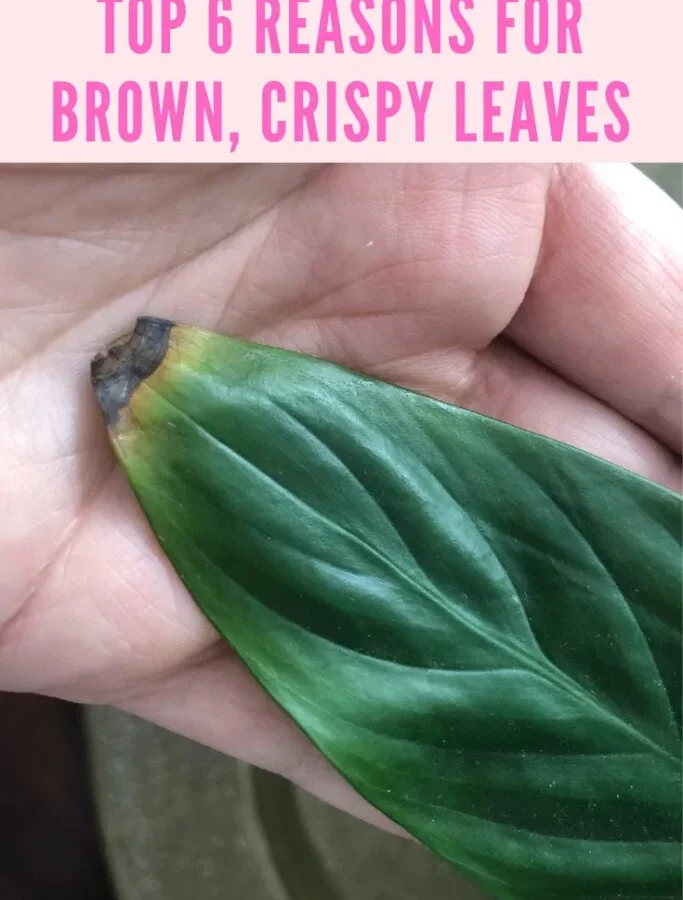
If you've been staring at a sad, crispy leaf wondering why are my plant leaves turning brown, the honest answer is that the pattern of the browning tells you the cause. Brown tips mean one thing. Soft, mushy edges mean something completely different.
Once you learn to read the leaf, the fix usually becomes obvious.
Most browning in houseplants traces back to five root causes: watering issues, low humidity, salt or tap-water buildup, sun scorch, or pests and disease. In our research across university extension guides as of 2026, most tropicals do best between 40 and 60 percent relative humidity and 65 to 75°F. Miss that window for weeks and leaves start dying at the edges.
Let's start with what those brown patches are actually telling you.
Quick Answer
Plant leaves turn brown when tissue dies from stress. The most common causes are underwatering, overwatering, low humidity, salt buildup, sun scorch, root rot, and pests. The location and texture of the brown area point to the cause.
Crispy brown tips suggest humidity or salts. Soft, mushy patches suggest root rot. Bleached patches on top leaves suggest sun damage.
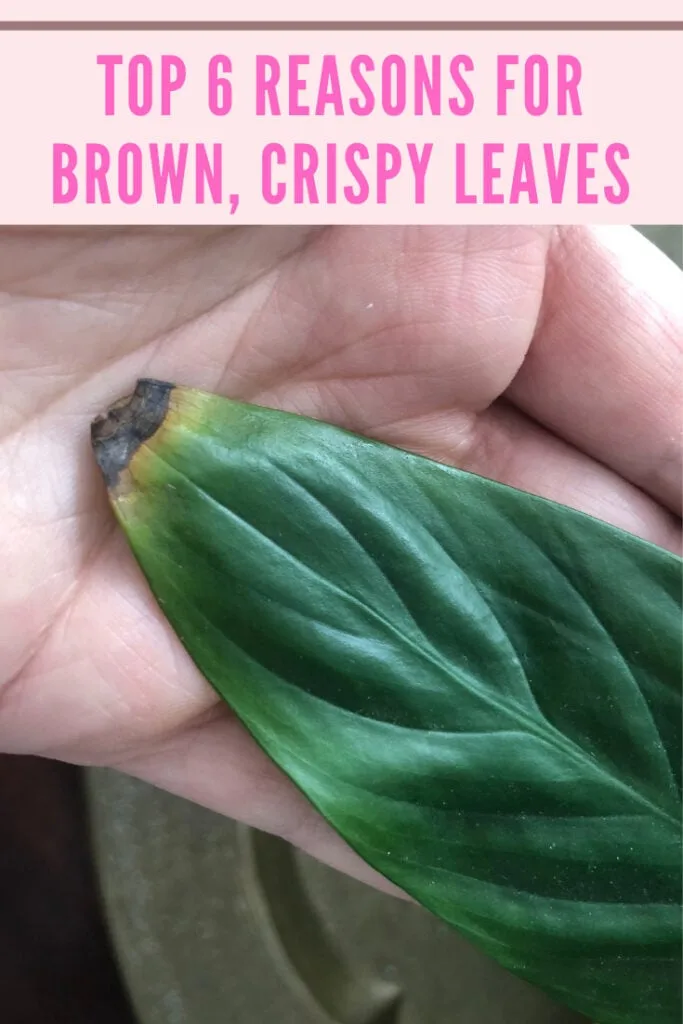
What Brown Leaves Are Actually Telling You
A brown patch on a leaf is dead tissue, plain and simple. Once the cells collapse, they can't turn green again. That part of the leaf is gone for good.
But the leaf is also a diagnostic tool. Where the browning starts, how it spreads, and what the tissue feels like all point to a specific cause. Plants can't say "I'm thirsty" or "your tap water is too salty," so they show it in leaf damage instead.
Think of it like a doctor reading symptoms. A dry, crispy tip means one thing. A soft, mushy blotch means the opposite problem.
If you skip the diagnosis and just "water more," you often make it worse.
The good news: healthy new growth is a reliable signal that you fixed the right thing. Old brown leaves won't heal, but the next set of leaves should come in clean and green.
The 60-Second Diagnostic: Where Is the Browning?
Before you change anything, look closely at the plant for one minute. You're gathering four pieces of information.
- Location on the leaf: tip only, edges, center, spots, or the whole leaf
- Texture of the brown area: crispy and dry, or soft and mushy
- Which leaves are affected: only the oldest, only the newest, or scattered
- Surrounding color: green up to the brown, a yellow halo, or a dark ring
Use this quick lookup to point yourself in the right direction.
| What you see | Most likely cause |
|---|---|
| Crispy brown tips, rest of leaf green | Low humidity, salt buildup, tap water |
| Brown edges with yellow halo | Under or overwatering |
| Soft, mushy brown patches, wilting | Root rot, overwatering |
| Bleached tan patches on top leaves | Sun scorch |
| Brown spots with rings or halos | Fungal or bacterial disease |
| Speckling with fine webbing | Spider mites |
| Whole lower leaves brown, dropping | Natural aging, cold shock |
Match your plant to a row, then jump to that section below. Plants often have more than one thing going wrong at the same time.
Crispy Brown Tips: Humidity, Salts, and Tap Water
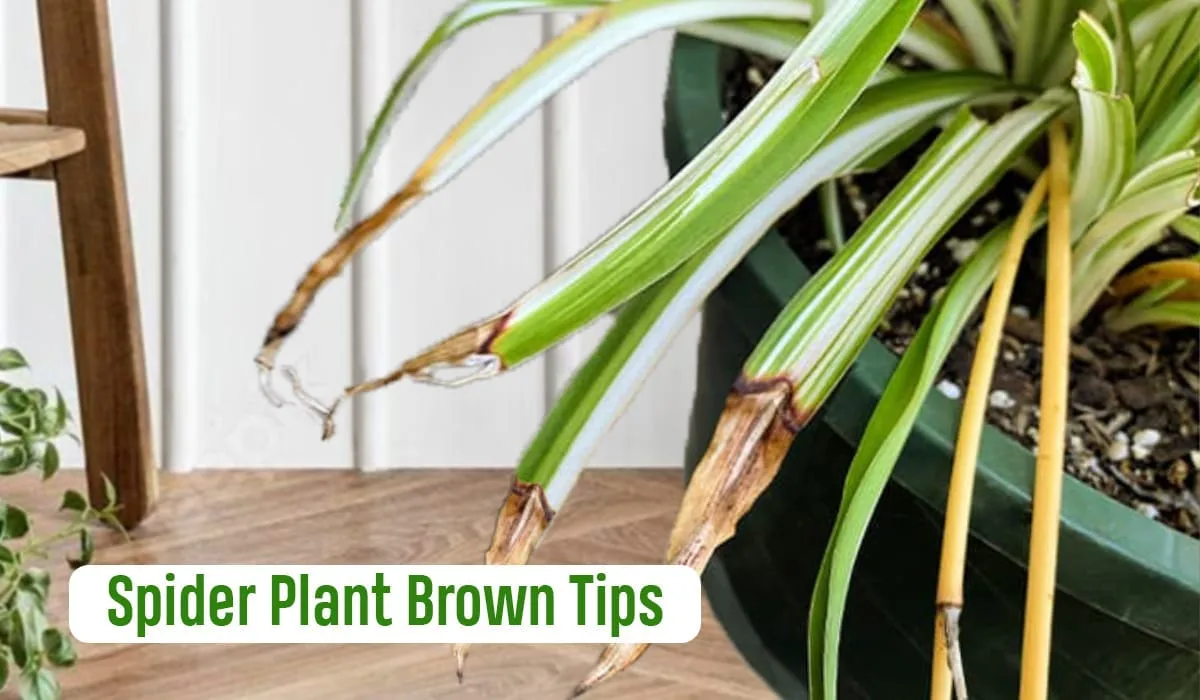
Crispy brown tips are the most common complaint. They show up on spider plants, dracaenas, calatheas, prayer plants, and peace lilies more than anything else. If the tip is dry and papery while the rest of the leaf looks fine, you're dealing with one of three causes.
Low humidity. Most tropical houseplants evolved in 60 to 80 percent humidity. Heated or air-conditioned indoor air often drops to 20 or 30 percent in winter.
The leaf tip loses moisture faster than the plant can replace it.
Salt buildup in the soil. Fertilizer salts and mineral deposits accumulate over time. They pull water away from the roots and burn the leaf edges.
A white crust on the soil surface or pot rim is a strong tell.
Tap water sensitivity. Chlorine, chloramine, and especially fluoride damage some species. Dracaenas, spider plants, and prayer plants are famously sensitive.
The University of Florida IFAS Extension documents fluoride tip burn in ornamentals at levels as low as 1 ppm, which is common in municipal water.
The fix is a three-part reset. Flush the pot with plain water until it runs freely from the drainage holes. Switch to filtered water, rainwater, or distilled for sensitive species.
Bump humidity with a small humidifier, a pebble tray, or by grouping plants together.
Brown Leaf Edges with a Yellow Halo: The Watering Problem
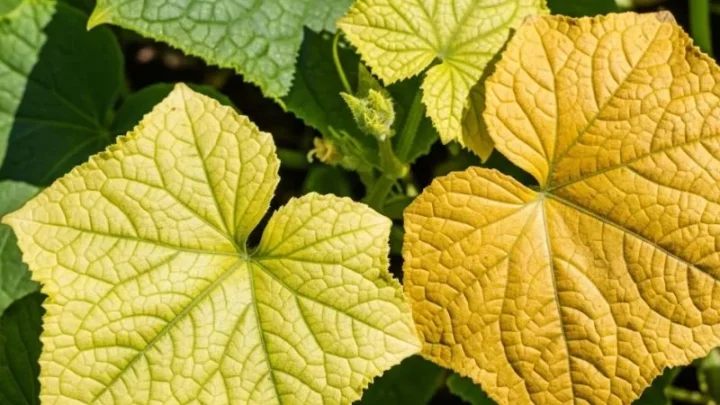
Brown edges bordered by a soft yellow ring almost always mean watering is off. The tricky part is that both underwatering and overwatering produce this same look. You have to check the soil to tell them apart.
Underwatering signs. The soil pulls away from the pot walls. The pot feels light when you lift it.
Leaves may curl or droop before the browning starts.
Overwatering signs. The soil stays wet for a week or more. The pot feels heavy.
Lower leaves yellow first, then brown. The brown edges may feel slightly soft rather than crispy.
Here's a simple decision rule. Stick your finger 2 inches into the soil.
- If it's bone dry all the way down: you're underwatering. Water deeply until it drains, then check again in a few days.
- If it's soggy or smells sour: you're overwatering. Stop watering, move the plant somewhere warm and airy, and let the top 2 inches dry out before watering again.
Watering "on a schedule" is where most people go wrong. Water when the plant needs it, not when the calendar says so.
Soft, Mushy Brown Patches: Root Rot and Overwatering
If the browning is soft, dark, and spreading fast, you're likely dealing with root rot. This is the most serious cause on the list and the one that kills plants quickly.
Root rot happens when roots sit in wet soil without oxygen. Fungal pathogens like Pythium, Phytophthora, and Fusarium move in and destroy root tissue. The plant can no longer take up water, so it wilts and browns even though the soil is soaked.
Warning signs to catch it early:
- A sour or swampy smell from the soil
- Stems that feel soft or bendy at the base
- Lower leaves turning yellow, then black-brown, then dropping
- The whole plant wilting despite wet soil
- Fungus gnats swarming around the pot
If you spot two or more of these, don't water again. Move straight to the root inspection below. Caught early, most plants recover.
Caught late, they usually don't.
Bleached or Papery Brown Spots on Top Leaves: Sun Scorch
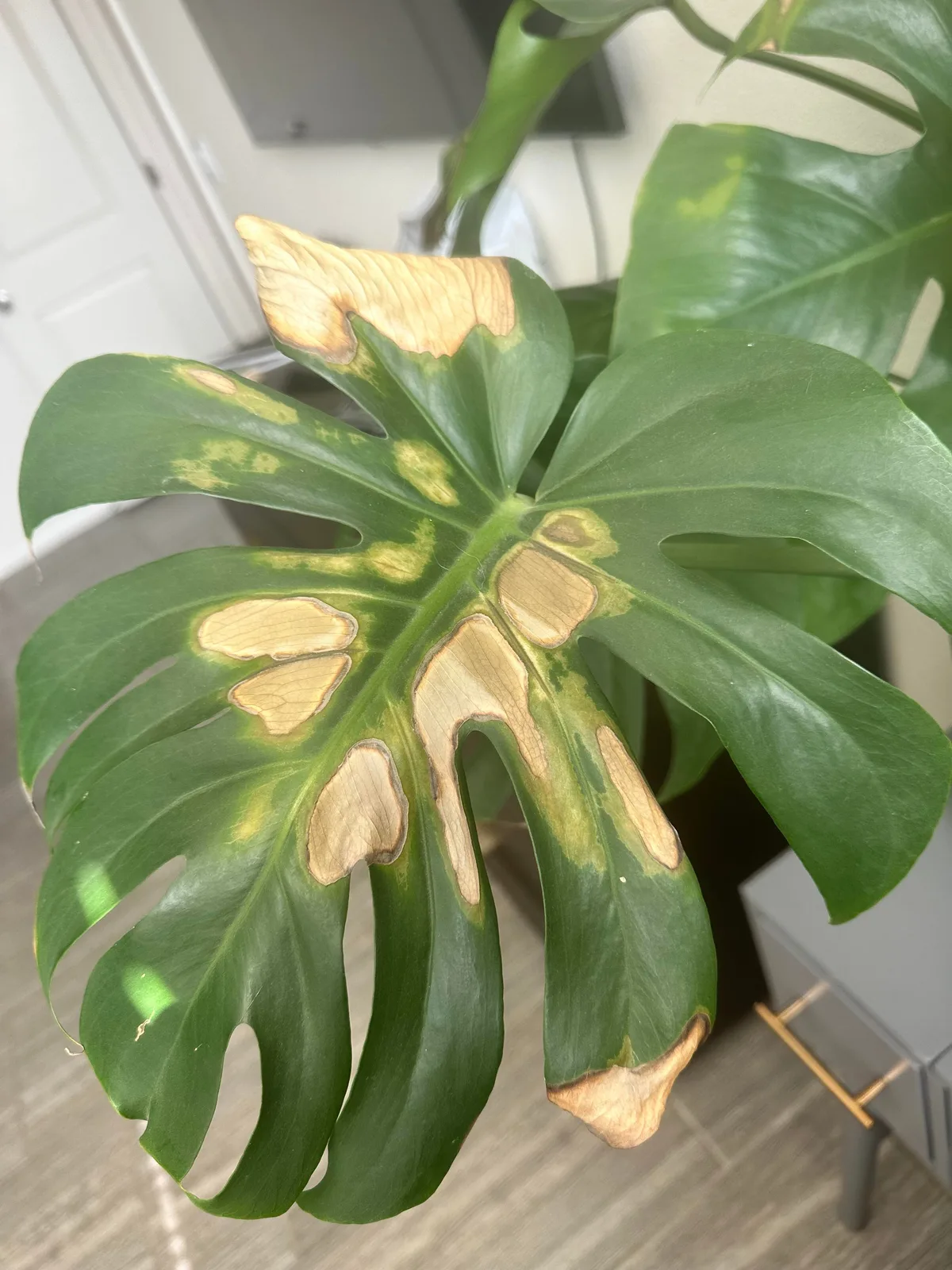
Sun scorch shows up as pale, tan, papery patches on the leaves closest to the light source. The damaged tissue often looks bleached or almost translucent, not deep brown. You'll see it on the top-facing surface, never the underside.
This one has a clean tell. If the browning only appears on leaves within a foot of a south or west window, sun is the cause. Move the plant back a few feet or add a sheer curtain.
Grow lights placed under about 12 inches also cause the same damage.
Plants moved suddenly from low light to bright light scorch fastest. Shade-adapted tropicals like calathea, maranta, and peace lily can burn in a single afternoon of direct sun. Acclimate them gradually over a week or two.
Scorched patches won't recover, but new growth will come in normal once the stress stops. Trim the worst leaves for looks. Leave lightly damaged ones alone so the plant keeps photosynthesizing.
Brown Spots with Rings or Halos: Fungal and Bacterial Disease
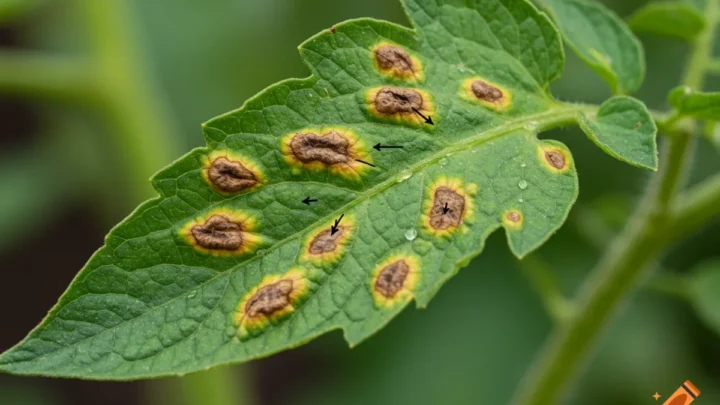
Distinct brown spots with a yellow halo, a dark border, or concentric rings usually mean disease. Fungal pathogens like Alternaria and Cercospora produce circular spots with rings inside them. Bacterial infections like Xanthomonas produce spots with a wet-looking dark border that sometimes ooze in humid weather.
Look for these clues to separate disease from stress damage:
- Spots that are round or oval rather than following leaf edges
- A clear halo of yellow or water-soaked tissue
- Spots that spread from leaf to leaf over days
- Damage that started after a period of high humidity
The fix is airflow, dry foliage, and removing infected leaves. Snip damaged leaves with clean scissors and throw them in the trash, not the compost. Water at the soil, not overhead.
Space plants apart so air can move around them.
For bacterial infections, a copper-based fungicide labeled for indoor use can slow the spread. Fungal spots often respond to neem oil or a horticultural fungicide. Isolate the affected plant until you see clean new growth.
Brown Undersides and Speckling: Pest Damage to Check For
If a leaf looks stippled, pale, or bronzy with tiny brown flecks, flip it over. Most sap-sucking pests hide on the underside. The damage often starts as pinprick dots before turning into large brown patches.
Common culprits and their tells:
| Pest | What you'll see |
|---|---|
| Spider mites | Fine webbing, tiny moving dots, stippled bronze leaves |
| Thrips | Silvery streaks, black frass spots, distorted new growth |
| Mealybugs | White cottony clumps in leaf joints |
| Scale | Brown or tan bumps stuck to stems and leaf undersides |
| Fungus gnats | Small flies at the soil surface, mostly a wet-soil symptom |
Wipe leaves top and bottom with a damp cloth, then treat with insecticidal soap or neem oil once a week for three weeks. That covers the hatch cycle for most pests. Isolate the plant so the infestation doesn't spread.
Spider mites in particular thrive in dry indoor air. Raising humidity above 50 percent slows them down.
Whole Leaves Turning Brown and Dropping: Shock, Cold, and Aging
When entire leaves brown out and drop, three causes lead the list: transplant shock, cold damage, and normal aging. The pattern of which leaves are affected tells you which one.
Transplant shock. Happens within days of repotting, moving to a new spot, or bringing a plant home from the nursery. Multiple leaves brown and drop at once.
Leave the plant alone in a stable spot with normal watering. New growth usually returns within three or four weeks.
Cold damage. Look for browning after a cold snap, a chilly window sill, or a draft. Tropical plants show damage below about 50°F.
Leaves turn dark, then brown, then crisp. Move the plant away from windows and heating vents.
Natural aging. Only the lowest, oldest leaves brown and drop, one at a time. This is normal for pothos, philodendron, dracaena, and most other tropicals.
If new top leaves are also browning, you're dealing with a bigger problem than aging.
How to Check the Roots Without Killing the Plant
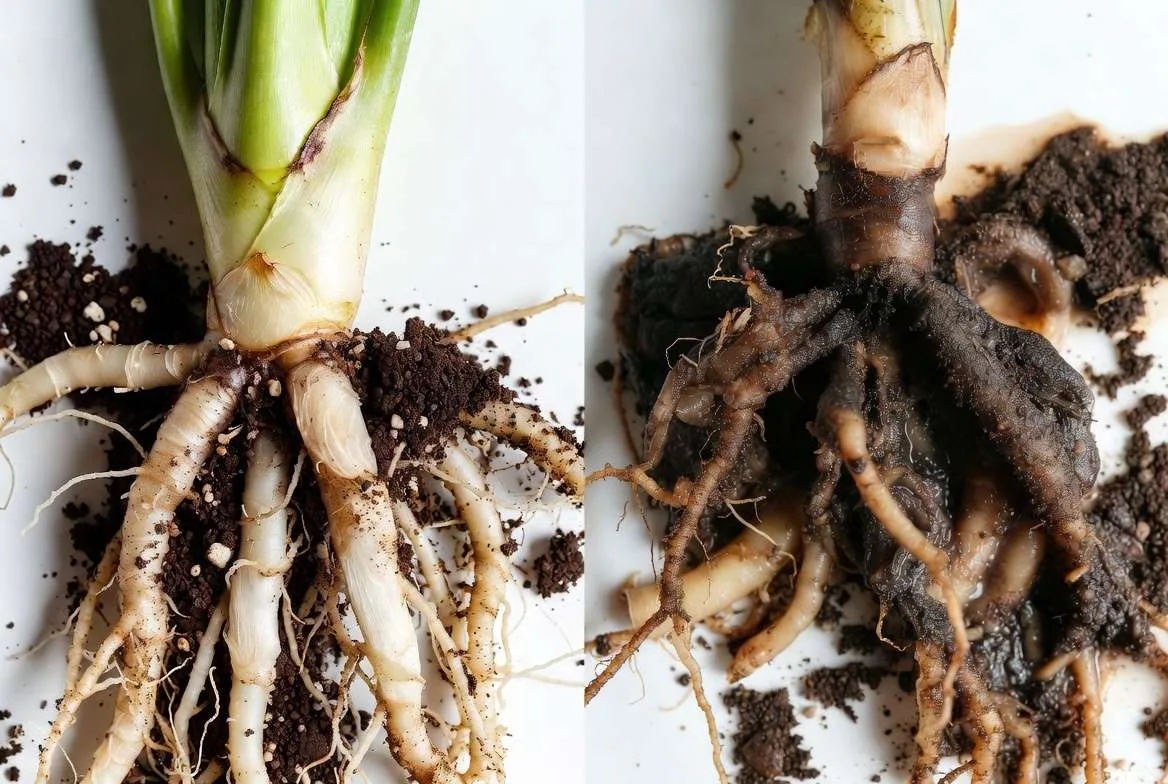
When leaf symptoms point to root rot or you want to rule it out, unpotting is safe if you do it gently. Most healthy plants tolerate a root check without missing a beat.
Follow these steps:
- Water lightly a day before if the soil is bone dry. Slightly moist soil holds together and protects roots.
- Tip the pot sideways. Support the base of the plant with one hand and slide the root ball out.
- Loosen the outer soil with your fingers so you can see the roots clearly.
- Look at color and texture. Healthy roots are white or cream and firm. Rotted roots are brown, black, or gray and slide apart when touched.
- Smell the root ball. A fresh, earthy smell is normal. A sour or swampy smell means rot.
If you find rot, trim the dead roots with clean scissors until only firm tissue remains. Rinse the healthy roots. Repot into fresh, well-draining mix in a pot only slightly larger than the remaining root mass.
Skip fertilizer for a month while the plant recovers.
The Water Fix: Tap, Filtered, Rain, or Distilled
Not all water is created equal for houseplants. Municipal tap water often contains chlorine, chloramine, and fluoride at levels that damage sensitive species over time.
| Water type | Best for | Watch out for |
|---|---|---|
| Tap (left out 24 hours) | Most hardy plants | Chloramine and fluoride don't evaporate |
| Filtered (carbon filter) | Sensitive tropicals | Doesn't remove fluoride |
| Rainwater | All plants | Collect in clean containers only |
| Distilled or RO | Fluoride-sensitive plants | No minerals, so occasional feeding matters |
If tap is your only option, let it warm to room temperature before watering. Cold water shocks tropical roots and adds to leaf stress.
Humidity, Light, and Temperature Ranges That Actually Matter
Most houseplant browning traces back to conditions outside these ranges. Aim for 40 to 60 percent relative humidity, 65 to 75°F, and bright indirect light for the majority of tropicals.
A cheap hygrometer is the fastest diagnostic tool you can own. If yours reads below 40 percent for weeks, add a small humidifier near the plants. Pebble trays and misting help far less than most people think.
For light, watch the shadow test. A crisp shadow means direct sun (too much for most tropicals). A soft blurry shadow means bright indirect (the sweet spot).
No shadow at all means low light.
How to Flush Salt Buildup and Reset the Soil
A soil flush removes accumulated fertilizer salts and mineral crust in about ten minutes. Do it every three to six months for plants you fertilize regularly.
Steps:
- Move the pot to a sink or shower.
- Pour room-temperature water slowly through the soil.
- Keep pouring until at least three times the pot's volume has drained through.
- Let the pot drain fully before returning it to its saucer.
If the topsoil has a hard white crust, scrape it off first with a spoon and replace it with fresh mix. Skip fertilizer for the next month so the roots recover.
Should You Cut Off the Brown Parts?
Yes, but only for looks. Brown tissue is dead and won't rejoin the leaf, so trimming does nothing for the plant's health. It just looks tidier.
Use sharp, clean scissors and follow the leaf's natural shape. For a brown tip, cut at an angle that mimics the point. For a whole brown leaf, snip it off at the base of the petiole.
Never remove more than about a third of the plant's foliage at once.
Mistakes That Make Brown Leaves Worse
The most common panic reactions kill more plants than the original problem. Avoid these traps.
- Watering more when leaves brown from overwatering already
- Fertilizing a stressed plant to "give it a boost"
- Repotting into a much larger pot, which keeps soil too wet
- Moving a struggling plant to full sun to "help it"
- Misting daily instead of addressing real humidity
- Cutting off every damaged leaf at once
- Chasing every yellowing lower leaf on a healthy plant
When in doubt, do less. Stable conditions and patience fix more brown leaves than any intervention.
Recovery Timeline: What Healthy Regrowth Looks Like
Expect the first sign of recovery within two to four weeks after fixing conditions. Look for a new leaf emerging from the growing tip, tighter node spacing, and firm stems. Old brown leaves won't turn green again, but healthy new growth confirms you fixed the right problem.
When to Give Up on a Plant
Compost the plant when the main stem is soft, mushy, and brown to the core, or when the roots are gone entirely. If any firm green stem or one healthy root remains, propagation is often worth trying. Snip a clean cutting, root it in water or fresh mix, and start over.
Frequently Asked Questions
Do brown leaves ever turn green again?
No. Brown leaf tissue is dead and can't recover. New leaves grow in green once conditions stabilize.
How often should I water to prevent brown leaves?
There's no fixed schedule. Water when the top 2 inches of soil are dry for most tropicals, less for succulents.
Is misting enough to fix low humidity?
No. Misting raises humidity for minutes, not hours. A small humidifier is the reliable fix.
Should I fertilize a plant with brown leaves?
Not until it recovers. Fertilizing stressed roots often makes salt burn and browning worse.

Similar Posts