Pepper Leaves Curling and Falling Off? Here’s Why
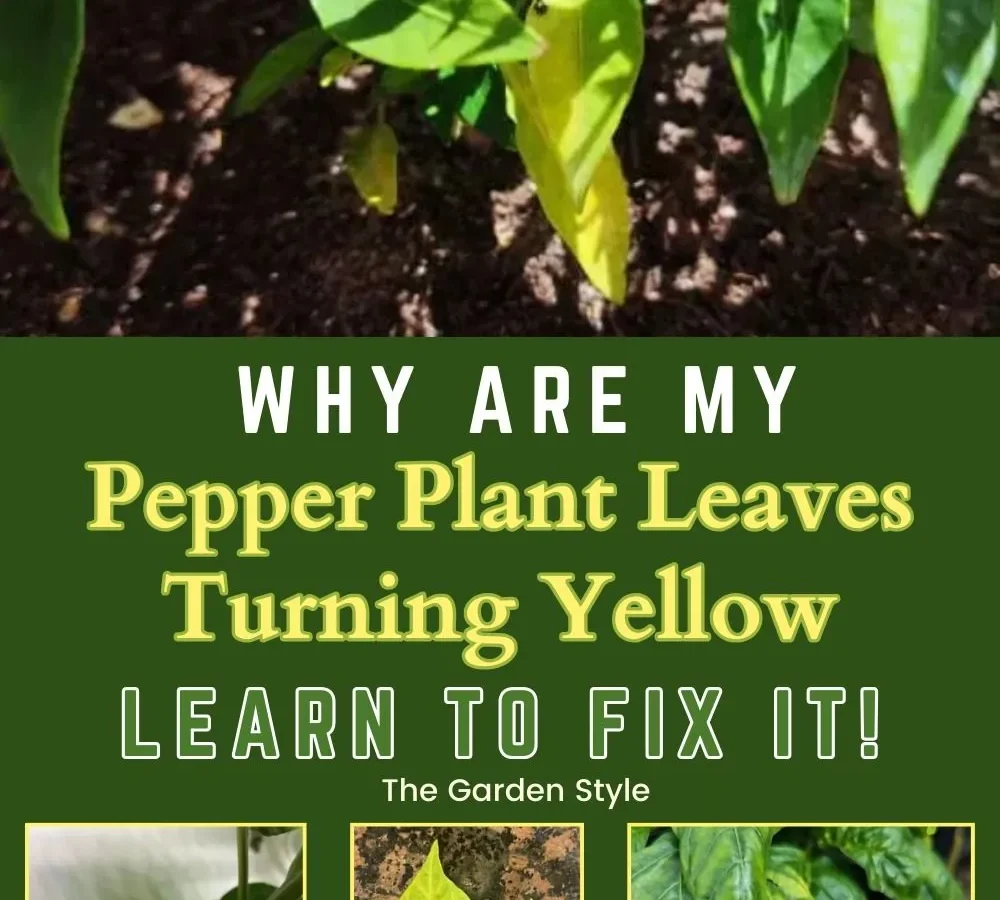
Curling leaves and dropping foliage are the two big panic moments for pepper growers. The honest answer to "Why are pepper leaves curling and falling off?" is that your plant is flagging one specific stress. Read the signal correctly and you can fix it fast.
Causes fall into five clean buckets: watering, temperature, pests, nutrients, or chemical injury.
The wrong fix makes things worse. Overwatering a drowning plant kills its roots faster. Spraying pesticide for a nutrient issue burns healthy tissue.
As of 2026, University of Minnesota Extension diagnostic clinics still flag aphids and broad mites as the top two misidentified culprits.
Quick Answer
Pepper leaves curl and fall off under one clear stress signal. Common causes are watering swings, heat, cold, or pests. Heat above 90 °F and cold below 55 °F both trigger it.
Aphids, broad mites, or herbicide drift are frequent culprits. Fix the root cause, not the surface symptom.
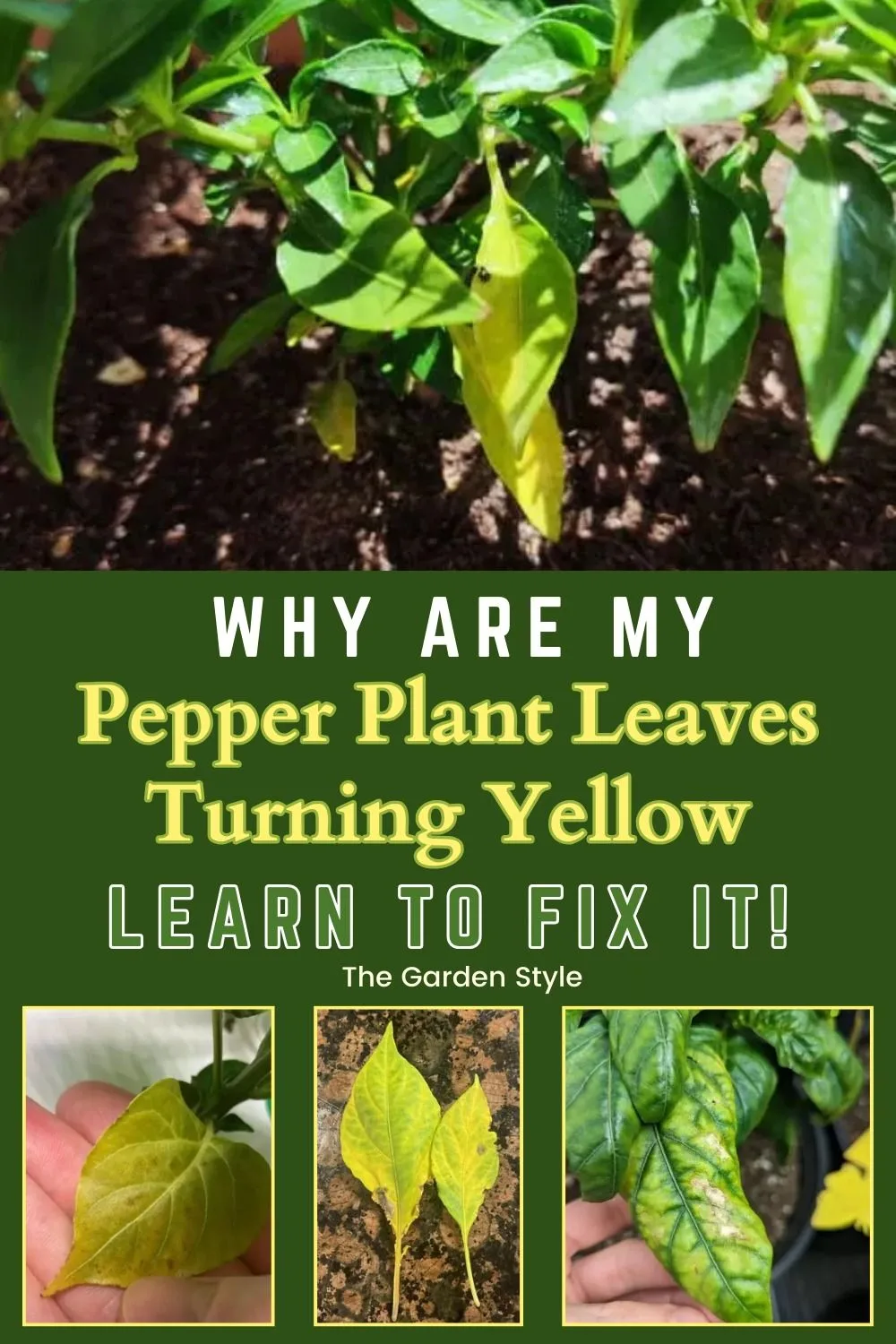
Pepper Leaves Curling and Falling Off: What's Actually Going On
The plant is losing water faster than the roots can replace it, or the roots themselves are damaged. That's the mechanism behind almost every case. Curling reduces leaf surface area to slow transpiration.
Dropping leaves cuts fluid demand when the situation gets critical.
Think of it as triage. A pepper plant sacrifices older leaves first when it needs to conserve resources. It curls new growth hard when the growing tip is under active attack.
Both are protective responses, not diseases in themselves.
The trap is treating the symptom and not the trigger. A yellow, curled leaf that falls off is data. What matters is which leaves, curling which way, and what the roots and undersides actually look like.
The 60-Second Diagnostic: Answer These 4 Questions First
Before anything else, walk the plant with these four questions. Written answers beat gut feel every time.
- Which leaves are curling? New growth at the top, or older leaves near the bottom?
- Which direction do they curl? Upward like a taco, or downward like a claw?
- What does the soil feel like 2 inches down? Soggy, evenly damp, or bone dry?
- What's on the undersides? Bugs, sticky residue, silvery stippling, or fine webbing?
Write the answers down. Skip this step and you'll almost certainly guess wrong. Aggregate extension reports show diagnostic accuracy jumps sharply when growers physically inspect undersides and roots instead of eyeballing tops from a standing distance.
Curl Direction Tells You the Cause
Curl direction is the single most useful clue on a struggling pepper leaf. It splits the possible causes into two clean buckets.
Upward Cupping (Heat, Broad Mites, Herbicide Drift)
Leaves that fold up like a taco point to stress arriving from above the soil.
- Heat stress: Cupping shows up on hot afternoons and often relaxes overnight. Trigger is roughly 90 °F day / 75 °F night.
- Broad mites: New leaves cup hard, look glossy or bronzed, and stay curled after temperatures drop. Damage concentrates at the growing tip.
- Herbicide drift (2,4-D or dicamba): New growth cups, twists, and takes on a strap-like shape. Older leaves usually look normal.
Downward Rolling (Aphids, Overwatering, Thrips)
Leaves that roll under (sometimes called claw or spoon) point at root or sap-flow problems.
- Aphids: Flip a leaf. Clusters of green or black insects and sticky honeydew give it away instantly.
- Overwatering and root rot: The whole plant droops, leaves curl down, and the soil stays wet for days.
- Thrips: Silvery stippling on the top surface, plus tiny black specks of frass on the underside.
New Growth vs Old Growth: Where the Damage Starts
The location of the damage narrows the cause even faster than direction. Nutrients that move freely inside the plant show deficiency in old leaves first. Nutrients that don't move show it in new leaves.
| Where damage starts | Likely cause |
|---|---|
| New leaves at the top | Calcium, iron, or boron issue. Broad mites. Herbicide drift |
| Old leaves at the bottom | Nitrogen, magnesium, or potassium deficiency. Normal aging |
| Whole plant at once | Water stress, temperature shock, or root disease |
| Random single branches | Physical damage, an aphid colony, or virus |
If the top of the plant looks tortured while lower leaves stay flat and green, don't blame nutrients you can find in a bag of fertilizer. It's almost always mites, calcium lockout, or a chemical exposure.
Watering Problems: Overwatering, Underwatering, and the Hidden Middle Ground
Water is the top cause of pepper leaf curl worldwide. It's also the one growers get wrong most often. Overwatered and underwatered plants can look nearly identical from a distance.
Underwatered peppers droop, roll their leaves inward to conserve moisture, and drop lower leaves first. Soil is dry 2 inches down. Recovery after a deep soak is usually fast, often within a day.
Overwatered peppers also droop and curl. But the soil stays wet, roots turn brown and mushy, and lower leaves yellow before falling. Recovery is slow and often incomplete.
Root rot pathogens like Phytophthora and Pythium move in behind the waterlogging.
The hidden middle ground is inconsistent watering. Big swings from bone dry to soaked cause calcium lockout and blossom end rot. Leaves curl even when the current soil moisture looks fine.
Peppers want steady, moderate moisture, not drama.
- Target: roughly 1 to 2 inches of water per week, more during heat waves.
- Containers: water when the top inch is dry, drain fully, and never let pots sit in saucers.
- In-ground: deep watering twice a week beats shallow daily sprinkles every time.
- Mulch: 2 to 3 inches of straw or shredded leaves stabilizes soil temperature and moisture.
Temperature Stress: Heat Above 90 °F and Cold Below 55 °F
Peppers are a warm-season crop with a narrow comfort zone. Optimal daytime range is 70 to 85 °F, with nights between 60 and 70 °F. Push past 90 °F during the day and the plant closes stomata, curls leaves upward, and drops blossoms to preserve resources.
Cold shock hits from the other side. Below 55 °F, chilling injury shows up as leathery, purpled leaves with downward curl. Damage often appears 24 to 48 hours after the cold event, so growers blame the wrong week.
Both extremes trigger leaf drop when they last longer than a day or two. The fix is buffering, not correction. Shade cloth rated 30 to 50 percent knocks midday temperatures down 8 to 12 °F.
Row cover or a frost blanket raises nighttime lows by 4 to 8 °F.
Transplant Shock and Sunscald in Young Plants
Young peppers moved from indoors to outdoors without a hardening-off period will curl, bleach, and drop leaves within 3 to 5 days. Indoor light is a fraction of full sun intensity. Even a cloudy afternoon outside can scorch tender tissue.
Hardening off takes 7 to 14 days. Start with 1 to 2 hours of dappled shade on day one and increase exposure gradually. Skip this step and you'll lose the lower leaves at minimum.
Transplant shock also mimics disease. Roots disturbed during planting can't pull water at the old rate, so the top of the plant wilts and curls for several days. Water in gently, shade for 48 hours, and skip fertilizer for a week.
Recovery is usually complete inside 10 days if roots weren't torn.
Pest Diagnosis: Aphids, Thrips, Broad Mites, and Spider Mites
Sap-sucking pests are the second most common trigger after water problems. Most get missed because they live on leaf undersides. A 10x hand lens changes the game.
How to Spot Broad Mites Without a Microscope
Broad mites measure roughly 0.2 mm and are invisible to the naked eye. You diagnose by damage pattern, not by seeing the mite itself.
Look for cupped, glossy, bronzed new leaves at the growing tip. Fruit develops a russeted, cracked skin. If a hot, humid stretch produced sudden distortion on new growth only, broad mites are the top suspect.
Confirmed cases respond to sulfur sprays or wettable sulfur, applied per label directions.
Aphid and Thrips Signs on Undersides and New Leaves
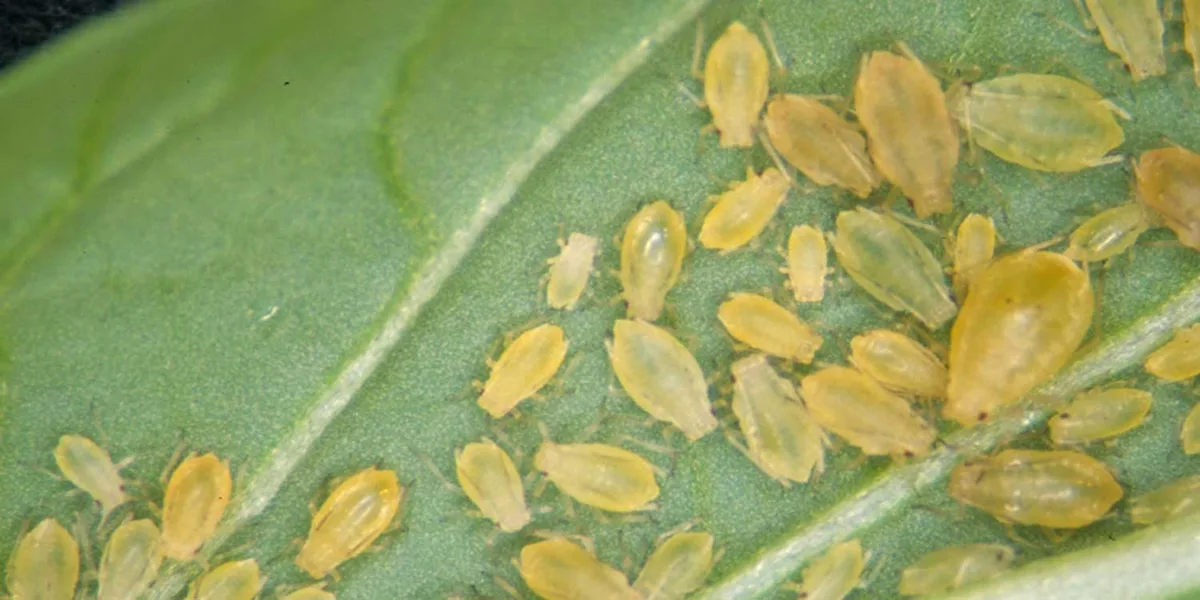
Aphids cluster on stems and leaf undersides in visible colonies. You'll see sticky honeydew, sooty black mold on lower leaves, and downward-curled foliage. Ladybugs, lacewings, and a hard blast of water knock populations back fast.
Thrips are slim, 1 to 2 mm long, and leave silvery stippling with black frass dots. Sticky yellow or blue traps confirm the ID. Spinosad or insecticidal soap work when applied to undersides in the evening.
Spider mites show up in hot, dry conditions with fine webbing on leaf undersides and pin-prick stippling on tops. Increase humidity, spray leaf undersides with water daily for a week, and follow with horticultural oil if the infestation persists.
Nutrient Deficiencies vs Nutrient Excess
Nutrient issues split cleanly by which leaves are affected, which the diagnostic table above already flags.
Calcium, Magnesium, and Potassium Deficiency Signs
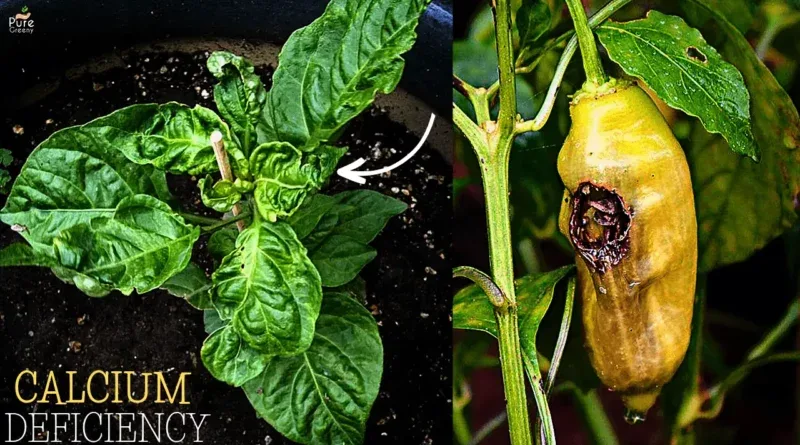
Calcium deficiency shows in new growth first. Leaves cup, tips die back, and blossom end rot appears on fruit. The root cause is usually inconsistent watering blocking uptake, not a lack of calcium in the soil.
Steady moisture fixes it faster than any calcium spray.
Magnesium deficiency yellows the tissue between veins on older leaves while the veins stay green. A foliar spray of 1 tablespoon Epsom salt per gallon of water gives quick relief. Potassium deficiency browns the leaf edges on older foliage and weakens stems.
Nitrogen Excess and Salt Buildup in Containers
Too much nitrogen makes pepper foliage dark, soft, and curled with almost no fruit set. Peppers want moderate nitrogen and higher potassium. Stop feeding, water deeply to flush the root zone, and let the plant coast for two weeks.
Container growers face a second problem: salt buildup from repeated fertilizing. White crust on the soil surface or pot rim confirms it. Flush the container with plain water at 3 to 5 times the pot volume until it runs clear from the drainage holes.
Herbicide Drift and Contaminated Compost or Straw
Herbicide drift is more common than most growers realize. Peppers are unusually sensitive to synthetic auxin herbicides like 2,4-D, dicamba, and picloram. Damage shows up 3 to 7 days after exposure.
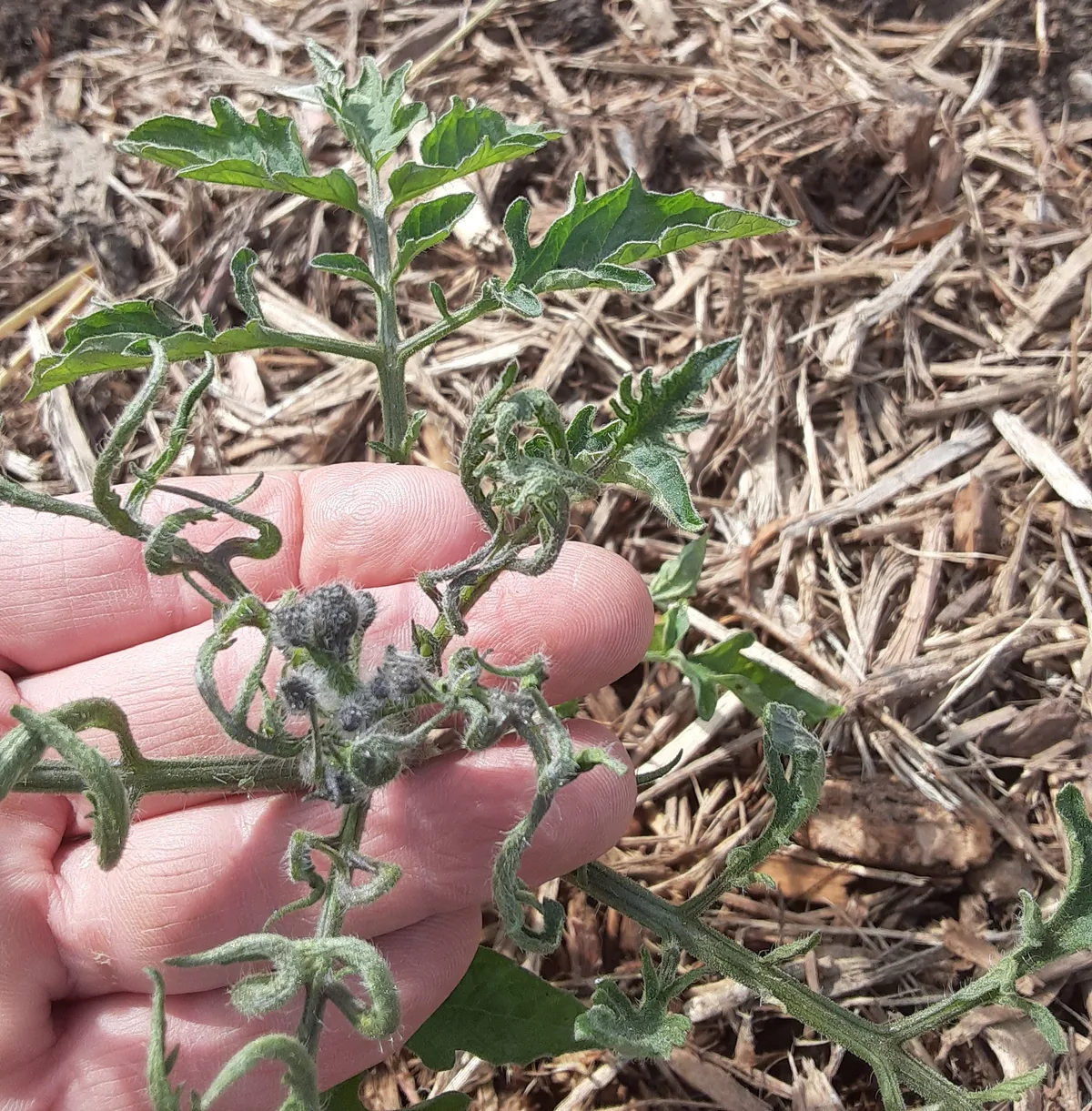
The signature is unmistakable. New growth twists into strap-like, cupped forms while older leaves look normal. Stems can spiral or fatten.
Fruit sets deformed if it sets at all.
Drift arrives from neighbor lawn treatments, roadside spraying, or on the wind from farm fields miles away. Contaminated straw, hay, or manure from animals grazed on treated pasture carries the same chemicals into your beds. These compounds can persist in compost for months to years.
There is no cure. Mildly affected plants may push clean growth after 4 to 6 weeks. Severely affected plants should be pulled.
Suspected drift can be reported to your state department of agriculture per EPA pesticide guidance. Test suspect mulch by growing bean seedlings in it. Beans distort within a week if auxin residues are present.
Soil-Borne Disease: Root Rot, Fusarium, and Nematodes
Soil pathogens explain curl and drop that persist after you've fixed watering, temperature, and pests. The signature is a plant that never bounces back no matter what you do.
Phytophthora and Pythium rot roots from the outside in. Lift a struggling plant and roots look brown, mushy, and slip their outer sheath. Fusarium and Verticillium wilts cause one-sided yellowing on lower leaves that spreads upward.
A cut stem shows brown streaks in the vascular tissue.
Root-knot nematodes leave bumpy galls on the roots themselves. Plants stay stunted and wilt in mild afternoon heat. There is no treatment that saves an infected plant.
Remove it, avoid replanting nightshades in that spot for 3 to 4 years, and consider solarizing the soil over summer.
Viruses: When Curling Won't Reverse
Viral infections produce leaf curl that doesn't respond to any correction. Tobacco mosaic virus, cucumber mosaic virus, and tomato spotted wilt virus all hit peppers.
Signs include mosaic yellow-green mottling, ring spots, stunted growth, and distorted new leaves that stay malformed as they age. Aphids and thrips carry these viruses between plants.
Pull suspected virus plants immediately and bag them for the trash. Never compost infected material. Wash your hands and tools with 10 percent bleach before touching healthy plants.
Prevention is the only defense: control the insect vectors early in the season.
The Decision Tree: Match Your Symptoms to the Fix
Run your observations through this quick table and jump to the fix that matches.
| Main symptom | Most likely cause | First action |
|---|---|---|
| Upward cup on new growth, hot week | Heat stress | Add 30 to 50 percent shade cloth |
| Upward cup, bronzed new tips | Broad mites | Wettable sulfur spray, follow label |
| Twisted, strappy new growth | Herbicide drift | Isolate plant, wait 4 to 6 weeks |
| Downward curl, sticky undersides | Aphids | Strong water spray or insecticidal soap |
| Whole plant wilts, wet soil | Root rot | Stop watering, improve drainage |
| Whole plant wilts, dry soil | Underwatering | Deep soak, add mulch |
| New leaf tips die back | Calcium lockout | Steady moisture, mulch |
| Interveinal yellowing, old leaves | Magnesium deficiency | Epsom salt foliar spray |
| Mosaic pattern, distorted growth | Virus | Remove and destroy plant |
Recovery Steps for a Stressed Pepper Plant
Once you've identified the cause, follow a simple recovery sequence. Skip steps and you'll stall out.
- Fix the trigger first. Water correction, pest treatment, or shade before anything else.
- Prune the worst damage. Remove leaves that are more than 50 percent damaged. Leave anything green.
- Skip fertilizer for 7 to 10 days. Stressed roots can't process nutrients and salt burn stacks on top of the original problem.
- Water with plain water only. Deep, even soaks. No compost tea or feed until new growth appears.
- Watch new leaves. Clean, flat new growth means recovery. Continued curl on new tips means the cause is still active.
Most peppers show measurable rebound within 10 to 14 days if the trigger is truly resolved.
Mistakes That Make Curling Leaves Worse
The pattern shows up over and over in extension diagnostic clinics. Growers escalate a small problem into a plant loss by taking the wrong action fast.
- Watering a wilting plant that's already overwatered. Check soil moisture 2 inches down before reaching for the hose.
- Fertilizing to fix a curled plant. Nutrient sprays on a heat-stressed or pest-damaged plant burn tissue.
- Spraying broad-spectrum insecticide without ID. Kills the ladybugs and lacewings eating your aphids.
- Skipping the underside inspection. The pest and the answer both live under the leaf.
- Repotting during heat stress. Root disturbance during a heat wave often kills the plant outright.
- Using contaminated mulch. Straw from herbicide-treated fields turns your bed into a dead zone for months.
When to Pull the Plant and Start Over
Some plants aren't worth saving. Pull and destroy any pepper with confirmed virus symptoms. The same goes for Fusarium or Verticillium wilt with brown vascular streaks.
Severe herbicide drift with no clean new growth after 6 weeks also warrants removal.
Also remove any plant with mushy, blackened roots that slip their sheath. Bag infected plants for the trash. Never compost them, and disinfect tools with a 10 percent bleach solution before touching healthy plants.
Prevention Checklist for the Rest of the Season
A few consistent habits keep leaves flat and fruit setting reliably.
- Water deeply on a schedule, not by feel alone.
- Mulch 2 to 3 inches around every plant to buffer moisture and temperature.
- Inspect leaf undersides with a hand lens once a week.
- Test soil pH annually and keep it between 6.0 and 6.8.
- Rotate nightshades to a fresh bed every 3 to 4 years.
- Source straw, hay, and compost from verified herbicide-free suppliers.
- Add row cover on nights forecast below 55 °F.
- Install 30 to 50 percent shade cloth before daytime highs hit 90 °F.
Pepper Leaf Curl FAQs
Should I cut off curled pepper leaves?
Only remove leaves that are more than half damaged, wilted, or covered in pest colonies. Healthy but curled leaves still photosynthesize and support the plant. Cutting too much foliage in one session stresses the root system and slows recovery.
Prune with clean shears and never remove more than a third of foliage at once.
Will curled pepper leaves uncurl?
Curled leaves rarely flatten completely once the tissue has hardened. What matters is the new growth. If leaves emerging after you fix the trigger come in flat and healthy, the plant is on track.
Old curled leaves can stay put until they yellow naturally and drop on their own.
Can pepper plants recover from leaf drop?
Yes, most peppers recover fully from leaf drop if the roots are still intact. New leaves usually appear within 10 to 14 days after the underlying stress is corrected. A plant that has lost more than 70 percent of its foliage may still fruit.
Yield can drop by roughly half in those cases.
Is Epsom salt good for curling pepper leaves?
Only when the cause is magnesium deficiency, which shows as yellowing between veins on older leaves. Mix 1 tablespoon of Epsom salt per gallon of water and spray on foliage. Using it on curl from heat, pests, or overwatering does nothing.
You'll waste time you need for the actual fix.

Similar Posts