Why Won’t My Tomatoes Turn Red? Causes & Fixes
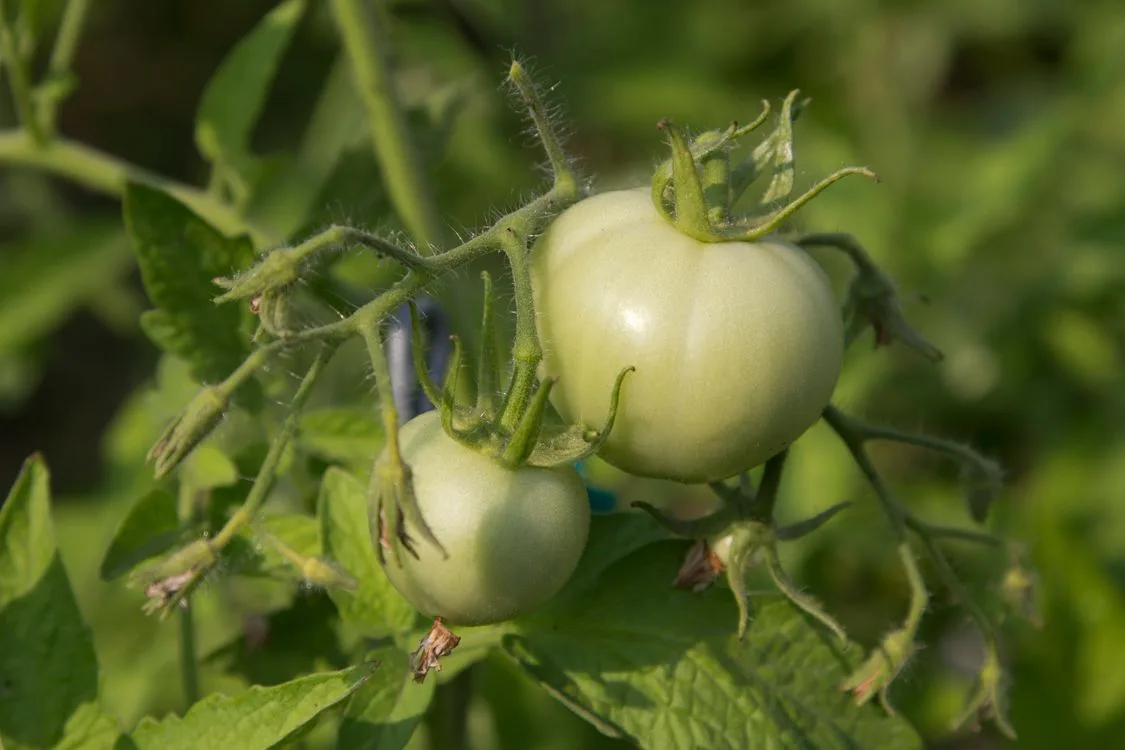
"Why won't my tomatoes turn red / ripen?" is the single most common late-summer complaint gardeners send us. If your plants look loaded with fat green fruit and nothing's coloring up, the plant isn't broken. Something in its environment is telling it to hit pause on the pigment.
Ripening depends on a narrow temperature window between roughly 68°F and 77°F. It stalls hard once daytime highs push past 85°F. That single fact explains most stalled harvests reported by home growers as of 2026.
Let's start with the fastest way to spot which cause is yours.
Quick Answer
Ripe tomatoes need daytime temperatures between 68°F and 77°F. Above 85°F, the plant stops making lycopene and carotene. Fruit stays green, yellow, or orange instead of red.
Nitrogen overload, wrong variety, or plant overload can also stall color. Fix the cause, or ripen mature-green fruit indoors near a banana.
Why Your Tomatoes Won't Turn Red (The Real Reasons in One Look)
The real reasons boil down to five triggers. Most stuck plants hit more than one at the same time. Before you change anything, match your symptoms to the table below.
| Cause | What you'll see | Most common in |
|---|---|---|
| Heat above 85°F | Full-size green fruit, healthy plant | Mid to late summer, southern climates |
| Cold below 50°F | Slow color, soft skin risk | Early autumn, cool coastal zones |
| Late variety | Green fruit as frost nears | Short-season regions |
| Nitrogen overload | Huge leaves, few or green fruit | Recently fertilized beds |
| Overloaded plant | Many fruit, none coloring | Vigorous indeterminate varieties |
Use the table as your starting diagnosis. Then work through the sections below to confirm which branch fits your patch. Every fix in this guide flows from getting that diagnosis right.
The Heat Problem: Why Tomatoes Stop Ripening Above 85°F
Heat is the number-one culprit most gardeners miss. Once daytime temperatures push past 85°F (30°C), tomatoes stop making the two pigments that turn them red: lycopene and carotene. The fruit itself is fine.
The biochemistry just switches off until things cool down. Research shared through Iowa State University Extension confirms this heat threshold matches what growers see every summer.
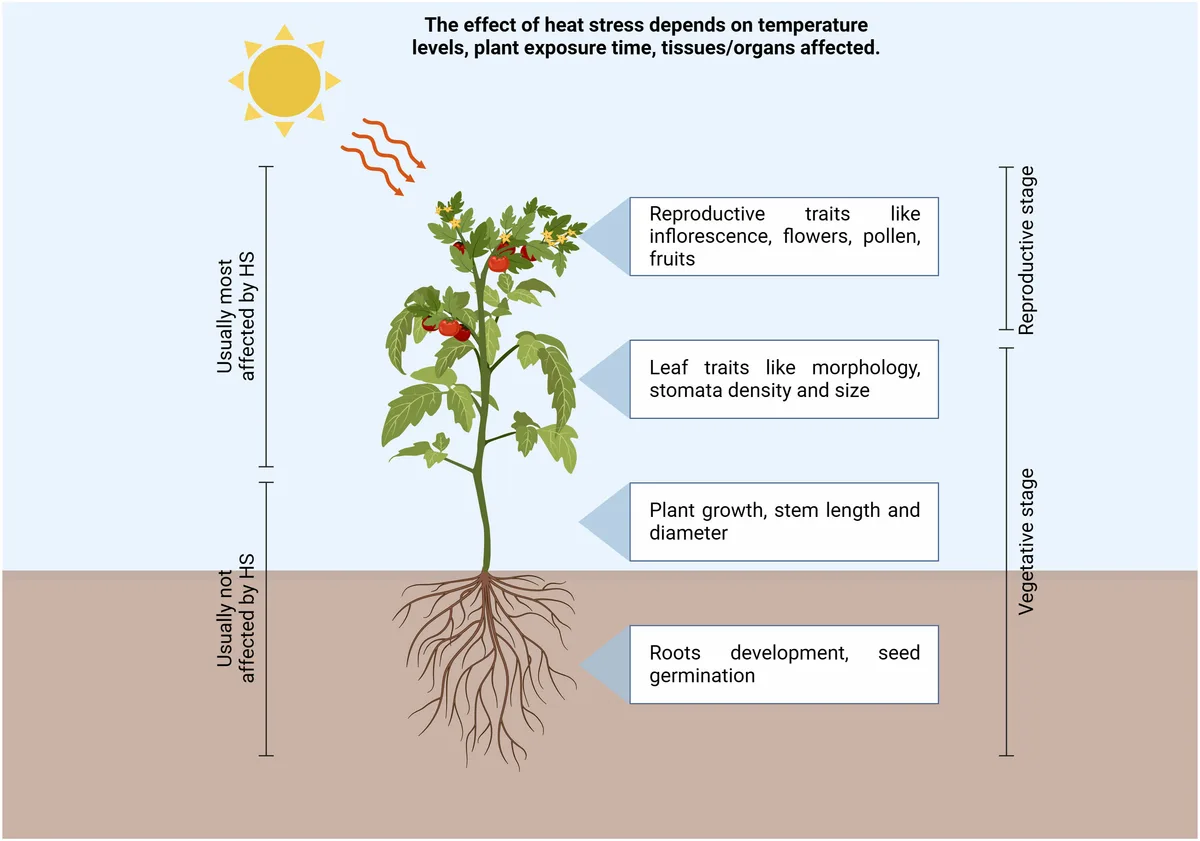
Nighttime heat matters just as much. If overnight lows stay above 75°F (24°C), the plant can't recover, and ripening drags for weeks. Add full sun on exposed fruit and you get pale green shoulders or a yellow blotch across the top.
What to do when heat is the cause:
- Drape 30 to 40 percent shade cloth over the plants during heat spikes.
- Water deeply and consistently so the soil buffers against temperature swings.
- Leave the upper leaf cover alone. Don't over-prune during a heatwave.
- Pick fruit at the breaker stage (first color break) and finish ripening indoors at 65 to 70°F.
Cold Nights, Slow Ripening: What Happens Below 50°F
At the other end of the scale, cold shuts ripening down too. Once nighttime lows drop below 50°F (10°C), color development slows to a crawl. Below 40°F, the fruit risks chilling injury that ruins flavor and texture even if it eventually reddens indoors.
This is the late-season problem for northern gardeners, UK growers, and cool coastal regions. Your tomatoes were happy in July, then September's cool nights arrived and everything hit a wall.
Quick moves for cool weather:
- Cover plants at night with row cover or horticultural fleece once lows hit the mid-50s°F.
- Move container tomatoes into an unheated greenhouse or against a south-facing wall.
- Ease off watering. Drier soil warms up faster during the day.
- Harvest anything at mature green or breaker stage before the first hard frost.
Variety Matters: Days to Maturity and Late-Season Trouble
Not every tomato variety was ever going to redden where you live. Days to maturity is the number of days from transplant to first ripe fruit under ideal conditions. Real-world timings often run 10 to 20 percent longer.
| Variety type | Typical days to maturity | Best for |
|---|---|---|
| Cherry / cocktail | 55 to 65 days | Short seasons, cool climates |
| Early hybrids (e.g. Early Girl) | 55 to 65 days | Northern gardens |
| Mid-season slicers | 70 to 80 days | Most US zones |
| Beefsteak / heirloom | 80 to 95 days | Long, warm summers |
If you planted a 90-day beefsteak in a region with 100 frost-free days, you're racing the calendar. Late-planted seedlings hit the same wall. Indeterminate varieties keep setting new fruit long after determinates finish, and that late fruit rarely gets the time or warmth to color properly.
Too Much Nitrogen, Not Enough Fruit Color
Overfeeding tomatoes with nitrogen is one of the fastest ways to push a plant into "all leaf, no ripe fruit" mode. Nitrogen fuels foliage. Once the plant is thriving on greens, it stops prioritizing sugar and pigment inside the fruit.
Common triggers we see in aggregate grower reports:
- Fresh compost or manure applied mid-season.
- Lawn fertilizer runoff reaching the bed from a neighboring strip.
- Repeated feeding with a high-nitrogen liquid feed meant for leafy crops.
- Rich potting mix in containers without any potassium follow-up.
Fix it by switching to a low-nitrogen, higher-potassium feed once flowers appear. Look for an N-P-K ratio like 5-10-10 or a labeled tomato feed. Potassium supports fruit sugar and pigment development.
Stop feeding entirely once fruit reaches full size, so the plant redirects energy into ripening what's already on the vine.
When the Plant Is Simply Overloaded
An indeterminate tomato can set 40 to 60 fruit at once and simply run out of steam. Every fruit competes for the same pool of sugars, and the plant prioritizes size over color. You end up with a bush full of full-size green tomatoes and nothing turning.
Signs the plant is overloaded:
- Multiple trusses of full-size green fruit, none ripening.
- Yellowing lower leaves as the plant reallocates resources.
- New blossoms dropping off before setting fruit.
- No obvious pest, disease, or weather problem.
The fix is triage. Remove any tiny new fruit or fresh flower clusters late in the season. Snip off the top growing shoots to stop new fruit from forming.
This tells the plant to focus its energy on the fruit it's already carrying. Aggregate grower reports suggest ripening speeds up by 5 to 10 days after topping a heavy plant.
Reading Your Tomatoes: Mature Green, Breaker, Turning, Red
Not every green tomato is stuck. Some are just at an earlier ripening stage than you realize. The USDA formally recognizes six ripening stages, and knowing them changes what you do next.
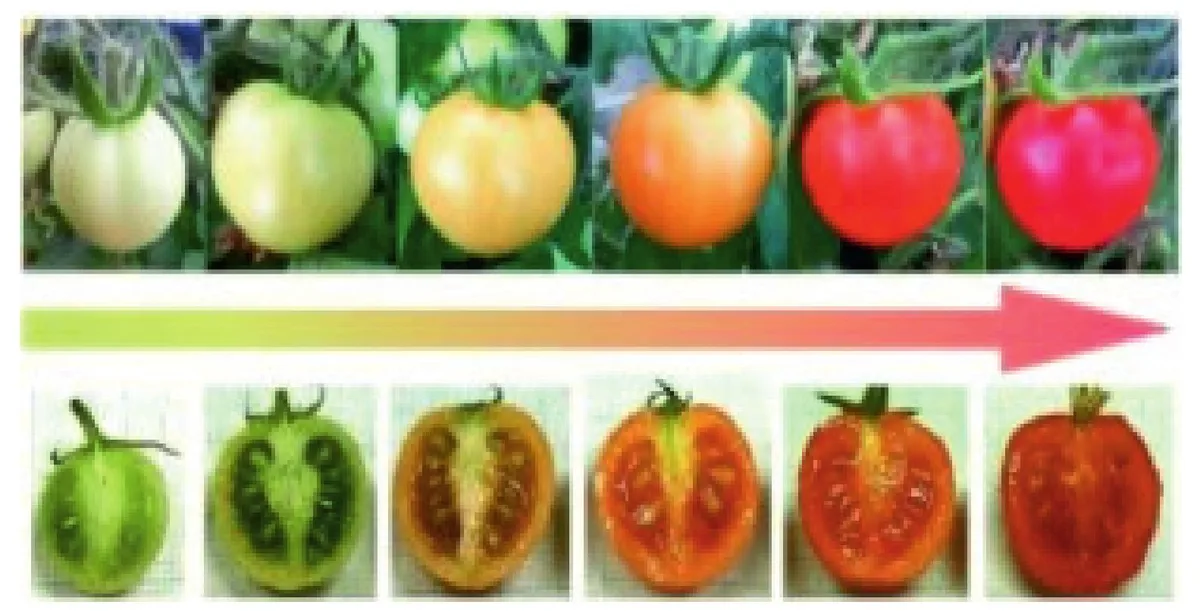
- Mature green: Full size, dull green, glossy skin, seeds fully developed inside. Will ripen off the vine.
- Breaker: First hint of pink, yellow, or tan at the blossom end. Ready to pick.
- Turning: 10 to 30 percent color across the fruit. Ripens quickly off the vine.
- Pink: 30 to 60 percent color, mostly rose. Almost there.
- Light red: 60 to 90 percent color. Table-ready in 1 to 2 days.
- Red: Fully colored, peak eating quality.
A tomato at breaker or later will ripen indoors with almost no loss of flavor or nutrition. USDA marketing and shipping guidelines use these exact stages, so this isn't hobby folklore. Reference the USDA Agricultural Marketing Service if you want the technical detail.
If the fruit is still small and pale with soft skin, it's immature. Immature green fruit won't ripen properly at any temperature. That's not a stuck tomato.
It's one that ran out of time.
The Diagnostic Flow: Matching Symptoms to Causes
Work through the four scenarios below to find your branch. Each one maps a symptom to the likely cause and the next action.
Green All Over, Firm, Full-Sized
If the fruit is full-size, firm, and evenly green, you're looking at a heat or overload problem nine times out of ten. Check the last 14 days of daytime highs. If they've stayed above 85°F, hold your fixes and wait for cooler weather.
If the plant is carrying 30-plus fruit, top the plant and strip new flower clusters. Give it 7 to 14 days before judging.
Green Shoulders With Red Bottoms
If the base is red but the top stays green or yellow, that's a variety trait combined with sun exposure. Older heirlooms often lack the uniform ripening gene. Nothing you do changes the genetics, but shading the cluster with leaf cover helps.
Adding potassium won't fix this one. Eat around the green shoulder or plant a modern uniform-ripening variety next season.
Blotchy, Yellow, or Uneven Ripening
Blotchy, yellow, or uneven ripening usually points to potassium deficiency, extreme heat spikes, or both. Aggregate soil-test data suggests low potassium is far more common in home beds than gardeners realize. Feed with a tomato-specific potassium formula and mulch heavily to steady soil temperature.
Deep, consistent watering also helps color even out.
Ripening Painfully Slowly
If fruit is coloring but taking 3 to 4 weeks per fruit, cool nights and nitrogen overload are your top suspects. Nights below 55°F stretch the timeline hard. So does any recent high-nitrogen feed.
Cut the nitrogen, cover the plants overnight, and pick anything at breaker stage to finish indoors.
How to Push Stalled Tomatoes to Ripen on the Vine
Sometimes you just need to nudge things. If the weather is cooperating and the plant is healthy, these moves speed ripening without hurting the plant.
Ranked by impact:
- Top the plant. Cut the main growing tip 2 to 3 inches above the highest fruit truss. This ends vertical growth and redirects energy into ripening.
- Remove new flowers and pea-size fruit. They won't finish before frost anyway.
- Prune leaves that shade ripening clusters, but leave the upper canopy intact for photosynthesis.
- Stop feeding nitrogen entirely. Switch to a potassium-only feed if you feed at all.
- Water less often, more deeply. Slight controlled water stress signals the plant to finish what it's carrying.
- Root prune as a last resort. Slice a spade into the soil 6 to 8 inches from the main stem, cutting one side of the root ball. The mild shock can trigger a ripening wave.
Give it 10 to 14 days after topping before you judge the results. If nothing changes, your problem is weather or variety, not effort.
When to Give Up and Ripen Them Indoors
Sometimes the calendar wins. If a frost warning is a week out, or overnight lows are already below 50°F, pick your mature-green and breaker fruit and finish them indoors. Once fruit reaches mature-green stage, vine ripening has no proven flavor advantage over a warm, dry indoor spot.
Extension research from land-grant universities confirms it.
The Paper Bag and Banana Method
Place 4 to 6 mature-green tomatoes in a paper bag with one ripe banana. Fold the top loosely so ethylene builds up but air still moves. Store the bag at 65 to 70°F, out of direct sun.
Check daily. Most fruit colors up in 4 to 10 days.
The Cardboard Box Layer Method
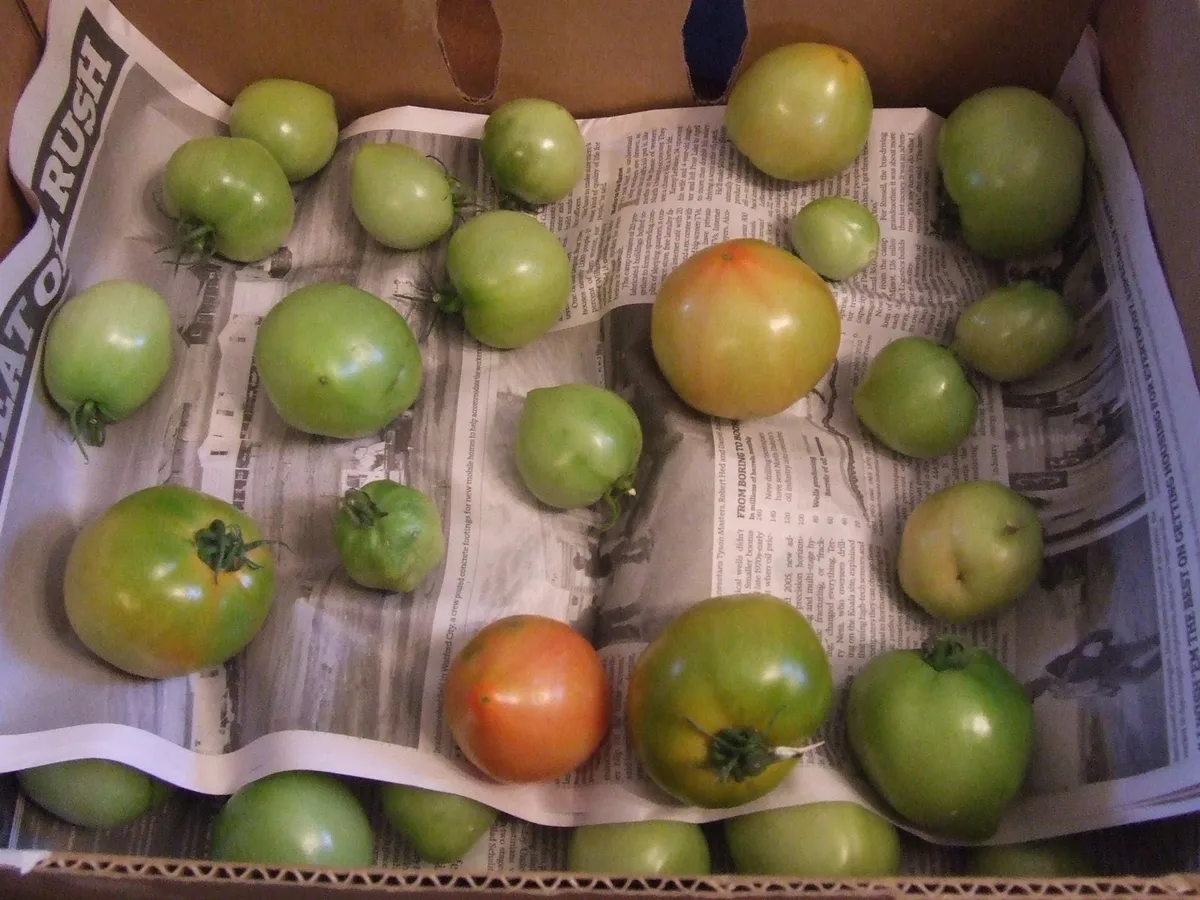
For a bigger harvest, line a shallow cardboard box with newspaper. Lay tomatoes in a single layer, stems up, not touching each other. Add one ripe apple or banana per layer for ethylene.
Cover with more newspaper and check every 2 days. Remove any fruit showing soft spots or mold immediately.
Ripening Whole Vines Upside Down
For end-of-season salvage, pull the whole plant, shake off the soil, and hang it upside down in a garage or basement at 60 to 65°F. The plant continues feeding the fruit as it slowly dies back. Ripening takes 2 to 4 weeks.
Aggregate grower feedback says the flavor comes surprisingly close to vine-ripened.
End-of-Season Moves Before First Frost
Once the forecast shows overnight lows dipping into the 40s°F within 10 days, you're in salvage mode. Frost damages fruit well before it kills the plant, so move early.
Priority actions:
- Strip every mature-green and breaker fruit off the vines.
- Bring container tomatoes into a garage or unheated porch overnight.
- Cover in-ground plants with row cover or an old bedsheet if a light frost is forecast.
- Water the soil (not the leaves) the afternoon before a frost. Moist soil holds daytime heat better and radiates it overnight.
- Once a hard freeze is 48 hours out, harvest everything and pull the plants.
Skip anything smaller than a walnut. Immature fruit rarely colors and tastes chalky even if it does. Focus your energy on the larger, glossier greens that will ripen indoors within 2 weeks.
Mistakes That Keep Tomatoes Green Longer
The same handful of mistakes show up over and over in gardener questions. Fixing any one of these can restart stalled ripening within a week.
- Refrigerating half-ripe tomatoes. Anything below 55°F kills flavor and can stop ripening entirely. Keep them on the counter until fully red.
- Stripping every leaf off the plant. Exposed fruit sun-scalds and loses ripening momentum. Keep the upper canopy.
- Fertilizing with lawn feed or fresh manure mid-season. Both push huge nitrogen loads at exactly the wrong time.
- Splash-and-move watering. Deep, consistent watering matters more than volume or frequency.
- Waiting for red on the vine when frost is 3 days out. You'll lose the crop.
- Picking tomatoes at rock-hard immature green stage. They'll never ripen right, no matter what tricks you try.
- Storing ripening fruit stem-down. Stems up prevents pressure spots and slows rot.
Expert Tips From Growers Who've Solved This
A few less obvious moves show up again and again in university trials and grower interviews.
- Plant one early-maturing variety alongside heirlooms as insurance against a cool summer.
- Mulch heavily with straw or wood chips to hold soil in the 65 to 75°F sweet spot.
- Prune only in the morning so wounds seal before the hot part of the day.
- Feed potassium as a foliar spray if plants show yellow shoulders. Leaf uptake beats root uptake for speed.
- Grow against a south-facing wall in cool climates. The reflected warmth adds 3 to 5°F of ripening heat.
- Track daytime highs on a simple thermometer. Three straight days above 90°F is your signal to pick at breaker.
- Save seed from the earliest ripening fruit each year. Over a few seasons you'll drift toward a strain that ripens well in your specific microclimate.
FAQs About Tomatoes That Won't Ripen
Will green tomatoes ripen after picking?
Yes, if they've reached the mature-green stage. Full-size, glossy, dull-green fruit ripens at 65 to 70°F in 4 to 14 days. Immature green fruit that's still small and pale won't ripen properly and stays flavorless.
Speed things up with a paper bag and a ripe banana.
Why are my tomatoes turning yellow instead of red?
Yellow color usually means the plant hit temperatures above 85°F during ripening. Lycopene shuts down at that heat, but carotene keeps going, so fruit stops at orange or yellow. Once nights cool below 75°F, some fruit may finally redden.
A few varieties are genuinely yellow at full ripe stage.
How long does it take for tomatoes to turn red?
From breaker stage (first color break) to fully red takes 7 to 14 days at 68 to 77°F. Cool temperatures can stretch that to 3 or 4 weeks. Sustained heat above 85°F can stall the process entirely until night temperatures drop back below 75°F.
Should I remove leaves to help tomatoes ripen?
Only a little, and only in the lower canopy. Removing a few leaves that shade ripening fruit clusters can speed things up. Stripping the upper canopy does the opposite.
It exposes fruit to sun scald and cuts the sugar supply that fuels ripening.
Can I ripen tomatoes on a sunny windowsill?
Not effectively. Direct sunlight raises the fruit surface above 85°F and stalls the same lycopene reaction happening outdoors. A warm, shaded spot at 65 to 70°F ripens faster and gives better color.
Move green fruit off the windowsill and into a paper bag with a banana instead.
Your Decision Guide: What to Do This Week
If daytime highs are still above 85°F, do nothing except shade cloth and deep watering. Wait for cooler weather.
If nights are 55 to 75°F and plants look healthy, top the plants, cut nitrogen, and give it 10 to 14 days.
If frost is 7 to 10 days out, pick every mature-green and breaker fruit. Finish them indoors with the paper bag method.
If nothing improved after 2 weeks of good conditions, your problem is variety or planting date. Choose an early-maturing variety next season, and start seeds 2 weeks earlier.
Match your situation to the branch that fits. That single decision covers the vast majority of stalled harvests.

Similar Posts