Blossom-End Rot: Calcium Deficiency or Watering Issue?
Ask any gardener what causes blossom-end rot and you'll get two loud answers: not enough calcium, or bad watering. So, does blossom-end rot come from calcium deficiency or watering? The short answer is that it's a calcium problem inside the fruit, but water stress is almost always the reason the calcium didn't get there.
Most soils already have plenty of calcium sitting in the root zone.
That's why dumping eggshells or spraying leaves rarely fixes anything. As of 2026, university extension services still list irregular soil moisture as the top trigger of blossom-end rot (BER) in tomatoes, peppers, and squash, with optimal soil pH sitting at 6.2 to 6.8 for calcium availability. Understanding the split between "cause" and "trigger" is the whole game.
Let's start with what the disorder actually looks like on the fruit.
Quick Answer
Blossom-end rot is technically a calcium deficiency inside the fruit. But inconsistent watering is the real trigger. Most garden soils already hold enough calcium.
When roots dry out or flood, the plant can't move calcium to the growing fruit fast enough. Fix the watering first. Only add calcium if a soil test shows a true shortage.
The Real Cause of Blossom-End Rot: Calcium or Water?
Both. But not equally. BER happens when cells at the bottom of a developing fruit don't receive enough calcium during a critical growth window.
That part is a nutrient issue.
The reason those cells don't get calcium is almost always water related. Calcium moves through the plant in the water stream, driven by transpiration. Break that stream with drought, flood, or shock, and calcium delivery stalls.
The soil can be loaded with calcium and it still won't reach the fruit.
Think of it like plumbing. The tank is full. The pipe is dry.
Adding more water to the tank doesn't help until the pipe is working again. That's why watering practices, not calcium supplements, do most of the heavy lifting.
What Blossom-End Rot Actually Looks Like on the Fruit
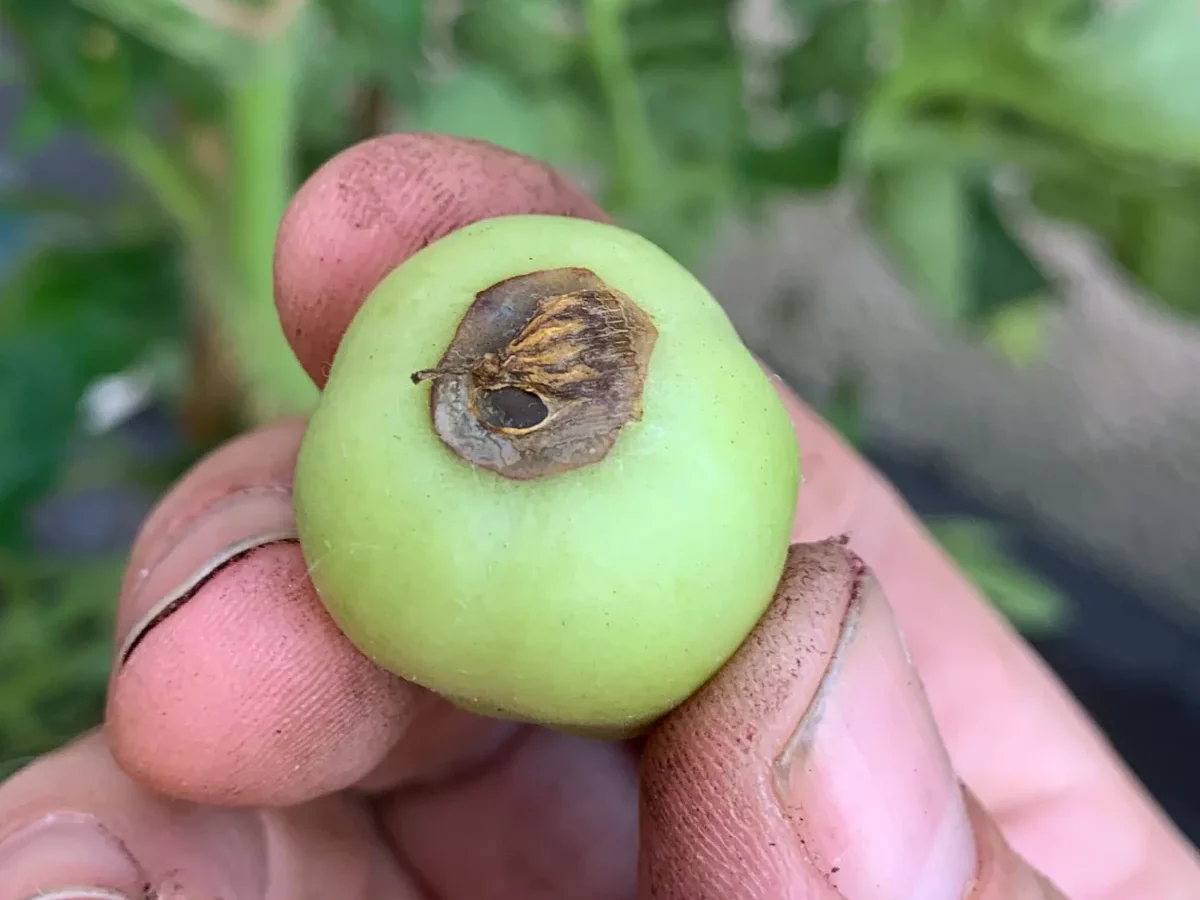
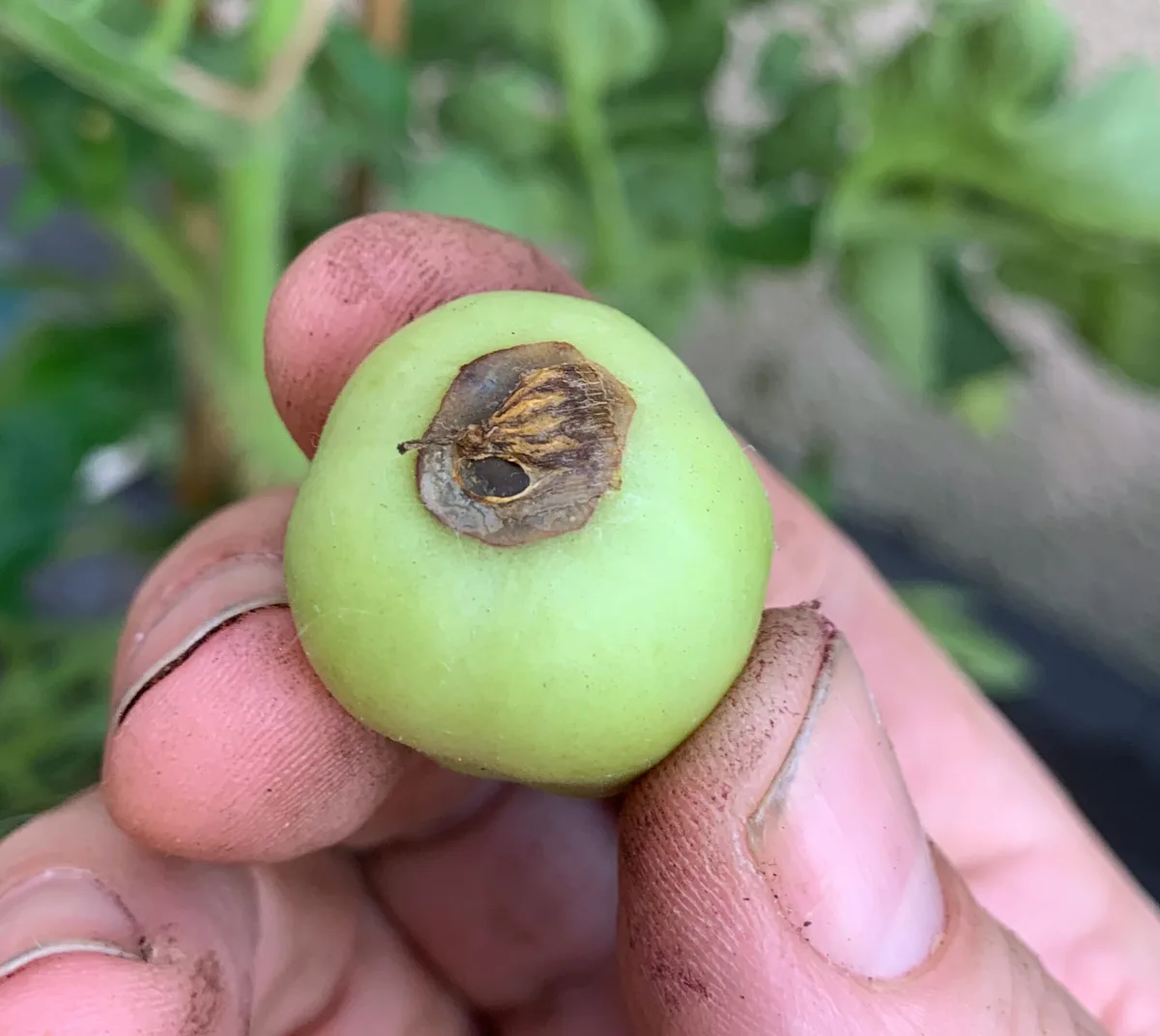
The classic sign is a sunken, leathery patch on the blossom end of the fruit, opposite the stem. It starts as a small water-soaked spot. Within a few days it turns tan, then dark brown or almost black.
The tissue feels dry and papery, not slimy.
Here's what to look for:
- Lesion sits on the bottom of the fruit, never the top
- Skin is firm and leathery, not oozing
- Interior tissue near the lesion looks corky and dry
- Often shows on green or half-ripe fruit, not at flowering
- Usually hits the first flush of fruit hardest
- Can appear on just one or two fruits per truss
BER is not caused by bacteria, fungus, or insects. It's what botanists call an abiotic or physiological disorder. That distinction matters, because sprays and fungicides won't touch it.
If the spot is soft, sunken, and covered in pink or salmon spore masses, you're likely looking at anthracnose, not BER. If it's a pale, papery patch on the sun-facing side, that's sunscald. Get the ID right before you treat.
Why Both Answers Are Partly Right (And Why That Matters)
The internet argument between "it's calcium" and "it's watering" is a false choice. Both camps are describing different links in the same chain.
Cornell and other land-grant researchers describe BER as a "water-related calcium deficiency." The fruit is short on calcium at the tissue level. But the shortage is caused by something interrupting calcium's ride from root to fruit. That something is almost always uneven soil moisture.
Getting the diagnosis right changes what you do about it:
- If you believe it's pure calcium deficiency, you'll waste money on foliar sprays, eggshells, and antacid tablets
- If you believe it's pure watering, you might ignore genuine soil issues like very acidic pH or high-ammonium fertilizer
- If you understand it's both, you fix moisture first and test soil to catch the rare true deficiency
For a deeper primer on the physiology, the USDA Agricultural Research Service publishes ongoing work on calcium transport in fruiting crops. State cooperative extension pages, like those at Penn State and UC ANR, offer regional guidance that matches climate and soil type.
How Calcium Moves Through a Tomato Plant
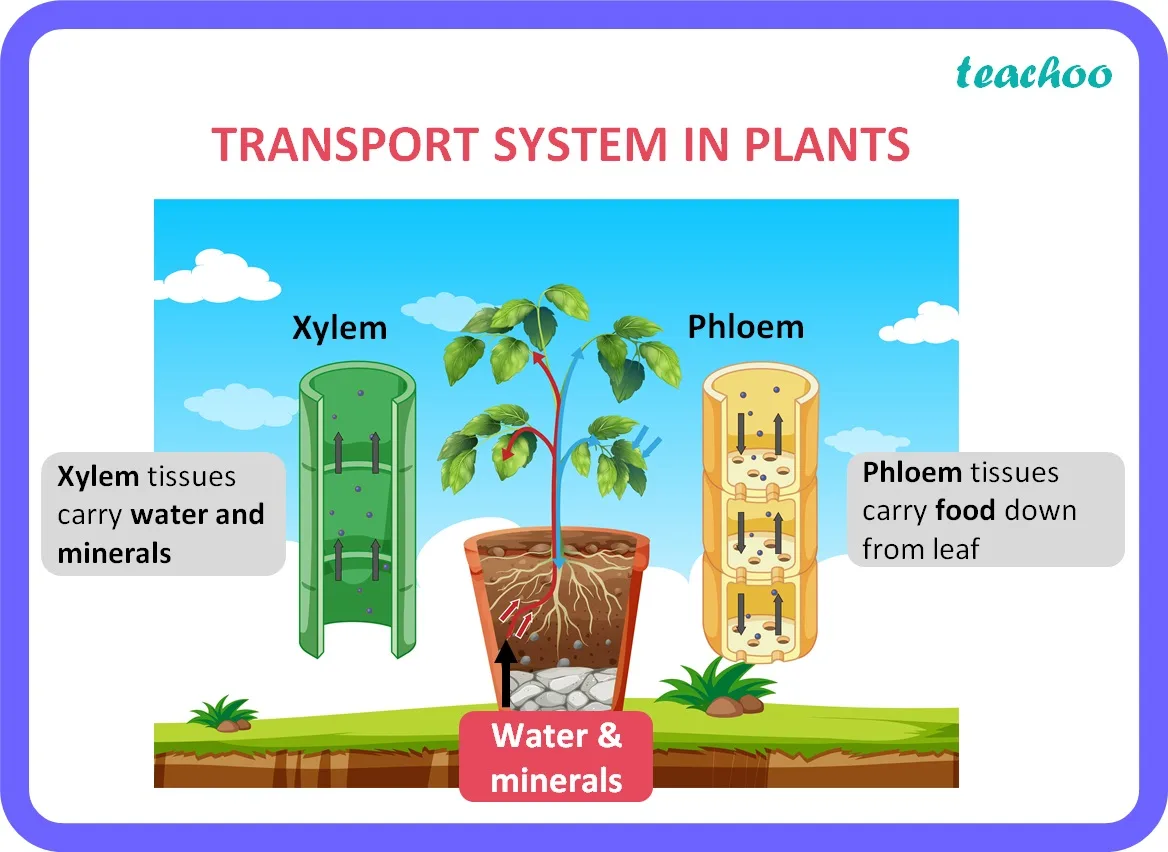
Calcium is a strange nutrient. Unlike nitrogen or potassium, it can't be reshuffled once it's placed. Where the plant drops it, it stays.
That one fact explains most of BER.
Here's the flow in plain language:
- Roots pull water from the soil
- Water carries dissolved calcium up the xylem, the plant's plumbing
- Transpiration from leaves pulls that water column upward
- Calcium gets deposited wherever the water stream lands
- Leaves transpire more than fruits, so they win most of the calcium
Fruits are last in line. They have small pores and transpire very little compared to a big, breezy tomato leaf. During hot, dry, or windy weather, leaves pull even harder on the water stream, and fruits get shortchanged.
The blossom end, farthest from the stem, is the tail of the line and shows the deficit first.
There's another wrinkle. Calcium only moves in actively growing water flow. If the roots dry out for even a day, that flow stops.
When watering resumes, the plant sends calcium back to the fastest-growing tissues, which are usually new leaves, not existing fruit. The fruit that was developing during the drought is already damaged. You just can't see the lesion yet.
That's why BER often appears three to five days after a stress event, not during it.
The Role of Water Stress in Triggering BER
Water stress is the single biggest lever you have. Get it right and BER usually disappears, even without any calcium products.
Stress doesn't just mean drought. It means any sudden swing in soil moisture. The plant hates change.
A consistently damp root zone is what it wants. Here are the swings that trigger BER most often:
- Letting a container dry out completely, then soaking it
- Heavy rain after a dry week in ground beds
- Skipping watering for a weekend during a heatwave
- Deep cultivation that severs shallow feeder roots
- Transplant shock right before the first fruit sets
- Overhead watering that wets the canopy but not the root zone
- Windy afternoons above 90°F that spike transpiration
A good visual: picture the plant running a garden hose to each fruit. When that hose kinks, the fruit at the far end suffers first. The blossom end is always the far end.
Aim for soil that stays evenly moist about 6 to 8 inches down. In-ground tomatoes generally need 1 to 2 inches of water per week, more in hot or sandy conditions. Container plants may need daily watering in summer, sometimes twice.
Mulch is your best friend here. Two to three inches of straw, shredded leaves, or wood chips buffers the soil against fast drying and slows evaporation. Drip irrigation on a timer beats hand watering because it removes the "I'll get to it later" variable.
Calcium Deficiency vs Water Inconsistency: Side-by-Side Breakdown
The two "causes" behave very differently in the garden. This table shows what each looks like in practice.
| Factor | True Calcium Deficiency | Water Inconsistency |
|---|---|---|
| How common | Rare in most garden soils | The trigger in most BER cases |
| Soil test result | Low exchangeable Ca (below ~1,000 ppm) | Ca is normal or high |
| Pattern | Widespread on many plants and trusses | Often first-flush fruit or after weather swings |
| Fix that works | Lime, gypsum, or calcium nitrate per soil test | Consistent watering, mulch, drip irrigation |
| Fix that fails | Watering alone won't help | Adding more calcium won't help |
| Speed of response | Slow (weeks to next season) | Fast (next flush often clean) |
The fixes barely overlap. If you can't tell which one is driving your BER, start with watering. It's cheaper, faster, and correct in most cases.
A basic soil test through your county extension office confirms the rest.
When Calcium Really Is the Problem
Actual calcium shortages exist, they're just uncommon. When they show up, it's usually one of these conditions:
- Very acidic soil below pH 5.5, where calcium is chemically locked away from roots
- Sandy or heavily leached soils in high-rainfall regions
- Long-term container mixes that have never been amended
- Peat-heavy or coir-based hydroponic media without added calcium
- Soils with a documented history of low base saturation
The tell is a soil test, not a guess. A standard test shows exchangeable calcium in parts per million and cation ratios. If calcium is genuinely low, agricultural lime raises pH and adds calcium at the same time.
Gypsum (calcium sulfate) adds calcium without changing pH, useful when pH is already correct.
For hydroponic and container growers, calcium nitrate mixed into the feed solution delivers plant-available calcium quickly. Foliar sprays on fruit (not leaves) can help in acute cases, but they're a bandage, not a fix.
When Watering Is the Real Culprit
If your soil test looks normal and BER keeps returning, watering is almost certainly the driver. The clues are usually right there in the calendar and the weather log.
Ask yourself:
- Did the fruit set during a heatwave or windy stretch?
- Did you miss a watering during a hot week?
- Do you water deeply once, then let the soil dry hard?
- Are containers baking on a south-facing patio?
- Did a thunderstorm dump 2 inches after a dry week?
- Did you cultivate close to the plant and damage roots?
Any yes points to a moisture swing. The fix is boring but effective: keep the root zone evenly damp, not soggy and not bone dry. Water in the morning, deeply, on a schedule.
Add mulch. Put containers on a timer if you travel or forget.
Aggregate extension guidance shows BER often clears up within one to two fruit flushes after moisture stabilizes. The damaged fruit won't recover, but the next round usually comes in clean.
Soil pH, Fertilizer, and Nutrient Interactions That Block Calcium
Calcium doesn't move through the plant in isolation. Other nutrients compete with it at the root surface, and soil chemistry can lock it away entirely. This is where a lot of "mystery" BER hides.
The main blockers to watch for:
- Soil pH below 6.0 reduces calcium availability sharply
- High potassium (from wood ash or K-heavy blends) competes with calcium uptake
- High magnesium (from Epsom salt binges) does the same
- Ammonium-based nitrogen (urea, ammonium sulfate) suppresses calcium movement
- Salt buildup from over-fertilization creates osmotic stress that mimics drought
The most common self-inflicted wound is heavy Epsom salt use. Gardeners sprinkle it hoping to green up leaves, and end up creating a calcium-magnesium imbalance that triggers BER on the next fruit set.
Aim for tomato soil pH between 6.2 and 6.8. Use balanced fertilizers, not high-nitrogen or high-potassium formulas, once fruit begins to set. Nitrate-based nitrogen sources (like calcium nitrate) are gentler on calcium uptake than ammonium-based ones.
A soil test every two to three years catches drift before it becomes a problem.
Container and Raised-Bed Growers: Why You're Hit Hardest
Containers and raised beds see more BER than in-ground gardens. Three factors stack against them.
First, soil volume is small. A 5-gallon pot on a hot patio can lose most of its moisture in one afternoon. A tomato plant in that pot has nowhere to buffer the swing.
Second, container mixes drain fast and hold fewer nutrients. Peat and coir have very little native calcium. After a few weeks of watering, salts and nutrients wash out the bottom, and calcium goes with them.
Third, heat stress runs higher in containers. Dark pots on concrete can push root-zone temperatures past 100°F in summer sun, spiking transpiration and stalling calcium delivery.
Practical fixes for container and raised-bed growers:
- Use pots at least 10 to 15 gallons for indeterminate tomatoes
- Choose light-colored or fabric pots to reduce heat buildup
- Mix a slow-release calcium source into the medium at planting (calcium nitrate or gypsum)
- Install drip emitters on a timer, running short cycles twice a day in peak summer
- Top-dress with mulch to slow surface evaporation
- Flush pots monthly with plain water to prevent salt buildup
Raised beds fall between containers and in-ground for buffering. They still benefit from mulch, drip irrigation, and a proper starting soil mix with adequate calcium and organic matter.
Look-Alike Problems Often Mistaken for BER
A few disorders look similar enough to fool even experienced gardeners. Getting the ID wrong wastes time and treatments.
- Sunscald: pale, papery bleached patch on the sun-facing shoulder, not the bottom
- Catfacing: distorted scarring at the blossom end caused by cool temps at pollination
- Anthracnose: soft sunken spots with pink or salmon spore masses, often late season
- Zippering: thin brown scars running down the fruit from stem to blossom end
- Growth cracks: radial or concentric splits triggered by rain after drought
BER is dry, leathery, on the bottom, and appears while fruit is still developing. If your lesion is soft, oozing, or on the top or side, look at the alternatives first before touching your watering routine.
Fixes That Actually Work (And Ones That Don't)
Watering and Mulching Practices That Prevent BER
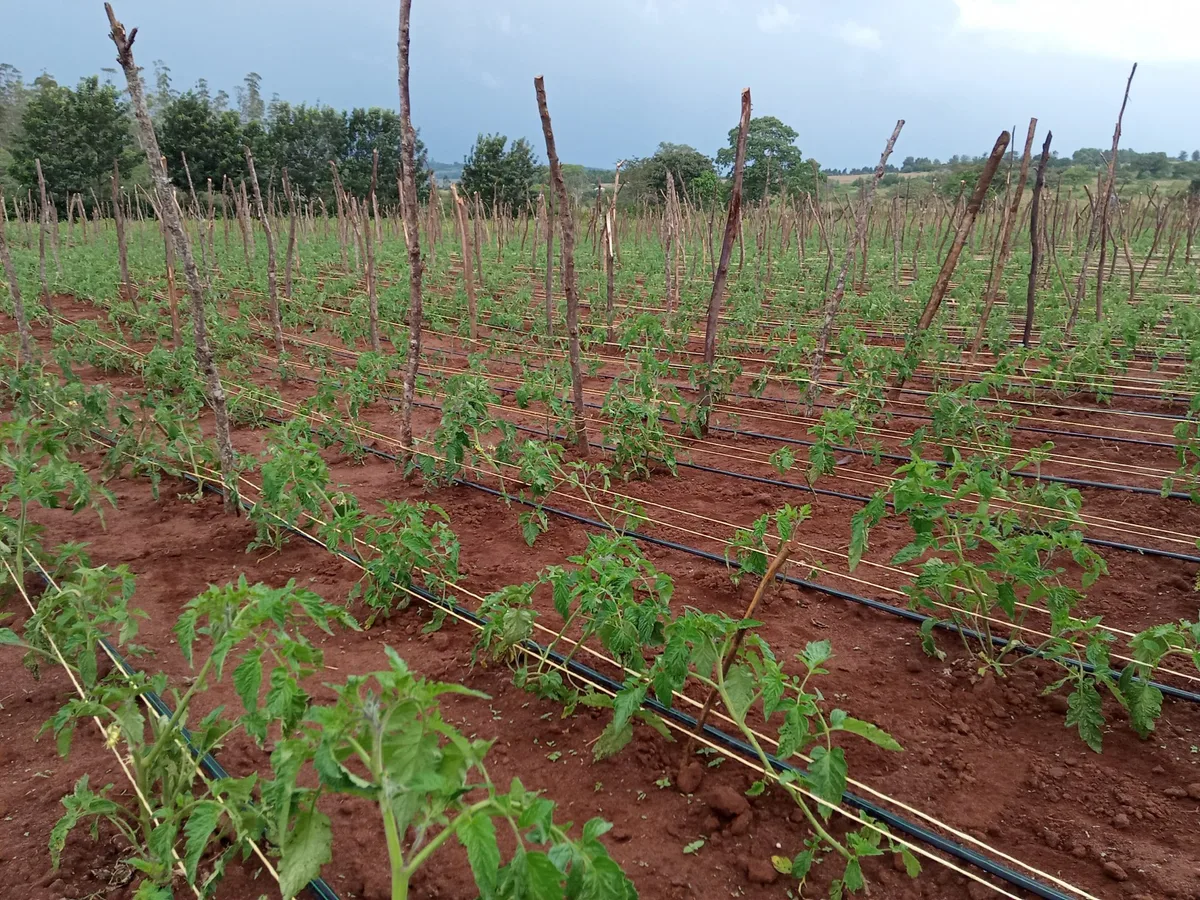
Deep, consistent watering is the single most effective preventive step. Aim for about 1 to 2 inches of water per week in-ground, delivered on a schedule rather than on impulse.
Lay 2 to 3 inches of straw, shredded leaves, or bark mulch around each plant. Mulch cuts evaporation, moderates soil temperature, and buffers rain shocks. Drip lines on a timer remove human error and keep the root zone in a steady moisture band.
Soil Amendments Worth Using
Only amend based on a soil test. If pH is below 6.0 and calcium is genuinely low, dolomitic or calcitic lime raises both at once. If pH is already correct, gypsum adds calcium without moving pH.
For hydroponics and containers, calcium nitrate mixed into feed water is the fastest and most reliable delivery method. Use per label rates, not gardener guesswork.
Popular "Cures" That Waste Your Time
Skip these. They feel productive but do very little:
- Crushed eggshells at planting (take months or years to break down)
- Tums or antacid tablets buried by the stem
- Foliar calcium sprays on leaves (fruit doesn't absorb through them)
- Powdered milk drenches
- Epsom salt (this actually makes BER worse by adding magnesium)
If a "cure" doesn't address moisture or a proven soil deficit, it's not doing anything useful.
Which Crops and Varieties Are Most Prone
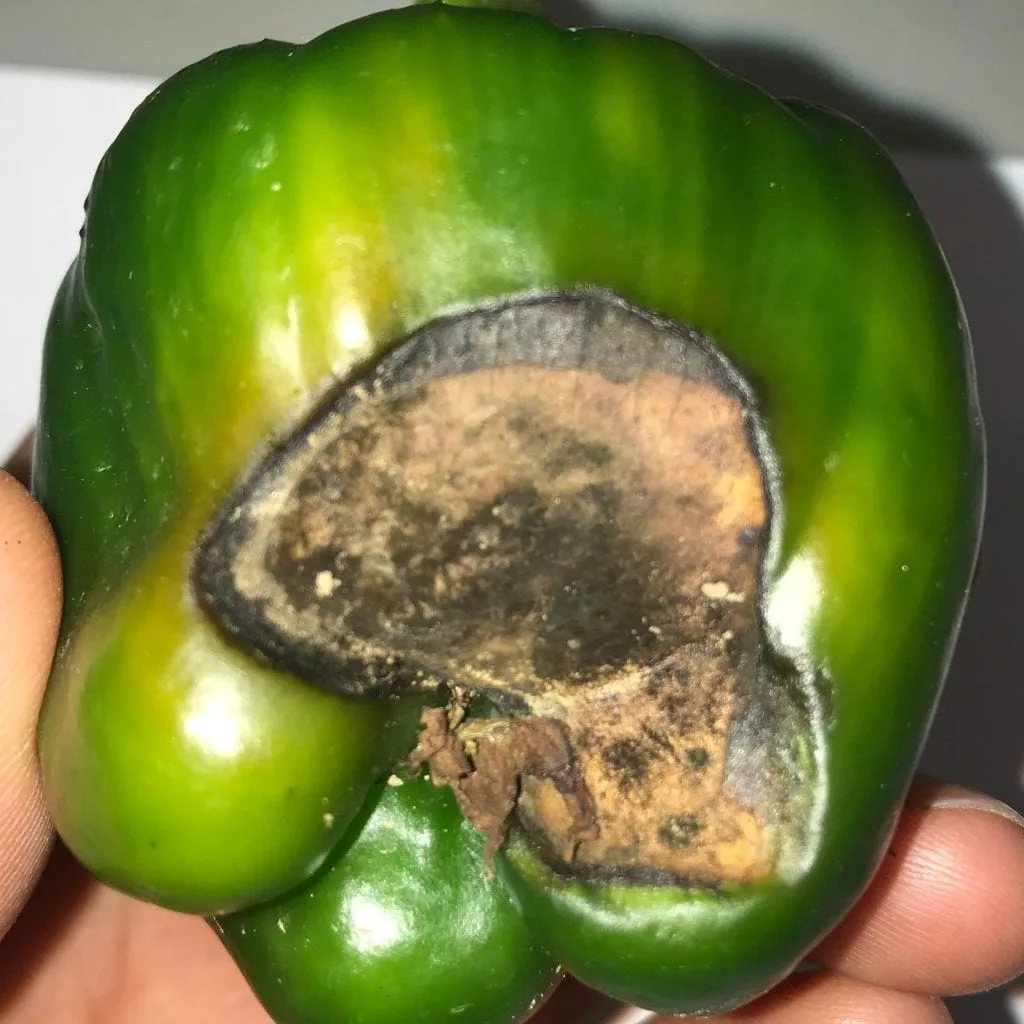
Tomatoes get most of the attention, but BER hits several fruiting crops. Peppers, eggplants, summer squash, zucchini, and watermelon all show it under water stress.
Within tomatoes, paste and Roma varieties are the most susceptible because of their elongated shape and dense flesh. Beefsteaks come next. Cherry and grape tomatoes rarely show BER, thanks to their small size and short growth window.
Indeterminate varieties usually recover faster than determinates once moisture stabilizes.
Frequently Asked Questions
Can I eat tomatoes with blossom-end rot?
Yes. BER is a physiological disorder, not a disease or toxin. Cut away the discolored area and use the rest of the fruit.
Unaffected tomatoes on the same plant are completely safe. Just harvest early if the lesion is spreading, since secondary rots can move in through the damaged tissue.
Will adding calcium fix blossom-end rot already on the fruit?
No. Damaged fruit won't heal, even with perfect calcium delivery. Focus on saving the next flush by stabilizing soil moisture immediately.
If a soil test shows a true calcium shortage, amend for future seasons. Removing affected fruit early helps the plant redirect energy to clean, developing tomatoes.
How fast do fixes work?
Watering fixes show up within one fruit flush, often 10 to 21 days. Soil amendments like lime work slowly, sometimes taking a full season to shift pH. Calcium nitrate in hydroponic or container feed works within days.
Mulch benefits are immediate because they stabilize the root zone the same afternoon.
Does overwatering cause blossom-end rot too?
Yes. Waterlogged soil starves roots of oxygen, killing fine root hairs that absorb calcium. The plant then behaves as if it's drought stressed, even in wet soil.
Good drainage matters as much as consistent watering. Raised beds and quality potting mix help avoid the swampy-then-dry cycle in containers.
Why do my first tomatoes get BER but later ones don't?
Early fruit sets during unstable spring weather, when nights are cool and roots are still shallow. Transpiration and root uptake haven't synced yet, so calcium delivery lags. As the plant matures and weather steadies, moisture and nutrient flow stabilize.
Later fruit trusses usually come in clean without any intervention.
The Verdict: Which One Causes Blossom-End Rot
Both, but watering wins the argument. Calcium is the missing ingredient inside the fruit. Water stress is what keeps it from getting there.
Fix your moisture routine, mulch heavily, run drip on a timer, and only add calcium if a soil test tells you to. Do that, and BER stops being a yearly frustration.

Similar Posts