Blossom-End Rot in Tomatoes vs Peppers: Key Differences
If you've spotted a dark, sunken patch on your ripening fruit and wondered, "Is blossom-end rot different in tomatoes vs peppers?", the answer is yes and no. It's the same underlying calcium disorder. But it looks and behaves differently on each crop, and that catches even seasoned gardeners off guard.
Peppers rarely rot at the tip the way tomatoes do, which is one big reason growers keep misdiagnosing it as disease.
As of 2026, university extension programs still rank blossom-end rot (BER) among the top three fruiting-vegetable complaints from home gardeners. Severe outbreaks can ruin 20 to 50 percent of a plant's first fruit set. Knowing how BER differs between the two crops changes how you fix it.
Here's what shows up where, and why it matters.
Quick Answer
Yes, blossom-end rot behaves differently on tomatoes and peppers. On tomatoes, the lesion forms at the bottom of the fruit. On peppers, it often appears on the side wall instead.
Peppers also tend to lose their very first fruit set. The underlying cause is the same. It's a localized calcium shortage inside the fruit itself.
Why Tomato and Pepper Growers Confuse Blossom-End Rot
Most gardening advice treats BER as a single, tomato-shaped problem. That framing breaks the moment you look at a rotted pepper. The lesion on a pepper often sits halfway up the fruit or near the shoulder.
So people assume it's sunscald, anthracnose, or a bug bite instead.
The confusion runs deeper than symptoms. Tomato BER usually shows up on the first few fruits and then fades. Pepper BER can wipe out most of the first flush and quietly return during every heat wave.
Same disorder, different personality on each plant.
Growers who understand the difference fix the problem in one season. Growers who don't keep buying calcium sprays that were never the real answer.
The Short Answer: Same Disorder, Different Behavior
Blossom-end rot in both crops is a calcium transport failure inside fast-growing fruit tissue. The soil almost always has enough calcium. The plant just can't move it into the fruit fast enough during rapid cell division.
Where the two crops split is in expression. Tomatoes route calcium to the tip of the fruit, so a shortage shows there first. Peppers have thinner walls and a different fruit shape, so the weak spot often lands on the side.
Aggregate reports from Cornell, Penn State, and UC IPM confirm the same trigger stack for both plants. Erratic watering, heat spikes, root damage, and high salt levels. The fix strategy is similar.
The urgency and the timing are not.
What Blossom-End Rot Actually Is (And Why It's Not a Disease)
BER is a physiological disorder, not an infection. No fungus, bacteria, or virus starts it. Nothing spreads from a rotted fruit to a healthy one.
You can't spray it away with a fungicide.
Inside the plant, calcium moves through the xylem, pulled along by water flow during transpiration. Fruit doesn't transpire much compared to leaves. So during hot afternoons, calcium gets diverted to thirsty leaves and away from the swelling fruit.
When cell walls at the fruit tip don't get enough calcium, they collapse. That collapse is the sunken brown patch you see.
Guidance from Penn State Extension frames BER as a symptom of stress, not a nutrient deficiency in the soil. Adding more calcium rarely fixes it once the fruit is already forming. Preventing the stress does.
A few facts worth locking in:
- BER is triggered by uneven water, not low soil calcium in most gardens.
- Secondary molds can colonize the dead tissue, but they arrive after the damage.
- Affected fruit is safe to eat once the lesion is cut away and no mold is present.
- Foliar calcium sprays are far less useful than the label suggests, because calcium barely moves out of leaves into fruit.
How Blossom-End Rot Shows Up on Tomatoes
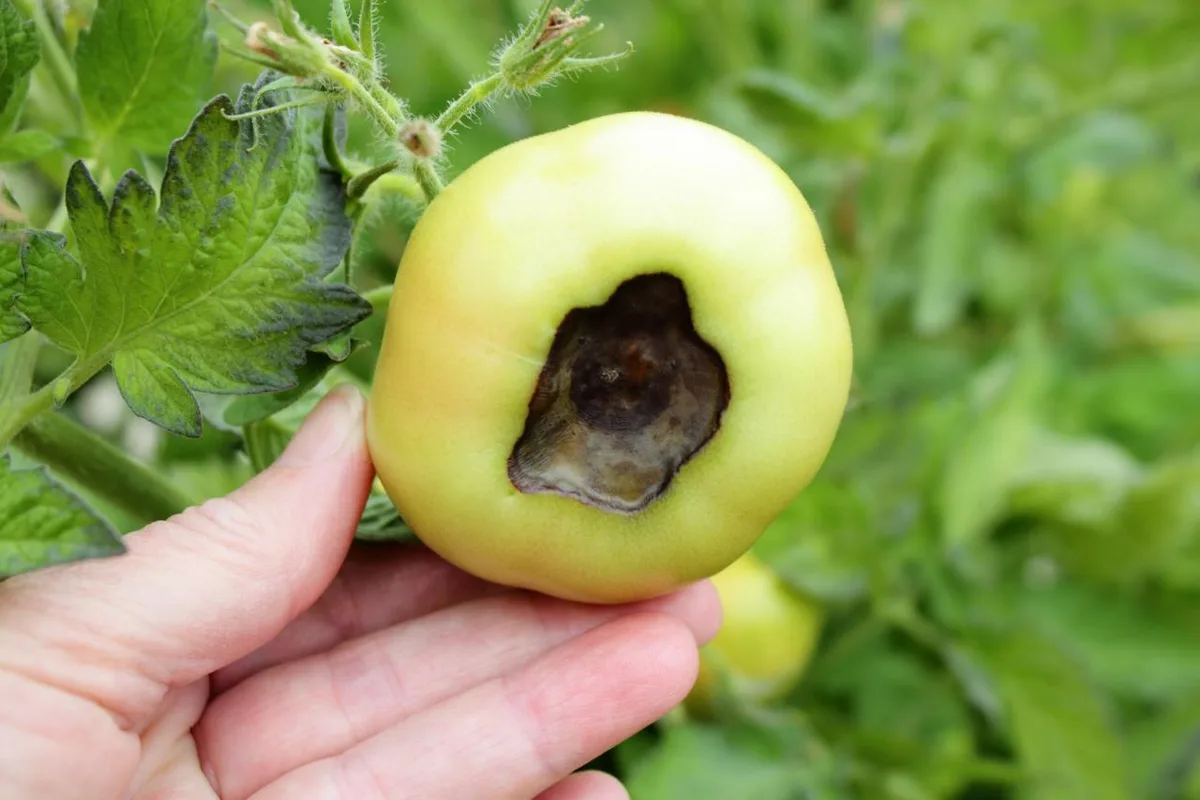
Tomato BER is the textbook case. Most photos you'll ever see of the disorder are on a tomato. But even here, the exact look changes as the fruit ages.
Where the Lesion Forms
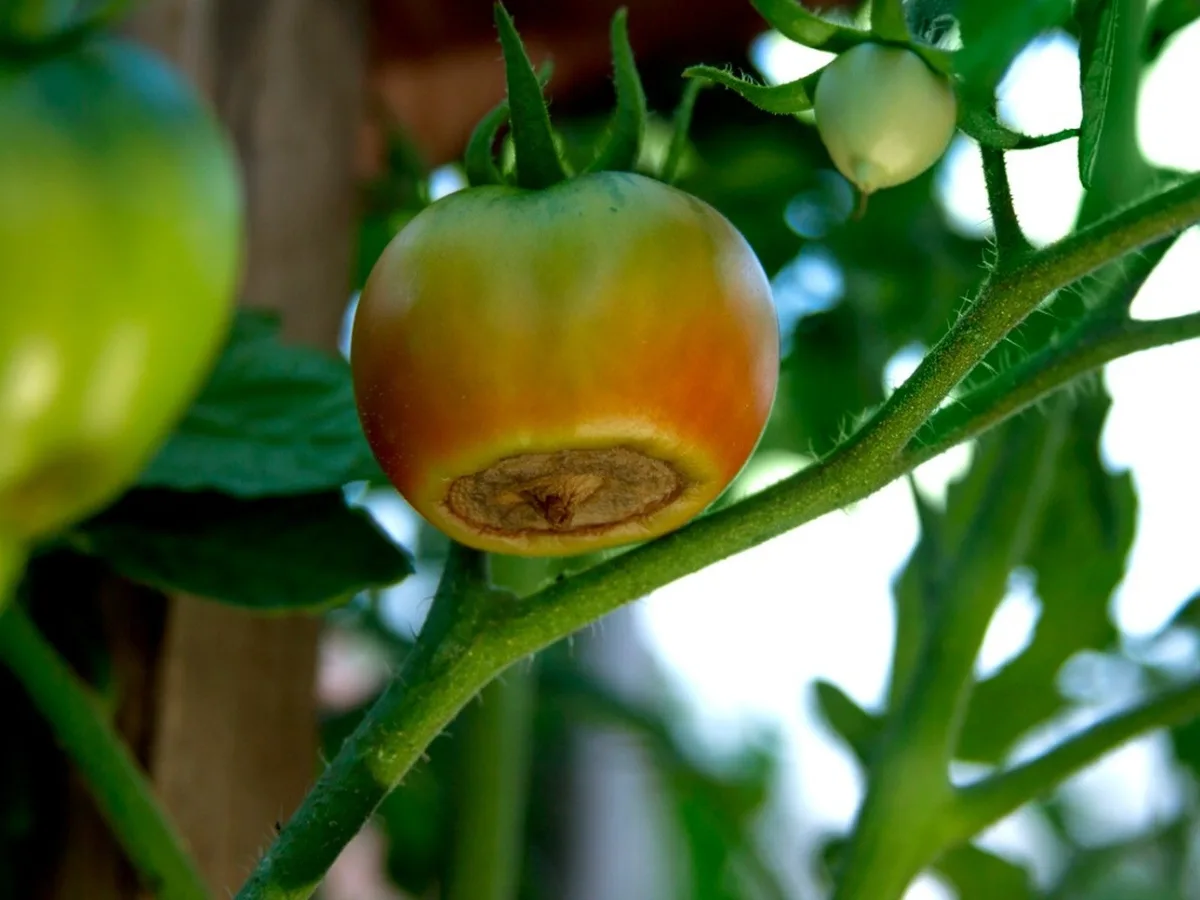
The lesion almost always sits at the blossom end. That's the bottom of the fruit, opposite the stem. It starts as a small, water-soaked spot the size of a pea.
Within a few days it turns tan, then brown to black. The tissue goes leathery and slightly sunken.
On paste and Roma types, the lesion can sink deep and cover a third of the fruit. On round slicers, it usually stays flatter and more contained.
When in the Season It Hits Hardest
Tomato BER hits the earliest fruits worst. That's when roots are still catching up to fast top growth and moisture cycles are least stable. The first two or three trusses often carry most of the damage.
Later fruit usually comes in clean once the plant settles into a rhythm.
Extreme summer heat can cause a second wave. So can a heavy pruning that shocks the plant.
Which Varieties Get It Worst
Long, elongated fruits get BER more often than round ones. Roma, San Marzano, and Amish Paste top the list. Large beefsteaks are a distant second.
Cherry and grape types rarely show it at all.
Determinate varieties tend to concentrate BER because their whole crop matures in a tight window. Indeterminate types spread the risk across a longer season.
How Blossom-End Rot Shows Up on Peppers
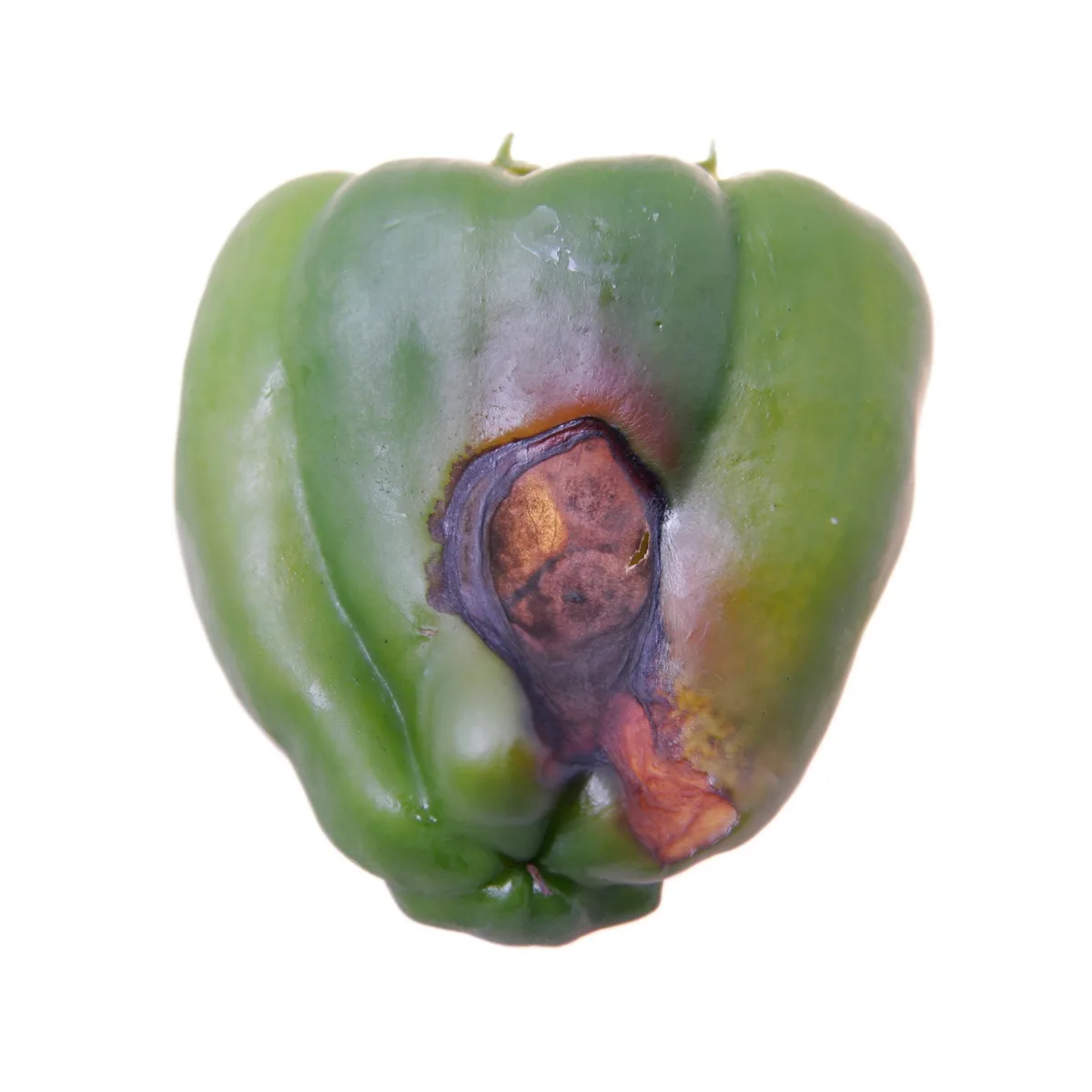
Pepper BER is the version that fools people. It doesn't follow the tomato rulebook. If you're looking for a tidy brown circle at the bottom of the fruit, you'll miss it.
Why Pepper Lesions Often Appear on the Side
On peppers, the lesion often shows up on the side wall of the fruit, not the tip. It starts as a pale, slightly translucent patch. That patch dries, sinks in, and turns light tan or papery brown.
Sometimes it wraps around a shoulder or forms two spots on opposite sides.
The shape follows fruit geometry. Bell and elongated peppers have thin walls that swell fast during cell expansion, and the weakest calcium zone often ends up mid-fruit. That's where the tissue gives out.
Bell Peppers vs Hot Peppers: Who Suffers More
Bell peppers are the most vulnerable. Their thick, fleshy walls demand a lot of calcium delivery in a short window. Hot peppers with smaller, thinner-walled fruits (jalapeños, cayennes, Thai chilies) show BER far less often.
Habaneros sit somewhere in the middle.
If you grow only bells and never see BER on your jalapeños, that's normal. It's not a soil difference. It's a fruit-size and wall-thickness difference.
The First-Flush Problem Pepper Growers Know Too Well
Peppers famously lose the first few fruits to BER. Then the plant seems to fix itself. That pattern is so common it feels like a rite of passage in pepper growing.
The reason is timing. Early fruits set while roots are still shallow and weather is unstable. Once the root system fills out and the canopy shades the soil, moisture stabilizes and calcium delivery evens out.
Later flushes grow in with clean walls.
Tomato BER vs Pepper BER: Side-by-Side Comparison
Here's the fastest way to see how the two crops differ in the field.
| Feature | Tomato BER | Pepper BER |
|---|---|---|
| Lesion location | Bottom (blossom end) of fruit | Side wall, shoulder, or mid-fruit |
| Early appearance | Small water-soaked spot | Pale, papery, translucent patch |
| Mature lesion | Sunken, leathery, brown to black | Dry, sunken, tan to light brown |
| Fruit stage hit | Early expansion (green stage) | Very early set, often first flush |
| Worst-hit varieties | Roma, San Marzano, paste types | Bell peppers, thick-walled types |
| Least-affected | Cherry and grape types | Small hot peppers (jalapeño, cayenne) |
| Typical pattern | First 2 to 3 trusses, then fades | First flush lost, later flushes clean |
| Confusion risk | Low, symptoms are classic | High, often mistaken for sunscald |
If you spot rot at the tip of a tomato, you've got BER. If you spot a sunken pale patch on the side of a pepper, you probably do too.
What Actually Triggers It in Each Crop
The trigger stack is the same for both. The weighting is not.
Water Stress and Transpiration
Water swings are the number one driver. Deep watering followed by three dry days, then another soak, creates the exact yo-yo pattern that starves fruit tissue of calcium. Peppers are slightly more forgiving of dry soil than tomatoes.
But they punish uneven moisture harder once the fruit sets.
Hot afternoons pull calcium toward leaves instead of fruit. That's why BER often follows the first heat wave of the season.
Calcium Movement Inside the Plant
Calcium moves in one direction, up through the xylem with water. It doesn't cycle back once it lands. So fruit that formed during a stress window stays calcium-short even after the weather calms down.
Damaged fruit never recovers. Only new fruit shows improvement.
Peppers add one twist. Their fruit walls thicken quickly, and calcium has to reach the middle of that wall through a shorter transpiration pull. Bells are the extreme case.
Fertilizer and Root Zone Issues
Too much nitrogen, especially the ammoniacal form in cheap urea blends, blocks calcium uptake at the root. High potassium and magnesium do the same by competing for the same root channels. Salt buildup in containers pushes electrical conductivity (EC) past what roots can handle.
Any of these can trigger BER even in soil that tests fine for calcium.
Look-Alikes You Shouldn't Mistake for BER
Misdiagnosis wastes a whole season. Here are the common mistakes.
- Sunscald. White or bleached patches on the sun-facing side. BER lesions are brown and sunken, not bleached.
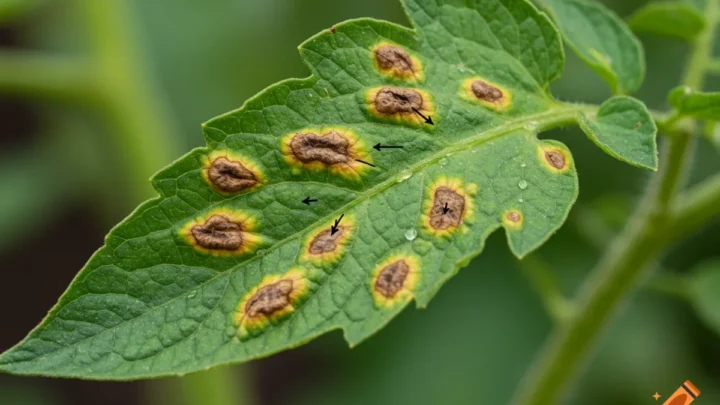
- Anthracnose. Circular, water-soaked spots with dark, sunken centers and pinkish spore masses. Anthracnose is fungal and spreads. BER doesn't.
- Catfacing. Deep scarring and puckering on the blossom end of tomatoes, usually from cool weather at flowering. Deformed but not rotten.
- Internal fruit rot. Fusarium and other fungi rot pepper fruit from the inside. Outside looks fine until you cut it open.
- Insect damage. Stink bug feeding leaves small hard yellow spots. BER lesions are soft and much larger.
When in doubt, cut the fruit open. BER kills tissue in a wedge that follows the vascular pattern. Fungal rots spread more randomly and often show visible mold.
Fixing Blossom-End Rot on Tomatoes
You can't reverse BER on a fruit that already has it. What you can do is stop the next fruits from developing the same lesion.
- Stabilize watering first. Aim for deep, even soakings on a schedule the soil can predict. Two to three inches per week for in-ground plants is a solid baseline.
- Mulch heavily. Two to three inches of straw, wood chips, or shredded leaves buffer soil moisture and temperature.
- Cut back on nitrogen. Stop weekly high-N feeds. Switch to a balanced tomato formula with slightly more potassium and phosphorus than nitrogen.
- Skip the foliar calcium sprays. Research from multiple extension programs shows minimal fruit-level benefit.
- Remove badly rotted fruit. It won't heal, and secondary molds can spread from it.
Recovery on tomatoes is fast. New fruit that sets after you fix the watering routine is often BER-free within two to three weeks.
Fixing Blossom-End Rot on Peppers
Pepper BER responds to the same fixes but demands more patience. The first flush is often already lost by the time you notice the problem.
- Pinch off the first damaged fruits. Removing affected peppers redirects the plant's energy into a stronger second flush.
- Never let the root zone dry out fully. Check soil moisture at 4 to 6 inches deep, not just the surface.
- Provide afternoon shade during heat spikes. A 30 to 40 percent shade cloth helps stabilize transpiration.
- Feed lightly and consistently. Small doses beat one large push. Avoid ammonium sulfate during fruit set.
- Check container drainage. Waterlogged root zones stop calcium uptake cold.
Expect the second flush to come in clean once these adjustments hold for two to three weeks. Bell peppers may need a full month to reset. Hot peppers usually bounce back faster.
Mistakes That Make It Worse on Both Crops
A few habits reliably turn a small BER problem into a season-long one.
- Overreacting with calcium products. Dumping gypsum, lime, or eggshells on a plant already showing BER rarely helps.
- Watering little and often. Shallow daily sips train roots to stay near the surface, where moisture swings hardest.
- Cultivating too close to the stem. Hoeing near the root zone slices feeder roots and cuts calcium uptake fast.
- Chasing lush growth. Heavy nitrogen produces big leaves that outcompete fruit for calcium.
- Ignoring container drainage. Dead roots move zero calcium.
Prevention Habits That Work for Both Plants
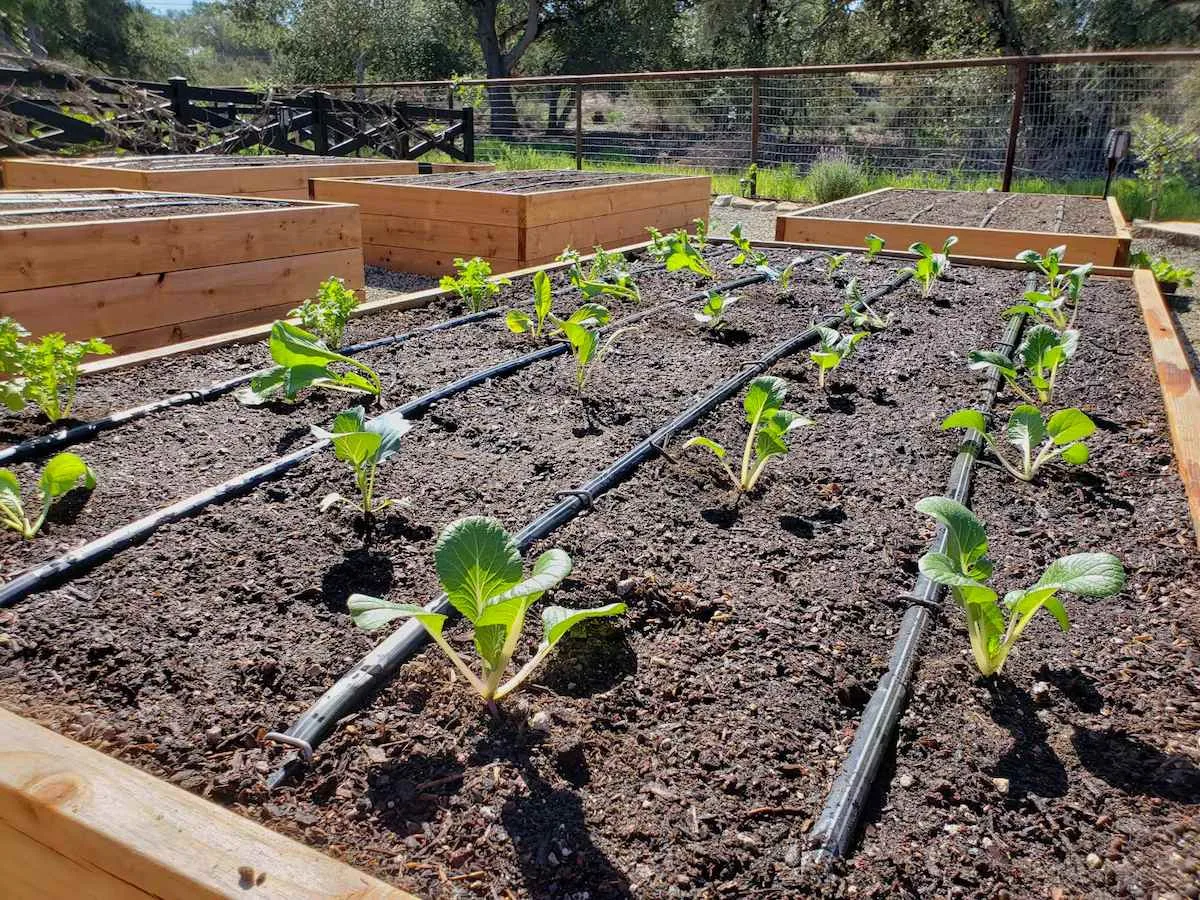
Prevention is boring on purpose. Steady beats heroic every time.
- Install drip irrigation on a timer. Even watering is the single strongest lever.
- Mulch two to three inches deep. Straw, wood chips, or shredded leaves buffer moisture and temperature.
- Test soil pH before planting. Aim for 6.2 to 6.8 for both tomatoes and peppers.
- Feed lightly and evenly. Small, regular doses of a balanced fertilizer beat one big push.
- Harden off transplants properly. A shocked seedling never fully catches up on root development.
Guidance from the USDA and university extension services consistently points to consistent moisture as the top preventive factor. It outperforms every calcium product on the market.
Container, Raised Bed, and Hydroponic Considerations
Container growers see BER more often than in-ground gardeners. Small soil volumes dry out fast and heat up faster. Use pots of at least 5 gallons for peppers and 10 gallons for tomatoes.
Raised beds sit in a middle zone. They warm up quickly in spring but drain faster than field soil. Add compost to boost water retention and mulch heavily on top.
Hydroponic growers get precision and new risks. Keep calcium at 150 to 200 ppm, tomato EC at 2.0 to 3.5 mS/cm, and pepper EC at 1.8 to 2.8 mS/cm. High EC pulls water away from fruit even when the reservoir looks full.
When to Pull the Fruit vs When to Wait
Pull any fruit with a lesion covering more than a third of the surface. It won't recover and can attract secondary molds. Compost or bury it.
Small lesions on nearly ripe tomatoes can be left to finish ripening, then trimmed at harvest. The undamaged flesh is safe to eat.
On peppers, pull damaged fruit early. Bell peppers with side-wall BER lose flesh quality fast. Removing them redirects energy into the next flush, which often turns a lost season around.
Frequently Asked Questions
Can I eat tomatoes or peppers with blossom-end rot?
Yes, if you trim off the lesion and no secondary mold is present. The rest of the flesh is safe. Cut generously around the dead tissue and check for any off smell.
Discard fruit with visible mold, mushy interiors, or an odd odor. BER itself is not toxic.
Why do my peppers get BER but my tomatoes don't?
Bell peppers are more sensitive to erratic watering than most tomato varieties. Their thick fruit walls demand rapid calcium delivery during expansion. If your tomato varieties are cherry or grape types, they naturally resist BER while your peppers show it clearly.
Same trigger, different vulnerability.
Do eggshells or calcium sprays actually stop BER?
Not reliably. Eggshells break down too slowly to raise soil calcium during a fruiting season. Calcium chloride foliar sprays reach leaves easily but barely move into developing fruit.
Fixing watering, mulching, and root health delivers far better results than any calcium product.
How long does it take BER to stop after I fix the watering?
New fruit that sets after two to three weeks of stable moisture usually comes in clean. Damaged fruit already on the plant will not recover. On peppers, the recovery window can stretch to a month if bell varieties are involved.
Patience matters more than product.

Similar Posts