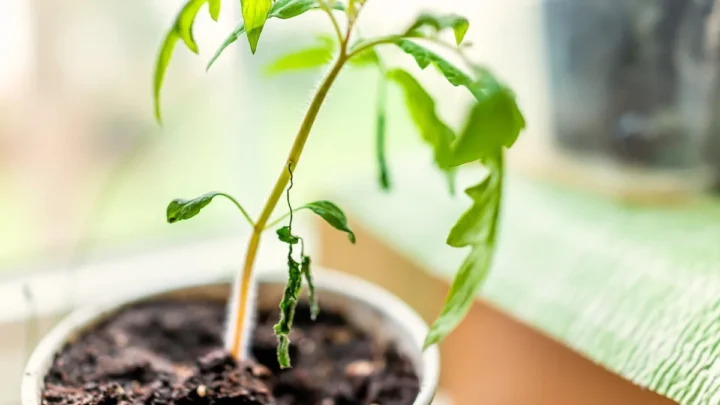
What Causes Catfacing on Tomatoes? Scarring Explained
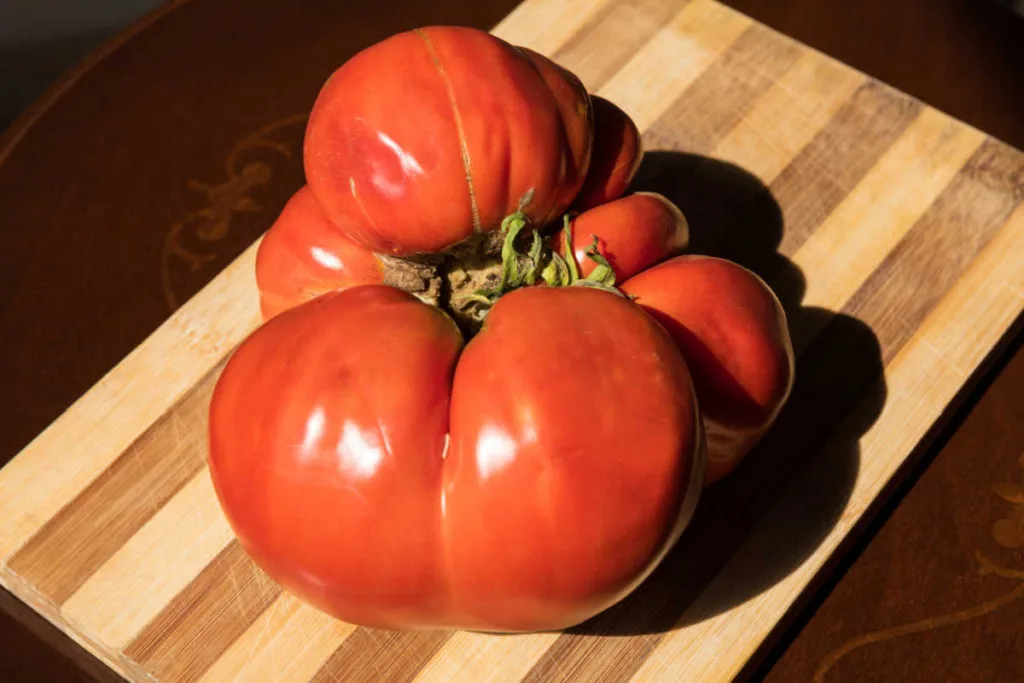
Catfacing on tomatoes is one of the most frustrating problems a home grower runs into, and the answer to what causes catfacing (weird scarring) on tomatoes almost always traces back to what happened during flowering. Those puckered blossom ends, corky brown scars, and lopsided lobes come from disrupted ovary development, not disease. The fruit stays safe to eat.
But the fix depends entirely on which trigger set it off.
Research from university extension programs points to night temperatures below 55°F (13°C) during bloom as the single biggest driver. Excess nitrogen, herbicide drift, and thrips play major supporting roles. As of 2026, aminopyralid residue in manure and straw mulch remains one of the most under-diagnosed culprits in home gardens.
Once you know the pattern, you can rule causes in or out fast.
Quick Answer
Catfacing is caused by disrupted flower development, usually from cold nights below 55°F during bloom. Excess nitrogen, herbicide drift, thrips feeding, and heavy pruning also trigger it. Large-fruited heirloom varieties like Brandywine are genetically more prone.
The scars are cosmetic, not a fungal or bacterial disease. The fruit stays safe to eat.
What Catfacing Actually Looks Like on a Tomato
Catfacing shows up at the blossom end of the fruit, the opposite side from the stem. You'll see deep puckering, corky brown scar tissue, and sometimes hollow cavities running into the flesh. Some fruits look almost pinched together like two tomatoes fused into one.
The scars are usually tan or brown and feel dry to the touch. Ribbing and creasing often run down the shoulders. In severe cases, the locule walls get exposed and the skin splits around the scar.
Cherry tomatoes almost never show this. Beefsteaks and paste varieties do it far more often.
If the deformity is at the stem end instead, that's a different problem. Catfacing is a blossom-end story every time.
Why Some Tomatoes Scar and Others Don't
Genetics does most of the heavy lifting here. Large-fruited cultivars develop bigger, more complex flowers with more ovaries fused together. When anything stresses those flowers during pollination, the fused ovaries fail to knit smoothly.
The result is a scar-lined, distorted fruit.
Cherry and grape tomatoes have small, simple flowers. They rarely catface even under stress. Beefsteak types like Brandywine, Mortgage Lifter, and Cherokee Purple can scar even in a picture-perfect season.
Modern hybrid slicers sit somewhere in the middle.
So two plants in the same bed can produce wildly different results. One heirloom sulks and scars while the hybrid next door pumps out flawless fruit. That's not bad luck.
It's flower architecture doing what it was bred to do.
The Main Culprits Behind Catfacing
Five triggers cause almost every case. Sometimes two overlap, which is why diagnosis matters more than guessing.
Cold Nights During Flowering
This is the number one cause across cool-spring climates. When nighttime temperatures drop below 55°F (13°C) for several nights during bloom, the developing ovaries get injured. Pollen tube growth slows.
The flower parts stick to the young fruit as it swells, leaving scars where they held on.
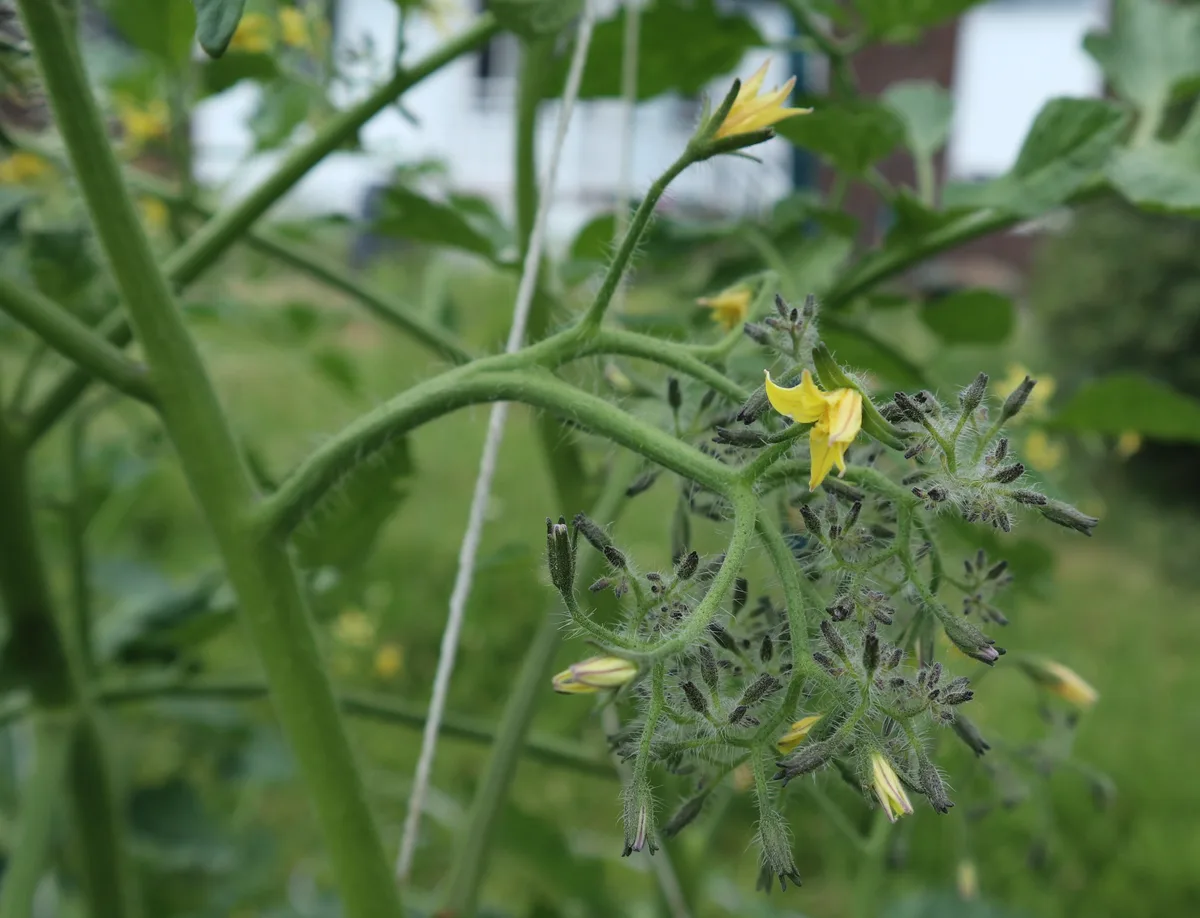
The damage happens at bloom, but you won't see the scar until the fruit sizes up weeks later. That's why gardeners often blame July weather for June's mistake. If you set transplants out early and hit a cold snap, expect the first cluster or two to catface.
Later clusters usually come in clean once the weather stabilises.
Excess Nitrogen and Overfeeding
Heavy nitrogen pushes rapid, lush growth and enlarges the flowers past what the plant can properly develop. Oversized flowers mean more ovaries and a higher chance of fusion errors. Gardeners who dump manure, blood meal, or high-N fertiliser at planting often see the worst catfacing.
Balanced feeding fixes this. A soil test through your local university extension gives you real numbers instead of guesswork. The USDA National Institute of Food and Agriculture funds the cooperative extension network that runs those tests in every state.
Herbicide Drift and Contaminated Compost
Auxin-mimicking herbicides like 2,4-D, dicamba, and aminopyralid distort flowers and fruits at tiny doses. Drift from a neighbour's lawn spray can hit your plants without you knowing. Worse, aminopyralid and clopyralid survive composting and pass through livestock intact, contaminating manure, hay, and straw mulch for months or years.
If leaves look twisted, cupped, or strap-like alongside the catfacing, herbicide exposure is your prime suspect. Persistent herbicide residue can stay active in soil for 12 months or longer.
Thrips and Insect Damage to Blossoms
Thrips are tiny slivers of insects that feed inside tomato flowers. Their rasping mouthparts scar the developing ovary tissue, and those scars grow with the fruit. Look for silvery streaks on nearby leaves and pale, stippled flowers.
Thrips damage is patchy across the plant, not uniform like cold injury. If only a handful of fruits show scarring and you see leaf stippling, scout the blossoms with a hand lens.
Genetics of Large-Fruited Heirlooms
Some varieties will catface no matter what you do. Brandywine, Mortgage Lifter, German Johnson, and Costoluto Genovese are famous for it. The flower structure is simply too complex to consistently produce clean fruit.
If a variety catfaces every year in your garden, the plant isn't broken. That's just what it does. You either accept a percentage of scarred fruit or grow a smaller-fruited alternative.
How to Diagnose the Real Cause in Your Garden
Work through this checklist in order. It usually narrows the cause within minutes.
- Check the calendar. Did nighttime temperatures drop below 55°F during the two to three weeks before you saw the affected clusters?
- Look at new leaf growth. Twisted, cupped, or fern-like leaves point to herbicide exposure.
- Inspect flower clusters with a hand lens. Tiny moving specks and silvery flecking mean thrips.
- Review your fertiliser log. Heavy nitrogen feeding six to eight weeks back? Suspect overfeeding.
- Check the variety. If it's a large-fruited heirloom, genetics is likely part of the story.
- Trace your mulch and compost. Where did the manure or straw come from? Was the source field sprayed?
Whichever cause matches the most evidence is your answer. If two match, both are probably contributing. Cold plus overfeeding is a very common combo in early-season gardens.
Catfacing vs Other Tomato Disorders
Scarred and deformed tomatoes come in several flavours. Getting the diagnosis right changes the fix completely.
| Disorder | Where It Shows | Main Cause |
|---|---|---|
| Catfacing | Blossom end, puckered scars | Cold, nitrogen, herbicide, thrips |
| Blossom-end rot | Blossom end, dark sunken patch | Calcium uptake failure from uneven watering |
| Zippering | Thin scar line down the side | Anther sticking to fruit at bloom |
| Growth cracks | Radial or concentric splits | Rapid water uptake after drought |
| Herbicide injury | Twisted leaves plus deformed fruit | Auxin-type chemical exposure |
Catfacing vs Blossom-End Rot
These get mixed up constantly because both hit the blossom end. Blossom-end rot is a dark, sunken, leathery patch, almost like the fruit has been burned. Catfacing is corky, scarred, and often puckered inward with visible cavities.
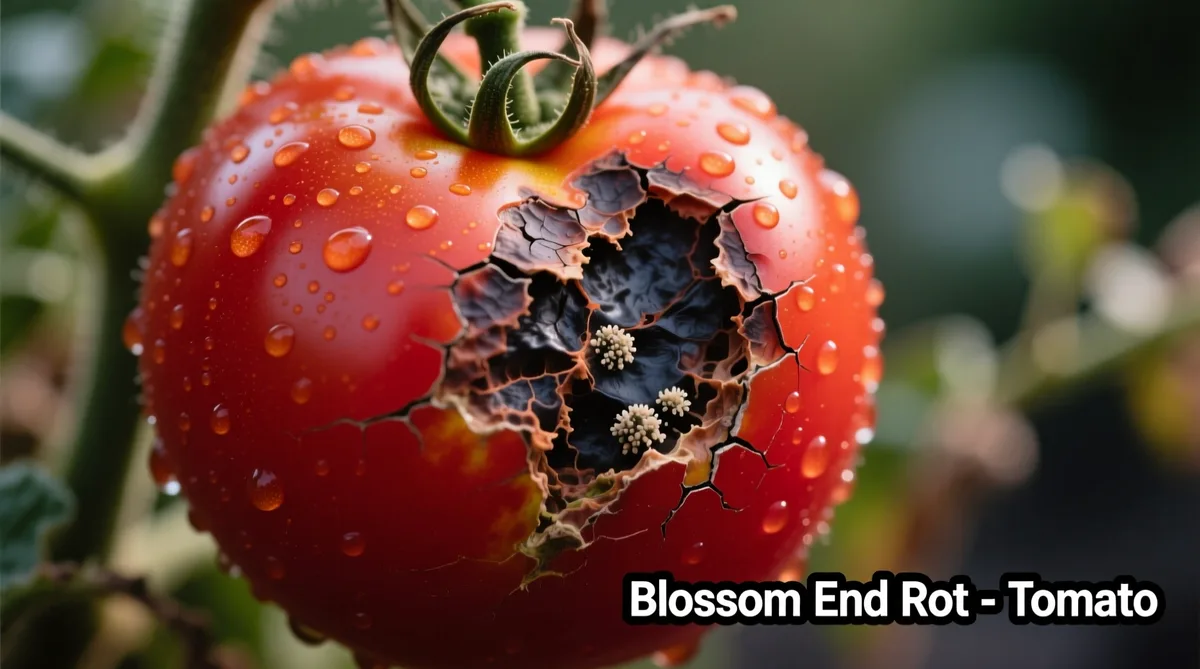
Blossom-end rot is a calcium problem driven by inconsistent watering. Catfacing is a flower-development problem driven by stress at bloom. Consistent moisture and mulch fix the first.
Neither will do a thing for the second.
Catfacing vs Zippering
Zippering is a thin, brown, scar-like line running from the stem down the side of the fruit. It looks like a seam. The cause is an anther sticking to the fruit skin as it develops.
Zippering doesn't cause the deep cavities or puckering of catfacing. Both share cool-weather triggers, and you'll sometimes see them on the same plant. Zippering rarely ruins the fruit for the kitchen.
Catfacing vs Growth Cracks
Growth cracks are clean splits, not scars. Radial cracks run from the stem outward. Concentric cracks form rings around the top.
Both happen when a plant takes up water fast after a dry stretch, and the skin can't stretch quickly enough.
Catfacing scars are dry, corky, and formed at flowering. Growth cracks are fresh splits that open days before harvest. Even watering and mulch prevent cracks.
Neither has anything to do with the flower stage.
Catfacing vs Herbicide Injury
Herbicide injury usually shows in the leaves before the fruit. New growth twists, cups, or takes on a strap-like shape. Fruits then come in stunted, deformed, or heavily scarred.
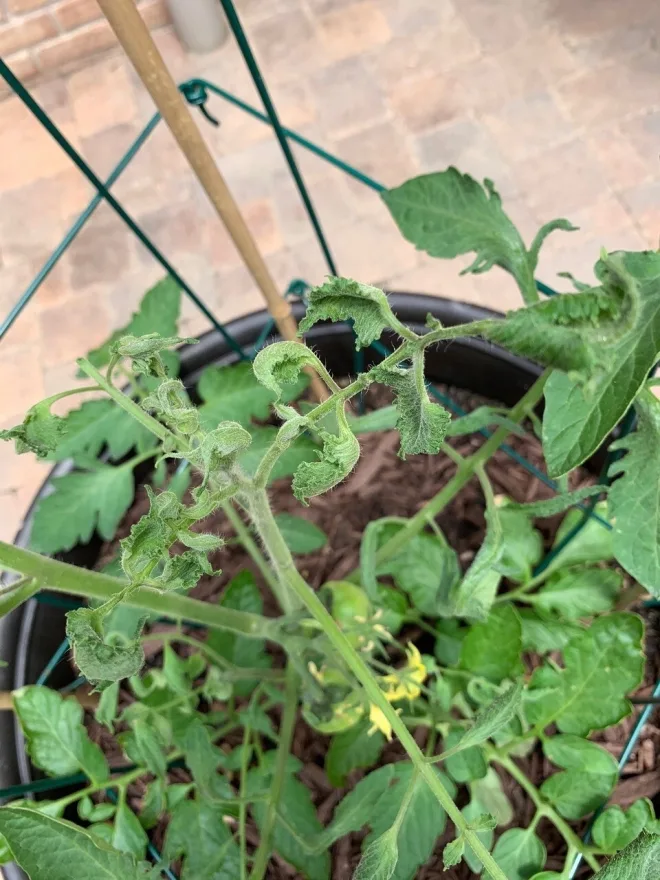
Pure catfacing leaves the foliage looking normal. If the leaves are distorted too, herbicide is almost certainly in play. Trace the source before adding more compost or mulch from the same batch.
Guidance from the US Environmental Protection Agency covers label rules for these products, and state pesticide offices handle drift complaints.
Varieties Most and Least Likely to Catface
Variety choice is the single easiest lever a gardener can pull. If your climate runs cool at bloom or your soil tends nitrogen-heavy, skip the varieties that scar reliably.
Aggregate reports from university extension trials show a clear pattern. Large-lobed heirloom beefsteaks scar most often. Modern hybrid slicers scar less.
Cherry, grape, and paste types rarely scar at all.
| Susceptibility | Example Varieties |
|---|---|
| High | Brandywine, Mortgage Lifter, German Johnson, Costoluto Genovese, Cherokee Purple |
| Moderate | Big Boy, Better Boy, Celebrity, Early Girl |
| Low | San Marzano, Roma, Amish Paste |
| Very Low | Sungold, Sun Sugar, Sweet 100, Juliet, most grape types |
If you love a scar-prone heirloom, grow it alongside a reliable performer. That way a cool spring doesn't wipe out your slicer harvest. Determinate types often finish before the worst weather stress hits, which helps in short-season northern zones.
Weather and Temperature Thresholds That Trigger It
Cold nights are the trigger most gardeners underestimate. Damage happens well above frost. You don't need ice for catfacing, just a few chilly nights in a row.
Here are the thresholds worth watching:
- Below 55°F (13°C) at night during bloom: high catfacing risk
- Below 50°F (10°C) at night: severe risk plus poor pollination
- Above 85°F (29°C) during daytime pollen shed: pollen viability drops, fruit set stalls
- Below 60°F (16°C) soil temperature at transplant: slow roots, weak early growth, extra stress on the first flower cluster
Watch the forecast for the two to three weeks after your first flowers open. That's the danger window for the earliest cluster. Row cover, cloches, or plastic tunnels raise night temperatures by 4°F to 8°F and often make the difference.
Wait for stable overnight lows in the mid-50s before removing covers.
If you transplant early to get a jump on the season, expect the first fruits to show some scarring. Later fruits usually come in clean once the plant is flowering in warm weather.
How to Prevent Catfacing Next Season
Prevention is mostly about timing and restraint. You can't fix a scarred fruit, but you can stack the odds for a clean harvest.
- Wait until soil temperature holds above 60°F (16°C) before transplanting.
- Harden off seedlings for 7 to 10 days before setting them out.
- Use row cover or wall-of-water cloches through the first flowering weeks in cool climates.
- Get a soil test through your local cooperative extension before the season starts.
- Keep nitrogen moderate. Side-dress lightly after the first fruits set, not before.
- Source manure, straw, and hay from farms that confirm no aminopyralid or clopyralid use.
- Compost-test suspicious mulch by sprouting pea or bean seeds in it before spreading.
- Scout flower clusters weekly with a hand lens for thrips.
- Pick varieties suited to your climate. Skip large heirlooms in short cool seasons.
- Water consistently. Uneven moisture stresses plants and worsens overlapping disorders.
None of these steps requires expensive gear. They just take planning before the season starts. A ten-dollar soil thermometer beats guesswork every time.
Mistakes That Make Catfacing Worse
Some well-meaning gardening habits actively push catfacing rates up. Avoid these, and even susceptible varieties will fruit cleaner.
- Rushing transplants outside two weeks too early to beat the neighbours.
- Piling fresh manure or a full cup of blood meal into planting holes.
- Using lawn-clipping mulch from a yard treated with weed-and-feed.
- Heavy pruning during the first flush of flowers, which shocks the plant.
- Applying tomato-toning products with growth-regulator ingredients above label rates.
- Ignoring cold-snap forecasts and leaving unprotected plants uncovered.
- Assuming compost from any source is safe. Aminopyralid can survive years of composting.
- Blaming the variety before checking temperatures, feed history, and mulch source.
- Yanking the whole plant after one bad cluster. Later clusters usually recover.
Also skip the folk remedies. Epsom salts, aspirin sprays, and eggshell burials don't prevent catfacing. Those addressed different disorders or nothing at all.
The real fixes are boring: temperature control, balanced nutrition, and clean inputs.
Are Catfaced Tomatoes Still Safe to Eat?
Yes, catfaced tomatoes are completely safe to eat. The scarring is a cosmetic and structural problem, not a disease. There's no pathogen, no toxin, and no reason to compost a fruit just because it looks strange.
Cut away the corky scar tissue with a paring knife. The flesh underneath is usually perfect. Deep cavities can sometimes trap dirt or hold moisture that invites secondary mould, so inspect the inside before slicing.
Catfaced fruits are excellent for cooking down into sauce, salsa, paste, or soup. They rarely make the cut for slicing on a burger, but the flavour is identical to a clean fruit. Market growers grade them out because customers won't buy ugly tomatoes at full price.
In your own kitchen, that's a non-issue.
The one exception is fruit with active rot, insect tunnelling, or mould growing in the cavities. Toss those. Everything else goes in the pot.
When to Cull, When to Keep Growing
Don't pull a plant based on one bad cluster. First-cluster catfacing is almost always weather-driven and clears up in later flushes. Give the plant three to four weeks before making any big decisions.
Cull the plant when the whole plant shows twisted leaves and every cluster comes in deformed. That points to herbicide contamination in the soil, and no amount of babying will fix it. Bag the plant and dispose of it in household waste, not the compost bin.
Keep growing when the leaves look normal, later clusters improve, and the scarring is limited to the first fruits. Trim severely deformed tomatoes off early so the plant can put its energy into clean fruit. A mostly-scarred harvest is still a harvest, especially for sauce and canning.
Frequently Asked Questions
Does catfacing spread from plant to plant?
No. Catfacing is a physiological disorder, not a disease. It can't move between plants because there's no pathogen involved.
Multiple plants may show scarring at once, but that's because they all faced the same weather, feeding, or herbicide exposure. Fixing the underlying trigger stops the problem for everyone.
Can I compost catfaced tomatoes?
Yes, catfaced tomatoes compost normally. There's no pathogen risk, so they break down like any other kitchen scrap. The only exception is fruit from plants you suspect were hit by aminopyralid or clopyralid.
Persistent herbicides survive composting, so bag those plants and dispose of them in household waste instead.
Will pruning fix catfacing mid-season?
No, pruning won't undo scars already forming. Heavy pruning during bloom often makes catfacing worse because it stresses the plant at the exact wrong moment. Light removal of yellowing lower leaves is fine.
Save any serious pruning for after the first strong fruit flush has set.
Why did my greenhouse tomatoes catface?
Greenhouse catfacing usually traces to nighttime temperature swings, high humidity affecting pollination, or excess nitrogen from fertigation. Even indoors, night lows below 55°F trigger the same flower damage. Check your minimum temperature logs and your feed strength before blaming the variety.
Are hybrid tomatoes immune to catfacing?
No, hybrids aren't immune, but most modern hybrids resist it far better than large heirloom types. Breeders selected against the fused-flower architecture that causes worst-case scarring. Under enough stress, even a hybrid can catface.
Cherry and grape hybrids come closest to full resistance.

Similar Posts