Why Tomato Leaves Turn Yellow and Crumble in Hot Weather
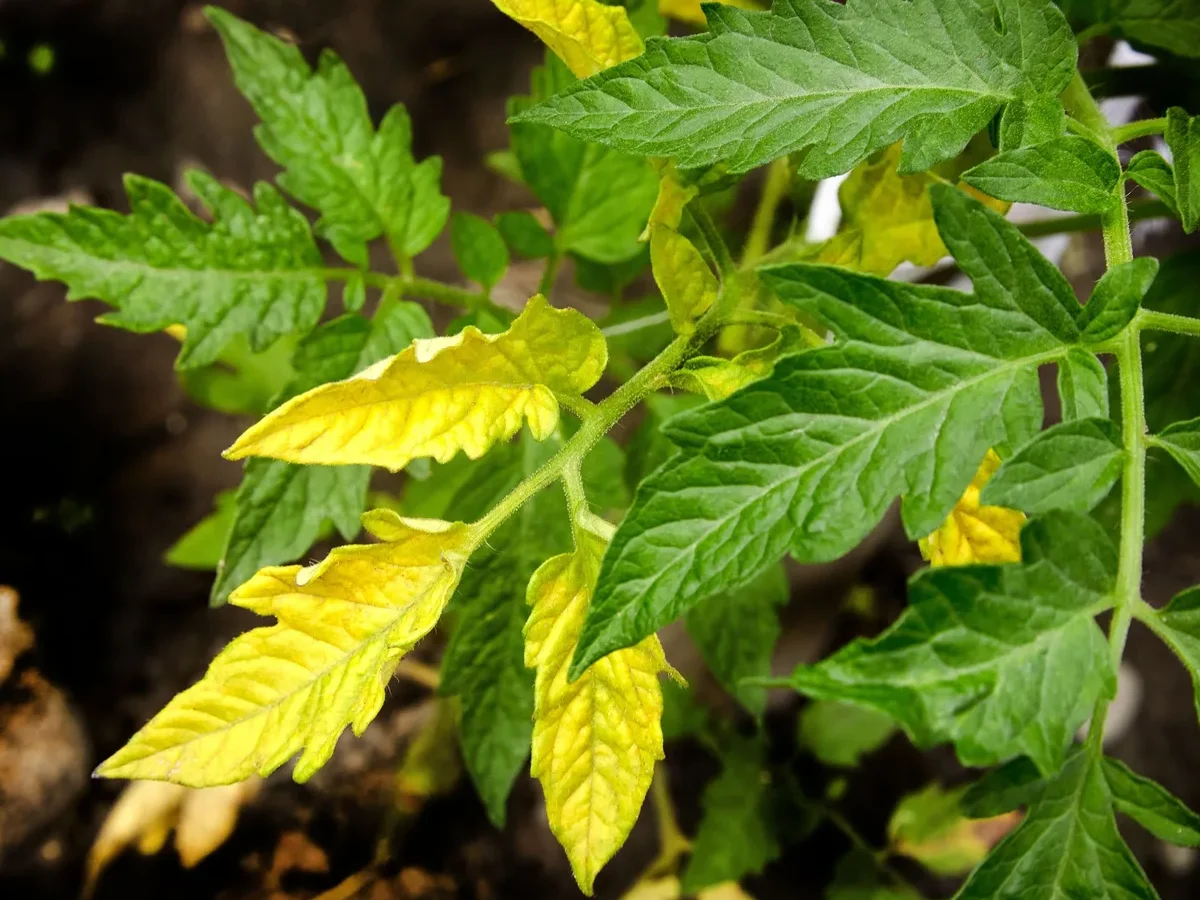
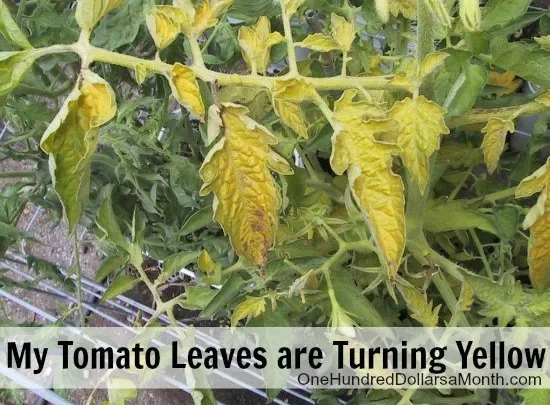
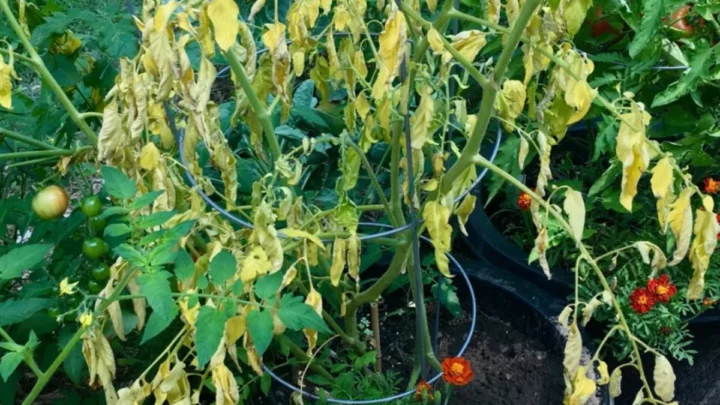
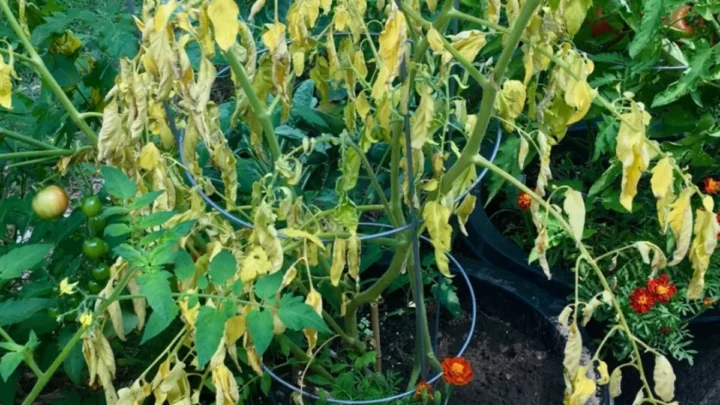
If you've walked out to your garden in July and found tomato leaves turning yellow, drying, and crumbling in hot weather, you're seeing one of the most common summer distress signals in the vegetable patch. The good news is that yellow, crispy tomato foliage almost always tells you exactly what's wrong once you learn to read the pattern. The bad news is that "just water more" fixes it maybe a third of the time.
Aggregate reports from university extension programs show tomatoes struggle badly once sustained daytime temperatures cross 90°F (32°C), with pollen becoming non-viable around 95°F. As of 2026, most Sun Belt gardeners face at least three weeks of that range every summer. Let's start with the fastest way to figure out what your plant is actually telling you.
Quick Answer
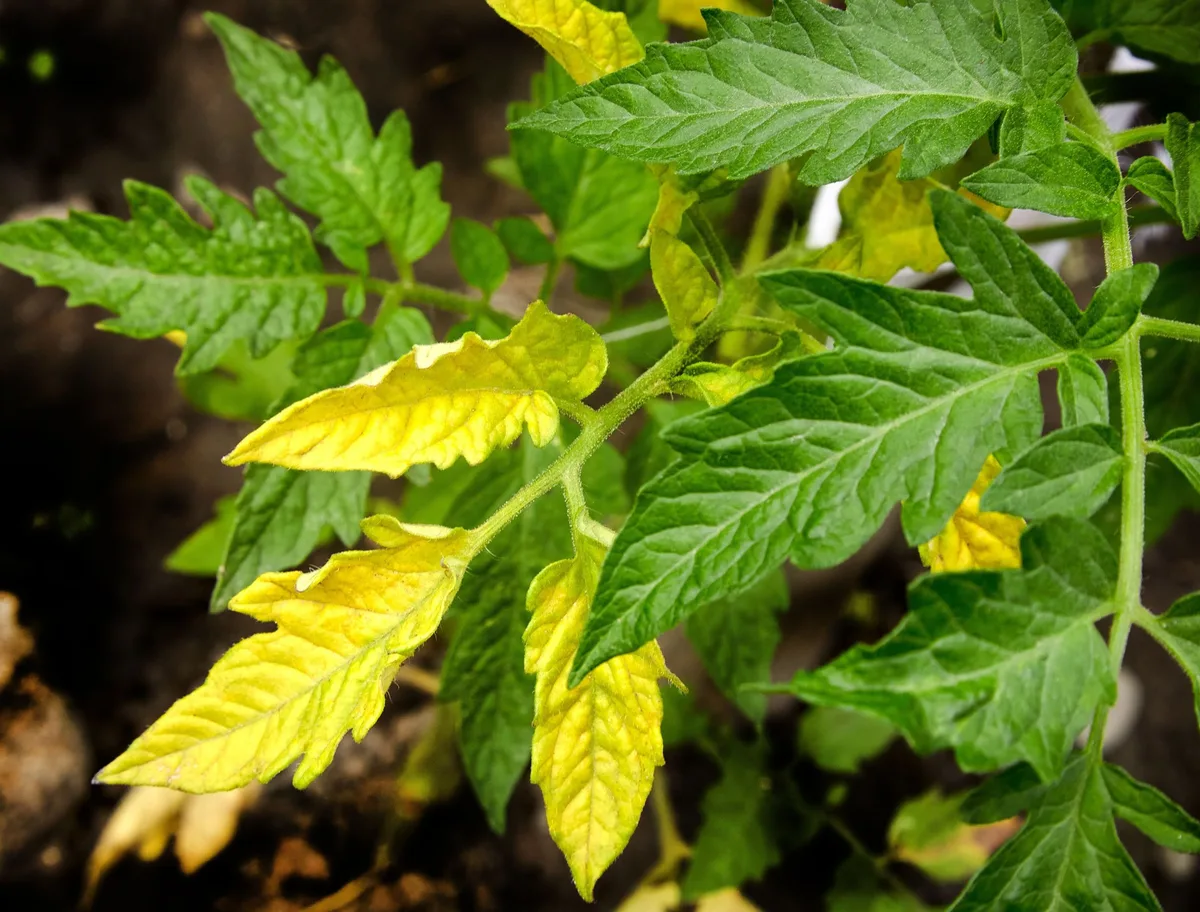
Tomato leaves turn yellow, dry out, and crumble in hot weather for one of five reasons. Heat stress shuts down photosynthesis above 90°F. Inconsistent watering triggers wilt and browning.
Spider mites explode in dry heat and stipple foliage. Magnesium or nitrogen deficiencies cause interveinal or bottom-up yellowing. Fungal diseases like early blight spread fast in warm, humid spells.
The Fast Diagnosis: Reading Your Tomato Plant in Under 5 Minutes
Before you reach for the hose or the sprayer, spend five minutes looking. The pattern of yellowing tells you the cause faster than any single test.
Walk around the plant and check three things in order.
- Which leaves are yellow? Bottom, top, or all over.
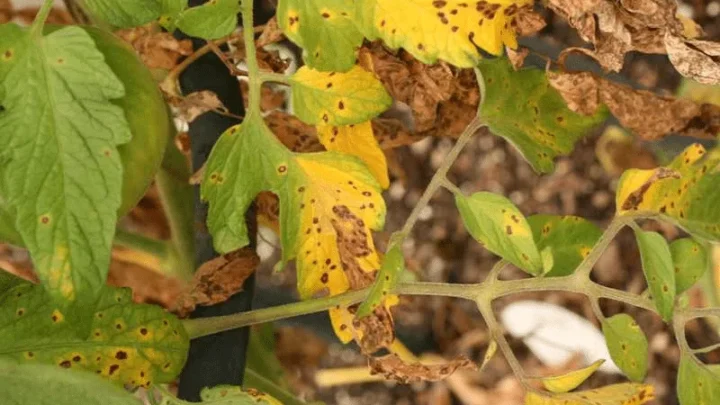
- What's the pattern on a single leaf? Green veins with yellow between them, uniform pale color, brown crispy edges, or tiny bronze speckles.
- What's happening on the underside? Fine webbing, dark spots, or clean.
Answer those three questions and you've narrowed the problem to two or three candidates. That's the whole diagnostic backbone. Everything else in this guide fills in the gaps.
What Heat Actually Does to a Tomato Plant
Tomatoes photosynthesize best between 70°F and 85°F. Once air temperature climbs past 90°F, the plant closes its stomata to save water. That shutdown stops carbon dioxide from entering the leaves.
With no gas exchange, the plant runs on stored sugars. Older leaves get sacrificed first so the plant can push energy toward fruit and new growth. That's why bottom leaves turn yellow and crumble even when everything else looks fine.
Soil temperature matters just as much as air temperature. When the root zone crosses 85°F, roots stop taking up water and nutrients efficiently. You can water a plant twice a day and still see wilting by 2 p.m.
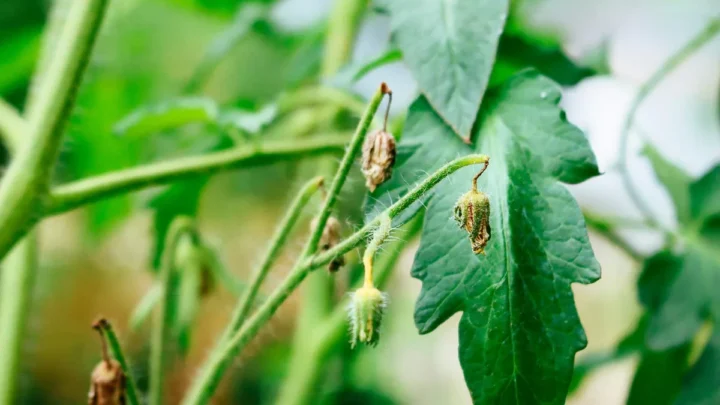
The University of California Agriculture and Natural Resources notes that tomato pollen becomes non-viable above roughly 95°F, which is also when leaf damage tends to accelerate. Heat isn't just uncomfortable for the plant. It's a metabolic emergency.
Where the Yellowing Starts: Bottom Leaves vs. Top Leaves
The location of yellow leaves narrows the cause faster than any other clue. Tomato plants move mobile nutrients around when they're short, so old leaves usually surrender first.
Bottom-Up Yellowing and What It Signals
If the oldest leaves at the base are yellowing while the top stays green, you're probably looking at one of three things.
- Nitrogen deficiency. Uniform pale yellow, working upward slowly.
- Magnesium deficiency. Yellow between the veins while the veins stay green.
- Normal senescence under heat stress. The plant shedding old leaves to protect new growth.
None of these are emergencies. All three are fixable within a week.
Top-Down or Whole-Plant Yellowing and What It Signals
If the new growth at the top is yellow or the whole plant is fading at once, that's more serious. Suspects include:
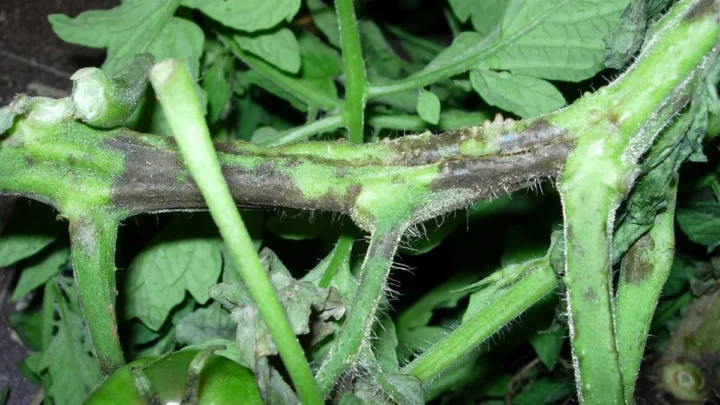
- Fusarium or verticillium wilt (often one side of the plant first).
- Root rot from overwatering or poor drainage.
- Herbicide drift from a neighbor's lawn spray.
- Tomato spotted wilt virus (bronze speckling on new growth).
Whole-plant collapse in under a week usually means disease or root failure, not heat.
The Symptom Pattern Decision Tree
Now zoom in on a single leaf. The pattern on the leaf blade itself is the single most reliable clue you have.
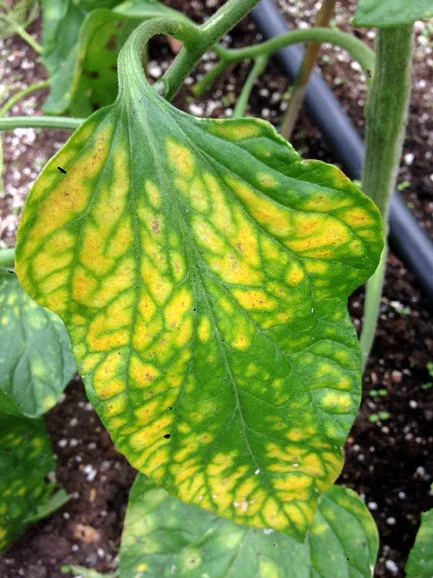
Interveinal Yellowing with Green Veins
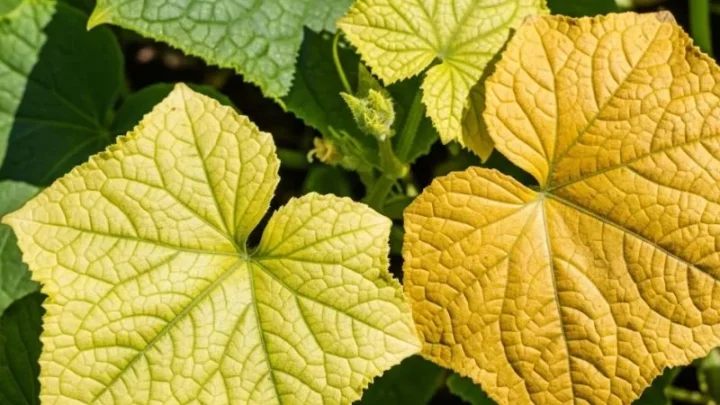
If the veins stay dark green while the tissue between them goes yellow, that's classic magnesium deficiency. It shows up on older leaves first. A foliar spray of 1 tablespoon Epsom salt per gallon of water fixes visible symptoms within 5 to 7 days.
Uniform Pale Yellow Across the Leaf
Even, pale yellow across the whole leaf points to nitrogen shortfall. It moves from the bottom of the plant upward. A balanced liquid feed at half strength every 10 days corrects it without pushing soft growth that heat will scorch.
Stippled, Bronzed, or Dusty-Looking Leaves
Tiny yellow or bronze speckles that look almost sandblasted mean spider mites. Flip the leaf. If you see fine webbing or moving dots the size of pepper grains, that's the two-spotted spider mite.
Heat and dry air let them double their population every 5 to 7 days.
Brown Crispy Edges with a Yellow Halo
Marginal necrosis with a yellow band inside the brown is a potassium deficiency or fertilizer salt burn. Container tomatoes get this most often. Flush the pot with clean water twice, wait a week, then resume feeding at half strength.
Sudden Wilting That Doesn't Recover Overnight
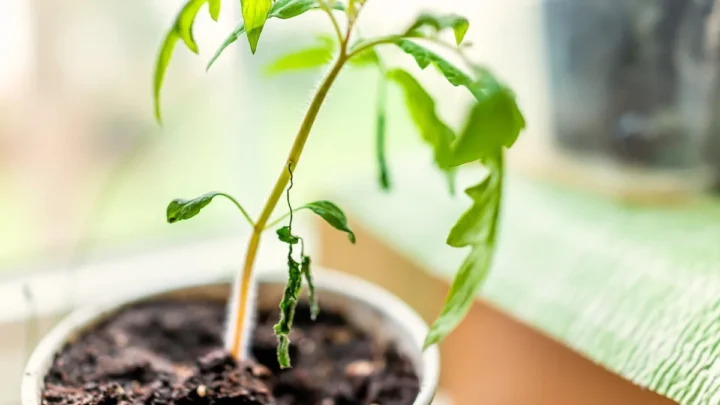
A plant that wilts by noon but perks up at dawn is stressed but fine. A plant still wilted at sunrise has a root problem. That could be rot, vascular wilt disease, or severe root damage from cultivating too close to the stem.
Heat Stress vs. Spider Mites vs. Disease: Telling Them Apart
These three look similar at a distance and need completely different treatments. Get this wrong and you'll waste weeks.
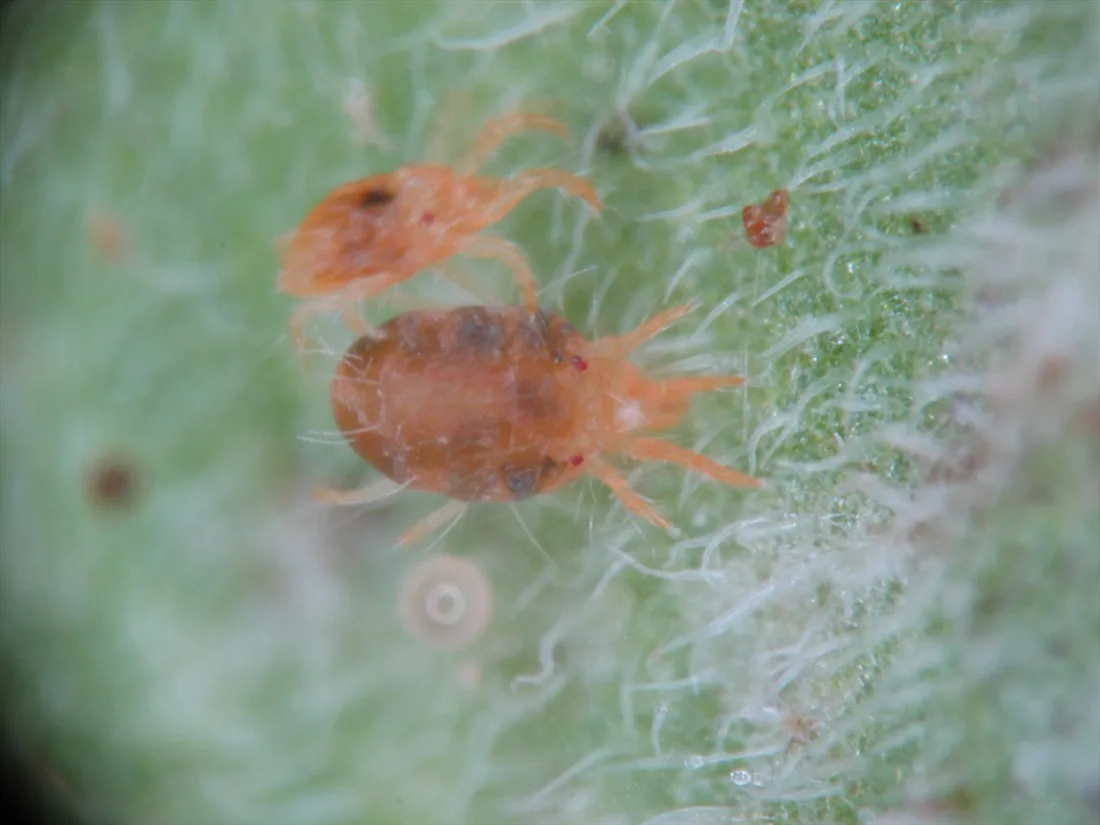
| Clue | Heat Stress | Spider Mites | Fungal Disease |
|---|---|---|---|
| Leaf pattern | Uniform yellowing, dry edges | Tiny bronze stipples, dusty look | Dark spots with rings or halos |
| Underside of leaf | Clean | Fine webbing, moving dots | Fuzzy growth or lesions |
| Speed of spread | Days, worst in afternoon | 5 to 7 days, explosive in dry heat | 1 to 3 weeks, moves up plant |
| Recovery at night | Partial | None | None |
| Best first response | Shade cloth and mulch | Neem or insecticidal soap under 85°F | Remove infected leaves, apply copper |
One quick field test settles most cases. Hold a sheet of white paper under a suspect leaf and tap the leaf sharply. If specks fall onto the paper and start walking, you have mites.
If the paper stays clean and the spots stay stuck to the leaf, look at heat stress or disease next.
Aggregate university extension guidance from Texas A&M AgriLife and Clemson Cooperative Extension consistently ranks spider mites as the single most misdiagnosed tomato problem in hot, dry summers. Growers spray fungicide when they should be spraying water and soap.
When in doubt, treat the mite theory first. Two rounds of insecticidal soap 5 days apart, applied at dawn or dusk below 85°F, will crash a mite population without harming the plant.
Watering Mistakes That Look Like Heat Damage
Watering errors cause more yellow, crumbling leaves in summer than heat itself. The tricky part is that too much water and too little produce almost identical symptoms.
Signs of underwatering: wilting that starts at midday, dry soil 4 inches down, leaves turning yellow from the tips inward, and a light pot when you lift it. The fix is deep watering twice a week, not shallow daily sprinkles.
Signs of overwatering or poor drainage: constant wilting even in cool morning, soggy soil, a sour smell, and yellowing that spreads uniformly across the whole plant. Roots are drowning. Back off water for 5 to 7 days and check drainage before resuming.
The single biggest fix for both problems is a soil moisture check at 6 inches depth. Stick a finger, a wooden dowel, or a cheap moisture meter in. Water only when the top 2 inches feel dry but the deeper layer still holds moisture.
Nutrient Deficiencies That Show Up Fast in Hot Weather
Heat accelerates nutrient issues because plants transpire faster, pulling nutrients through the roots at higher rates. Any shortage in the soil hits the leaves within days.
Three deficiencies show up most often on stressed tomatoes:
| Nutrient | Leaf Pattern | Where It Starts | Fast Fix |
|---|---|---|---|
| Magnesium | Interveinal yellow, green veins | Older leaves | Epsom salt foliar spray, 1 tbsp/gal |
| Nitrogen | Uniform pale yellow | Bottom leaves upward | Half-strength liquid fish or kelp feed |
| Potassium | Yellow, then brown crispy margins | Older leaves | Kelp meal or potassium sulfate top-dress |
Alkaline soil (pH above 7.2) locks out iron and manganese even when they're present. New top growth turns pale yellow with dark veins. A soil test from your county extension office costs $10 to $20 and answers the question in a week.
Skip synthetic high-nitrogen fertilizer during a heatwave. It pushes soft new growth that scorches instantly and attracts spider mites and aphids.
Container and Raised-Bed Tomatoes: Why They Crumble First
Container tomatoes suffer heat damage 3 to 5 days earlier than in-ground plants, and raised beds sit somewhere in between. Small soil volume means faster temperature swings and faster moisture loss.
A black plastic pot in full sun can hit 120°F on the outside by early afternoon. Roots on the sunny side cook. The plant response is instant leaf droop, yellowing, and crumbling starting on that side of the canopy.
Three practical fixes work well:
- Move containers into afternoon shade or wrap them in reflective cloth.
- Upgrade to fabric grow bags or lighter-colored ceramic pots.
- Double-pot: set the growing pot inside a larger empty pot for insulation.
Raised beds benefit from 3 to 4 inches of straw mulch and a soaker hose set on a timer. Salt buildup is also a common container issue. Flush the pot with clear water every 3 to 4 weeks in hot weather to wash out fertilizer residue.
The Action Plan for Each Cause
Once you've identified the cause from the earlier decision tree, the treatment is straightforward. Each fix is cheap and starts working within a week.
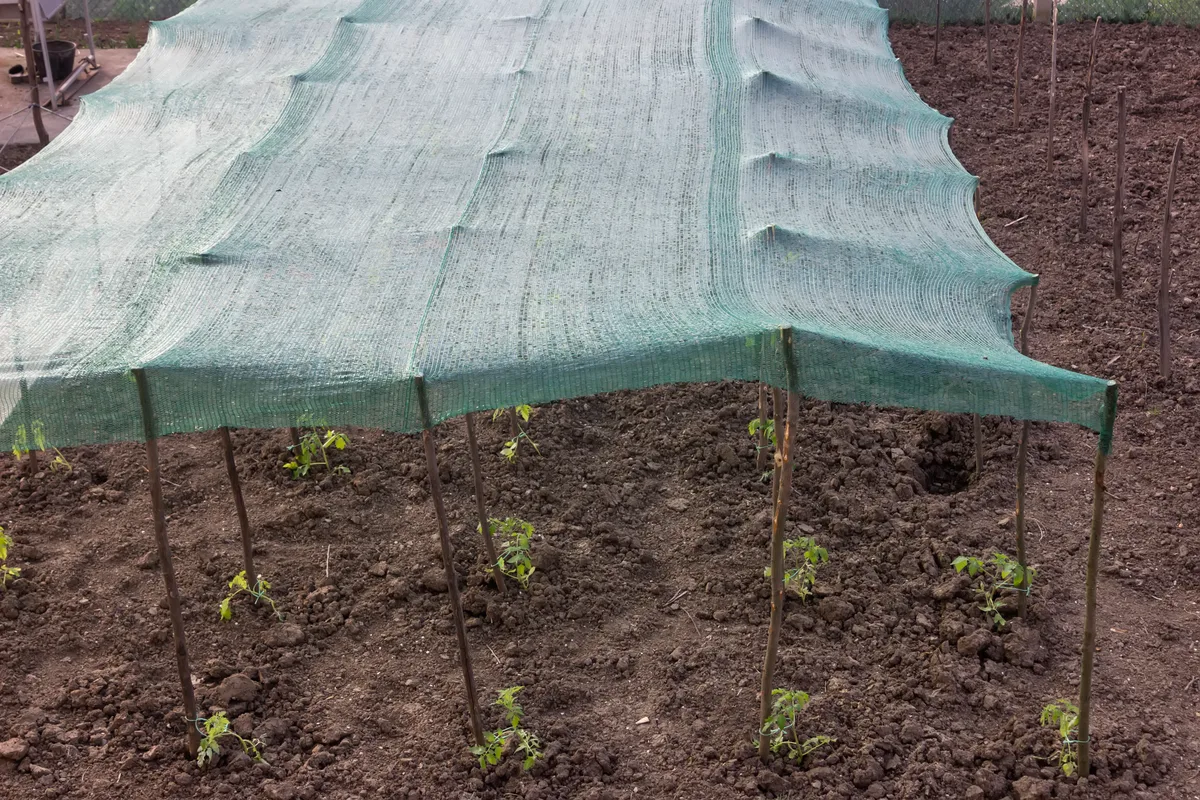
Fixing Heat Stress Directly
Rig 30% to 50% shade cloth over the plants whenever temperatures cross 90°F. Water deeply at dawn so roots take up moisture before stomata close. Add 3 inches of straw or shredded leaf mulch to drop soil temperature 8°F to 15°F.
Skip pruning during heatwaves because remaining leaves shield fruit from sunscald.
Rescuing an Underwatered Plant
Water slowly with 1 to 2 gallons per mature plant, letting it soak in fully. Repeat the next morning to fully rehydrate the root zone. Add mulch that same day.
Do not fertilize a drought-stressed plant for at least 7 days.
Treating Spider Mite Infestations Safely in Heat
Spray insecticidal soap or a 1% neem oil solution on both leaf surfaces at dawn or dusk when temperatures are under 85°F. Repeat every 5 days for three treatments to break the reproduction cycle. Hose the undersides of leaves with a strong water spray between treatments.
Never spray oil-based products in full sun above 85°F because leaves will scorch.
Correcting Magnesium, Nitrogen, and Potassium Shortfalls
For magnesium, mix 1 tablespoon Epsom salt in 1 gallon of water and spray leaves in the evening. For nitrogen, apply a half-strength liquid fish emulsion at the root zone. For potassium, top-dress with kelp meal or greensand and water in well.
Retest soil after 2 weeks if symptoms haven't improved.
Handling Early Blight and Septoria Before They Spread
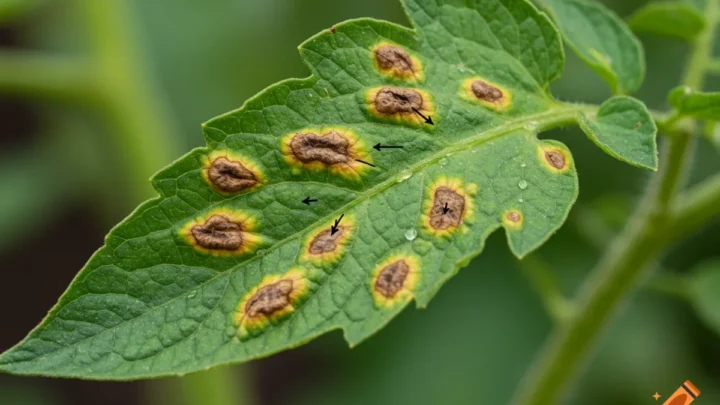
Remove infected lower leaves at the first sign of dark concentric rings or small tan spots with dark borders. Bag them and throw them out, do not compost. Apply copper fungicide or a biofungicide like Bacillus subtilis every 7 to 10 days.
Mulch heavily to stop rain splash from carrying spores upward.
Heat-Tolerant Tomato Varieties Worth Growing in Hot Zones
Choosing the right cultivar prevents most heat problems before they start. Standard hybrids like 'Better Boy' and heirlooms like 'Brandywine' drop blossoms and shed leaves above 92°F. Bred-for-heat varieties keep setting fruit.
Reliable heat-tolerant picks include:
- 'Heatmaster': Determinate, sets fruit into the mid-90s°F, disease-resistant.
- 'Solar Fire': Developed by the University of Florida, holds pollen viability at high temperatures.
- 'Phoenix': Determinate, bred specifically for Southwest and Gulf Coast summers.
- 'Sun Leaper': Compact, good for containers, tolerant of erratic watering.
- 'Arkansas Traveler': Heirloom, handles heat and humidity better than most open-pollinated varieties.
- 'Sioux': Old prairie variety, deep roots and forgiving in dry heat.
For USDA Zones 8 to 10, plant these in early spring and again in late summer for a fall crop that avoids peak heat. Grafted tomatoes on vigorous rootstocks like 'Estamino' also handle heat and soil disease pressure better than own-root plants.
Mistakes That Make Yellowing Worse
A few well-meaning fixes actually accelerate leaf loss during a heatwave. Watch for these before you reach for a solution.
- Watering the leaves in midday sun. Wet foliage scorches and invites fungal spread.
- Heavy pruning during heat stress. Every removed leaf exposes fruit to sunscald.
- High-nitrogen fertilizer to "green things up." It forces tender growth that wilts in hours.
- Fresh wood chip mulch against the stem. Traps heat and can burn young stems.
- Overhead sprinklers at dusk. Wet leaves overnight feed early blight and Septoria.
- Skipping mulch to "let soil breathe." Bare soil hits 120°F fast and cooks feeder roots.
The most costly mistake is treating for the wrong cause. Fungicide on a mite infestation, or fertilizer on a rot problem, wastes 7 to 10 critical days.
When to Pull the Plant vs. When to Nurse It Back
Not every yellowing tomato is worth saving. Knowing when to cut losses protects the rest of the garden from spreading disease.
Pull the plant if you see:
- Brown vascular streaks inside the split stem (fusarium or verticillium wilt).
- Sudden one-sided wilting that doesn't recover after deep watering.
- Bronze, ringed spots on new growth (tomato spotted wilt virus).
- More than 60% of the canopy dead with no new growth in 10 days.
Nurse the plant if you see:
- Yellowing limited to the bottom third with healthy top growth.
- Stippled leaves that respond to two rounds of soap treatment.
- Interveinal chlorosis that greens up 5 days after magnesium spray.
- Wilting that resolves overnight after deep watering.
Bag and trash pulled plants. Never compost diseased tomato material or the pathogens will overwinter and hit next year's crop.
Frequently Asked Questions
Can tomato plants recover after all their leaves turn yellow and crumble?
Yes, if the growing tip and stem are still green and firm. Cut off the dead leaves, water deeply, add mulch, and shade the plant for a week. New growth usually appears within 10 to 14 days if roots are healthy.
A stem that snaps easily or shows brown streaks inside means the plant is gone.
Should I remove yellow leaves from my tomato plant during a heatwave?
Only remove leaves that are more than 75% dead or clearly diseased. Healthy but stressed yellow leaves still shade the fruit and lower stems from sunscald. Aggressive pruning in heat exposes tomatoes and stems to direct sun, causing white patches and cracked fruit within 48 hours.
Is Epsom salt safe to spray on tomato leaves in hot weather?
Yes, at 1 tablespoon per gallon of water, sprayed at dusk when temperatures drop below 85°F. Higher concentrations or midday application can scorch already-stressed foliage. Use Epsom salt only when interveinal yellowing on older leaves confirms a magnesium shortage, not as a routine feed.
Why do my tomato leaves curl up as well as turn yellow in hot weather?
Leaf roll is a protective response, not a disease. Tomatoes curl leaves upward to reduce surface area and conserve water when transpiration exceeds root uptake. If the curl is soft and the leaves stay green underneath, the plant is coping.
Yellowing plus tight curling near the top can also signal herbicide drift.
Your Heatwave Recovery Checklist
Run through this list any time yellow, dry, crumbling leaves show up between June and September.
- Inspect leaf pattern (bottom vs. top, interveinal vs. uniform, stippled vs. blotched).
- Flip a leaf and check for spider mite webbing.
- Test soil moisture at 6 inches depth.
- Add 3 inches of straw mulch if the soil is bare.
- Rig 30% to 50% shade cloth once daytime highs cross 90°F.
- Deep water at dawn, never at night, never on the leaves.
- Match the fix to the diagnosis, one treatment at a time.
- Wait 7 days before adding a second intervention.
Stay patient. Most heat-damaged tomatoes bounce back within two weeks once the underlying cause is addressed and daytime temperatures drop below the mid-90s.

Similar Posts