Why Tomatoes Get Sunscald & Yellow Shoulders (And Fixes)
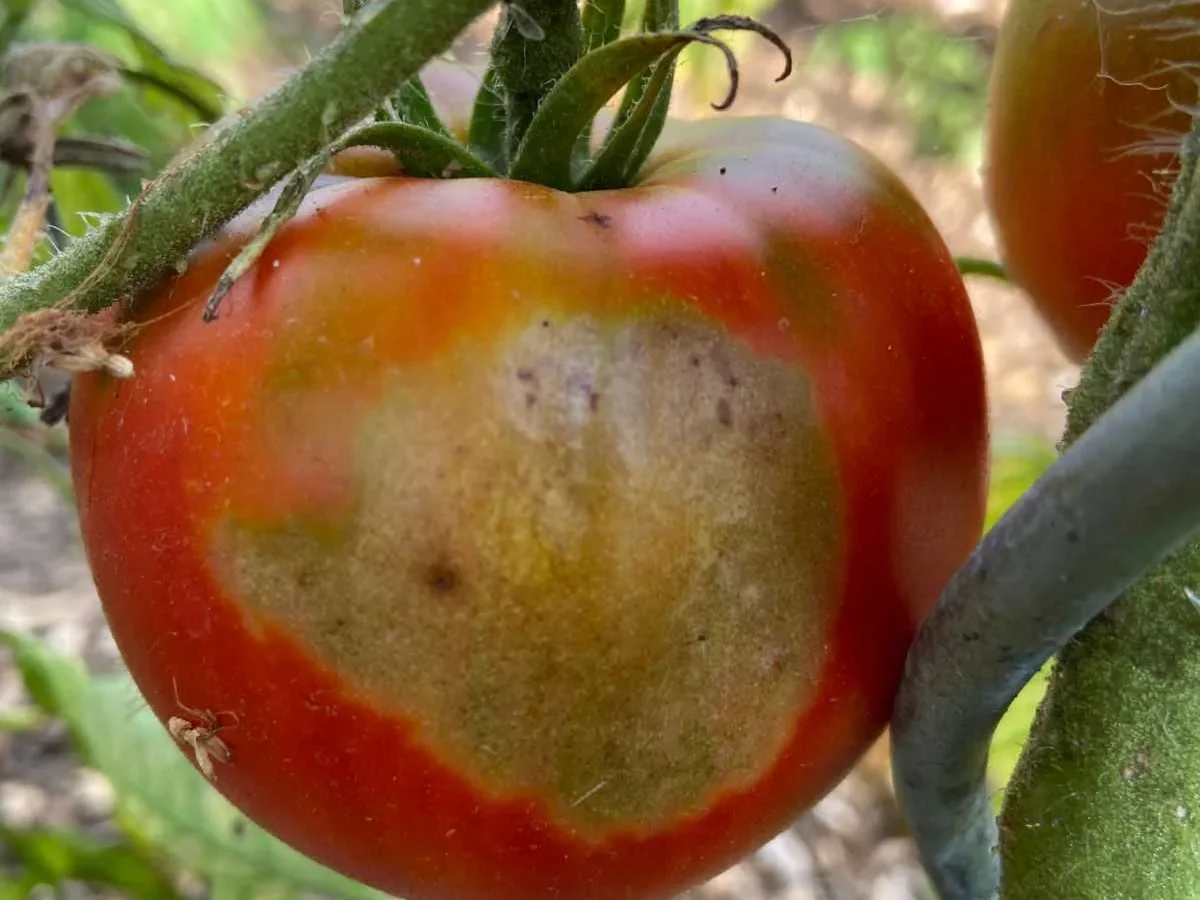
Why do tomatoes get sunscald or yellow shoulders? Both problems trace back to fruit tissue that never ripens the way it should, but the causes are completely different. Sunscald is heat and UV damage that kills patches of exposed skin.
Yellow shoulders is a ripening failure driven by genetics, hot weather, and soil chemistry.
University extension research, as of 2026, still points to fruit surface temperatures above 86°F (30°C) as the tipping point where lycopene stops forming and yellow shoulder disorder shows up on susceptible varieties. Sunscald follows a totally different trigger. Diagnose the wrong one and you'll spend the whole season fixing the wrong thing.
Here's how to tell them apart and stop both.
Quick Answer
Tomatoes get sunscald when exposed fruit skin overheats under direct sun and UV. That usually follows over-pruning, sudden leaf loss, or pest defoliation. Yellow shoulders is different.
It's caused by ripening temperatures above 86°F, low or unbalanced soil potassium, and cultivars carrying the green-shoulder gene. Both share hot weather. Each needs its own fix.
What Sunscald and Yellow Shoulders Actually Look Like on Your Tomatoes
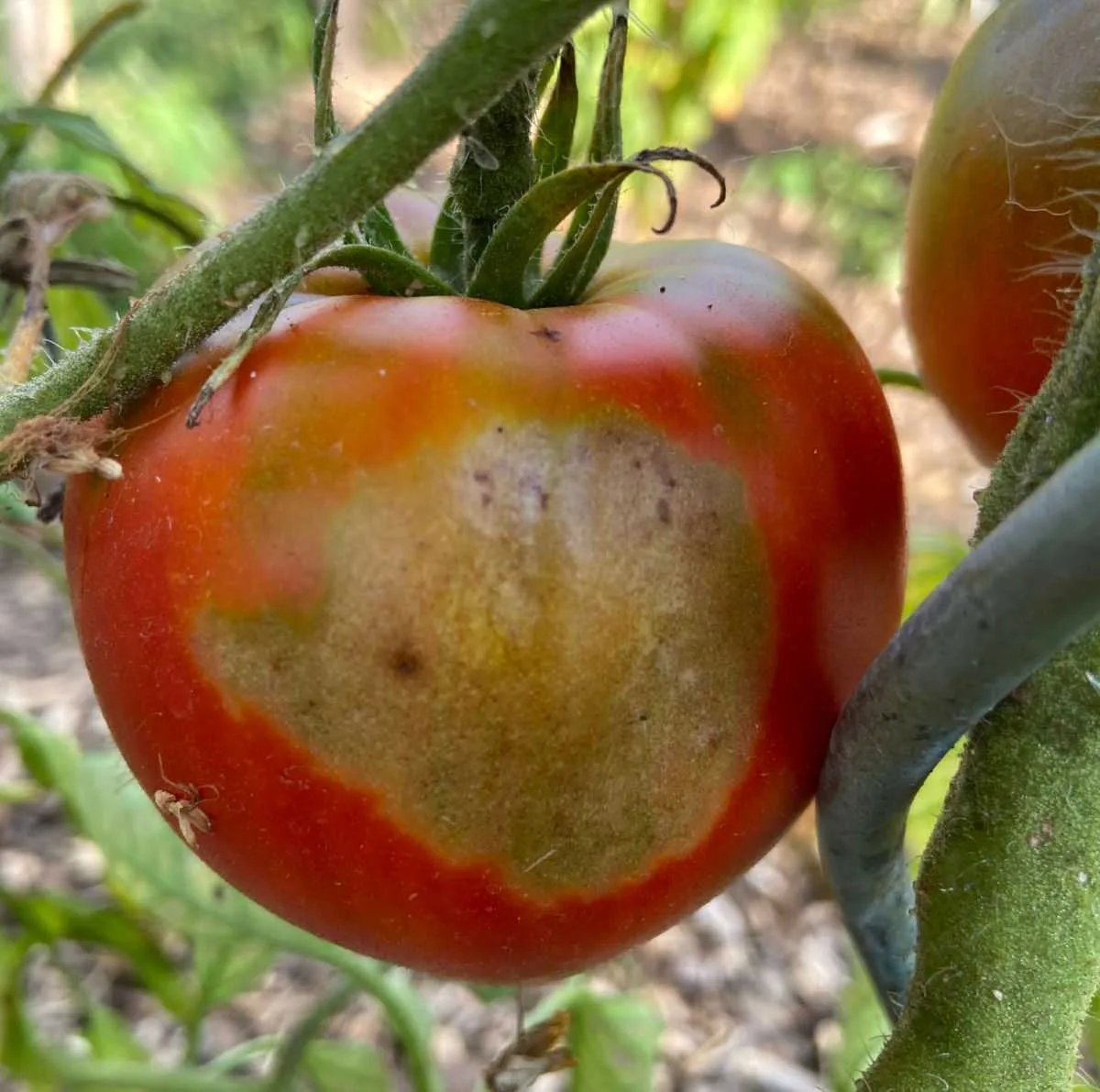
Sunscald shows up as a white or pale yellow patch on the side of the fruit facing the sun. The patch feels papery and thin. Over a few days it can blister, sink, and turn tan or gray.
Secondary rots like Alternaria often move in through the dead tissue.
Yellow shoulders looks nothing like that. The fruit ripens red almost everywhere, but the area around the stem stays hard, yellow, orange, or green. Cut one open and you'll usually find tough white tissue inside the pericarp near the top.
Here's the quick visual split:
| Symptom | Sunscald | Yellow Shoulders |
|---|---|---|
| Location on fruit | Sun-facing side | Top / stem end |
| Texture | Papery, blistered | Hard, firm |
| Color | White to tan | Yellow, orange, or green |
| Internal tissue | Usually normal below | White core inside |
| Rot risk | High | Low |
Once you've seen both, you won't mix them up again.
Why These Two Disorders Get Confused (And Why It Matters)
Both problems peak in the same weeks of summer. Both hit red-fruited cultivars. Both leave part of the tomato unusable.
So gardeners lump them together and reach for shade cloth as a single fix.
That's the mistake. Shade cloth helps sunscald because it blocks the UV and heat load on exposed skin. It only partly helps yellow shoulders, because that disorder is baked into the plant's genetics and soil chemistry long before the fruit sees the sun.
Aggregate extension bulletins from land-grant universities keep flagging the same misdiagnosis. Growers strip more leaves thinking airflow will help, and end up making sunscald worse while doing nothing about yellow shoulder.
- Sunscald wants MORE canopy over the fruit.
- Yellow shoulders wants better potassium, cooler ripening, and smarter cultivar picks.
Get the diagnosis right and each fix actually works.
The Real Cause of Sunscald: It's Not Just "Too Much Sun"
Tomatoes evolved with leaves shading their fruit. When that canopy disappears suddenly, the exposed skin can't handle the jump in surface temperature and UV. Fruit surface temperatures under direct summer sun routinely climb past 100°F and can exceed 115°F on dark-colored varieties.
That's hot enough to kill the outer cell layers outright.
The trigger is almost always a sudden loss of leaf cover, not sunlight itself. Common causes:
- Over-aggressive pruning or sucker removal
- Stripping lower leaves for "airflow" during a heat wave
- Rapid defoliation from early blight, septoria, or bacterial spot
- Hornworm feeding that clears leaves in a day or two
- Storm damage that shreds the upper canopy
Green fruit is more vulnerable than fully ripe fruit because chlorophyll in the outer wall soaks up more heat. Fruit that spent weeks shaded and is suddenly exposed has no time to harden off. The USDA Agricultural Research Service has published extensively on this photooxidative damage pathway.
You can browse their research portal at USDA ARS. Protect the canopy and you protect the fruit.
The Real Cause of Yellow Shoulders: Heat, Genetics, and Potassium
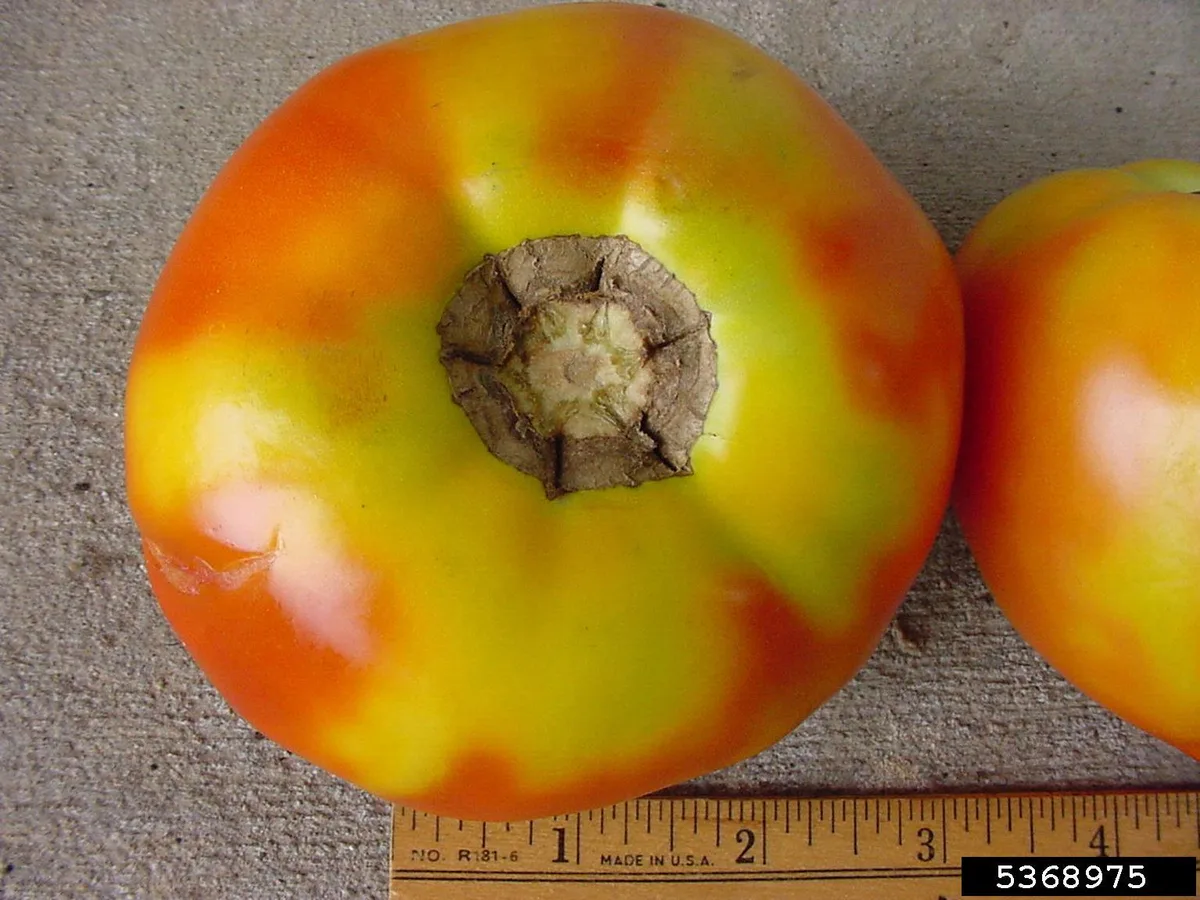
Yellow shoulder disorder (YSD) is a physiological failure inside the fruit itself. Three things drive it, and usually all three stack together.
First, temperature. When air or fruit temperatures push above 86°F during the color-change window, lycopene synthesis slows or stops. Beta-carotene keeps forming, so parts of the fruit stay yellow or orange instead of turning red.
The shoulder is the hottest, most sun-exposed part of the fruit, which is why it's hit worst.
Second, genetics. Older heirloom cultivars often carry the u/u recessive gene that keeps the shoulder area green longer. That "green shoulder" trait locks in as yellow shoulder under heat stress.
Uniform-ripening (U/U) hybrids resist it much better.
Third, potassium. YSD tracks strongly with low soil potassium and imbalanced K:Mg ratios. When potassium runs short during fruit fill, the tomato can't complete pigment conversion in the shoulder tissue.
Extension research from Ohio State and Cornell ties YSD directly to these nutrient patterns. Integrated pest management guidance is available through UC IPM for California conditions.
Aim for soil potassium in the 150 to 250 ppm range, with a K:Mg ratio near 2:1 to 4:1. Higher magnesium than that starts to block potassium uptake at the root.
Quick Diagnosis: Which Disorder Is Hitting Your Plants?
Walk out to the plants and answer two questions. Where on the fruit is the damage, and when in the season did it start? Those two answers pin down the disorder almost every time.
Symptom Check by Location on the Fruit
Use this quick if/then read on the fruit itself:
- If the damage is on the side facing the sun and feels papery, it's sunscald.
- If the damage sits at the top around the stem and feels hard, it's yellow shoulders.
- If the bottom (blossom end) is sunken and black, that's blossom end rot, not either of these.
- If you see brown or gray leathery patches with concentric rings, look at anthracnose or Alternaria.
- If the fruit shows dark internal walls with normal outside color, that's graywall.
Location alone rules out most look-alikes in under a minute.
Symptom Check by Weather and Timing
Now overlay what the weather has been doing:
- If you pruned hard or lost leaves in the last 7 to 10 days AND a heat wave hit, expect sunscald.
- If daytime highs have been sitting above 86°F for a week or more during ripening, expect yellow shoulders on susceptible cultivars.
- If damage is on green fruit, sunscald is more likely.
- If damage appears only as fruit turns from breaker to pink, yellow shoulders is more likely.
- If the same variety showed the same shoulder problem last year in normal weather, suspect a genetic green-shoulder cultivar plus low potassium.
Match the pattern to the disorder and you'll skip weeks of guessing.
The Condition Variables That Decide Which One You Get
Four variables set the stage for whether a plant slides toward sunscald, yellow shoulders, both, or neither. Nail these down before ripening starts and you save yourself the whole problem.
Cultivar Genetics (Uniform Ripening Gene)
If your variety carries the u/u recessive gene, the shoulder area holds chlorophyll longer and struggles under heat. Modern hybrids bred as U/U ripen evenly and shrug off mild heat waves. Many prized heirlooms (Brandywine, Cherokee Purple, Mortgage Lifter) are u/u and will show shoulders in a hot summer no matter what you do.
Canopy Density and Pruning Habits
Dense foliage keeps fruit surface temperatures 10 to 20°F below ambient. Aggressive suckering, lower-leaf stripping, or heavy topping thins that shade fast. Determinate varieties usually self-shade well.
Indeterminates need thoughtful pruning that keeps upper leaves intact over the fruit cluster.
Soil Potassium and Nutrient Balance
Potassium below 150 ppm, or a K:Mg ratio squeezed below 2:1, sets up yellow shoulder even without extreme heat. Excess magnesium from dolomitic lime is a common hidden culprit. A pre-season soil test tells you where you stand.
Air Temperature During Ripening
Sustained daytime highs above 86°F during color change is the signal that shuts lycopene formation down. Night temperatures above 70°F make it worse. Track your forecast during the two weeks before harvest, not just at planting.
Decision Branch 1: You're Seeing White, Papery Patches (Sunscald Path)
If the damage is white, papery, and on the sun-facing side of the fruit, you're on the sunscald path. The plant lost leaf cover somewhere along the line. Your fix targets the canopy, not the fruit.
Work through these steps in order:
- Stop pruning entirely for the rest of the season.
- Scout for disease (early blight, septoria, bacterial spot) and treat if leaves are dropping fast.
- Check for hornworms every 2 days during outbreak weeks.
- Rig temporary 30 to 50 percent shade cloth over exposed clusters until leaves regrow.
- Harvest any near-ripe exposed fruit at the breaker stage and finish indoors at 65 to 70°F.
Damaged fruit won't heal, but the plant can regrow enough leaves in 2 to 3 weeks to protect the next flush. Trim off badly rotted fruit so secondary pathogens don't spread up the vine.
Decision Branch 2: You're Seeing Hard Yellow or Green Shoulders (YSD Path)
If the top of the fruit stays hard, yellow, or green while the rest ripens red, you're on the yellow shoulder path. Shade cloth alone won't fix this one. The trigger is inside the plant.
Move through the checklist:
- Pull a soil test now if you haven't done one this season.
- Side-dress with a potassium sulfate source at label rate if K is under 150 ppm.
- Skip potassium chloride during hot spells to avoid extra salt stress.
- Mulch heavily with straw or wood chips to buffer soil temperatures.
- Water deeply and consistently to keep nutrient flow steady.
For an active heat wave, add temporary 30 percent shade cloth during the peak color-change window. It won't undo the genetic tendency, but it takes a few degrees off the shoulder and helps borderline fruit finish red. Plan a cultivar swap for next season if the same variety fails two years running.
Decision Branch 3: You're Seeing Both at Once
When you're finding papery patches AND hard yellow shoulders on the same plants, treat it as a stacked-cause problem. Both interventions run in parallel. Start with the fastest wins.
- Stop all pruning immediately.
- Deploy 30 to 50 percent shade cloth today, not next week.
- Soil test within the next 7 days.
- Deep water on a fixed schedule to stabilize potassium uptake.
- Harvest exposed fruit at the breaker stage and ripen indoors.
The pattern usually points to two upstream mistakes at once: over-pruned canopy plus low potassium in a heat wave. Fix the canopy this season and rebuild soil K over fall and winter with compost, greensand, or a sulfate-of-potash amendment. Next year the same plants in the same beds should behave completely differently.
Cultivar Choices That Prevent Yellow Shoulders in Hot Climates
The cheapest fix is buying the right seed. Uniform-ripening (U/U) cultivars carry a dominant gene that keeps shoulder pigment developing evenly. They're widely available in modern hybrids and increasingly in newer open-pollinated lines.
Look for varieties described in catalogs as "uniform ripening," "no green shoulder," or "crack and shoulder resistant." For growers in the US South, Southwest, or Mediterranean climates, heat-tolerant hybrids handle both fruit set and ripening above 86°F better than most heirlooms.
Practical picks for hot-summer regions:
- Heat-set determinates like Heatmaster, Solar Fire, Phoenix, Florida 91
- Uniform-ripening slicers such as Celebrity, Big Beef, BHN 602
- Paste and processing types like Roma VF, Plum Regal
- Heat-tolerant cherry lines including Sun Gold, Sweet 100, Juliet
Heirloom lovers don't have to give up. Growing susceptible cultivars under a light shade cloth on well-balanced potassium soil often gets acceptable fruit. Just plant a couple of uniform-ripening backups so you always have a red harvest.
Pruning and Canopy Management to Prevent Sunscald
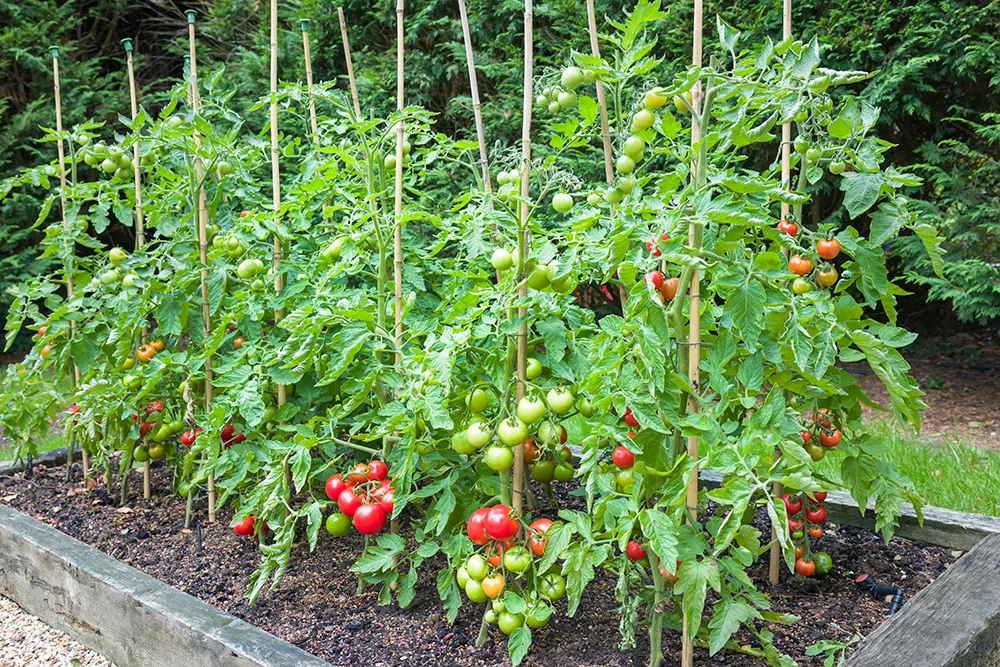
The rule is simple: keep leaves above every fruit cluster. On indeterminate varieties, remove suckers below the first flower cluster and leave everything above alone during heat weeks.
Skip the urge to "open up" the plant for airflow when a heat wave hits. That's the exact move that causes sunscald.
- Stake or cage tall, don't top the leader.
- Retain 3 to 4 large leaves directly over each ripening cluster.
- Prune only in the morning so leaves rehydrate before peak sun.
- Remove diseased lower foliage, not healthy upper canopy.
- On determinates, prune almost nothing after the first flower cluster.
If disease is thinning your plants faster than they can regrow, treat the disease first. Cutting more won't help.
Fixing Potassium Deficiency and K:Mg Imbalance
Start with a soil test from a state-lab or land-grant extension. Guessing at nutrients wastes a whole season. Aim for 150 to 250 ppm K and a K:Mg ratio in the 2:1 to 4:1 range.
If potassium is low, side-dress with sulfate of potash (0-0-50) at label rate during fruit set and again at first color break. Sulfate forms suit hot weather better than muriate (potassium chloride), which can worsen salt stress. For organic beds, use greensand, langbeinite, or composted banana and kelp meal blends.
If magnesium is high from years of dolomitic lime, switch to calcitic lime and back off Epsom salts. High Mg locks out K at the root even when the soil test looks fine.
Managing Heat Waves Above 86°F During Ripening
Once daytime highs hit 86°F and stay there, your window to protect ripening fruit is short. Move fast and stack tactics.
- Water deeply every 2 to 3 days, not shallow daily sips.
- Add a 3-inch straw or wood-chip mulch to drop soil temperature 5 to 10°F.
- Harvest any fruit at the breaker stage (first blush of color) and finish indoors at 68 to 72°F.
- Skip nitrogen side-dressing during heat waves. It pushes soft leaf growth that wilts.
- Avoid overhead watering in late afternoon to prevent scald from water droplets acting as lenses.
Indoor-ripened tomatoes develop nearly identical flavor to vine-ripened once they've passed the breaker stage. That single move rescues most of a heat-stressed harvest.
Shade Cloth, Mulch, and Microclimate Tools That Actually Work
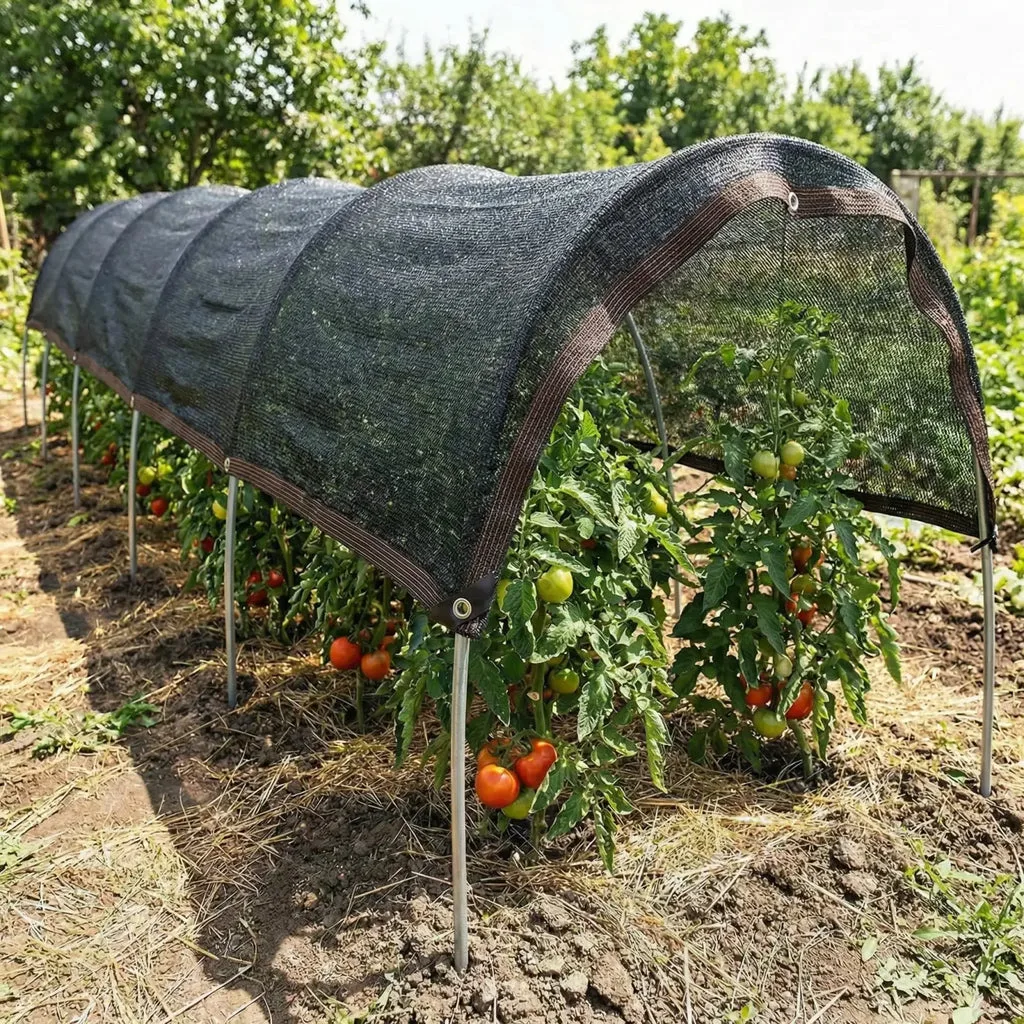
A 30 to 50 percent knitted shade cloth over the row is the single most reliable tool for both disorders during heat spikes. Anything denser than 50 percent starts to limit fruit set on the next cluster.
Rig it 12 to 24 inches above the canopy so airflow keeps moving. Aluminet-style reflective cloth cools better than black in high-UV regions.
| Tool | Cost | Best For | Effect |
|---|---|---|---|
| 30% shade cloth | Low | Short heat waves | Cuts fruit surface temp 8 to 15°F |
| 50% shade cloth | Low | Southwest, desert | Cuts temp 15 to 25°F |
| Straw mulch | Very low | Soil temp buffering | Drops soil temp 5 to 10°F |
| Light-colored wood chips | Low | Reflectivity | Raises canopy albedo |
| Living mulch (clover) | Low | Long-term soil health | Buffers moisture and temp |
Combine mulch and shade cloth for the biggest gain. Neither alone matches the two together.
Mistakes That Make Both Disorders Worse
The same handful of habits show up in almost every failed crop. Skip these and you're already ahead.
- Aggressive lower-leaf stripping during heat waves.
- Over-pruning indeterminate varieties to a single leader.
- Ignoring soil tests and guessing at potassium.
- Piling on dolomitic lime year after year.
- Choosing heirloom-only plantings without a uniform-ripening backup.
- Watering shallow and daily instead of deep and spaced.
- Waiting to add shade cloth until damage already appears.
- Treating yellow shoulders as sunscald (or vice versa) and applying the wrong fix.
Every one of these is reversible. Fix the habit, and the next flush of fruit usually shows improvement within 10 to 14 days.
What to Do With Fruit That's Already Damaged
Damaged fruit won't repair itself. Cut off the affected shoulder or scalded patch and use the rest, if internal flesh is firm and clean. Toss fruit showing gray, fuzzy, or wet rot.
Pick borderline fruit at the breaker stage and ripen indoors at 68 to 72°F for cleaner flavor and less waste.
Prevention Checklist for Next Season
Set the plant up right in spring and neither disorder shows up in August.
- Soil test in early spring, correct K and K:Mg before planting.
- Choose at least one uniform-ripening cultivar per bed.
- Cage or stake for full canopy retention.
- Mulch 3 inches deep at first fruit set.
- Keep shade cloth on standby before June heat waves.
- Scout for defoliating pests every 2 to 3 days in July.
Frequently Asked Questions
Can I eat tomatoes with yellow shoulders?
Yes. The yellow tissue is safe but bland and tough. Cut it away and use the ripe red flesh in sauces, salads, or fresh eating.
Does calcium fix yellow shoulders?
No. Calcium fixes blossom end rot, not yellow shoulders. YSD responds to potassium correction, cooler ripening, and better cultivar choice.
Will sunscald spread from fruit to fruit?
Not directly. But the dead tissue invites Alternaria and Rhizopus rots, which can spread. Remove affected fruit to protect neighbors.
Do container tomatoes get these disorders?
Yes, often worse. Small pots heat up fast and dry out unevenly, stressing potassium uptake and pushing fruit temperatures higher.
Similar Posts