Why Is My Cucumber Yellowing and Shriveling on the Vine?
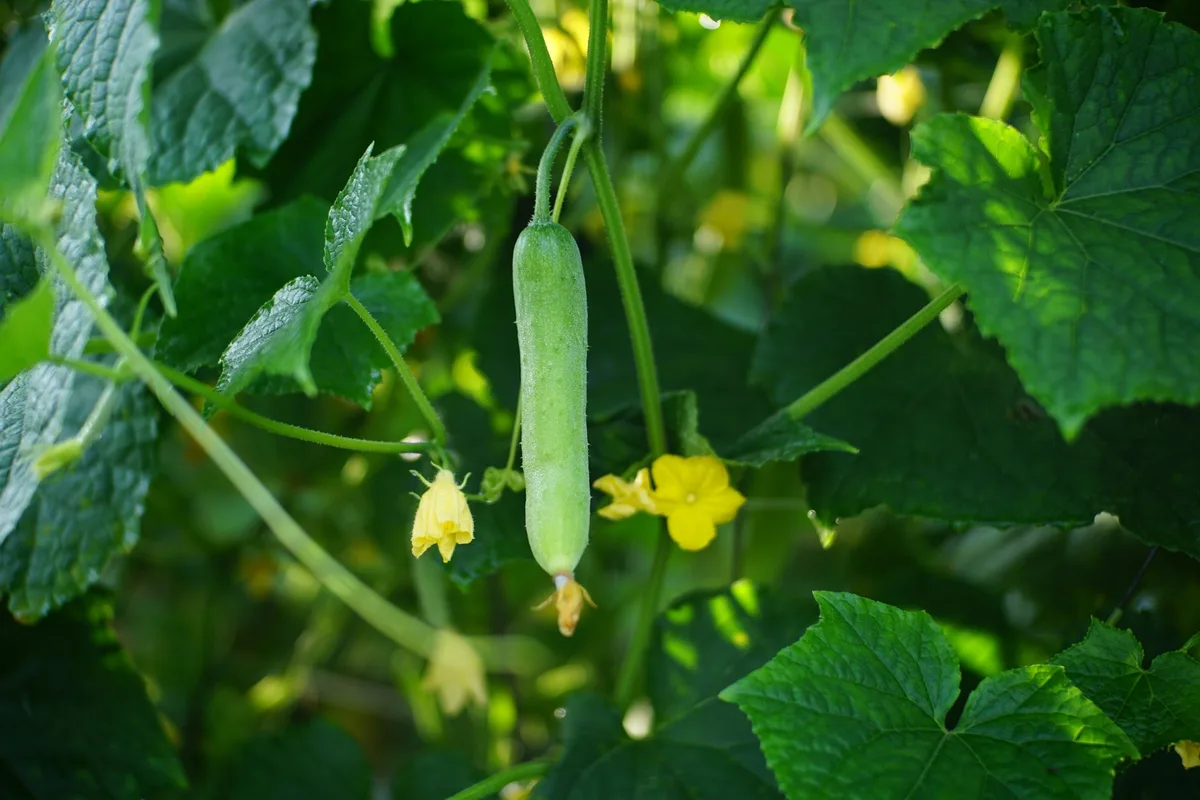
"Why is my cucumber yellowing and shriveling on the vine?" is the question that pops up the moment your first fruit starts to fade. The short answer: something has stopped that cucumber from finishing what it started. It could be a pollination miss, a water swing, a hungry vine, or a disease creeping in from the leaves down.
The pattern of yellowing tells you which one.
Cucumbers need 8 to 12 bee visits per female flower to set properly, and pollen goes sterile above 90°F (32°C) according to USDA cucurbit research. So even one hot, buggy week can trigger a wave of yellow, shriveled fruit that never stood a chance. As of 2026, with heat stretches lengthening in many regions, growers are seeing this earlier than usual.
Let's start with the fast answer, then work through what a healthy vine should look like.
Quick Answer
A cucumber yellows and shrivels when it stops developing on the vine. The most common cause is poor pollination, starving the fruit from the blossom end. Other triggers include water stress, heat above 90°F, and disease.
Overripe cucumbers also turn yellow as seeds mature. Check the pattern of yellowing to find the cause.
What a Healthy Cucumber Should Look Like at Each Growth Stage
A healthy cucumber starts as a tiny green ovary behind the female flower. Within days of pollination, it swells fast and stays a uniform, glossy green. Skin firmness increases, the blossom drops off cleanly, and growth stays steady.
If growth stalls or the fruit softens at any stage, something is off. Here's a quick reference for how a normal cucumber develops.
| Stage | Age from bloom | What to look for |
|---|---|---|
| Bloom set | Day 0 to 2 | Bright yellow female flower with a tiny green ovary behind it |
| Early swell | Day 3 to 7 | Fruit doubles in size, deep green, firm to the touch |
| Rapid growth | Day 8 to 14 | Adds roughly 1 inch per day, smooth skin, waxy bloom |
| Harvest ready | Day 15 to 25 | Slicers 6 to 8 in, picklers 3 to 5 in, still deep green |
| Overripe | Day 25+ | Skin turns pale, then yellow-orange, seeds harden inside |
Pale skin, soft spots, or a shriveled tip at any point before day 20 signals trouble. The next section shows you how to read those signals fast.
The 60-Second Diagnostic: Where Is the Yellowing Starting?
Grab the affected cucumber and look at it end to end. The location of the yellowing usually points straight to the cause. Use this as your first-pass check before you touch any tools or sprays.
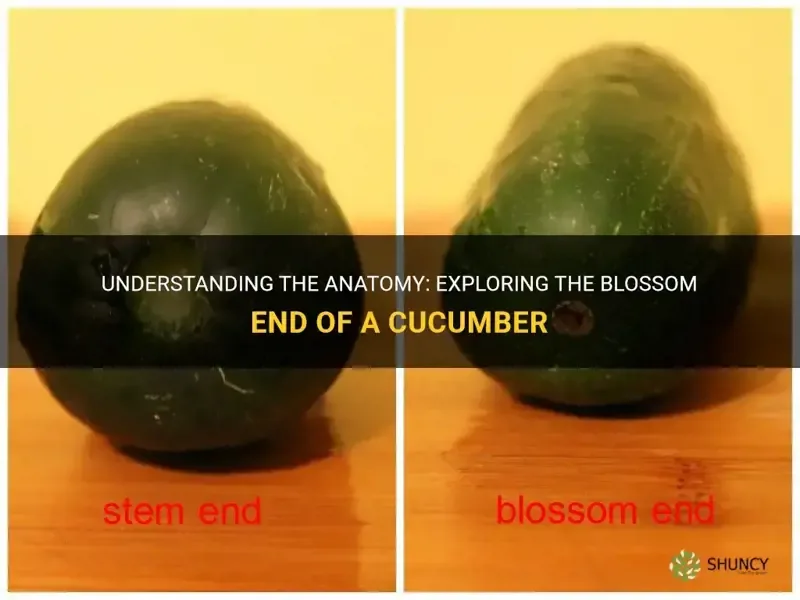
Blossom-End Shriveling (Tip First)
If the far tip is yellow, tapered, and shrunken while the stem end still looks green, you're almost certainly looking at poor pollination. The fruit started but never got enough pollen to finish. These are often called "nubbins" and they'll drop on their own.
Stem-End Yellowing (Attached to Vine)
Yellowing that starts where the fruit meets the vine usually points to a vascular problem. Bacterial wilt, fusarium, or a damaged stem can all cut off water and nutrients from the top down. Check the vine itself for wilting or a milky ooze at cut points.
Whole-Fruit Yellowing (Uniform Color Change)
A cucumber that turns yellow evenly, top to bottom, is usually overripe or heat-stressed. Overripe fruit still feels firm inside. Heat-damaged fruit tends to feel soft and taste bitter.
Yellowing Paired With Leaf Symptoms
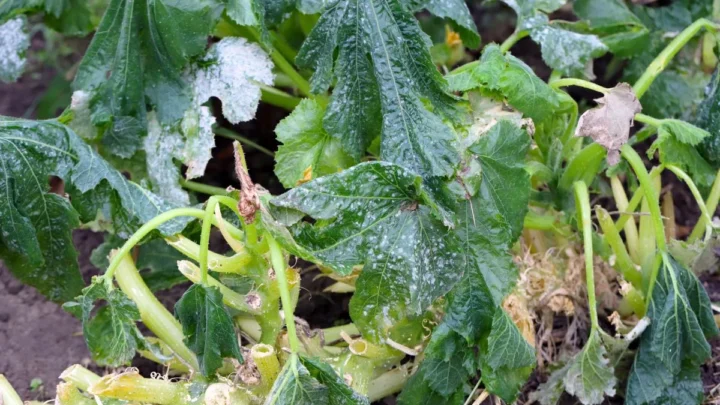
If leaves show mottling, spots, or wilting alongside yellow fruit, treat it as a disease or pest issue first. Cucumber mosaic virus, downy mildew, and squash bug feeding all show up on foliage before they wreck the crop. Take a photo of the leaves and compare against your local extension service's identification guide.
Cause 1: Poor Pollination and Fruit Abortion
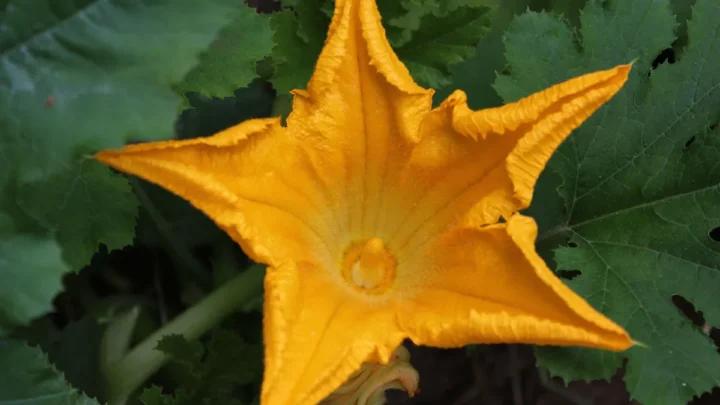
Poor pollination is the number one reason home-grown cucumbers yellow and shrivel from the tip. Cucumbers grow male and female flowers separately on the same vine. Pollen must move from male to female flowers by bees, and each female needs 8 to 12 visits to fully fertilize every seed cavity.
Miss that mark, and the fruit aborts.
You'll see this pattern most often in three situations:
- Rainy or overcast weeks when bees stay in the hive
- Yards with heavy pesticide use nearby
- Early-season vines that produce male flowers first, then only a few females
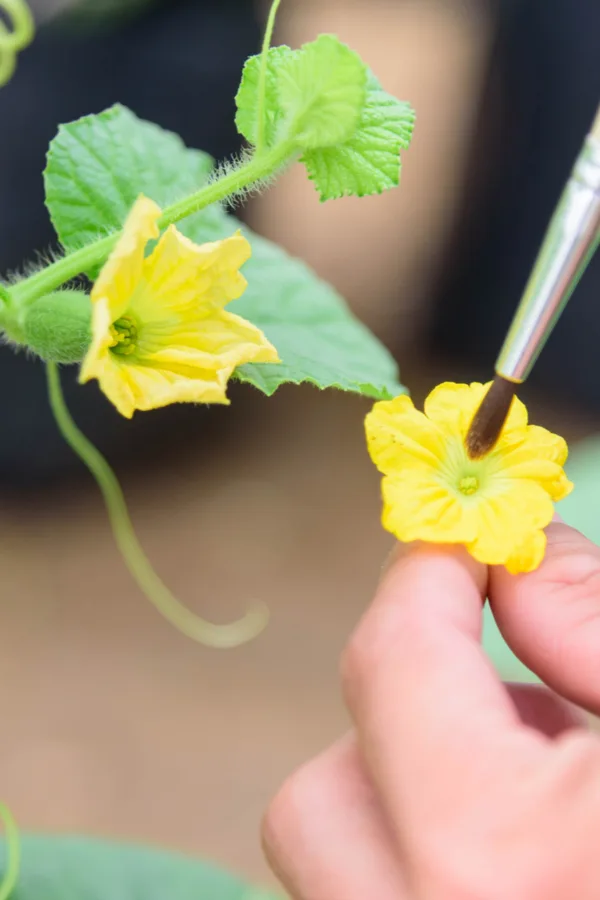
The fix is straightforward. Hand-pollinate in the morning between 6 a.m. and 11 a.m., when pollen is fresh. Pick a male flower (no swelling behind the petals), peel it back, and dab the yellow anther onto the stigma of each female flower.
A small paintbrush works too.
Planting nasturtiums, borage, or zinnias nearby pulls in more pollinators. If you're growing under cover, look at parthenocarpic varieties like Diva or Socrates, which set fruit without pollination.
Cause 2: Water Stress and Inconsistent Soil Moisture
Cucumbers are 95% water and their roots stay shallow, mostly in the top 12 to 18 inches of soil. When moisture swings between bone dry and soaked, the vine drops fruit to protect itself. That's why yellowing often shows up right after a heat wave followed by a heavy soak.
The University of Minnesota Extension recommends 1 to 2 inches of water per week for cucumbers, delivered deeply and consistently. Overhead watering wets the leaves and invites disease. Drip lines or soaker hoses at the base work best.
Signs your vine is water-stressed:
- Midday leaf wilting even when soil looks damp
- Curled or leathery leaf edges
- Bitter taste in fruit that does size up
- Small yellow cucumbers dropping before they mature
Fix it in three steps. Mulch the base with 2 to 3 inches of straw to lock in moisture. Water in the morning so leaves dry before night.
Check soil moisture 4 to 6 inches down with your finger before each watering, not on a fixed schedule.
Container growers face this the hardest. Pots dry out fast in summer heat and may need daily watering. A moisture meter, priced around $10 to $20 as of 2026, takes the guesswork out.
Consistency, not volume, is the goal.
Cause 3: Nutrient Imbalance (Nitrogen, Potassium, Magnesium)
Cucumbers are heavy feeders, and the ratio matters more than the total amount. Too much nitrogen pushes leafy growth at the expense of fruit. Not enough potassium or magnesium, and the fruit that does set turns pale, misshapen, and yellow at the ends.
Look for these tells:
- Lush, dark green vines with almost no fruit: too much nitrogen
- Yellow fruit with tapered ends and yellow-margined leaves: low potassium
- Yellowing between leaf veins on older leaves: magnesium deficiency
Side-dress with a balanced, fruit-friendly fertilizer like 3-4-6 or 5-10-10 when the first female flowers appear. A soil test through your local extension office costs $15 to $25 and takes the guessing out of it. Keep soil pH between 6.0 and 6.8 so nutrients stay available to the roots.
Cause 4: Heat Stress and Temperature Extremes
Cucumbers thrive between 65°F and 85°F (18°C to 29°C). Push past 90°F (32°C) for even a few days, and pollen viability drops sharply. The result: fertilized flowers that don't finish, fruit that yellows and drops, and vines that look fine but produce nothing.
Cold snaps hurt too. Nights below 55°F (13°C) slow the vine, cause misshapen fruit, and can knock flowers off before they open.
Practical fixes for hot spells:
- Add 30% to 50% shade cloth over vines during afternoon peaks
- Mulch heavily to keep root-zone temperatures down
- Water at dawn so leaves cool through the morning
- Skip midday fertilizing, which stresses roots further
Regions with long summer heat runs, such as much of the US South and Southwest, should plant heat-tolerant varieties like Suyo Long or Poinsett 76 for a stronger set through July and August.
Cause 5: Bacterial Wilt, Mosaic Virus, and Fungal Diseases
Diseases usually announce themselves on the leaves before the fruit gives up. If you see spots, mottling, or a whole vine wilting overnight, disease is the likely driver.
Here's a quick read on the four biggest offenders:
| Disease | Key symptom | What to do |
|---|---|---|
| Bacterial wilt | Sudden vine collapse, sticky sap when stem is cut | Pull and destroy plant, control cucumber beetles |
| Cucumber mosaic virus | Mottled yellow-green leaves, warty misshapen fruit | Remove infected plants, control aphids |
| Downy mildew | Yellow angular spots on upper leaves, gray fuzz below | Improve airflow, apply copper-based fungicide |
| Powdery mildew | White powder on leaves, stressed fruit | Prune crowded vines, spray with potassium bicarbonate |
Never compost infected plants. Bag them and trash them, or burn them where local rules allow. Rotate cucurbits on a 3-year cycle to break disease cycles in the soil, a practice backed by the American Phytopathological Society.
Cause 6: Cucumber Beetles, Squash Bugs, and Other Pests
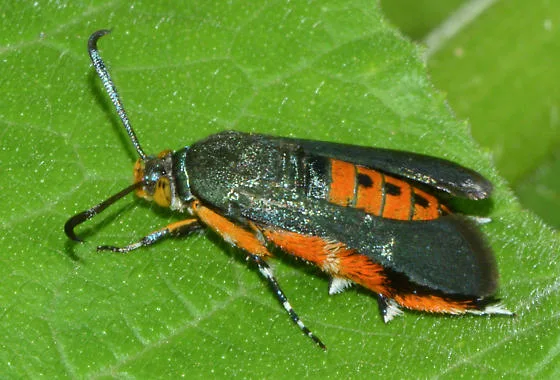
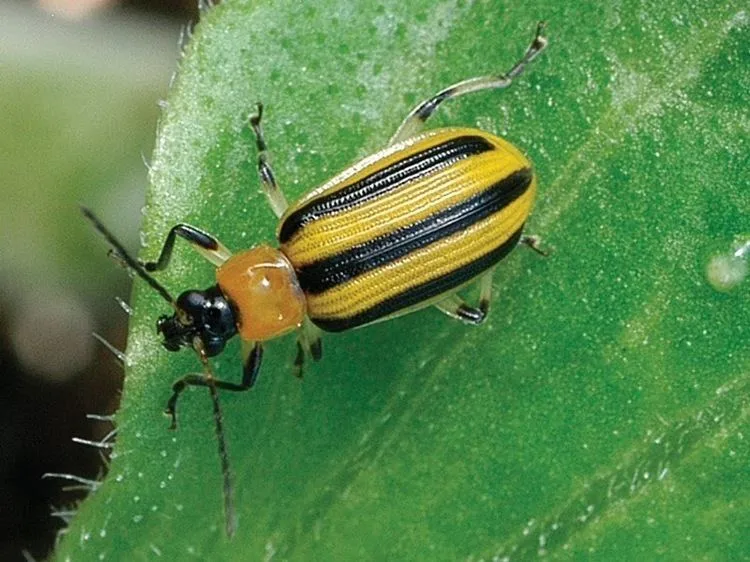
Pests damage cucumbers two ways: directly, by chewing on fruit and vines, and indirectly, by spreading disease. Striped and spotted cucumber beetles are the top offenders because they carry the bacterium that causes wilt. One beetle bite can infect a whole vine.
Watch for:
- Small yellow beetles with black stripes or spots, often at flower bases
- Gray-brown squash bugs clustered on leaf undersides
- Curled, sticky leaves from aphid feeding
- Fine webbing on leaf undersides in dry weather (spider mites)
Control options, ranked from lowest impact to strongest:
- Row covers until first flowers appear, then remove for pollinators
- Yellow sticky traps to monitor beetle numbers
- Kaolin clay spray to deter feeding
- Neem oil or insecticidal soap in the evening, when bees are off the vines
- Targeted pyrethrin only when other steps fail
Always follow the pesticide label and observe the pre-harvest interval. Never spray blooming plants during pollinator hours.
Cause 7: The Fruit Is Simply Overripe
Not every yellow cucumber is a problem. Left on the vine past maturity, cucumbers naturally turn from deep green to pale, then yellow to orange as the seeds inside harden and the plant shifts energy into seed production.
You can tell an overripe cucumber from a diseased one in seconds:
- Overripe: firm skin, uniform yellow, large hard seeds, bitter taste
- Diseased or stressed: soft spots, uneven color, shriveled ends, watery flesh
The bigger consequence is what an overripe fruit does to the rest of the vine. Once seeds mature, the plant slows or stops producing new fruit. Pick cucumbers every 2 to 3 days at peak season to keep the vine cranking out fresh set.
Decision Tree: Match Your Symptoms to the Right Fix
Use this flow to move from symptom to solution in under a minute.
- If the tip is shriveled and the stem end is green: pollination failure. Hand-pollinate the next morning.
- If the whole fruit is yellow but firm with hard seeds: overripe. Pick and reset the harvest cycle.
- If the vine wilted overnight and stem oozes when cut: bacterial wilt. Pull and destroy the plant.
- If leaves show yellow angular spots: downy mildew. Improve airflow and apply copper spray.
- If yellow fruit follows a heat wave over 90°F: heat stress. Add shade cloth and mulch.
- If soil is dry beyond 4 inches down: water stress. Deep-water and mulch heavily.
- If vines are lush with no fruit: nitrogen excess. Switch to a low-N, high-K feed.
Work top to bottom. The first "yes" is your answer.
Step-by-Step Rescue Plan for a Struggling Cucumber Vine
Follow these steps in order. Skip none, and you'll usually see recovery inside 10 to 14 days.
- Remove every yellow or shriveled fruit. Leaving them drains the plant.
- Inspect leaves and stems for pests. Squash any eggs and knock beetles into soapy water.
- Prune damaged or diseased leaves with clean shears. Sanitize with 70% isopropyl alcohol between cuts.
- Water deeply at the base, 1 to 2 inches, then mulch with 2 to 3 inches of straw.
- Side-dress with a 3-4-6 or 5-10-10 fertilizer, half a cup per plant, watered in.
- Hand-pollinate every open female flower for the next 5 mornings.
- Add 30% shade cloth if daytime highs stay above 90°F.
Track new fruit set for two weeks. Healthy vines will push 3 to 5 new fruits per plant in that window.
Mistakes That Make Yellowing Cucumbers Worse
Small missteps often turn a fixable problem into a lost crop. These are the ones aggregate grower reports flag most often.
- Overhead watering that wets leaves and spreads fungal spores
- Composting infected fruit or vines, which recycles pathogens into the bed
- Broad-spectrum pesticide sprays during bloom hours, killing pollinators
- Ignoring the first yellow fruit and letting damage cascade across the vine
- Planting cucumbers in the same bed year after year, building up soil-borne disease
- Feeding heavy nitrogen mid-season to "green up" struggling vines
Fix the habit, not just the symptom. A single overhead watering in humid weather can seed a downy mildew outbreak that takes a month to control.
Prevention Checklist for Next Season's Crop
Prevention beats rescue every time. Build these into your routine before you plant.
- Rotate cucurbits on a 3-year cycle to break pest and disease chains
- Choose resistant varieties like Marketmore 76, County Fair, Diva, or Salad Bush
- Start with a soil test and amend to pH 6.0 to 6.8
- Space plants 12 inches apart in rows 4 to 6 feet apart for airflow
- Trellis vines vertically to keep fruit off the soil
- Install drip irrigation with a timer for consistent moisture
- Use floating row covers until flowering, then remove for pollinators
- Interplant nasturtiums, borage, and marigolds to boost pollinator visits
- Scout twice weekly for beetles, aphids, and early leaf spots
The USDA Cooperative Extension network offers free, region-specific planting calendars. Match your variety and planting date to your USDA hardiness zone for the strongest set.
When to Pull the Plant vs. Try to Save It
Some cucumber problems are worth fighting. Others waste weeks you could spend replanting. Use these thresholds to decide.
Pull the plant when:
- Bacterial wilt is confirmed by the milky sap test on a cut stem
- Cucumber mosaic virus shows on more than 30% of leaves
- Downy mildew has spread across most of the canopy in humid weather
- The vine collapses overnight with no recovery by the next morning
- Fewer than 2 healthy leaves remain per foot of vine
Try to save it when:
- Only fruit shows symptoms and leaves stay green
- The issue traces to water, heat, or nutrients
- Pest pressure is under 5 beetles or bugs per plant
- New female flowers are still forming
Cucumbers grow fast, often producing a harvestable crop in 50 to 60 days from seed. If you're before mid-July in most US zones, replanting is often the smarter call than nursing a sick vine.
FAQs About Yellow, Shriveled, and Misshapen Cucumbers
Can I still eat a yellow cucumber?
Yes, if it's overripe rather than diseased. Overripe yellow cucumbers taste bitter and have tough seeds, so they're best used cooked, pickled, or composted. Skip any fruit from vines showing wilt, mosaic, or rot.
Why do my cucumbers shrivel right after they start growing?
Almost always poor pollination. The fruit forms from the female flower's ovary, but without enough pollen it can't develop past the first inch or two, so the tip yellows and dries out.
How often should I water cucumbers to prevent yellowing?
Aim for 1 to 2 inches of water per week, delivered deeply 2 to 3 times, not daily light sprinkles. Containers may need daily watering in heat. Consistency matters more than volume.
Do cucumbers need male and female flowers?
Most standard varieties do. Male flowers appear first and grow on thin stems, while females have a tiny cucumber behind the bloom. Parthenocarpic varieties like Diva set fruit without pollination and work well in greenhouses.

Similar Posts