How to Tell If You Have Root-Knot Nematodes: 7 Clear Signs
Root-knot nematodes are tricky pests because the damage often looks like something else entirely. If you’re wondering how to tell if you have root-knot nematodes, the honest answer is that above-ground clues will only get you halfway there. The real diagnosis lives underground, in the shape and feel of the roots themselves.
Get that visual check right and you’ll stop wasting money on the wrong fertilizers, fungicides, and treatments.
As of 2026, the USDA Agricultural Research Service still ranks Meloidogyne species among the most economically damaging plant pests worldwide, with yield losses on susceptible crops running as high as 60%. The good news? A pocket knife, a bucket of water, and about five minutes with a suspect plant will usually tell you what you need to know.
Here’s how to do the check properly, plus what to do when the roots don’t give you a clear answer.
The Fastest Way to Tell If Root-Knot Nematodes Are the Problem
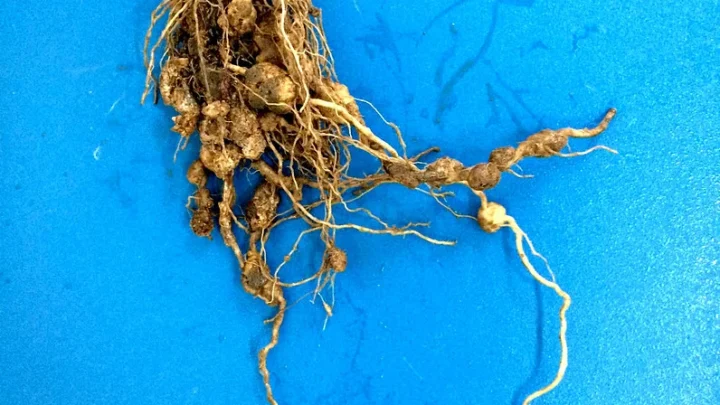
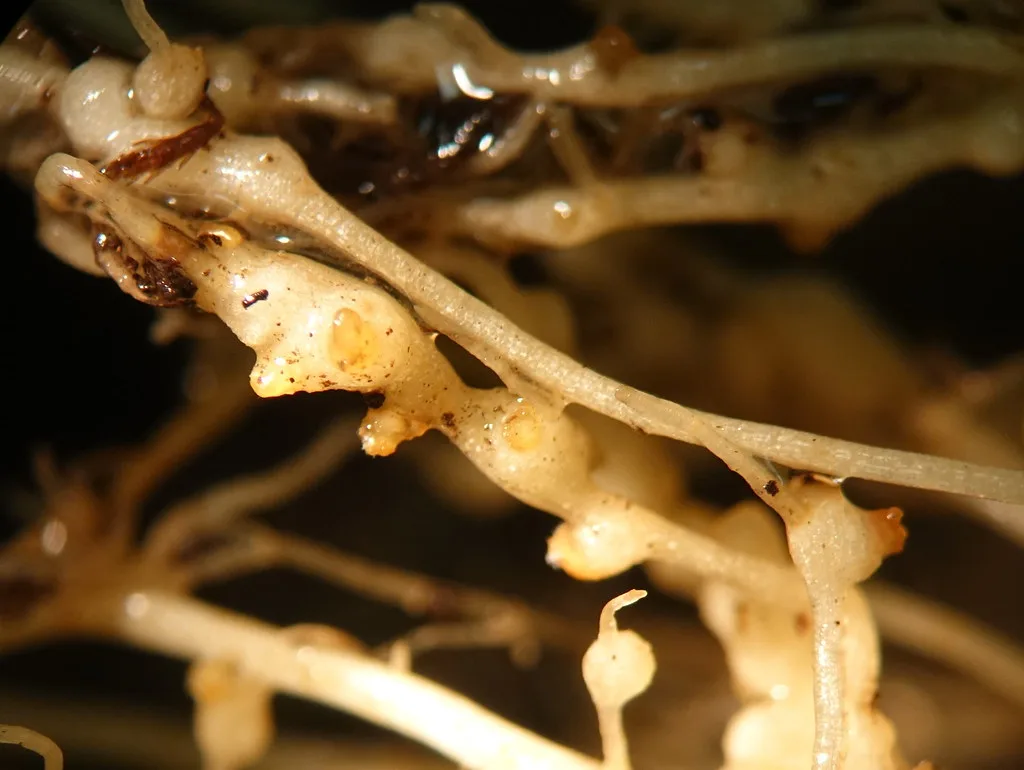
Dig up a struggling plant and rinse the soil off its roots. If you see swollen, knobby galls fused into the root tissue, that’s root-knot nematode damage. Galls won’t rub off with your thumb.
They’re part of the root itself. Above-ground wilting or yellowing alone is not enough to confirm it.
Why a Visual Diagnosis Beats Guessing With Root-Knot Nematodes
Root-knot nematodes (Meloidogyne spp.) are microscopic worms. You’ll never see them without a lens. What you can see, easily, is the physical damage they leave on the roots of the plants they feed on.
That’s why every reliable diagnosis starts with the roots. Aggregate extension guidance from land-grant universities is consistent on this point. Leaves alone lie.
A plant wilting at midday could be dry, root-bound, salt-stressed, fusarium-infected, or nematode-damaged. Roots don’t lie in the same way.
Skipping the root check is the single most common mistake gardeners make. They spend a season fighting a phantom nutrient deficiency, dumping nitrogen, then wonder why the tomatoes still collapse in August. Meanwhile the real problem is quietly multiplying underground the whole time.
If you can pull one struggling plant from a suspect bed and get its roots into daylight, you’ve done 80% of the work.
Above-Ground Symptoms That Point to Nematode Damage
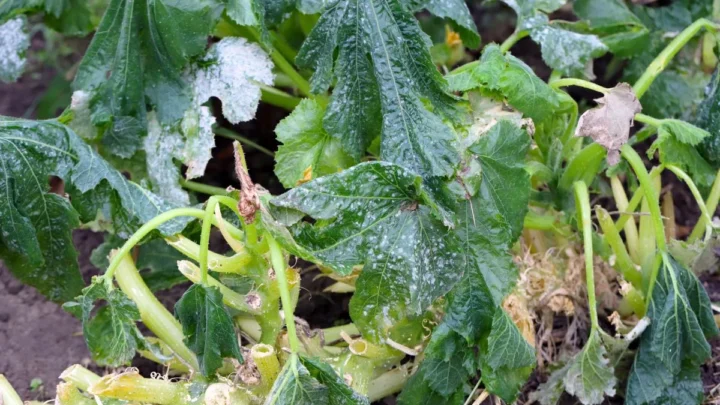
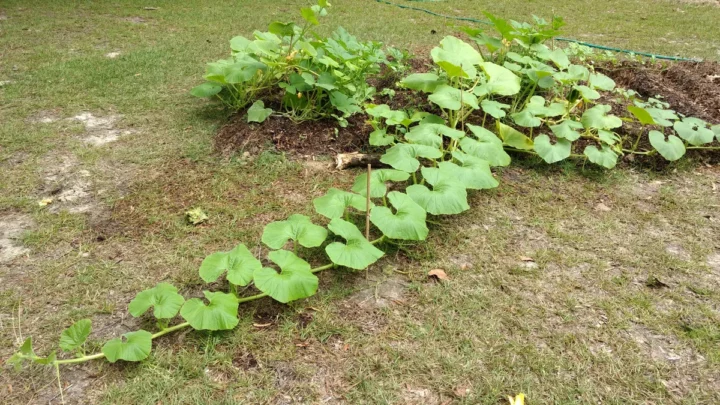
Above-ground symptoms won’t confirm root-knot nematodes on their own, but they tell you where to dig. Look for patchy performance more than plant-wide failure. Root-knot damage almost always shows up as uneven zones inside an otherwise healthy planting.
Wilting, Yellowing, and Uneven Patches
Classic signs include:
- Midday wilting on hot days even when the soil is moist
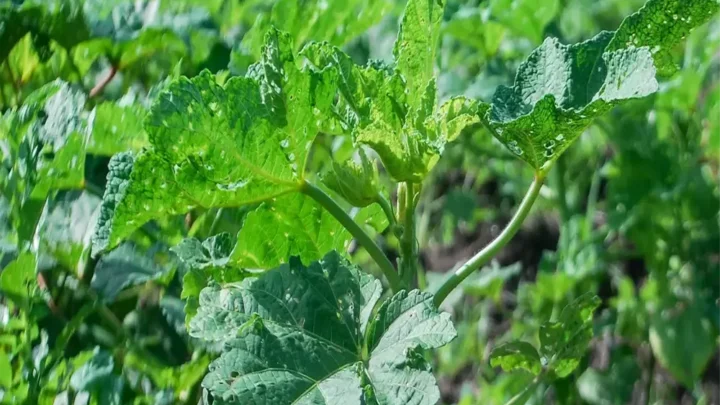
- Chlorosis (yellowing) between leaf veins or across whole lower leaves
- Plants that recover overnight then wilt again by noon
- Distinct patches or “hotspots” of poor plants inside a row of healthy ones
- Symptoms that get worse as summer heat builds
The patchiness matters. Drought and fertility problems tend to affect the whole bed. Nematode hotspots follow the pest’s clumpy distribution in the soil.
If half your tomato row looks fine and the other half looks miserable, and you’re watering both the same, that’s a nematode red flag.
Stunted Growth and Poor Yield on Fruiting Crops
Susceptible plants often just stall. New growth slows. Leaves stay small.
Fruit set drops. On tomato, pepper, and cucurbits, you’ll frequently see plants that flower early but hold only a fraction of the fruit a healthy neighbor produces.
On sweet potato and carrot, the above-ground plant may look almost normal. The damage hides in the harvest instead, which is one reason root crops get diagnosed later and hit harder.
What Root-Knot Nematode Galls Actually Look Like on Roots
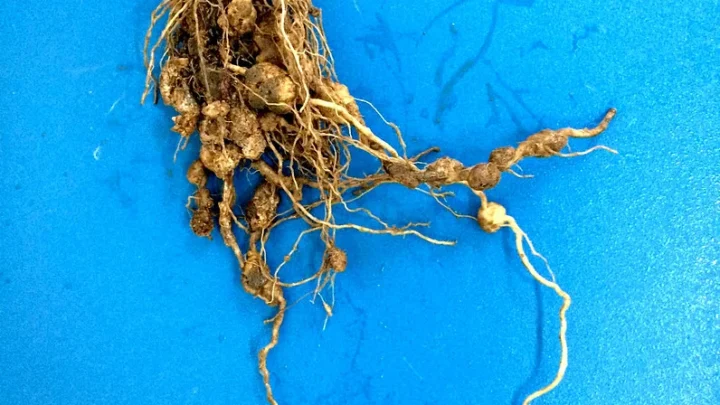
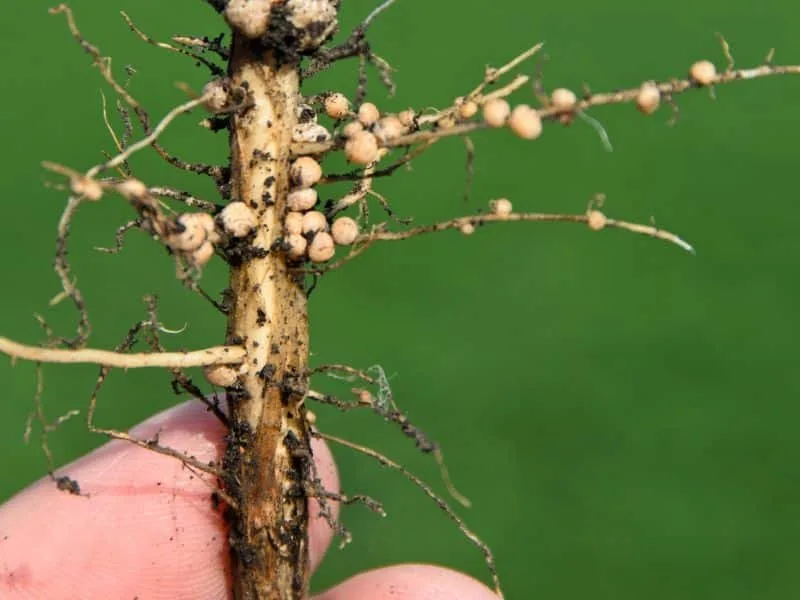
Root-knot galls are swollen, warty, distorted lumps built into the root itself. They range from the size of a pinhead up to a marble on heavily infected tomato or okra. Small galls can look like beads on a string.
Heavy infections fuse into knobby ropes that make the whole root system look deformed.
Size, Shape, and Where They Form on the Root
A few visual traits set root-knot galls apart from other root oddities:
- Galls are part of the root tissue itself, not sitting on top of it
- Color is usually the same tan or off-white as the healthy root, sometimes darker
- Shape is irregular and lumpy, not perfectly round
- Small feeder roots often show excessive branching just above a gall
- Old galls may crack, rot, or host secondary fungal infection
You’ll often find a cluster of small galls at the growing tip of a young root, with older galls sitting further back on the main root. On carrots and sweet potatoes, the “galls” show up as bumps, forks, and warty patches on the storage root you actually eat.
The Rub Test for Galls vs. Nitrogen-Fixing Nodules on Legumes
This is the single most useful field test, especially if you’re checking beans, peas, or cover-crop legumes. Nitrogen-fixing rhizobia bacteria form pink or reddish nodules that sit on the outside of legume roots. Rub one with your thumb and it pops off cleanly.
The root underneath stays smooth.
A root-knot gall is fused into the root. Rub it and nothing happens. Slice it open with a fingernail or knife and you’ll often see a tiny, pear-shaped white female nematode embedded in the tissue, sometimes with a gelatinous egg mass on the gall surface.
That combination, fused swelling plus embedded white body, is a lock for root-knot nematodes.
Step-by-Step: How to Inspect a Suspect Plant
Do this the right way once and the technique sticks with you for every future season. Programs like University of Florida IFAS Extension and other land-grant nematology labs recommend the same basic protocol, so you’re on solid ground following it.
- Pick a plant that’s struggling but not yet dead. Nematodes leave dead roots as soon as they stop feeding, so a fresh symptom is much easier to diagnose.
- Dig, don’t pull. Use a spade or fork to lift the plant with as much of the root ball intact as possible. Yanking snaps off the fine roots where you’d see the earliest galls.
- Gently wash the soil off the roots with a hose or a bucket of water. Skip the pressure nozzle. You want the galls intact, not blasted off.
- Lay the wet root system on a light surface (a plastic lid, a white board, even a paper plate) so galls stand out.
- Look for swellings fused into the roots. Compare the fine feeder roots to a healthy plant from the same bed if you can.
- Do the rub test on anything that looks like a bump. A nodule pops off, a gall does not.
- Cut one questionable gall open with a sharp knife or razor. A tiny white pear-shaped body inside seals the ID.
- Sanitize your tools with 70% alcohol or a 10% bleach solution before moving to another bed. Nematode eggs travel on soil clinging to steel.
If the roots look ambiguous, or the plant is a species that hides the damage (root crops, some ornamentals), you’ll want a lab-confirmed soil test.
Host Plants That Show Textbook Galls (and the Ones That Fool You)
Some crops paint you a Rembrandt of nematode damage. Others hide the evidence until harvest. Knowing which host you’re inspecting changes what “obvious” looks like.
Tomato, Pepper, Cucumber, and Okra
These are the textbook diagnostic crops. On tomato especially, galling is dramatic. You’ll see grape-cluster swellings up and down the main root, plus a mess of stubby, misdirected feeder roots.
Pepper and cucurbits (squash, melon, cucumber) show the same pattern with slightly smaller galls.
Okra is arguably the loudest indicator plant in a Southern garden. If okra roots come up clean, root-knot pressure in that bed is probably low.
Carrot, Sweet Potato, and Other Root Crops
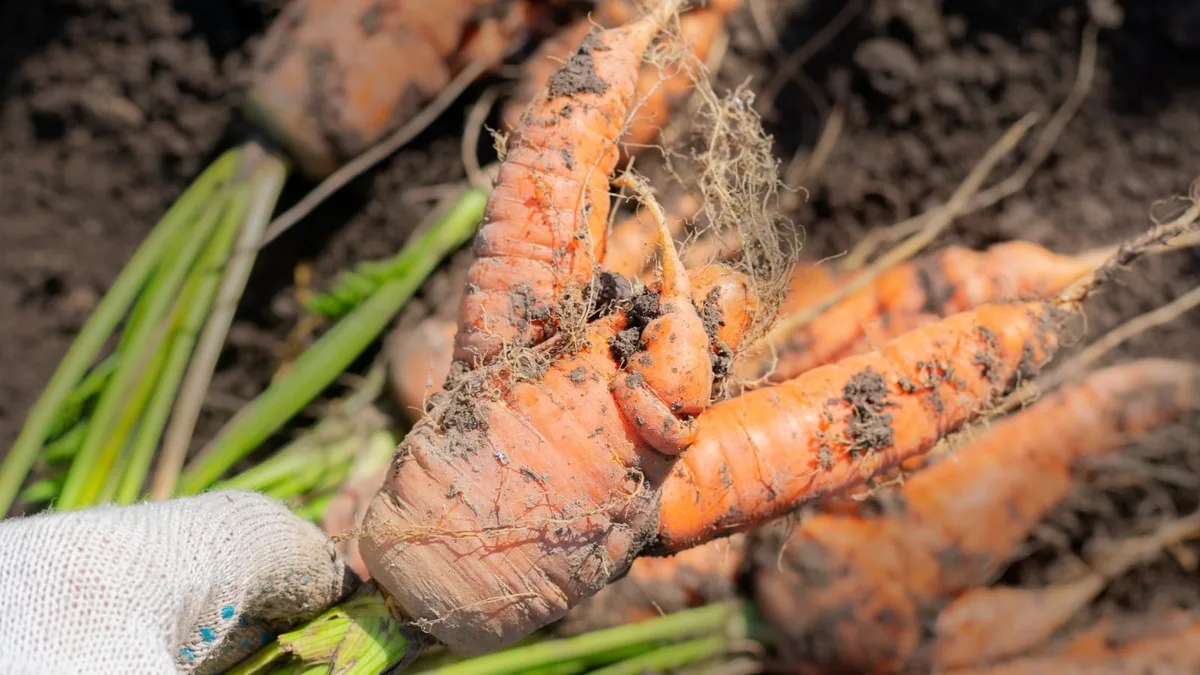
Root crops rewrite the rulebook. On carrot, root-knot damage looks like forking, hairy side roots, and warty bumps on the taproot itself. You often won’t spot it until you pull the crop.
Sweet potato tubers develop rough, cracked skin, sometimes with dark internal specks where nematodes have fed. Potato tubers infected with Meloidogyne chitwoodi show pimply blisters and internal brown flecks under the skin. That’s why USDA APHIS treats it as a regulated pest for seed potato movement.
On onions and garlic, galls are subtle. On strawberries, damage often shows as stunting with little visible root deformity. When the host hides the evidence, skip straight to a lab assay.
Look-Alikes: Root Diseases and Damage You Can Confuse With RKN
Half the diagnostic battle is ruling out other problems that mimic nematode symptoms. Get these wrong and you’ll treat the wrong pest all season.
Rhizobia Nodules, Crown Gall, and Clubroot
Rhizobia nodules on legumes are the number-one false positive. They’re round, sit on the outside of the root, and rub off. Nematode galls are fused in and won’t budge.
Crown gall (Agrobacterium tumefaciens) produces tumor-like growths, but they form at the crown or lower stem near the soil line, not scattered along fine roots. The texture is corky and rough.
Clubroot (Plasmodiophora brassicae) hits cabbage, broccoli, and other brassicas. It creates massive, spindle-shaped swellings on the taproot that look almost like giant club-shaped carrots. Root-knot galls on brassicas are much smaller and beadier by comparison.
Fusarium, Verticillium, and Pythium Root Rot
Vascular wilts like Fusarium and Verticillium cause wilting, yellowing, and stunting almost identical to nematode damage above ground. The tell: slice the lower stem lengthwise. Wilts leave a brown or dark streak inside the vascular tissue.
Nematodes don’t.
Pythium and Phytophthora rots turn feeder roots mushy, brown, and slimy, often with a rotten smell. Nematode-damaged roots may rot secondarily at old gall sites, but the primary sign is swelling, not decay.
If you see galls plus internal vascular browning, you might have both, which is common in worn-out tomato beds.
When Visual ID Isn’t Enough: Sending a Soil Sample to a Lab
Visual diagnosis works when galls are obvious. It falls apart when populations are low, when the crop hides damage, or when you want to know species and exact counts before planting. That’s where a proper nematode assay earns its keep.
How to Pull a Proper Soil Sample
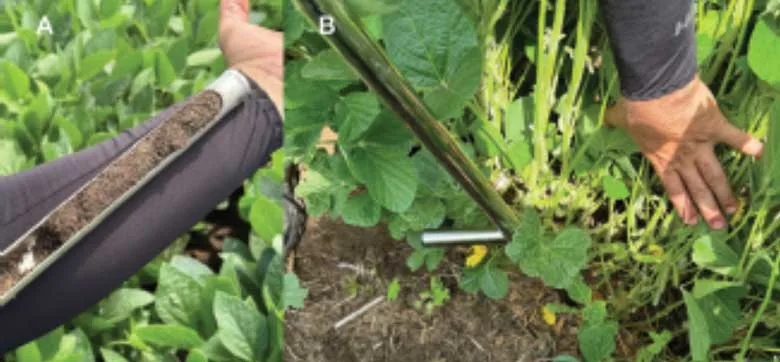
Sampling technique matters more than most gardeners think. A single scoop from one corner of a bed tells you almost nothing.
- Sample 6 to 12 inches deep, in the active root zone
- Pull 10 to 20 subsamples across the suspect area
- Mix subsamples in a clean bucket, then bag about 1 pint (500 mL) of the composite
- Sample late in the season, right before harvest, when populations peak
- Keep the sample cool (not frozen) and ship within 48 hours
- Include a few damaged roots if you have them
Label the bag with your name, the crop grown, the crop you plan to plant next, and the sample date. Most state diagnostic labs charge $15 to $40 per sample as of 2026.
What a Nematode Assay Report Tells You
A good report gives you two numbers that actually matter: species identification (or at least genus) and juveniles per unit volume of soil. Damage thresholds vary by crop.
| Crop | Rough damage threshold (J2 per 100 cm³ soil) |
|---|---|
| Tomato, pepper, cucurbits | 50 to 100 |
| Sweet potato | 10 to 50 |
| Carrot | 10 to 30 |
| Corn (field) | 150+ |
| Turfgrass | 500+ |
Numbers below threshold usually mean you can plant with resistant varieties or basic sanitation. Numbers above threshold call for rotation, cover cropping, solarization, or a labeled nematicide. Your local extension nematologist can interpret borderline reports for your soil type.
Common Mistakes People Make When Diagnosing Root-Knot Nematodes
Even good gardeners fumble the diagnosis in predictable ways. Watch for these traps.
- Sampling dead plants. Once a plant dies, the nematodes have already moved on, so counts crash.
- Confusing nodules with galls on beans, peas, and clover. Always do the rub test.
- Yanking instead of digging, which strips off the exact feeder roots that hold the earliest galls.
- Blasting roots with a pressure nozzle, which breaks off small galls.
- Assuming resistant varieties are bulletproof. Meloidogyne enterolobii breaks the Mi resistance gene in most tomato varieties.
- Skipping tool sanitation, then spreading eggs to a clean bed on a dirty spade.
- Sampling in spring when populations are lowest, then getting a “clean” report that misses a heavy infestation.
- Ignoring root crops until harvest. By then it’s too late to save the season.
Getting the diagnosis right is 90% of the fix. Guess wrong and every treatment you throw at the bed is wasted money.
Regional Clues: Which Meloidogyne Species You’re Likely Dealing With
Species matters because it drives which crops are at risk and which resistant varieties will actually hold up. Geography is your first clue.
| Species | Common name | Typical range | Key hosts to watch |
|---|---|---|---|
| M. incognita | Southern root-knot | US Southeast, Gulf Coast, California | Tomato, cotton, sweet potato |
| M. javanica | Javanese root-knot | Warm regions worldwide, US South | Tomato, tobacco, ornamentals |
| M. arenaria | Peanut root-knot | US Southeast | Peanut, tomato, cucurbits |
| M. hapla | Northern root-knot | Northern US, Canada, cooler zones | Carrot, potato, strawberry |
| M. chitwoodi | Columbia root-knot | Pacific Northwest | Potato, wheat, alfalfa |
| M. enterolobii | Guava root-knot | Florida, NC, tropical zones | Tomato, sweet potato, guava |
Warm, sandy soils favor most Meloidogyne species. Heavy clay slows them down but doesn’t stop them. If you’re in the Southeast growing tomatoes, assume M. incognita until a lab says otherwise.
In the Pacific Northwest potato belt, M. chitwoodi is the one to fear because it triggers phytosanitary rejections on seed potatoes.
M. enterolobii is the emerging worry as of 2026, because it defeats the Mi-1 resistance gene that most nematode-resistant tomato varieties rely on. If resistant tomatoes still show heavy galls in your bed, that species is the leading suspect.
When to Call Your Extension Office or Diagnostic Clinic
Some situations warrant a professional before you commit to a treatment plan. Your local cooperative extension office is free (or nearly free) and staffed by people who know your soil and climate.
Call or submit a sample when:
- Resistant varieties still show heavy galling
- You suspect M. chitwoodi or M. enterolobii (regulated species with legal implications)
- Damage spans multiple crops across multiple beds
- You’re planning a large planting and want a preplant population count
- Symptoms could point to a wilt disease and nematodes at the same time
State Departments of Agriculture and university plant diagnostic clinics can confirm species by morphology or PCR, which matters when resistance and rotation plans are on the line.
A Quick Visual Reference Guide for Field Diagnosis
Use this as your at-a-glance checklist next time you dig a suspect plant.
| Clue | What it means |
|---|---|
| Swollen lumps fused into root, won’t rub off | Root-knot gall (positive) |
| Round beads that pop off cleanly | Rhizobia nodule (not RKN) |
| Slimy brown feeder roots | Pythium or Phytophthora rot |
| Brown streak inside sliced stem | Fusarium or Verticillium wilt |
| Warty, forked carrots or blistered potatoes | Root-knot on root crop |
| Uneven patches wilting in midday heat | Above-ground RKN pattern |
| White pear-shaped body inside a cut gall | Confirms Meloidogyne species |
If two or more clues line up, treat the diagnosis as strong. Send a soil and root sample for the final species and count.
Frequently Asked Questions
Can I see root-knot nematodes with the naked eye?
No. Adult females can be visible as tiny white pinheads inside a sliced gall, but the juveniles that infect roots are microscopic. You diagnose the pest by its damage, not by spotting the worm itself.
A hand lens helps you see egg masses on the surface of a gall.
How fast do root-knot nematodes spread in a garden bed?
Fast. In warm soil between 77 and 86 °F, one generation completes in 21 to 30 days, and each female lays 300 to 500 eggs. Populations can multiply tenfold in a single susceptible season.
Contaminated tools, boots, and transplants move them between beds.
Will root-knot nematodes kill my plants?
Not usually on their own, but they cripple yield and open the door to secondary root rots. On heavily infested tomato or pepper, expect 25 to 60% yield loss and stunted, unproductive plants. Root crops like carrots become unmarketable long before the plant itself dies.
Do resistant tomato varieties always work against root-knot?
No. Varieties labeled with the “N” designation carry the Mi-1 resistance gene, which handles M. incognita, M. javanica, and M. arenaria well under most soil temperatures. Resistance breaks down above 82 °F soil temp and offers little defense against M. enterolobii.
Can compost or organic matter cure a root-knot problem?
Compost helps but doesn’t cure it. Heavy organic matter boosts beneficial microbes that suppress nematode populations, and biofumigant cover crops like mustard or marigold (Tagetes) reduce numbers. Combine those with crop rotation and resistant varieties for meaningful control.
No single organic input eliminates an established infestation.

Similar Posts