How to Treat a Rotted Zucchini Stem and Save Your Plant
"How can I treat a rotted zucchini stem?" is the kind of garden emergency where the wrong move kills the plant faster than the rot itself. The right treatment depends on what's actually causing the damage. There are four separate culprits, and they all look nearly identical from the outside.
Get the diagnosis wrong and you'll waste weeks spraying fungicide on a bacterial infection. Meanwhile a moth larva finishes off the crown from inside. Per aggregated cooperative extension diagnostic data current as of 2026, roughly 60% of "sudden zucchini collapse" cases east of the Rocky Mountains trace back to the squash vine borer, not to disease at all.
That's where every treatment plan starts.
Quick Answer
To treat a rotted zucchini stem, first identify the cause. Look for sawdust-like frass, stringy ooze, or white fungal growth. If you spot frass, slit the stem, remove the borer, and mound damp soil over the wound.
If the cut stem oozes stringy sap, bacterial wilt is present and the plant can't be saved. For fungal crown rot, prune back to clean green tissue and apply a copper drench.
Why a Rotted Zucchini Stem Isn't One Problem, It's Four
Zucchini stem rot is a symptom, not a diagnosis. Four completely different problems produce the same soggy, collapsing stem. Each one demands a different response.
| Culprit | Type | Curable? | Key Sign |
|---|---|---|---|
| Squash vine borer | Insect (larva) | Yes, if caught early | Sawdust frass at base |
| Bacterial wilt (Erwinia tracheiphila) | Bacterial | No | Stringy sap ooze |
| Crown rot (Fusarium, Phytophthora) | Fungal / oomycete | Sometimes | Water-soaked lesion at soil line |
| Southern blight / Sclerotinia | Fungal | Sometimes | White mycelium, tan pellets |
Copper spray does nothing to a borer. Removing beetles won't reverse bacterial wilt once symptoms show. Cutting infected tissue won't help if the roots are already colonized.
The good news: you can usually tell these apart in under a minute if you know what to look for.
First Look: What the Rot Tells You Before You Touch Anything
Before you grab a knife or a spray bottle, just look at the plant. Aggregate reports from university extension diagnostic labs show a five-minute visual inspection resolves the cause in most home garden cases.
Check three things:
- Where is the rot? Right at soil line points to crown rot. A few inches up the vine points to borer damage. Multiple scattered lesions point to a fungal spread.
- What color is it? Dark brown, water-soaked, and mushy suggests bacterial or Phytophthora. Tan and dry with white fuzz suggests Sclerotinia or Southern blight.
- What's the canopy doing? Wilting midday but recovering overnight fits bacterial wilt or borer damage. A flat plant that stays flat means the crown is already gone.
Take a photo of the base before you touch anything. It gives you a reference if the damage shifts over the next 24 hours.
The 60-Second Diagnostic: Frass, Ooze, or Mycelium?
Three quick tests decide the treatment path. Run them in order.
The frass test. Look at the base of the stem at soil level. Wet, sawdust-like material means a squash vine borer is inside. You'll usually see a small round entry hole nearby.
The ooze test. Cut a wilted stem cleanly with a sharp knife. Press the two cut ends together for five seconds, then pull them slowly apart. A sticky, stringy strand of sap confirms bacterial wilt.
No strand means you can rule it out.
The mycelium test. Scrape mulch and topsoil away from the crown. White cottony fungal growth or small tan pellets the size of mustard seeds point to Southern blight or Sclerotinia. Fine white threads without pellets can indicate Fusarium.
If all three tests are negative and the base is dark and soft, you're most likely dealing with Phytophthora or root rot from waterlogged soil.
Squash Vine Borer Damage: Signs, Surgery, and When to Inject Bt
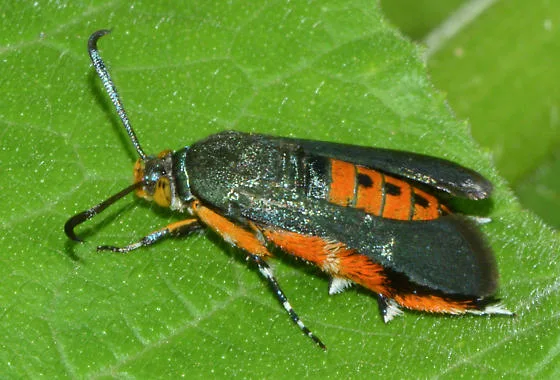
The squash vine borer (Melittia cucurbitae) is the top killer of home garden zucchini east of the Rockies. Adult moths lay eggs at the plant base from late June through August. The larvae tunnel in and hollow out the stem from the inside.
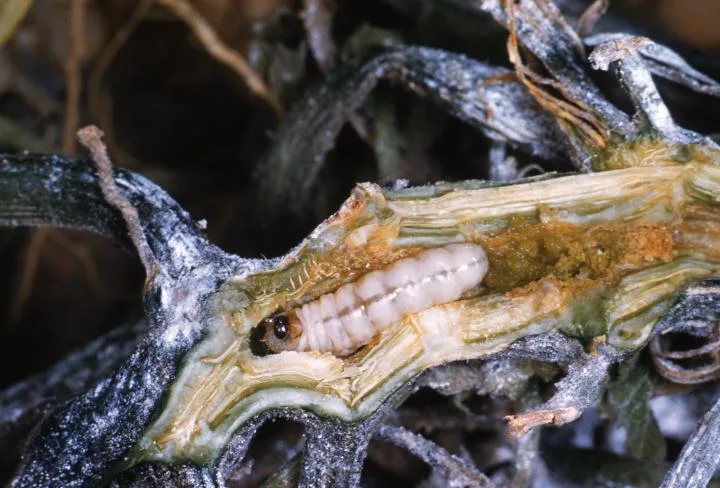
Signs that confirm it:
- Sudden midday wilt that no longer recovers overnight
- Sawdust frass at the base, often piled like a tiny anthill
- A small round entry hole in the lower stem
- On dissection, a cream-colored larva up to one inch long
The surgery. Use a sterile utility blade. Make a shallow vertical slit above the frass hole. Open the stem gently, pluck out every larva you can find (there may be more than one).
Mound moist soil over the wound and keep it damp for a week.
The Bt injection alternative. Inject a Bacillus thuringiensis (Bt kurstaki) solution, about 1 mL, directly into the stem using a garden syringe every 7 days during flight season. University of Minnesota Extension research indicates injection works far better as prevention than as a rescue after damage is visible.
Bacterial Wilt from Cucumber Beetles: Why This One's Usually Terminal
Bacterial wilt, caused by Erwinia tracheiphila, is the heartbreaker of the four. Once symptoms show, there is no cure. Guidance from Cornell University plant pathology programs is blunt.
Infected plants should be pulled to protect the rest of the patch.
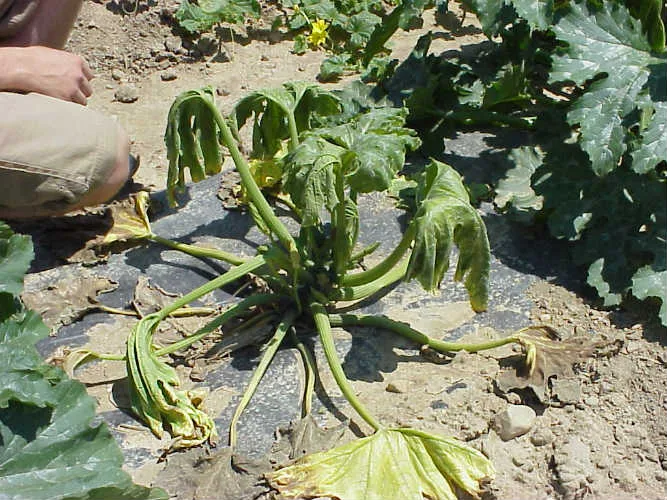
The pathogen lives inside striped and spotted cucumber beetles. When they feed on zucchini leaves, they push bacteria into the wounds. Those bacteria multiply and clog the water-conducting tissue.
The plant wilts from the top down over 7 to 14 days.
What confirms it:
- A positive ooze test with visible stringy sap
- Daytime wilting that used to bounce back overnight and no longer does
- Green leaves collapsing while the soil is still moist
- Cucumber beetles present or recently spotted on the plant
What to do next:
- Pull the plant, bag it, and bin it. Don't compost it.
- Inspect every remaining cucurbit for beetles.
- Apply kaolin clay or a labeled insecticide to protect neighbors.
- Plan row covers or resistant varieties for next season.
Fusarium and Phytophthora Crown Rot: Treating the Soil, Not Just the Stem
These two soil-borne pathogens hit the crown from below, so surface treatment alone rarely works. Fusarium solani f. sp. cucurbitae thrives at 68 to 82°F. Phytophthora capsici explodes whenever soil moisture stays above 60% for extended periods.
Signs to look for:
- A water-soaked lesion right at the soil line, spreading upward
- Reddish-brown discoloration inside the split stem
- Roots that pull free easily and smell sour
- Rapid collapse after a heavy rain or overwatering event
The treatment path is soil-first. Cut out visible rot back to firm green tissue with a sterile blade. Reduce watering hard, water only at the base, and pull mulch away from the crown.
Drench the root zone with a Trichoderma harzianum biological or a labeled copper hydroxide product per the manufacturer's rate.
If the plant collapses again within a week, the roots are already compromised. Pull it. Don't replant cucurbits in that spot for at least three seasons.
Southern Blight and Sclerotinia: Spotting the White Mycelium and Sclerotia
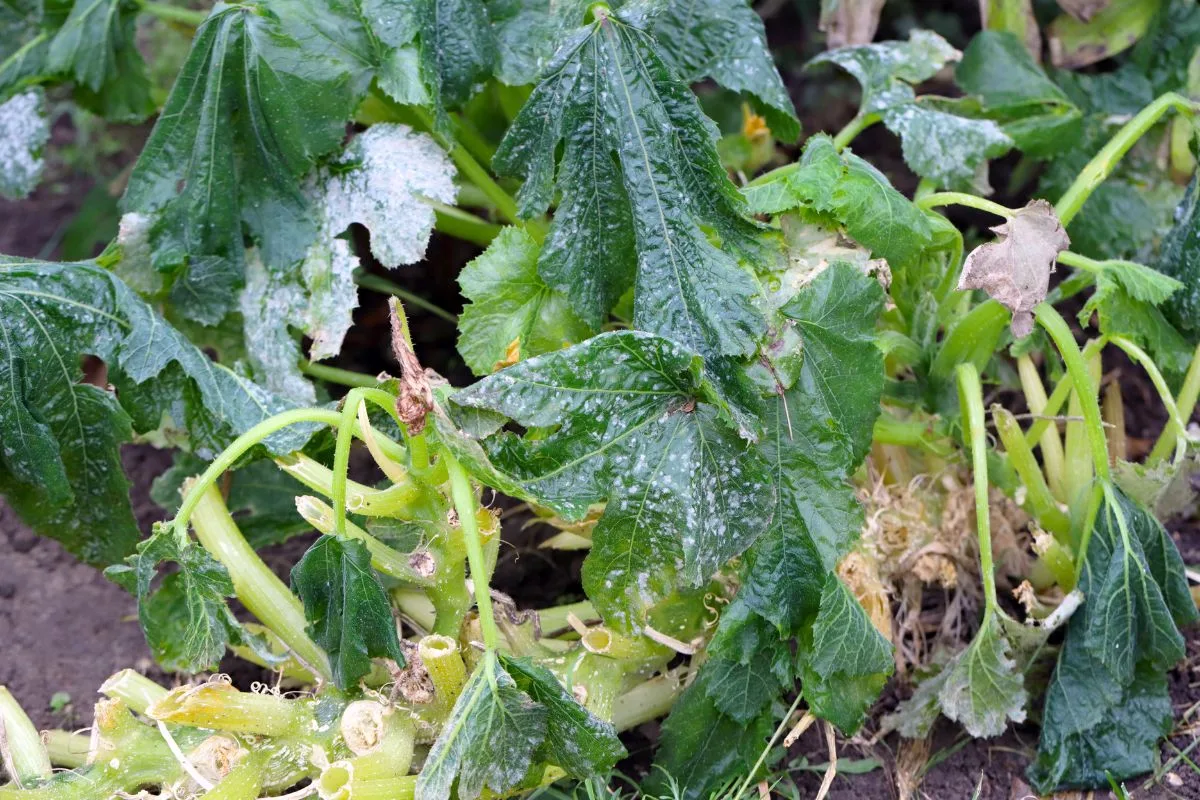
Southern blight (Sclerotium rolfsii) and white mold (Sclerotinia sclerotiorum) leave the most obvious fingerprints of any zucchini pathogen. Both produce dense white cottony growth on the stem and around the soil line.
The tell that separates them: Southern blight drops tan to reddish-brown pellets the size of mustard seeds. Sclerotinia produces larger black irregular sclerotia, sometimes inside the stem itself. Both survive in soil for 5 or more years, which makes cleanup as important as treatment.
Steps to contain the spread:
- Remove infected tissue and the top inch of soil around the crown
- Bag everything. Don't shake sclerotia loose into the bed
- Solarize the bed for 4 to 6 weeks with clear plastic during hot months
- Apply a Bacillus subtilis biofungicide to remaining plants
- Skip cucurbits, tomatoes, beans, and peppers in that bed next year
Aggregate university extension data shows untreated sclerotia can push infection rates above 40% the following season. Sanitation isn't optional here.
The Decision Tree: Save the Plant, Root a Cutting, or Pull It
Once you've named the culprit, the next choice is what to do with the plant. Three options, and the right one depends on how far the damage has spread.
Save the plant if the rot is localized to a single spot. The vine above it should still be firm and green, and the leaves should be turning back toward the sun after a cool night. Surgery or a fungicide drench has a fair chance here.
Root a cutting if the crown is gone but the upper vine is still healthy. Zucchini stems root readily at leaf nodes when buried in moist soil. You may lose 10 to 14 days of harvest, but you'll keep the plant.
Pull it if the ooze test came back positive, if the plant collapses again within 48 hours of treatment, or if you see sclerotia. Trying to save an infected plant risks the whole bed.
Step-by-Step Stem Surgery for a Borer-Infested Zucchini
Borer surgery sounds dramatic, but it's a five-minute job with a sharp knife. Do it in the morning while the plant is turgid.
- Sterilize your blade. Wipe a utility knife or scalpel with 70% isopropyl alcohol.
- Find the entry. Look for the frass hole. If you see multiple, work on each in turn.
- Slit the stem. Cut a shallow vertical slit, roughly 1 to 2 inches long, starting just above the frass and working upward. Slice only as deep as the outer layer.
- Extract the larva. Use tweezers or the blade tip to lift out every cream-colored grub. Check twice. There are often two or three.
- Close the wound. Press the stem back together. You don't need tape or wax.
- Mound moist soil. Cover the wound with 2 to 3 inches of damp soil. Keep it consistently moist for a week.
Watch for adventitious roots forming from the buried section within 7 to 10 days. That's the plant rescuing itself.
Rescuing the Plant by Burying Nodes for Adventitious Rooting
Zucchini has a hidden superpower. Any stem node in contact with moist soil will grow new roots. This is your rescue plan when the original crown is compromised but the vine above it is still healthy.
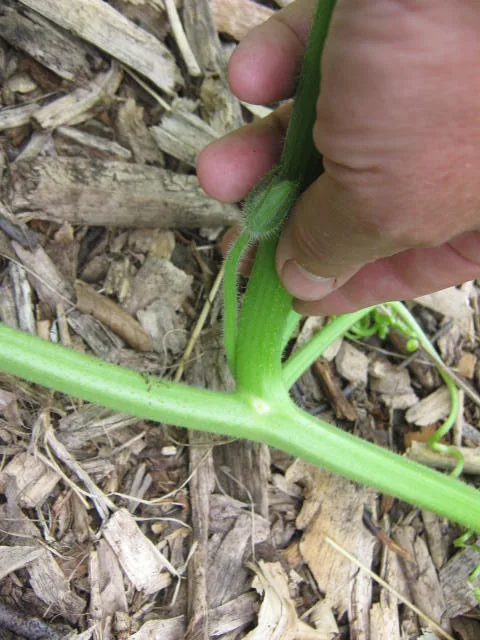
How to do it:
- Pick a healthy node 6 to 12 inches above the damaged area
- Nick the underside of the stem lightly with a clean blade to encourage rooting
- Bend the vine gently to lay that section on the soil surface
- Cover it with 2 inches of moist compost or garden soil
- Weight it with a small stone so it stays in contact
New roots typically appear within 10 to 14 days at soil temperatures of 70 to 80°F. Once you see fresh growth pushing from the buried section, you can cut the vine free from the dying crown. The plant now runs on its new root system, and fruiting often resumes within three weeks.
Watering, Mulch, and Airflow Fixes That Stop Rot from Spreading
Most crown rot cases trace back to three habits. Overhead watering, mulch piled against the stem, and crowded planting. Fix these and the pathogen loses its foothold.
Switch to drip irrigation or a soaker hose at the base. Water the soil, not the leaves, and do it in the morning so foliage dries fast. Aggregate extension data suggests morning-only watering reduces cucurbit foliar disease incidence by 30 to 50%.
Pull mulch back 3 to 4 inches from the crown so the stem stays dry. Straw is fine, wood chips are fine, but neither should touch the plant. Thin the canopy by removing lower shaded leaves.
Better airflow drops humidity around the crown, and that starves Fusarium, Phytophthora, and Sclerotinia of the wet conditions they need.
Copper, Bacillus subtilis, and Trichoderma: What Actually Works on Which Pathogen
The wrong product on the wrong pathogen wastes money and time. Match the treatment to the diagnosis.
| Product | Best Against | Weakest Against |
|---|---|---|
| Copper hydroxide | Phytophthora, some bacterial spread | Established borer, wilt |
| Bacillus subtilis | Fusarium, Sclerotinia, Southern blight | Bacterial wilt |
| Trichoderma harzianum | Root-zone Fusarium, Pythium | Foliar disease |
| Bt kurstaki | Squash vine borer larvae | Any fungal or bacterial disease |
Copper is protective, not curative, so apply it before the pathogen spreads. Bacillus subtilis and Trichoderma work best as preventive drenches at transplant and again 3 to 4 weeks later. All copper products carry re-entry intervals and pre-harvest intervals on the label. Read them before spraying anything you plan to eat.
Mistakes That Kill Zucchini Faster Than the Rot Itself
A few common reactions turn a treatable problem into a dead plant. Watch for these.
- Spraying fungicide on a borer. Copper does nothing to a caterpillar chewing through the stem interior.
- Watering more when leaves wilt. Wilt from bacterial wilt or root rot only gets worse with wetter soil.
- Piling soil on a mushy crown. That traps moisture and speeds the rot. Only mound soil over a clean surgical wound.
- Cutting with a dirty blade. Unsterilized tools spread pathogens plant to plant.
- Composting infected material. Home compost rarely hits temperatures that kill Sclerotinia sclerotia or Fusarium chlamydospores.
- Waiting to act. A borer larva can hollow six inches of stem in 72 hours. Same-day surgery saves plants.
When to Give Up: Signs the Crown Is Beyond Saving
Some plants are past rescue. Continuing to treat them wastes effort and risks spreading disease. Pull the plant when you see any of these signs.
- The crown is soft all the way around and pulls apart with light pressure
- The upper vine wilts and stays wilted for 48 hours after treatment
- The ooze test comes back positive at any point
- Multiple lesions appear along the vine within a week
- Sclerotia are visible in soil or inside the stem
Aggregate diagnostic data indicates once bacterial wilt is confirmed, or Phytophthora has reached the primary root system, recovery rates fall below 5%. Pull, bag, and bin the plant. Sanitize your tools with 70% isopropyl alcohol before touching another cucurbit.
Preventing a Repeat Next Season: Rotation, Row Covers, and Resistant Varieties
Prevention is where you actually win against these problems. Three tactics do most of the work.
Crop rotation. Don't plant zucchini, pumpkin, squash, cucumber, or melon in the same bed for at least three years. Per USDA integrated pest management guidance, a 3 to 4 year rotation breaks the life cycles of Fusarium, Phytophthora, and overwintering borer pupae.
Floating row covers. Cover plants from transplant until the first female flower opens. That blocks adult vine borers and cucumber beetles during the highest-risk 30 to 40 day window. Remove covers at first bloom so pollinators can reach the flowers.
Resistant or tolerant varieties.Cucurbita moschata types like 'Tromboncino' and 'Butternut' shrug off vine borer damage because their solid stems don't hollow out the same way. Grafting onto resistant rootstock is common in commercial cucurbit production and starting to reach home gardeners.
Finish the season with a hard cleanup. Pull every vine. Till the top 2 inches of soil to expose overwintering pupae to birds and frost, then refresh your mulch layer next spring.
Regional Notes: US Vine Borer Zones vs. UK Sclerotinia Pressure
Where you garden shapes the odds. Squash vine borer is a North American pest, common east of the Rockies from Ontario through Texas. It's largely absent from the UK, Ireland, and mainland Europe.
UK and Irish growers face different pressure. Cool wet summers push Sclerotinia white mold, Botrytis, and Pythium to the top of the list. Row covers still help, but the focus shifts to drainage, spacing, and biofungicide drenches rather than borer exclusion.
Frequently Asked Questions
Can I still eat zucchini from an infected plant?
Yes, if the fruit itself looks and smells normal. Bacterial wilt and vine borer don't produce toxins in the fruit. Skip any zucchini with visible rot, mold, or off odors, and wash the rest before use.
How long does borer surgery take to heal?
New adventitious roots usually appear at the buried wound in 7 to 10 days. Full recovery, with fresh flowering resuming, takes 2 to 3 weeks in warm soil.
Will neem oil stop a rotted zucchini stem?
No. Neem has limited effect on borers already inside the stem, and none on established fungal or bacterial crown rot. It's a mild preventive at best.
Can I replant zucchini in the same spot next year?
Not if the bed had bacterial wilt, Fusarium, Phytophthora, or Sclerotinia. Rotate cucurbits out for at least 3 years and choose a well-drained spot.
Your Quick Decision Guide by Symptom
- Frass at base → borer surgery, mound soil, watch for adventitious roots
- Stringy ooze from cut stem → pull the plant, protect neighbors
- White cottony growth with pellets → remove tissue, solarize, rotate out
- Water-soaked lesion at soil line → prune, drench with copper or Trichoderma, cut watering
- Healthy vine above dead crown → bury a node, root a cutting, cut free once new roots take

Similar Posts