Garden Hose Sizes: Is Yours 3/4 or 5/8 Inch?
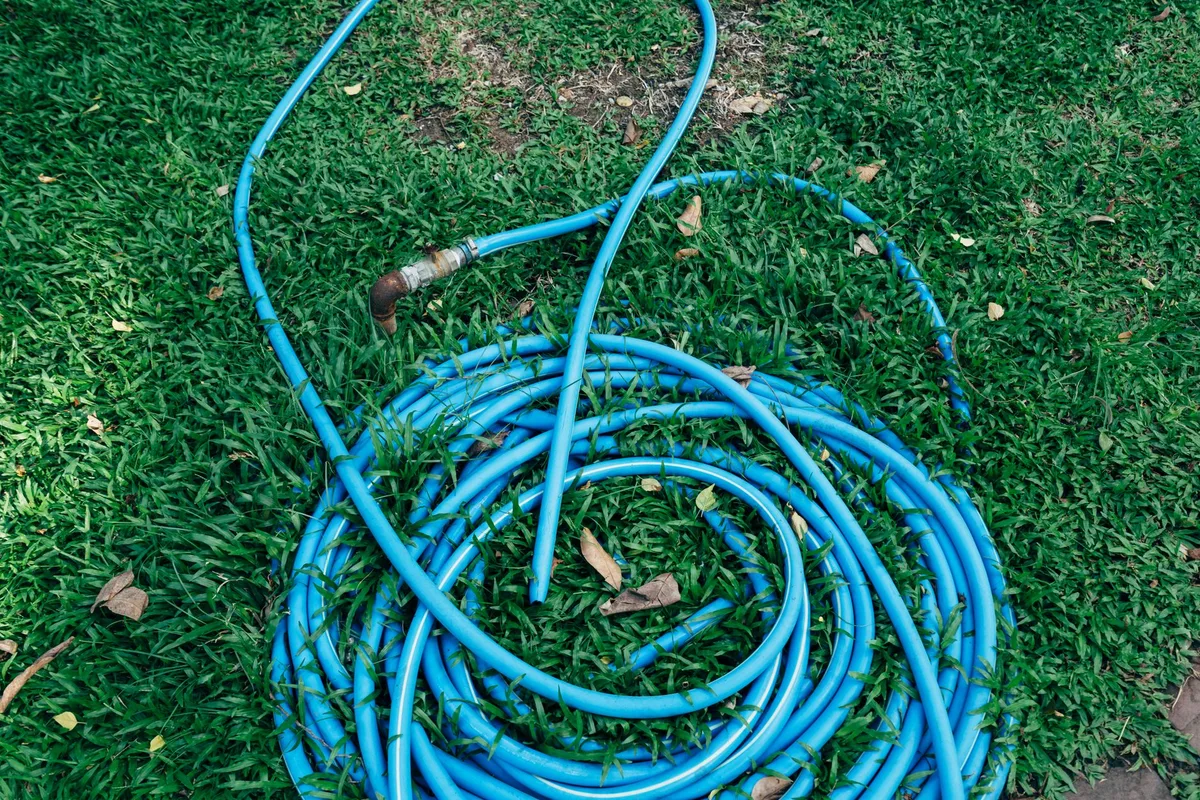
If you've stood in the hardware aisle wondering whether garden hoses are 3/4 or 5/8, here's the quick truth. Most standard garden hoses sold for home use are 5/8 inch. That number refers to the inside width of the hose, not the fitting on the end.
This one detail clears up most of the confusion people run into.
Per ASME B1.20.7, the threaded connector on nearly every consumer hose is 3/4 inch garden hose thread. That's exactly why folks assume their hose is 3/4 inch when the water tube itself is 5/8. As of 2026, 5/8 inch is still the most common size on store shelves.
Let's break down what each number means and how to size a hose the right way.
The Short Answer: Are Garden Hoses 3/4 or 5/8?
Most garden hoses are 5/8 inch, not 3/4 inch. The number measures the hose's inner diameter. The 3/4 inch figure usually describes the threaded fitting.
That thread size stays the same across most hoses. So a 5/8 inch hose still uses a 3/4 inch connector.
Why People Mix Up Hose Diameter and Thread Size
The mix-up comes from two different measurements sharing one product. One number is the diameter of the water tube. The other is the size of the screw-on fitting.
They don't have to match, and usually they don't.
Nearly every garden hose in North America ends in a 3/4 inch garden hose thread, or GHT. That's a fixed standard so any hose connects to any spigot or nozzle. The tube feeding water through the hose, though, can be 1/2, 5/8, or 3/4 inch wide.
So when someone reads "3/4 inch" on a package, they often assume it's the hose size. In most cases, that's the thread. The actual hose is 5/8 inch.
If you've ever screwed two random hoses together and they fit perfectly, that universal thread is why.
A quick way to keep it straight:
- Inner diameter (ID) = how much water the hose carries
- Thread size (GHT) = how it screws onto taps and nozzles
- These are two separate specs, even when both mention fractions
What the "3/4" and "5/8" Numbers Actually Measure
The 3/4 and 5/8 figures both describe internal diameter, the width of the water channel inside the hose. They're not about the outside of the hose or the fitting. A bigger inner diameter carries more water per minute.
Inner Diameter vs. Outer Diameter
Inner diameter is the measurement that matters for flow. It's the open space inside the tube where water travels. A 5/8 inch hose has a 5/8 inch inner channel, regardless of how thick the walls are.
Outer diameter is different. It includes the rubber or vinyl walls wrapped around that channel. A heavy-duty 5/8 inch hose with thick walls can look chunkier than a cheap 3/4 inch hose.
That's why you can't judge size by eyeballing the outside.
Wall thickness affects durability and kink resistance, not water volume. Two hoses with the same 5/8 inch ID can feel completely different in your hands. The one with thicker walls simply lasts longer and resists crushing.
Why the Fitting Is Always 3/4" GHT
The fitting is standardized so everything stays compatible. Garden hose thread is 3/4 inch with 11.5 threads per inch. This applies whether your hose tube is 1/2, 5/8, or 3/4 inch inside.
Standards bodies like ASME publish the specs that keep this consistent across brands. Because of that, your sprinkler, nozzle, and quick-connect all thread onto the same coupling. It's one of the few plumbing sizes that just works everywhere.
Keeping your watering gear compatible matters just as much when you're feeding water to raised beds or a bit of framed flower-bed planting at the edge of the lawn.
How to Tell What Size Hose You Already Have
You can confirm your hose size in about a minute. Check the printed label first, then measure the opening if the print has worn off. Both methods are reliable.
Check the Printed Specs
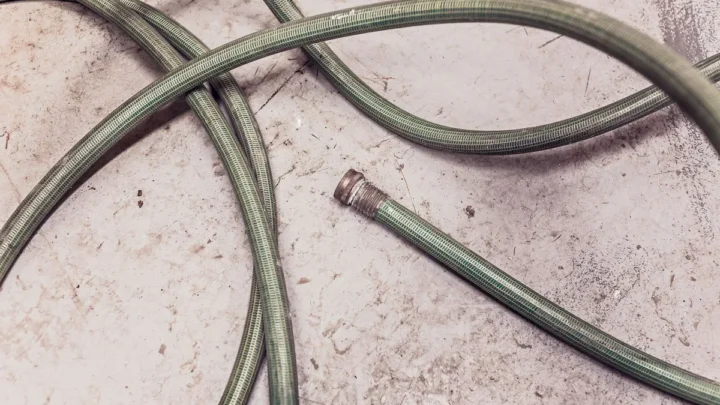
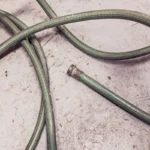
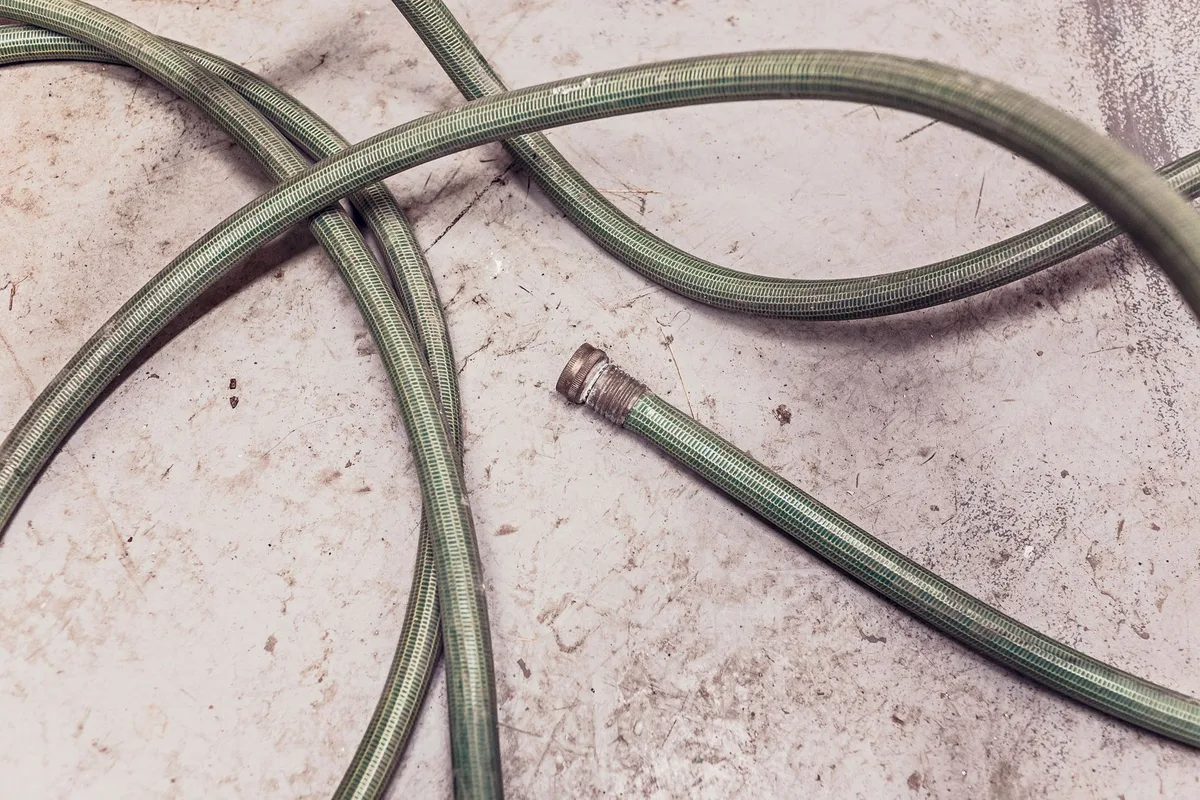
Most hoses print the diameter and length right on the outer wall. Look near either end or every few feet along the hose. You'll usually see something like "5/8 in. x 50 ft."
If the hose is new, the packaging or the store listing lists the same spec. Manufacturer specs confirm the inner diameter and length together. That's the fastest route when the printing is still legible.
Measure the Inner Diameter Yourself
If the print has faded, measure the open end. Here's how to do it in a few quick steps:
- Look straight into the cut end of the hose.
- Place a ruler or tape across the inside opening, edge to edge.
- Measure only the open water channel, not the rubber walls.
- Match your number: 1/2 inch, 5/8 inch, or 3/4 inch.
A coin trick helps too. A US nickel is about 5/8 inch wide. Hold it against the opening.
If the inner hole roughly matches the nickel, you've got a 5/8 inch hose. This is handy whether you're watering the yard or topping off your indoor greenery with a short hose run from the tap.
Common Garden Hose Diameters and Their Flow Rates
Diameter changes how much water moves through the hose. A wider inner channel delivers more gallons per minute at the same pressure. That's the whole reason people size up for big jobs.
Here's how the three common sizes stack up at typical household pressure of 40 to 60 PSI:
| Inner Diameter | Approx. Flow Rate | Weight & Handling | Best Fit |
|---|---|---|---|
| 1/2 inch | Around 9 GPM | Lightest, easy to coil | Short runs, light watering, containers |
| 5/8 inch | Around 17 GPM | Balanced, most common | Everyday lawn and garden use |
| 3/4 inch | Around 23 GPM | Heaviest, bulkier | Long runs, high-flow tasks, filling pools |
These flow numbers are approximate and shift with your water pressure and hose length. The pattern holds, though. Every step up in diameter roughly boosts your flow.
A couple of practical takeaways:
- 5/8 inch is the sweet spot for most homes. Good flow, manageable weight.
- 3/4 inch shines on long runs where pressure drop is a problem.
- 1/2 inch is fine for quick jobs and tight spaces, less so for sprinklers.
Flow only matters if it reaches the far end with pressure to spare. That's where hose length comes in, which we'll get into next. If you're planning watering around a cottage-style garden layout, pairing the right diameter with the right length keeps every bed getting the flow it needs.
5/8 vs 3/4 vs 1/2: Which Diameter Fits Your Situation
The right size depends on your yard, your water pressure, and the job. For most homes, go 5/8 inch. If you're stretching water a long way or moving high volume, size up.
When 5/8" Is the Right Call
Pick 5/8 inch for standard lawn and garden watering. It carries around 17 GPM, enough to run sprinklers and nozzles well. It's light enough to drag around without wearing you out.
This is the size aggregate reviews point to as the everyday default. If your run is 25 to 75 feet and pressure is normal, it rarely disappoints. For most readers, this is the safe pick.
When to Size Up to 3/4"
Choose 3/4 inch when flow and distance matter more than weight. Its wider channel pushes roughly 23 GPM and fights pressure loss over long runs. That's a real advantage past 100 feet.
Good times to go 3/4 inch:
- Filling pools, ponds, or stock tanks fast
- Running water 100-plus feet to the back of a large property
- Feeding multiple sprinklers or a pressure washer
- Commercial or contractor work
The trade-off is weight. A 3/4 inch hose full of water gets heavy and stiff. Screening off a work zone behind a wire-panel garden divider can keep a bulky contractor hose from cluttering the yard.
When 1/2" Is Enough
Go 1/2 inch for light, short-distance watering. It's the lightest option and coils up easily for storage. Think patio pots, hanging baskets, and small beds.
At around 9 GPM, it can starve sprinklers and high-flow nozzles. Keep runs short, under 50 feet ideally. For quick hand-watering, it's perfectly fine.
How Hose Length and Diameter Affect Water Pressure
Longer hoses lose pressure, and narrower hoses lose it faster. This is friction loss, the drag water feels rubbing against the inner walls. Every foot of hose bleeds off a little pressure.
Diameter is your best defense. A wider inner channel means less friction per gallon. That's why a 3/4 inch hose holds pressure better over 100 feet than a 5/8 inch one.
Here's the practical rule for combining the two:
- Short run (under 50 ft): almost any diameter holds pressure fine
- Medium run (50 to 100 ft): 5/8 inch keeps good flow
- Long run (over 100 ft): step up to 3/4 inch to fight pressure drop
Coupling hoses together makes it worse. Two 50 foot hoses lose more pressure than one 100 foot hose because of the extra fitting. If your sprinkler weakens at the far end, length is usually the culprit.
Sizing up the diameter often fixes it.
Mistakes That Lead to Weak Flow and Leaky Connections
Most flow and leak problems trace back to a handful of avoidable errors. The fixes are simple once you know where to look. Here are the ones that come up most in verified buyer feedback.
- Measuring the outer diameter instead of the inner channel. Only the inside width sets your flow.
- Buying a long 1/2 inch hose for sprinklers. It can't deliver the volume they need.
- Chaining several hoses together. Each added coupling drops pressure and adds leak points.
- Overtightening fittings. Crushing the washer causes leaks instead of stopping them.
- Ignoring a worn rubber washer. A cracked washer is the top cause of drips at the tap.
Leaks at the connection usually aren't the thread's fault. Nine times out of ten it's a bad or missing washer. Swap in a fresh rubber washer before you blame the hose.
Kinks are another silent flow killer. A hose folded at a sharp angle chokes off water completely. Route hoses in gentle curves and store them coiled, not bent.
Matching Your Hose to the Spigot and Fittings
Almost every outdoor spigot and hose in North America uses 3/4 inch GHT, so they thread together without adapters. Your hose, nozzle, sprinkler, and splitter all share this standard. That's the compatibility we covered earlier paying off.
Watch out for one common trap: pipe thread is not hose thread. GHT and NPT (national pipe thread) look similar but don't match. To connect a hose to indoor plumbing or an irrigation line, you'll need a GHT-to-NPT adapter.
A few quick pointers for clean connections:
- Confirm both sides are 3/4 inch GHT before forcing anything.
- Keep a rubber washer seated in every female fitting.
- Use hand-tight pressure, then a slight nudge, no wrench needed.
- Add a quick-connect set if you swap nozzles often.
Brass fittings outlast plastic ones and resist cross-threading. If your hose ends are dented or leaking, a replacement brass coupling is a cheap fix. It restores a tight seal without buying a whole new hose.
Tidy hose management around beds also keeps things looking sharp, much like the tricks in these screening ideas for bare fencing.
Drinking-Water Safety and Hose Ratings
Standard garden hoses are not safe for drinking water. Many are labeled "not for potable use" because the materials can leach compounds into the water. This matters if you fill pet bowls, kiddie pools, or water bottles.
For drinking-safe water, look for a hose certified to NSF/ANSI 61. These "drinking water safe" or "potable" hoses are lead-free and made for RVs, marine use, and camping. The U.S.
Environmental Protection Agency backs safe drinking water practices under the Safe Drinking Water Act, and a certified hose is the easy way to comply at home.
A couple of safety habits worth keeping:
- Let a standard hose run a few seconds before filling anything anyone will drink.
- Don't leave a filled hose baking in the sun, then drink from it. Heat speeds up leaching.
- Store hoses drained in freezing weather. Trapped water can freeze, expand, and burst the wall.
Check the PSI rating too. Most quality hoses handle 200 to 500-plus PSI burst pressure, well above household supply. A cracked or bulging hose is a burst risk and should be retired.
Pro Tips for Picking the Right Size the First Time
Buy for your longest run and heaviest task, not your average one. It's easier to manage a slightly bigger hose than to fight weak flow later. Sizing up once beats buying twice.
- Default to 5/8 inch unless you have a clear reason not to.
- Match length to your yard, then round down. Extra hose just adds pressure loss and clutter.
- Choose rubber over vinyl for durability, or a hybrid polymer for lighter weight.
- Store hoses out of direct sun. UV breaks down the wall over time.
- Keep a spare rubber washer or two on hand for instant leak fixes.
One more trick: keep a short 1/2 inch hose for containers and a longer 5/8 inch for the yard. Two right-sized hoses beat one compromise hose. Your back will thank you.
FAQs About Garden Hose Sizes
Is a standard garden hose 5/8 or 3/4 inch?
A standard garden hose is 5/8 inch on the inside. The 3/4 inch you often see refers to the threaded fitting, not the hose tube. Both numbers can appear on the same hose, which causes most of the confusion.
Does hose diameter really change water flow?
Yes, quite a bit. A 5/8 inch hose flows around 17 GPM, while a 3/4 inch flows about 23 GPM at the same pressure. Wider inner diameter means less friction and more water at the far end.
Will a 5/8 inch hose fit a 3/4 inch fitting?
Yes. Nearly all consumer hoses use the same 3/4 inch garden hose thread regardless of inner diameter. So a 5/8 inch hose screws onto standard spigots, nozzles, and sprinklers with no adapter needed.
How do I measure my hose diameter?
Look into the cut end and measure the inner opening across, not the outer wall. Match your number to 1/2, 5/8, or 3/4 inch. A US nickel is roughly 5/8 inch wide and makes a handy quick check.
When should I choose a 3/4 inch hose?
Pick 3/4 inch for long runs over 100 feet or high-volume jobs like filling pools. It holds pressure better across distance. Just expect a heavier, stiffer hose that's harder to coil.
Are all garden hoses safe for drinking water?
No. Standard hoses often carry a "not for potable use" label. For drinking-safe water, use a hose certified to NSF/ANSI 61, sold as a drinking-water or RV hose.
Picking Your Hose Size: Quick Decision Guide
Run through these quick if/then calls and you'll land on the right size fast.
- If you water a normal yard within 75 feet, then choose 5/8 inch.
- If your run tops 100 feet or you fill pools, then step up to 3/4 inch.
- If you only water pots and small beds nearby, then 1/2 inch is plenty.
- If sprinklers weaken at the end, then go wider or shorten the run.
- If you fill drinking bowls or bottles, then buy an NSF/ANSI 61 certified hose.
Here's the whole thing in one line. The hose tube is almost always 5/8 inch, the thread is almost always 3/4 inch GHT, and you size up only when distance or volume demands it.
Get those two numbers straight and you'll never second-guess a hose purchase again. Measure the inside, trust the standard thread, and match the diameter to the job. That's all it takes to water smart.

Similar Posts