Garden Hose Sizing: Is It Measured by ID or OD?
If you've ever stood in the hardware aisle wondering whether garden hoses are measured by ID or OD, here's the short version: it's the ID. Garden hoses are sized by their inside diameter, meaning the width of the water channel running through the middle. The outside measurement changes with wall thickness, so it's a poor way to label a hose.
Get the ID right and your fittings, menders, and reels all line up.
That one detail trips up a lot of people at the checkout. The most common home hose measures 5/8 inch on the inside, and as of 2026 that's still the default residential size in the US. Manufacturer specifications confirm the printed size almost always refers to bore, not the outer skin.
Let's break down what that means and how to check the hose you already own.
Quick Answer
Garden hoses are measured by ID, the inside diameter. That number describes the internal bore where water flows. Common sizes are 1/2 inch, 5/8 inch, and 3/4 inch.
OD, the outside diameter, varies with wall thickness and material. Fittings and repair couplings are matched to ID, not OD.
What ID and OD Actually Mean on a Hose
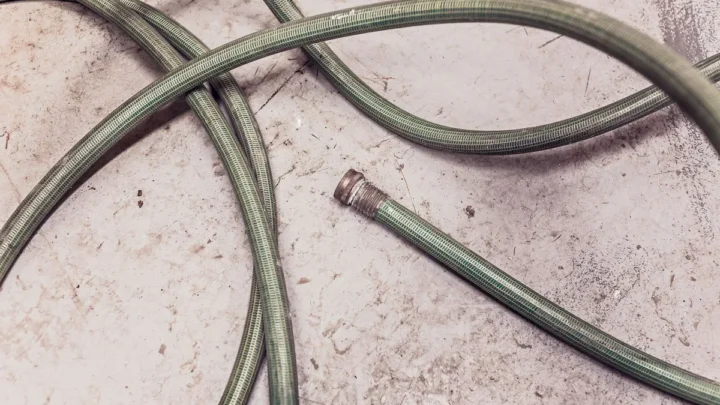
ID stands for inside diameter. It's the distance straight across the open hole at the cut end of the hose. Picture a tube sliced clean in half.
The gap in the middle is your ID.
OD stands for outside diameter. That's the full width of the hose, wall included. Two hoses can share the same ID but have very different ODs.
A cheap thin-wall hose and a heavy-duty rubber one both flow 5/8 inch of water, yet the rubber one feels much fatter in your hand.
Here's the quick contrast:
| Term | What it measures | Why it matters |
|---|---|---|
| ID (inside diameter) | The water channel width | Sets flow and fitting size |
| OD (outside diameter) | The full hose width | Changes with wall thickness only |
So when a package says 5/8 inch, that's the bore. The outside might run closer to 7/8 inch or more, depending on the build. A cross-section diagram makes this obvious: the inner circle is what counts.
Why Garden Hoses Are Sized by Inside Diameter
Inside diameter is what controls your water. A wider bore moves more gallons per minute at the same pressure. That's why the industry settled on ID as the standard label decades ago.
Think about it from the fitting side too. Every barbed coupling, mender, and quick-connect has to slide into the bore. Manufacturers build those parts to match the inside, so ID keeps everything interchangeable.
OD would be a mess as a standard. Wall thickness swings with material and grade, so the outer size drifts all over the place. If hoses were sold by OD, a "3/4 inch" hose from one brand wouldn't match a "3/4 inch" fitting from another.
Sizing by the bore keeps the whole system honest, whether you're watering a raised bed or feeding a flower-bed border.
The Standard Garden Hose Sizes: 1/2", 5/8", and 3/4"
Residential garden hoses come in three main inside diameters. Each one suits a different job, and the difference in flow is bigger than it looks.
- 1/2 inch: Lightweight and easy to coil. Best for small gardens, patio pots, and short runs. Lower flow, so it struggles over long distances.
- 5/8 inch: The all-rounder and the most common home size. Good balance of flow, weight, and price. This is what most nozzles and reels expect.
- 3/4 inch: The high-flow option. Common with commercial crews and long hose runs. Heavier and pricier, but it moves serious volume.
Here's how they stack up:
| Inside diameter | Typical use | Relative flow | Weight and handling |
|---|---|---|---|
| 1/2 inch | Small gardens, containers | Lowest | Lightest, easiest to coil |
| 5/8 inch | General home use | Medium | Balanced |
| 3/4 inch | Long runs, commercial | Highest | Heaviest, stiffer |
Length matters as much as diameter. A 5/8 inch hose at 100 feet loses more pressure than the same hose at 25 feet. If you're reaching the far corner of a big yard or a boundary planting, step up to 3/4 inch or keep the run short.
The same logic helps when you're planning irrigation around a cottage-style garden layout.
How to Tell What Size Hose You Already Have
The fastest way is to read the hose itself. Most manufacturers print the size right on the jacket, near the coupling. Look for something like "5/8 in" stamped into the rubber or printed along the length.
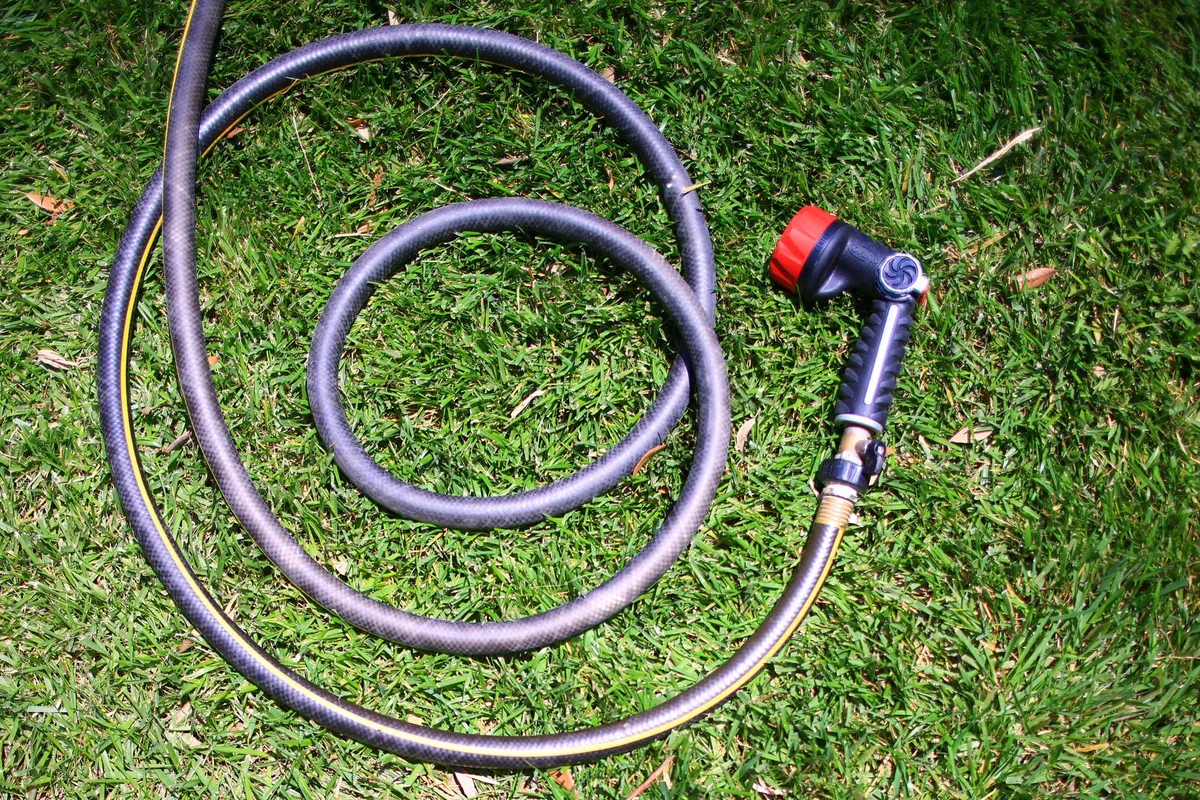
No printing left? Measure the bore.
- Uncouple the hose and look at the cut end.
- Hold a ruler or tape across the open hole, edge to edge.
- Measure the inside gap only, not the outer wall.
- Round to the nearest common size: 1/2, 5/8, or 3/4 inch.
A caliper gives a sharper reading if you have one. Set the inside jaws against the bore and read the number. In metric, 1/2 inch is about 13 mm, 5/8 inch is about 16 mm, and 3/4 inch is about 19 mm.
Don't measure the OD and assume that's your size. The outer wall can add a quarter inch or more, which pushes you into the wrong fitting. Standard US hose threads follow the ASME B1.20.7 spec, and you can read more about American standards work at ASME's official site.
Measure the bore, match the ID, and your parts will fit the first time.
Where Hose Thread Size Fits In (and Why It's Not the Diameter)
Hose thread size is a separate spec from bore size. The standard US connection is Garden Hose Thread, or GHT, sometimes written as NH. It runs 3/4 inch diameter with 11.5 threads per inch, no matter whether your hose is 1/2, 5/8, or 3/4 inch inside.
That's why a 1/2 inch hose and a 3/4 inch hose both screw onto the same spigot. The bore changes, the thread stays the same. So when a nozzle box says "fits 3/4 inch GHT," it's talking about the coupling, not the water channel.
People mix these up constantly. If a fitting won't thread on, the problem is usually GHT versus a pipe thread, not the hose diameter. Match the thread standard first, then worry about bore for barbed repairs.
Common Mix-Ups That Lead to the Wrong Hose or Fitting
Most sizing mistakes come from measuring the wrong part. Here are the ones our research sees again and again.
- Measuring the OD and buying that size. The outer wall adds width, so you end up with a mender that's too big.
- Confusing thread size with bore. GHT is always 3/4 inch. That does not mean the hose is 3/4 inch inside.
- Grabbing an NPT fitting for a GHT hose. Pipe thread and hose thread look similar but won't seal together.
- Assuming all "5/8 inch" hoses feel identical. They flow the same, but wall thickness and stiffness vary a lot.
If a barbed coupling slides in loose, you sized up from OD by mistake. Drop to the next size down and check the bore again. A snug barb that needs a gentle push is the right fit.
Quick-connect adapters are built around GHT, so they clip onto almost any home hose. The connector doesn't care about your inside diameter at all.
Why the Right ID Changes Your Water Flow and Pressure
Inside diameter drives volume more than anything else on the hose. A wider bore carries more water per second at the same tap pressure. Even a small jump in ID makes a real difference over distance.
Move from 1/2 inch to 5/8 inch and flow climbs noticeably. Move up to 3/4 inch and it climbs again. That's why sprinkler systems and long runs favor the bigger bores.
Length works against you, though. Every extra foot adds friction and bleeds off pressure. A short 5/8 inch hose can out-deliver a long one of the same size.
Here's a simple way to match bore to the job:
| Situation | Better ID choice | Why |
|---|---|---|
| Container plants, small beds | 1/2 inch | Light, enough flow for short reach |
| General yard, most homes | 5/8 inch | Solid flow without the weight |
| Long runs, multiple sprinklers | 3/4 inch | Holds pressure over distance |
If your sprinkler sputters at the far end of the yard, the bore is often too small for the run. Sizing up usually fixes weak coverage faster than cranking the tap. Good flow also keeps a soaker line steady when you're watering along a privacy planting screen.
Same ID, Different OD: What Wall Thickness Tells You
Wall thickness is the reason two hoses with the same bore feel so different. The extra material sits between the inner channel and the outer skin. More wall means a bigger OD, even when the flow stays the same.
Thicker walls usually mean tougher hose. You get better kink resistance, higher burst pressure, and longer life outdoors. The trade-off is weight and stiffness, which make coiling harder.
Thin-wall hoses are lighter and cheaper. They kink more easily and wear out faster in sun and heat. For light patio duty they're fine.
For daily use, a thicker rubber or reinforced hose holds up better.
A quick read on wall thickness:
- Thin wall: Light, budget-friendly, kinks and cracks sooner.
- Medium wall: Common on 5/8 inch hoses, decent all-round durability.
- Heavy wall (rubber or reinforced): Fat OD, high burst pressure, best lifespan.
So when you compare hoses of the same ID, the OD is really telling you about build quality. A chunkier hose is usually the more durable pick, not a wider water path.
Matching a Repair Coupling or Fitting to Your Hose
Match repair parts to the inside diameter, always. Barbed menders, splice couplings, and quick-connects are sized to slide into the bore. Get the ID right and the barb seats snugly for a leak-free hold.
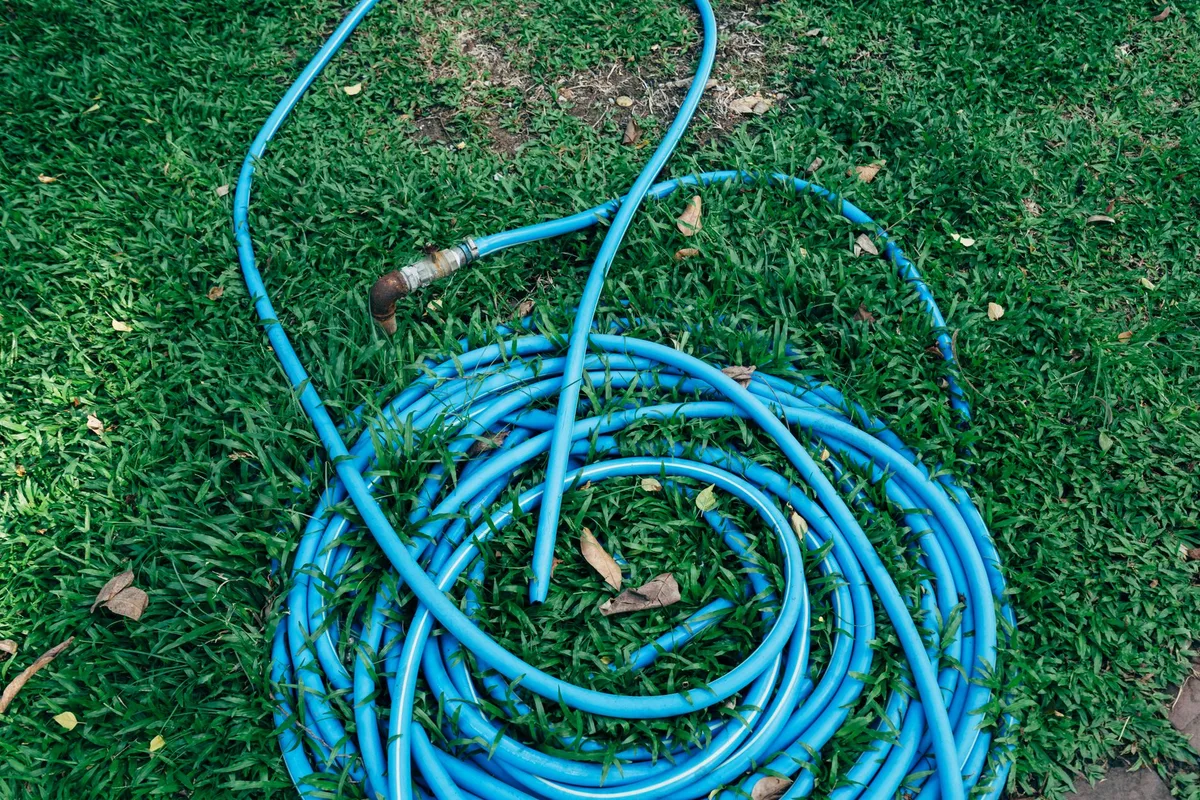
Here's the clean repair flow for a cut or split hose:
- Cut out the damaged section with a sharp knife, square across.
- Check your bore size: 1/2, 5/8, or 3/4 inch.
- Buy a barbed mender that matches that ID.
- Push the hose onto the barbs, warming stiff hose in hot water first if needed.
- Tighten the clamps or the compression collar until snug.
Two fittings to know. A barbed mender needs clamps and matches the ID. A compression fitting grips the outer wall and is a bit more forgiving on size.
Both work, so pick whichever your hose and clamps suit.
If a repair still weeps after tightening, the barb size is usually off. A leak at the collar means the ID is too large for the fitting. Step down one size and the seal should hold.
Garden Hose Sizing vs. Pipe and Industrial Hose Sizing
Garden hoses and pipe both use inch labels, but the systems don't match. Garden hoses are sized by ID with a fixed GHT connection. Pipe uses nominal pipe size and NPT threads, which are tapered to seal under pressure.
That's why a garden hose won't screw straight onto a threaded pipe. GHT is straight and gasket-sealed. NPT is tapered and metal-to-metal.
You need an adapter to cross between them.
Industrial and hydraulic hoses go further still. They're often sized in dash numbers, where each dash equals 1/16 inch of ID. A "dash 8" hose means 8/16, so 1/2 inch bore.
Home gardeners rarely touch these, but it helps to know the labels differ.
| System | Sized by | Thread type |
|---|---|---|
| Garden hose | Inside diameter | GHT (3/4 in, 11.5 TPI) |
| Household pipe | Nominal pipe size | NPT (tapered) |
| Industrial hose | Dash size (1/16 in units) | Varies by application |
Pro Tips for Buying the Right Size the First Time
A little prep saves a return trip. These are the habits that keep sizing simple.
- Check the printed size before you shop. It's usually near the coupling.
- If it's worn off, measure the bore and round to 1/2, 5/8, or 3/4 inch.
- Match fittings to ID, and confirm the thread is GHT for anything that screws on.
- Pick 5/8 inch for general use unless you have a long run or heavy sprinkler load.
- Compare wall thickness, not just bore, when you want durability.
Keep a spare barbed mender in your size on the shelf. A small split then takes five minutes to fix instead of a hardware run. For more seasonal upkeep ideas, our garden care guides cover the small jobs that keep gear lasting.
Watering delicate plants? Flow and pressure matter there too. A gentler 1/2 inch hose suits tender beds and container and houseplant care better than a blasting 3/4 inch line.
Frequently Asked Questions
Are garden hoses measured by inside or outside diameter?
Inside diameter. The printed size, like 5/8 inch, refers to the bore where water flows. Outside diameter changes with wall thickness and material, so it's never used as the standard label.
Match hoses and fittings by ID for a proper fit.
What is the most common garden hose size?
5/8 inch inside diameter is the most common home size. It balances good flow with manageable weight and works with standard nozzles and reels. 1/2 inch suits small gardens, and 3/4 inch handles long runs or commercial watering with higher volume.
Does garden hose thread size match the hose diameter?
No. Garden Hose Thread is a fixed standard at 3/4 inch with 11.5 threads per inch. It stays the same whether your hose is 1/2, 5/8, or 3/4 inch inside.
That's why hoses of different bores all fit the same spigot and nozzles.
How do I measure my garden hose diameter?
Look at the printed size on the jacket first. If it's gone, hold a ruler across the open cut end and measure the inside gap only. Round to the nearest common size.
In metric, that's roughly 13 mm, 16 mm, or 19 mm.
Will a repair fitting size match the OD or ID?
Barbed repair couplings match the inside diameter. The barbs slide into the bore, so ID is the number you need. Compression fittings grip the outer wall and are more forgiving on size.
If a repair leaks, the barb size is usually wrong for the bore.
The Bottom Line on Measuring Your Garden Hose
Size by the bore and you'll rarely go wrong. The inside diameter sets your flow, your fittings, and your repair parts, so that's the number to trust. The outside width only tells you about wall thickness and build quality.
Keep it simple at the store. Read the printed size, or measure the open end and round to 1/2, 5/8, or 3/4 inch. Confirm the connection is GHT for anything that threads on.
Do that, and your nozzles seat, your menders hold, and your sprinklers get the pressure they need. One quick measurement of the inside is all it takes.

Similar Posts