Are Garden Hoses Recyclable? What You Need to Know
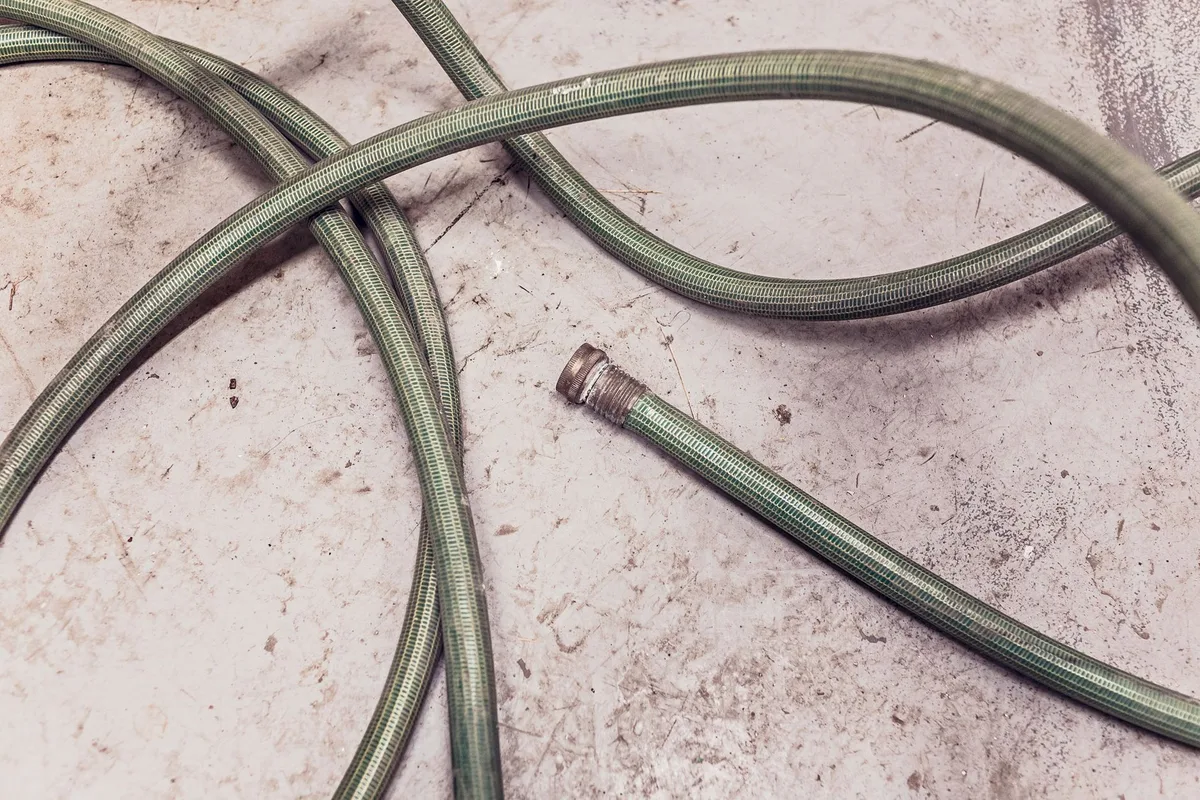
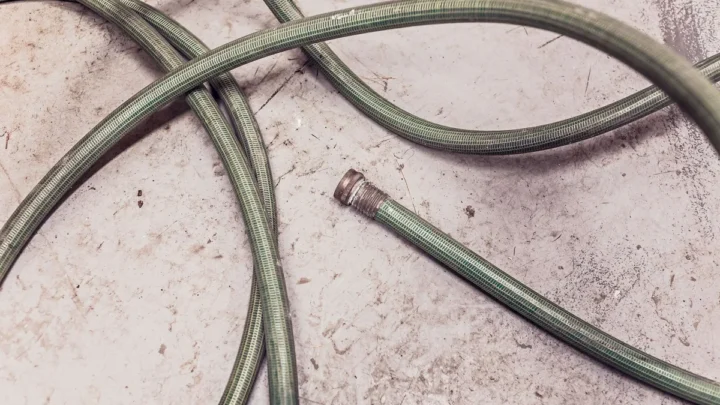
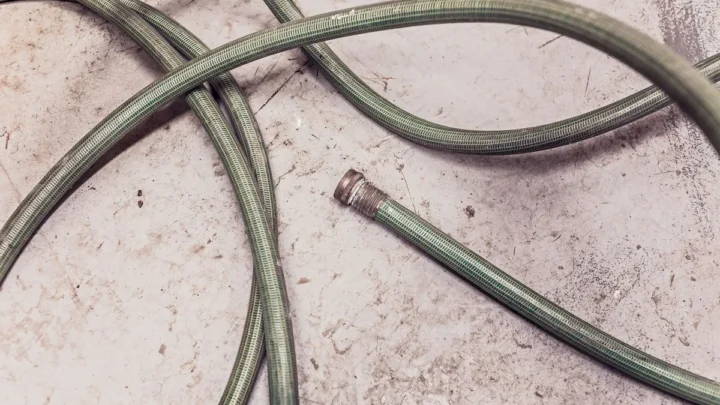
You've got a cracked, kinked hose sitting in the corner of the shed, and you're wondering if it can just go in the blue bin. Here's the honest answer to whether garden hoses are recyclable: not through your curbside collection. Hoses are one of the most common items people toss in hopefully, only to have them pulled straight back out.
That doesn't mean the landfill is your only move, though.
Garden hoses are what the recycling trade calls "tanglers." They wrap around the spinning screens at a Material Recovery Facility (MRF) and can bring the whole sorting line to a halt. As of 2026, most single-stream programs still won't accept them. But once you know what your hose is actually made of, you've got real options for keeping it out of the ground.
Quick Answer
Garden hoses are not recyclable in curbside bins. They tangle and jam the machines at sorting facilities. Most councils and municipalities reject them outright.
You can recycle the brass or aluminum fittings at a scrap yard. The hose body itself usually needs reuse, a specialty program, or the trash.
Why Garden Hoses Get Rejected From Curbside Bins
The problem isn't the material. It's the shape. A long, flexible hose behaves exactly like a rope inside a recycling plant.
MRFs use fast-spinning disc screens to separate paper, plastic, and glass. Hoses, cords, wires, and old string lights wrap around those spinning shafts. When that happens, a worker has to climb in and cut them free by hand.
That's lost time, lost money, and a real safety hazard.
The U.S. Environmental Protection Agency's guidance on recycling basics makes clear that tanglers don't belong in household bins. Tossing one in anyway is called wishcycling.
It feels responsible, but it often contaminates the whole load.
There's a second issue too. Most hoses are built from more than one material bonded together. Separating a vinyl outer, a mesh middle, and a rubber liner isn't economical, so recyclers won't take them.
Figure Out What Your Hose Is Made Of First
Before you decide anything, you need to know your hose type. The material drives every choice that follows. Here's how to tell them apart quickly.
Rubber, Vinyl (PVC), and Reinforced Hybrids
Give the hose a squeeze and a bend. That tells you most of what you need.
- Rubber hose: heavy, matte, and firm. It springs back and resists kinking. Rubber is the easiest type to reuse and the most likely to be accepted by a scrap or rubber program.
- Vinyl (PVC) hose: lightweight, shiny, and cheap. PVC carries resin code #3, which almost no curbside program accepts. These kink fast and split with age.
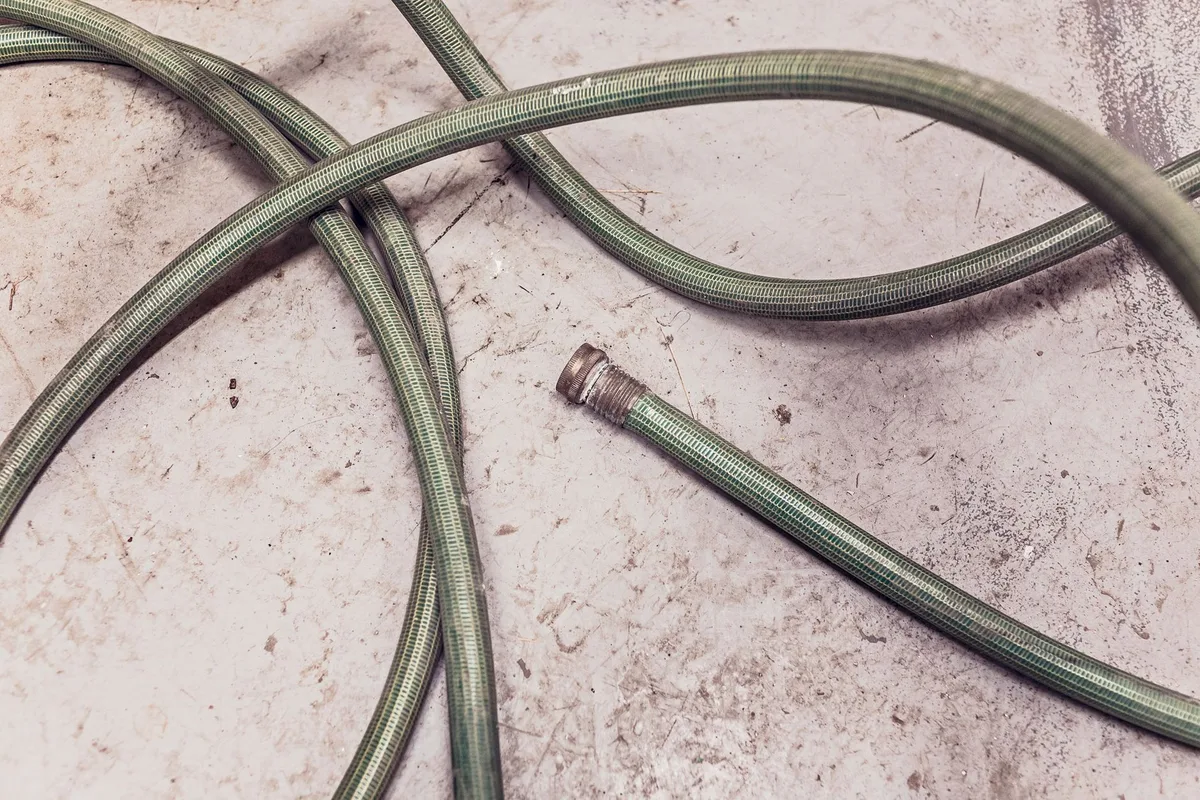
- Reinforced hybrid hose: a middle layer of woven mesh between plastic. Cut the end and you'll see a crisscross pattern. The bonded layers make it impossible to recycle whole.
Expandable and Soaker Hoses
Expandable "pocket" hoses use a stretchy inner tube inside a fabric sleeve. That's two very different materials, so they're a landfill or reuse item, never curbside.
Soaker hoses are often made from recycled rubber and tyre crumb already. If yours still holds together, it's a prime candidate for reuse rather than disposal. We'll come back to that.
The Decision Tree: Recycle, Reuse, Repair, or Toss
Now put it all together. Run your hose through these questions in order and stop at the first "yes."
- Does it still hold water without major leaks? If yes, repair a small split or reuse it as-is. Don't bin a working hose.
- Is only one section damaged? If yes, cut out the bad part and use the good length for soaker or drip duty.
- Are the fittings metal? If yes, cut them off and save them for scrap, whatever you do with the rest.
- Is it rubber and totally shot? If yes, check for a local rubber or tangler drop-off before the trash.
- Is it PVC, hybrid, or expandable and unusable? If yes, the general waste bin is the realistic answer.
Here's a quick reference version of the same logic.
| Hose condition | Material | Best action |
|---|---|---|
| Works, minor split | Any | Repair with a mender |
| One bad section | Rubber or PVC | Reuse good length |
| Fully worn out | Rubber | Scrap fittings, seek rubber drop-off |
| Fully worn out | PVC / hybrid / expandable | Scrap fittings, then trash |
If you're clearing out the shed anyway, it's a good moment to rethink the space. Some of our privacy screening ideas for tired fencing pair nicely with a spring tidy-up.
Save the Metal: Brass and Aluminum Fittings Have Scrap Value
Whatever you do with the rubber or vinyl, don't throw away the ends. The couplings are the one part with real recycling value.
Most quality hoses use solid brass couplings. Cheaper ones use aluminum or plastic. Brass and aluminum are both fully recyclable, and a scrap yard will take them by weight.
Here's the simple process:
- Cut the fitting off with a sharp utility knife, an inch or two back into the hose.
- Peel the leftover hose out of the collar so you're left with clean metal.
- Drop a magnet on it. Brass and aluminum aren't magnetic, so if it sticks, it's cheap plated steel.
- Save your fittings in a jar until you've got a handful, then take them in with other household scrap.
The payout is small per hose, but the metal genuinely gets remelted and reused. That beats sending brass to a landfill where it does nothing. If you're planning new plantings once the shed's clear, these salvaged bits also come in handy for staking, and our raised bed border inspiration can help you plan the layout.
Specialty and Mail-In Recycling Routes That Actually Work
If curbside is out, a few dedicated routes can still take a worn hose. They cost a little, but they keep rubber and plastic out of the ground.
- Scrap and rubber yards: some accept clean rubber hose by weight, especially alongside old tyres. Call ahead and ask if they take rubber tanglers.
- Mail-in specialty programs: services like TerraCycle sell prepaid zero-waste boxes for hard-to-recycle items. You fill the box, ship it, and they process it.
- Retailer take-back events: a handful of garden centres run seasonal collection days each spring. Check your local store's noticeboard.
Here's the honest trade-off on cost versus effort.
| Route | Rough cost | Best for |
|---|---|---|
| Scrap/rubber yard | Free or small payout | Solid rubber hoses |
| Mail-in box | Paid upfront | Mixed or PVC hoses |
| Retailer event | Free | Anyone near a participating store |
If you buy a prepaid box, fill it with other tanglers too. Old extension cords and string lights ride along at no extra cost. That makes the price per item far more reasonable.
When Repair Beats Replacement
A leaking hose isn't automatically a dead hose. If the fault is a split near an end or a cracked coupling, a cheap fix beats buying new. Repair is almost always the greener and cheaper call.
Here's the quick test. If water sprays from one clean spot, you can fix it. If the hose is brittle and cracking along its whole length, let it go.
Hose Menders, Couplings, and Clamp Kits
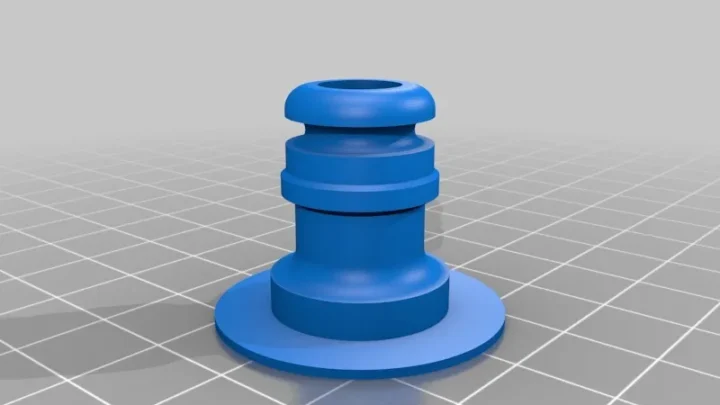
A hose mender is a barbed insert that joins two cut ends back together. It's the single most useful repair part to keep in the shed.
Follow these steps:
- Cut out the damaged section with a sharp knife, straight across.
- Push a barbed mender or replacement coupling into each clean end.
- Tighten the collar or add a hose clamp for a leak-free seal.
- Run the water and check the joint before you trust it.
Brass menders outlast plastic ones and grip better under pressure. For a hose that won't seal at the tap, a fresh female coupling usually solves it. These small repairs keep a good hose going for years, much like the routine upkeep we cover across the garden maintenance guides on the site.
Smart Ways to Repurpose an Old Hose
A hose too far gone for water duty is still useful. Repurposing skips recycling entirely and gives it a second life for free. This is often the smartest ending of all.
Soaker Hose, Drip Irrigation, and Bumper Guards
Turn an old hose into a soaker line by drilling small holes every few inches along one side. Cap the far end, lay it along a bed, and it waters roots slowly with almost no waste. That's a real win during a dry summer.
Other easy reuses:
- Drip irrigation: snake a low-flow hose between plants for hands-off watering.
- Edge and blade guards: split a short piece lengthwise and slip it over a saw blade or sharp tool handle.
- Bucket and chain protectors: pad a swing chain or bucket handle so it doesn't dig into hands.
- Plant ties: cut thin rings to hold stems to stakes without cutting into the bark.
These projects work best with flexible rubber hose. Stiff, sun-brittled PVC tends to crack when you drill it. A soaker conversion pairs perfectly with tidy planting beds, and our country-style boundary ideas can frame the space around them.
How to Dispose of a Hose You Genuinely Can't Save
Sometimes the trash is the right answer. A shredded, moldy, or fused hose with no reuse left in it belongs in general waste, not recycling. Putting it in the wrong bin causes more harm than good.
Before it goes, do two quick things. Cut off any metal fittings for scrap. Coil the hose tightly and tie it so it can't unravel and snag a collection truck.
If your hose is huge or you've got several, check for a bulky-waste or household drop-off centre. Many councils and municipalities run these for items that don't fit the normal bin. It's a small trip, but it keeps loose hose out of the recycling stream where it does the most damage.
Mistakes That Wreck Recycling Loads (and Cost Facilities Money)
The single biggest mistake is wishcycling: dropping a hose in the recycling bin and hoping for the best. It doesn't get recycled. It jams the machines and can spoil an entire truckload of otherwise good material.
Watch out for these common slip-ups too:
- Leaving metal fittings on before the trash, throwing away recyclable brass for nothing.
- Coiling a hose loosely, so it tangles with equipment on collection day.
- Assuming "rubber" means curbside-safe. It never does for hoses.
- Binning a hose that only needs a two-minute mender repair.
One more worth flagging. Don't burn old PVC hose to get rid of it. Heated vinyl releases toxic fumes, and it's illegal in many areas.
When in doubt, reuse first, scrap the metal, and send only the truly dead remains to landfill.
Safety and Labeling: Lead, Phthalates, and Non-Potable Warnings
Not every hose is safe to reuse for anything that touches food or drink. Many older PVC hoses contain lead in the brass fittings and phthalates in the vinyl. That's why most carry a "not for drinking water" label.
Check the hose for a printed warning or a Prop 65 notice if you're in California. If it says non-potable, don't turn it into a soaker for a vegetable bed you'll eat from. Use it for lawns, flowers, or tool duty instead.
Want a hose that's genuinely food-safe? Look for one certified to NSF/ANSI drinking-water standards. Those use lead-free fittings and safer polymers.
When handling old hoses, a quick hand-wash afterward is sensible, especially with cracked vinyl.
Local Rules and Where to Check Before You Bin It
Your local council or municipality has the final say, so check them first. Recycling rules vary widely from one town to the next. What's banned in one place may have a drop-off option two towns over.
Here's the fastest way to get a straight answer:
- Search your city or county waste department's website for "tanglers" or "garden hose."
- Use their A-to-Z disposal search tool if they have one.
- Call the facility directly if the site is vague.
- Ask local garden centres about seasonal take-back days.
Rules also shift with the seasons. Spring cleanups and end-of-season shed clear-outs bring bulky-waste events worth timing your disposal around. If you're rethinking the whole plot, our wire panel boundary ideas can help you plan while you're at it.
Frequently Asked Questions
Can garden hoses go in the recycling bin?
No. Garden hoses can't go in your curbside recycling bin. They tangle around sorting machines and jam the line at recycling facilities.
Every hose put in the bin risks contaminating the whole load. Recycle the metal fittings at a scrap yard instead, and reuse or trash the rest.
Are rubber hoses easier to recycle than vinyl ones?
Yes, slightly. Rubber hose is a single, more consistent material, so some scrap and rubber programs will accept it. Vinyl (PVC) hose carries resin code #3 and is rarely taken anywhere.
Rubber is also the better candidate for reuse projects like soaker lines.
What can I do with a completely dead garden hose?
Cut off the brass or aluminum fittings for scrap first. Then check for a rubber drop-off or a mail-in specialty program near you. If neither exists, coil it tightly, tie it, and put it in general waste.
Never place a loose hose in recycling.
Is it worth saving the metal ends?
Yes. Brass and aluminum couplings are fully recyclable and hold real scrap value. A magnet tells you fast: if it doesn't stick, it's brass or aluminum worth saving.
Collect them in a jar and take them to a scrap yard with other household metal.
Can I turn an old hose into a soaker hose?
Yes, and it's one of the best reuses. Drill small holes every few inches along one side, cap the far end, and lay it in a bed. It waters roots slowly with little waste.
Use flexible rubber hose, since brittle PVC cracks when drilled.
Your Quick Decision Guide by Hose Type and Condition
When you're standing over the hose deciding, run this cheat sheet. It folds everything above into one glance.
| Hose type | Still works? | Do this |
|---|---|---|
| Rubber | Yes | Reuse or repair with a mender |
| Rubber | No | Scrap fittings, find rubber drop-off |
| Vinyl (PVC) | Yes | Repair or reuse for non-food watering |
| Vinyl (PVC) | No | Scrap fittings, then general waste |
| Expandable / hybrid | No | Scrap any metal, then trash |
The golden rule stays simple. Reuse first, repair when you can, recover the metal always, and only landfill the truly dead. Do that, and a worn-out hose leaves the smallest footprint it possibly can.

Similar Posts