Sprinkler or Soaker Hose with a Rain Barrel: What Works?
Can a rain barrel's garden-hose spigot run a sprinkler, or is a soaker hose better? The honest answer is that a sprinkler will usually disappoint you on gravity feed, while a soaker hose matches rain barrel output perfectly. The spigot on a standard 55-gallon barrel typically delivers only 0.5 to 2 PSI, which barely nudges an oscillating sprinkler.
A soaker hose needs almost none of that pressure and does a far better job at every step.
Sprinklers fight gravity, lose water to wind and evaporation, and will drain your barrel in under 30 minutes. Soaker hoses crawl along garden beds and move the same amount of water over hours instead of minutes. That slower pace means deeper soaking, less runoff, and healthier roots.
If you want a straightforward breakdown of how each system performs, let's walk through it together.
Quick Answer
A soaker hose is the better choice for almost every rain barrel setup. A rain barrel's spigot produces roughly 0.5 to 2 PSI of gravity-fed pressure. That weak flow is enough for a soaker hose but not enough to properly operate most sprinklers.
A sprinkler connected to a rain barrel will sputter, leave dry patches, and empty the barrel quickly. A soaker hose runs steadily for hours and delivers water straight to the root zone with minimal waste. In most gardens, the soaker hose wins on efficiency, plant health, and water conservation.
Why Your Rain Barrel Sprinkler Setup Might Be Failing
The reality of low-pressure gravity feeding
Gravity-fed watering is elegant in theory. But it hits a hard limit the moment you try to push water upward into a sprinkler head. A rain barrel sitting two feet off the ground creates roughly 0.9 PSI at the spigot.
Even a tall 4-foot barrel only reaches about 1.7 PSI. That's the physics involved, and it doesn't change no matter how clean your filter is or how wide your hose is. Most oscillating sprinklers need at least 20 PSI to throw a decent pattern.
Rotary nozzles often want 30 to 50 PSI. The gap between what your barrel provides and what a sprinkler demands is massive.
Manufacturers publish flow rate specs that make this even clearer. A typical rain barrel spigot with a ¾-inch opening might move 2 to 4 gallons per minute at best. A single oscillating sprinkler usually asks for 3 to 5 GPM just to start a uniform sweep.
A rotary head can pull 4 to 8 GPM or more. When you try to connect one, you get a sad dribble at best. The spray arm wobbles.
The pattern breaks into sporadic squirts. The corners stay bone dry. That's why so many people feel stuck when they try this combo.
Where sprinklers fall short on rainwater
Even if your barrel sits on a sturdy platform and your hose run is short, you still face real performance problems. First, evaporation eats a large chunk of the water before it ever reaches the soil. An oscillating sprinkler throws droplets into the air, where wind and sun steal them away.
University extension publications on water-wise gardening repeatedly flag overhead watering as one of the least efficient methods available. Second, leaf wetness invites disease. Tomato blight, powdery mildew on squash, and fungal spots on roses all thrive when foliage stays damp for long periods.
A sprinkler keeps leaves wet for hours after the soil is barely damp.
Third, rain barrels tend to collect fine sediment at the bottom. Without a quality pre-filter, that grit reaches your sprinkler nozzle and clogs it within minutes. You'll notice a sputtering pattern that gets worse over time.
Fourth, the barrel empties fast. A 55-gallon drum drained at 3 GPM is empty in about 18 minutes. That's not enough time to water more than a tiny patch before you're chasing the barrel around or switching to a backup source.
If you want to avoid garden hose leaks and other connection frustrations later, you need a system that works with gravity rather than fighting it.
How Soaker Hoses Work — And Why They Fit
Capillary action and slow-release watering
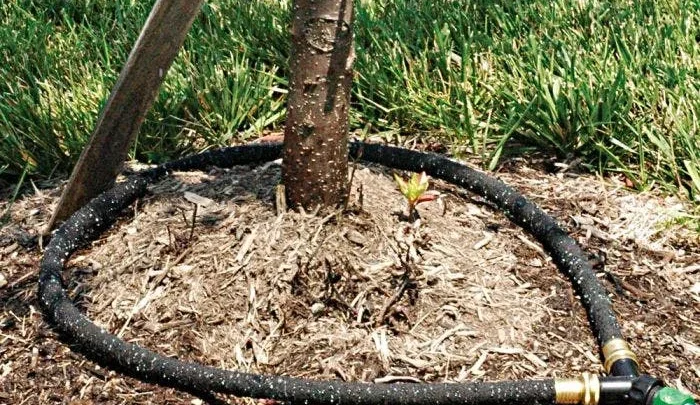
Soaker hoses rely on a simple principle most people overlook. The tubing is made from porous material, usually recycled rubber or reinforced polyethylene with micro-pores woven throughout the wall. Water seeps out along the entire length instead of shooting from a single nozzle.
That process is called capillary action, and it happens without any pressure boost. The water migrates through the tiny spaces in the material and drips straight onto the soil surface. Once it touches the ground, it moves inward through the soil matrix via毛细作用, reaching the root zone where plants actually use it.
This design means almost zero evaporation loss. The water never travels through the air. It also means very little runoff.
Soil absorbs the slow drip faster than it can bead away, even on sloped beds. Vegetables, perennials, and fruit bushes all prefer this steady, low-intensity soak. Their roots drink steadily instead of fighting through puddles and dry crusts.
The trade-off is that coverage is linear. A soaker hose waters a strip rather than a wide arc. That's a deliberate feature, not a flaw, when you place it along rows or around individual plants.
Pressure requirements (and why they're nearly zero)
A soaker hose needs almost no pressure to perform. You can run one from a rain barrel sitting on the ground with zero elevation gain. Even a two-foot lift gives you more than enough force to push water through 50 to 100 feet of hose.
Most manufacturers rate soaker hoses for inlet pressures between 5 and 30 PSI, but that number describes the upper limit, not the requirement. Running at 1 PSI works fine. The flow rate will be lower, but that's usually what you want from a gravity system.
Slower seepage equals deeper penetration. Faster flow just wets the surface and evaporates.
A standard ½-inch soaker hose laid flat along a garden bed typically releases between 0.5 and 2 gallons per hour per 100 feet, depending on brand and soil type. At that pace, a 55-gallon barrel can sustain several hours of watering. You can daisy-chain multiple soaker hoses or loop them through raised beds.
The setup cost stays low, and you rarely need valves, regulators, or pumps. If you're curious about hose durability in general, learning how long a garden hose lasts can help you pick materials that survive repeated seasonal use.
Flow control without valves or pumps
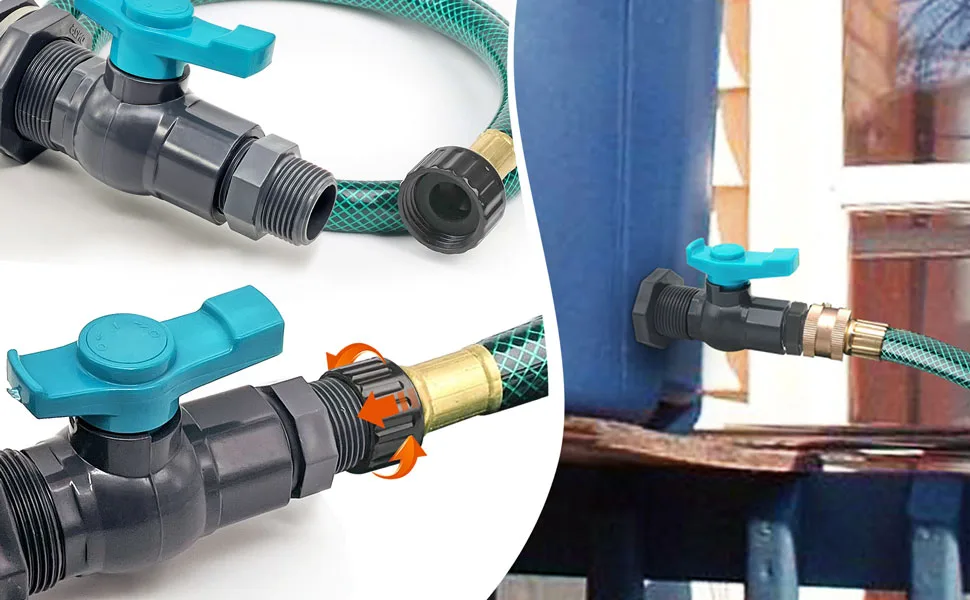
You don't need a pressure regulator on a rain barrel soaker hose setup. In fact, adding one can sometimes choke flow unnecessarily. The easiest approach is to install a simple ball valve near the spigot.
Close it partially if the seepage feels too aggressive. Leave it fully open if the output looks adequate. Some gardeners prefer a needle valve for finer adjustment, but a basic shut-off valve works for most situations.
Just remember to close the valve before you disconnect the hose for winter storage. Fixing a garden hose that won't unkink is another seasonal maintenance tip worth keeping in mind.
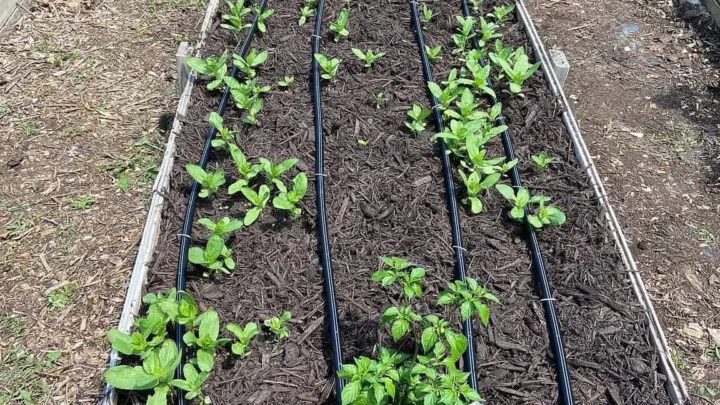
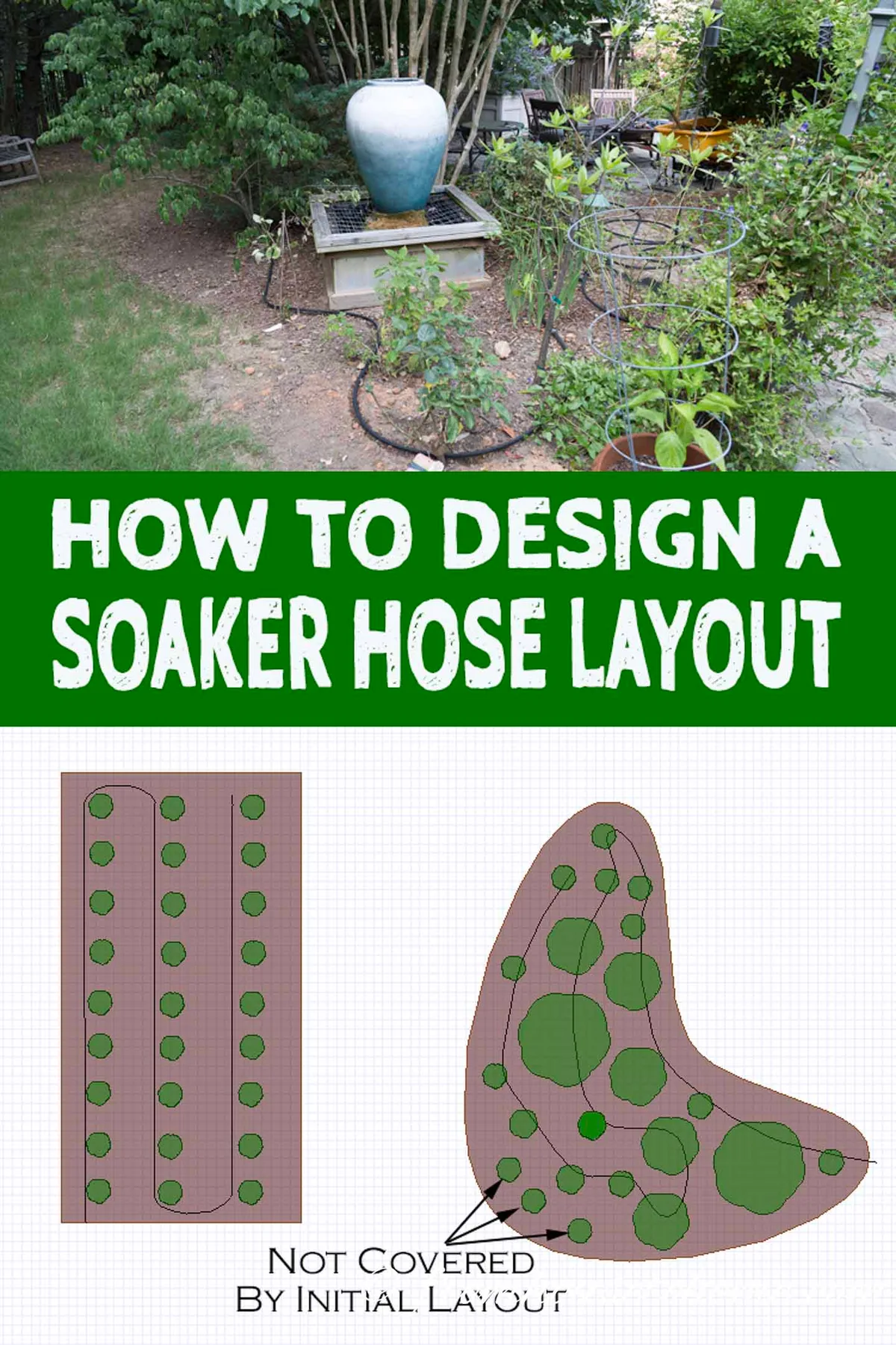
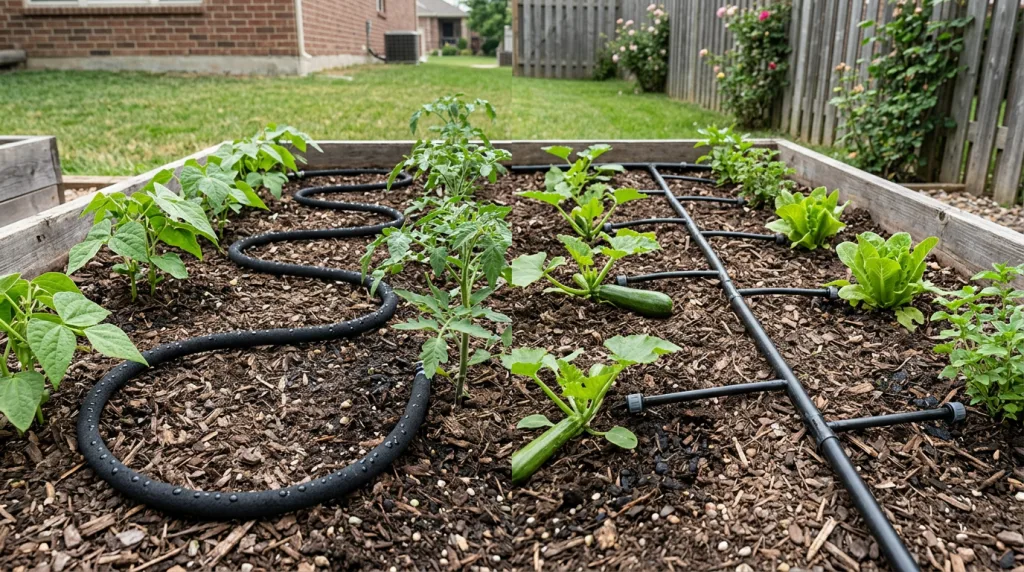
Positioning matters more than pressure control. Lay the soaker hose on top of the soil and cover it with a thin layer of mulch. Mulch reduces surface drying, suppresses weeds, and keeps the hose from shifting.
Keep the hose flat instead of coiled. Coils create pressure traps that cause uneven seepage. If you need to reach a distant bed, use a short run of standard garden hose to carry water from the barrel to the soaker line, then attach the soaker hose at the far end.
This hybrid approach preserves your barrel's modest flow while giving you flexible layout options.
Sprinkler vs. Soaker Hose: Head-to-Head Comparison
Water delivery method and coverage pattern
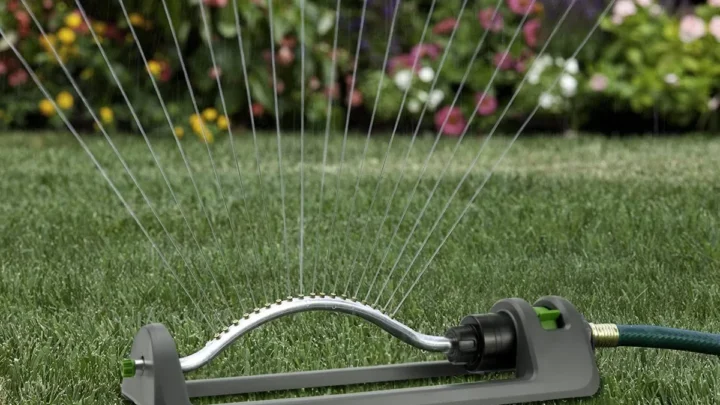
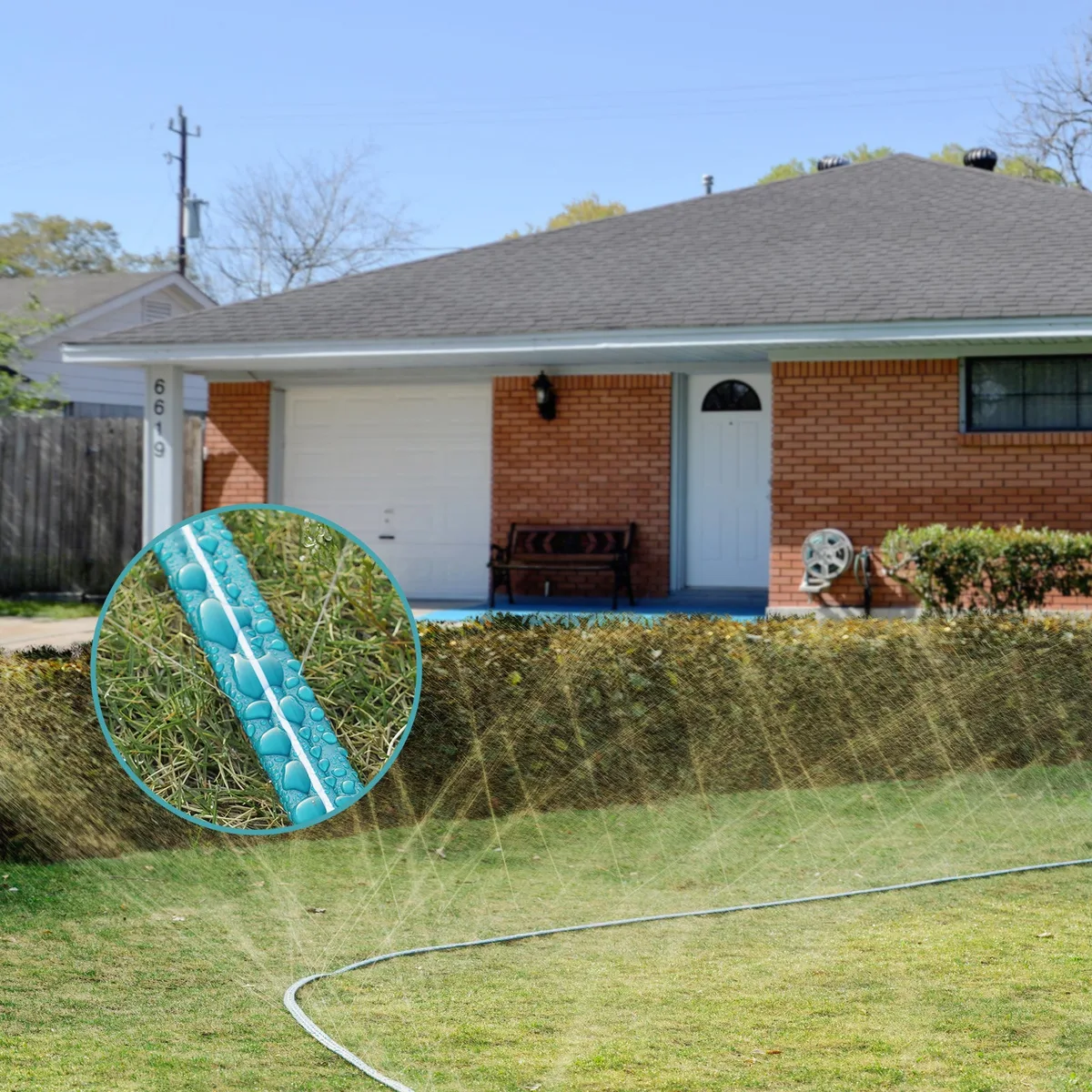
A sprinkler throws water into the air and relies on gravity to bring it back down. The pattern depends on the head type. Oscillating heads sweep side to side and cover rectangular areas.
Rotary heads spin in arcs and throw water farther. Mist nozzles create fine droplets that drift with wind. A soaker hose does none of that.
It lays along the ground and seeps water uniformly along its length. The coverage is linear, matching plant rows or bed edges instead of open lawn areas.
Flow and pressure demands
Sprinklers demand flow rates that rain barrels can't reliably supply. A single oscillating unit may pull 3 to 5 GPM. A rotary head can ask for 4 to 8 GPM or more.
Rain barrel spigots typically move 2 to 4 GPM at best, and that's with a wide opening and a full barrel. Soaker hoses pull far less. A 50-foot ½-inch soaker hose operating at low pressure might consume only 1 to 2 GPM total across its entire length.
That difference changes everything about barrel management.
Evaporation, runoff, and waste
Overhead watering loses 20 to 30 percent of applied water to evaporation and wind drift, according to USDA Natural Resources Conservation Service guidance on efficient irrigation. Soaker hoses reduce that loss to under 5 percent because water enters the soil directly. Runoff follows the same pattern.
Sprinklers saturate the surface faster than many soils can absorb, especially clay-heavy beds. Soaker hoses apply water slowly enough that absorption keeps pace.
Plant health and disease risk
Wet leaves are a disease magnet. Fungal spores germinate on damp foliage within hours. Squash plants succumb to powdery mildew.
Tomatoes develop early blight. Roses sprout black spot. Soaker hoses keep foliage dry by design.
Water reaches the root zone without splashing upward. That single difference can cut fungal outbreaks significantly over a growing season.
Barrel longevity and water savings
A sprinkler drains a 55-gallon barrel in roughly 15 to 30 minutes depending on flow rate. You'll refill it frequently during warm weather, which defeats the purpose of capturing rainwater in the first place. A soaker hose stretches that same volume across several hours.
You water a larger area with fewer refills. That's the core efficiency advantage.
Setup complexity and cost
Sprinkler setups need pressure regulators, flow meters, filters, and sometimes booster pumps to perform acceptably. Those add-ons increase cost and failure points. Soaker hose setups need only a ball valve, a few fittings, and the hose itself.
Prices for a quality 50-foot soaker hose range from $20 to $40. Sprinkler heads and accessories quickly exceed that amount.
| Feature | Sprinkler | Soaker Hose |
|---|---|---|
| Water delivery | Overhead spray | Soil-level seepage |
| Pressure needed | 20 to 50+ PSI | Near zero, gravity-friendly |
| Flow demand | 3 to 8+ GPM | 0.5 to 2 GPM |
| Evaporation loss | 20 to 30 percent | Under 5 percent |
| Disease risk | Higher, wet foliage | Lower, dry foliage |
| Barrel drain time | 15 to 30 minutes | Several hours |
| Setup cost | Higher with accessories | Low, minimal parts |
Best Use Cases: When to Choose Each Method
Sprinkler-friendly scenarios (and why they're rare)
There are a few situations where a sprinkler connected to a rain barrel makes sense. The first is rinsing off a patio, deck, or garden tool. A quick spray from a barrel-fed hose cleans dust and pollen effectively.
The second is watering a small lawn area next to a raised bed, though you'll need a boosted water pressure setup to make that work reliably. The third edge case involves misting heat-sensitive seedlings under a shade cloth, where a fine droplet source matters more than volume. In all three cases, the barrel feeds a quick task rather than a sustained irrigation need.
If you live in an area with strict outdoor water restrictions, a sprinkler on city water becomes a compliance issue. A sprinkler on rainwater is still inefficient compared to other methods, so the restriction argument actually strengthens the case for switching away from overhead watering altogether. That logic leads directly into the soaker hose scenarios below.
Soaker hose ideal conditions
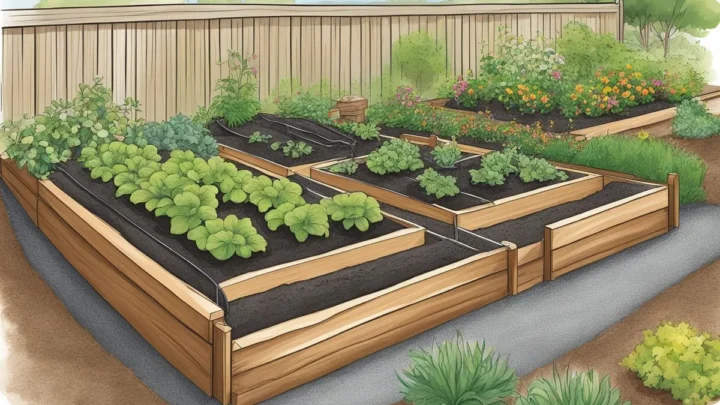
Soaker hoses shine in vegetable gardens, herb beds, and perennial borders. Any planting arrangement with defined rows or spaced clusters benefits from linear water placement. Raised beds are especially well suited because the contained soil structure holds moisture longer, and the elevated position makes hose layout simpler.
If you grow tomatoes, peppers, beans, or squash, a soaker hose running along each row delivers consistent moisture without wetting the leaves. Fruit bushes like blueberries and raspberries also respond well to steady root-zone watering.
Xeriscape and drought-tolerant gardens are another strong match. Plants adapted to dry climates prefer deep, infrequent moisture over frequent shallow watering. A soaker hose buried under mulch provides exactly that rhythm.
Landscape beds around foundations, where splashing water against siding would be damaging, also fit this method perfectly. The hose stays hidden, the water goes where roots need it, and your barrel lasts longer between refills.
Combined approaches for different garden zones
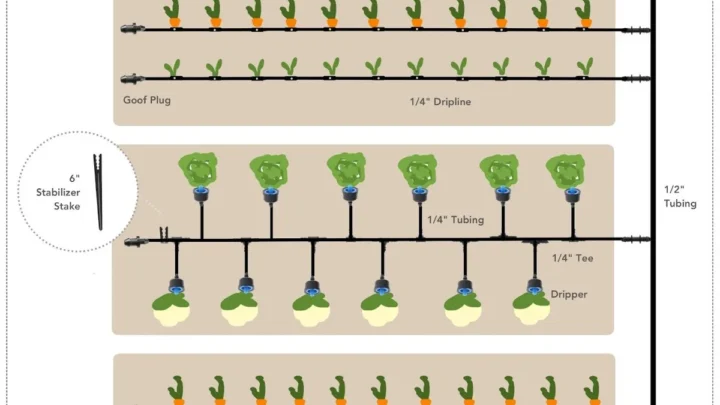
Many gardens contain mixed zones that call for mixed strategies. A practical layout might use a soaker hose loop through the vegetable beds, a short drip line around rose bushes, and a rain barrel fed sprinkler only for occasional patio rinsing. You can connect these systems with a simple diverter valve at the spigot.
That valve lets you choose which zone gets water on any given day. When rain is forecast, you leave the valve closed and preserve barrel volume. When a dry spell hits, you rotate zones and extend coverage across the week.
This hybrid approach also protects your barrel from premature sediment drawdown. The sprinkler position can sit higher on the barrel, away from the sludge layer at the bottom. The soaker hose connects to a cleaner water outlet, or you install a filtered connection near the mid-level port if your barrel has one.
Either way, you get the benefits of both methods without forcing one system to do everything.
How to Decide: Quick Guide for Your Garden
Questions to ask before you connect anything
Start by answering three simple questions. First, what do you want to water? Rows of vegetables, a flower border, a small lawn patch, or a mixed bed?
Second, how high is your barrel sitting? Two feet, four feet, or mounted on a stand? Third, how much rainfall do you capture in a typical month?
Those answers point directly to the right tool. If you answer low height, moderate rainfall, and planted beds, the soaker hose is your clear path. If you answer high barrel, heavy rainfall, and a mixed patio-garden area, a sprinkler might serve a secondary role.
A fourth question matters too. Are you growing disease-prone crops like tomatoes, potatoes, or squash? If yes, overhead watering becomes a serious risk.
Foliar diseases spread fastest when leaves stay wet overnight. A soaker hose eliminates that trigger entirely. Choosing the right tool early saves time, money, and plant health down the line.
Pressure and barrel height checks
Measure your barrel elevation from the ground to the spigot centerline. Every two feet of lift adds roughly one PSI of pressure. A two-foot setup yields about 0.9 PSI.
A four-foot setup yields about 1.8 PSI. That math tells you immediately whether a sprinkler has any realistic chance of working. Anything below 20 PSI will struggle to throw a meaningful pattern, and most residential sprinklers need at least that much to function properly.
A soaker hose, by contrast, performs well at 0.5 PSI and above. The height check becomes a quick decider.
If your barrel sits on the ground, elevate it using cinder blocks or a sturdy wooden platform. Even a one-foot lift improves flow noticeably. Never place a full 55-gallon barrel directly on soft soil.
The weight, roughly 460 pounds when full, will sink and tilt over time. A stable base keeps the spigot aligned and prevents hose connection leaks from uneven stress.
Matching the tool to your plant types
Vegetables and herbs benefit most from soaker hoses. Carrots, radishes, lettuce, basil, and cilantro all prefer steady moisture near the roots. Deep-rooted crops like tomatoes and peppers appreciate the slow soak that encourages vertical root growth.
Perennials and shrubs also respond well to below-surface watering once established. Lawns are the one common exception. Turf grass tolerates overhead watering better than most beds, but even lawns absorb rain barrel water more efficiently through bubblers or low-pressure rotors if you choose that route.
When in doubt, run a simple test. Connect a soaker hose to your barrel and watch it run for two hours. Dig into the soil alongside the line.
If moisture reaches 6 to 8 inches deep, your setup is working as intended. If the soil stays damp only on the surface, your flow is too fast or your soil repels water. Add mulch, adjust the valve, or lengthen the run time.
That hands-on check takes five minutes and tells you more than any general guideline ever could.
Frequently Asked Questions
Can I add a pump to make a sprinkler work?
Yes, a small 12-volt submersible pump can boost rain barrel pressure to sprinkler levels. However, you'll need a battery or solar panel to run it, which adds cost and maintenance. Most gardeners find the effort isn't worth it when soaker hoses solve the problem without any extra equipment.
Do soaker hoses attract pests or mosquitoes?
Soaker hoses don't attract pests when installed correctly. The water seeps into the soil instead of pooling on the surface. Mosquitoes need standing water to breed, which a properly functioning soaker hose avoids entirely.
Just ensure the hose lies flat and doesn't collect water in low spots.
How long does a soaker hose last?
Quality soaker hoses typically last three to five growing seasons with proper care. Rubber soaker hoses tend to outlast polyethylene versions. Kinks, sharp bends, and freezing temperatures shorten lifespan.
Store hoses coiled loosely indoors during winter to maximize their service life.
Can I use both a sprinkler and soaker hose together?
Absolutely. Many gardeners connect a diverter valve to their rain barrel spigot. This setup lets them run a soaker hose through planted beds while reserving sprinkler water for patio cleaning or lawn rinsing.
Just remember the sprinkler will drain your barrel much faster than the soaker hose.
What's the biggest mistake people make with rain barrels?
The most common error is placing the barrel too low. A ground-level barrel produces barely any pressure. Elevating it at least two feet dramatically improves flow to any connected device.
Without that height, even a soaker hose struggles to deliver water to distant garden beds effectively.

Similar Posts