How to Connect a Garden Hose to Your Kitchen Tap
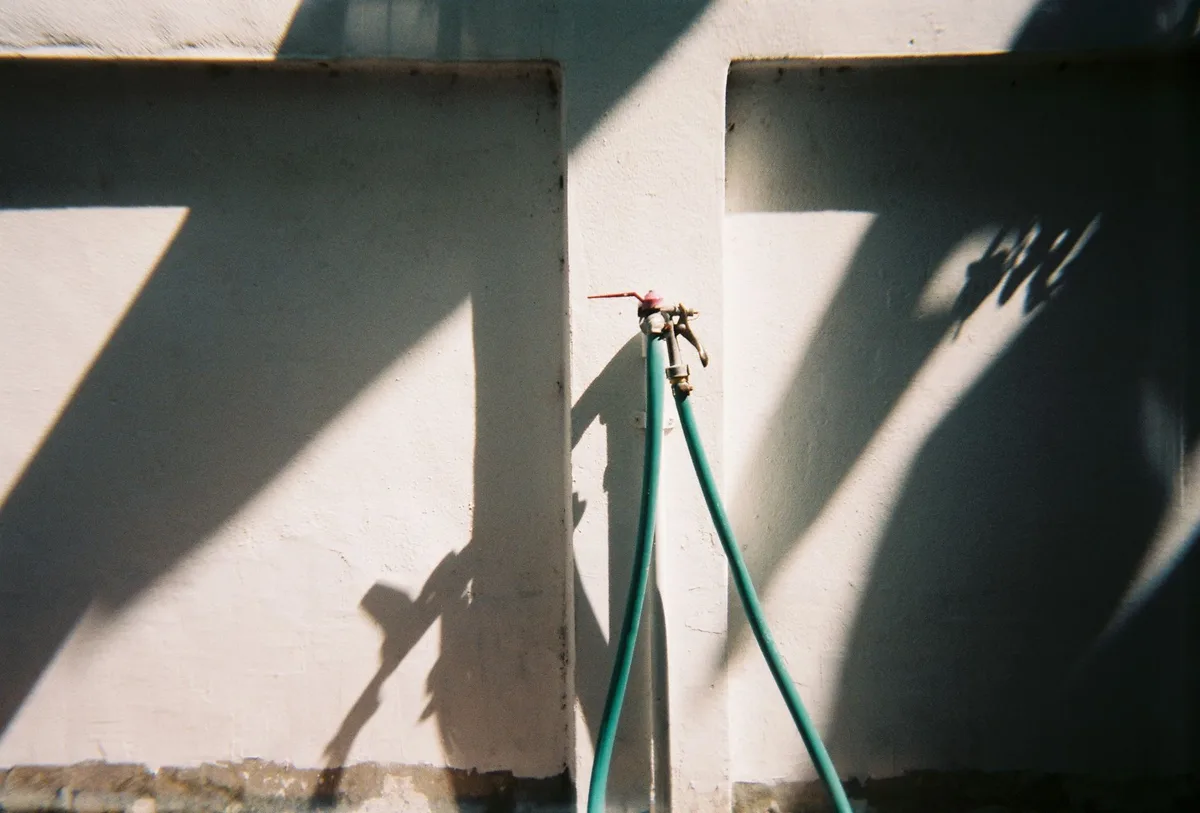
If you've got no outside tap and a garden gasping for water, you're probably asking: can i connect garden hose to kitchen tap without soaking the whole kitchen? The short answer is usually yes. But it hangs entirely on the tap you already have.
Some taps accept a hose in five minutes flat. Others fight you at every turn.
Most garden hoses use a 3/4-inch BSP thread, while kitchen mixer aerators commonly run M22 male or M24 female. Get that match wrong and you'll get a fine spray across the ceiling. As of 2026, cheap universal adapters have made the whole job far less fiddly than it used to be.
Let's work out exactly what fits your setup.
Quick Answer
Yes, you can connect a garden hose to most kitchen taps. You'll need an adapter that matches your tap's aerator thread. Standard mixer taps take a screw-on threaded connector.
Odd or curved spouts use a push-on rubber connector. Always fit a check valve to stop dirty water siphoning back.
Why It Depends on Your Tap (Not a Simple Yes or No)
The tap on your sink decides how easy this is. Not every kitchen tap plays nicely with a hose. So before you buy anything, look at what you're working with.
Here's the simple logic:
- If your tap has a straight spout with a removable aerator, then a threaded adapter usually screws straight in.
- If your spout is curved or tapered, then a threaded adapter won't seal, and you'll need a push-on rubber connector instead.
- If you have a pull-out spray tap, then the hose fights the retractable head, and you'll need a different route entirely.
This is why a single yes or no never works. A basic mixer on a rented flat behaves nothing like a designer boiling-water tap. If you're setting up water for a small courtyard or a cottage-style plot, the connection point matters just as much as the hose length.
One more thing to check upfront. Kitchen taps carry both hot and cold. Run hot water through a standard garden hose and the rubber can perish fast.
Keep it cold unless the hose is rated for heat.
First Job: Unscrew and Check Your Aerator
Start by unscrewing the aerator. That's the small nozzle screwed onto the tip of your spout. It breaks the water into a soft stream and traps grit.
It's also where nearly every hose adapter connects.
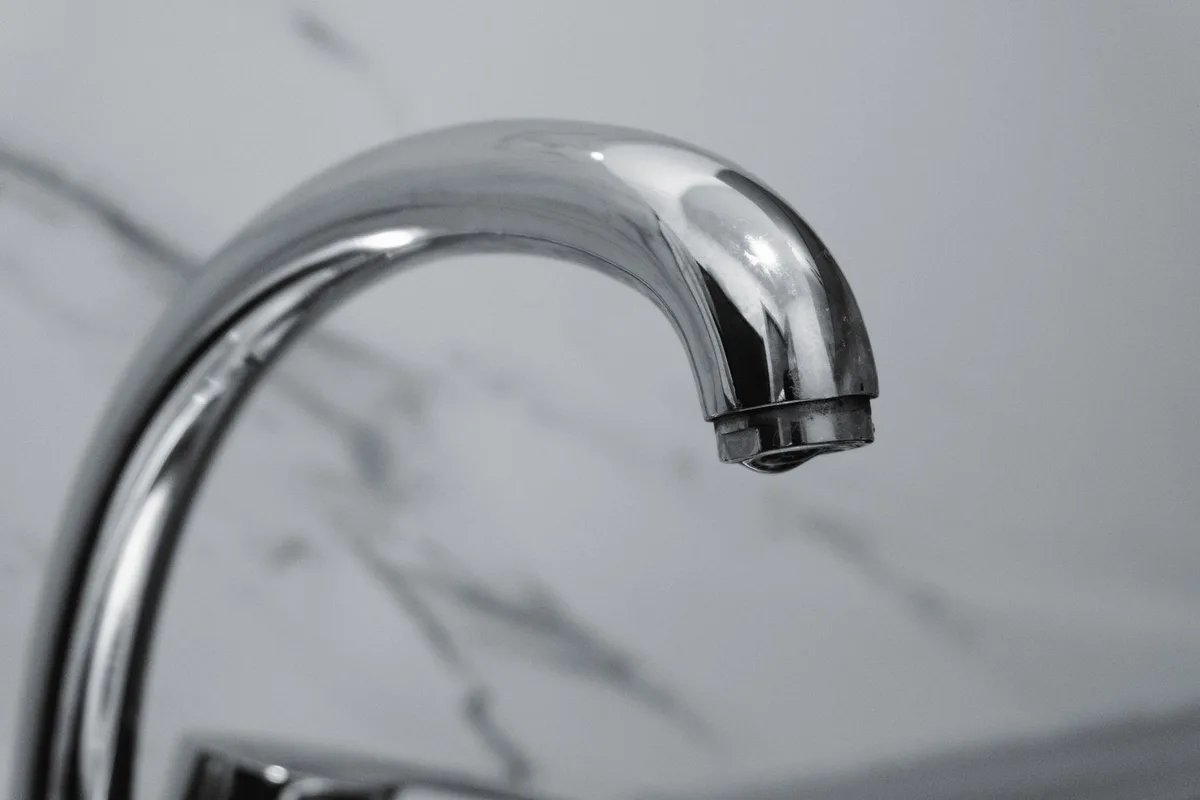
Twist it anti-clockwise by hand. If it's stuck with limescale, grip it with a cloth for extra purchase. Hard-water homes often need a gentle nudge with pliers wrapped in tape so you don't scratch the chrome.
The US Environmental Protection Agency's WaterSense programme is a solid reference on how aerators and flow rates work if you want the background.
Male Thread, Female Thread, or No Thread at All
Once the aerator is off, look closely at the spout. This is the make-or-break moment.
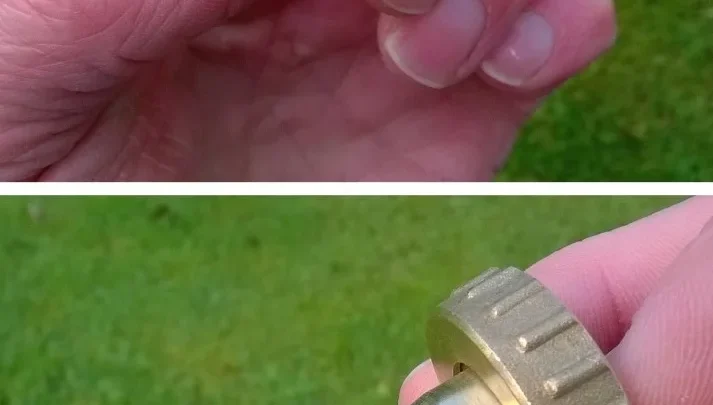
- Male thread: the thread sits on the outside of the spout. An adapter screws over it.
- Female thread: the thread sits inside the spout. An adapter screws into it.
- No thread: some sleek modern taps hide the thread, or have none at all. These need a push-on connector.
You'll also meet the cache aerator, or hidden aerator. It sits flush inside the spout and needs a small plastic key to remove. That key usually comes taped to the box when the tap was new.
How to Measure Your Thread Size (M22, M24 and the Rest)
The two sizes you'll meet most are M22 and M24. M22 means a 22mm male thread. M24 means a 24mm female thread.
Measure across the widest points of the thread with a ruler or calliper.
| Aerator thread | Type | Where you'll find it |
|---|---|---|
| M22 | Male (external) | Most modern mixer taps |
| M24 | Female (internal) | Many kitchen mixers |
| M18 / M28 | Male / Female | Older or oversized spouts |
| 3/4" BSP | Hose end | Standard garden hose fitting |
Snap a photo of the thread and take it to the shop. It saves a wasted trip. Getting this number right is the single biggest thing that stops leaks later.
Which Connector Fits Your Tap: The Decision Branches
Now match your tap to the right connector. There are three main paths, and your aerator check just told you which one you're on.
Threaded Aerator Adapter (For Standard Mixer Taps)
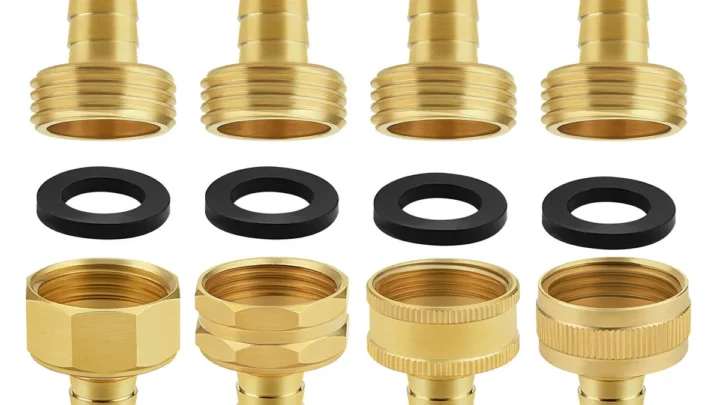
This is the best-fit option. A threaded adapter screws straight into the aerator housing, then a quick-connect fitting clicks onto your hose. It seals tightly and handles mains pressure well.
Buy one that matches your thread size exactly. Many kits come with both M22 and M24 ends so you're covered either way. Fit the rubber washer inside first, or it'll weep at the join.
This route is ideal if you're regularly topping up thirsty houseplants as well as the garden.
Universal Push-On Rubber Connector (For Odd or Curved Spouts)
No thread? Curved spout? This is your answer.
A universal connector clamps a rubber cone over the outside of the spout and grips it with a screw collar or jaw.
It's less secure than a threaded fit. Under full mains pressure it can pop off with a bang. So turn the tap on slowly and never crank it fully open.
A jubilee clip over the rubber adds real holding power if you want the extra insurance for reaching the back of the borders.
Pull-Out Spray and Cache Aerator Taps (The Tricky Ones)
These are the awkward ones. A pull-out spray head has no fixed spout to grip, and the hose gets in the way of the retracting mechanism. Honestly, for these taps a proper outdoor bib tap is often the smarter long-term fix.
Cache aerators need their key removed first, then a threaded adapter fits the internal housing. If you've lost the key, most tap brands sell a replacement for a couple of pounds.
Step-by-Step: Fitting the Connector and Testing for Leaks
With the right adapter in hand, the fitting itself is quick. Work slowly and you'll avoid the classic soaked-floor moment.
- Turn the tap off fully before you start.
- Check the rubber washer is seated inside the adapter.
- Screw the threaded adapter into the aerator housing hand-tight. Don't force it, or you'll strip the thread.
- For a push-on connector, slide the rubber cone over the spout and tighten the collar evenly.
- Click your hose's quick-connect fitting onto the adapter until it snaps home.
- Turn the cold tap on slowly, about a quarter open.
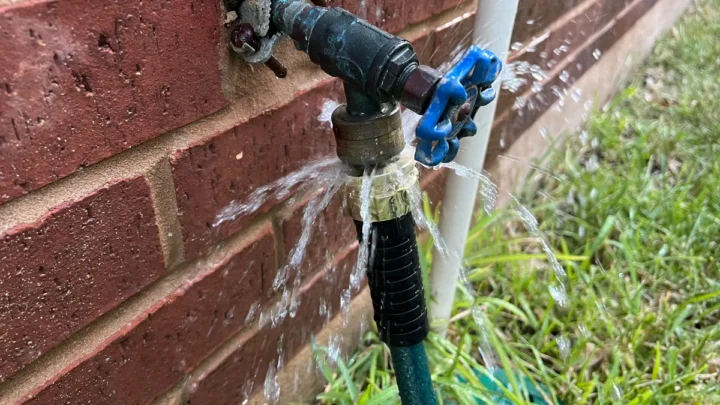
- Watch the join for drips or spray. Nip up any leaks a touch tighter.
If water seeps around the thread, back it off and reseat the washer. Cross-threading is the usual culprit, so always start the thread by hand. A snug hand-tight fit beats over-tightening every time.
Once it holds at low pressure, ease the tap open a little more. Keep it below full blast on push-on connectors. For more seasonal setup tips like this, our garden how-to guides cover the wider jobs around the yard.
Mistakes That End With a Soaked Kitchen Floor
Most hose-to-tap disasters come down to the same handful of errors. Dodge these and you'll stay dry.
- Turning the tap on full blast. Push-on connectors blow off under sudden pressure. Open the tap slowly, every time.
- Skipping the washer. A missing or flattened washer weeps at the thread. Keep a spare pack in the drawer.
- Cross-threading the adapter. Force it and you'll wreck the aerator housing. Start every thread by hand.
- Buying the wrong size blind. An M22 adapter won't sit on an M24 spout. Measure first, shop second.
- Running hot water through the hose. Heat perishes standard rubber and can split the line.
One sneaky problem is a slow drip you don't spot until later. Leave the hose connected overnight and a weeping join can pool across the counter. Disconnect the adapter when you're done, and the risk drops to zero.
Backflow and Contamination: The Safety Bit You Can't Skip
This is the part people ignore, and it's the one that actually matters. When a hose sits in dirty water and the mains pressure drops, water can siphon backwards into your drinking supply. That's called backflow, and it's a genuine contamination risk.
Picture a hose end resting in a paddling pool or a bucket of feed. A pressure drop upstream can pull that water back toward the tap. Fit a double check valve (DCV) between the tap and the hose and that backflow is blocked.
Many quality adapters include one built in.
Never leave a submerged hose end unattended. Keep the outlet above the water line whenever you can. If you're filling a fish tank or mixing plant feed, the check valve stops nasty stuff reaching your kitchen supply.
WRAS, Water Fittings Regs, and Why Check Valves Matter
Yes, there are rules, and they exist for good reason. In the UK, the Water Supply (Water Fittings) Regulations 1999 require backflow protection on hose connections. Look for WRAS-approved fittings, which meet the recognised standard for contact with drinking water.
A single check valve suits low-risk jobs like watering. Higher-risk uses, such as chemical feeds, call for stronger protection. When in doubt, pick the fitting with built-in backflow prevention and you'll stay on the right side of the rules.
What It Costs and What to Buy
The whole setup is cheap. As of 2026, aggregate retail listings put a basic kit in the single-digit range, so this is rarely a big spend.
| Item | Typical price | What it does |
|---|---|---|
| Threaded aerator adapter | £3 to £8 | Screws into a standard mixer tap |
| Universal push-on connector | £5 to £10 | Grips curved or thread-free spouts |
| Adapter with built-in check valve | £6 to £12 | Adds backflow protection |
| Full indoor tap-to-hose kit | £8 to £15 | Adapter, connector and quick-fit in one |
Buy brass over plastic if you'll use it often. Brass threads survive repeated fitting far better. A kit with both M22 and M24 ends is worth the extra pound, since it covers most taps you'll meet.
Kitchen Tap vs Fitting a Proper Outdoor Tap
A kitchen adapter is the quick fix. A plumbed outdoor tap is the permanent one. Here's how they stack up.
| Factor | Kitchen tap adapter | Outdoor bib tap |
|---|---|---|
| Cost | £3 to £15 | £80 to £200 fitted |
| Install time | 5 minutes | Half a day or a plumber |
| Landlord friendly | Yes, reversible | Needs permission |
| Convenience | Hose runs through the house | Tap right by the garden |
| Best for | Renters, flats, occasional use | Homeowners, frequent watering |
If you rent or only water now and then, the adapter wins hands down. If you own the place and drag a hose out weekly, a proper outside tap pays for itself in saved hassle. For anyone screening off an unloved boundary wall or building beds along a fence line, an outdoor tap nearby makes upkeep far easier.
Best For: When This Setup Actually Makes Sense
This trick shines in specific situations. It's not for everyone, but for the right home it's brilliant.
- Flats and apartments with no outdoor tap at all.
- Renters who can't drill through walls or plumb a new line.
- Filling a paddling pool, watering can, or bucket on the odd warm day.
- Topping up an aquarium or hot tub where a hose reaches the sink.
- Small courtyards and balconies with a handful of pots.
It's less ideal for heavy daily watering across a big garden. Dragging a hose through the kitchen loses its charm fast. For metal-boundary gardens like those built around wire grid panels, a fixed outdoor supply usually makes more sense long term.
Pro Tips for a Leak-Free Connection
A few small habits separate a clean fit from a dripping mess. These come straight from common patterns in verified buyer feedback.
- Wrap the thread with PTFE tape for a stubborn weep. Two or three turns clockwise is plenty.
- Smear a little silicone grease on the washer. It seals better and slides on without pinching.
- Descale the aerator housing first in hard-water homes. Limescale ruins the seal.
- Keep the hose looped, not kinked. A sharp bend at the tap chokes the flow.
- Store the adapter dry between uses. Grit and grime stop it seating properly next time.
Check the join after the first minute of running. A tiny bead of water is your early warning. Nip it up a quarter turn before it becomes a puddle.
Frequently Asked Questions
Can I connect a hose to any kitchen tap?
Almost any tap works with the right adapter. Standard mixer taps take a threaded connector. Curved or thread-free spouts need a push-on rubber fitting.
The only real holdouts are some pull-out spray taps, where a proper outdoor tap is the cleaner fix.
What size adapter do I need for my tap?
Measure the aerator thread first. The two most common sizes are M22 male and M24 female. Measure across the thread with a ruler, or take the aerator to the shop.
Kits with both sizes cover nearly every kitchen mixer you'll meet.
Is it safe to run a garden hose off drinking water?
Yes, as long as you fit a backflow preventer. A double check valve stops dirty water siphoning back into your supply. Never leave the hose end submerged in a pool or bucket.
Many quality adapters include a check valve built in.
Can I use hot water through the hose?
Stick to cold unless the hose is heat-rated. Standard garden hoses use rubber that perishes under hot water and can split. If you need warm water for cleaning, run it briefly and keep the temperature low.
Why does my connector keep popping off?
You're likely opening the tap too fast. Push-on connectors can't hold sudden mains pressure. Open the tap slowly to a quarter turn, then ease it wider.
A jubilee clip over the rubber collar adds real grip for stubborn cases.
Your Quick Decision Guide
Run through this quick logic and you'll land on the right fix in seconds.
- Straight spout with a removable aerator? Use a threaded adapter. Match M22 or M24 and you're done.
- Curved or thread-free spout? Go with a universal push-on connector and open the tap gently.
- Pull-out spray or hidden cache aerator? Remove the aerator key first, or plan a proper outdoor tap.
- Filling anything dirty, like a pool or feed bucket? Fit a check valve without exception.
For occasional watering in a flat or rental, the kitchen adapter is the smart, cheap call. For weekly watering across a real garden, save yourself the hassle and plumb in an outside tap. Either way, measure the thread, seat the washer, and turn the water on slow.
Do that and you'll stay dry.

Similar Posts